Private Seferihisar & Sığacık Tour
Ask us about a tailor-made day combining Sığacık Kaleiçi, the harbor, Teos Ancient City, local food and a relaxed Aegean coastal stop.
Request a Custom Tour





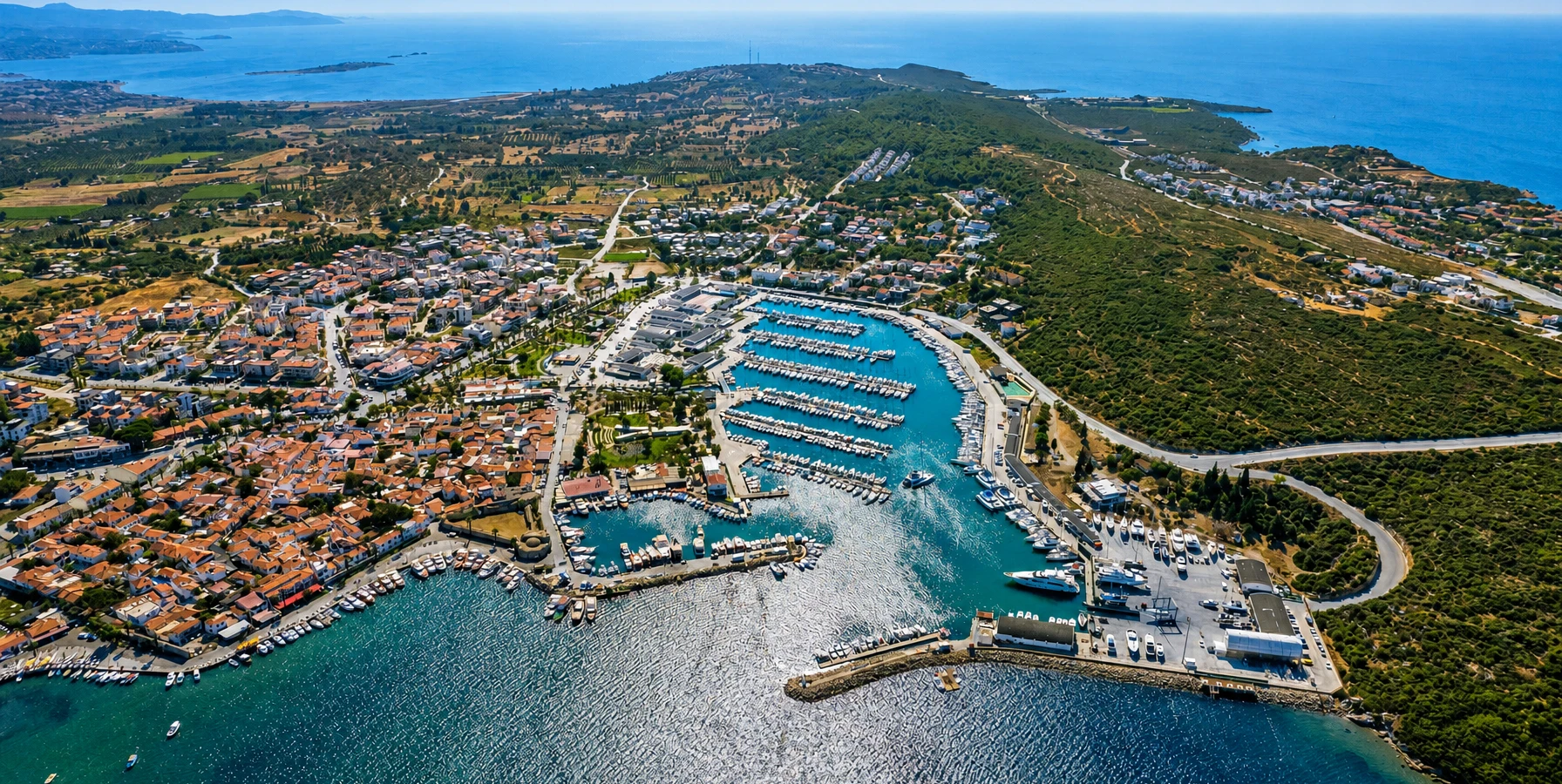
Less than an hour from central İzmir, Seferihisar offers a remarkably complete introduction to the quieter side of Türkiye's Aegean coast. Ancient ruins, historic villages, clear-water beaches, olive groves, mandarin orchards and traditional food all sit within a relatively compact district.
The best-known destination is Sığacık, a picturesque coastal settlement built around a 16th-century Ottoman castle. Its narrow Kaleiçi streets, traditional houses, waterfront, marina and producer market have made it one of the most attractive short-trip destinations from İzmir.
Only a few kilometers away lies Teos Ancient City, one of the historic cities of Ionia. Ancient walls, a theater, agora, harbors and the remains of the monumental Temple of Dionysus create an archaeological landscape surrounded by olive trees and the Aegean coast.
But Seferihisar is much more than Sığacık and Teos. Travel inland toward Ulamış, Turgut, Gödence and Orhanlı and the character changes again: village squares, olive groves, local cheeses, traditional bread, seasonal produce and agricultural landscapes reveal the district's deeper rural identity.
Continue south along the coast and Akarca, Doğanbey and Ürkmez provide long beaches, summer neighborhoods and another perspective on Seferihisar's extensive shoreline.
Seferihisar became Türkiye's first member of the international Cittaslow network in 2009. That identity fits the destination perfectly. This is a place best experienced slowly: with a market morning, an archaeological walk, a long lunch, a swim and enough free time to follow whichever village road looks interesting.
Walk through castle streets, traditional houses, cafés and the historic harbor quarter.
Explore one of Ionia's historic cities among olive groves beside the Aegean Sea.
Swim around Akkum, Akarca, Doğanbey, Ürkmez and the wider Seferihisar coastline.
Discover producer markets, village food, orchards and the philosophy behind Türkiye's first Cittaslow.
Essential information for planning a visit to Seferihisar, Sığacık, Teos and the surrounding Aegean coast.
Southwest of İzmir on Türkiye's Aegean coast, approximately 45 km from central İzmir.
Open on Google MapsSeferihisar became Türkiye's first Cittaslow town in 2009.
The district includes Teos, one of the historic cities of ancient Ionia.
Beaches, rocky coves, harbors and long coastal stretches extend from Sığacık toward Ürkmez.
One full day for Sığacık and Teos; two or three days for beaches, villages and slower exploration.
Spring and autumn for exploration; June to September for swimming and beach days.
Few destinations around İzmir combine archaeology, village life, beaches and local food so naturally.
Seferihisar is sometimes introduced simply as Türkiye's first Cittaslow, but the district's appeal goes much further than the title. Its landscape contains thousands of years of history alongside communities that still depend on agriculture, fishing and local production.
A single day can move from the castle walls of Sığacık to the olive-covered ruins of Teos, then continue to a clear-water beach before ending with fresh fish, Aegean mezes or a village meal.
The district is also unusually good for travelers who prefer slow travel. Many of its most memorable experiences are simple: walking through a village, buying fruit directly from a producer, drinking tea in a square, watching fishing boats return to harbor or finding a quiet stretch of coast away from the busiest summer areas.
Seferihisar also works well for repeat visits. A first trip may focus almost entirely on Sığacık and Teos, while later journeys can explore Ulamış, Turgut, Gödence, Orhanlı, Doğanbey and Ürkmez or dedicate an entire day to swimming along the coast.
In 2009, Seferihisar became Türkiye's first member of Cittaslow, an international network inspired by the idea that towns can develop without sacrificing local identity, traditional food, public spaces, environmental quality and community life.
The word does not simply mean that everything happens slowly. The wider philosophy encourages communities to value local production, regional cuisine, walkability, traditional culture, environmental responsibility and a more human-scale approach to everyday life.
For visitors, this philosophy becomes visible in producer markets, village projects, local food, traditional seeds, small-scale agriculture and the continuing effort to preserve Seferihisar's distinctive identity.
Producer markets allow visitors to buy fruit, vegetables, bread, cheese, prepared food and handmade products directly from local communities.
Local products such as mandarin oranges, Armola cheese, olive oil and Karakılçık wheat remain strongly connected with Seferihisar's identity.
Rural communities surrounding the district center remain an essential part of the Seferihisar experience.
The destination rewards travelers who choose fewer stops and spend more time actually experiencing each place.
Although most visitors immediately continue toward Sığacık, Seferihisar center offers a more everyday perspective on the district. This is where local residents shop, meet, work and move through daily life beyond the more visitor-oriented coastline.
The town center is particularly interesting on market days, when local produce, olives, cheese, vegetables, fruit and seasonal ingredients reveal the agricultural richness of the surrounding countryside.
It also makes a practical base for travelers who want easy access to Sığacık, Teos, Akarca and inland villages without staying directly in the busiest coastal areas.
Walk through the center for bakeries, small shops, cafés and a more everyday atmosphere than coastal Sığacık.
Local markets are among the easiest places to discover seasonal produce and understand what grows around Seferihisar.
Simple restaurants, pide shops, bakeries and lokantas can provide excellent alternatives to the waterfront dining areas.
The center is conveniently positioned for exploring both inland villages and the coast.
For many travelers, Sığacık is the place that first puts Seferihisar on the map. Located approximately five kilometers from the district center, the settlement combines historic streets, a working harbor, traditional houses, cafés, restaurants and access to some of the area's most important archaeological and coastal attractions.
The most atmospheric section lies within Sığacık Kaleiçi, where narrow streets pass between traditional houses, courtyards, small shops and historic walls. Despite its popularity, the area remains a living neighborhood rather than a museum reconstruction.
Outside the walls, the waterfront provides a completely different scene: fishing boats, sailing yachts, seafood restaurants and evening promenades create a lively maritime atmosphere.
Walk without a fixed route through narrow lanes, traditional houses, courtyards and small local businesses.
Enjoy fishing boats, waterfront restaurants, sea views and evening walks around the harbor.
Sunday is traditionally the busiest market day, when local food, produce and handmade products fill the Kaleiçi streets.
The archaeological site of Teos lies only a short distance south of the village.
For a much more detailed look at the castle, market, marina, restaurants, beaches and practical visitor information, see our complete Sığacık travel guide.
The present form of Sığacık Castle dates largely to 1521–1522, when fortifications were constructed during the reign of Sultan Süleyman I in preparation for Ottoman naval operations in the Aegean.
Stone from nearby Teos was reused in sections of the fortification, and ancient blocks and inscriptions can still be identified within parts of the walls.
What makes Sığacık unusual is that the enclosed area remained a residential quarter. The result is a historic environment of walls, gates, houses, small gardens, shops and everyday neighborhood life.
Early morning is particularly rewarding for photography before day visitors arrive, while late afternoon brings warm light to the stone walls and a livelier atmosphere around the waterfront.
Just south of Sığacık lies Teos, one of the twelve historic cities traditionally associated with the Ionian League. Its position between two ancient harbors helped connect the city with trade, maritime activity and the wider Mediterranean world.
Today, the archaeological landscape spreads through olive groves and contains remains from several periods, including city walls, a theater, agora, odeon, gymnasium, public buildings, harbor structures and the Temple of Dionysus.
The Temple of Dionysus is the site's most celebrated monument. The major Hellenistic temple is associated with Hermogenes of Priene and was constructed in the early second century BC. Although much of the structure survives only in fragments, its scale reflects the importance of Dionysus within ancient Teos.
The site is most enjoyable when approached as an archaeological landscape rather than a collection of standing monuments. Olive trees, ancient roads, fallen architectural blocks and views toward the sea create a strong sense of place.
The signature monument of Teos and one of the most important ancient structures dedicated to Dionysus in Anatolia.
Explore the remains of the city's performance space and imagine the cultural life of ancient Teos.
Teos developed as a maritime city with harbors connecting it to Aegean trade networks.
One of the pleasures of visiting Teos is walking through an archaeological site still closely connected to the rural Aegean landscape.
For history, main monuments, visitor planning and a more detailed archaeological overview, see our complete Teos Ancient City guide.
Seferihisar has a long and varied coastline. Some beaches are convenient and developed, while others feel considerably quieter and are surrounded by natural Mediterranean vegetation.
Conditions can change substantially with wind direction, so the perfect beach on one day may feel very different the next.
One of the best-known beaches near Sığacık, with clear water, easy access and a lively summer atmosphere.
A long coastal area east of Sığacık with several swimming points, summer residences and extensive sea views.
A beautiful natural coastal setting associated with pine-covered surroundings and clear water. Access arrangements can change, so check current local conditions before making a special journey.
A quieter coastal area close to the archaeological landscape of ancient Teos.
Long stretches of coast south of Seferihisar provide a more open beach landscape and a relaxed summer atmosphere.
One of the district's main southern beach areas, with long shoreline, local facilities and family-oriented summer activity.
Akkum Beach is one of the easiest swimming stops to combine with Sığacık. Its proximity to the village, clear Aegean water and convenient access make it especially popular during summer.
The beach can become busy on July and August weekends, so early morning is often the most pleasant time for travelers who prefer quieter conditions.
Wind is an important part of the local coastal climate. On windy days, the sea can become livelier, while calmer mornings may provide excellent swimming conditions.
East of Sığacık, Akarca stretches along an extended section of the Seferihisar coastline. Rather than one compact beach, the area contains several places where visitors can reach the sea.
Akarca is particularly popular with summer residents, families and travelers who prefer a less enclosed coastal setting than the small beaches immediately around Sığacık.
The long shoreline also makes Akarca rewarding for sunset walks, casual cycling and relaxed evenings beside the sea.
Choose your swimming point according to wind, access and current facilities.
Long coastal sections are suitable for easy seaside walks.
The wider coastal setting provides more options than many small isolated coves.
Evening light can be beautiful along the open Aegean shoreline.
Travel south from Seferihisar and the district gradually changes character. The coastline around Doğanbey and Ürkmez contains long beaches, summer neighborhoods, local restaurants and a more spacious coastal landscape.
These areas receive fewer international visitors than Sığacık, making them useful for travelers who want to see how local summer life along the İzmir coast differs from the better-known resort towns farther west.
Ürkmez is particularly practical for families, long beach days and travelers continuing south toward the Gümüldür and Özdere coast.
Spend an uncomplicated day beside the sea without building the entire itinerary around sightseeing.
The southern coast feels more residential and locally oriented than central Sığacık.
Look for casual restaurants, seafood and seasonal local produce.
Continue south toward Gümüldür and Özdere for a wider coastal journey.
Seferihisar's inland villages reveal a side of the district that many beach visitors never experience. Agriculture, olive growing, traditional food and village social life remain visible throughout the countryside.
One of the best villages for experiencing Seferihisar's food culture, particularly traditional Ata Ekmeği, Armola cheese and local producer events.
An agricultural village strongly associated with olive growing and the rural landscapes of the hills surrounding Seferihisar.
A peaceful village surrounded by agricultural land, olive groves and countryside suited to a relaxed inland drive.
A rural settlement where olive groves, wild herbs and traditional agricultural landscapes dominate the surroundings.
Another quiet inland community that helps reveal the agricultural character behind Seferihisar's coastal tourism.
A countryside settlement toward the Güzelbahçe side of the district, surrounded by hills and seasonal agricultural landscapes.
Producer markets became one of the most visible expressions of Seferihisar's Cittaslow identity. They create direct connections between local farmers, village producers, home cooks and visitors.
The most famous is the Sığacık Kaleiçi Market, traditionally held on Sundays. Stalls spread through streets around the castle selling seasonal produce, homemade food, handcrafts and regional products.
Markets and producer events are also associated with Seferihisar center and villages such as Ulamış. Schedules can occasionally change, particularly around holidays, special events or seasonal arrangements, so confirm locally if a particular market is central to your plans.
Mandarins, grapes, figs and other local fruit appear according to the agricultural calendar.
Look for pastries, stuffed vegetables, bread, cheese and dishes prepared by local producers.
The surrounding countryside is rich in olive groves, making locally produced olive products excellent edible souvenirs.
Textiles, decorative objects and other crafts often appear beside the food stalls.
Explore the castle gates, traditional houses and narrow streets without following a rigid route.
Give yourself enough time to appreciate both the archaeology and the surrounding olive landscape.
Choose between Akkum, Akarca, Doğanbey, Ürkmez and other coastal areas according to weather and wind.
Taste Seferihisar through its bread, cheese, fruit, herbs, olive oil and homemade dishes.
Add Ulamış, Gödence, Turgut or Orhanlı to see a quieter agricultural side of the district.
Enjoy fish, mezes and a slow evening around Sığacık's waterfront.
Visit during the cooler months to see the orchards associated with one of Seferihisar's most recognizable products.
Finish the day beside the coast rather than rushing back to İzmir immediately after sightseeing.
A first visit should concentrate on Sığacık, Teos and the coast rather than trying to cover the entire district.
Begin early in Sığacık. Walk through the castle gates before the streets become busy, explore Kaleiçi and stop for coffee around the harbor.
Continue south toward Teos Ancient City. Allow approximately two hours for an unhurried archaeological visit, especially if you enjoy ancient history and photography.
Return toward Sığacık for lunch, or continue directly toward Akkum for an afternoon swim.
Later in the day, drive along part of the Akarca coast or return to Sığacık for dinner and an evening waterfront walk.
Two days allow the district to reveal much more of its character. Use the first day for Sığacık, Teos and Akkum, then dedicate the second to inland villages or the southern coastline.
Sığacık Kaleiçi, Teos Ancient City, Akkum and an evening around the harbor.
Explore Ulamış, Turgut and Gödence with a slow village lunch and local products.
Follow the coast through Akarca, Doğanbey and Ürkmez for swimming and a relaxed beach day.
Combine all three: Sığacık and Teos, a village day and a southern-coast beach day.
Seferihisar is an excellent swimming destination, but the coastline is affected by wind and individual beaches can feel very different from one another.
A beach that was calm yesterday may be considerably rougher today. Always judge actual conditions.
Popular beaches around Sığacık are much quieter during summer mornings.
Useful around mixed, pebble or rocky sections of the coast.
Shade can be limited, particularly outside organized beach areas.
Choose accessible, sheltered beaches and check depth and waves before entering the water.
Do not assume every swimming point provides showers, toilets, food or lifeguard services.
Food is one of the best reasons to explore Seferihisar slowly. The district's cuisine reflects agriculture, animal husbandry, olive growing, fishing and the herb-rich culinary traditions of the Aegean.
One of the district's signature agricultural products, particularly visible during the autumn and early winter harvest season.
A traditional local cheese associated especially with village food culture and celebrations in Ulamış.
Traditional bread made using locally revived Topan Karakılçık wheat and closely connected with Seferihisar's local-food movement.
A local sweet pastry often filled and finished with syrup, and one of the traditional flavors associated with Seferihisar.
A regional variation that reflects the district's home-cooking traditions.
Seasonal wild greens appear in salads, olive-oil dishes and traditional village cooking.
Olive landscapes surround many of Seferihisar's villages, making local oil one of the most natural products to take home.
Sığacık is an excellent place for fish, calamari, octopus and a table of Aegean mezes beside the harbor.
Agriculture remains fundamental to Seferihisar's identity. Behind the beaches and historic streets lie mandarin orchards, olive groves, vegetable fields, vineyards and villages whose rhythms still follow the agricultural year.
Citrus orchards become particularly striking as the fruit ripens during the cooler months.
Olive growing shapes the hills and villages throughout much of the district.
The revival of traditional wheat varieties has become an important symbol of Seferihisar's local-production movement.
Markets help small producers sell directly to residents and visitors.
Wild and cultivated greens remain central to many local Aegean dishes.
Traditional cheeses reflect the pastoral heritage of inland communities.
Seferihisar's appeal depends on much more than its built heritage. The district contains coastal habitats, wetlands, Mediterranean scrub, olive landscapes and agricultural areas that support significant biodiversity.
The coastal environment around Sığacık, Teos and the wider Doğanbey shoreline includes sensitive natural areas where wetlands, dunes and archaeological remains can exist close together.
Visitors should avoid driving onto dunes, creating new tracks, collecting plants or entering sensitive wetland areas simply to obtain photographs.
Ancient archaeology and cultivated olive trees create some of the district's most characteristic scenery.
Coastal wetland environments provide important habitat for birds and other wildlife.
Wild herbs, shrubs and seasonal flowers transform the countryside during spring.
Rocky shorelines, beaches and open water create constantly changing coastal landscapes.
Excellent for archaeology, village drives, green countryside, wildflowers and comfortable walking weather.
A superb balance of warm weather, swimming conditions and lighter crowds than peak summer.
Ideal for beach holidays, but Sığacık and popular swimming areas can become busy, especially on weekends.
One of the best months for combining warm sea temperatures, archaeology and more relaxed sightseeing.
Excellent for food, photography, village exploration and the beginning of the mandarin season.
Quiet and atmospheric, with local life continuing after beach tourism slows considerably.
Choose Sığacık alone or combine a short Kaleiçi walk with the waterfront.
Combine Sığacık, Teos and one beach or coastal stop.
Add an inland village route or a longer beach day around Akarca and the southern coast.
Ideal for Sığacık, Teos, villages, markets and several different swimming areas.
Perfect for travelers who want slow mornings, multiple beaches and time to explore without a fixed itinerary.
Early mornings are ideal for Sığacık, Teos and popular beaches during summer.
The traditional Sığacık market attracts large numbers of visitors. Expect additional traffic and parking demand.
Useful for ancient Teos, castle streets and rural village exploration.
Summer temperatures can be high, particularly while exploring archaeological sites.
Coastal conditions can change quickly and affect which beach is most comfortable.
Small producers, markets and village businesses may not always offer every electronic payment method.
Two meaningful stops and a good meal often create a better day than six rushed attractions.
Archaeological sites, beach facilities and small businesses can operate different hours according to season.
Few districts around İzmir offer such varied photographic subjects within a short distance. Historic architecture, archaeology, markets, agricultural landscapes and the sea can all be photographed in a single day.
Photograph quiet castle streets before market visitors and day-trippers arrive.
Use olive trees and ancient architectural fragments together to show the archaeological landscape.
Seasonal fruit, bread, herbs and local products create colorful documentary details.
Olive groves, stone walls and agricultural fields are especially attractive in spring.
Morning light often works beautifully with the blues and greens of sheltered coastal areas.
Late afternoon gives castle stone, olive groves and waterfront scenes warmer tones.
Seferihisar can work extremely well for families when the day is kept simple and archaeological sightseeing is balanced with beach time.
Castle streets are compact and easy to combine with food, ice cream and a harbor walk.
Interesting for older children, but bring hats, water and sun protection because shade is limited in parts of the site.
Choose a sheltered, accessible beach and always evaluate current waves and depth.
Producer markets can be enjoyable, but narrow Kaleiçi streets become crowded on busy Sundays.
For younger children, Sığacık + Teos + one beach is usually enough for a satisfying day.
Avoid the hottest part of the afternoon for long archaeological walks.
Accessibility differs greatly between modern waterfront areas, historic Sığacık streets, beaches and the archaeological landscape of Teos.
Generally easier than historic interior streets, although surfaces and crowd levels vary.
Historic lanes may include uneven paving, narrow passages and occasional steps.
The archaeological site includes natural ground, uneven surfaces and walking between widely separated remains.
Usually offer more predictable access than isolated natural sections of coastline.
Useful for reducing walking distances between widely separated attractions.
Contact individual attractions or beach operators for current information about ramps, accessible toilets and step-free routes.
Seferihisar lies southwest of İzmir and can be reached comfortably from the city, İzmir Adnan Menderes Airport and neighboring Aegean destinations.
Driving is the most flexible option, particularly if you want to continue beyond the town center toward villages and beaches.
Private transfer, rental car or combinations of regional public transport can be used to reach Seferihisar.
Regional bus connections make Seferihisar possible without a car, although remote villages and beaches are less convenient.
The best independent choice for combining Sığacık, Teos, villages and different beaches in one trip.
Useful for travelers arriving directly from the airport or combining Seferihisar with another İzmir Peninsula destination.
Possible for experienced cyclists, but summer heat, traffic, distances and hills require careful route planning.
Seferihisar sits in an excellent position for a wider journey through İzmir's western peninsula and Aegean coast.
Explore castle streets, the producer market, harbor, restaurants and one of İzmir's most atmospheric coastal communities.
Discover the Temple of Dionysus, ancient theater, harbors and the archaeological landscape south of Sığacık.
Continue north for vineyards, gastronomy, ancient Klazomenai, the İskele waterfront and creative neighborhoods.
Explore vineyard countryside and combine Seferihisar's slow-food culture with one of western İzmir's most distinctive rural routes.
Continue west for beaches, Çeşme Castle, thermal springs and a livelier Aegean resort atmosphere.
Discover stone architecture, windmills, restaurants, shops and one of the İzmir Peninsula's most recognizable historic towns.
Travel toward a wilder peninsula of small villages, clear-water coves, rugged landscapes and quiet Aegean roads.
Combine beaches, local history, coastal restaurants and traditional settlement life on the Karaburun Peninsula.
Seferihisar is an Aegean coastal district southwest of İzmir in western Türkiye. It lies approximately 45 km from central İzmir.
It is known for Sığacık, Teos Ancient City, Aegean beaches, local food, mandarin orchards and becoming Türkiye's first Cittaslow.
Yes. It combines archaeology, historic streets, beaches, village life, local food and easy access from İzmir within one destination.
Cittaslow is an international movement encouraging towns to protect local identity, food traditions, environmental quality, community life and human-scale urban development.
Seferihisar joined the Cittaslow network in 2009 and became the first Turkish town to do so.
No. Sığacık is a coastal neighborhood of Seferihisar, located approximately five kilometers from the district center.
Sığacık is known for its castle, Kaleiçi streets, traditional houses, producer market, harbor and proximity to Teos Ancient City.
Sunday is traditionally the main day for the Sığacık Kaleiçi producer market. Schedules can change, so confirm locally if the market is an essential part of your visit.
The present Ottoman fortifications largely date to 1521–1522, during the reign of Sultan Süleyman I.
The Kaleiçi neighborhood is a living urban area and visitors can walk through its streets and gates. Individual museums, events or attractions may have separate arrangements.
Teos is an ancient Ionian city located close to Sığacık, with remains including the Temple of Dionysus, theater, agora, city walls and ancient harbor structures.
Allow roughly one and a half to two hours for a comfortable first visit, and longer if you are particularly interested in archaeology.
Yes. They are very close to one another and form an excellent combination for a one-day trip.
Popular areas include Akkum, Akarca, the Teos coastline, Doğanbey and Ürkmez. The best choice depends on wind and current sea conditions.
Yes. Akkum is one of the most convenient beaches to combine with a visit to Sığacık.
The coastline varies. Some sections are sandy, while others contain pebbles, rock or mixed natural shoreline.
Yes. Sığacık, accessible beaches and short driving distances between major attractions make the district family friendly when the itinerary is kept relaxed.
Not necessarily for Seferihisar center and Sığacık, but a car is strongly recommended if you want to explore villages, remote beaches and the wider district.
Yes. It is one of the easiest coastal day trips from İzmir. A classic route combines Sığacık, Teos and a seaside lunch or swim.
One day is enough for the highlights. Two or three days are better if you want villages, markets and several beach stops.
June and September are excellent for combining swimming with sightseeing. April, May, October and November are particularly pleasant for archaeology, villages and food-focused travel.
Sığacık and popular beaches can become busy, particularly during July and August weekends. Quieter areas can still be found elsewhere in the district.
Look for Armola cheese, Ata Ekmeği, samsades, nohutlu mantı, Aegean herbs, local olive oil, seasonal mandarins and fresh seafood.
Mandarins, olives, olive oil, vegetables, traditional wheat and other regional agricultural products are important parts of the district's identity.
Armola is a traditional cheese associated with Seferihisar and particularly with the food culture of villages such as Ulamış.
Ata Ekmeği is traditional bread connected with the revival of Topan Karakılçık wheat and Seferihisar's efforts to preserve local agricultural heritage.
Yes. Spring and autumn are arguably better for archaeology, walking, villages, markets and photography, while autumn and early winter bring the mandarin season.
Yes. The atmosphere is considerably quieter and many beach-oriented businesses reduce their activity, but local life, markets, food and historic sites remain rewarding.
Choose Sığacık for historic atmosphere, restaurants and the waterfront. Seferihisar center can be practical for local life, transport and exploring different parts of the district.
Yes. Seferihisar and Urla combine very well, especially for travelers interested in food, vineyards, archaeology and slow Aegean travel.
Start in Sığacık, visit Teos Ancient City, have lunch near the harbor and spend the afternoon at Akkum or along the Akarca coast.
Slowly. Choose a few meaningful stops, eat local food, visit a producer market if possible and leave enough time for an unplanned village or beach stop.
Buy fruit, bread, cheese, olive oil and handmade products directly from local producers whenever possible.
Never climb, move or remove ancient stones from Teos or other archaeological areas.
Historic Sığacık is still a residential neighborhood. Avoid blocking doorways or intruding into private courtyards.
Take litter away from beaches, picnic areas, village roads and natural coastal environments.
Stay away from sensitive nesting, wetland and dune areas unless an established visitor path is provided.
Mediterranean vegetation becomes extremely vulnerable during dry summer conditions. Follow all local fire restrictions.
Do not create new vehicle tracks across beaches, fields, dunes or natural vegetation.
Spending more time in fewer places reduces unnecessary driving and usually creates a much richer travel experience.
Explore Sığacık, ancient Teos, traditional villages, local food and the Aegean coast with a flexible private experience designed around your interests and pace.
Choose a history-focused day, a relaxed Sığacık and coastal experience or a deeper journey combining villages, archaeology and regional food.
Ask us about a tailor-made day combining Sığacık Kaleiçi, the harbor, Teos Ancient City, local food and a relaxed Aegean coastal stop.
Request a Custom Tour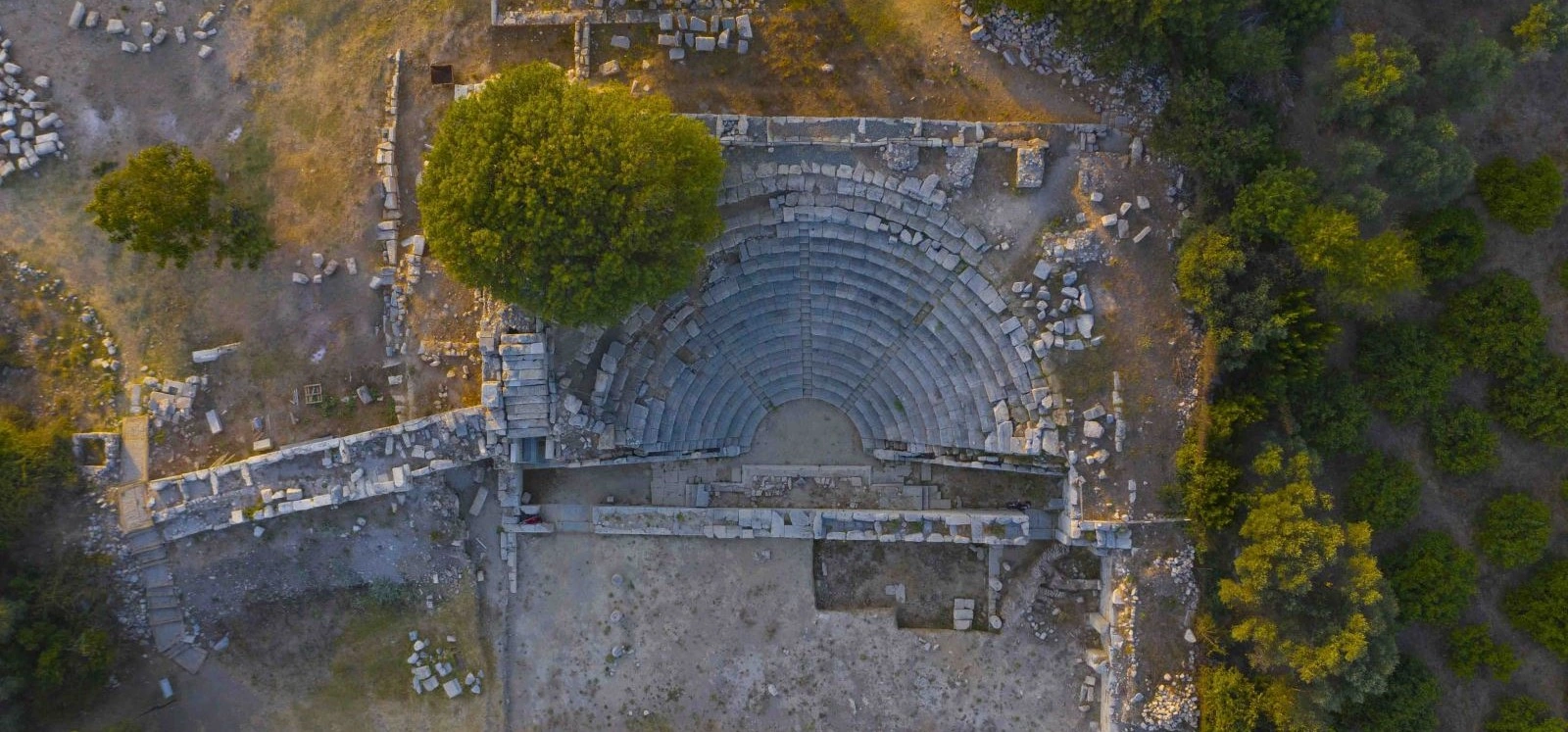
Combine ancient Teos with Ulamış, Turgut or another traditional village for a day focused on archaeology, local culture and the landscapes of rural Seferihisar.
Request a Custom TourCombine Seferihisar with historic towns, vineyards, beaches and the extraordinary landscapes of the wider İzmir Peninsula.
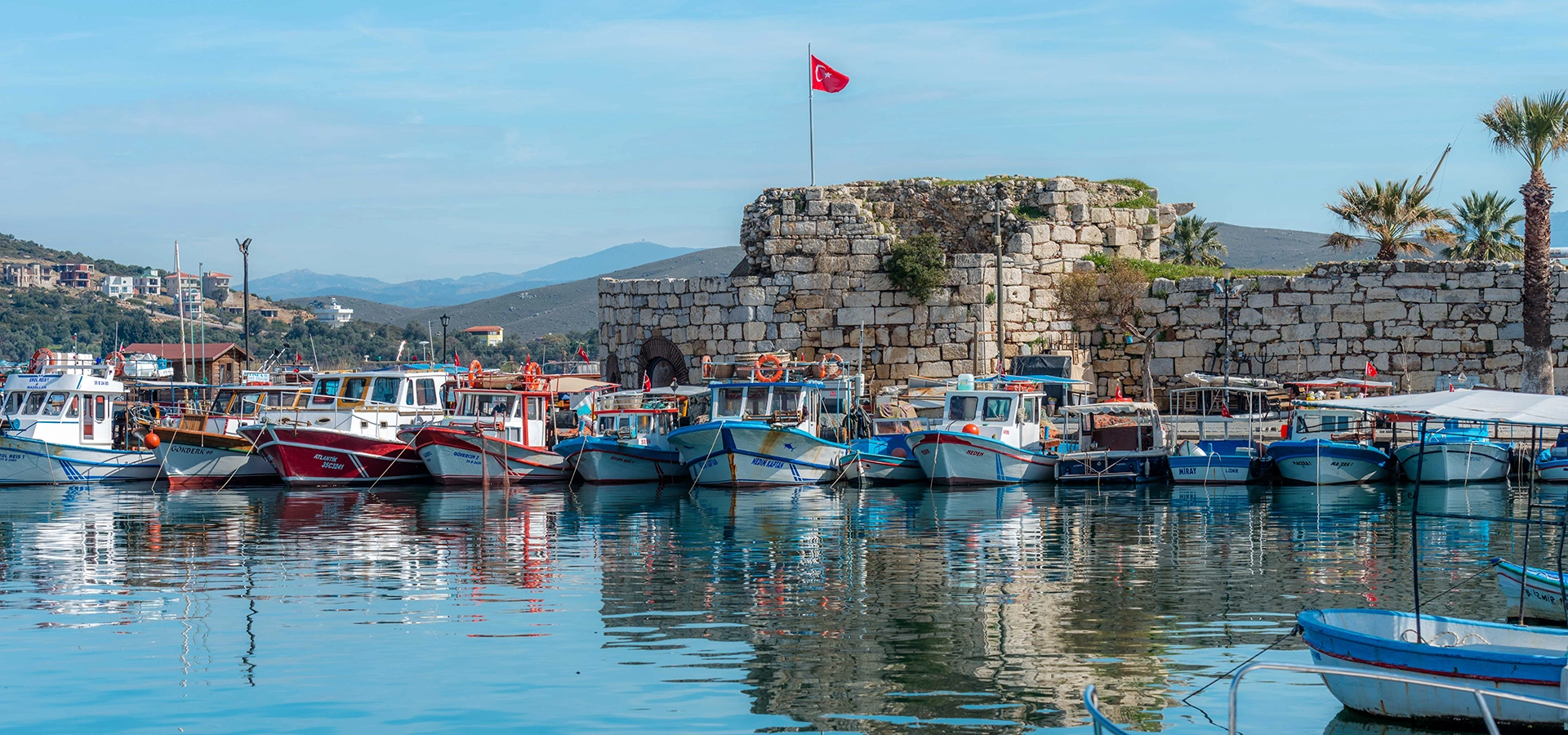
Discover castle streets, traditional houses, the producer market, Aegean restaurants, the harbor and one of İzmir's most charming historic coastal neighborhoods.
Explore Sığacık
Walk through one of ancient Ionia's historic cities and discover the Temple of Dionysus, theater, agora, harbors and olive-covered archaeological landscape.
Explore Teos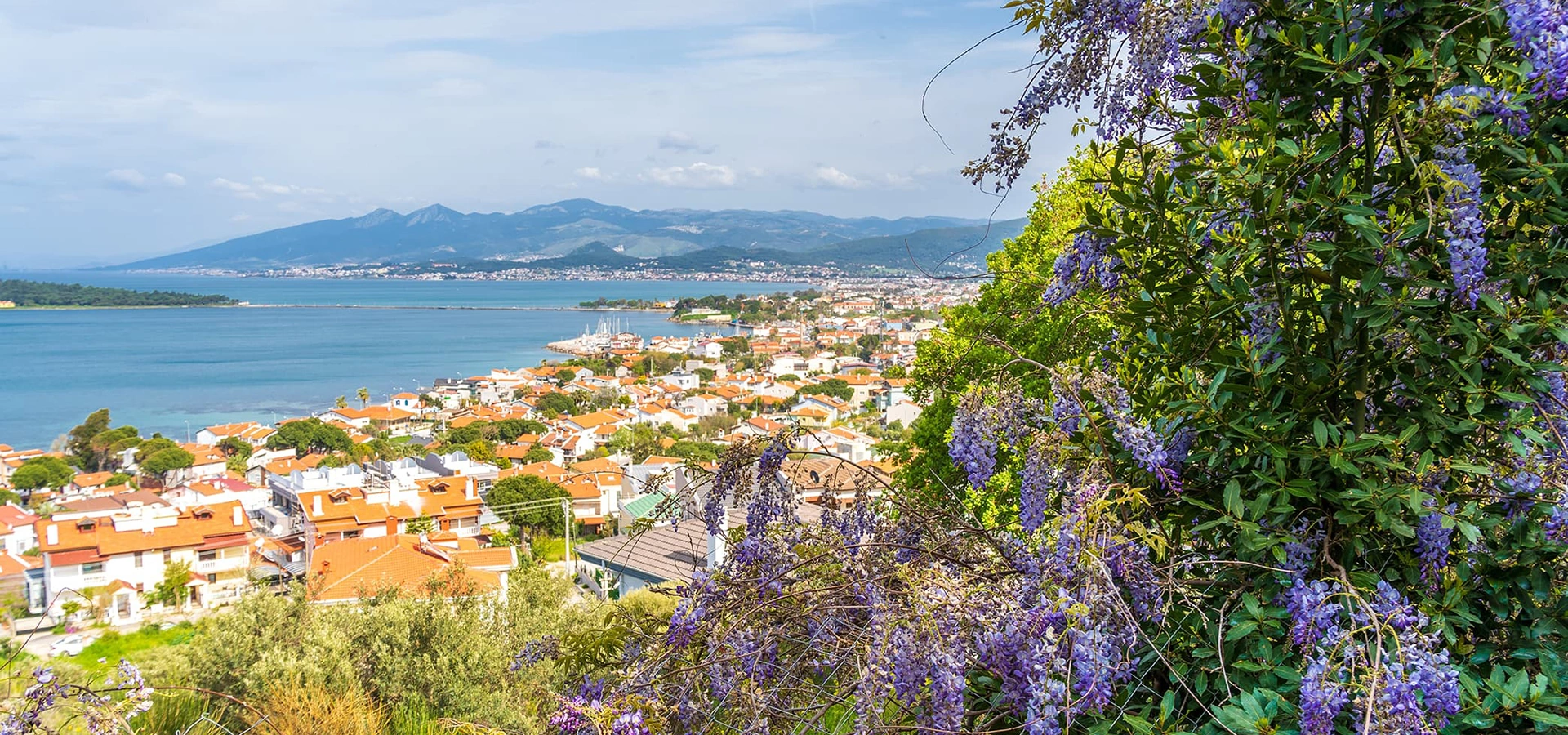
Continue north for ancient Klazomenai, İskele, vineyards, art, excellent restaurants and another distinctive interpretation of slow Aegean life.
Explore Urla