The cauldron stage
The shaped dough is boiled before it reaches the oven.






Kazan Simidi is a classic Sivas bakery ring: the shaped yeast dough is plunged into simmering mulberry-molasses water before being coated in sesame and baked in a stone oven.
The shaped dough is boiled before it reaches the oven
Dut pekmezi colours and flavours the poaching bath
The provincial record gives 5 kg water to 1 kg mulberry molasses
The boiled ring receives sesame before baking
Its place in Sivas cuisine and the defining preparation details.
Sivas province, Türkiye
Regional food
Mix flour, yeast, water and salt into a pliable dough.
No confirmed registration claimed for this specific dish
The word kazan means a large cooking pot or cauldron and directly describes the technique that gives the bread its name. Local simit bakers use a boiling bath with mulberry molasses before baking, unlike methods where dough is simply brushed with sweet liquid.
The provincial culinary inventory specifies a traditional bath of approximately five parts water to one part mulberry molasses. Once the rings rise to the surface, they are lifted out, coated with sesame and baked. The same account associates the baking with a stone oven fired using hornbeam wood.
The result is a sesame ring with a darker surface from the molasses treatment and a distinct baked crust. Its identity lies in this cauldron-and-oven sequence rather than merely being a round bread called simit.
The shaped dough is boiled before it reaches the oven.
Dut pekmezi colours and flavours the poaching bath.
The provincial record gives 5 kg water to 1 kg mulberry molasses.
The boiled ring receives sesame before baking.
Hornbeam-fired stone ovens are specifically mentioned in the local record.
These are ingredients documented in the local culinary sources or used in the explained traditional method. Amounts are included only where the available source specifies them; household quantities vary.
Wheat flour
Fresh yeast
Water
Salt
Mulberry molasses for the boiling liquid
Sesame seeds
A stone oven or a sufficiently hot oven for a home adaptation
The ring dough is submerged in boiling water mixed with mulberry molasses. When it floats, it is retrieved and coated with sesame. This brief cooking stage contributes to the outside texture and helps the sesame adhere before baking.
The provincial description points specifically to a stone oven fired with hornbeam wood. The hot masonry rapidly browns the already dipped ring, producing a crust different from soft ordinary breakfast rolls.
Professional stone ovens produce a more characteristic crust.
Home bakers can use a conventional oven, but it will not reproduce all conditions of the traditional stone oven.
The boiling liquid and heat source distinguish this from many other Turkish simits.
Kazan Simidi is usually eaten as a bakery snack or breakfast bread with tea, cheese or olives. It is wheat-based and normally sesame-coated.
Although molasses goes into the poaching liquid, the finished simit is a savoury bakery product, not a syrup-saturated sweet. It can be eaten with breakfast cheese or tea, and its dark finish should not be confused with chocolate.
Be careful with the simmering molasses bath; sugar-rich liquid can foam and burn.
There is no confirmed registration number attached to this page; avoid describing the bread as officially registered without a record.
Ask local restaurants, bakers or specialist food shops for Sivas Kazan Simidi. Availability depends on the dish and preparation schedule; slow-cooked, preserved and festival foods are not necessarily offered every day. For historical context and other Sivas places, browse our Sivas food and craft guide.
The rings are first boiled in a large pot or cauldron.
The documented Sivas method uses mulberry molasses mixed with water.
Yes, sesame is added after the boiling stage.
Traditionally in a stone oven, with hornbeam fuel mentioned in local descriptions.
The Sivas Provincial Directorate of Culture and Tourism publishes a documented introduction to Sivas Kazan Simidi or the relevant Sivas culinary tradition, linked in the sources below.
This guide draws on the provincial Culture and Tourism Directorate’s culinary documentation and, where the product is registered, TÜRKPATENT’s official geographical-indication register. Historical traditions are identified as local culinary accounts, not dated archaeological proofs.

Gürün Dut Pekmezi is a concentrated mulberry preparation produced in the highland district of Gürün. Its flavour comes from ripe mulberries reduced into a dark, sweet syrup rather than from a flavoured sugar mixture.
Read Food Guide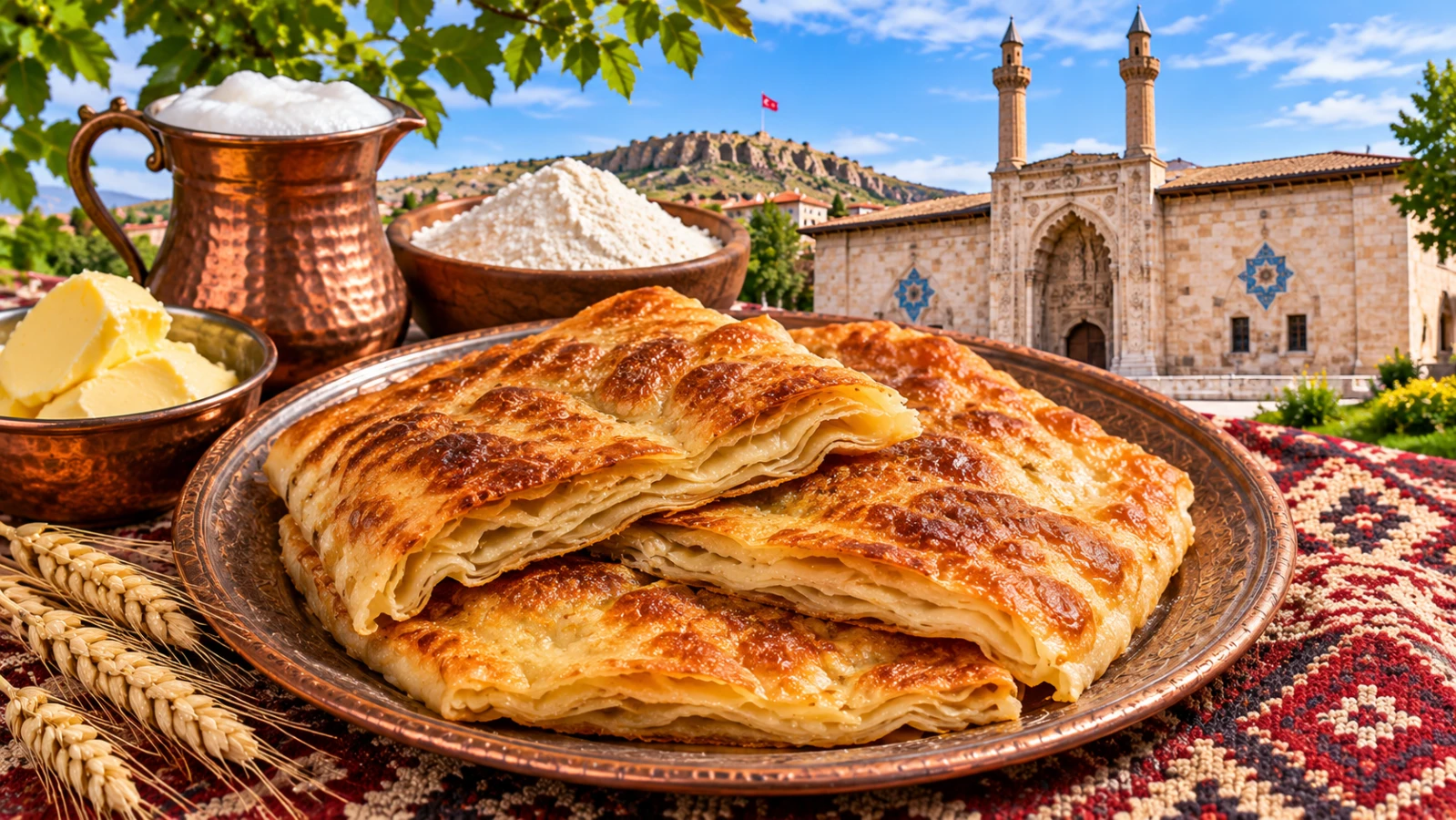
Sivas Katmeri is a savoury, butter-layered pastry associated with local ovens and breakfast tables. Its crisp surface and separated inner layers are created by repeated oiling, folding and shaping of dough.
Read Food Guide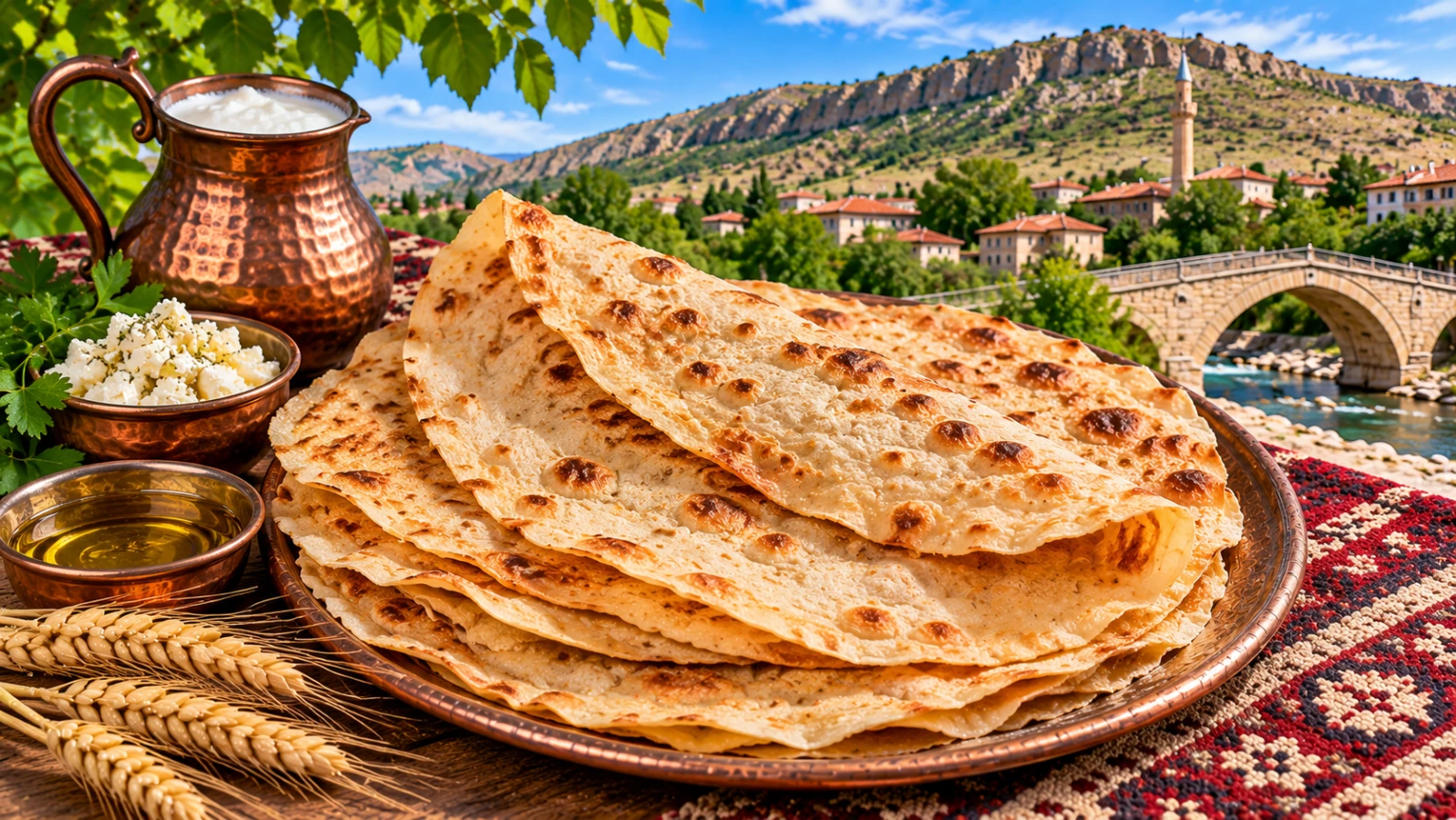
Zara Sac Ekmeği is a distinctive bread of the Zara district, made on the convex side of a traditional sac over wood fire. Its dough includes çökelek or whey, and it may be prepared plain or with filling.
Read Food Guide