Whey or çökelek dough
A dairy ingredient distinguishes the recipe from simple flour-and-water griddle bread.






Zara Sac Ekmeği is a distinctive bread of the Zara district, made on the convex side of a traditional sac over wood fire. Its dough includes çökelek or whey, and it may be prepared plain or with filling.
A dairy ingredient distinguishes the recipe from simple flour-and-water griddle bread
The bread is cooked on the rounded back of the sac
The registered bread is around 1
Plain, potato-filled and çökelek-filled recipes are recognised
Its place in Sivas cuisine and the defining preparation details.
Sivas province, Türkiye
Regional food
Mix the salt, whey or çökelek and water into a workable mixture.
Registered: Zara Sac Ekmeği (no. 969)
Although translated in some guide menus as “sheet bread”, the Turkish word sac refers to the curved metal griddle rather than a flat sheet of dough. The registered Zara bread is thicker than many thin yufka breads and has a rounded upper surface with impressions from the fingers.
The official geographical-indication specification identifies wheat flour, çökelek or whey, rock salt and yeast as the key ingredients. The griddle is set with its hollow side towards the fire and its curved back as the cooking surface. This method is a meaningful distinguishing detail, not a generic reference to baking bread.
Zara Sac Ekmeği was registered in December 2021 with geographical-indication number 969. Plain, potato-filled and çökelek-filled preparations are all described under the official product.
A dairy ingredient distinguishes the recipe from simple flour-and-water griddle bread.
The bread is cooked on the rounded back of the sac.
The registered bread is around 1.5 cm thick, unlike very thin yufka.
Plain, potato-filled and çökelek-filled recipes are recognised.
A slightly domed, textured top is characteristic of the shaped bread.
The official TÜRKPATENT registration uses the product name Zara Sac Ekmeği. This status belongs to the defined local product and production specification, not to every vaguely similar dish.
Zara Sac Ekmeği
969
Mahreç işareti
09 December 2021
Read the official TÜRKPATENT record for the detailed specification and current register.
These are ingredients documented in the local culinary sources or used in the explained traditional method. Amounts are included only where the available source specifies them; household quantities vary.
250 g bread wheat flour for the registered single-bread example
150 g çökelek or about 150 ml whey
3.5 g rock salt
10.5 g fresh yeast or 3.5 g dry yeast
Water as required by the dough
Optional 150 g mashed potato filling
Optional çökelek and parsley filling
The registered formula uses çökelek or whey as part of the dough. This is a practical link between regional dairying and baking; it also means the bread cannot automatically be described as dairy-free when sold plain.
The griddle’s concave side faces the fire, while bread rests on its convex upper back. The shaped bread has a flatter base and a slightly domed top marked by fingers; these details distinguish it from paper-thin yufka cooked on the same equipment.
Dough shaped and baked without a centre filling.
Mashed cooked potato, optionally with a little paste, is enclosed in the dough.
Fresh curd and parsley create the alternative savoury filling.
Eat Zara Sac Ekmeği warm with breakfast or alongside savoury dishes. Even the plain version contains dairy in its traditional dough, so visitors avoiding milk products should check the ingredients.
Plain bread, potato-filled bread and çökelek-filled bread are all covered by the official description. A traveller should ask which is being served because a filled version can look similar from the outside.
The official dough contains dairy even when the bread has no filling.
The name refers to the metal sac griddle, not to an English “sheet” style of bread.
Ask local restaurants, bakers or specialist food shops for Zara Sac Ekmeği. Availability depends on the dish and preparation schedule; slow-cooked, preserved and festival foods are not necessarily offered every day. For historical context and other Sivas places, browse our Sivas food and craft guide.
A curved metal cooking griddle traditionally heated over fire.
No. The protected product is much thicker than thin yufka.
Yes, potato and çökelek versions are documented alongside plain bread.
Yes, geographical-indication number 969.
The Sivas Provincial Directorate of Culture and Tourism publishes a documented introduction to Zara Sac Ekmeği or the relevant Sivas culinary tradition, linked in the sources below.
This guide draws on the provincial Culture and Tourism Directorate’s culinary documentation and, where the product is registered, TÜRKPATENT’s official geographical-indication register. Historical traditions are identified as local culinary accounts, not dated archaeological proofs.
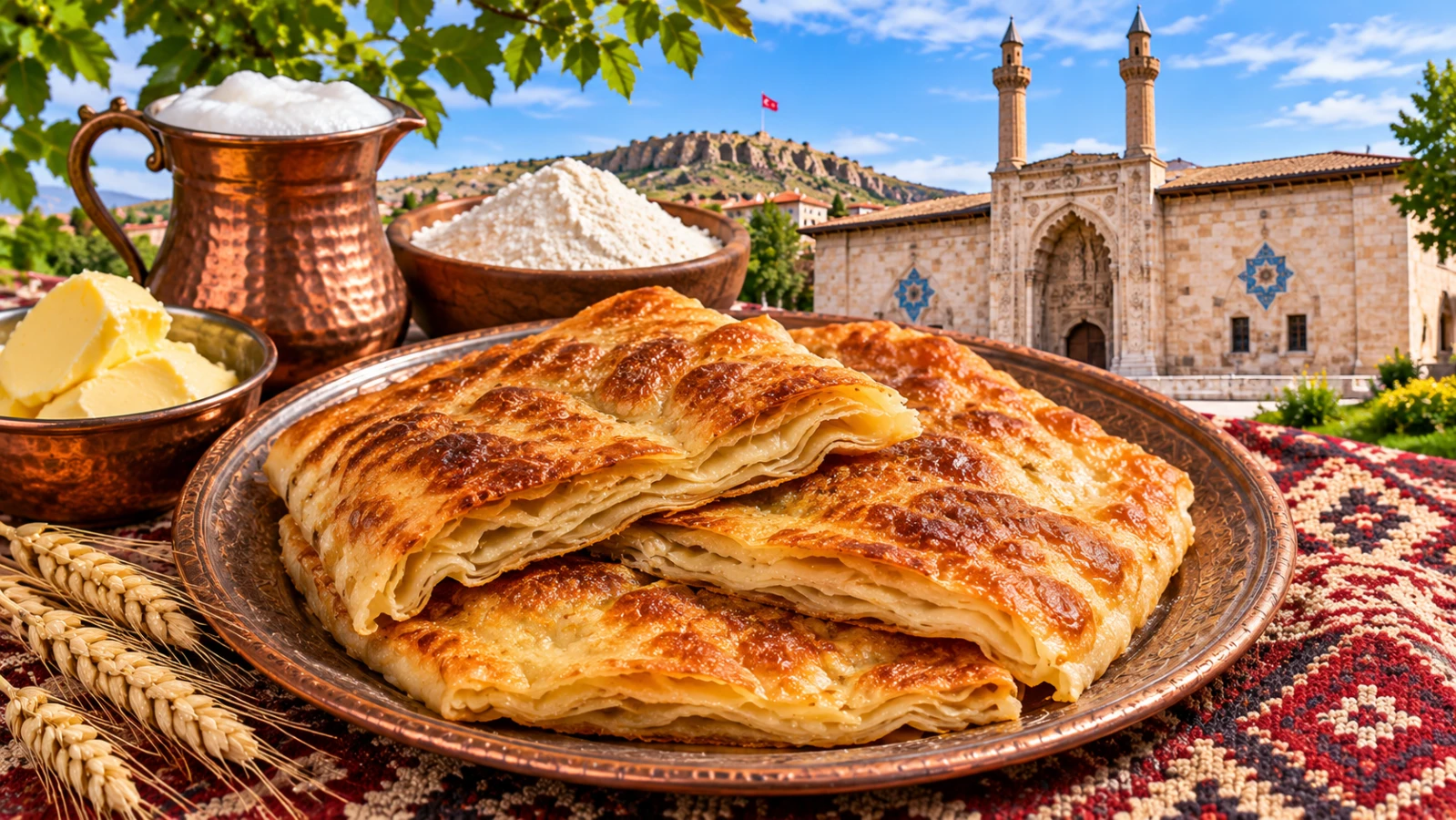
Sivas Katmeri is a savoury, butter-layered pastry associated with local ovens and breakfast tables. Its crisp surface and separated inner layers are created by repeated oiling, folding and shaping of dough.
Read Food Guide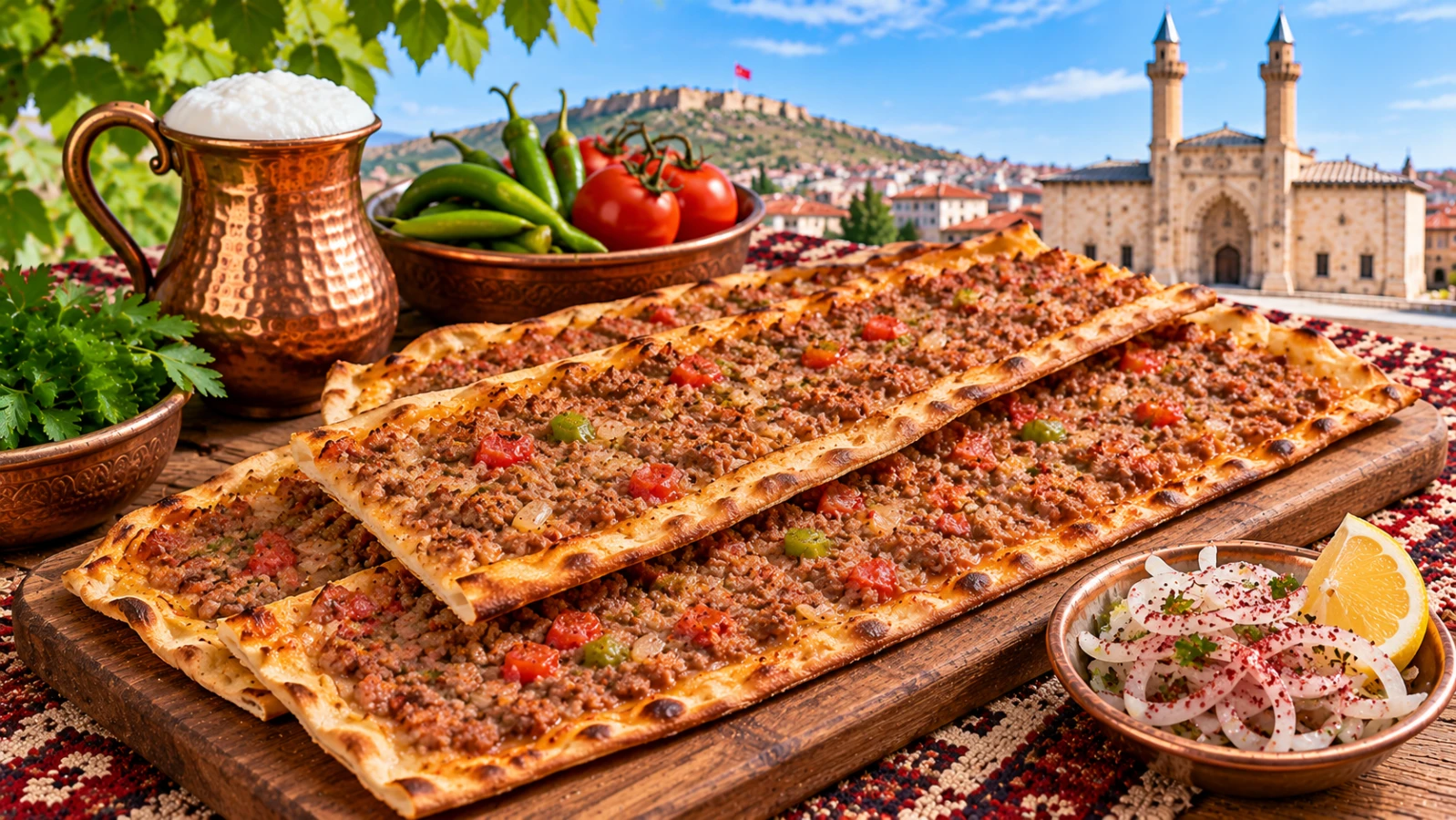
Sivas Etli Ekmek is a regional oven-baked meat-topped dough dish. It should be considered alongside, but not automatically equated with, the geographically indicated Ulaş Etli Pidesi of Sivas province.
Read Food Guide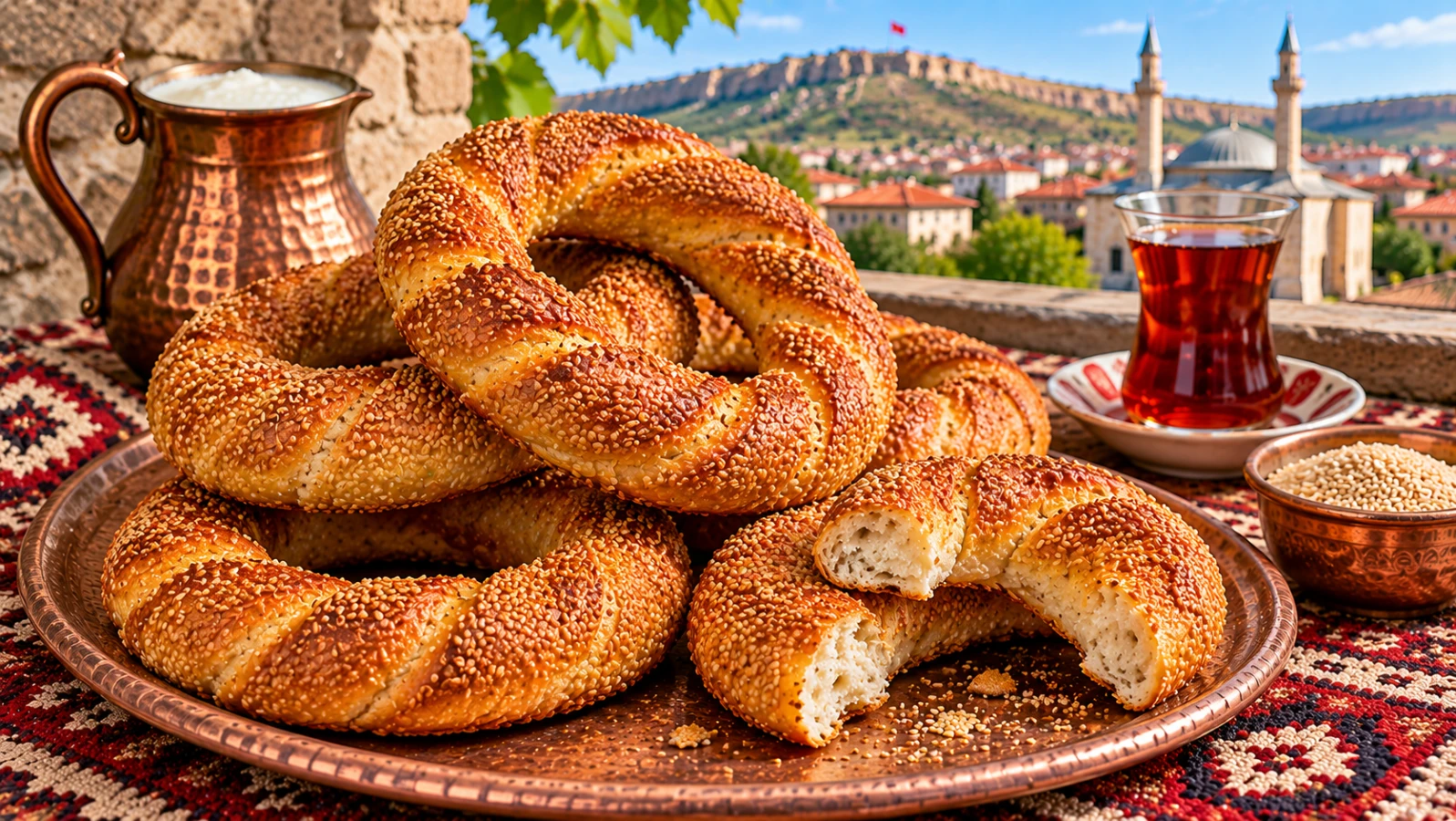
Kazan Simidi is a classic Sivas bakery ring: the shaped yeast dough is plunged into simmering mulberry-molasses water before being coated in sesame and baked in a stone oven.
Read Food Guide