Built-in butter layers
Butter between folds creates the prized flaky interior.






Sivas Katmeri is a savoury, butter-layered pastry associated with local ovens and breakfast tables. Its crisp surface and separated inner layers are created by repeated oiling, folding and shaping of dough.
Butter between folds creates the prized flaky interior
A thin folded parcel can be cooked on a hot metal griddle
A rolled-and-coiled dough is flattened, scored and baked
The provincial oven recipe uses a diamond pattern across the top
Its place in Sivas cuisine and the defining preparation details.
Sivas province, Türkiye
Regional food
Knead flour, water and salt into a workable dough.
Registered: Sivas Katmeri (no. 402)
Sivas has both sac-cooked and oven-baked katmer traditions. The province’s culinary inventory describes a thin dough brushed with melted butter, folded into a parcel and rested before being opened again for the sac. Another Sivas fırın katmeri method coils a buttered sheet into a spiral before it is flattened and scored for oven baking.
Those two preparation styles should not be flattened into the same recipe: the heat source, final shape and surface finish differ. What connects them is the deliberate building of buttery layers by folding and resting dough.
Sivas Katmeri is a protected geographical-indication product, registration number 402, registered in December 2018. The registered name relates to a defined local preparation; the wider word katmer is used for different pastries across Türkiye.
Butter between folds creates the prized flaky interior.
A thin folded parcel can be cooked on a hot metal griddle.
A rolled-and-coiled dough is flattened, scored and baked.
The provincial oven recipe uses a diamond pattern across the top.
Savoury katmer is often served with tea and other breakfast foods.
The official TÜRKPATENT registration uses the product name Sivas Katmeri. This status belongs to the defined local product and production specification, not to every vaguely similar dish.
Sivas Katmeri
402
Mahreç işareti
26 December 2018
Read the official TÜRKPATENT record for the detailed specification and current register.
These are ingredients documented in the local culinary sources or used in the explained traditional method. Amounts are included only where the available source specifies them; household quantities vary.
Wheat flour
Water, or sometimes milk in local sac preparations
Salt
Butter for repeated brushing and folding
Optional olive oil replacing part of the fat in some oven recipes
Egg yolk for the oven-baked surface in the provincial fırın katmeri recipe
The cook spreads fat over a thin sheet before folding it back on itself. The fat creates separation between dough layers; pressing hard after folding can ruin that structure. This is why the resting stage matters before the dough is flattened again.
Sac katmeri is browned on a metal griddle and may be brushed with butter as it cooks. Fırın katmeri is scored and brushed with egg yolk before baking. Both use laminated dough, but the outer crust and final appearance are visibly different.
Butter an opened sheet, fold into a parcel and brown on the griddle.
Roll the buttered sheet into a spiral, flatten and bake with an egg-washed surface.
Namesake pastries elsewhere may include pistachio, clotted cream or different fillings; they should not be confused with the Sivas version.
Serve Sivas Katmeri warm so the buttery layers are distinct. It can accompany cheese and tea. In the local context it is a savoury pastry, not the syrup-soaked or pistachio-filled dessert called katmer in other regions.
A Sivas bakery may sell katmer with tea at breakfast or as a savoury snack. It should not be illustrated as the pistachio-and-cream dessert sold under the same name in Gaziantep, because that would misrepresent the provincial food.
Butter between thin sheets is essential to creating the layers; too much pressure after folding can fuse them.
The sac and fırın methods should be identified separately when describing the cooking method.
Ask local restaurants, bakers or specialist food shops for Sivas Katmeri. Availability depends on the dish and preparation schedule; slow-cooked, preserved and festival foods are not necessarily offered every day. For historical context and other Sivas places, browse our Sivas food and craft guide.
The characteristic regional pastry is primarily savoury and buttery.
One documented version does; the region also has an oven-baked style.
Yes, Sivas Katmeri has geographical-indication registration number 402.
Butter is worked between folded layers of dough.
The Sivas Provincial Directorate of Culture and Tourism publishes a documented introduction to Sivas Katmeri or the relevant Sivas culinary tradition, linked in the sources below.
This guide draws on the provincial Culture and Tourism Directorate’s culinary documentation and, where the product is registered, TÜRKPATENT’s official geographical-indication register. Historical traditions are identified as local culinary accounts, not dated archaeological proofs.
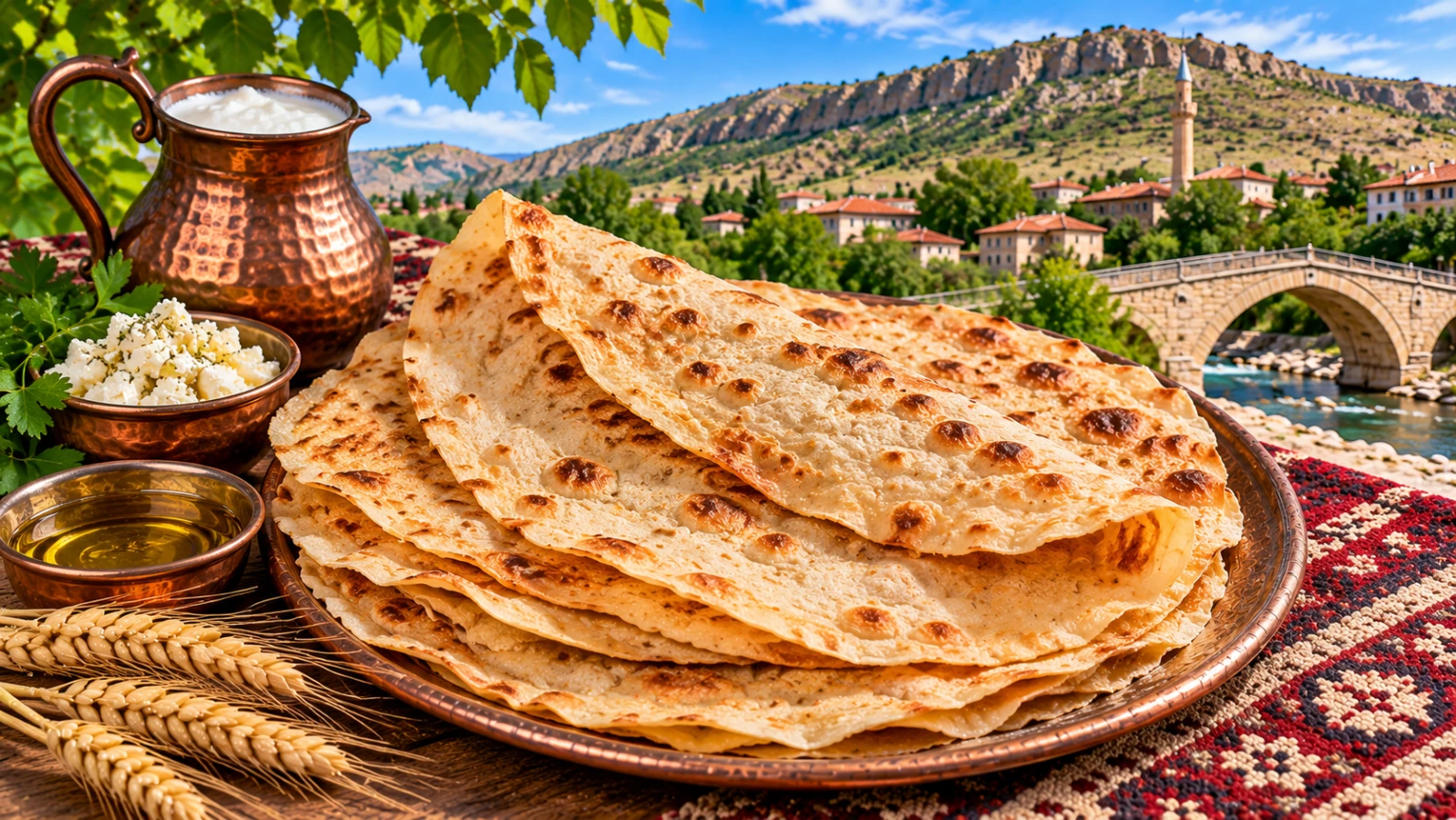
Zara Sac Ekmeği is a distinctive bread of the Zara district, made on the convex side of a traditional sac over wood fire. Its dough includes çökelek or whey, and it may be prepared plain or with filling.
Read Food Guide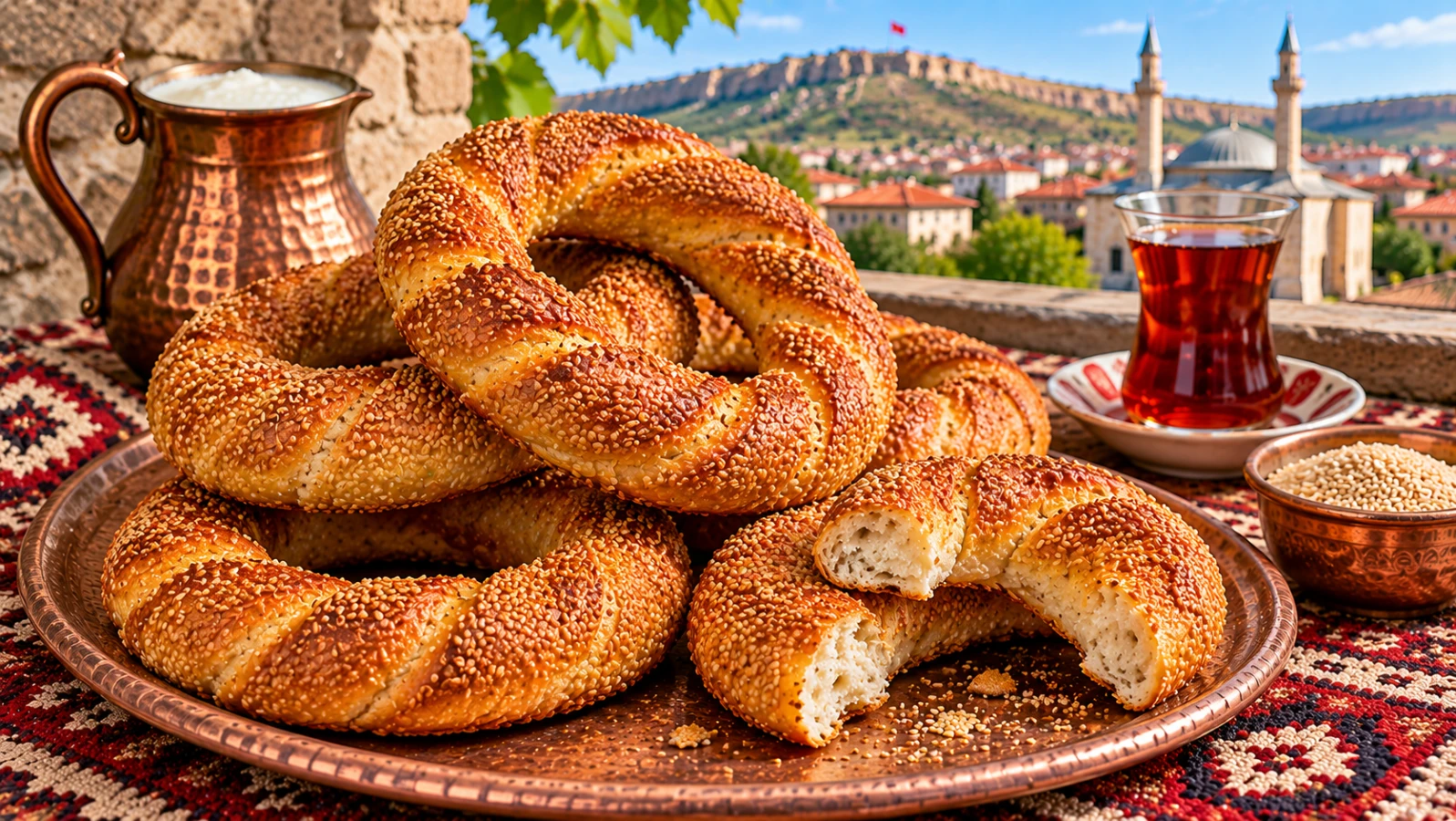
Kazan Simidi is a classic Sivas bakery ring: the shaped yeast dough is plunged into simmering mulberry-molasses water before being coated in sesame and baked in a stone oven.
Read Food Guide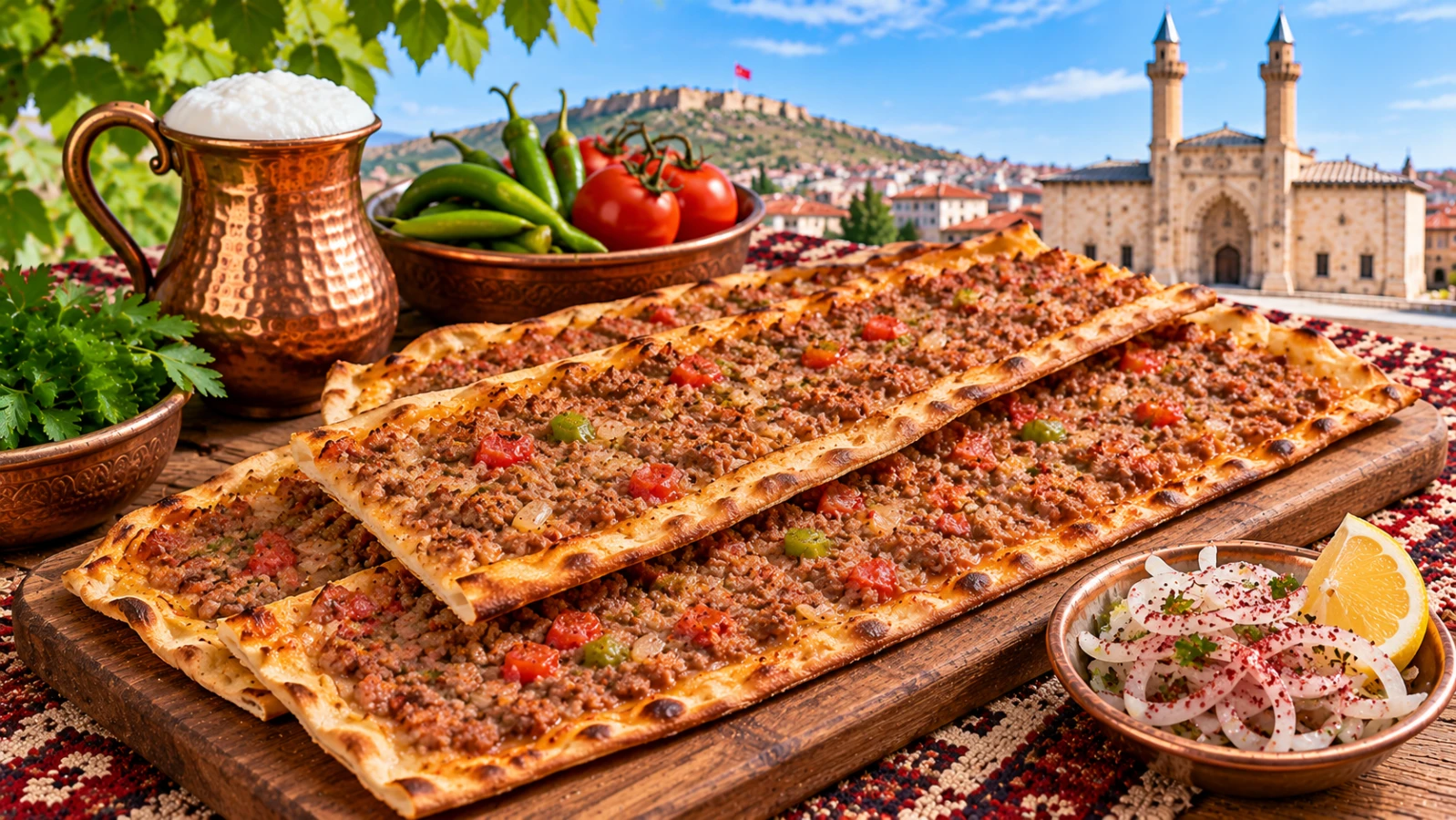
Sivas Etli Ekmek is a regional oven-baked meat-topped dough dish. It should be considered alongside, but not automatically equated with, the geographically indicated Ulaş Etli Pidesi of Sivas province.
Read Food Guide