Private Ayasuluk Castle & Selçuk Tour
Ask us about a private historical route combining Ayasuluk Castle, St. John's Basilica, İsa Bey Mosque, the Temple of Artemis and the archaeology of Selçuk.
Request a Custom Tour





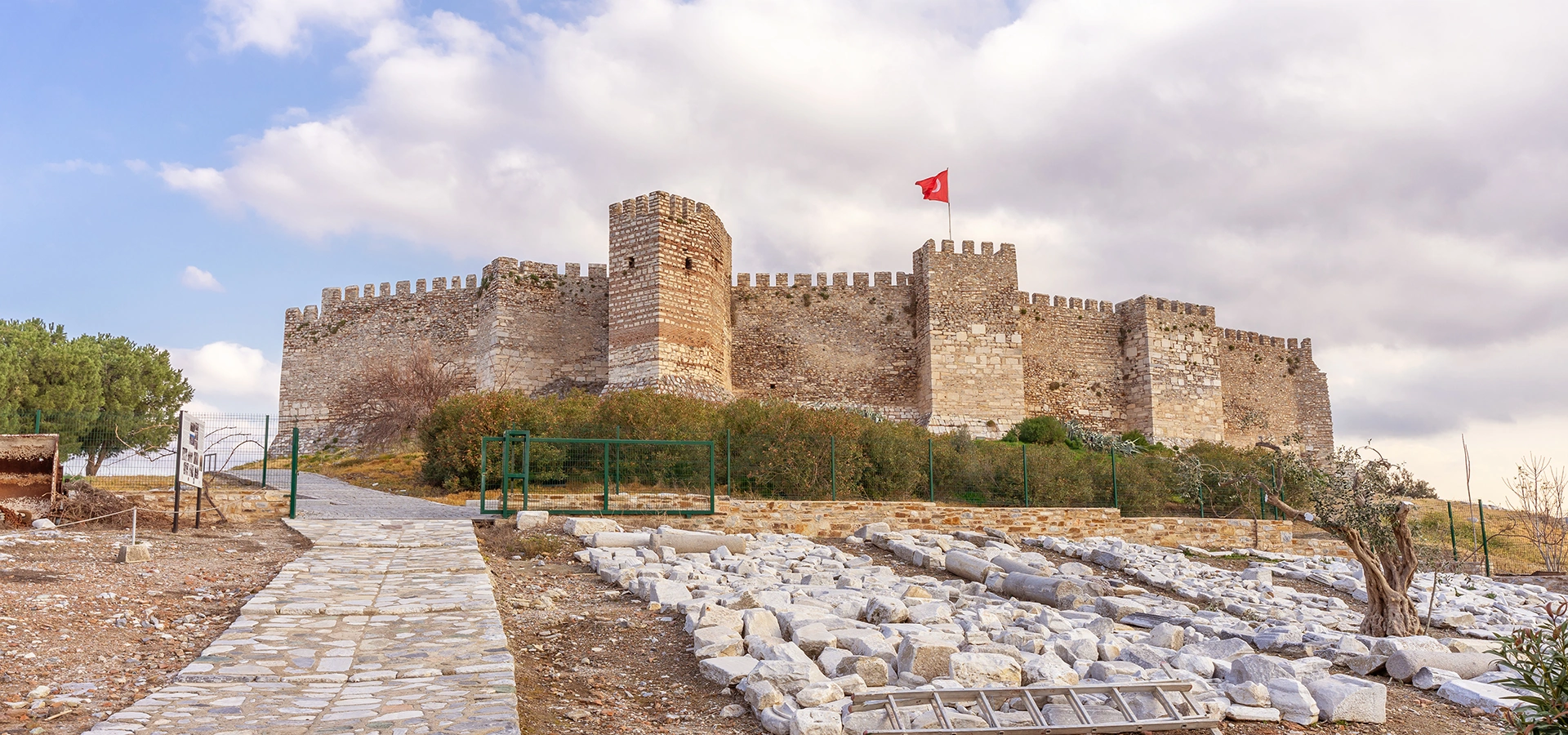
Rising above the modern town of Selçuk, Ayasuluk Castle — also known as Ayasuluk Citadel or Selçuk Castle — crowns the summit of Ayasuluk Hill beside the monumental ruins of the Basilica of St. John. Its defensive walls, towers, gates, cisterns and medieval buildings preserve one of the most important later chapters in the long history of Ephesus.
The hill was occupied long before the surviving castle took shape. Archaeological evidence shows settlement on Ayasuluk Hill from the Bronze Age, while the area later became closely connected with ancient Ephesus. After the gradual decline of the Roman city in the plain, population shifted toward the fortified hill during the Byzantine period.
The fortress visible today reflects several historical phases. Byzantine defenses were strengthened and transformed during the Turkish period, particularly after the region came under the control of the Aydınoğlu Beylik in the early 14th century. Ayasuluk became an important political and commercial center before eventually entering Ottoman rule.
Inside the citadel are the remains of cisterns, a small mosque, residential structures, a bath and other medieval buildings. From the hilltop, visitors can also appreciate how Ayasuluk connects St. John's Basilica, the Temple of Artemis, the plain of ancient Ephesus and the surrounding landscape.
Part of the UNESCO World Heritage property of Ephesus.
Explore fortifications shaped by Byzantine, Aydınoğlu and Ottoman occupation.
Look across Selçuk, the Basilica of St. John and the historic Ephesus landscape.
Discover a hill occupied from antiquity through the medieval and Ottoman periods.
Essential information for visiting Selçuk's hilltop medieval fortress.
Ayasuluk Hill in central Selçuk, İzmir Province, above the Basilica of St. John.
Open on Google MapsPrimarily Byzantine, Aydınoğlu and Ottoman, with much earlier occupation of the hill.
Included within the Ephesus UNESCO World Heritage property since 2015.
Stone-and-brick walls strengthened by approximately fifteen towers and two principal gates.
Currently listed at 130 TL. Fees and access arrangements can change.
Allow approximately 45–75 minutes for the castle, or 1.5–2.5 hours with St. John's Basilica.
Ayasuluk Castle reveals how the center of settlement shifted from Roman Ephesus toward the fortified hill that later became medieval Ayasuluk and modern Selçuk.
Visitors often associate Ephesus primarily with the famous Roman city containing the Library of Celsus, Terrace Houses and Great Theatre. But the history of Ephesus did not end when the ancient harbor silted up and the Roman urban center declined. Settlement gradually shifted toward Ayasuluk Hill, where stronger defensive conditions and the presence of the Basilica of St. John encouraged the development of a new center.
The castle therefore represents an important stage in the transformation of Ephesus from a classical Mediterranean metropolis into a Byzantine pilgrimage center and later into the Turkish town of Ayasuluk. The hill connects ancient, Christian, Byzantine, Aydınoğlu and Ottoman history within a remarkably compact landscape.
Its importance is reinforced by its inclusion within the UNESCO World Heritage Site of Ephesus. The UNESCO property recognizes not only the Roman ruins in the valley, but also Ayasuluk Hill, the nearby Artemision and the medieval settlement as essential parts of the area's continuous cultural history.
For visitors exploring Selçuk, the castle provides an excellent visual introduction to this continuity. From its elevated position it becomes easier to understand how the Temple of Artemis, St. John's Basilica, medieval Ayasuluk and ancient Ephesus belong to one evolving settlement landscape.
The history of Ayasuluk Hill reaches much further back than the medieval fortress visible today. Archaeological evidence indicates occupation from the Bronze Age, and UNESCO's documentation identifies the hill as one of the successive settlement areas associated with the long history of Ephesus.
During antiquity, the principal city shifted away from the hill toward the plain and eventually toward the Hellenistic and Roman city now visited as Ephesus Archaeological Site. Centuries later, changing environmental, political and defensive conditions brought population back toward Ayasuluk.
Christian tradition profoundly increased the importance of the hill. A tomb believed to belong to St. John the Apostle became the focus of pilgrimage. An earlier church was eventually replaced during the reign of Emperor Justinian I in the 6th century by the monumental Basilica of St. John.
As the Roman city in the valley declined, Ayasuluk became increasingly important. The hill and the basilica were enclosed within defensive structures, helping create a fortified Byzantine settlement.
The city passed into Turkish hands in 1304. Under the Aydınoğlu Beylik, Ayasuluk entered another prosperous period and for part of the 14th century functioned as an important political center. The castle was repaired and adapted, while new mosques, baths, commercial structures and other buildings transformed the settlement.
The town later entered Ottoman rule. Although Ayasuluk remained regionally significant for a time, changing trade routes and the growth of Kuşadası and İzmir gradually reduced its importance. The modern town eventually became known as Selçuk.
Ayasuluk Hill was already occupied long before the medieval fortress developed.
Justinian's monumental Basilica of St. John transformed the hill into a major Christian pilgrimage destination.
Settlement shifted toward the fortified hill as the classical city of Ephesus declined.
Ayasuluk came under Turkish control and entered the era of the Aydınoğlu Beylik.
The fortified town became an important Aydınoğlu political and commercial center.
Ephesus, including Ayasuluk Hill and its medieval settlement, was inscribed on the UNESCO World Heritage List.
The castle occupies the highest part of Ayasuluk Hill, using the natural elevation to command the surrounding plain. Its surviving defenses demonstrate a long sequence of building, repair and reuse rather than a single construction campaign.
UNESCO documentation describes an enclosure built with stone and brick masonry and strengthened by approximately fifteen towers. The fortification system reflects Byzantine construction as well as later Seljuk-period, Aydınoğlu and Ottoman repairs and alterations.
The citadel has principal entrances on its eastern and western sides. Within the walls are traces of the everyday infrastructure required by a fortified settlement: cisterns for storing water, domestic and administrative structures, a mosque, a bath and other medieval remains.
Heavy stone-and-brick defenses surround the upper summit of Ayasuluk Hill.
Towers strengthened the walls and provided observation and defensive positions.
One of the two principal approaches into the fortified upper citadel.
A second entrance connected the fortress with the surrounding settlement.
Several water-storage structures helped sustain occupation within the fortified enclosure.
A small single-domed mosque preserves part of the Turkish-period history of the fortress.
Remains in the western section have been associated with an elite Turkish-period residence.
Remains of a bath illustrate that the citadel functioned as an inhabited complex rather than merely a defensive wall.
The restored walls are the most immediately visible feature, but the interior contains archaeological remains from several phases of occupation. Some structures survive only as foundations, so understanding their original purpose adds greatly to the visit.
Walk beside the restored defensive perimeter and study its alternating stone, brick and reused masonry.
Observe the projecting towers that allowed defenders to watch and protect the approaches to the hill.
See the small mosque with its surviving dome and partially preserved minaret.
Several cisterns near the entrances demonstrate the importance of secure water storage inside the citadel.
Examine the remains interpreted as a Turkish-period elite residence on the western side.
The bath forms part of the evidence for daily and residential life inside medieval Ayasuluk.
Scattered walls and foundations reveal that the interior was once much more densely occupied.
Look south toward St. John's Basilica and across the plain toward the ancient Ephesus landscape.
One of the most distinctive surviving structures inside the fortress is the Castle Mosque, or Kale Camii. Located within the central part of the citadel, the building reflects the transformation of Ayasuluk after Turkish settlement.
The mosque has a compact plan with a single dome. Part of its minaret also survives, making it one of the easiest structures to recognize when exploring the castle interior.
Its presence is particularly important because Ayasuluk Castle is sometimes described simply as a Byzantine fortress. In reality, the hill continued to develop after the Byzantine period, and the mosque, residential buildings and baths preserve important evidence of Aydınoğlu and later Ottoman life.
The summit of Ayasuluk Hill offers one of the most useful viewpoints for understanding the geography of Selçuk. From above, monuments that may seem separate at street level become part of the same historical landscape.
Look directly down onto the massive ruins of Justinian's 6th-century pilgrimage church.
See the modern town spreading around the historic hill and railway corridor.
The great 14th-century mosque below the hill helps illustrate the importance of Aydınoğlu Ayasuluk.
Look toward the plain where one of the Seven Wonders of the Ancient World once stood.
The surrounding agricultural land preserves the landscape once crossed by roads, waterways and ancient settlement zones.
The surrounding ridges explain why Ayasuluk Hill offered such an advantageous defensive position.
In 2015, Ephesus was inscribed on the UNESCO World Heritage List. The protected property is not limited to the famous Roman archaeological city. It consists of several components that together illustrate thousands of years of settlement and religious history.
One of those components is officially identified as Ayasuluk Hill, Artemision and Medieval Settlement. This places Ayasuluk Castle, St. John's Basilica and the surrounding medieval landscape within the broader UNESCO interpretation of Ephesus.
UNESCO emphasizes the remarkable continuity of settlement in the region, from prehistoric communities through ancient Ephesus, Roman and early Christian civilization, the medieval settlement of Ayasuluk and the later Turkish town.
Ayasuluk Castle and the Basilica of St. John should ideally be understood together. The basilica spreads across the southern slope of Ayasuluk Hill, while the citadel occupies the summit immediately above it.
According to Christian tradition, St. John the Apostle spent his final years in the region and was buried on Ayasuluk Hill. A small memorial structure developed into a church, which was eventually replaced in the 6th century by a monumental basilica commissioned during the reign of Emperor Justinian I and Empress Theodora.
The church became one of the most important Christian pilgrimage destinations of Byzantine Asia Minor. As Ephesus shifted toward Ayasuluk, the basilica and surrounding settlement required increasing protection, helping transform the hill into an important fortified center.
Today, visitors normally approach the castle through the archaeological complex associated with St. John's Basilica, making it easy to experience both monuments during a single visit.
The capture of Ayasuluk in 1304 opened a new chapter in the hill's history. The settlement later became associated with the Aydınoğlu Beylik, one of the Turkish principalities that emerged in western Anatolia after the decline of Seljuk authority.
During the 14th century, Ayasuluk developed into an important political, commercial and maritime center. Its strategic location near the Aegean coast and routes leading into western Anatolia gave the settlement renewed significance.
The castle was repaired and adapted, while the town below gained important Islamic and civic architecture. The most spectacular surviving monument of this period is the nearby İsa Bey Mosque, built in 1375.
The castle's mosque, cisterns, bath and residential remains demonstrate that the upper citadel continued to function as an inhabited administrative and defensive center. Ayasuluk later entered the Ottoman Empire, although control changed temporarily during the political instability following the Battle of Ankara in 1402.
The castle is relatively compact, but reaching and exploring the upper citadel involves slopes, historic paving and uneven archaeological ground. A few simple preparations make the visit much more comfortable.
Expect slopes, stone surfaces, archaeological paths and occasional uneven ground.
The hill can become hot and exposed during summer, particularly around midday.
Good daylight makes the archaeological foundations easier to understand and improves the panoramic views.
Allow enough time to explore the basilica below before or after climbing to the fortress.
A hat, sunscreen and water are especially useful from late spring through early autumn.
Opening arrangements for the castle may differ from the wider St. John archaeological site.
The summit is worth exploring slowly rather than treating the castle as a quick photo stop.
Do not climb closed walls or enter archaeological areas beyond barriers.
Ayasuluk Castle is managed within the archaeological complex associated with Ayasuluk Hill and the Basilica of St. John. The official Turkish Museums website currently lists the archaeological site as open every day.
As checked in September 2026, the official listing gives general opening hours of 08:30–18:00, with the ticket office closing at 17:00. However, the same official page specifically notes that Ayasuluk Castle itself can currently be visited between 09:00 and 16:00.
The official listing currently gives an admission price of 130 TL. Admission fees and seasonal hours can change, so visitors should verify the latest information shortly before arrival.
Ayasuluk Castle is an outdoor archaeological site with relatively little shade. Season, temperature and time of day therefore have a major effect on the experience.
Mild temperatures, green vegetation and flowering landscapes make spring especially attractive.
Comfortable temperatures and softer sunlight are excellent for both walking and photography.
Arrive early before the exposed hill and stone surfaces become intensely hot.
Midday and early afternoon can be very hot, with limited shade inside the fortress.
The castle can be quiet and atmospheric, although wind and rain may make stone surfaces slippery.
Visibility across Selçuk and the Ephesus plain is best on bright, clear days.
Enough for a very quick climb, exterior overview and a few panoramic photographs.
A comfortable amount of time for the major castle structures and viewpoints.
Ideal for visitors interested in architecture, archaeology and photography.
Combine the castle with a focused exploration of the Basilica of St. John.
Add İsa Bey Mosque, the Temple of Artemis and the Ephesus Museum in central Selçuk.
Combine Ayasuluk Hill with the main Ephesus archaeological site and other Selçuk monuments.
Ayasuluk Castle offers a very different visual experience from the marble avenues of Roman Ephesus. Here the strongest subjects are medieval walls, weathered masonry, the relationship between the citadel and St. John's Basilica, and the broad landscape of Selçuk.
Photograph the crenellated walls and towers from the approach through the St. John archaeological area.
Elevated viewpoints reveal the enormous scale and cruciform arrangement of the ruined church below.
Use close compositions to capture changing masonry, reused blocks and restoration phases.
Wide-angle views show the modern town wrapped around its archaeological landscape.
Lower-angle sunlight brings out the texture of the fortress walls and archaeological foundations.
Include the basilica, mosque, plain and mountains to show how many historical layers exist within one view.
Because Ayasuluk Castle occupies the summit of a historic hill, accessibility is more limited than at many modern museums. The route includes climbing, sloping paths and uneven archaeological surfaces.
Reaching the upper fortress requires a noticeable climb from the lower archaeological area.
Expect stone paths, irregular paving and archaeological surfaces inside the site.
Rest opportunities are more comfortable during cooler parts of the day.
The steep terrain and historic surfaces can make access to the upper castle difficult.
Visitors with limited mobility should assess the climb carefully before continuing beyond St. John's Basilica.
Current accessible routes can change with archaeological conservation and restoration work.
Ayasuluk Castle stands immediately north of central Selçuk and can be reached easily from the town center. Visitors enter the archaeological area near the Basilica of St. John and continue uphill toward the fortress.
The entrance area is within comfortable walking distance of the town center and Ephesus Museum.
The hill is approximately a short walk through central Selçuk toward the St. John archaeological area.
Travel into Selçuk by taxi, minibus or private vehicle before continuing to Ayasuluk Hill.
Selçuk can be reached by regional rail, İZBAN connections, bus or private transfer depending on your starting point.
Regular road connections make Selçuk an easy excursion from the Aegean resort town.
Follow signs toward St. John's Basilica and Ayasuluk Hill; parking availability may vary by season.
Few places in Türkiye contain so many major monuments within such a small area. From the castle, several important archaeological and religious sites can be reached within minutes.
Explore the monumental 6th-century church traditionally associated with the burial place of St. John the Apostle.
Visit one of western Anatolia's most important 14th-century Aydınoğlu mosques directly below Ayasuluk Hill.
See the surviving remains of one of the Seven Wonders of the Ancient World.
Discover sculptures, cult objects and archaeological finds recovered from Ephesus and the surrounding area.
Walk through one of the Mediterranean world's greatest surviving Greco-Roman archaeological cities.
Connect the medieval hill with evidence for the much earlier prehistoric settlement history of the Ephesus region.
Start at the archaeological entrance to St. John's Basilica and spend time exploring the great church, its baptistery, atrium and the traditional tomb of St. John. Then continue uphill toward Ayasuluk Castle.
Inside the fortress, walk through the main surviving structures, look for the cisterns, Castle Mosque and residential remains, and take time to appreciate the views across Selçuk and the Ephesus plain.
After descending, continue to the nearby İsa Bey Mosque. From there, walk downhill toward the Temple of Artemis and finish at the Ephesus Museum.
Follow established routes through the archaeological site and upper fortress.
Historic masonry may be unstable and repeated climbing damages fragile structures.
Even small fragments form part of the protected archaeological context.
Closed areas may contain unstable structures or active archaeological conservation work.
Keep the hill and archaeological paths free from bottles, food packaging and litter.
The hill contains important monuments connected with both Christian and Islamic history.
Ayasuluk Castle stands on the summit of Ayasuluk Hill in Selçuk, İzmir Province, immediately above the Basilica of St. John.
Yes. The fortress is commonly called Ayasuluk Castle, Ayasuluk Citadel or Selçuk Castle.
The hill was occupied in antiquity, but the surviving fortress reflects mainly Byzantine and later Turkish phases, with substantial rebuilding during the medieval period.
The castle was not created in one single building campaign. Its fortifications developed during the Byzantine period and were subsequently repaired and altered under Turkish rulers, including the Aydınoğlu and Ottoman periods.
Ayasuluk Hill belongs to the long settlement history of Ephesus. As the classical city in the valley declined, population increasingly shifted toward the fortified hill during the Byzantine period.
Yes. Ayasuluk Hill is included within the UNESCO World Heritage property of Ephesus, inscribed in 2015.
UNESCO nomination documentation describes the fortified enclosure as having approximately fifteen towers.
Visitors can see fortification walls and towers, cisterns, the Castle Mosque, remains associated with a Turkish-period mansion and bath, archaeological foundations and panoramic viewpoints.
Yes. The citadel contains a small single-domed mosque known as the Castle Mosque or Kale Camii, with part of its minaret still surviving.
The cisterns stored water for people living within the fortified settlement, an essential requirement during periods when outside access could be restricted.
The basilica occupies the southern slope of the same hill, while the fortress stands above it. Together they formed part of the fortified medieval settlement of Ayasuluk.
Christian tradition holds that St. John the Apostle was buried on Ayasuluk Hill. The monumental Basilica of St. John was later built over the site traditionally associated with his tomb.
After the Turkish capture of Ayasuluk in 1304, the town became an important center of the Aydınoğlu Beylik. The fortress and settlement were repaired and developed during this period.
As checked in September 2026, the official Turkish Museums listing states that Ayasuluk Castle itself can currently be visited from 09:00 to 16:00. The wider site is listed as open 08:30–18:00. Always verify current hours before visiting.
The official Turkish Museums listing currently states that the site is open every day, although closures may occur for conservation, weather or operational reasons.
As checked in September 2026, the official listing gives an admission price of 130 TL. Prices can change, so confirm before visiting.
Around 45–75 minutes is sufficient for most visitors. Allow 1.5–2.5 hours if you are also exploring the Basilica of St. John in detail.
The archaeological entrance is close to central Selçuk, but reaching the upper fortress requires walking uphill over historic and occasionally uneven surfaces.
Yes. The castle is only a short distance from the main Ephesus archaeological site, making it easy to combine both places during a full day in Selçuk.
Nearby attractions include the Basilica of St. John, İsa Bey Mosque, Temple of Artemis, Ephesus Museum and the main archaeological city of Ephesus.
Yes. The castle adds an important Byzantine and medieval dimension to a visit to Ephesus and offers excellent views across one of Türkiye's richest archaeological landscapes.
Connect Ayasuluk Castle with St. John's Basilica, the Temple of Artemis, İsa Bey Mosque, Ephesus Museum and the ancient city through a private route built around your interests and without compulsory shopping stops.
Choose a focused historical route through Ayasuluk Hill or combine Selçuk's medieval monuments with a complete private visit to ancient Ephesus.
Ask us about a private historical route combining Ayasuluk Castle, St. John's Basilica, İsa Bey Mosque, the Temple of Artemis and the archaeology of Selçuk.
Request a Custom Tour
Combine the Roman city of Ephesus with the later Christian, Byzantine and Turkish monuments that explain how the settlement evolved across centuries.
Plan Your Private Ephesus TourDiscover the monuments surrounding Ayasuluk Hill and follow the history of Ephesus from the ancient world into the medieval period.
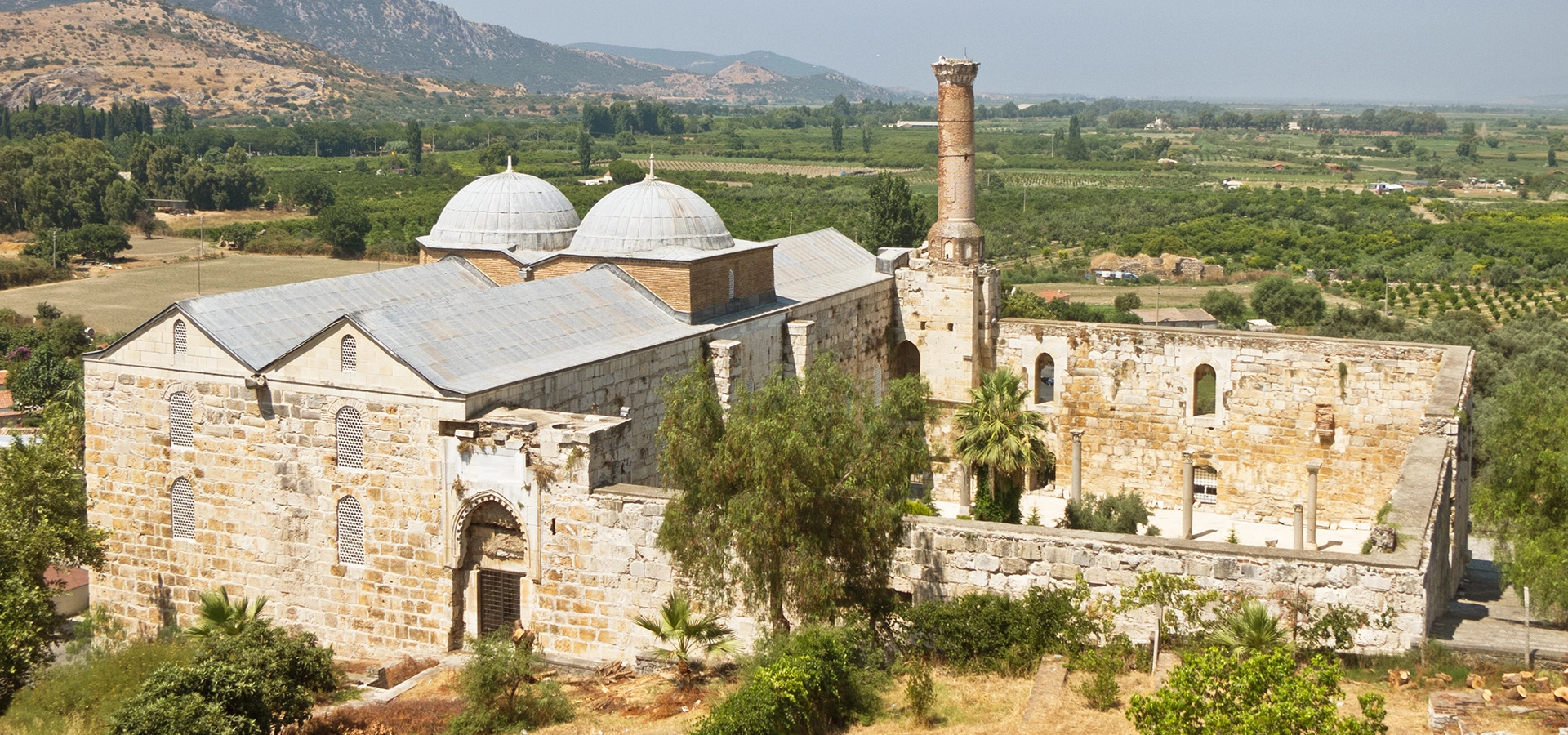
Explore one of the finest surviving monuments of Aydınoğlu architecture, built directly below Ayasuluk Hill in 1375.
Explore İsa Bey Mosque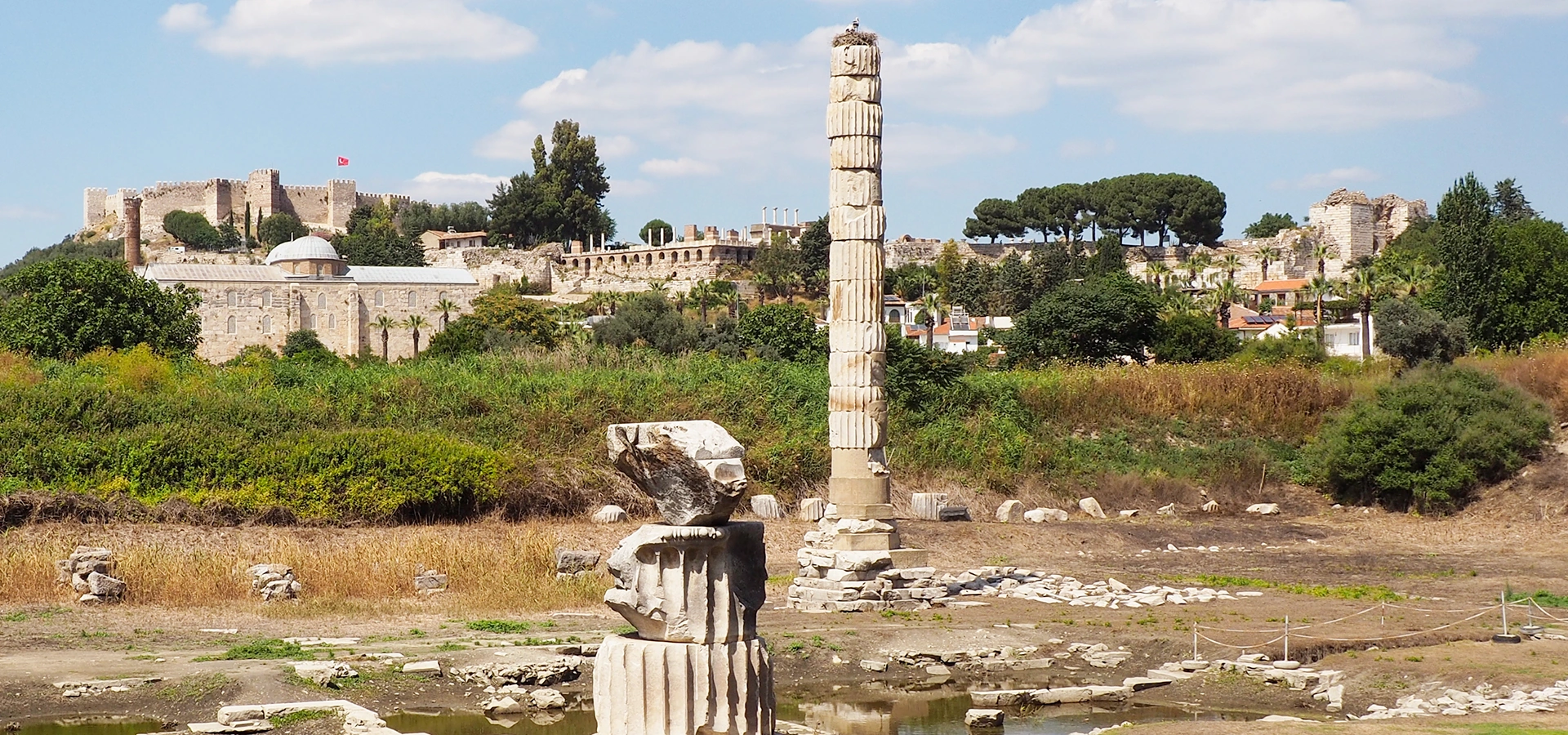
Visit the remains of one of the Seven Wonders of the Ancient World and understand the sacred landscape that preceded Christian Ayasuluk.
Explore the Temple of Artemis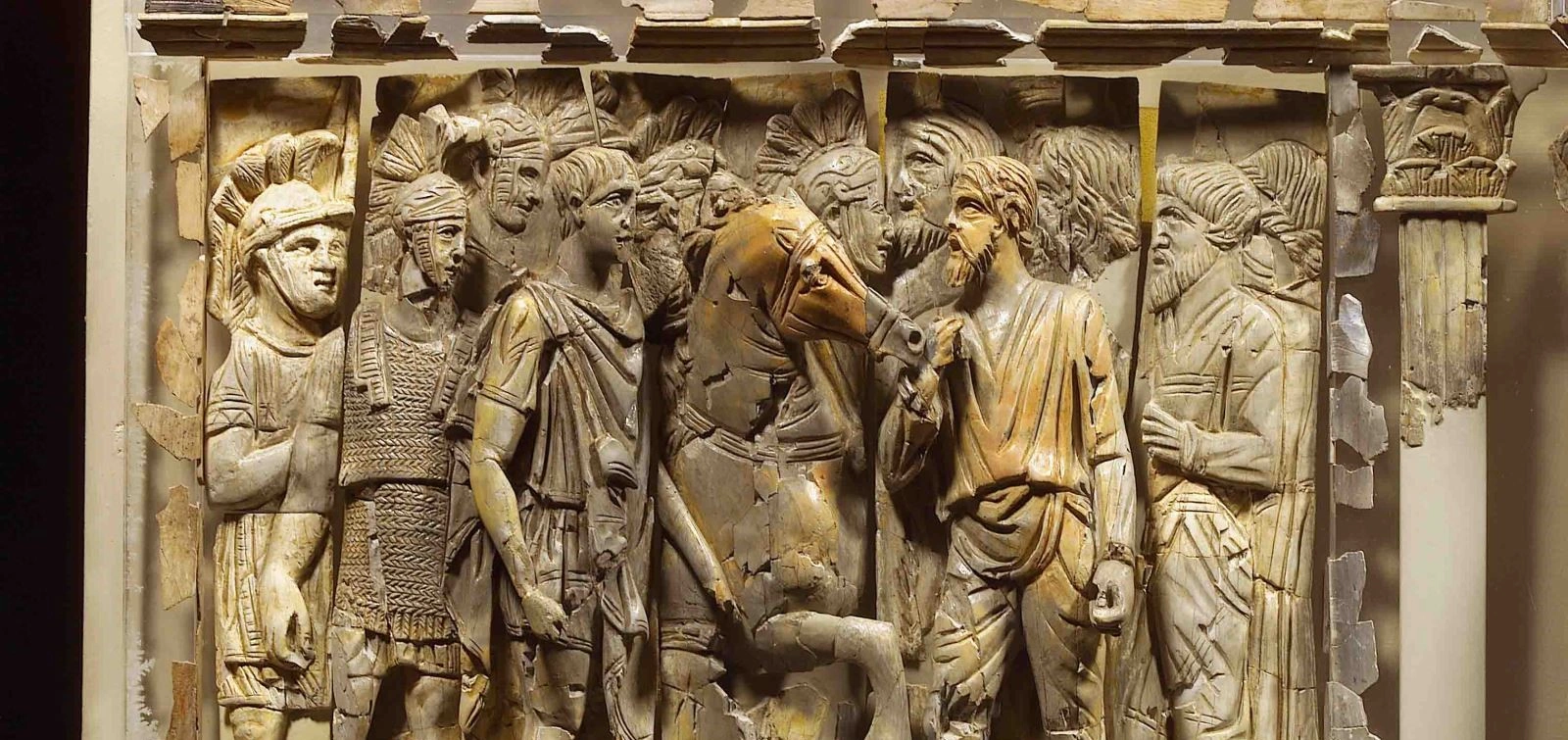
See sculptures, inscriptions and archaeological discoveries that bring the temples, houses and religious traditions of Ephesus to life.
Explore Ephesus Museum