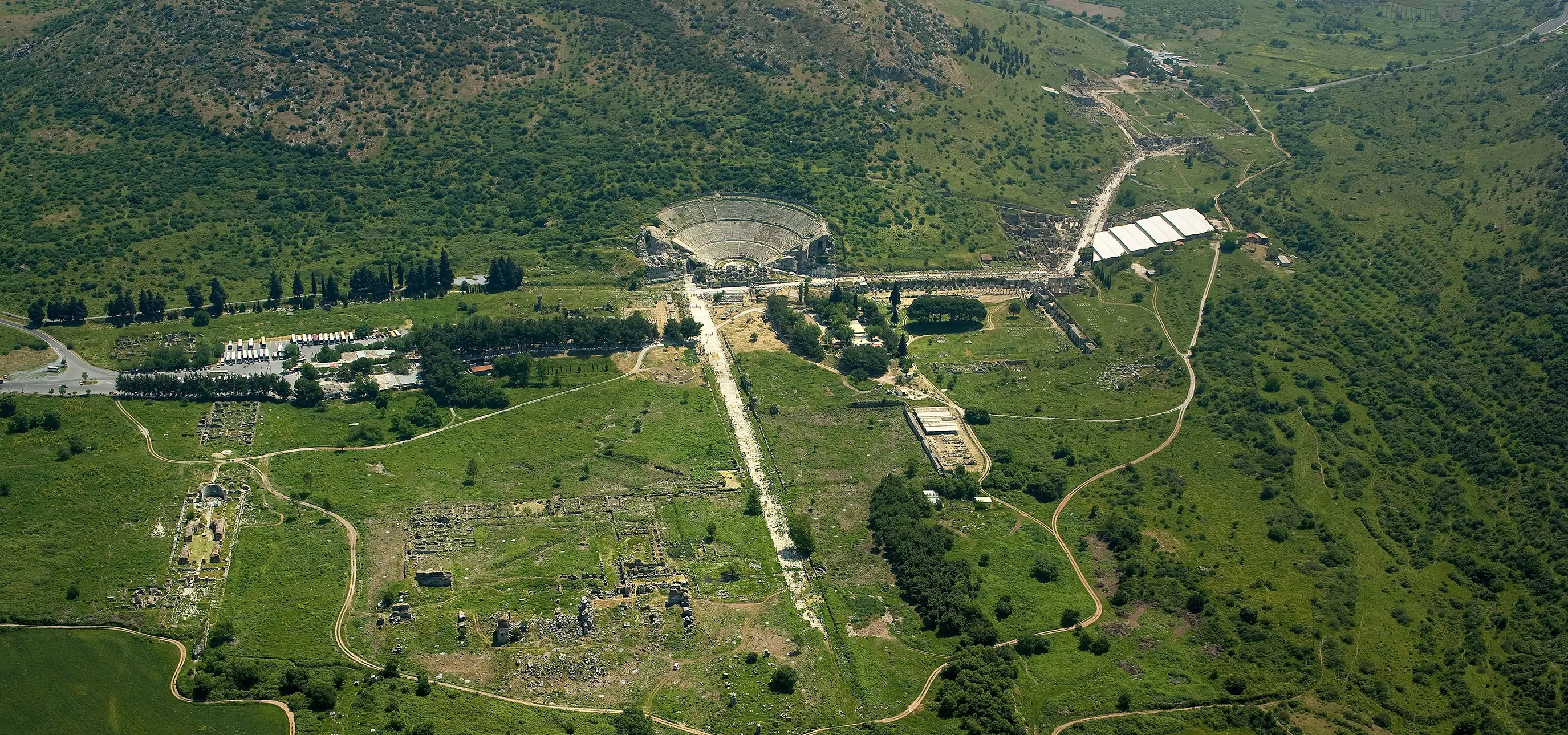
Ephesus Ancient City
Walk the marble streets of one of the ancient Mediterranean's greatest cities and discover the Library of Celsus, Great Theatre, Terrace Houses, temples and monumental civic architecture.
Explore Ephesus





At first sight, the Temple of Artemis at Ephesus can be surprisingly difficult to comprehend.
Today, the archaeological site beside modern Selçuk is quiet.
A reconstructed column rises above scattered marble fragments, waterlogged foundations, vegetation and the remains of a sanctuary whose original monument has almost completely disappeared.
Yet approximately 2,300 years ago, this was one of the most celebrated sacred places in the Mediterranean world.
The monumental Temple of Artemis — known in antiquity as the Artemision — was so famous that ancient writers included it among the Seven Wonders of the Ancient World.
Its marble architecture, enormous Ionic columns, sculptural decoration and immense religious prestige made it far more than simply another Greek temple.
It was the centre of the cult of Artemis Ephesia, a major pilgrimage destination, an economic institution, a place associated with asylum, and one of the defining symbols of ancient Ephesus.
The sanctuary also appears within the cultural world described in the New Testament's Acts of the Apostles, where the importance of Artemis and the city's silversmiths forms the background to one of the most dramatic episodes connected with Saint Paul at Ephesus.
Understanding the Temple of Artemis therefore requires imagination.
You are not visiting one of Türkiye's largest standing ruins.
You are standing on the archaeological footprint of one of the largest and most influential sanctuaries of the ancient Mediterranean.
The monumental Artemision was celebrated by ancient writers as one of the greatest architectural achievements of the ancient world.
Ancient descriptions and archaeological reconstruction associate the later temple with 127 enormous Ionic columns approximately 18 metres high.
The goddess worshipped here developed a distinctive identity closely connected with ancient Anatolia and the city of Ephesus.
The Artemision forms an essential part of the wider Ephesus cultural landscape inscribed on the UNESCO World Heritage List.
Essential information for visiting the remains of one of the Seven Wonders of the Ancient World in Selçuk.
Artemision of Ephesus.
Selçuk, İzmir Province, western Türkiye.
One of the Seven Wonders of the Ancient World.
Artemis Ephesia, the distinctive Ephesian form of Artemis.
Lydian King Croesus contributed to the monumental Archaic sanctuary in the 6th century BC.
The Archaic temple was destroyed by fire in 356 BC.
A monumental replacement was constructed during the late Classical and Hellenistic periods.
The later temple is traditionally reconstructed with 127 monumental Ionic columns.
Approximately 18 metres according to ancient descriptions and archaeological reconstruction.
Part of the UNESCO World Heritage property of Ephesus, inscribed in 2015.
The Temple of Artemis archaeological area is currently generally visited free of charge and is separate from the ticketed Ephesus Ancient City.
Allow approximately 20–40 minutes for the site, or longer with a knowledgeable guide.
The Artemision is a separate archaeological area from Ephesus Ancient City, so visitors should not assume the two sites share the same ticket or entrance arrangements.
The Temple of Artemis is not comparable to Ephesus Ancient City in terms of visible standing architecture.
That difference is important.
Visitors expecting another Library of Celsus or Great Theatre may initially find the Artemision underwhelming.
Visitors who understand what once stood here usually experience the site very differently.
The archaeological footprint, surviving foundations, scattered architectural pieces and reconstructed column mark the location of a sanctuary that once attracted worshippers from across the Mediterranean.
There are archaeological sites where the visible ruins immediately explain their importance.
The Artemision is different.
Its significance lies in the enormous contrast between what you see today and what once stood here.
The sanctuary was once one of the most famous religious centres of antiquity.
Its temple became internationally celebrated for its scale, marble construction, Ionic architecture, relief sculpture and monumental columns.
Pilgrims, merchants, rulers and travellers knew the sanctuary.
The cult of Artemis helped define the identity of Ephesus itself.
The temple's fame spread so widely that it entered the canonical list of the Seven Wonders of the Ancient World.
Visiting today therefore provides an unusual archaeological experience.
Instead of being overwhelmed by surviving architecture, you reconstruct the monument mentally from foundations, fragments, museum objects, ancient descriptions and modern archaeology.
Few places demonstrate more dramatically how even the greatest monuments of antiquity can almost completely disappear.
Very little of the monumental temple survives standing above ground.
The most recognizable feature is the single reconstructed column rising from the archaeological area.
It is important to understand that this column is an archaeological reconstruction assembled from ancient architectural material.
It should not be imagined as one complete original column that remained standing continuously from antiquity.
Around it are traces of the enormous foundations, marble architectural fragments, low archaeological walls and areas where groundwater frequently collects.
The wet landscape is more historically meaningful than it may first appear.
The ancient sanctuary itself was constructed within a low-lying environment, and ancient writers already commented on the unusual engineering required to support such an enormous monument.
From parts of the archaeological area, visitors can also place the sanctuary within the wider historical landscape of Selçuk, including Ayasuluk Hill and later monuments.
The Seven Wonders were not a modern archaeological ranking.
They developed from ancient traditions describing extraordinary monuments that educated travellers of the Hellenistic Mediterranean were expected to know.
The Artemision earned its place because of the scale, craftsmanship and visual impact of the sanctuary.
Ancient visitors encountered a vast marble temple surrounded by rows of soaring Ionic columns.
Some columns carried elaborate relief decoration, while sculptural and architectural details transformed the building into far more than a simple colonnaded hall.
Ancient writers praised the temple as an achievement that surpassed ordinary architecture.
Its reputation depended not only on size.
The sanctuary combined architecture, religion, wealth, pilgrimage, art and the international prestige of Ephesus.
That combination turned the Artemision into one of antiquity's most recognizable sacred monuments.
The Temple of Artemis was not created suddenly as an isolated monumental building.
The sanctuary developed through centuries of religious activity.
Archaeological and historical research indicates that sacred activity in the area reached back long before the giant marble temples for which Ephesus later became famous.
UNESCO describes the sanctuary of the Ephesian Artemis as having roots extending into the second millennium BC.
During the first millennium BC, Greek cultural influence increasingly interacted with older Anatolian religious traditions.
The result was not simply the transplantation of a Greek goddess into western Anatolia.
The Ephesian deity developed a distinctive local identity.
This blending of traditions helps explain why Artemis of Ephesus looked and functioned differently from the familiar Greek huntress Artemis.
During the sixth century BC, the sanctuary entered a new phase of extraordinary monumentality.
A vast new temple was constructed in the Ionic style.
The project received support from Croesus, the famous king of Lydia, whose kingdom controlled western Anatolia during part of this period.
Ancient inscriptions and archaeological research associate Croesus with donations of columns to the sanctuary.
This Archaic temple was among the most ambitious architectural projects of its age.
UNESCO's archaeological documentation describes it as more than 100 metres long and nearly 60 metres wide.
It was surrounded by an extraordinary forest of marble columns.
The building represented an important stage in the development of monumental Ionic architecture.
Its fame, however, would eventually be eclipsed by the even more celebrated temple constructed after its destruction.
One of the most famous episodes in the history of the Artemision occurred in 356 BC.
Ancient historical tradition records that a man named Herostratus deliberately set fire to the temple.
His alleged motivation was extraordinary: he wanted his name to become immortal through the destruction of something famous.
According to later accounts, the authorities attempted to prevent his name from being remembered.
Ironically, the story itself ensured that it survived.
Ancient writers also later connected the date of the fire with the birth of Alexander the Great.
Those literary traditions became part of the mythology surrounding both the temple and Alexander.
Whatever later storytelling accumulated around the event, archaeological and historical evidence confirms that the great Archaic temple was destroyed by fire and eventually replaced by another monumental structure.
The destruction of the Archaic temple did not end the cult of Artemis.
The Ephesians rebuilt.
Construction of the later Artemision produced the monumental sanctuary that became most strongly associated with the Seven Wonders tradition.
The new structure repeated important architectural principles of its predecessor while increasing its monumentality.
It stood on a high stepped platform and was surrounded by a double colonnade.
Ancient descriptions traditionally attribute 127 columns to the building.
The columns rose to approximately 18 metres, creating an immense architectural screen around the sacred centre.
Some column drums carried sculptural reliefs.
Fragments from these decorated architectural elements survive today and help archaeologists reconstruct the visual richness of the temple.
The exact reconstruction of the Artemision depends on which building phase and archaeological interpretation is being discussed.
Ancient authors and archaeological research nevertheless agree on one fundamental point: the temple was enormous.
Ancient descriptions of the later building indicate a structure roughly comparable to a modern football field in length.
Traditional reconstructions place the temple at approximately 115–130 metres long and roughly 55–70 metres wide.
It was surrounded by multiple rows of Ionic columns.
The famous figure of 127 columns approximately 18 metres high comes from the ancient literary tradition and remains central to modern visualizations of the monument.
The monumental temples used marble on a scale that helped make the sanctuary famous throughout antiquity.
Rows of columns surrounded the sacred interior, creating a vast architectural perimeter.
The building became one of the great monuments of Ionic architecture in the ancient Mediterranean.
Some column drums were decorated with carved human and mythological figures.
The later temple stood above a monumental stepped foundation that emphasized its scale.
The architecture framed the cult image and ritual heart of the sanctuary of Artemis Ephesia.
The location of the Artemision can surprise modern visitors.
Parts of the archaeological area are low and wet, and seasonal water may surround the surviving foundations.
This is not merely the result of modern neglect.
The sanctuary occupied a naturally low-lying landscape in antiquity as well.
Ancient writers were fascinated by the engineering problem.
They claimed that the foundations had been carefully prepared to support the enormous weight of the marble structure on unstable terrain.
Archaeological investigation has identified layers including charcoal and other prepared foundation materials beneath parts of the temple.
Ancient literary accounts even described the use of materials intended to help stabilize the building against movement.
Not every detail of those ancient engineering stories can be confirmed archaeologically, but the foundation system demonstrates the enormous technical challenge faced by the builders.
The goddess worshipped at Ephesus should not simply be imagined as the familiar Greek Artemis running through the forest with a bow.
Artemis Ephesia developed a very different visual identity.
Her cult incorporated traditions rooted in western Anatolia while also interacting with the wider Greek religious world.
Roman-period statues show the goddess standing rigidly upright, wearing elaborate garments and surrounded by symbolic imagery.
Animals, architectural forms, zodiacal imagery and other symbols appear within representations associated with her cult.
The rows of rounded forms covering the upper part of some famous statues have generated centuries of debate.
They have often been popularly described as multiple breasts, leading to interpretations emphasizing fertility and abundance.
Scholars have proposed other explanations as well, and the precise meaning of these forms remains debated.
The important point is that Artemis Ephesia represented a distinctive local divine identity deeply connected with Ephesus.
Visitors who want to understand her iconography should combine the Artemision with Ephesus Museum in Selçuk, where celebrated statues of the Ephesian Artemis are displayed.
At the heart of the sanctuary was the cult image of Artemis.
Ancient descriptions indicate that an important early image was made from wood.
Such cult statues were not treated merely as decoration.
They formed the ritual centre around which sacrifice, procession, festival and religious identity developed.
Later marble statues preserving the distinctive form of Artemis Ephesia provide some indication of how the goddess was understood in Roman Ephesus.
However, those later statues should not automatically be treated as exact copies of every earlier cult image used over the sanctuary's long history.
The religion of the Artemision developed across many centuries, and its imagery changed with it.
When people speak of the Temple of Artemis, attention naturally focuses on the enormous marble temple.
But the ancient sanctuary was an entire sacred complex.
The temple stood within a larger precinct containing ritual, administrative, economic and supporting structures.
There was a major altar.
Processional routes connected the sanctuary with the city.
Pilgrims arrived with offerings.
Craftspeople produced objects associated with the cult.
Money and property flowed through the institution.
Festivals brought large numbers of people together.
Modern archaeological research increasingly investigates this wider sanctuary rather than treating the marble temple as an isolated monument.
Major ancient sanctuaries were often important economic institutions.
The Artemision was no exception.
Its religious prestige attracted pilgrims, offerings, craft production and commercial activity.
The sanctuary controlled property and participated in financial relationships extending beyond purely ritual activity.
Its sacred status also gave the institution unusual political and social influence.
The connection between religion and economy is especially important for understanding ancient Ephesus.
Artemis was not simply a deity worshipped privately by individuals.
Her sanctuary was woven into the identity, prosperity and international reputation of the city.
The Artemision stood outside the later Hellenistic and Roman urban centre of Ephesus.
Yet sanctuary and city were closely connected.
Sacred roads and processional routes physically linked the two.
During festivals, religious processions could move through the landscape, connecting Artemis with the civic life of Ephesus.
This helps explain why the temple should not be understood as an isolated rural shrine.
It belonged to a much larger ritual geography.
When visiting both the Artemision and Ephesus Ancient City, you are seeing different parts of the same ancient religious and urban landscape.
The fame of Artemis also forms the background to one of the best-known New Testament episodes connected with Ephesus.
In Acts chapter 19, Paul's preaching is described as creating anxiety among craftsmen whose livelihoods were connected with the worship of Artemis.
A silversmith named Demetrius is said to have gathered fellow craftsmen and warned that Paul's message threatened both their trade and the prestige of the goddess.
The narrative develops into a major disturbance in the city.
The crowd eventually gathers in the Great Theatre of Ephesus, crying: “Great is Artemis of the Ephesians!”
The episode is historically important because it reflects a world in which religion, urban identity and economic activity were deeply interconnected.
Archaeology does not independently prove every detail of the biblical narrative.
What the archaeological evidence does demonstrate is that the cult of Artemis really was one of the most powerful institutions in ancient Ephesus, making the cultural background of the story entirely understandable.
The traditional Seven Wonders of the Ancient World represented monumental achievements distributed across the eastern Mediterranean and Near East.
The only one of the traditional Seven Wonders still substantially standing today.
The most archaeologically debated member of the ancient list.
A colossal seated image created for the sanctuary of Zeus in Greece.
The monumental sanctuary of Artemis Ephesia at Ephesus in western Anatolia.
The monumental tomb of Mausolus at modern Bodrum in Türkiye.
A colossal statue associated with the harbour city of Rhodes.
The famous Pharos that guided ships approaching ancient Alexandria.
Remarkably, two of the Seven Wonders stood within modern Türkiye: the Temple of Artemis at Ephesus and the Mausoleum at Halicarnassus.
The disappearance of the Artemision cannot be explained by one dramatic event alone.
The sanctuary survived the famous fire of 356 BC because it was rebuilt.
Centuries later, ancient sources describe Gothic attacks affecting Ephesus during the third century AD.
The year AD 262 is often presented in popular accounts as the moment the Temple of Artemis was finally destroyed.
The archaeological history is more complicated.
Modern research indicates that activity within the sanctuary continued to evolve during Late Antiquity, and the exact sequence of damage, reuse, closure and abandonment remains an area of scholarly investigation.
Christianity became increasingly dominant within the Roman Empire during the fourth and fifth centuries.
As traditional pagan cults lost institutional support, the Artemision gradually ceased functioning as the great sanctuary it had once been.
Architectural material was reused.
Marble disappeared into later construction.
Flooding, sedimentation and centuries of abandonment further transformed the landscape.
The world's most famous temple slowly became an archaeological ruin.
One of the most extraordinary aspects of Ephesus is the way its religious landscape changed across time.
For centuries, the sanctuary of Artemis was among the most famous destinations for pagan pilgrimage in the Mediterranean.
Later, Ephesus became equally important within early Christianity.
Christian tradition associated the region with Saint Paul, Saint John and the Virgin Mary.
The Council of Ephesus was held in AD 431.
The Basilica of Saint John eventually became one of the most important Christian pilgrimage destinations in the region.
UNESCO specifically highlights this remarkable continuity of pilgrimage as one of the defining characteristics of Ephesus.
The sacred landscape did not simply disappear.
Its religious focus changed.
By the nineteenth century, the ancient fame of the Artemision was well known from literary sources.
Its exact location was another matter.
British engineer and archaeologist John Turtle Wood began searching for the temple on behalf of the British Museum during the 1860s.
The search lasted several years.
Wood investigated inscriptions, ancient topography and archaeological remains while excavating different parts of Ephesus.
In 1869–1870, his work successfully located the remains of the long-lost Artemision.
Excavations produced architectural fragments, sculpture, inscriptions and other objects from the sanctuary.
A number of discoveries were subsequently transported to Britain and today form part of the British Museum's Ephesus collections.
Later Austrian archaeological research greatly expanded knowledge of both the temple and its surrounding sanctuary.
Research did not end with John Turtle Wood.
Austrian archaeological investigations at Ephesus began in 1895 and developed into one of the world's longest-running archaeological research programmes.
Work at the Artemision has examined the monumental temples, their predecessors, the altar, architectural fragments and the wider sacred precinct.
Research resumed with renewed intensity during the twentieth century, including important campaigns from the 1960s onward.
Modern projects increasingly ask questions that go beyond architecture.
How was the sanctuary administered?
How did it generate economic power?
Who lived and worked around it?
How did pilgrimage function?
What happened to the sanctuary during Late Antiquity?
The Artemision is therefore not only the remains of an ancient Wonder.
It remains an active subject of archaeological research.
Many important objects discovered in and around the Artemision are no longer displayed at the archaeological site itself.
The essential companion to the site, especially for the celebrated statues and imagery of Artemis Ephesia.
Holds major sculptural and architectural material excavated during nineteenth-century British work at the sanctuary.
Decorated drums from the later temple preserve part of the monument's extraordinary sculptural programme.
Fragments from the earlier monumental temple help reconstruct the development of Ionic architecture at Ephesus.
Epigraphic evidence helps reconstruct the sanctuary's administration, sacred boundaries and relationship with the city.
Roman-period images preserve the distinctive iconography that made Artemis Ephesia instantly recognizable.
Almost every modern photograph of the Artemision includes one tall column.
It has become the visual symbol of the archaeological site.
The column helps visitors understand the approximate vertical scale of the original architecture.
But it requires explanation.
The standing feature was reconstructed from surviving ancient architectural pieces.
Its drums do not represent one untouched column preserved exactly as it stood in antiquity.
The reconstruction instead functions as a visual aid within the archaeological landscape.
Even so, it provides something the flat foundations alone cannot.
It allows visitors to begin imagining a sanctuary in which dozens upon dozens of enormous columns once surrounded the sacred building.
The most visible surviving element and the easiest feature for understanding the former vertical scale of the temple.
Look carefully at the low archaeological remains marking the enormous footprint of the monument.
Scattered architectural pieces provide clues to the scale and material richness of the sanctuary.
Seasonal water around the foundations recalls the challenging low-lying terrain on which the temple was constructed.
Use the surrounding landscape to understand the relationship between the Artemision and later Selçuk.
Walk slowly around the perimeter and imagine a building stretching across the archaeological footprint rather than concentrating only on the surviving column.
Remember that shifting coastlines and sedimentation dramatically changed the geography surrounding Ephesus over thousands of years.
The landscape surrounding the temple also contains traces belonging to later phases of Selçuk's long settlement history.
This is the single most important piece of advice before visiting.
The Temple of Artemis is historically enormous but visually subtle.
The site contains no complete marble façade.
There is no reconstructed roof.
There is no forest of standing columns.
The monument survives mostly through archaeology.
For that reason, the Artemision becomes much more meaningful when you know what stood here, how large it was and why it mattered.
Looking at a reconstruction drawing before or during the visit can dramatically improve the experience.
The surviving landscape then stops looking like an empty field and begins revealing the footprint of an ancient Wonder.
Enough only for a quick photograph and view of the reconstructed column.
A practical amount of time for most independent visitors who already understand the temple's history.
Better if you want to walk around the archaeological footprint and study the surviving remains carefully.
Worthwhile with a knowledgeable guide who can reconstruct the sanctuary's architecture, cult and historical significance.
Combine the Artemision with Ephesus Museum, Basilica of Saint John and İsa Bey Mosque.
Add Ephesus Ancient City and follow the development of the entire historical landscape.
Green vegetation and comfortable temperatures create one of the most atmospheric periods for the archaeological landscape.
Visit early in the morning or later in the afternoon to avoid the strongest Aegean heat.
Milder weather makes combining the Artemision with other Selçuk monuments particularly comfortable.
The site can be quiet and atmospheric, although rain may leave parts of the low-lying archaeological area wet or muddy.
A good choice for cooler temperatures and a peaceful start before visiting Ephesus Ancient City.
Softer light can create beautiful views of the column, archaeological landscape and Ayasuluk Hill.
The simplicity of the modern site can produce surprisingly atmospheric photographs.
Use the reconstructed column as the dominant vertical element against the open landscape.
When water collects around the temple foundations, reflections can create some of the site's most memorable images.
Frame the ancient sanctuary against Ayasuluk Hill to show different layers of Selçuk's history in one image.
Use a wider composition to communicate the enormous footprint rather than photographing only the column.
Close details of marble blocks and column pieces help reveal the material reality of the vanished monument.
Low-angle sunlight creates stronger texture and separation across the archaeological remains.
The Artemision is one of the easiest major archaeological monuments to reach in the Selçuk area.
Unlike Ephesus Ancient City, it lies very close to the modern town centre.
The site is close enough to reach on foot from many central hotels, restaurants and the Ephesus Museum area.
Continue by taxi, private vehicle or tour vehicle toward central Selçuk after visiting the main archaeological city.
The archaeological area lies beside the main Selçuk road network and can easily be included in a regional driving itinerary.
Any Selçuk taxi driver will know the site as “Artemis Tapınağı” or “Artemision.”
Travel to Selçuk by train, road or organised excursion and combine the temple with the wider Ephesus heritage area.
The Temple of Artemis, Ephesus Museum, İsa Bey Mosque and Basilica of Saint John form a practical cluster around central Selçuk.
The Temple of Artemis is an outdoor archaeological landscape rather than a modern indoor museum.
Approach areas are relatively straightforward, but surfaces around archaeological remains can be uneven, grassy, muddy or wet depending on weather.
Visitors with limited mobility may still be able to obtain a useful view of the principal archaeological area without exploring every uneven section.
Conditions can change after rain, so visitors with specific accessibility requirements should assess the terrain on arrival.
Summer sun and limited shade are also important considerations.
The single most important companion visit for seeing statues of Artemis Ephesia and understanding the sanctuary's religious imagery.
Explore the monumental Byzantine basilica built over the traditional burial place of Saint John on Ayasuluk Hill.
Discover one of western Anatolia's most important surviving examples of 14th-century Turkish Islamic architecture.
Climb into the medieval fortified landscape overlooking Selçuk and the ancient Ephesus plain.
Continue into the great Hellenistic and Roman city with the Library of Celsus, Great Theatre, Terrace Houses and monumental streets.
Visit one of the region's most important modern Christian pilgrimage destinations in the hills above Ephesus.
The best short combination because the museum's Artemis statues help reconstruct the religious world that is no longer visible at the sanctuary.
Compare two extraordinary phases of Ephesus pilgrimage — the ancient sanctuary of Artemis and the great Byzantine shrine of Saint John.
Essential for understanding the relationship between the sanctuary and the great Hellenistic-Roman city.
Combine Artemis, Ephesus Ancient City, Saint John Basilica and the House of the Virgin Mary.
Combine the Temple of Artemis, Ephesus Museum, İsa Bey Mosque and Saint John Basilica without leaving the central Selçuk area.
Visit Ephesus Ancient City first, then continue to the museum, Artemision and Ayasuluk Hill monuments.
Use the Artemision as part of a wider journey through more than two thousand years of Ephesus history.
The Ephesus Museum dramatically improves your understanding of Artemis Ephesia and the sanctuary.
A reconstruction image makes the surviving foundations far easier to interpret.
This is a historically extraordinary site with very limited standing architecture.
The site is compact unless you are studying the archaeology in depth with a guide.
Ground around the archaeological area can be uneven and occasionally muddy.
There is limited shade around the open archaeological landscape.
Early morning and late afternoon are particularly attractive for photography.
Do not photograph the column and immediately leave — the surrounding foundations explain the real scale.
The museum, Saint John Basilica and İsa Bey Mosque are all natural additions to the visit.
The famous 356 BC fire did not mark the final end of the sanctuary.
Ancient stories about Herostratus, Alexander and the temple contain both historical information and later literary traditions.
The Artemision was a sanctuary, pilgrimage centre and economic institution — not simply a giant marble temple.
The Temple of Artemis is located in Selçuk in İzmir Province, western Türkiye, close to Ephesus Ancient City.
Yes. The Artemision belonged to the ancient cultural and religious landscape of Ephesus, although today its archaeological site lies close to modern Selçuk and several kilometres from the principal entrance to Ephesus Ancient City.
Yes. The monumental Temple of Artemis at Ephesus was one of the traditional Seven Wonders of the Ancient World.
The sanctuary and temple are commonly referred to as the Artemision.
The sanctuary was dedicated to Artemis Ephesia, a distinctive Ephesian form of Artemis combining strong local Anatolian traditions with the wider Greek religious world.
They were identified as the same goddess within the ancient religious world, but the Ephesian cult developed very distinctive imagery and traditions unlike the familiar bow-carrying huntress.
The sanctuary developed through several building phases. The famous sixth-century BC monumental temple received important patronage from Lydian King Croesus, while a later monumental temple replaced it after the fire of 356 BC.
Croesus was an important patron of the sixth-century BC temple and donated architectural elements, but the sanctuary and construction project were larger undertakings involving Ephesus and its builders.
Sacred activity at the site is much older, but the monumental Archaic marble temple was constructed primarily during the sixth century BC.
Ancient tradition attributes the famous fire of 356 BC to a man named Herostratus.
Ancient writers claimed that he wanted to achieve lasting fame by destroying a monument known throughout the ancient world.
Ancient literary tradition connects the 356 BC fire with the birth of Alexander the Great, although parts of the story belong to later ancient storytelling surrounding the event.
Yes. A new monumental temple was constructed and became the building most commonly associated with the Artemision's later fame.
Ancient descriptions traditionally give the later temple 127 monumental columns.
The columns of the later temple are generally reconstructed at approximately 18 metres high.
Reconstructions vary by building phase and source, but the monumental temples exceeded 100 metres in length and were among the largest Greek temples ever constructed.
Yes. Its monumental use of marble was one of the characteristics that impressed ancient observers.
Its enormous scale, Ionic architecture, sculptural decoration, religious importance and wealth made it one of the most celebrated sanctuaries of antiquity.
The temple was damaged, abandoned and extensively stripped of reusable building material over many centuries. The column visible today is a modern archaeological reconstruction assembled from surviving ancient pieces.
The marble material is ancient, but the present column was reconstructed from archaeological fragments rather than surviving intact in its present form since antiquity.
There was no single simple final event. Damage, political instability, changing religious practices, Late Antique transformation, abandonment and reuse of building materials all contributed to the monument's disappearance.
Gothic attacks affected Ephesus in the third century AD and are frequently connected with damage to the Artemision, but modern archaeological research treats the sanctuary's final decline as a longer and more complicated process.
The cult of Artemis at Ephesus forms the background to Acts 19, which describes conflict involving Paul, silversmiths and worshippers of Artemis.
The biblical account describes the crowd repeatedly proclaiming the greatness of Artemis of the Ephesians during the disturbance at the Great Theatre.
Yes. It attracted worshippers from across the Mediterranean world and was one of antiquity's most important sanctuaries.
Yes. The sanctuary controlled wealth and property and supported commercial, craft and financial activities connected with its religious importance.
John Turtle Wood located the archaeological remains during his searches of 1869–1870 after several years of investigation for the British Museum.
Important material is preserved in collections including Ephesus Museum in Selçuk and the British Museum in London.
Ephesus Museum in Selçuk displays famous statues representing the distinctive Ephesian form of Artemis.
Yes. The Artemision forms part of the cultural landscape included within the UNESCO World Heritage property of Ephesus.
No. The Artemision is a separate archaeological area from the main ticketed Ephesus Ancient City.
Current visitor information describes the archaeological area as free to visit.
Approximately 20–40 minutes is sufficient for most visitors, although archaeology enthusiasts may spend longer with a guide.
Yes. The archaeological site lies very close to central Selçuk and can be reached on foot from many central locations.
It is physically possible, but the archaeological city is several kilometres away and many visitors prefer a taxi, private vehicle or organised transfer, especially during hot weather.
Ephesus Museum, Basilica of Saint John, İsa Bey Mosque and Ephesus Ancient City create the strongest historical combination.
Yes for visitors interested in ancient history, archaeology, religion and the Seven Wonders. Its significance comes from understanding what once stood there rather than from extensive surviving architecture.
The Temple of Artemis becomes far more meaningful when explored together with the ancient city, archaeological museum and the later sacred monuments of Ayasuluk Hill.
Follow the landscape from the sanctuary of Artemis to Roman Ephesus, early Christianity and medieval Selçuk.
Walk the marble streets of one of the ancient Mediterranean's greatest cities and discover the Library of Celsus, Great Theatre, Terrace Houses, temples and monumental civic architecture.
Explore Ephesus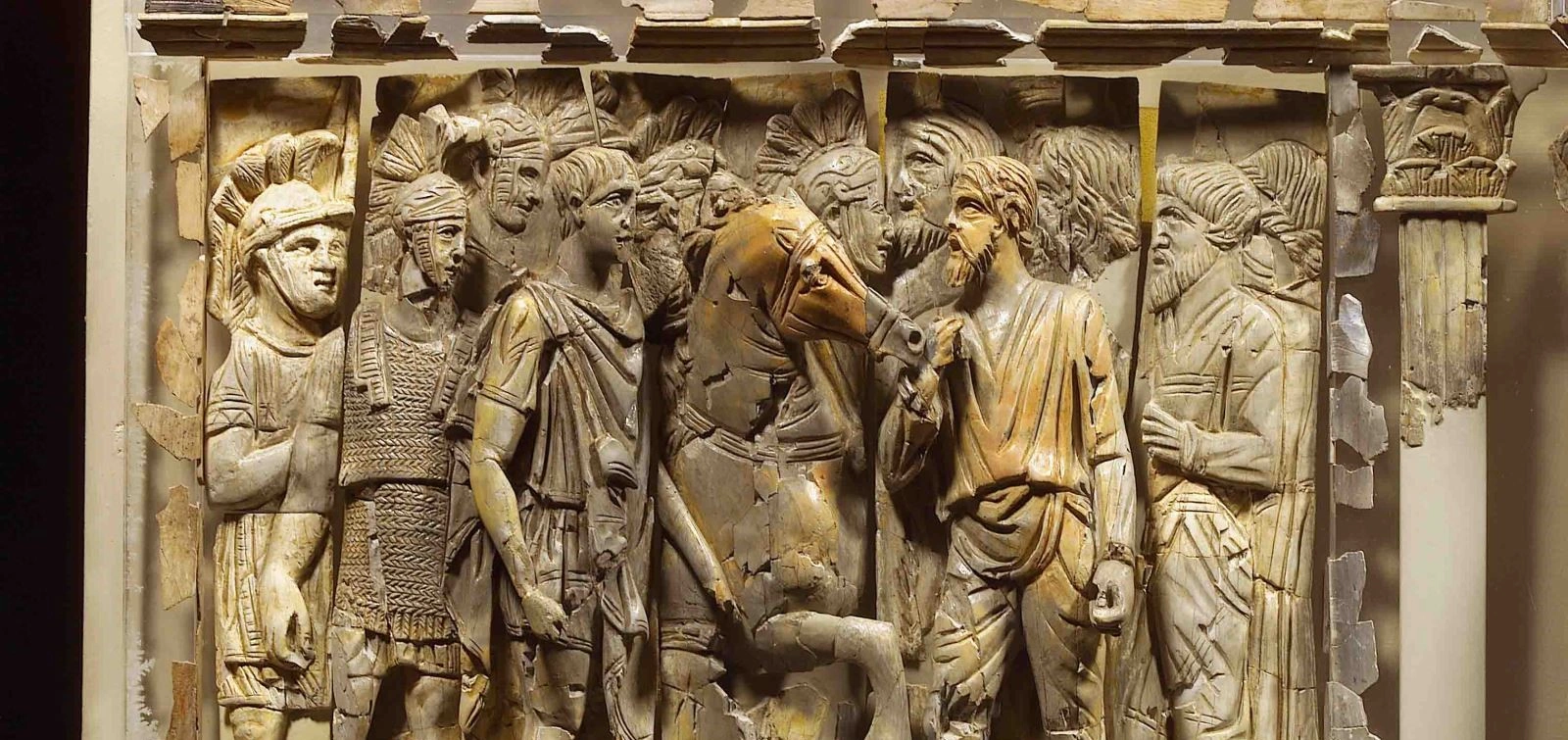
See the famous statues of Artemis Ephesia and archaeological discoveries that transform the ruined sanctuary into a much richer historical story.
Explore Ephesus Museum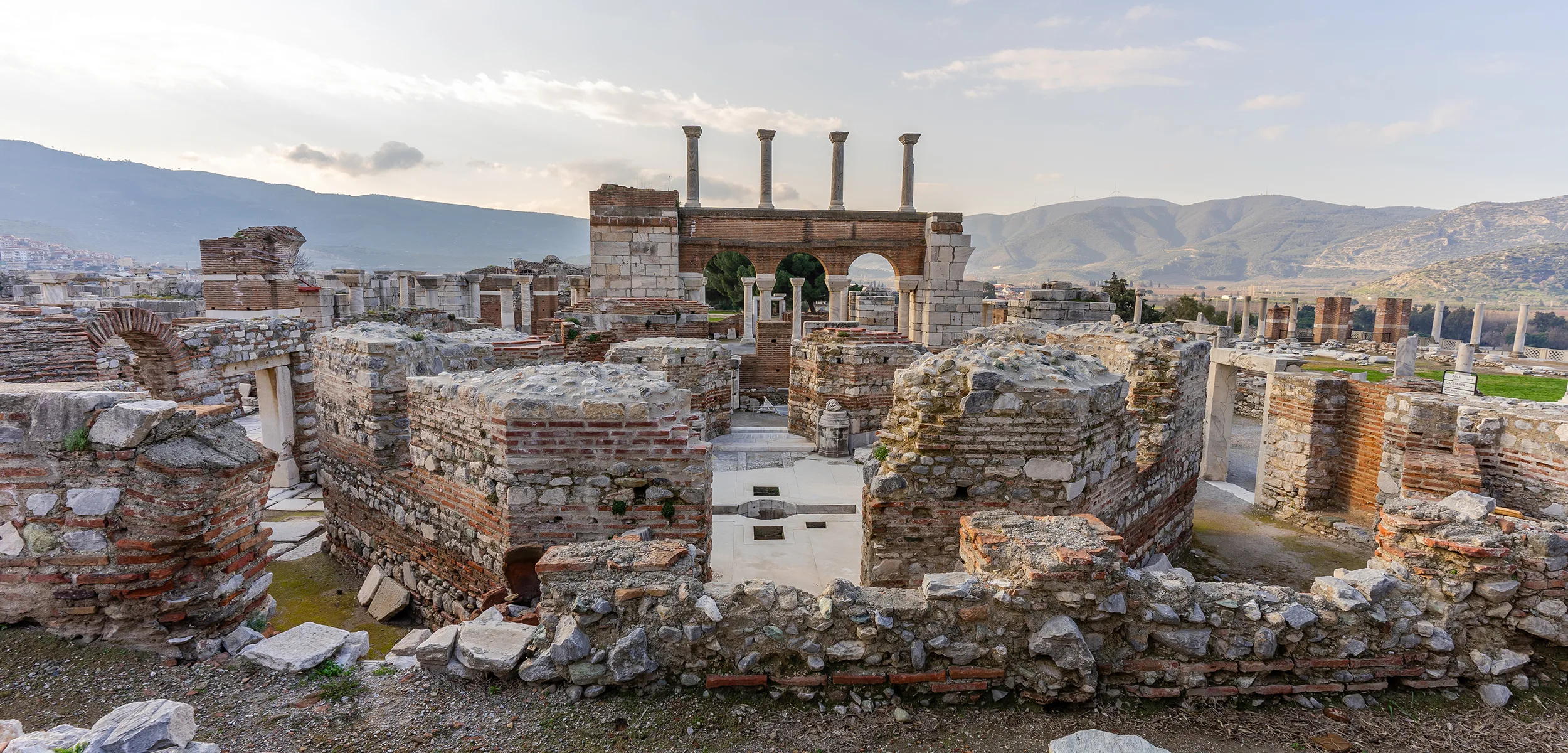
Continue from the great pagan sanctuary of Artemis to one of Byzantine Ephesus's most important Christian pilgrimage centres on Ayasuluk Hill.
Explore Saint John Basilica
Continue through İzmir Province with ancient cities, archaeological museums, sacred sites, coastal towns, historic districts, local cuisine and cultural experiences.
View İzmir Guide