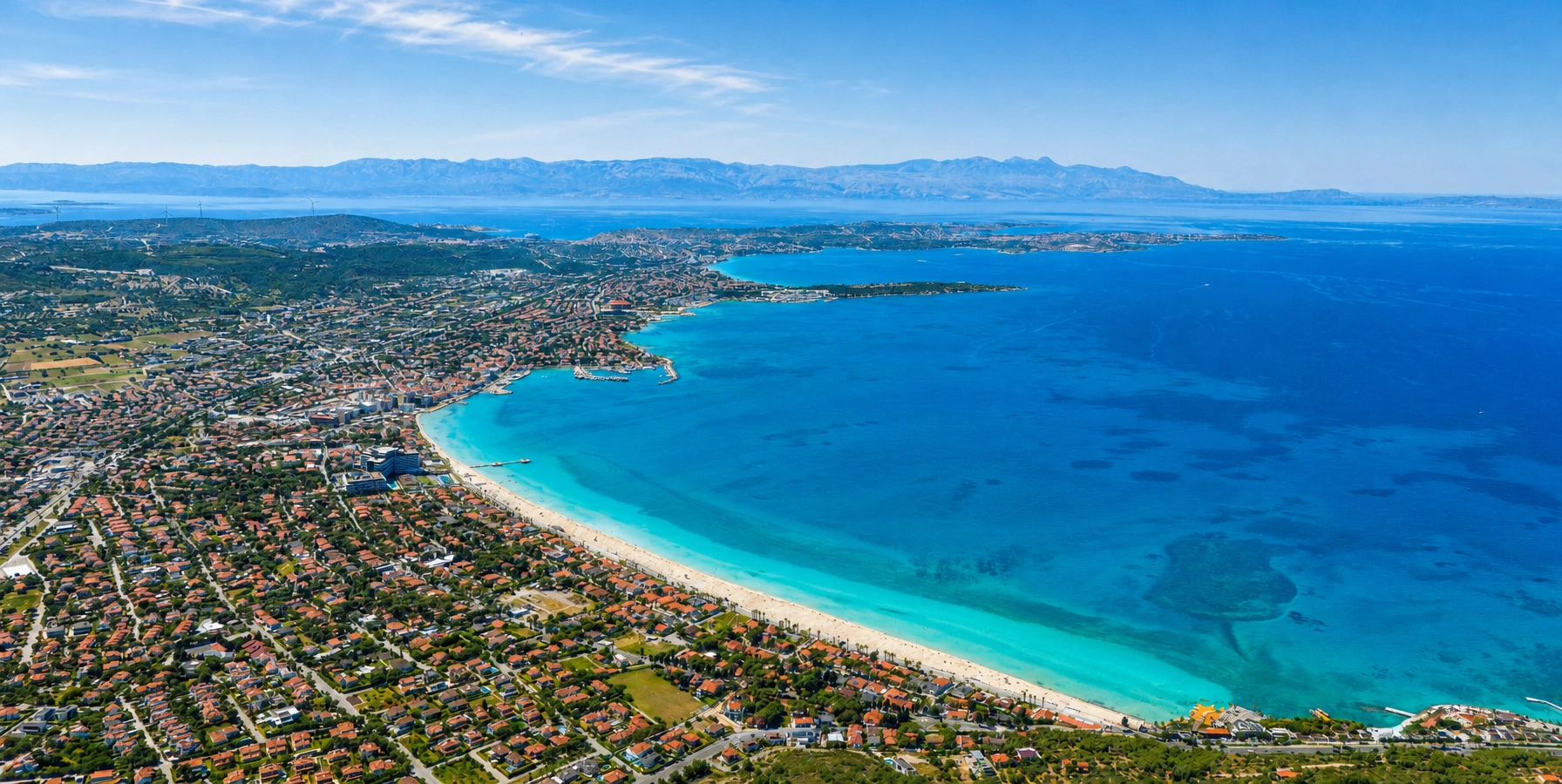
Private Çeşme & Alaçatı Experience
Ask us about a tailor-made day combining Çeşme Castle, historic streets, Ilıca, Alaçatı, local food and the beautiful Aegean coastline.
Request a Custom Experience





At the western edge of the İzmir Peninsula, facing the Greek island of Chios across the Aegean Sea, Çeşme is one of Türkiye's best-known coastal destinations.
Most visitors first associate Çeşme with clear water, long summer days and beautiful beaches. Yet the district is much more than a seaside resort. At its historic centre rises Çeşme Castle, while nearby streets preserve old stone houses, fountains, Ottoman monuments and reminders of centuries of maritime trade.
Travel only a short distance from the centre and the landscape changes again. Ilıca is famous for its pale sandy beach and naturally warm thermal waters, while Alaçatı combines historic stone architecture with cafés, restaurants, boutique accommodation and one of the Aegean's most important windsurfing areas.
Farther north, the quiet village of Ildırı preserves the remains of Erythrai, one of the ancient Ionian cities. Archaeological finds from this region, together with discoveries from the Bronze Age settlement of Bağlararası, reveal that the human story of the Çeşme Peninsula reaches far deeper into the past than its modern tourism reputation might suggest.
Add sheltered coves, marinas, seafood restaurants, vineyards, wind-shaped landscapes and spectacular sunsets, and Çeşme becomes one of the most varied destinations on the entire İzmir coast.
Explore the monumental Ottoman fortress overlooking the historic town and visit the archaeological museum inside.
Swim at Ilıca, Boyalık, Altınkum, Pırlanta and numerous bays around the Çeşme Peninsula.
Walk through stone streets, discover traditional architecture and experience one of Türkiye's famous windsurfing destinations.
Travel to Ildırı and explore an ancient Ionian settlement overlooking the islands of the northern Çeşme coast.
Essential information for planning a visit to one of the most famous destinations on Türkiye's Aegean coast.
Çeşme lies at the western end of the Çeşme Peninsula in İzmir Province on Türkiye's Aegean coast.
The district faces the Aegean Sea, with the Greek island of Chios lying offshore to the west.
Çeşme Castle dominates the historic centre and today houses the Çeşme Archaeological Museum.
The peninsula includes Erythrai at modern Ildırı and important Bronze Age archaeological remains at Bağlararası.
Ilıca, Boyalık, Altınkum, Pırlanta and Çark are among the best-known beaches around the peninsula.
Ilıca is especially known for natural thermal springs that emerge around the coastline and shallow sea.
Alaçatı Bay is internationally known for reliable winds, shallow water and windsurfing schools.
Çeşme centre combines traditional streets, historic fountains, Ottoman buildings, restaurants and modern coastal life.
Çeşme Fortress forms part of Türkiye's Tentative List property representing the Genoese maritime trading network.
Çeşme is approximately 94–95 km west of central İzmir and is connected by a major motorway.
Allow at least two days, while three to five days gives much more time for beaches, history and Alaçatı.
May, June, September and early October offer an excellent balance of warm weather and easier sightseeing.
Çeşme succeeds as a destination because it offers far more variety than a conventional beach resort.
The first reason to visit is the coastline. Sandy beaches, rocky bays, turquoise shallows and open-water views appear around almost every side of the peninsula, allowing travellers to choose between lively resort beaches and quieter stretches of shore.
The second reason is history. Çeşme Castle, the Kanuni Caravanserai, old fountains, historic streets and archaeological collections reveal the town's strategic importance as a harbour facing Chios and the wider Aegean.
The third reason is the extraordinary contrast between different neighbourhoods. Historic Çeşme centre feels maritime and urban, Ilıca is defined by beach and thermal water, while Alaçatı has its own architectural identity, restaurant culture and windsurfing landscape.
Finally, Çeşme works equally well for travellers interested in food, photography, archaeology, sailing, swimming, nightlife, wellness or simply slowing down beside the Aegean.
Çeşme is a district of İzmir Province located on the peninsula forming the westernmost section of the İzmir region.
The town of Çeşme occupies the western side of the peninsula and historically developed around a protected harbour directly opposite the island of Chios.
Central İzmir lies roughly 94–95 kilometres to the east, while the motorway connection allows Çeşme to function both as a major holiday destination and as a practical extension to an İzmir city itinerary.
The wider district includes several distinctive visitor areas such as Ilıca, Alaçatı, Dalyan, Çiftlikköy, Ovacık, Reisdere, Germiyan and Ildırı.
Çeşme's history has always been connected with its position beside the sea.
In antiquity, the harbour settlement was associated with Erythrai, one of the ancient Ionian cities located at modern Ildırı on the northern side of the peninsula. Ancient sources and archaeological evidence demonstrate long-distance commercial connections throughout the Aegean and eastern Mediterranean.
The surrounding region passed through periods of Lydian, Persian, Hellenistic, Roman and Byzantine influence before later becoming part of the medieval Turkish and Ottoman worlds.
Its harbour was particularly valuable because the Çeşme coast provides one of the closest Anatolian approaches to the island of Chios. Maritime trade, naval activity and control of the surrounding sea therefore remained important for centuries.
Genoese commercial influence was significant along this part of the western Anatolian coast during the medieval period. Later Ottoman authorities reinforced Çeşme's strategic position, most visibly through the castle that still dominates the town.
During the nineteenth and twentieth centuries the commercial role of the harbour changed, while the peninsula gradually developed into one of western Türkiye's leading destinations for beaches, thermal tourism and summer holidays.
The Turkish word çeşme means fountain.
The district became known for abundant springs and numerous public fountains where travellers and sailors could obtain fresh water.
Official tourism sources record a local tradition that the area once contained a very large number of fountains, each with its own form and architectural character.
Although some disappeared as water sources changed or roads were widened, historic fountains remain an important part of Çeşme's urban heritage.
The name therefore reflects something fundamental about the settlement: for travellers arriving after a sea journey, reliable fresh water was once as valuable as the harbour itself.
The massive stone walls of Çeşme Castle are the most immediately recognizable historic feature of the town.
Evidence and official museum interpretation connect the fortress with earlier Genoese maritime activity, while the castle reached its major Ottoman form during the reign of Sultan Bayezid II in 1508.
The position was originally much closer to the shoreline. Changes to the harbour and later land reclamation mean the fortress now appears slightly inland from the modern waterfront.
Its walls, towers, courtyards and elevated viewpoints make the castle worthwhile even before considering the archaeological museum contained within it.
From the upper areas, visitors can understand exactly why this position mattered: the harbour, modern marina, historic centre and open Aegean all form part of the same panorama.
The castle was extensively rebuilt and strengthened during the reign of Sultan Bayezid II in 1508.
The fortress defended an important harbour facing Chios and the central Aegean.
Historic rooms inside the castle display finds from Çeşme, Erythrai and the wider peninsula.
Elevated sections offer excellent views across the old town, marina and harbour.
Cannons, cannonballs and other military objects help explain the defensive life of the fortress.
A museum section interprets the major Ottoman-Russian naval battle fought around Çeşme in 1770.
Çeşme Castle today functions as the Çeşme Archaeological Museum, making the monument both an architectural site and an important introduction to the archaeology of the peninsula.
The castle first opened as a museum in 1965, initially displaying historical weapons. The exhibition concept later changed and archaeological material became the main focus.
Particularly important objects come from Erythrai at Ildırı and the Bağlararası Bronze Age settlement in Çeşme.
Displays include figurines, oil lamps, glass vessels, sculptures, inscriptions, coins and amphorae associated with the movement and storage of products such as wine, olive oil and grain.
The combination works extremely well: objects associated with ancient settlement and maritime trade are viewed within a fortress built to control the same strategically important coastline centuries later.
Çeşme Fortress is included within Türkiye's UNESCO Tentative List property representing the Genoese maritime network of trading posts and fortifications from the Mediterranean to the Black Sea.
The importance of the property lies in a network rather than a single monument. Genoese merchants developed commercial routes linking ports across the Mediterranean, Aegean and Black Sea and relied upon fortified coastal positions to protect trade.
Other Turkish components connected with this maritime system include fortifications at Foça, Çandarlı, Amasra and other strategic locations.
Only a short distance from Çeşme Castle stands the historic Kanuni Caravanserai.
It was commissioned by Sultan Süleyman the Magnificent in 1528, when Çeşme was an active port within the Ottoman maritime and commercial system.
Caravanserais provided secure accommodation and services for merchants, travellers, animals and goods moving through important commercial routes.
The building therefore complements the castle perfectly. One structure represents defence and harbour control, while the other reflects the movement of travellers and merchandise through Çeşme.
The historic building has been adapted for modern hospitality use, but its courtyard arrangement and heavy stone architecture still preserve a strong sense of its original function.
Do not leave immediately after visiting the castle.
The streets surrounding the fortress form part of Çeşme's historic urban landscape and contain a mixture of traditional houses, old commercial buildings, fountains and later coastal architecture.
Much of the surviving townscape developed during the nineteenth and early twentieth centuries, when maritime commerce continued to influence the economic and cultural character of Çeşme.
Today restaurants, cafés, shops and accommodation occupy many of these streets, creating a lively transition between historic fabric and modern tourism.
The best approach is simply to walk. Begin near the castle, continue through the traditional centre and eventually move toward the marina and waterfront.
Because the name Çeşme literally means fountain, the surviving historic fountains deserve more attention than they usually receive.
These structures once served practical functions, providing water for residents, travellers and maritime visitors.
Several eighteenth- and nineteenth-century fountains remain within the wider district, although many others have disappeared as springs dried or urban streets changed.
Look carefully for carved stone, inscriptions, niches and differences in architectural treatment while walking through the older neighbourhoods.
Together they provide a quieter historical layer that contrasts with the monumental scale of Çeşme Castle.
The modern marina occupies part of the maritime landscape that has shaped Çeşme for centuries.
Today yachts, restaurants, cafés and pedestrian areas create one of the most pleasant evening environments in the town.
The contrast with the nearby fortress is particularly attractive. Medieval and Ottoman defensive stonework rises immediately behind a harbour now filled with modern sailing boats.
Late afternoon is an excellent time to walk here, especially after visiting the castle when the air becomes cooler and restaurants begin preparing for the evening.
Even travellers who are not interested in sailing will find the marina useful as a place to understand how deeply Çeşme's identity remains tied to the sea.
Ilıca is one of the best-known coastal areas in the Çeşme district.
Its broad sandy beach and shallow water make it particularly popular during the summer, but what makes Ilıca genuinely unusual is its connection with natural thermal springs.
Warm mineral water emerges around sections of the coastline and seabed, creating a long tradition of thermal tourism in the area.
The sea remains shallow for a considerable distance in places, which can make Ilıca particularly appealing for relaxed swimming and families.
Because of its popularity, summer weekends can become extremely busy. Early morning and late afternoon usually provide a calmer experience and more comfortable light.
One of Çeşme's most famous stretches of pale sand and shallow Aegean water.
Naturally warm mineral water emerges around parts of Ilıca's coastal zone.
Shallow areas make the beach popular with families, although normal sea-safety precautions remain important.
Arrive early in the morning or later in the afternoon during July and August.
The shape of the Çeşme Peninsula creates a remarkable variety of beaches.
Famous for pale sand, shallow water and the unusual presence of thermal springs around the coastline.
A long coastal area close to Çeşme centre with clear water and easy access from nearby accommodation.
Known for bright sand and beautifully clear water on the southwestern side of the peninsula.
A more exposed coastal setting popular with visitors who enjoy open scenery and windy conditions.
Located near the Alaçatı windsurfing zone and strongly associated with water sports.
A sheltered bay known for beach venues, swimming and lively summer evenings.
A quieter northern option with fishing-town character and access to beaches and coves.
A photogenic natural coastal area where visitors come for rocky scenery and striking blue water.
Conditions can differ greatly according to wind direction. On breezy days, choosing a beach on the more sheltered side of the peninsula can completely change the swimming experience.
No complete Çeşme itinerary is complete without time in Alaçatı.
The historic centre is known for narrow streets, traditional two-storey stone houses and architecture reflecting the multicultural history of the Aegean coast.
Over recent decades, many historic buildings have been carefully adapted into small hotels, cafés, restaurants and boutiques.
The result is one of Türkiye's most recognizable coastal townscapes, particularly when bougainvillea and other summer flowers cover the old stone façades.
Alaçatı is busiest during summer evenings. Travellers interested mainly in architecture and photography may prefer visiting early in the morning before the pedestrian streets fill.
Distinctive masonry façades and compact streets preserve much of the town's architectural character.
Alaçatı has become one of the major gastronomic and social centres of the Çeşme Peninsula.
Markets and seasonal events add another layer to the town beyond its restaurant and nightlife scene.
Early hours provide the best chance to photograph quiet streets before the centre becomes busy.
Alaçatı's international reputation is closely connected with the wind.
Its bay combines consistent seasonal winds with relatively shallow and protected water, conditions that have encouraged the development of windsurfing schools and specialist sports facilities.
Beginners can take lessons in controlled areas, while experienced windsurfers and other wind-powered water-sports enthusiasts come specifically for the peninsula's conditions.
The southern coastal area around Port Alaçatı feels completely different from the historic village centre and is worth visiting even if you do not intend to surf.
Watching colourful sails move across the bay is one of the characteristic visual experiences of modern Çeşme.
Around twenty kilometres northeast of central Çeşme lies Ildırı, a small coastal settlement occupying the site of ancient Erythrai.
Erythrai belonged to the ancient Ionian cultural world and occupied a naturally strategic position overlooking offshore islands and maritime routes.
Archaeological research has identified a long sequence of occupation extending back into the Bronze Age.
Among the important remains are sections associated with the ancient theatre, fortifications, residential areas and the sanctuary of Athena on the acropolis.
The setting makes the site especially rewarding. Climbing above the modern village provides wide views across the northern Çeşme coastline and offshore islands.
Ildırı itself retains a much quieter character than Çeşme or Alaçatı, making the excursion valuable even for travellers whose main interest is landscape rather than archaeology.
One of the most important archaeological discoveries for understanding early Çeşme comes from Bağlararası.
Excavations revealed settlement remains dating back thousands of years, demonstrating that the central Çeşme area had significant communities long before the medieval and Ottoman harbour town developed.
Archaeologists identified buildings separated by streets, pottery and evidence related to food and wine production.
Research also revealed evidence of a major Bronze Age earthquake that caused substantial destruction within the settlement.
Many important objects recovered during excavation can now be understood more easily through the displays inside Çeşme Museum.
Çeşme has long been associated with natural mineral and thermal waters.
Ilıca is the best-known thermal area, where warm springs emerge close to the coastline and in some locations beneath the shallow sea.
The presence of these waters encouraged the development of thermal hotels, bathing facilities and wellness tourism alongside the district's conventional beach resorts.
This unusual combination means visitors can spend the morning exploring an Ottoman fortress and archaeological museum, swim in the Aegean during the afternoon and finish the day with a thermal experience.
Anyone seeking treatment for a medical condition should distinguish ordinary wellness use from medical therapy and obtain appropriate professional advice when necessary.
Food is one of the easiest ways to understand the Aegean character of Çeşme.
The district's best-known street food: a distinctive sandwich served in sesame-covered bread with several possible fillings.
Fish, calamari, octopus and other seafood feature heavily in restaurants around Çeşme, Dalyan and Ildırı.
Olive oil, herbs, vegetables and yoghurt-based dishes form an important part of local dining culture.
The wider peninsula is particularly associated with seasonal Aegean greens and herb-based cooking.
Mastic appears in desserts, ice cream and other regional flavours, reflecting historic Aegean culinary connections.
Olives, tomatoes, artichokes and seasonal vegetables play an important role in simple peninsula cuisine.
For the best experience, combine famous dishes with seasonal local products rather than limiting yourself to the most photographed restaurants in the main tourist streets.
Explore the fortress, museum collections and panoramic viewpoints above the harbour.
Walk through traditional streets around the castle, old fountains and commercial quarter.
Enjoy the waterfront, sailing atmosphere, restaurants and evening light beside the fortress.
Swim in shallow Aegean water influenced by the area's famous thermal springs.
Explore stone houses, narrow streets, cafés, restaurants and boutique shops.
Visit Alaçatı Bay for one of Türkiye's most famous wind-powered water-sports landscapes.
Discover ancient Ionian archaeology and panoramic views above Ildırı.
Explore Boyalık, Altınkum, Pırlanta, Çark and smaller bays around the peninsula.
Spend time around the fishing harbour and northern coastal neighbourhoods.
Watch the evening light from the marina, Ildırı or one of the peninsula's western coastal viewpoints.
Çeşme can technically be visited from İzmir in a single day, but doing so reveals only a small part of the peninsula.
Travellers interested mainly in the castle and historic centre can comfortably explore central Çeşme within several hours.
Adding Ilıca and Alaçatı creates a very full day, while Erythrai, beach time and slower coastal exploration are better reserved for an additional day.
Summer traffic can add considerable time between the most popular areas, particularly during weekends. A route that looks short on a map may therefore take longer than expected in July and August.
Çeşme lies roughly 94–95 km west of central İzmir and is connected with the city by motorway.
Travel west from Adnan Menderes Airport toward the Çeşme Peninsula; journey times depend heavily on traffic and season.
A private vehicle offers the greatest flexibility for visiting beaches, Ildırı and quieter parts of the peninsula.
Regular regional bus services connect İzmir and Çeşme, with additional local transport around the district.
Local services connect central Çeşme with areas including Ilıca, Alaçatı and other coastal neighbourhoods.
Passenger ferry connections operate between Çeşme and Chios, with schedules varying according to season and operator.
Central Çeşme itself is easy to explore on foot.
The castle, historic centre, marina and waterfront sit relatively close together and do not require a vehicle once you have arrived.
The wider peninsula is different. Ilıca, Alaçatı, southern beaches, Dalyan and Ildırı lie in separate directions.
Local buses, minibuses and taxis make it possible to travel without a rental car, particularly along popular routes connecting Çeşme, Ilıca and Alaçatı.
A private vehicle becomes considerably more useful when planning multiple beaches, archaeological sites or quieter villages within the same day.
Parking is usually straightforward outside the busiest summer periods but can become challenging during July and August.
Central Çeşme has public and private parking areas around the town centre, although spaces closest to the castle and marina fill quickly in the evening.
Alaçatı's historic core is best approached by parking outside the narrow central streets and continuing on foot.
Beach parking varies enormously. Some beaches have organised parking areas, while smaller bays may have limited roadside space.
During peak weekends, arriving before late morning is one of the easiest ways to reduce parking and traffic problems.
Accessibility differs significantly between individual locations.
Modern promenades, marina areas and parts of the main town centre can be relatively straightforward for travellers with limited mobility.
Historic locations such as Çeşme Castle contain stone surfaces, steps and level changes that reflect the original architecture.
Alaçatı's narrow historic streets can also include uneven paving, crowded pedestrian areas and occasional gradients.
Travellers requiring step-free access should verify the current conditions of specific attractions and accommodation before visiting.
Quiet and cool, suitable for history, walking and uncrowded photography rather than conventional beach tourism.
Green landscapes, spring flowers and comfortable conditions make this excellent for cultural exploration.
One of the best overall months, with warm days and considerably fewer visitors than peak summer.
Excellent beach weather arrives while the peninsula is often still easier to explore than in July and August.
Hot, sunny and extremely lively, with peak demand for beaches, restaurants and accommodation.
The busiest holiday month. Expect warm sea temperatures, nightlife and substantial traffic around popular areas.
Exceptional for swimming, with warm water and a more relaxed atmosphere as the month progresses.
Often rewarding for food, history, walking and quieter coastal travel, although weather becomes less predictable.
For travellers wanting both swimming and cultural exploration, late May, June and September are particularly attractive.
Early morning is particularly valuable in Alaçatı, where usually busy streets can still feel calm and atmospheric.
Morning also works well for Çeşme Castle during the hottest months because climbing exposed stone areas becomes more tiring around midday.
Use the middle of the day for swimming, lunch or shaded activities rather than extended walking during July and August.
Late afternoon brings softer light to the castle, marina and stone architecture.
Evening is when central Çeşme and Alaçatı become most animated, with restaurants, pedestrian streets and the waterfront filling after sunset.
Enough for Çeşme Castle, the museum, old town and a short marina walk.
Combine central Çeşme with Ilıca and an evening in Alaçatı.
Add beach time, Alaçatı at a slower pace and another coastal neighbourhood.
Include Erythrai at Ildırı, several beaches and time for local food without rushing.
Ideal for a balanced combination of swimming, heritage, windsurfing, villages and relaxed evenings.
Perfect for a genuine peninsula holiday with multiple beach days and possible excursions toward Urla and İzmir.
Çeşme Castle → Archaeological Museum → Old Town → Marina → Boyalık or Ilıca → evening in central Çeşme.
Alaçatı morning walk → windsurfing coast → lunch → Erythrai and Ildırı → sunset overlooking the northern Aegean.
Travellers primarily interested in swimming can replace Ildırı with Altınkum, Pırlanta or another beach, while archaeology enthusiasts should keep Erythrai in the itinerary.
Photograph the town and marina from elevated areas of Çeşme Castle.
Use sailing boats and harbour reflections to contrast historic stonework with modern maritime life.
Visit early for quieter stone lanes, colourful doors, flowers and traditional façades.
Sunny weather reveals the pale sand and turquoise tones that make the beach so recognizable.
Colourful sails against blue water create strong action images around Alaçatı Bay.
Use archaeological remains as foreground elements against islands and the northern Aegean.
The western peninsula offers excellent evening light, particularly on clear spring and autumn days.
Çeşme Castle and marina become especially atmospheric immediately after sunset.
Çeşme can work extremely well for families because historical sightseeing can easily be balanced with swimming and relaxed outdoor time.
Çeşme Castle gives younger visitors an immediately understandable historical setting of towers, walls, cannons and harbour defence.
Ilıca is especially popular with families because sections of the water remain shallow for a considerable distance.
Alaçatı can be enjoyable earlier in the day but becomes much busier during summer evenings, when narrow pedestrian streets may be tiring for very young children.
Always supervise children carefully around castle walls, archaeological sites, marinas and naturally rocky coastal areas.
Accommodation demand rises sharply during July, August and major holiday weekends.
Visit the castle and Alaçatı before midday during the hottest period of summer.
Çeşme is famously breezy, and conditions can differ dramatically between opposite sides of the peninsula.
Use sunscreen, a hat and drinking water during beach days and exposed historical visits.
If one coast is very windy, another bay may offer calmer swimming conditions.
Historic streets, castle surfaces and archaeological sites may be uneven.
Travel times between Çeşme, Ilıca and Alaçatı can increase considerably on peak summer evenings.
Aegean wind can make evenings feel cooler even after very hot daytime temperatures.
Do not climb ancient walls or remove pottery, stone or other material from archaeological areas.
Take rubbish away and avoid leaving plastics, cigarette ends or other waste around natural coves.
The Aegean experiences long dry summers, making responsible water use particularly important.
Alaçatı and Çeşme's historic quarters remain living neighbourhoods rather than open-air museums.
Restricted areas protect both visitors and fragile historical structures.
Markets, independent restaurants and regional products help distribute tourism benefits beyond major venues.
Explore stone houses, picturesque streets, restaurants, boutiques and the famous windsurfing coast.
Combine a broad sandy beach with the unusual thermal springs for which the area has long been known.
Discover ancient Ionian archaeology, village life and panoramic northern Aegean scenery.
Visit a quieter fishing area north of Çeşme centre and explore nearby coves and seafood restaurants.
Head to the southwestern peninsula for clear water, bright sand and a very different coastal exposure.
Experience another open coastal landscape known for sand, wind and water-sports conditions.
Continue east for vineyards, gastronomy, villages, art spaces and another historic section of the İzmir Peninsula.
Combine Çeşme with Kemeraltı, Konak, Alsancak, museums and the historic urban landscape of central İzmir.
The essential first combination, linking Ottoman maritime heritage with one of Türkiye's most famous historic coastal towns.
Combine castle history and waterfront exploration with a relaxed afternoon beside the thermal beach.
Follow the peninsula's story from Bronze Age and Ionian archaeology to medieval and Ottoman maritime heritage.
Combine beaches and historic Çeşme with vineyards, gastronomy and cultural landscapes farther east.
Spend a day comparing Ilıca, Boyalık, Altınkum and other beaches according to weather and wind conditions.
Use several days to explore Çeşme, Alaçatı, Urla and the villages between the Aegean coast and İzmir.
Çeşme is a district of İzmir Province at the western end of the Çeşme Peninsula on Türkiye's Aegean coast.
Official tourism sources place Çeşme approximately 94–95 km west of central İzmir.
Çeşme offers a combination of beaches, Ottoman heritage, archaeology, thermal water, sailing, food and historic towns within a relatively compact peninsula.
It is especially known for its beaches, Çeşme Castle, Ilıca thermal waters, Alaçatı, windsurfing and lively summer atmosphere.
Çeşme means fountain in Turkish, and the town's name is traditionally connected with the numerous fresh-water fountains once found throughout the area.
No. Alaçatı is a historic town and neighbourhood within the wider Çeşme district.
The two centres are close enough to combine easily during the same day, although summer traffic can increase journey times.
Çeşme Castle is the monumental historic fortress overlooking the old harbour and town centre.
The castle has earlier maritime and Genoese connections but reached its major Ottoman form during the reign of Sultan Bayezid II in 1508.
Yes. The castle houses the Çeşme Archaeological Museum.
Displays include archaeological finds from Erythrai and Bağlararası, sculptures, figurines, coins, amphorae, inscriptions and material concerning maritime history.
It was a major Ottoman-Russian naval confrontation fought around Çeşme during the Russo-Ottoman War in 1770.
It is not currently a fully inscribed World Heritage Site. Çeşme Fortress forms part of a Genoese maritime heritage property on Türkiye's UNESCO World Heritage Tentative List.
It is a sixteenth-century Ottoman caravanserai commissioned by Sultan Süleyman the Magnificent in 1528 near Çeşme Castle.
Yes. The historic centre around the castle contains traditional streets, stone buildings, fountains and old commercial architecture.
Ilıca Beach is one of the best known because of its broad sandy shore, shallow water and nearby thermal springs.
The coastline is associated with natural thermal springs, including warm mineral water emerging around parts of the shallow sea.
Boyalık, Altınkum, Pırlanta, Çark and the coastal bays around Dalyan and Aya Yorgi are among the best-known options.
Yes. The peninsula contains numerous sandy beaches, sheltered bays and clear-water swimming areas.
Alaçatı is known for historic stone houses, atmospheric pedestrian streets, restaurants, boutique accommodation and windsurfing.
Yes. Alaçatı Bay is one of Türkiye's best-known windsurfing destinations because of its wind conditions and relatively shallow protected water.
Erythrai was an important ancient Ionian settlement located at modern Ildırı on the northern Çeşme Peninsula.
Yes. Ildırı can be reached comfortably by road and makes an excellent half-day excursion from central Çeşme.
Bağlararası is an important Bronze Age archaeological settlement in Çeşme that has revealed evidence of early urban life, wine production and ancient earthquake destruction.
Two to three days gives enough time for central Çeşme, Alaçatı, Ilıca and at least one additional beach or archaeological excursion.
Yes, although a single day usually means choosing between beach time, historical sightseeing and more distant places such as Erythrai.
May, June and September provide an especially good combination of warm weather, swimming and easier sightseeing.
These are peak summer months, so beaches, roads, restaurants and accommodation are considerably busier than in spring or autumn.
Yes for quiet coastal scenery, food, history and relaxed walks, although many businesses associated with summer tourism operate seasonally.
Not for central Çeşme, but a vehicle makes it much easier to visit multiple beaches, Ildırı and quieter corners of the peninsula.
Yes. Local public transport and taxi services connect the main visitor areas of the peninsula.
Passenger ferry services operate between Çeşme and Chios, although schedules and entry requirements should always be checked before travel.
Try Çeşme kumru, seafood, Aegean mezes, seasonal herbs, olive-oil dishes and local desserts using regional flavours such as mastic.
Yes. Beaches, short driving distances and attractions such as Çeşme Castle make the peninsula easy to adapt to family travel.
The western coast, Çeşme waterfront and elevated viewpoints around Ildırı can all provide excellent sunset conditions depending on season and weather.
Yes. Seasonal Aegean winds are a defining feature of the peninsula and one reason Alaçatı became famous for windsurfing.
Sun protection, comfortable shoes, swimwear, drinking water and a light evening layer are useful during most warm-season visits.
Yes. Çeşme is one of the easiest major coastal destinations to combine with several days exploring central İzmir.
Yes. A route through Çeşme, Alaçatı and Urla creates an excellent western İzmir Peninsula journey combining beaches, heritage, villages and food.
A tailor-made Çeşme journey can combine Ottoman heritage, ancient archaeology, historic towns, beaches, gastronomy and the dramatic landscapes of Türkiye's western Aegean coast.
Tell us whether your priority is history, beaches, archaeology, photography, gastronomy, traditional towns or a complete İzmir Peninsula journey, and we can shape the day around your interests.
Ask us about a tailor-made day combining Çeşme Castle, historic streets, Ilıca, Alaçatı, local food and the beautiful Aegean coastline.
Request a Custom Experience
Continue with our complete İzmir guide for ancient history, museums, waterfront neighbourhoods, markets and destinations across the province.
View İzmir Guide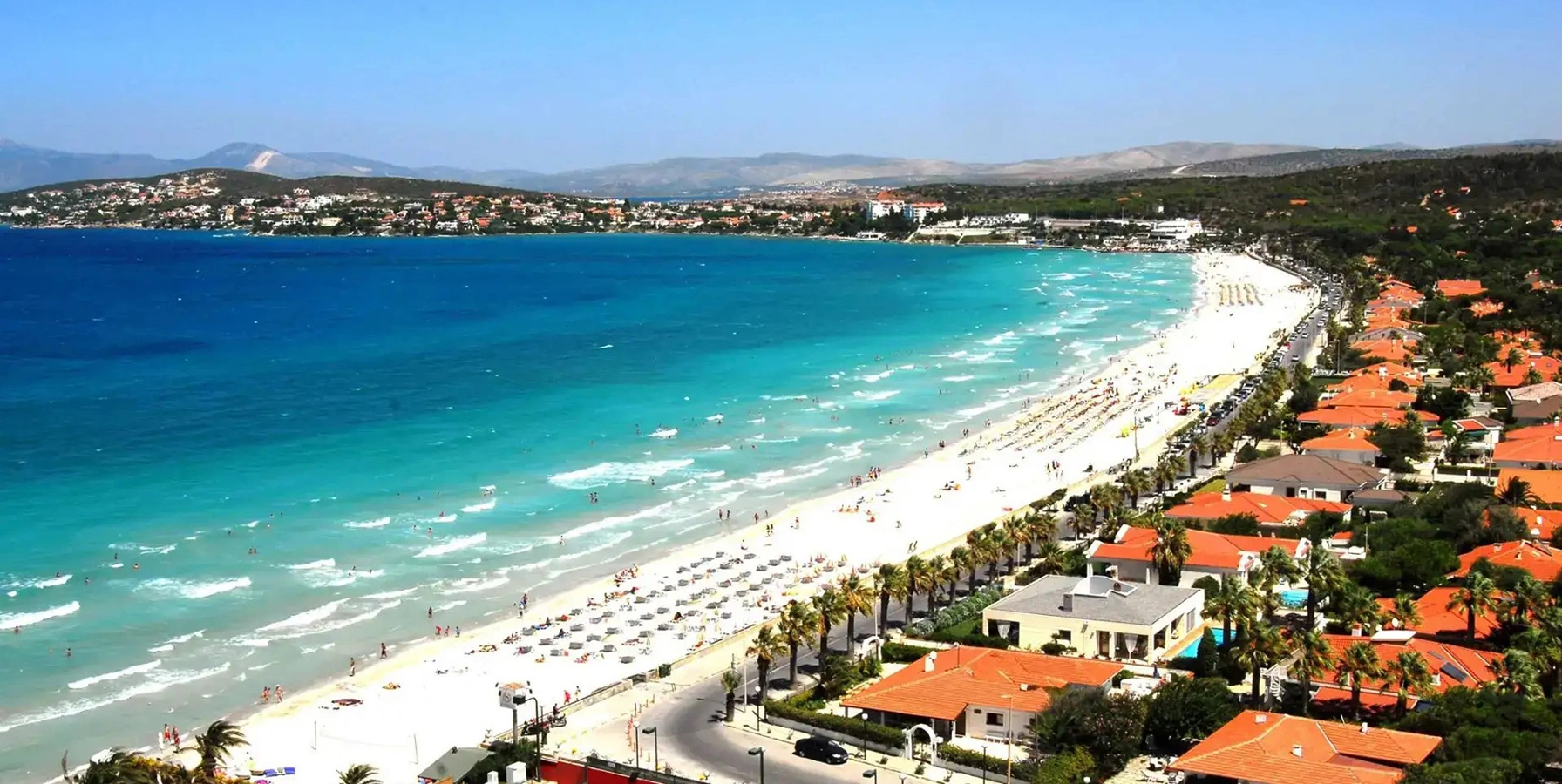
Discover historic stone houses, colourful streets, local food, windsurfing and one of Türkiye's most famous Aegean towns.
View Alaçatı Guide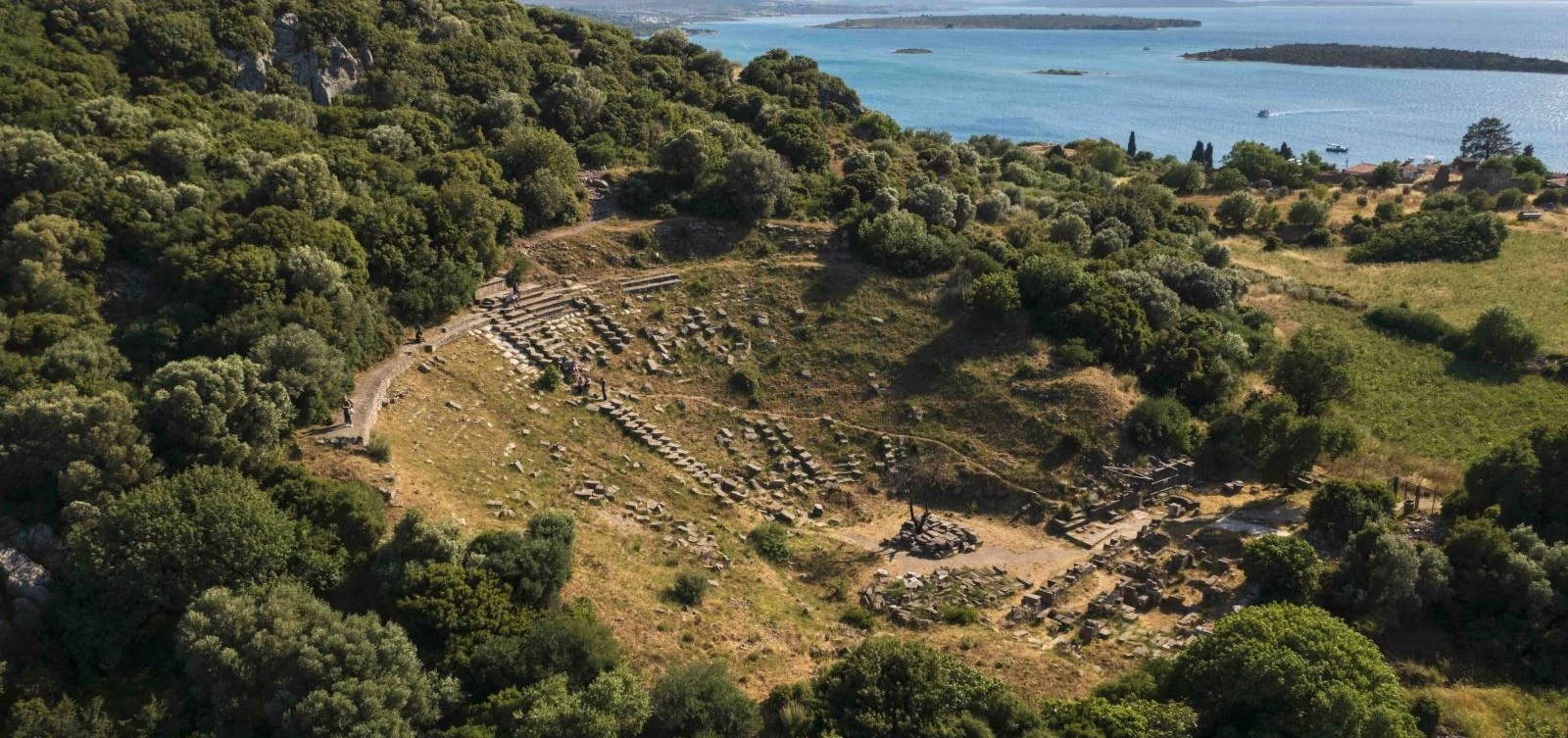
Travel north to ancient Ionian archaeology, quiet village streets and extraordinary views across the islands of the Aegean.
View Erythrai Guide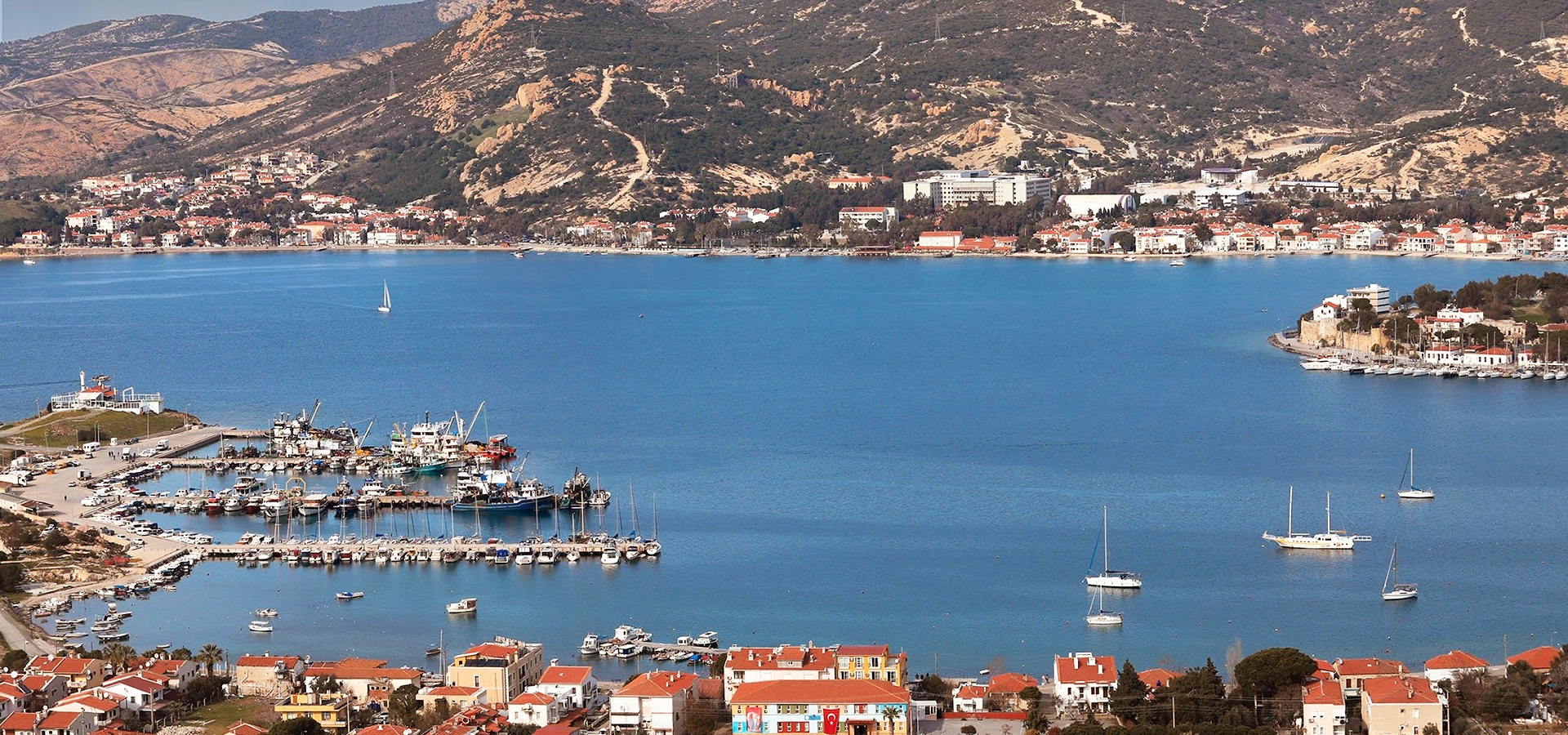
Continue the Aegean maritime story with ancient Phokaia, Genoese heritage, fishing harbours and traditional coastal streets.
View Foça Guide
Combine Çeşme, Alaçatı, Urla and selected coastal villages in a private itinerary designed around history, scenery, food and the Aegean Sea.
Request a Private Journey