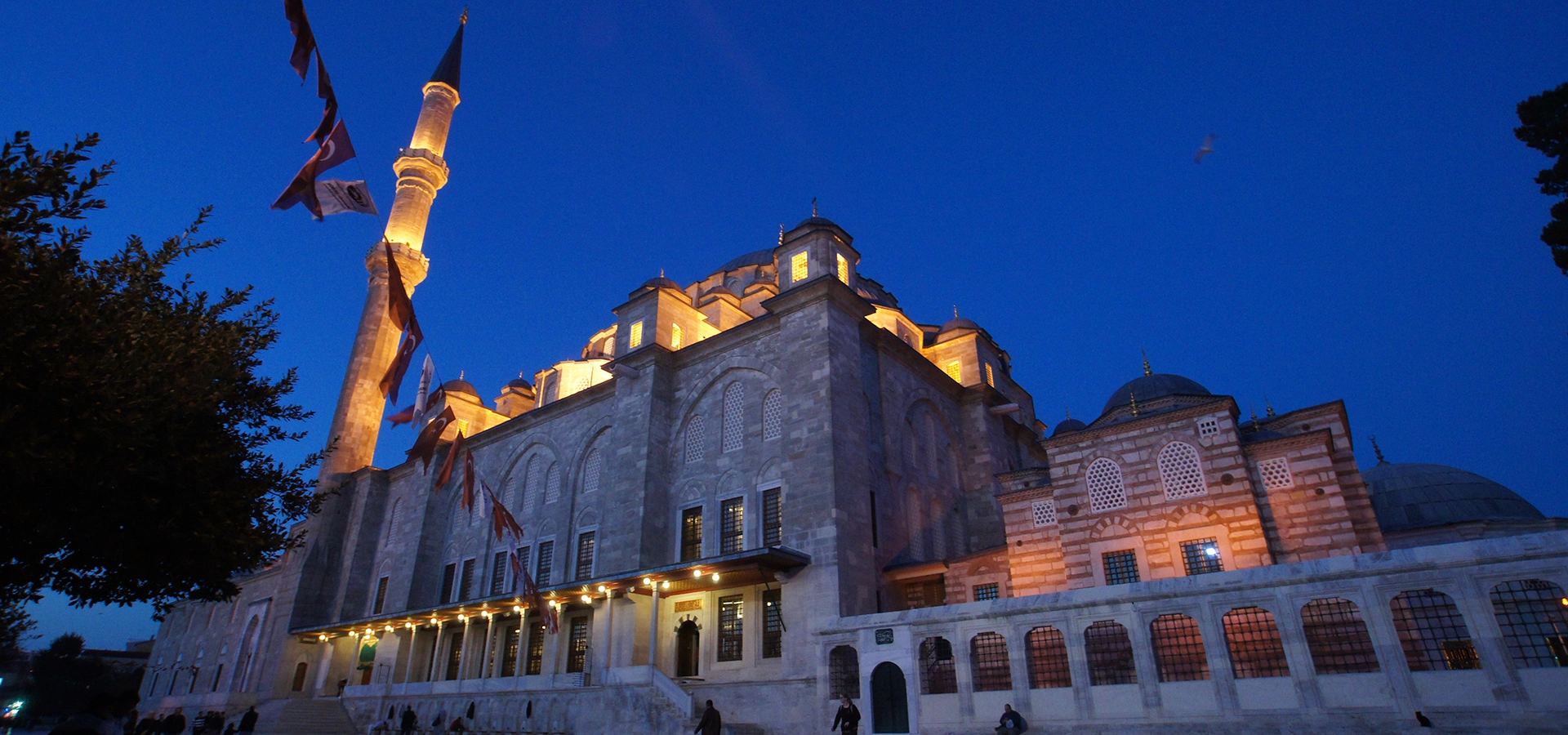
Private Fatih & Imperial Istanbul Tour
Ask us about a tailor-made route focused on Fatih Mosque, Mehmed the Conqueror, Zeyrek, Roman Constantinople and the historic neighborhoods beyond Sultanahmet.
Request a Custom Tour





The Fatih Mosque, known in Turkish as Fatih Camii, stands on Istanbul's historic peninsula in the district that took its name from Sultan Mehmed II, the Ottoman ruler remembered as Fatih Sultan Mehmed — Mehmed the Conqueror.
The mosque was the monumental center of one of the greatest charitable and educational complexes created after the Ottoman conquest of Constantinople in 1453. Construction began in 1463 and was completed in 1470 under the architect Atik Sinan. The vast foundation included madrasas, a hospital, guest accommodation, an imaret, a library, a bath and other institutions that helped shape the new Ottoman capital.
The original mosque suffered repeated earthquake damage and was catastrophically affected by the great earthquake of 1766. Sultan Mustafa III ordered a major rebuilding campaign, and the mosque reopened for worship in 1771. The present building therefore combines surviving elements of Mehmed II's 15th-century foundation with a grand 18th-century reconstruction associated with imperial architect Mehmed Tahir Ağa.
Behind the mosque stands the tomb of Mehmed the Conqueror, who died in 1481. Together with the surrounding tombs, courtyards, surviving medrese buildings and neighborhood streets, Fatih Mosque offers one of the clearest places in Istanbul to understand how conquest, religion, education, charity and imperial memory were woven into the urban fabric of the Ottoman capital.
Discover the first great imperial mosque complex commissioned by Mehmed II after the conquest of Constantinople.
See the monumental mosque rebuilt after the devastating earthquake of 1766 during the reign of Mustafa III.
Visit the tomb of the Ottoman sultan who conquered Constantinople in 1453 and transformed it into his capital.
Explore the center of an immense religious, educational and charitable foundation that shaped the Fatih district.
Essential information for visiting one of the most historically important Ottoman imperial mosques in Istanbul.
Ali Kuşçu neighborhood, Fatih district, on the historic peninsula of Istanbul.
Open on Google MapsCommissioned by Mehmed II and built between 1463 and 1470 by architect Atik Sinan.
Largely rebuilt between 1767 and 1771 after the great Istanbul earthquake of 1766.
Mehmed the Conqueror is buried in a monumental tomb immediately behind the mosque.
No general admission ticket is required; Fatih Mosque remains an active place of worship.
Allow around 60–90 minutes for the mosque, courtyard, tombs and immediate külliye surroundings.
Fatih Mosque is not simply a major Ottoman mosque: it was a powerful statement about the creation of a new imperial capital after 1453.
The importance of Fatih Mosque begins with its patron, Sultan Mehmed II. After conquering Constantinople in 1453, Mehmed launched an ambitious program of reconstruction, settlement and institution-building. The Fatih complex became one of the defining monuments of that transformation.
The külliye was established on the city's fourth hill, in the area associated with the former Byzantine Church of the Holy Apostles. The new Ottoman complex reorganized this elevated part of the city around a mosque, educational institutions, charitable services and the sultan's dynastic memory.
The foundation was enormous in scale. Its madrasas became important centers of higher learning, while the hospital, kitchens, guest facilities, bath and other charitable institutions served the wider population. The surrounding neighborhood gradually took the name Fatih, meaning “the Conqueror.”
The mosque also became one of Istanbul's most important places of remembrance because Mehmed II was buried here after his death in 1481. His tomb remains a major destination for visitors interested in Ottoman history as well as for people who come to pay their respects.
For travelers using our guide to places to visit in Istanbul, Fatih Mosque is especially valuable because it reveals a different layer of the historic peninsula from Sultanahmet: the urban world created by the Ottoman dynasty in the decades immediately following the conquest.
When the Ottomans captured Constantinople in 1453, the city inherited by Mehmed II contained the remains of centuries of Byzantine imperial, religious and civic architecture. The new sultan immediately began reshaping the city through repairs, new foundations, markets, palaces, religious buildings and population policies.
One of his most ambitious projects was the complex that would later be known as the Fatih Külliyesi. Construction began in March 1463 on the fourth hill of the historic peninsula and continued until December 1470. The architect was Sinanüddin Yusuf bin Abdullah, better known as Atik Sinan to distinguish him from the later and more famous Mimar Sinan.
The original mosque was architecturally different from the building standing today. Its large central dome was supported by a major semi-dome on the qibla side, while domed side spaces extended the prayer hall. The mosque formed the center of a rigorously organized complex surrounded by educational and charitable buildings.
Fatih Mosque suffered damage in several earthquakes, including the major earthquake of 1509, remembered in Ottoman sources as the “Little Apocalypse.” Further repairs followed after later seismic events, but the earthquake of 22 May 1766 caused catastrophic destruction. The main dome collapsed and large parts of the structure were damaged beyond practical repair.
Sultan Mustafa III ordered the mosque rebuilt. Work began in 1767, and the reconstructed mosque opened for worship in April 1771. The new design preserved important surviving parts of the earlier foundation while creating the great central-domed space visible today.
Mehmed II conquers Constantinople and begins transforming the city into the Ottoman imperial capital.
Construction of the Fatih Mosque and its monumental külliye begins on the fourth hill.
The original complex is completed under architect Atik Sinan.
Mehmed the Conqueror dies and is buried beside the mosque that bears his title.
A devastating earthquake causes the main dome to collapse and severely damages the mosque.
Sultan Mustafa III commissions the reconstruction that largely defines the mosque seen today.
The site of Fatih Mosque is closely connected with one of the most important lost monuments of Byzantine Constantinople: the Church of the Holy Apostles, known in Greek as the Hagioi Apostoloi. The church stood in this elevated part of the city and served for centuries as a major religious and imperial funerary center.
The Holy Apostles was associated with the burials of Byzantine emperors and members of the imperial family. By the time of the Ottoman conquest, however, the church had declined considerably and the surrounding district was much less prosperous than in earlier centuries.
Immediately after 1453, the church briefly served as the seat of the Orthodox Patriarchate. The patriarchate moved elsewhere in 1455, after which Mehmed II selected the area for the new imperial complex that would carry his name.
Because the Byzantine church disappeared and the Ottoman complex underwent major rebuilding over the centuries, many details of the precise relationship between the church's foundations and the later mosque remain difficult to reconstruct archaeologically. For visitors, the most important point is that the location represents a remarkable continuity of imperial sacred geography across Byzantine and Ottoman Istanbul.
Mehmed II's decision to construct an enormous religious and charitable complex was central to his vision for post-conquest Istanbul. The project gave the Ottoman dynasty a monumental presence away from the former Byzantine palace zone and helped stimulate settlement around the city's fourth hill.
The mosque occupied the center of the composition. Around it were organized sixteen madrasas, together with a hospital, guesthouse, imaret or public kitchen, library, bath and associated service buildings. The complex combined worship, education, healthcare, hospitality and charity within a single endowed institution.
The madrasas were especially important. They formed one of the leading centers of advanced Islamic learning in the Ottoman capital and helped establish Istanbul as a major intellectual center of the empire. Their arrangement on both sides of the mosque reinforced the planned and monumental character of the külliye.
This was architecture used as urban policy. By attracting scholars, students, religious officials, workers, residents and visitors, the Fatih complex helped generate a new neighborhood and a new social center within the historic peninsula.
The mosque proclaimed Mehmed II's authority and his role in establishing a new Ottoman capital.
A major network of educational buildings turned the complex into a center of advanced scholarship.
The original foundation included a hospital as part of its broad charitable mission.
A public kitchen formed part of the system of welfare and hospitality supported by the endowment.
Guest accommodation served travelers and visitors within the wider complex.
The külliye helped shape the district that still carries the Conqueror's title: Fatih.
Istanbul's location in an active seismic region repeatedly affected the Fatih complex. The original mosque required repairs after major earthquakes in 1509, 1557 and 1754, but the disaster of 1766 was far more destructive.
The earthquake caused the great dome to collapse and left major walls too badly damaged for ordinary repair. Sultan Mustafa III therefore ordered a comprehensive reconstruction on the same sacred and imperial site.
Rebuilding began on 31 July 1767 and continued until 1771. The reconstruction is traditionally associated with chief imperial architect Mehmed Tahir Ağa, while contemporary administrative records also reflect the participation of other officials during the long building campaign.
The result was not a simple copy of the 15th-century mosque. The new prayer hall adopted a more developed centralized arrangement in which the main dome is supported by four large semi-domes, creating a spacious interior closer to the mature tradition of Ottoman imperial mosque design.
The present Fatih Mosque has a monumental, nearly square prayer hall organized around a central dome approximately 26 meters in diameter. The dome rests on four great arches carried by massive piers and is supported on all four sides by large semi-domes.
This four-semi-dome arrangement gives the interior a strong sense of symmetry and expansion. Additional smaller semi-domes and domes cover peripheral spaces, galleries and transitional areas around the central prayer hall. The result is a bright and unified interior that differs significantly from the documented plan of Mehmed II's original mosque.
The mosque has two minarets, while the courtyard is framed by domed porticoes and centered on a historic şadırvan, or ablution fountain. Alternating red and light-colored stone in the arches creates one of the courtyard's most distinctive visual effects.
Although much of the structure belongs to the rebuilding of 1767–1771, important components from the first mosque survived. The complex therefore rewards close observation: its architecture is not the product of a single moment but the result of multiple Ottoman periods layered together.
A great dome roughly 26 meters in diameter dominates the present prayer hall.
Large semi-domes extend the central space in four directions and create the mosque's balanced interior.
Four great supports carry the principal arches beneath the central dome.
Two minarets rise from the entrance side of the mosque and preserve fabric from earlier building phases in their lower sections.
Domed porticoes surround a marble-paved courtyard centered on an ablution fountain.
The reconstruction blends surviving early Ottoman elements with details belonging to the 18th-century rebuilding.
Because the earthquake of 1766 destroyed so much of the first mosque, most visitors are seeing an 18th-century reconstruction rather than the complete building commissioned by Mehmed II. Even so, several important components preserve the memory and fabric of the original foundation.
Among the elements generally identified as surviving from the earlier mosque are parts of the courtyard walls, the şadırvan, the monumental portal, the mihrab, portions of the surrounding enclosure and the lower sections of the minarets up to around the level of the first balconies.
The courtyard is therefore especially important for understanding the age of the site. Its stonework, monumental entrance and decorative details provide a physical link with the great building campaign of the 1460s.
Significant sections of the original fountain courtyard survived later earthquakes and rebuilding.
The courtyard ablution fountain belongs to the historic core associated with the first mosque.
The great entrance preserves important early Ottoman stonework from Mehmed II's foundation.
The prayer niche retains an important connection with the 15th-century phase of the mosque.
Lower sections of the minarets preserve material belonging to the earlier structure.
Seeing Fatih Mosque means reading both the original Conqueror-era fabric and the major 18th-century reconstruction.
Fatih Mosque was designed as the center of a külliye — a large endowed complex in which religious worship was integrated with education, welfare, healthcare, hospitality and public services. Its extraordinary scale made the Fatih foundation one of the most ambitious institutions of early Ottoman Istanbul.
The famous Sahn-ı Seman madrasas formed the educational heart of the complex. Sixteen medrese buildings were arranged in groups on the north and south sides of the mosque, creating an organized academic environment for advanced study.
The original foundation also included a darüşşifa or hospital, a tabhane for guests, an imaret or public kitchen, a library, a bath, commercial facilities and other service structures supported by the sultan's endowment. Some buildings disappeared or were heavily altered over time, while others survive in varying states and continue to shape the district.
The complex illustrates an essential feature of Ottoman urbanism: a great mosque was not conceived only as a prayer building. It could function as the center of an entire social, educational and charitable ecosystem.
The celebrated medrese system helped make Fatih one of the leading centers of higher learning in the Ottoman capital.
The original complex included a hospital serving the charitable mission of the foundation.
The public kitchen supported students, staff, travelers and people in need.
Guest facilities made the complex part of a wider network of Ottoman hospitality.
Books and scholarly life reinforced the intellectual role of the mosque complex.
The külliye generated markets, housing and neighborhood life around one of Istanbul's major hills.
Behind the qibla side of Fatih Mosque stands the tomb of Sultan Mehmed II, one of the most historically significant Ottoman royal tombs in Istanbul. Mehmed died in 1481 while on campaign near Gebze and was brought back to his capital for burial beside the mosque he had founded.
The tomb suffered badly in the 1766 earthquake and was extensively rebuilt soon afterward. Its present appearance therefore reflects later Ottoman restoration rather than an untouched 15th-century mausoleum. The richly decorated interior and ceremonial setting emphasize the continuing importance of Mehmed's memory within Ottoman and Turkish history.
Visitors come to the tomb for different reasons. Some approach it as a major historical monument connected with the conquest of Constantinople, while others come in a devotional spirit to recite prayers and pay their respects. Both contexts are visible in the atmosphere of the site.
Nearby stands the smaller tomb of Gülbahar Hatun, wife of Mehmed II and mother of Sultan Bayezid II. The wider cemetery also contains the graves and tombs of important Ottoman statesmen, soldiers, scholars and later historical figures.
Mehmed the Conqueror dies and is buried beside the imperial mosque complex he created.
The earlier tomb is badly damaged and undergoes major reconstruction afterward.
The tomb became a powerful place of remembrance for the ruler who conquered Constantinople.
Many visitors still approach the tomb quietly for prayer and reflection rather than simply as a museum sight.
The burial ground around Fatih Mosque developed into an important landscape of Ottoman memory. Its prestige came first from the presence of Mehmed II's tomb, but over the centuries other members of the dynasty, statesmen, military commanders, scholars and public figures were also buried in the wider complex.
The tomb of Gülbahar Hatun stands close to that of Mehmed II. It is an octagonal domed structure that was heavily repaired after the earthquake of 1766 and again after later damage.
The complex also contains the monumental 19th-century tomb of Nakşidil Valide Sultan, mother of Sultan Mahmud II, whose architecture displays the more fluid and decorative character of later Ottoman taste.
Among other notable graves and memorials in the wider hazire are figures such as Gazi Osman Pasha, remembered as the defender of Plevna, along with numerous religious scholars, officials and intellectuals. The cemetery should be visited quietly and respectfully as a historic burial ground that remains part of a living religious complex.
Visit the tomb of Mehmed II's wife and the mother of Sultan Bayezid II.
See a distinguished later Ottoman tomb associated with the mother of Sultan Mahmud II.
The celebrated Ottoman commander known for the defense of Plevna is buried within the wider Fatih complex.
Ottoman gravestones and mausoleums reveal centuries of changing calligraphy, rank, costume symbolism and funerary art.
A good visit should include the prayer hall, the courtyard and the tomb area rather than focusing only on the mosque's exterior. The site becomes much more meaningful when the surviving 15th-century elements are considered together with the 18th-century reconstruction and the wider külliye landscape.
Look upward toward the central dome and the four large semi-domes that organize the spacious 18th-century interior.
Study the domed arcades, alternating stone arches and marble paving around the historic şadırvan.
Examine one of the most important surviving architectural links with Mehmed II's original mosque.
Observe the ceremonial focus of the prayer hall and details that connect different periods of Ottoman workmanship.
Visit the resting place of the Ottoman ruler whose conquest of Constantinople transformed world history.
Walk around the surrounding streets and surviving educational buildings to understand the original scale of the complex.
Shoulders and knees should be covered. Women should cover their hair when entering the main prayer hall.
Shoes must be removed before entering carpeted prayer areas. Follow the system provided at the entrance.
Sightseeing is easiest between prayer periods, especially outside the busy Friday midday prayer.
Mehmed II's tomb remains a place of prayer and remembrance, so keep conversation and photography discreet.
Allow extra time for Zeyrek, the Valens Aqueduct, Saraçhane and the surrounding historic streets.
Fatih is hilly, and the most rewarding nearby routes involve walking over sloping streets and historic paving.
Begin at Fatih Mosque in the morning, ideally between congregational prayer periods. Start with the courtyard before entering the main prayer hall, then continue around the qibla side to the tomb of Mehmed the Conqueror and the surrounding historic burial area.
After the mosque, walk downhill toward Zeyrek Mosque / Pantokrator Monastery. This short transfer creates a remarkable historical contrast between a major Middle Byzantine monastic complex and the Ottoman imperial district created after 1453.
Continue toward the Valens Aqueduct and Saraçhane. Nearby, the remains of the Church of St. Polyeuktos reveal another important layer of Byzantine Constantinople.
If you still have time and energy, continue toward Süleymaniye Mosque for one of the finest panoramic and architectural finales on the historic peninsula. This extended route links late antiquity, Byzantium, the conquest era and the mature Ottoman imperial city within a compact part of Istanbul.
Fatih Mosque is a working mosque rather than a ticketed museum. It is used throughout the day for the five daily prayers, Friday congregational prayer, funerals and religious gatherings. Visitors should therefore organize sightseeing around active worship.
There is no general admission fee to enter the mosque. Visitors of all backgrounds can normally enter respectfully outside congregational prayer periods, subject to any temporary restrictions or local arrangements in place on the day.
The tomb of Mehmed the Conqueror is located immediately behind the mosque and is normally visited as part of the same stop. Access arrangements for tombs can occasionally change because of ceremonies, maintenance, restoration or crowd management, so travelers for whom the tomb is a priority should allow flexibility.
Prayer times change daily throughout the year. Friday midday is the busiest regular period, and major religious nights or holidays can bring large congregations. A weekday morning or mid-afternoon between prayers is usually the easiest time for a sightseeing visit.
Usually the calmest period for seeing the courtyard, interior architecture and tomb area at an unhurried pace.
A good choice for combining the mosque with Zeyrek, the Valens Aqueduct or Süleymaniye before evening.
An important day for worship but very busy around the midday congregational prayer; sightseeing is easier at another time.
The district can be especially atmospheric, but expect more worshippers and greater activity around prayer times.
Mild weather is ideal for walking between the mosque, Zeyrek, Saraçhane and Süleymaniye.
The exterior and surrounding neighborhood become particularly atmospheric as the light softens over the historic peninsula.
Enough for a quick look at the courtyard and prayer hall outside congregational prayer.
The best range for the mosque interior, courtyard, Mehmed II's tomb and nearby historic graves.
Add a slower walk around the surviving külliye buildings and the surrounding Fatih neighborhood.
Combine Fatih Mosque with Zeyrek, the Valens Aqueduct, St. Polyeuktos and possibly Süleymaniye.
Fatih Mosque offers excellent opportunities for architectural photography. The courtyard, domes, minarets, monumental portal and tomb garden can all be photographed without intruding on worshippers when approached carefully.
Use the central şadırvan and surrounding arcades to create balanced compositions beneath the mosque's domes.
Photograph upward from the side of the prayer hall while remaining clear of people engaged in prayer.
The monumental entrance rewards close views of stonework, inscriptions and surviving early Ottoman elements.
Exterior views are atmospheric, but use restraint inside the tomb where visitors may be praying.
Step into the surrounding streets to frame the mosque rising above the dense urban fabric of Fatih.
Avoid photographing people during prayer, Qur'an recitation or private acts of devotion without permission.
Fatih Mosque occupies a large elevated site in a busy central neighborhood. The immediate mosque complex is relatively open, but the surrounding district is hilly and some historic surfaces, thresholds and crowded entrance areas can affect mobility.
The main courtyard has broad paved surfaces, though entrance thresholds and crowd conditions may vary.
Shoe removal and transitions onto carpeted areas can require extra care for visitors with limited mobility.
The paths around the imperial tombs are generally short but can become crowded at busy times.
Routes toward Zeyrek and the Golden Horn involve slopes, uneven paving and some steep sections.
A taxi can reduce uphill walking, though vehicles may not be able to stop directly beside every entrance during busy periods.
If step-free access is essential, confirm the most suitable current entrance with mosque staff on arrival.
Fatih Mosque stands in the heart of the historic Fatih district, north of Aksaray and west of the Valens Aqueduct. Because the mosque sits away from the main Sultanahmet tram corridor, buses, metro connections, taxis and walking combinations are often the most practical choices.
Take the T1 tram toward Laleli or Aksaray and continue by bus, taxi or an uphill walk through the historic peninsula.
Frequent city buses travel toward Fatih along routes serving the historic peninsula; a taxi is also a straightforward option.
The M2 Vezneciler metro station is within walking distance for travelers comfortable with a roughly 15–20 minute urban walk.
Walking is possible and rewarding, but expect slopes as you cross the historic hills toward Fatih.
Bus services along Fevzi Paşa Caddesi provide some of the most direct public-transport access to the Fatih neighborhood.
Ask for “Fatih Camii.” Traffic can be heavier around Friday prayer, religious holidays and major ceremonies.
Fatih Mosque sits within one of the richest historical zones of the old city. Use our complete Istanbul visitor guide to connect the Conqueror's imperial complex with Byzantine churches, Roman infrastructure and later Ottoman monuments.
Explore one of Constantinople's greatest surviving Middle Byzantine monastic complexes, a short walk downhill from Fatih.
See the monumental Roman aqueduct that carried water across the historic peninsula for Byzantine and Ottoman Istanbul.
Visit the archaeological remains of a magnificent 6th-century Byzantine church near Saraçhane.
Continue to Mimar Sinan's 16th-century masterpiece for imperial architecture and superb Golden Horn views.
Walk toward Beyazıt and explore the historic covered market at the commercial heart of the old city.
Continue toward Çemberlitaş to see one of the great surviving monuments of Constantine's 4th-century capital.
Head north through historic Fatih to another important Byzantine church complex with remarkable late Byzantine heritage.
Continue west toward the great land walls that defended Constantinople for more than a thousand years.
Fatih Mosque is in the Ali Kuşçu neighborhood of Istanbul's Fatih district, on the historic peninsula and on the city's traditional fourth hill.
The original mosque was commissioned by Sultan Mehmed II, known as Mehmed the Conqueror, and designed by architect Atik Sinan.
The first mosque and complex were constructed between 1463 and 1470. The present mosque largely dates from the rebuilding of 1767–1771 after the earthquake of 1766.
No. The original mosque was catastrophically damaged in 1766 and substantially rebuilt, although important earlier elements survive.
The architect was Sinanüddin Yusuf bin Abdullah, commonly called Atik Sinan or Sinan the Elder.
Sultan Mustafa III ordered the reconstruction. The rebuilding is traditionally associated with chief imperial architect Mehmed Tahir Ağa and was completed in 1771.
It was the first great Ottoman imperial mosque complex built in Istanbul after the conquest and became a major center of worship, education, charity and urban development.
The Fatih complex was established in the area occupied by the former Byzantine Church of the Holy Apostles, which had ceased functioning there before construction of the Ottoman mosque began.
Yes. Sultan Mehmed II was buried in a monumental tomb behind the mosque after his death in 1481.
The complex includes the tomb of Gülbahar Hatun and the graves or mausoleums of many other Ottoman figures, including statesmen, scholars and military commanders.
Yes. It is an active mosque rather than a ticketed museum, so there is no general admission fee.
Visitors of all backgrounds can normally enter respectfully outside congregational prayer periods, subject to current mosque arrangements.
Women should cover their hair inside the main prayer hall, and all visitors should wear clothing that covers shoulders and knees.
Yes. Shoes must be removed before entering the carpeted prayer area.
Sightseeing may be restricted during congregational prayers. Visiting between prayer periods is more comfortable and respectful.
A weekday morning is usually best for a quieter experience. Friday around midday is much busier because of congregational prayer.
Allow around 60–90 minutes for the mosque, courtyard, Mehmed II's tomb and immediate külliye area.
Discreet photography is generally possible, but visitors should never disturb worshippers or photograph people engaged in private prayer without permission.
Surviving elements include significant parts of the fountain courtyard, the şadırvan, monumental portal, mihrab, lower minaret sections and parts of the enclosure.
Zeyrek Mosque, the Valens Aqueduct, St. Polyeuktos, Süleymaniye Mosque and several historic Fatih neighborhoods can be combined with the mosque.
Absolutely. It is one of the best places in Istanbul for understanding Mehmed II, the transformation of Constantinople after 1453 and the development of Ottoman imperial architecture.
Never stand in front of someone praying or block prayer rows, entrances or circulation routes.
Modest clothing is expected inside the mosque and shows respect for its religious function.
Avoid loud conversation, speakerphone use and disruptive group behavior inside the prayer hall and tombs.
Do not turn prayer, grief or personal devotion into intrusive photography.
Do not sit on grave structures, touch delicate historic surfaces or block visitors who are praying.
Funerals, religious events and crowd management can temporarily change normal visitor routes.
Connect Fatih Mosque with Mehmed the Conqueror, Byzantine Constantinople, Roman monuments and the neighborhoods of the historic peninsula through a private route shaped around your interests and without compulsory shopping stops.
Choose a focused half-day visit around Fatih Mosque, Zeyrek and the Valens Aqueduct, or a deeper private route following the transformation of Constantinople from the Byzantine capital into Ottoman Istanbul.
Ask us about a tailor-made route focused on Fatih Mosque, Mehmed the Conqueror, Zeyrek, Roman Constantinople and the historic neighborhoods beyond Sultanahmet.
Request a Custom Tour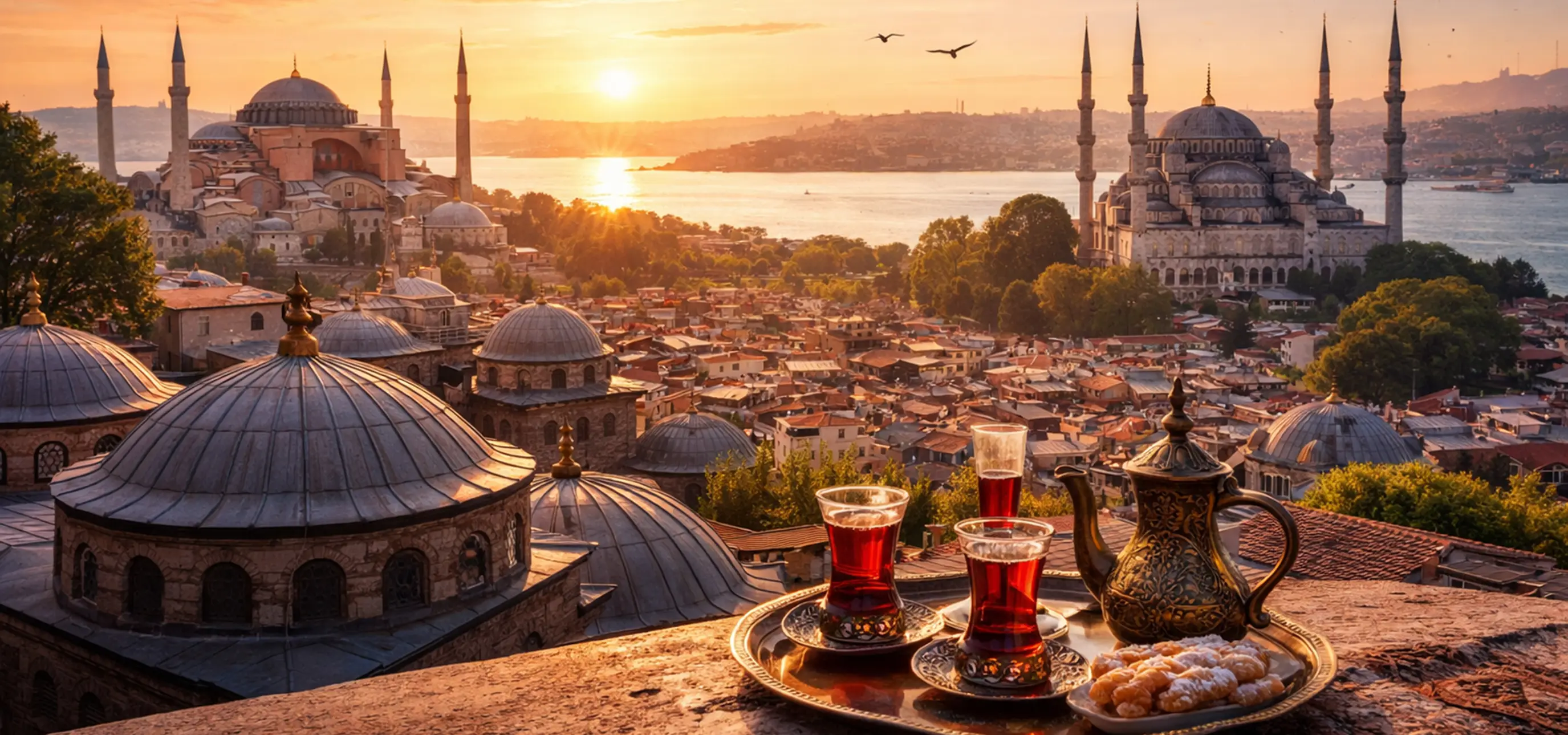
Discover imperial mosques, Byzantine churches, archaeological sites, historic neighborhoods, markets, palaces and waterfront districts across Istanbul.
View Istanbul GuideFollow the story from Mehmed the Conqueror's imperial district to Byzantine churches, Roman infrastructure and Ottoman masterpieces.
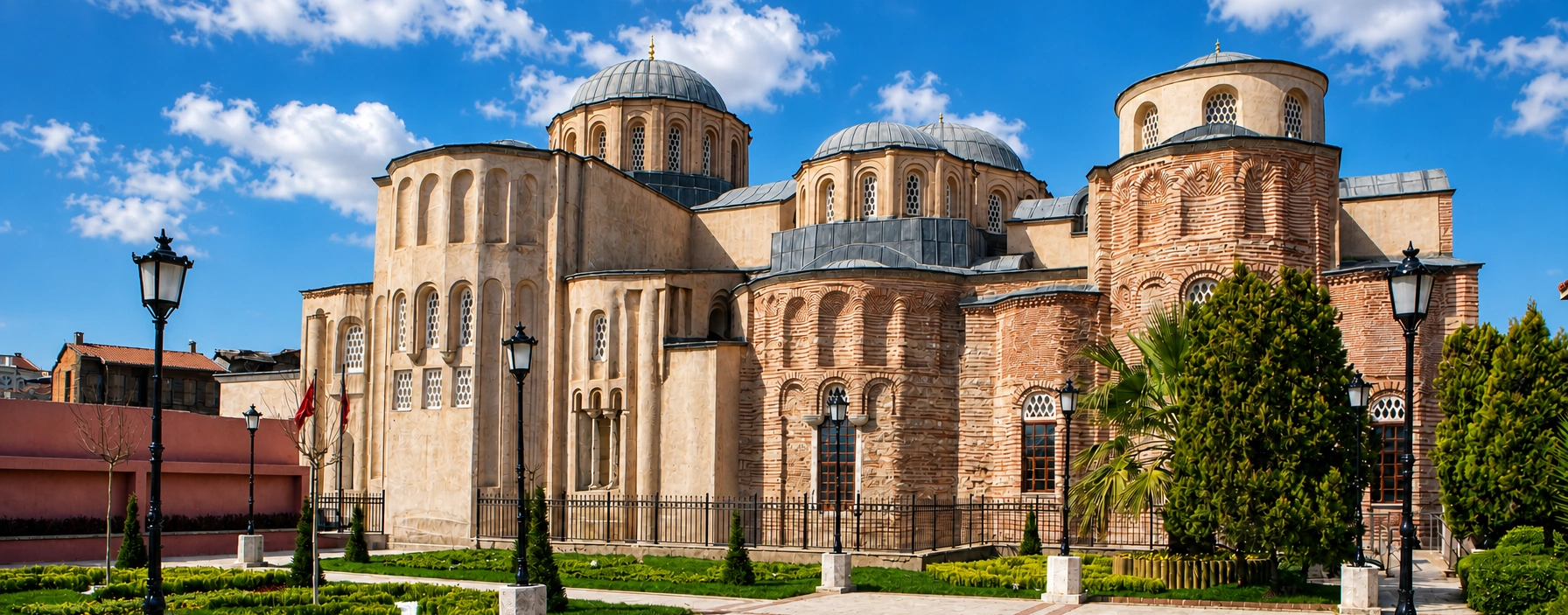
Explore one of Constantinople's greatest surviving Middle Byzantine monastic foundations just downhill from Fatih.
Explore Zeyrek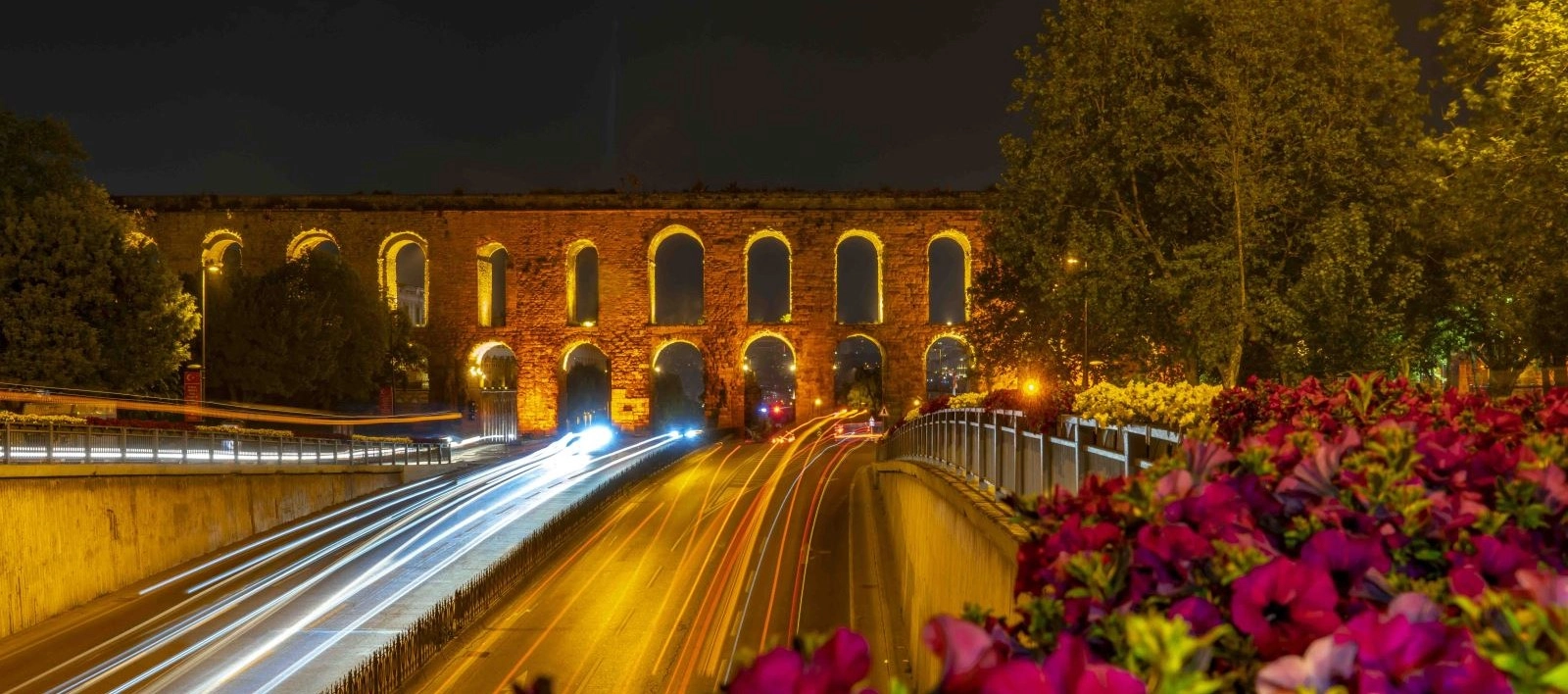
See the monumental Roman water bridge that remained part of Constantinople and Ottoman Istanbul for centuries.
Explore the Aqueduct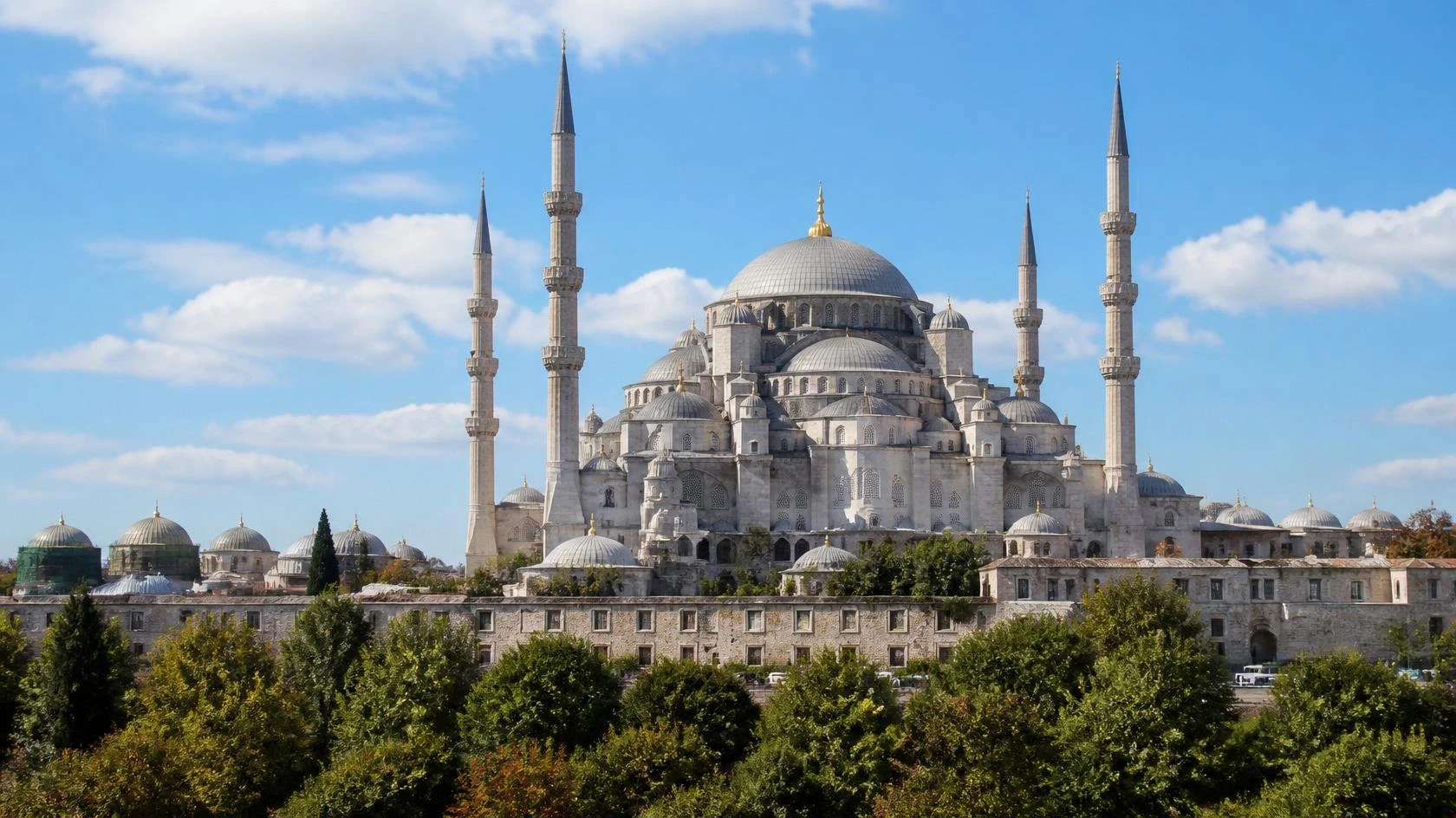
Continue to Mimar Sinan's 16th-century masterpiece and one of the greatest Ottoman imperial complexes in Istanbul.
Explore Süleymaniye