Private İznik History Tour
Ask us about a tailor-made exploration of Nilüfer Hatun Imaret, Hagia Sophia, ancient city walls, Ottoman monuments and İznik's ceramic heritage.
Request a Custom Tour





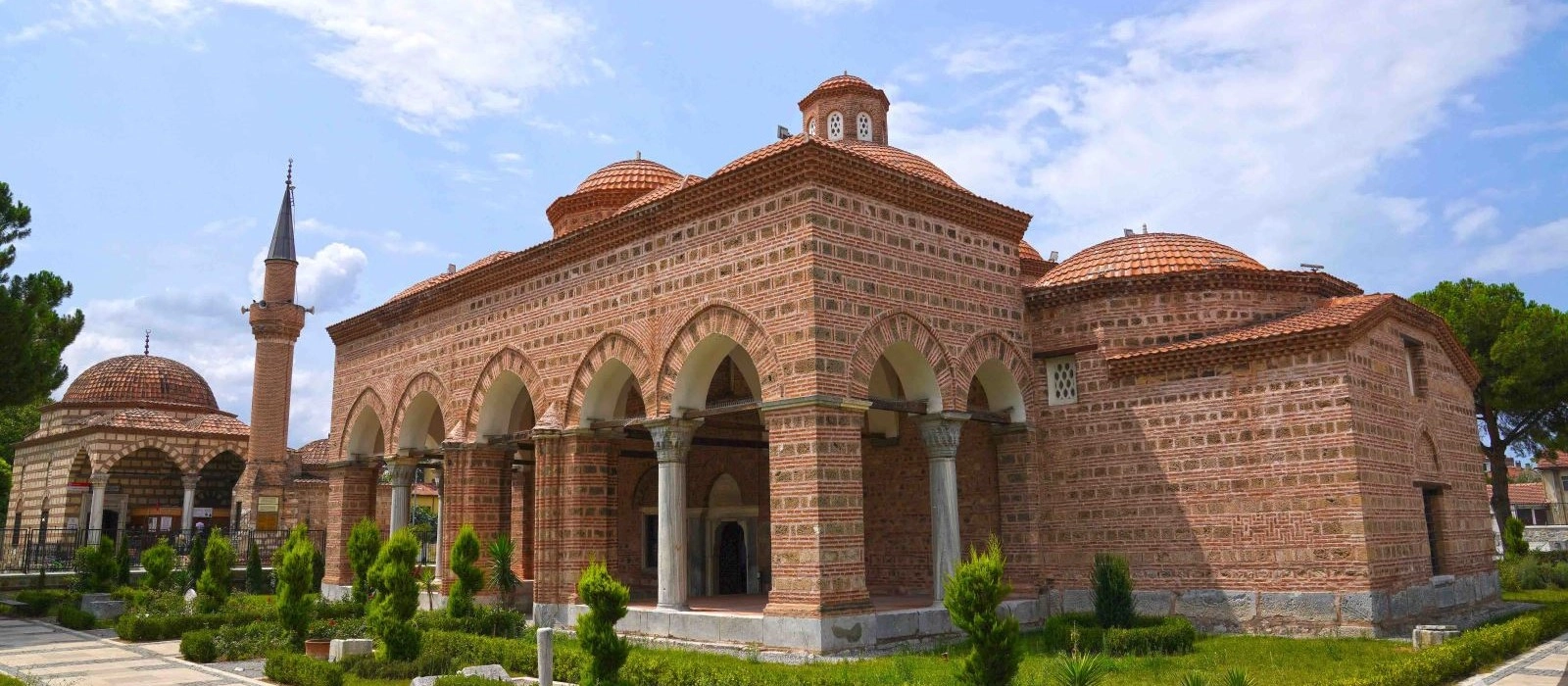
The Nilüfer Hatun Imaret is one of the most important surviving monuments of early Ottoman İznik. Standing close to the historic center of the city, the elegant stone-and-brick building was commissioned in 1388 by Sultan Murad I in memory of his mother, Nilüfer Hatun.
The monument belongs to the formative period when Ottoman architects were developing a distinctive architectural language from traditions inherited from Anatolia, the Seljuks and the Byzantine world. Its domes, arches, alternating brick-and-stone masonry and carefully proportioned portico make it one of İznik's most beautiful Ottoman buildings.
For decades the monument was widely known simply as the İznik Museum. After restoration and the reorganization of İznik's museum collections, it now officially operates as the Nilüfer Hatun İmareti Turkish-Islamic Arts Museum.
Inside, visitors can see examples associated with İznik ceramics and tiles, coins and objects connected with religious and social life, while the surrounding garden contains Islamic tombstones, inscriptions, fountain elements, well rings and other historic stonework.
Commissioned by Sultan Murad I in memory of his mother, Nilüfer Hatun.
See an exceptional reverse-T, or tabhaneli, building with domes, vaults and arcades.
Discover ceramics and displays explaining one of İznik's most celebrated artistic traditions.
Explore a monument that has served as a museum since the mid-20th century.
Essential information about one of İznik's finest surviving early Ottoman monuments.
Eşrefzade Mahallesi, Müze Sokak, central İznik, Bursa.
Open on Google MapsCompleted in 1388 during the reign of Sultan Murad I.
Sultan Murad I, who commissioned the building in memory of his mother Nilüfer Hatun.
Early Ottoman reverse-T, or zâviyeli/tabhaneli, architectural tradition.
Nilüfer Hatun İmareti Turkish-Islamic Arts Museum.
Allow approximately 45–75 minutes for the building, displays and museum garden.
The monument connects İznik's early Ottoman history, charitable institutions, architecture and world-famous ceramic tradition in a single historic setting.
The Nilüfer Hatun Imaret was constructed only a few generations after the emergence of the Ottoman principality. İznik itself had been conquered by the Ottomans in 1331 and became one of the dynasty's most important early political, religious and intellectual centers.
By the time Sultan Murad I commissioned the monument in 1388, Ottoman architecture was beginning to develop recognizable forms that would eventually lead to the monumental mosques and charitable complexes of Bursa, Edirne and Istanbul.
The building is especially valuable because it preserves the architectural language of this experimental period. Its central domed space, lateral rooms, vaulted sections and entrance portico belong to the family of structures often described as zâviyeli, tabhaneli or reverse-T-plan buildings.
Its importance is not limited to architecture. The monument also reflects the Ottoman concept of vakıf — charitable foundations through which rulers and wealthy patrons supported religious, educational and social institutions.
Today the building gives visitors a particularly rewarding introduction to Ottoman İznik before exploring the city's mosques, walls, gates, ceramic workshops and archaeological remains.
The monument was commissioned by Sultan Murad I, the third Ottoman ruler, whose reign from 1362 to 1389 witnessed major Ottoman expansion in both Anatolia and the Balkans.
An inscription above the entrance dates the building to 790 AH, corresponding to 1388. It was dedicated to Murad's mother, Nilüfer Hatun, one of the most important women associated with the first generations of the Ottoman dynasty.
Nilüfer Hatun had a close association with İznik. The famous 14th-century traveler Ibn Battuta, who visited the city shortly after its Ottoman conquest, described meeting an influential and respected woman generally identified by historians as Nilüfer Hatun.
The monument was traditionally described as an imaret, a term associated with charitable food distribution and hospitality. Architectural historians also place it within the broader family of early Ottoman zaviye or tabhane buildings, which could combine charitable, religious and accommodation functions.
Following centuries of changing use, the structure was used for storage during part of the Republican period. It was subsequently restored and opened as a museum in 1960.
For many years it housed archaeological material discovered in and around İznik and became widely known as the İznik Museum. Following later restoration and museum reorganization, the historic monument was reopened with a stronger emphasis on Turkish-Islamic art and İznik's Ottoman heritage.
The Ottomans capture Nicaea, transforming the Byzantine city into Ottoman İznik.
Murad I commissions the monument in memory of Nilüfer Hatun.
The building functions within the charitable and religious institutional life of İznik.
The historic building is used for storage before restoration.
The restored Nilüfer Hatun Imaret opens to visitors as a museum.
The monument operates as the Nilüfer Hatun İmareti Turkish-Islamic Arts Museum.
Nilüfer Hatun was the mother of Sultan Murad I and one of the best-known women associated with the formative decades of the Ottoman state.
Her biography is partly obscured by later traditions, and some stories surrounding her origins remain debated. What is clearer is that she enjoyed considerable status and became associated with charitable foundations and public works.
Historical evidence also connects her closely with İznik. When the Moroccan traveler Ibn Battuta visited the recently conquered city in 1332–1333, he described being received by a respected Ottoman woman whom historians generally identify as Nilüfer Hatun.
Her son Murad's decision to erect an important charitable monument in her memory more than half a century later demonstrates the lasting significance of her name within the Ottoman dynasty.
Even before entering the museum, spend time studying the building itself. The Nilüfer Hatun Imaret is one of the most elegant surviving examples of 14th-century Ottoman architecture.
Its walls use carefully arranged alternating courses of brick and cut stone. This construction technique creates a richly patterned surface and reflects architectural traditions that circulated throughout northwestern Anatolia during the Byzantine-Ottoman transition.
The entrance façade is dominated by a graceful five-bay portico. Arches carried by columns and piers create a shaded transitional space before visitors pass through the historic doorway into the principal interior.
Inside, a central space covered by a dome forms the architectural core. Side rooms open from this central area, creating the characteristic reverse-T arrangement associated with many early Ottoman multifunctional buildings.
The domes, vaults, arches and changes in height make the monument feel far larger and more complex than its exterior dimensions might suggest.
Courses of brick and carefully cut stone create one of the building's most recognizable visual features.
An elegant arcade creates a ceremonial transition between the garden and interior.
The principal interior space rises beneath a dome with natural illumination from above.
Rooms branching from the central space reflect the multifunctional nature of early Ottoman complexes.
Decorative brick arrangements add texture and geometric rhythm to the exterior walls.
The entrance inscription preserves essential information about the monument's patronage and date.
The word imaret is commonly associated with charitable institutions that provided meals to travelers, students, religious figures and people in need. Such institutions were normally supported by a vakıf, or charitable endowment.
In early Ottoman architecture, however, the terminology is not always simple. Buildings traditionally called imarets could combine several functions, including worship, hospitality, accommodation, communal gathering and food distribution.
For this reason, architectural historians frequently classify Nilüfer Hatun Imaret among the zâviyeli or tabhaneli buildings of the early Ottoman period rather than imagining it only as a large medieval kitchen.
Understanding this multifunctional character makes the architecture easier to read. The central hall, side chambers and additional spaces were designed for a social institution whose role went far beyond a single activity.
The present museum presentation focuses strongly on the artistic and cultural traditions associated with İznik and the Ottoman period.
Official museum information highlights examples of İznik tiles, displays explaining ceramic production, coins from different civilizations and presentations illustrating aspects of religious and social life.
The museum garden extends the exhibition outdoors with historic stone objects, including Islamic tombstones, inscriptions, fountain elements and well rings.
See examples connected with the ceramic tradition that made İznik famous throughout the Ottoman world.
Displays help explain techniques involved in forming, decorating, glazing and firing ceramics.
Numismatic material reflects the many civilizations that shaped İznik and northwestern Anatolia.
Objects and interpretive displays introduce aspects of Islamic artistic and devotional culture.
Exhibition elements help visitors imagine everyday traditions beyond palaces and battlefields.
The landscaped garden contains tombstones, inscriptions, architectural fragments and water-related objects.
Few artistic traditions are more closely identified with İznik than its ceramics. From the late 15th century onward, workshops in the city produced extraordinary pottery and architectural tiles for Ottoman patrons across the empire.
İznik ceramics became famous for brilliant white surfaces, precise drawing and rich colors. Blue and turquoise dominated many early designs, followed by increasingly complex combinations of green, black and the celebrated raised coral-red associated with the finest 16th-century production.
Flowers such as tulips, carnations, roses and hyacinths became characteristic decorative motifs, along with saz leaves, arabesques, geometric patterns and elegant calligraphic compositions.
Tiles produced in İznik decorated some of the Ottoman Empire's greatest monuments, including imperial mosques and palaces in Istanbul. Seeing examples in İznik itself allows visitors to connect this international artistic achievement with the town where the workshops once operated.
Deep blue designs formed one of the defining features of early İznik ceramic production.
Turquoise introduced another brilliant tone to the increasingly complex Ottoman palette.
The raised red pigment of the 16th century became one of the most admired achievements of İznik workshops.
Tulips, carnations, roses and hyacinths transformed Ottoman gardens into permanent ceramic decoration.
Large tile panels supplied monumental mosques, palaces, tombs and other prestigious buildings.
Bowls, plates, jugs and other vessels carried İznik craftsmanship far beyond architectural commissions.
A visit combines architecture, museum displays and an open-air collection. The experience is compact enough to explore carefully without rushing.
Begin with the beautiful arcade and study its columns, arches, vaults and brick detailing.
Look for the historic inscription associated with Murad I and the monument's 1388 construction.
Stand beneath the principal dome to understand the reverse-T organization of the building.
Examine the colors, floral decoration and technical sophistication of İznik ceramic art.
Explore the smaller spaces that help reveal the multifunctional plan of the original complex.
Walk among tombstones, inscriptions and architectural fragments displayed around the monument.
Study the patterned masonry from several angles to appreciate the craftsmanship of the exterior.
Step back in the garden for one of the clearest views of the building's interconnected volumes.
Do not leave immediately after visiting the interior. The garden surrounding Nilüfer Hatun Imaret forms an important part of the museum experience.
Historic Islamic tombstones preserve inscriptions, calligraphy, titles, dates and decorative symbols that provide valuable evidence for the social history of İznik.
Other displayed objects include well rings, fountains, inscriptions and architectural fragments. Together they demonstrate how carved stone served both practical and commemorative purposes in Ottoman urban life.
Older museum descriptions also refer to Greek, Roman and Byzantine stone material formerly displayed around the building. As İznik's museum collections have been reorganized, the precise selection of outdoor objects can change, so visitors should regard the present garden display rather than older photographs as authoritative.
Walk around the monument before entering so the reverse-T plan and domed volumes are easier to understand.
The entrance arcade is one of the architectural highlights and deserves more than a quick photograph.
Official listings currently differ concerning the museum's weekly closing day.
Most visitors can comfortably see the architecture, displays and garden in 45–75 minutes.
The museum lies within İznik's compact historic center and works well as part of a walking day.
Follow current instructions concerning photography, touching exhibits and restricted areas.
Do not overlook the inscriptions and historic stonework displayed outside.
Knowing a little about early Ottoman İznik makes the building considerably more meaningful.
Begin outside the monument and walk slowly along the main façade. Notice the rhythm of the five-bay portico, the alternating stone and brick, the roofline and the changing size of the domes.
Continue beneath the entrance arcade and look for the historic inscription above the doorway. Once inside, pause in the central domed hall before beginning to examine the museum cases. Understanding the architecture first helps reveal how the original Ottoman building was organized.
Continue into the side spaces and explore the displays of İznik ceramics, coins and Turkish-Islamic material. Finish outside in the museum garden, where tombstones, inscriptions and other carved stone objects provide a very different perspective on İznik's past.
The monument is located in Eşrefzade Mahallesi on Müze Sokak, within the historic center of İznik and close to many of the city's principal monuments.
As checked in September 2026, current Ministry museum information lists opening hours of 08:00–17:00, with the ticket office closing at 16:30.
However, there is currently a discrepancy between official platforms regarding the weekly closure. The Ministry's muze.gov.tr listing describes the museum as open every day, while the official Turkish Museums platform lists Monday as closed. Because schedules can also change during holidays, restoration work and special events, we strongly recommend confirming directly before making a special journey.
Current museum information also states that Müzekart is valid for eligible Turkish citizens. Ticket categories and foreign-visitor prices may change, so check the official ticket platform for the latest admission information.
Because the museum includes both indoor displays and an attractive outdoor garden, it can be visited throughout the year. Spring and autumn are particularly pleasant for combining the museum with a longer walk through historic İznik.
Mild weather and a green museum garden make spring ideal for walking between İznik monuments.
Visit early before the hottest part of the day if continuing to the city walls or lakeshore.
Comfortable temperatures and softer light are excellent for both sightseeing and photography.
The compact indoor museum makes a useful addition to an İznik itinerary during colder weather.
Morning visits often provide calmer conditions for studying the architecture and displays.
Warm light can beautifully emphasize the brick-and-stone exterior, but watch the museum's closing time.
Enough for a quick look at the main hall and major architectural features.
A comfortable introduction to the museum displays and historic building.
Ideal for most visitors, including time to examine ceramics and walk through the garden.
Recommended for architecture, Ottoman history or ceramic enthusiasts who want to study details carefully.
A 30–45 minute visit is usually manageable before continuing to another İznik attraction.
Allow extra time for inscriptions, architectural details and the outdoor stone collection.
The museum is one of İznik's most rewarding architectural photography locations. The patterned masonry, repeated arches and domed silhouette create strong compositions from almost every side.
Frame the repeated arches symmetrically to emphasize the balance of the façade.
Move closer to photograph decorative brick patterns and transitions between brick and stone.
Use a wider viewpoint from the garden to show how the different architectural volumes fit together.
Look upward to capture the geometry of arches, vaults and domes where photography is permitted.
Tombstones and carved stone details are especially effective in soft directional light.
Follow current museum instructions concerning flash, tripods and photography of individual exhibits.
The official Turkish Museums platform identifies the museum as accessible for visitors with disabilities. Nevertheless, this remains a protected 14th-century monument, so historic thresholds, floor surfaces and individual exhibition areas can affect accessibility.
The building and garden occupy a relatively manageable area compared with large archaeological sites.
Maintained outdoor paths provide access around much of the monument and open-air collection.
Some original architectural transitions may require additional care for visitors with limited mobility.
Contact the museum before visiting if you require confirmation of current accessible entrances or facilities.
Use available rest areas and the museum garden if a slower visit is more comfortable.
Museum staff can advise visitors about the most suitable accessible route through the historic building.
Nilüfer Hatun Imaret stands in central İznik, making it easy to reach while exploring the historic town on foot. It is located in Eşrefzade Mahallesi, close to the monumental core of ancient Nicaea and Ottoman İznik.
The museum is easily reached on foot from the central historic streets around Hagia Sophia.
Walking is the best way to combine the museum with İznik's mosques, walls, gates and traditional streets.
Local taxis can take you directly to Müze Sokak if arriving from the bus terminal or lakeside accommodation.
Central İznik is compact, so consider parking once and exploring several nearby monuments on foot.
İznik can be reached by road from Bursa before continuing into the historic town center.
İznik can be visited by private vehicle or organized excursion as a longer day trip from Istanbul.
The museum stands within one of Türkiye's richest small historic cities. Use our complete İznik visitor guide to explore the Roman, Byzantine, Christian and Ottoman monuments surrounding the museum.
Visit the Byzantine church associated with the Seventh Ecumenical Council and its later Ottoman mosque history.
Explore the monumental Roman and Byzantine fortifications surrounding ancient Nicaea.
Discover the remarkable Early Christian basilica submerged beside the shore of Lake İznik.
Admire one of İznik's finest early Ottoman mosques and its beautifully decorated minaret.
See one of the best-preserved monumental gateways in İznik's ancient defensive circuit.
Explore an early Ottoman educational building now closely associated with İznik's ceramic culture.
Discover the substantial remains of ancient Nicaea's Roman theater and continuing archaeological research.
Finish your historical exploration beside the lake with waterfront views and sunset scenery.
Nilüfer Hatun Imaret is a 14th-century early Ottoman monument in İznik, commissioned by Sultan Murad I in memory of his mother Nilüfer Hatun. Today it houses a Turkish-Islamic arts museum.
Historically, yes: the restored building opened as a museum in 1960 and was widely known as İznik Museum. Today the Ministry lists the Nilüfer Hatun İmareti Turkish-Islamic Arts Museum and İznik Museum as separate museum units, so older and newer guidebooks may use different names.
Sultan Murad I commissioned the building in memory of his mother, Nilüfer Hatun.
The inscription dates the monument to 790 AH, corresponding to 1388.
Nilüfer Hatun was the mother of Sultan Murad I and an important woman of the early Ottoman dynasty. Historical evidence also connects her closely with İznik during the decades following the Ottoman conquest.
An imaret was a charitable institution generally associated with food distribution and hospitality. Early Ottoman buildings described as imarets could also combine religious, residential and communal functions.
It is an important example of early Ottoman architecture and belongs to the reverse-T, zâviyeli or tabhaneli tradition.
Its alternating brick-and-stone masonry, elegant entrance portico, domes, vaulted spaces and balanced reverse-T plan make it one of İznik's finest Ottoman monuments.
Displays include İznik tiles and ceramics, presentations about ceramic production, coins and objects or interpretations connected with religious and social life.
The building historically housed İznik's archaeological collection. Museum collections have since been reorganized, while the present Nilüfer Hatun Imaret presentation focuses primarily on Turkish-Islamic art and İznik heritage.
The outdoor collection includes Islamic tombstones, inscriptions, well rings, fountain elements and other historic stone objects.
Yes. İznik ceramic art is an important part of the museum presentation, including examples and interpretive displays related to tile production.
As checked in September 2026, official sources list 08:00–17:00 with the ticket office closing at 16:30. Official platforms currently disagree about whether the museum is closed on Monday, so verify directly before visiting.
Official information is currently inconsistent. One Ministry listing states that the museum is open every day, while the Turkish Museums platform lists Monday as the weekly closing day. Check the official museum page immediately before your visit.
The official Ministry museum listing currently states that Müzekart is valid for eligible Turkish citizens. Admission policies can change, so verify the latest conditions before arrival.
Approximately 45–75 minutes is sufficient for most visitors to explore the architecture, museum displays and garden.
Photography policies can vary by exhibition. Follow museum signs and staff instructions regarding flash, tripods and individual objects.
The official Turkish Museums platform describes the museum as accessible for visitors with disabilities. Because it is a historic building, contact the museum directly if you require specific accessibility information.
Nearby highlights include İznik Hagia Sophia, the Green Mosque, Lefke Gate, the Roman Theatre, İznik's city walls and the Lake Basilica.
Yes. It is one of the best places in İznik to understand early Ottoman architecture, the city's ceramic tradition and the transition from Byzantine Nicaea to Ottoman İznik.
Historic ceramics, stonework and museum objects can be damaged by repeated handling.
Do not enter areas closed for conservation, museum operations or archaeological protection.
Follow museum instructions designed to protect sensitive objects and maintain a comfortable environment.
Never sit, lean or place bags on historic grave markers and carved stone objects.
Carry away bottles, packaging and other waste from the museum grounds.
Remember that the building itself is a protected work of architecture more than six centuries old.
Connect Nilüfer Hatun Imaret with İznik's Roman walls, Byzantine churches, Ottoman monuments, ceramic heritage and extraordinary lakeside archaeology through a private route shaped around your interests.
Explore more than two thousand years of history in ancient Nicaea and Ottoman İznik with a private itinerary designed around archaeology, Christianity, Ottoman architecture, ceramics or photography.
Ask us about a tailor-made exploration of Nilüfer Hatun Imaret, Hagia Sophia, ancient city walls, Ottoman monuments and İznik's ceramic heritage.
Request a Custom Tour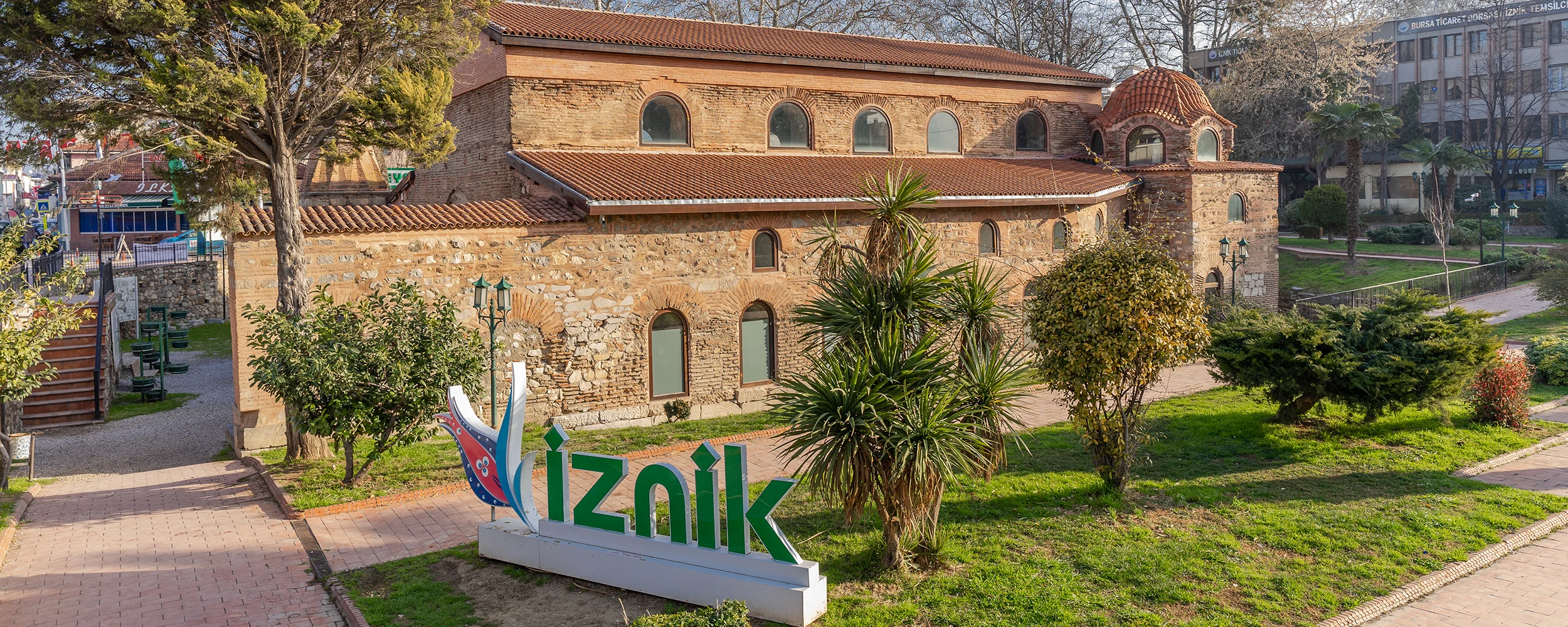
Discover ancient Nicaea, Byzantine Christianity, Ottoman architecture, İznik ceramics, city walls and remarkable Lake İznik.
View İznik GuideConnect the museum with the monuments that reveal İznik's Roman, Byzantine, Christian and Ottoman history.
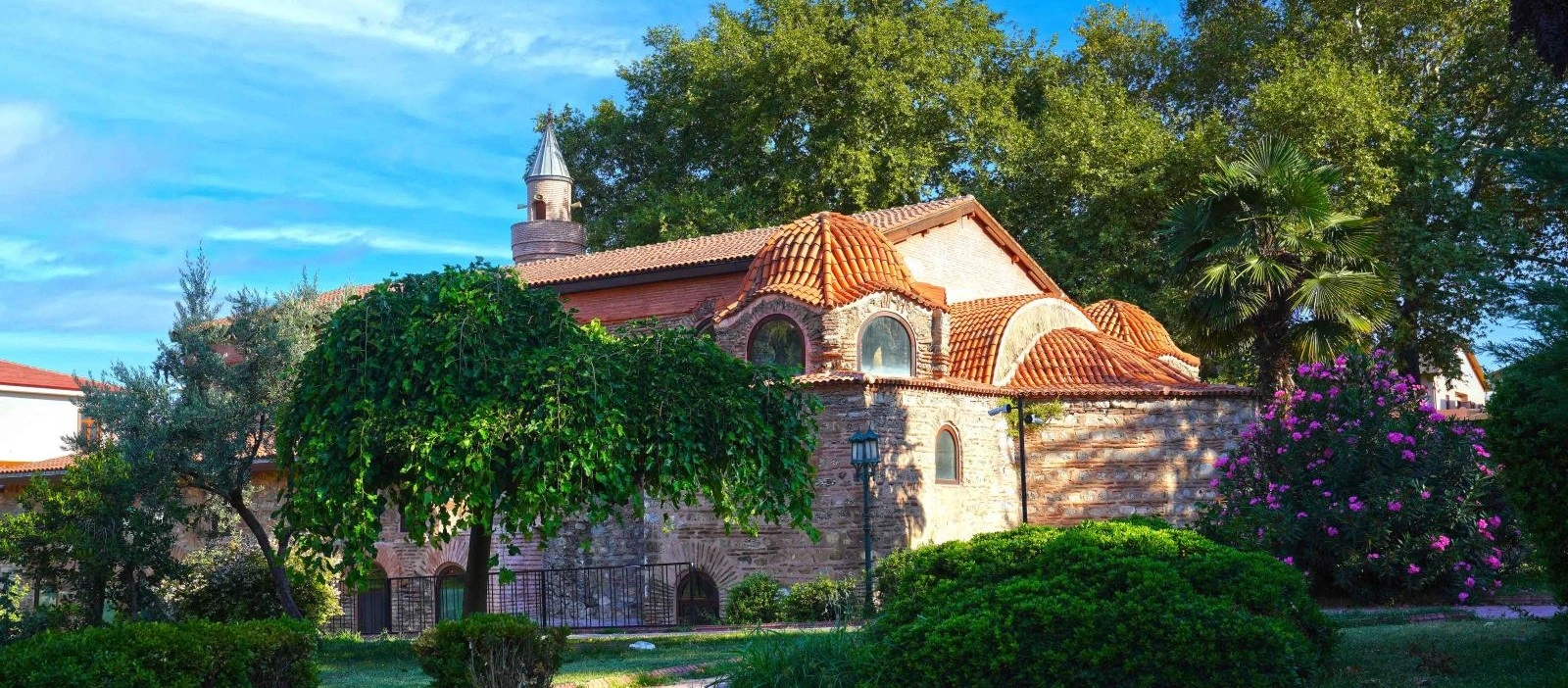
Explore one of Nicaea's most important Byzantine monuments, later transformed into an Ottoman mosque.
Explore Hagia Sophia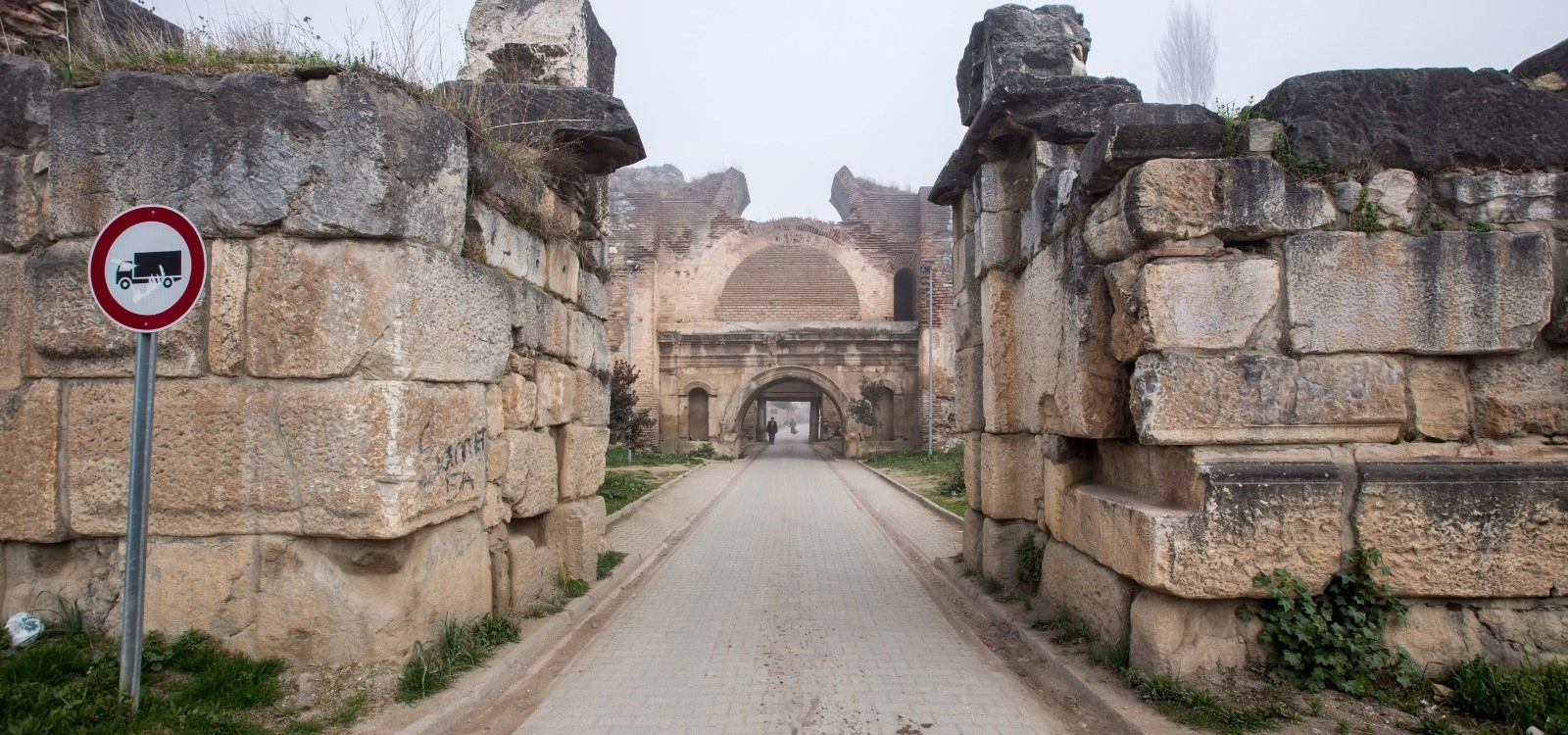
Walk beside the monumental fortifications that protected ancient Nicaea through Roman, Byzantine and Ottoman history.
Explore the City Walls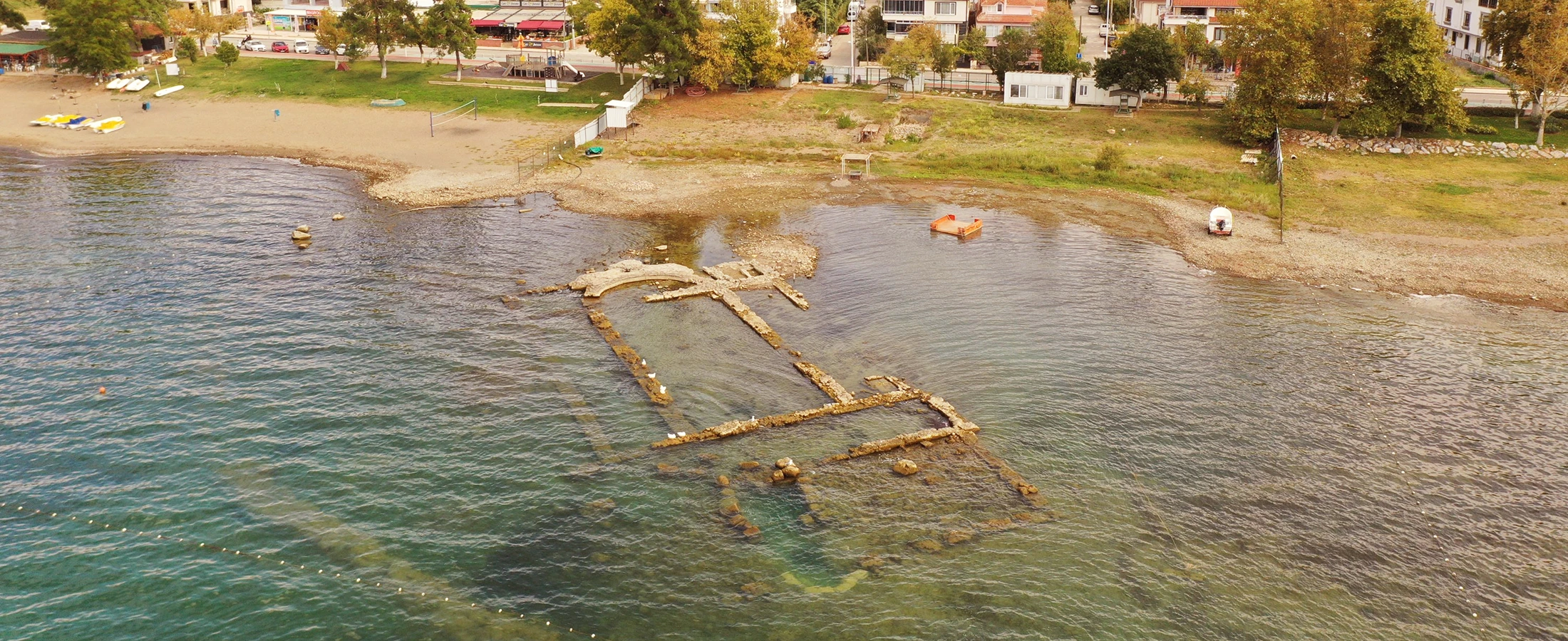
Discover the remarkable Early Christian church submerged beneath the waters beside the ancient city of Nicaea.
Explore the Lake Basilica