Private Ancient Nicaea & İznik Tour
Ask us about a tailor-made historical route covering the Roman Theatre, city walls and gates, Christian Nicaea, Ottoman monuments, archaeology and the shores of Lake İznik.
Request a Custom Tour





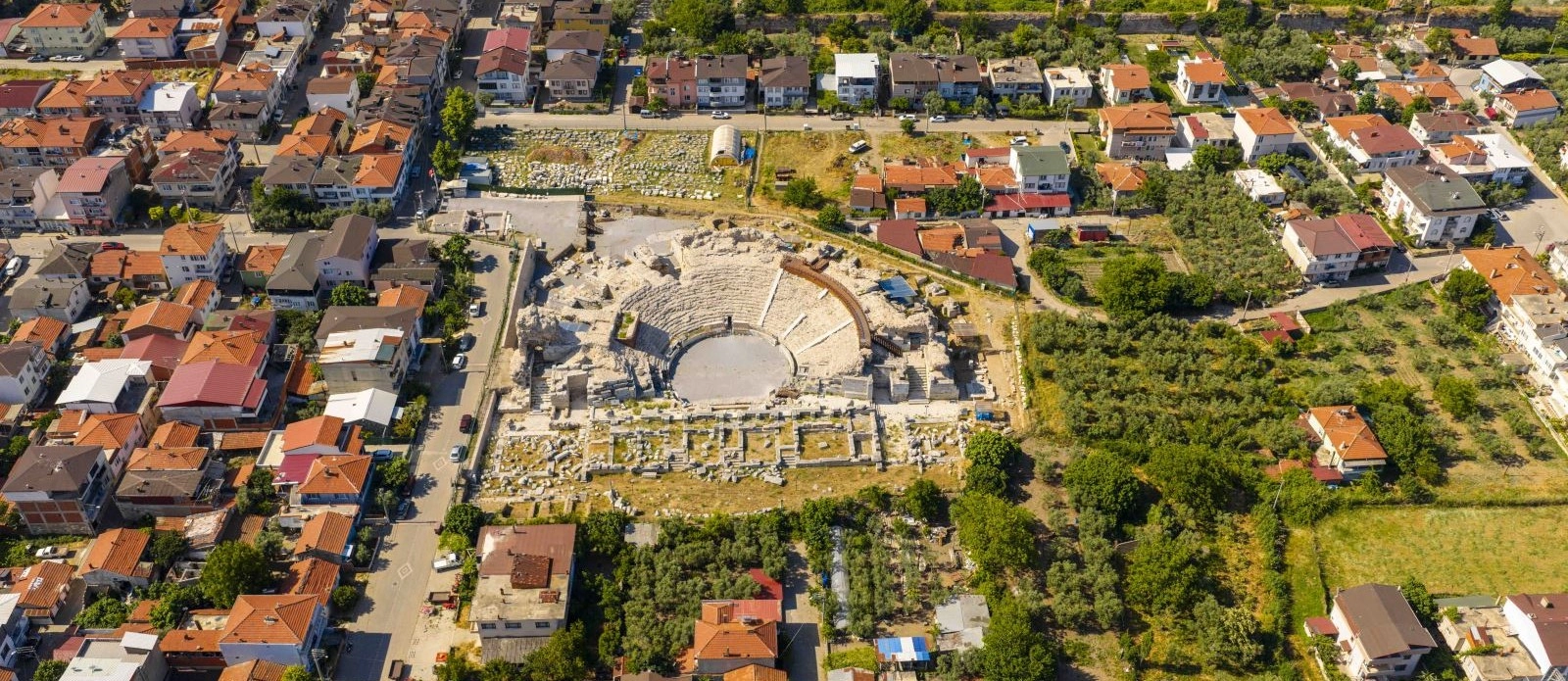
The İznik Roman Theatre, also known as the Roman Theatre of Nicaea, is one of the most important archaeological monuments in İznik, ancient Nicaea. Standing southwest of the historic town center, the enormous theatre reveals far more than the story of entertainment in a Roman provincial city.
Built on flat ground and raised on an impressive system of arches and barrel vaults, the theatre could accommodate approximately 10,000 spectators. Its construction was underway during the reign of Emperor Trajan in the early 2nd century AD, when the Roman governor and celebrated writer Pliny the Younger reported directly to the emperor about serious problems with the unfinished building.
The theatre later hosted different forms of public spectacle, including gladiatorial events, before the character of the site changed dramatically with the Christianization of Nicaea. Parts of the monument were adapted for religious use, Christian symbols and frescoes appeared, churches and burials occupied the area, and architectural blocks were removed to reinforce the city walls.
Centuries later, the abandoned monument became part of İznik's celebrated ceramic-producing landscape. Ottoman pottery and tile kilns were constructed among the Roman and Byzantine remains, turning the theatre into an extraordinary archaeological record of several civilizations occupying the same place.
Explore a monumental theatre constructed during the reign of Emperor Trajan.
Discover a Roman building discussed in surviving correspondence nearly two thousand years ago.
See evidence of the theatre's transformation through frescoes, churches and burials.
Follow layers ranging from Roman architecture to Byzantine Christianity and Ottoman ceramics.
Essential information for visiting the Roman theatre of ancient Nicaea.
Selçuk neighborhood, southwest of central İznik, Bursa Province.
Open on Google MapsRoman Imperial period, particularly the reign of Emperor Trajan in the early 2nd century AD.
Approximately 10,000 spectators.
About 102 × 79 meters, originally rising through several architectural levels.
Currently free of charge for both Turkish and international visitors.
Allow approximately 45–75 minutes, or longer for archaeology enthusiasts.
The theatre is remarkable not only for its Roman architecture but for the extraordinary sequence of cultural layers preserved within it.
The İznik Roman Theatre is among the most important surviving monuments of Roman Nicaea. Unlike many ancient theatres built into natural hillsides, this structure stood on relatively flat terrain. Roman engineers therefore created a vast artificial support system of vaulted galleries to carry the seating above.
That engineering solution makes the theatre particularly important for understanding Roman architecture in Anatolia. The surviving foundations, arches, vaults, seating areas and architectural blocks help archaeologists reconstruct how such a large entertainment complex could function without relying on a natural slope.
The monument is equally significant because its construction appears in one of antiquity's most remarkable surviving administrative documents: the correspondence between Pliny the Younger and Emperor Trajan. Pliny wrote from Bithynia that the unfinished theatre at Nicaea had already consumed an enormous amount of money and was suffering from settlement and cracking.
Even more unusually, the theatre continued to evolve after Roman performances ceased. Christian religious use, Byzantine churches and cemeteries, architectural spoliation, and later Ottoman ceramic production transformed the site repeatedly. Few individual monuments in İznik illustrate so clearly how the same urban space was reused for nearly two millennia.
Ancient Nicaea was one of the principal cities of Bithynia and later an important Roman provincial center. Its monumental streets, gates, public buildings and theatre expressed the wealth and civic ambitions of the ancient city.
Construction of the theatre was underway during the reign of Emperor Trajan, who ruled from AD 98 to 117. The project became significant enough to appear in the official correspondence of Pliny the Younger, governor of Bithynia-Pontus.
Pliny informed Trajan that the people of Nicaea had already spent more than ten million sesterces on the theatre while it remained unfinished. He was concerned that portions of the building were sinking and cracking, possibly because of weak ground or inadequate building stone. Trajan replied that Pliny should investigate the situation and decide the best course of action.
Despite these early construction problems, the theatre eventually developed into one of Nicaea's great public monuments. For roughly two centuries it served its principal Roman functions and at some stage was also associated with gladiatorial spectacles.
The 4th century brought profound changes. Christianity became increasingly dominant, and portions of the theatre were transformed for religious purposes. Walls were added to earlier spaces and Christian imagery appeared within the monument.
The structure also suffered from major earthquakes. Historical and archaeological research associates substantial damage and repair with the earthquakes of AD 358, 362 and 368.
By the Byzantine period, the theatre was no longer simply a Roman entertainment building. Architectural materials were removed and reused elsewhere in Nicaea. During periods when the city needed stronger fortifications, large stone blocks from the theatre were incorporated into sections of the İznik city walls and gates.
The religious character of the site continued. Church structures were constructed within the theatre area during the medieval Byzantine period, and surrounding spaces were used for Christian burial.
Under Ottoman rule another extraordinary chapter began. Ceramic workshops and kilns were installed among the ruins, connecting the theatre directly with the famous pottery and tile industry that eventually made İznik internationally celebrated.
Modern archaeological investigations began in 1980. More systematic excavation and conservation programs later exposed large portions of the monument, and work undertaken with the Ministry of Culture and Tourism, İznik Museum, academic teams and Bursa Metropolitan Municipality led to major restoration and visitor improvements.
Following extensive conservation and landscaping, the theatre was formally reopened to visitors in March 2024. Archaeological work continues in surrounding portions of the protected area, meaning that our understanding of the monument is still developing.
The theatre is under construction during the reign of Emperor Trajan.
Pliny the Younger reports construction and structural problems to Emperor Trajan.
Christian religious use develops as the character of Nicaea changes.
Architectural material is removed from the theatre and reused in the city's defenses.
Churches and a Christian cemetery occupy portions of the former theatre.
Ceramic and tile kilns operate among the ancient ruins.
Modern archaeological excavation begins at the site.
Restored visitor areas reopen to the public following major conservation work.
One of the most fascinating reasons to visit the İznik Roman Theatre is that we possess an ancient written discussion about its construction. The author was Gaius Plinius Caecilius Secundus, better known as Pliny the Younger.
Pliny served as imperial governor in the province of Bithynia-Pontus during the reign of Trajan. His surviving letters to the emperor discuss taxation, infrastructure, legal problems, public associations, fires, aqueducts, religious questions and municipal construction.
Among these letters is a report concerning the theatre at Nicaea. Pliny complained that although much of the building had already been constructed, it remained unfinished despite having consumed more than ten million sesterces.
He was particularly troubled by structural defects. The building appeared to be settling and large cracks had developed. Pliny considered whether the problem came from damp and unstable ground, poor-quality stone, or both.
He therefore asked Trajan whether the existing project should be completed, abandoned or even demolished. Trajan did not dictate a technical solution from Rome. Instead, he instructed Pliny to investigate and make the appropriate decision locally.
For visitors today, this correspondence transforms the archaeological remains into something unusually personal. The walls and vaults are not simply anonymous Roman ruins: their construction difficulties were being discussed by two named historical figures nearly two thousand years ago.
The most remarkable architectural feature of the theatre is its relationship with the terrain. Many ancient Greek and Roman theatres were constructed against hillsides, allowing the natural slope to support the rising rows of seats.
At Nicaea, however, the builders worked on a relatively flat site. They created a massive artificial substructure of corridors, arches and barrel vaults capable of supporting the cavea, or spectator seating area, above.
Archaeological research places the monument at approximately 102 meters by 79 meters. The original structure rose through several levels and may have reached approximately 24 meters in height. Its seating capacity is generally estimated at around 10,000 people.
The theatre also possessed an elaborate stage building. Fragments discovered during excavation reveal architectural decoration, columns, sculptural pieces and marble elements that once made the façade considerably richer than the weathered archaeological remains visible today might suggest.
The semicircular seating area accommodated thousands of spectators overlooking the orchestra and stage.
Massive arches and barrel vaults created the artificial support required by the flat terrain.
The central performance zone changed function as the building evolved through Roman and later periods.
The monumental stage façade originally included marble decoration, columns and sculptural elements.
Passageways and vaulted galleries helped move large crowds through the theatre efficiently.
Colonnaded areas were associated with movement, gathering and the monumental presentation of the complex.
Roman theatres were major civic spaces rather than buildings used only for occasional entertainment. Thousands of people could gather here for performances, ceremonies and public spectacles, making the theatre one of the places where Nicaea's population experienced Roman urban life collectively.
Actors, musicians and performers could entertain large audiences from the monumental stage area.
The theatre formed part of the entertainment culture expected in an important Roman provincial city.
Evidence and historical interpretation indicate that gladiatorial spectacles were held here during part of the Roman period.
Large public buildings demonstrated Nicaea's prosperity and status within Roman Bithynia.
As elsewhere in the Roman world, seating and access reflected distinctions within urban society.
Theatre architecture linked Nicaea visually and culturally with other major cities of the Roman Empire.
The theatre's history did not end when Roman entertainment declined. Beginning particularly in the 4th century, parts of the monument acquired a new religious character as Christianity became dominant in Nicaea.
Earlier spaces were altered with walls and secondary structures, while Christian symbols and painted decoration appeared on surviving surfaces. Among the most celebrated discoveries is a fresco showing the Virgin Mary holding the Christ Child.
The fresco was discovered during archaeological work and later underwent conservation, helping reveal one of the theatre's most unexpected historical chapters. Other Christian signs and painted remains further demonstrate that this was no longer simply an abandoned Roman entertainment complex.
During the medieval period, church buildings were constructed within the broader theatre area. Parts of the site were also used as a Christian cemetery, with burials adding another archaeological layer to the former Roman monument.
This transformation is particularly meaningful in İznik. Ancient Nicaea became one of the most important Christian centers of Late Antiquity and the Middle Ages, best known internationally for the First Council of Nicaea in AD 325 and the Second Council of Nicaea in AD 787.
One of the most evocative discoveries from the theatre is a Christian wall painting depicting the Virgin Mary and the infant Jesus. The image belongs to the period when parts of the Roman monument had taken on new religious functions.
The fresco demonstrates how dramatically the meaning of the structure changed. A building originally created for Roman public entertainment eventually contained Christian imagery, religious spaces and burials.
Conservation work has helped stabilize and reveal the painting, allowing visitors and researchers to appreciate a layer that would have been completely foreign to the architects who created the original theatre centuries earlier.
The later history of the theatre is just as fascinating as its Roman beginnings. As its original architectural function disappeared, the enormous structure became a source of building material and a convenient landscape for new activities.
Parts of the former theatre were reorganized for religious purposes during Late Antiquity.
Medieval churches were later constructed within the wider archaeological area.
Burials transformed portions of the former entertainment complex into sacred funerary ground.
Blocks were removed from the theatre and incorporated into repairs of İznik's defensive walls.
Ceramic and tile production later occupied convenient spaces among the ancient ruins.
Roman, Byzantine and Ottoman remains survive together rather than as isolated historical monuments.
The presence of Ottoman ceramic kilns is especially interesting because İznik ceramics became one of the most celebrated artistic traditions of the Ottoman world. Tiles manufactured in İznik decorated imperial mosques, palaces and religious complexes across the empire.
The theatre therefore provides an unusually concentrated view of İznik's history: Roman civic architecture lies beneath Byzantine Christian remains, while Ottoman ceramic production occupies spaces created by both earlier civilizations.
Modern scientific investigation of the theatre began in 1980. Excavation gradually removed enormous accumulations of earth and later occupation debris that had concealed much of the Roman structure.
The project eventually revealed the stage building, vaulted substructures, portions of the seating area, architectural fragments and the remains of later Byzantine and Ottoman activity.
From the mid-2010s onward, excavation and conservation accelerated under teams associated with Dokuz Eylül University, the Ministry of Culture and Tourism, İznik Museum and Bursa Metropolitan Municipality.
Restoration concentrated not on creating an entirely reconstructed Roman theatre, but on stabilizing ancient masonry, protecting vulnerable structures, improving visitor circulation and making the surviving architecture easier to understand.
The main monument reopened to visitors in March 2024, but excavation did not end. Research continues around peripheral areas of the archaeological site, including access roads, galleries, burial zones and other structures surrounding the theatre.
Recent investigations have identified features such as marble-paved routes, drainage infrastructure, churches, graves and ceramic-production areas. The site therefore remains an active archaeological project rather than a completely finished museum display.
Excavation reveals the theatre's cavea, vaults, stage architecture and circulation system.
Numerous marble blocks preserve evidence of the monument's once elaborate decoration.
Painted religious imagery records the theatre's transformation during Late Antiquity.
Medieval structures and burials reveal later Christian occupation of the site.
Ottoman production installations connect the site with İznik's famous pottery tradition.
Excavation continues in parts of the protected archaeological zone around the main monument.
The theatre rewards visitors who look beyond the overall semicircular shape. Its real story lies in the relationship between Roman engineering, later religious reuse and the archaeological fragments preserved throughout the complex.
Study the surviving cavea and imagine thousands of spectators filling the theatre during the Roman period.
Examine the remarkable substructure that allowed the seating to rise over relatively flat terrain.
Stand above the central performance zone and understand the relationship between audience and stage.
Look for surviving foundations and architectural fragments belonging to the monumental Roman stage complex.
Columns, capitals, mouldings and decorative pieces hint at the theatre's original grandeur.
Notice the evidence showing how the Roman monument acquired a religious character in later centuries.
Discover how pottery and tile production reused spaces inside the ancient archaeological landscape.
Use the visitor route to understand the monument while protecting fragile archaeological surfaces.
Travelers familiar with ancient cities such as Ephesus, Aspendos or Hierapolis may expect a theatre to rise naturally against a hillside. İznik provides a very different architectural experience.
The theatre could not rely on a natural hillside to support the enormous spectator seating.
Roman engineers created an artificial architectural skeleton beneath the cavea.
Ancient correspondence records the real construction problems faced by the Nicaean project.
The building changed from an entertainment venue into a landscape containing Christian religious activity.
Later ceramic kilns add an entirely different economic and artistic layer to the monument.
Modern archaeology continues to reveal new information from areas surrounding the restored theatre.
Most visitors need 45–75 minutes to explore the main visitor route without rushing.
The architecture and archaeological layers are easiest to understand in good natural light.
Expect archaeological surfaces, ramps, platforms and occasional uneven ground.
Summer temperatures in İznik can be high, particularly around midday.
Painted and conserved surfaces are extremely vulnerable to physical contact.
Excavation areas may contain unstable masonry, open trenches or archaeological deposits.
The museum provides valuable context for objects discovered in excavations across ancient Nicaea.
The theatre works especially well with the city walls, Hagia Sophia and other monuments in central İznik.
Begin at the İznik Roman Theatre while the light is good and spend approximately one hour exploring its seating, vaults, stage area and later archaeological layers.
Continue toward the İznik City Walls and Gates. The connection is especially meaningful because architectural blocks removed from the theatre were reused in the fortifications during later periods.
Next, continue into the historic center to Hagia Sophia – Orhan Mosque, where Roman, Byzantine and Ottoman history again overlap within a single monument.
Add the İznik Museum for archaeological objects representing the city's long history, then finish beside Lake İznik and learn about the remarkable İznik Lake Basilica, the submerged Late Antique church discovered just offshore.
The İznik Roman Theatre is a managed archaeological site in the Selçuk neighborhood of İznik. Following major restoration and visitor improvements, the monument reopened to the public in March 2024.
As checked in September 2026, official Turkish Museums information currently lists 08:00–17:00 opening hours, with the ticket office closing at 16:30. The current government visitor listing gives Monday as the weekly closing day.
Admission is currently listed as free of charge for both Turkish citizens and international visitors. Because archaeological sites can change hours during excavation, public holidays or conservation work, verify the latest information before making a special journey.
Mild temperatures and fresh vegetation make archaeological exploration particularly comfortable.
Comfortable temperatures and softer sunlight make this another excellent season.
Arrive early to avoid the strongest heat and enjoy clearer views of architectural details.
Lower-angle light helps reveal texture across the cavea, vaults and weathered stonework.
The site can be atmospheric and quiet, although rain may make outdoor surfaces less comfortable.
Usually quieter than weekends, but remember that the site is currently closed on Monday.
Enough for a quick overview of the cavea, orchestra and main Roman architecture.
Ideal for most first-time visitors following the complete visitor route.
Recommended for archaeology enthusiasts who want to study architectural details and later layers carefully.
Combine the theatre with İznik Museum and part of the nearby city walls.
Add Hagia Sophia, the city gates and a walk through historic central İznik.
Include the Lake Basilica area, lakeside, Ottoman monuments and additional archaeological sites.
The theatre offers excellent opportunities to photograph both monumental architecture and the smaller archaeological details that reveal its long history.
Use a broad composition to capture the sweep of the seating and orchestra together.
Photograph repeating architectural forms to emphasize Roman engineering beneath the seating.
Frame the stage and auditorium together to show how performers and spectators related spatially.
Look for column fragments, carved marble, masonry joints and surviving decorative pieces.
Use compositions showing Roman architecture beside Byzantine or Ottoman remains.
Low-angle sunlight creates stronger shadows across seating, arches and rough stone surfaces.
Restoration work has introduced organized visitor circulation and modern walkways, making much of the monument considerably easier to explore than an unmanaged archaeological ruin.
Nevertheless, this remains an ancient excavation site. Some sections contain uneven surfaces, changes in level and archaeological structures that cannot be made completely step-free without damaging the monument.
Modern routes provide safer circulation through key portions of the archaeological area.
Expect occasional gravel, ancient paving and irregular archaeological ground.
Official visitor information indicates accessible facilities, but access to every archaeological level may not be possible.
Compact strollers should manage many visitor areas, though some sections may require assistance.
Visitors with limited mobility may prefer morning hours when temperatures are cooler.
Staff can advise which current route offers the easiest access around excavation or maintenance work.
The theatre stands in Selçuk Mahallesi, southwest of İznik's compact historic center. Because central İznik is relatively small, the monument can be combined easily with other major attractions during the same day.
The theatre is within the urban area and can be reached by a short walk, taxi or local vehicle.
Reach İznik by road or regional bus connections, then continue locally to the archaeological site.
İznik can be visited on a long day trip by private vehicle, although an overnight stay allows a more relaxed experience.
Driving provides the easiest way to combine the theatre with walls, gates, lake viewpoints and monuments outside the center.
A short local taxi ride is convenient if you do not want to walk between the theatre and central İznik.
Walking works well when combining the theatre with central historic monuments in good weather.
The theatre lies within one of Türkiye's richest small historic towns. Roman, Byzantine and Ottoman monuments can all be explored within a relatively compact area.
Explore the monumental fortifications surrounding ancient Nicaea and see where reused Roman blocks became part of the city's defenses.
Visit the historic church associated with the Second Council of Nicaea and its later transformation into an Ottoman mosque.
Discover the remarkable submerged Late Antique basilica lying beneath the waters of Lake İznik.
See archaeological discoveries representing thousands of years of settlement in İznik and its surroundings.
Admire one of early Ottoman architecture's most elegant monuments and its famous decorated minaret.
Explore an important early Ottoman charitable structure associated with İznik's museum history.
Study the monumental northern entrance through the ancient and Byzantine fortification system.
Finish your historical visit with lakeside views, walking areas and sunset scenery.
Combine the theatre with the city walls, İstanbul Gate, Lefke Gate and surviving ancient architectural fragments.
Add Hagia Sophia and the Lake Basilica to explore the transformation of Nicaea during Late Antiquity and Byzantium.
Continue to the Green Mosque, Nilüfer Hatun Imaret and İznik's early Ottoman monuments.
Visit İznik Museum after the theatre to place excavated objects within their wider historical context.
Combine Roman masonry with the monumental gates, historic streets and sunset along Lake İznik.
Explore the theatre in the morning, central İznik during the day and finish beside the lake in late afternoon.
The theatre is in Selçuk Mahallesi in İznik, Bursa Province, southwest of the historic town center.
Yes. Modern İznik occupies the site of ancient Nicaea, and the Roman Theatre is one of the ancient city's major surviving public monuments.
The surviving monumental theatre belongs principally to the Roman Imperial period. Its construction was underway during the reign of Emperor Trajan in the early 2nd century AD.
The theatre was a civic project of Roman Nicaea undertaken during the reign of Emperor Trajan. The governor Pliny the Younger became directly involved because of difficulties with its construction.
Pliny reported to Emperor Trajan that the unfinished theatre had already consumed more than ten million sesterces and showed serious settlement and cracking.
Pliny considered several possibilities, including soft or damp ground and poor-quality building stone. The surviving correspondence shows that the problem was serious enough for him to consider whether work should continue.
Archaeological research gives dimensions of approximately 102 by 79 meters. The original monument rose through several levels and was a major feature of Roman Nicaea.
Its capacity is generally estimated at approximately 10,000 spectators.
It was constructed on relatively flat terrain rather than against a natural hillside. A major vaulted substructure therefore had to support the rising spectator seating.
Yes. Historical and archaeological interpretation indicates that the monument was used for gladiatorial spectacles during part of its Roman-period history.
Parts were reused for Christian religious purposes, churches and burials occupied the site, architectural blocks were removed for other buildings, and Ottoman ceramic kilns were later constructed among the ruins.
Yes. Christian symbols and painted decoration have been discovered, including a notable fresco representing the Virgin Mary with the Christ Child.
No evidence establishes the Roman Theatre as the meeting place of the First Council of Nicaea in AD 325. The theatre is connected with the wider Christian history of Nicaea, but it should not be identified as the council venue.
Yes. Medieval Christian structures were constructed within the wider theatre area, and parts of the site also became a burial ground.
After the ancient building lost its original function, its protected spaces were reused for different activities. During the Ottoman period, pottery and ceramic production became one of these later uses.
Modern excavations began in 1980. Major excavation, conservation and restoration programs have continued through subsequent decades.
Yes. Although the main monument has been excavated and restored for visitor access, archaeological investigation continues in portions of the surrounding protected area.
The restored visitor areas were reopened in March 2024 following major conservation and landscaping work.
Yes. The archaeological site is open to the public according to its official visitor schedule, although temporary restrictions can occur because of excavation or conservation.
As checked in September 2026, the current visitor schedule lists 08:00–17:00, with the ticket office closing at 16:30. Monday is currently listed as the weekly closing day.
Admission is currently listed as free for both Turkish citizens and international visitors. Always verify before traveling because admission policies can change.
Approximately 45–75 minutes is enough for most visitors. Archaeology enthusiasts may want 90 minutes or longer.
Yes, particularly for children interested in archaeology and Roman history. Adults should supervise them carefully around ancient masonry and restricted excavation areas.
Official visitor information indicates accessibility provisions, and modern visitor routes improve access considerably. However, some archaeological levels and uneven areas may remain difficult to reach.
General visitor photography is normally possible in open archaeological areas, but follow any restrictions around conserved frescoes, excavation zones or sensitive remains.
Spring and autumn offer the most comfortable temperatures. During summer, morning visits are preferable to the hottest part of the day.
Yes. The theatre, city walls, monumental gates, Hagia Sophia and several Ottoman monuments can comfortably be combined during a full day in İznik.
Absolutely. It is one of the best places in İznik to understand Roman Nicaea and is especially unusual because Roman architecture, Christian remains, medieval burials and Ottoman ceramic production survive within the same archaeological landscape.
Use designated walkways and platforms instead of crossing archaeological deposits.
Ancient walls and vaults may be unstable even when they appear solid.
Even small fragments may contain archaeological information about the monument.
Do not touch painted surfaces or use equipment that could damage delicate conservation areas.
Closed trenches and research areas must remain undisturbed even when archaeologists are not present.
Keep the archaeological area clean and carry bottles, packaging and other rubbish away with you.
Explore the Roman Theatre together with İznik's ancient walls, Byzantine Christian monuments, Ottoman architecture and Lake İznik through a private route designed around your interests and without compulsory shopping stops.
Choose a focused archaeological visit or a complete private day exploring the Roman, Byzantine and Ottoman history of İznik.
Ask us about a tailor-made historical route covering the Roman Theatre, city walls and gates, Christian Nicaea, Ottoman monuments, archaeology and the shores of Lake İznik.
Request a Custom Tour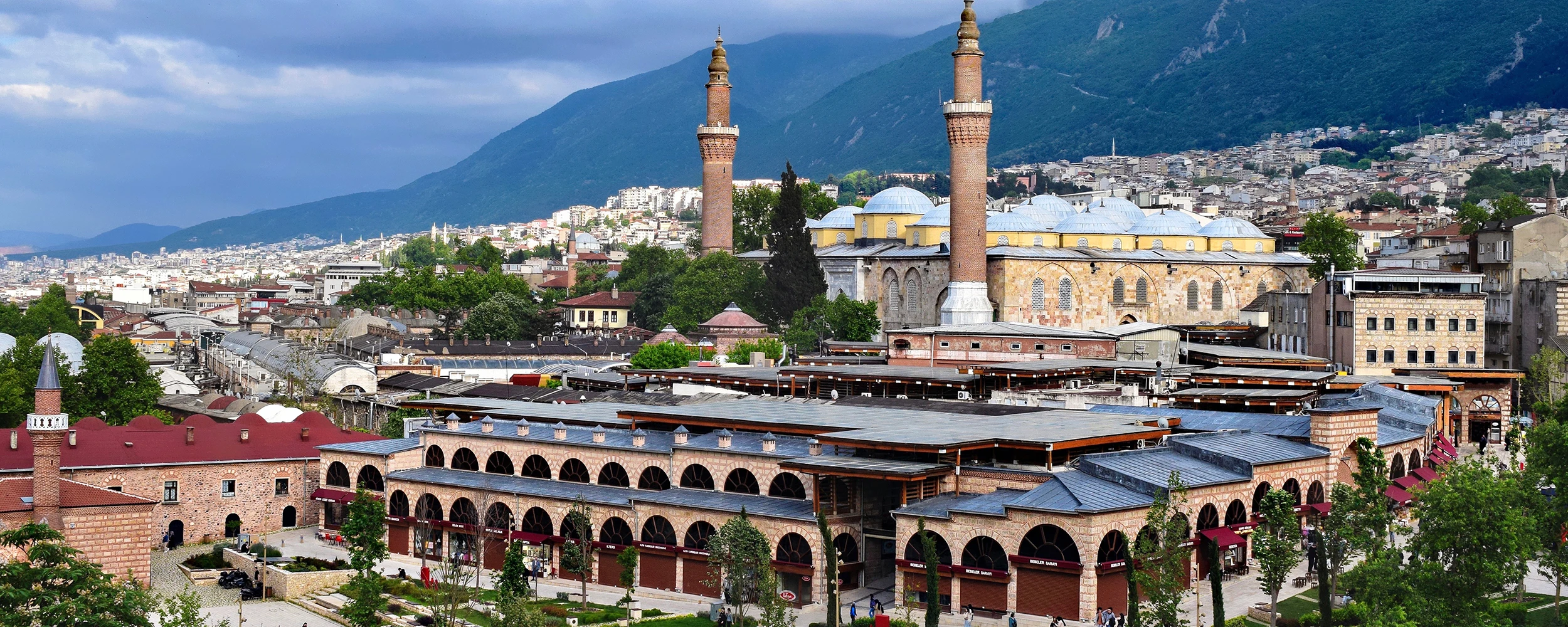
Continue through Bursa Province to discover early Ottoman architecture, UNESCO heritage, historic villages, museums, nature and remarkable local traditions.
View Bursa GuideConnect the Roman theatre with the monuments that tell the rest of Nicaea's extraordinary story.
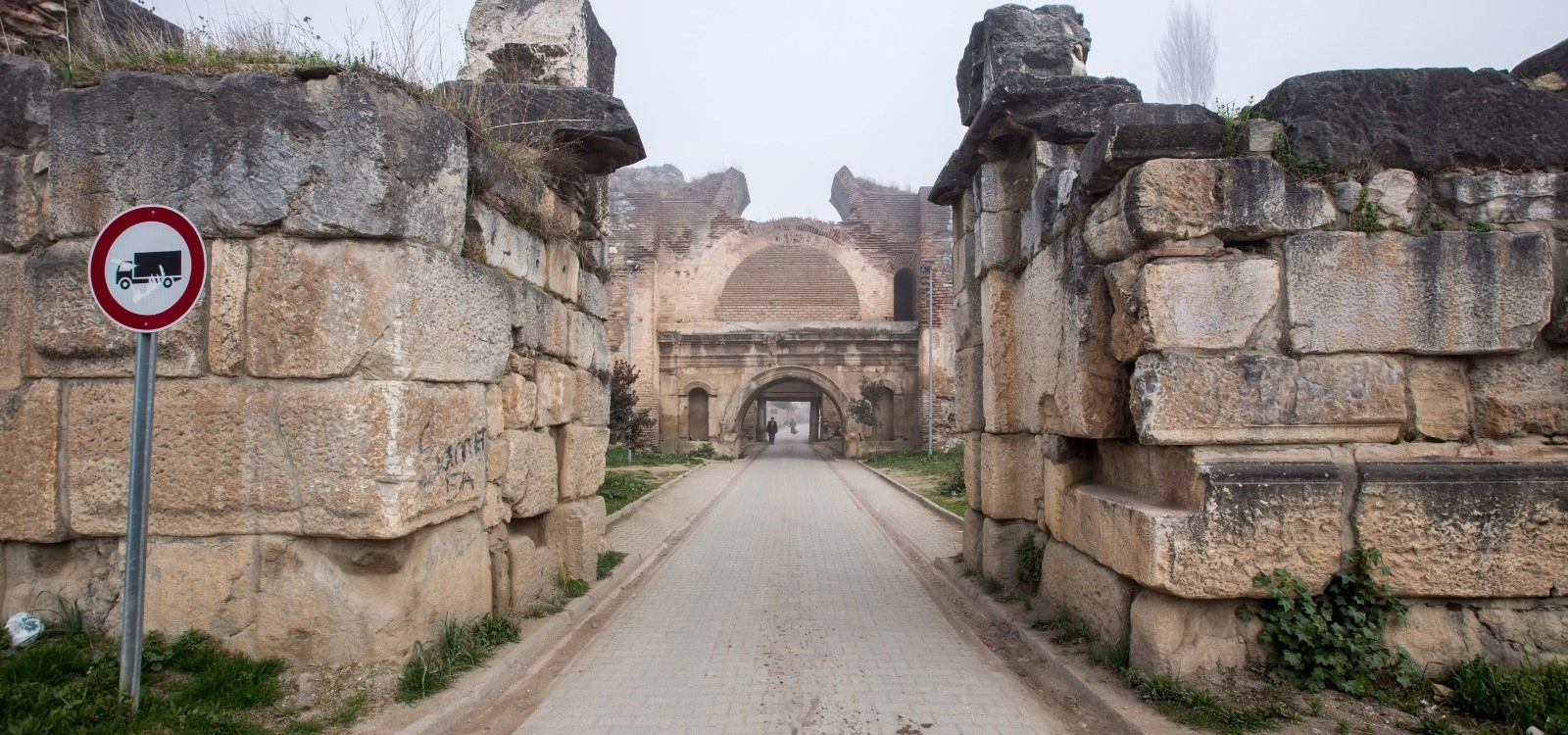
Explore nearly five kilometers of Roman and Byzantine fortifications surrounding ancient Nicaea.
Explore the City Walls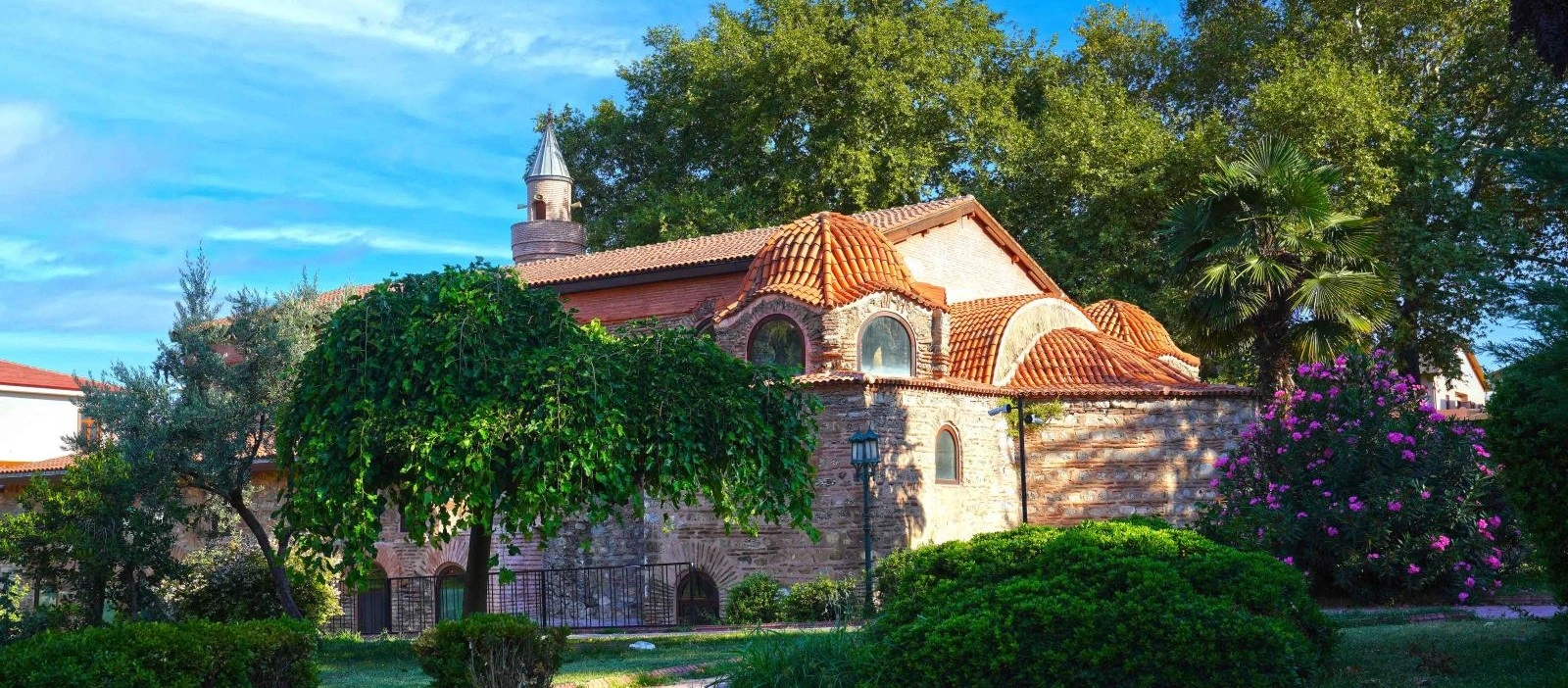
Discover the monument associated with the Second Council of Nicaea and its later Ottoman transformation.
Explore Hagia Sophia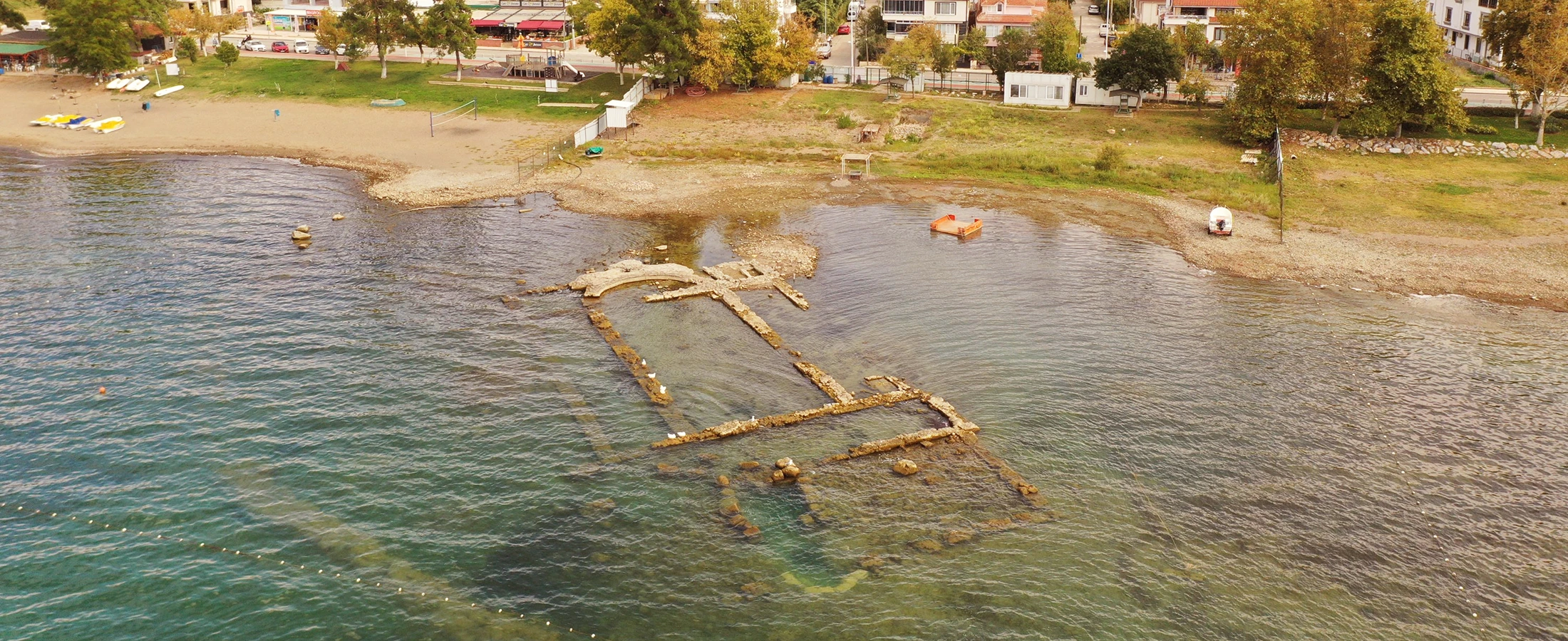
Learn about the extraordinary Late Antique church discovered beneath the waters just offshore from İznik.
Explore the Lake Basilica