Private Karantina Island & Urla Tour
Ask us about a tailor-made cultural day combining Karantina Island, the historic Tahaffuzhane, Klazomenai, Urla İskele and the historical and culinary highlights of the surrounding district.
Request a Custom Tour





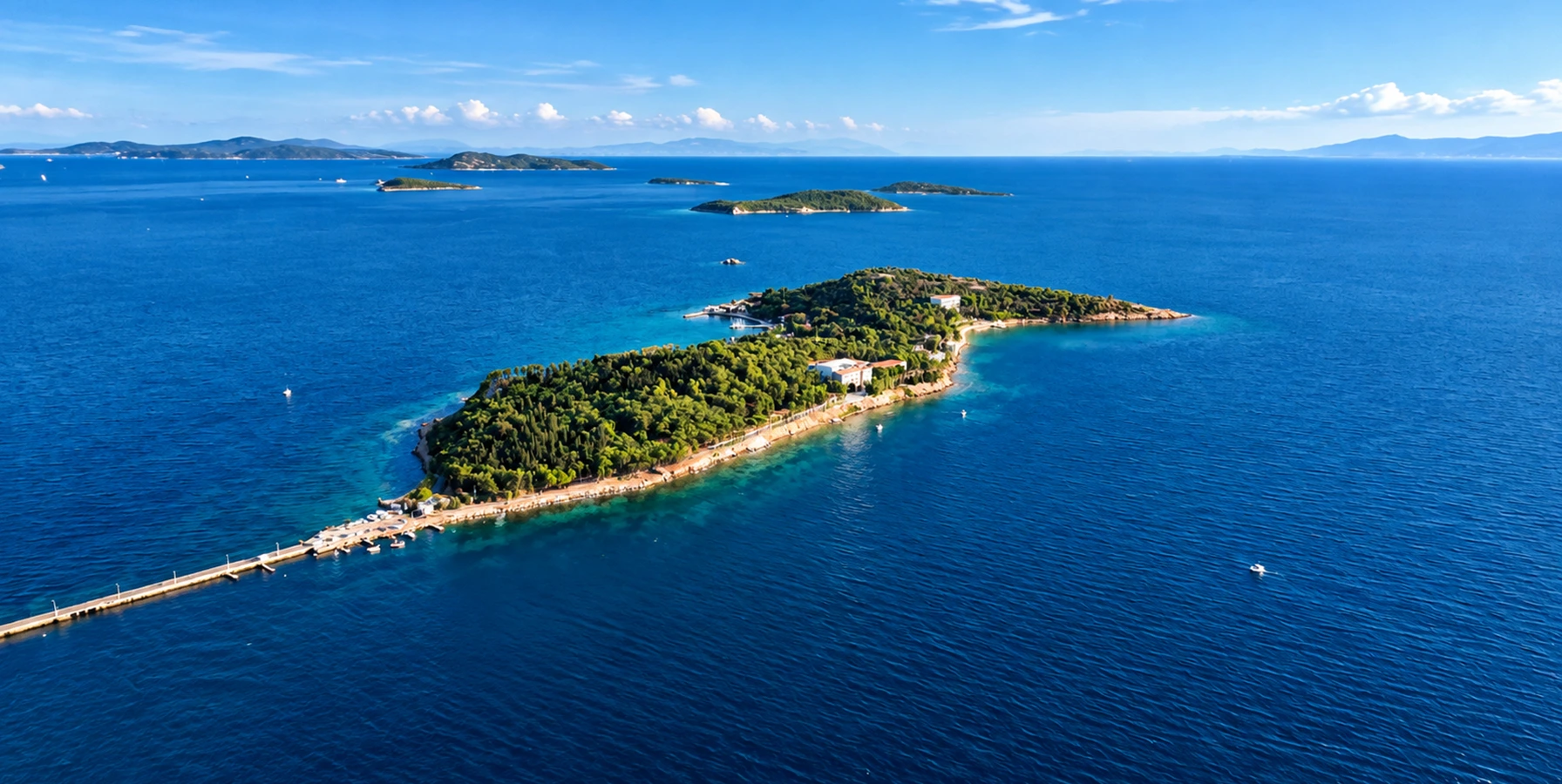
Just off the coast of Urla, west of İzmir, lies a small island whose peaceful appearance hides one of the most unusual stories on the Turkish Aegean.
Known today as Karantina Island, the island preserves traces of ancient Klazomenai as well as one of the most significant surviving Ottoman quarantine complexes on the coast of Türkiye.
Its name comes from the quarantine station, or tahaffuzhane, established here during the 19th century to help prevent infectious diseases from entering Ottoman ports with passengers and ships arriving by sea.
Travelers were received, examined, washed and separated when necessary, while clothing and personal belongings could be disinfected with specialized equipment.
The station was particularly important for maritime traffic and for pilgrims traveling along routes between Ottoman territories, the Black Sea, the Balkans and the pilgrimage routes toward the Hejaz.
But the island's history reaches far deeper. During antiquity, part of the Ionian city of Klazomenai was located here, making Karantina Island a rare place where ancient archaeology and the history of modern public health occupy the same landscape.
Today, the historic quarantine buildings, coastal setting and connection with Urla's ancient past make Karantina Island one of the most fascinating historical locations on the İzmir Peninsula.
Discover the 19th-century quarantine station created to protect Ottoman ports from epidemic diseases.
Explore the island landscape associated with one of the twelve ancient Ionian cities.
Learn how passengers, clothing and luggage were processed before travelers continued their journeys.
Experience an unusual historical landscape surrounded by the blue waters of the Gulf of İzmir.
Essential information for understanding one of Urla's most historically unusual coastal landmarks.
Urla, İzmir Province, on Türkiye's Aegean coast.
Open on Google MapsIts historic Ottoman quarantine station, or tahaffuzhane, and its connection with maritime public health.
Part of ancient Klazomenai, one of the important Ionian cities of western Anatolia, occupied the island.
Passengers arriving by sea could be examined, washed and quarantined while their belongings were disinfected.
A wooded Aegean island connected to the Urla mainland by a causeway.
Access to the historic Tahaffuzhane complex may require prior authorization. Confirm arrangements before visiting.
Few places around İzmir combine ancient Ionian archaeology, Ottoman medical history and the story of international maritime travel so clearly.
Karantina Island is important because its history can be read on several completely different levels.
Long before the word quarantine became associated with the island, this landscape formed part of ancient Klazomenai, one of the Ionian cities of western Anatolia.
By the early 5th century BC, Klazomenai's settlement had shifted substantially toward the island, and archaeological evidence demonstrates that the island formed an important part of the ancient city's later urban history.
Many centuries later, the same geographical quality that made the island useful in antiquity gave it another strategic purpose.
Its separation from the mainland, combined with its position close to important Aegean maritime routes, made it suitable for controlling travelers who might be carrying infectious diseases.
During the Ottoman period, a formal quarantine complex was established here as part of the developing public-health system designed to prevent epidemics from spreading through ports and cities.
The surviving buildings therefore tell a story not simply about illness, but about international travel, pilgrimage, maritime trade, sanitation, medicine and the early organization of public health.
For travelers exploring Urla today, Karantina Island adds an extraordinary historical dimension to a destination otherwise known for vineyards, Aegean cuisine, ancient settlements and quiet coastal scenery.
For a broader introduction to the district, continue to our complete Urla travel guide.
The story of Karantina Island did not begin with quarantine.
The island occupies part of a landscape that has been inhabited for thousands of years and is closely connected with Klazomenai, one of the major ancient settlements of the Urla region.
During the Classical period, Klazomenai developed as an island city, with occupation extending across what is now Karantina Island.
The connection between the island and mainland also has a long history. A road or causeway linking the island with the coast was already recorded by Piri Reis in the early 16th century.
Centuries later, the island entered a completely different chapter as epidemic diseases became one of the great challenges of international travel and trade.
During the 19th century, the Ottoman administration developed quarantine stations at strategic maritime locations. Urla's island was chosen for one of these facilities.
The historic quarantine complex, generally associated with the 1860s, was built with specialized spaces for receiving travelers, washing, disinfection, observation and isolation.
The facility remained associated with quarantine activity until around the middle of the 20th century.
In later decades, the island continued to be used for medical purposes, including treatment facilities and eventually hospital functions.
Karantina Island formed part of the ancient urban landscape of Klazomenai.
From the early 5th century BC, island settlement became particularly important in the history of the ancient city.
A connection between the island and mainland has existed for centuries and was noted by Piri Reis.
The Ottoman quarantine complex was established as maritime public-health controls became increasingly important.
After the quarantine era, parts of the island continued to serve medical and hospital-related functions.
The island remains an important historical and medical heritage landscape administered largely through public institutions.
To understand Karantina Island fully, it is necessary to go back more than two thousand years.
The island is closely associated with Klazomenai, one of the ancient Ionian cities that developed along the western Anatolian coast.
The broader archaeological landscape extends across the Urla İskele and Limantepe area as well as Karantina Island.
Following political and military upheavals around the beginning of the 5th century BC, the island became an important center of settlement for the people of Klazomenai.
Later occupation continued through the Classical, Hellenistic and Roman periods.
For visitors, this creates an unusual historical overlap: the same island known today for 19th-century quarantine buildings was already part of a significant Aegean city more than two millennia earlier.
Klazomenai belonged to the network of ancient Ionian cities along the western coast of Anatolia.
Karantina Island became an important part of Klazomenai's urban history during the Classical period.
The archaeological landscape continues on the mainland around Limantepe and modern Urla İskele.
The protected coastal setting helped connect ancient Klazomenai with wider Aegean trade networks.
The island preserves traces of human activity spanning very different periods of Aegean history.
Karantina Island is best understood together with the archaeological remains of Klazomenai on the mainland.
During the 18th and 19th centuries, increased maritime trade allowed people and goods to travel farther and faster than before.
It also allowed infectious diseases to move rapidly between ports.
Outbreaks of cholera, plague, smallpox, typhus and other epidemic diseases could have devastating consequences for densely populated cities.
Governments therefore developed systems for inspecting arriving ships and temporarily separating travelers who had come from places affected by disease.
Islands and isolated coastal locations were particularly useful because travelers could be processed before entering major population centers.
Karantina Island's location near İzmir and the maritime approaches to the Gulf made it well suited for this role.
The Ottoman quarantine facility here formed part of a much wider attempt to modernize disease prevention and regulate international movement through major ports.
Ships connected İzmir with ports throughout the Mediterranean, Aegean and Black Sea.
Quarantine systems attempted to stop infectious diseases before passengers entered major cities.
Physical separation made the island practical for observation, disinfection and temporary isolation.
Passengers arrived from many different parts of the Ottoman world and neighboring regions.
The facility became especially relevant to large movements of pilgrims traveling by sea.
The complex illustrates an important stage in the development of organized preventive medicine.
The Turkish term tahaffuzhane was used for a quarantine establishment where travelers, ships and belongings could be subjected to health controls before onward travel was permitted.
The Urla facility was much more than a single quarantine room.
It was a functioning medical complex designed around the controlled movement of people and objects.
Passengers arriving from ships could be directed through changing areas, washing sections and examination spaces.
Their clothing and belongings were separated and subjected to disinfection procedures using specialized equipment.
People who required observation could remain on the island, while those showing signs of illness could be separated from other travelers.
The physical arrangement of the site therefore reflected the fundamental principle of quarantine: control movement, separate possible infection and disinfect potentially contaminated belongings.
Passengers arriving by sea were received before being allowed to continue toward their final destination.
Travelers removed clothing so personal garments could be processed separately.
Dedicated washing areas formed part of the sanitation procedure used by the quarantine station.
Special equipment allowed clothes and other belongings to be treated before being returned.
Travelers could remain under medical observation when required by quarantine regulations.
Separating suspected cases helped reduce the risk of disease entering surrounding communities.
For travelers arriving by ship, the quarantine experience would have been carefully controlled.
Passengers entered the facility without immediately continuing inland.
They were directed into different sections, where clothing could be removed and personal belongings prepared for disinfection.
Specialized heating and steam equipment was used to treat clothing and objects, while travelers passed through washing procedures.
The design of the surviving quarantine building still helps visitors understand how people were moved from one stage of the process to another.
The objective was straightforward: anything that might carry infection had to be dealt with before travelers were permitted to continue.
Karantina Island developed as a collection of specialized structures rather than a single building.
The historic complex included quarantine buildings, storage areas, accommodation spaces, hospital-related structures and administrative facilities.
One of the most historically interesting components is the main disinfection building, where the architecture itself was arranged according to the sequence through which passengers and their belongings moved.
A historic pier also served the complex.
A small rail system once helped move belongings between the landing point and the quarantine facilities, and elements associated with this system have survived.
The principal quarantine and disinfection structures formed the functional heart of the complex.
Dedicated spaces allowed arriving passengers to pass through hygiene procedures.
Mechanical systems supported the heat and steam processes used for disinfection.
Separate buildings allowed travelers or patients to remain on the island when observation was necessary.
Passengers and belongings arriving by sea could enter the complex directly from the waterfront.
An administrative residence occupied a prominent position within the wider island complex.
One of the most fascinating aspects of the Urla quarantine station is its relationship with large-scale pilgrimage travel.
During the Ottoman period, pilgrims traveled toward the holy cities from regions spread across Anatolia, the Balkans, the Black Sea and beyond.
Sea transport formed an important part of many of these journeys.
Large numbers of people traveling together, often over very long distances, also created ideal conditions for infectious diseases to spread.
Quarantine stations therefore became a critical part of the infrastructure surrounding international pilgrimage.
Urla's tahaffuzhane was positioned to serve maritime traffic associated with these extensive movements of people.
The surviving buildings offer an unusual physical reminder that pilgrimage history was not only about ships, roads and sacred destinations, but also about medicine, sanitation and the challenge of protecting public health.
The medical identity of Karantina Island did not disappear when traditional quarantine practices declined.
After the original quarantine function ended, the island continued to be associated with health services.
In 1955, a Sea and Sun Treatment Institute began operating here.
During the following decade, the site became associated with treatment for bone and joint diseases.
From the 1980s, facilities on the island were used as part of Urla State Hospital.
The state hospital later moved to a new mainland facility in 2014.
Parts of Karantina Island continue to be connected with Ministry of Health activities, including training functions.
This remarkable continuity means the island has been associated with organized healthcare for far longer than its famous 19th-century quarantine period alone.
The island became a controlled gateway for passengers arriving from maritime routes.
The Sea and Sun Treatment Institute marked a new phase in the island's medical history.
Medical facilities focused particularly on bone and joint treatment.
Hospital services later became an important part of the island's modern identity.
Urla State Hospital moved to its newer mainland hospital complex.
The island continues to serve institutional and health-related functions today.
Karantina Island is not a conventional attraction filled with individual monuments.
Its importance comes from seeing the surviving buildings, coastal geography and historic infrastructure as parts of one complete system.
The surviving quarantine building is the most important structure for understanding the island's medical history.
Historic installations help explain how clothing and belongings were treated during quarantine procedures.
The waterfront landing area illustrates the direct connection between maritime arrivals and the quarantine process.
Remains associated with the transport of luggage reveal how objects moved through the complex.
Administrative, accommodation and medical buildings remain scattered through the wooded island landscape.
The surrounding sea makes it easy to understand why an island was considered ideal for controlled quarantine.
Karantina Island is visually distinctive because historic institutional buildings stand within a green coastal landscape surrounded by blue Aegean water.
Wide views are especially effective for showing the relationship between the island, causeway and mainland.
The historic buildings provide a different photographic character, with white or pale façades, red-tiled roofs and mature vegetation creating a classic western Anatolian scene.
Where interior photography is permitted, details connected with the quarantine system can be particularly interesting.
Photograph the narrow connection between the mainland and the island to emphasize its geography.
Red roofs and pale façades create strong contrasts with the surrounding greenery and sea.
Clear coastal water provides an atmospheric background to the medical heritage landscape.
Doors, windows, machinery and surviving infrastructure can reveal the practical character of the quarantine complex.
Earlier hours can provide softer light and comfortable conditions during warmer months.
The strongest images often show the historic buildings in relation to the island as a whole.
Unlike Urla's beaches, Karantina Island is primarily a cultural and historical destination.
That means it can be appreciated throughout the year, although spring and autumn generally provide the most comfortable conditions for exploring the wider Urla area.
Pleasant temperatures and green landscapes make spring attractive for historical sightseeing around Urla.
Long daylight hours and generally warm weather work well for combining the island area with coastal Urla.
Expect intense Aegean sunshine and heavier tourism throughout the wider Urla and Çeşme Peninsula.
An excellent month for combining historical sightseeing with warm coastal weather.
Milder weather and quieter surroundings are attractive for cultural exploration.
Urla remains atmospheric, although rain, wind and institutional access arrangements should be considered.
Enough to see the island setting from the surrounding coastal area if interior access is unavailable.
Suitable for a focused historical visit when access to the quarantine complex has been arranged.
A comfortable amount of time for understanding the quarantine buildings and their historical context.
Combine Karantina Island with Klazomenai, Limantepe and the Urla İskele waterfront.
Continue into central Urla for local markets, food, art streets and additional cultural attractions.
Add coastal villages, vineyards and countryside stops for a broader introduction to the district.
Begin around Urla İskele, where the relationship between the modern waterfront and ancient Klazomenai can be understood most clearly.
Continue toward the Klazomenai archaeological area, whose remains provide the ancient context for Karantina Island.
Then proceed toward Karantina Island.
If authorization for the historic quarantine complex has been arranged, allow enough time to understand the tahaffuzhane buildings, disinfection process and maritime setting.
Afterward, return toward Urla İskele for lunch beside the coast.
Spend the afternoon exploring central Urla, its historic streets, local shops, food culture and surrounding countryside.
Karantina Island should not be approached in the same way as a conventional archaeological site or municipal museum.
The island contains historic protected structures as well as facilities associated with the Turkish Ministry of Health.
Published visitor information for the Tahaffuzhane Museum states that visits may be possible with authorization from the Ministry of Health.
Because institutional use, restoration work, security arrangements and visiting procedures can change, travelers should confirm current access before making a special journey.
The island is physically connected to the mainland by road, making the general location more accessible than an island that requires a boat crossing.
However, accessibility inside the historic complex depends on which areas are open, the condition of historical buildings, steps, paths and institutional restrictions.
Travelers who require step-free access or specialized mobility arrangements should confirm conditions before visiting.
The island is connected to the Urla mainland, so no passenger boat is normally required to reach the general area.
Older buildings may include thresholds, steps and surfaces that do not meet modern accessibility standards.
Some parts of the island may be restricted regardless of physical mobility.
A private vehicle or arranged transfer can reduce unnecessary walking around the wider Urla area.
Morning visits are more comfortable for travelers sensitive to intense temperatures.
Ask specifically about step-free visitor routes if accessibility is essential to your visit.
Karantina Island lies beside the Urla coastline and is connected to the mainland by road.
It can therefore be reached without taking a ferry or private boat.
The surrounding Urla İskele area is easily combined with Klazomenai and the town's waterfront.
Travel toward Urla İskele and the coastal side of the district before continuing toward Karantina Island.
The island lies close to the İskele area and forms a natural combination with the archaeological landscape of Klazomenai.
Travel west toward Urla using the İzmir–Çeşme corridor before continuing toward the coast and İskele area.
Travel east toward Urla before turning toward the İskele and Karantina coastline.
A comfortable option when combining Karantina Island with several archaeological, culinary and coastal stops around Urla.
Useful for travelers continuing afterward toward vineyards, villages and other parts of the Urla Peninsula.
Karantina Island lies within one of the most historically interesting parts of Urla, making it easy to combine with archaeology, coastal scenery, local cuisine and the town's contemporary cultural life.
Explore the wider district through its coast, historic neighborhoods, markets, food culture and vineyards.
Discover one of ancient Ionia's important cities and the archaeological context behind Karantina Island.
Explore an archaeological landscape with evidence of settlement reaching far earlier than the Classical Ionian city.
Enjoy restaurants, cafés and a relaxed waterfront atmosphere close to the island and archaeological sites.
Walk through one of central Urla's best-known streets for small shops, cafés and local creative culture.
Experience the historic commercial heart of Urla and explore traditional streets around the town center.
Continue into the countryside to discover the agricultural landscapes that have made modern Urla a major gastronomy destination.
Finish the day beside the Aegean with quiet bays, coastal villages and sunset views across the peninsula.
Karantina Island is located off the coast of Urla in İzmir Province, on Türkiye's Aegean coast.
Yes, although it is connected to the mainland by a causeway and road, so visitors do not normally need a boat to reach the general island area.
The name comes from the quarantine station established on the island to control infectious diseases among passengers arriving by sea.
The Tahaffuzhane is the historic quarantine complex where passengers could be examined, washed and observed, while clothing and belongings were disinfected.
The principal Ottoman quarantine complex was established during the 1860s, when maritime quarantine systems were becoming increasingly important for controlling epidemic disease.
Its island geography allowed arriving travelers to be controlled and observed before entering the mainland, while its location was convenient for maritime traffic approaching İzmir and Urla.
Quarantine systems were designed to reduce the spread of major epidemic diseases such as cholera, plague, smallpox and typhus, among others.
Travelers passed through controlled washing procedures, while clothing and belongings could be separated and treated using specialized disinfection equipment.
Yes. The station was important for maritime passenger traffic and was particularly associated with pilgrimage routes linking different parts of the Ottoman world.
Yes. Part of ancient Klazomenai was located on Karantina Island, giving the site a history that extends far beyond the Ottoman quarantine period.
Archaeological evidence indicates that the island became particularly important for the city's settlement from around the beginning of the 5th century BC.
The island has a long history of connection with the mainland. A connecting road was documented by Piri Reis in the early 16th century, while traditions also associate earlier connections with the ancient period.
The island can be reached from the mainland, but access to the historic Tahaffuzhane and other institutional areas may require prior authorization. Always confirm current arrangements before visiting.
Not in the same sense as a conventional archaeological museum. The island includes protected historical areas alongside Ministry of Health facilities, so access can be controlled.
Published official tourism information indicates that visits to the historic complex may require authorization from the Turkish Ministry of Health. Confirm the current procedure before making a special journey.
Approximately one to two hours is suitable for a focused historical visit when access has been arranged.
Spring, early summer, September and autumn provide comfortable conditions for combining Karantina Island with other historical attractions around Urla.
For travelers interested in medical history, Ottoman history, archaeology or maritime heritage, Karantina Island is one of the most unusual historical landscapes around İzmir.
Yes. The two belong to the same wider historical landscape and are best understood together.
Continue through Urla İskele, Klazomenai, central Urla and the surrounding countryside. For more ideas, see our complete Urla travel guide .
Yes. Urla is close enough to İzmir for Karantina Island to form part of a cultural day trip, especially when combined with Klazomenai and central Urla.
Yes. Urla lies east of the Çeşme Peninsula, making it possible to combine the island with a wider journey through Alaçatı, Çeşme and western İzmir.
The surrounding coastal geography and the broader Urla İskele–Klazomenai landscape remain historically interesting, but the most important quarantine interiors should not be assumed to be accessible without permission.
It brings together ancient Ionian archaeology, 19th-century quarantine architecture, pilgrimage history, maritime transportation and more than a century of medical use within one compact Aegean landscape.
Do not enter buildings or sections marked as closed, institutional or authorized-access only.
Never move, collect or disturb stones, pottery fragments or other archaeological material.
Ask before photographing interiors, equipment or areas connected with active government facilities.
Historic machinery and surviving quarantine installations should be treated as cultural heritage objects.
Help protect the island's shoreline and wooded environment by taking all rubbish to appropriate facilities.
Remember that Karantina Island remains more than a tourist attraction; it is also an institutional and historical landscape.
Combine Karantina Island and the story of the Ottoman Tahaffuzhane with Klazomenai, Urla İskele, historic neighborhoods, Aegean cuisine and the beautiful countryside of the Urla Peninsula through a private itinerary designed around your interests and without compulsory shopping stops.
Follow nearly three thousand years of history from ancient Klazomenai to the Ottoman quarantine system and modern coastal Urla.
Ask us about a tailor-made cultural day combining Karantina Island, the historic Tahaffuzhane, Klazomenai, Urla İskele and the historical and culinary highlights of the surrounding district.
Request a Custom Tour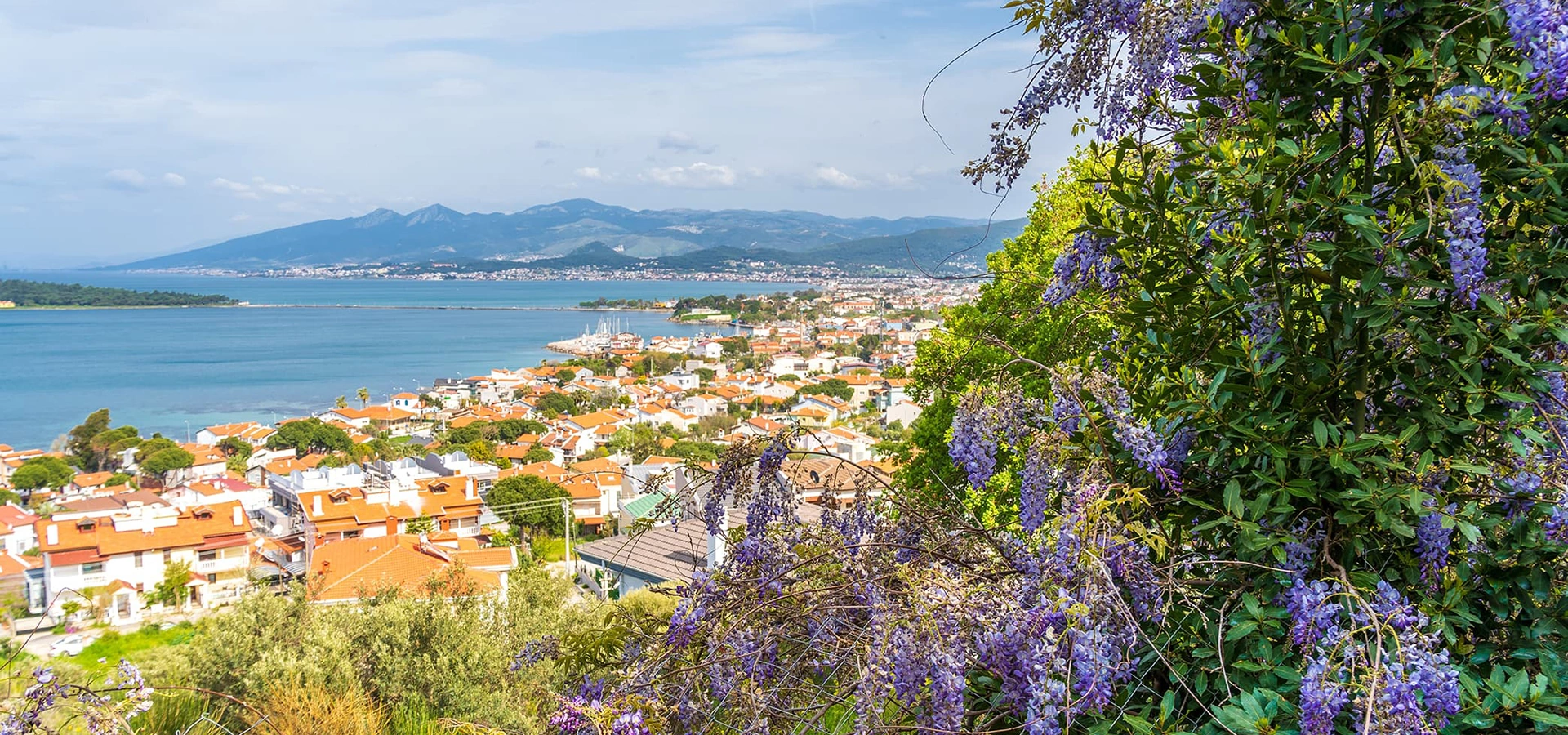
Continue beyond Karantina Island to discover Urla's archaeological heritage, historic center, İskele waterfront, vineyards, local cuisine and peaceful Aegean coastline.
View Urla GuideCombine Urla's remarkable history with some of the best-known destinations on the Çeşme Peninsula.
Discover archaeology, Aegean cuisine, vineyards, coastal villages and one of western İzmir's most attractive cultural landscapes.
Explore Urla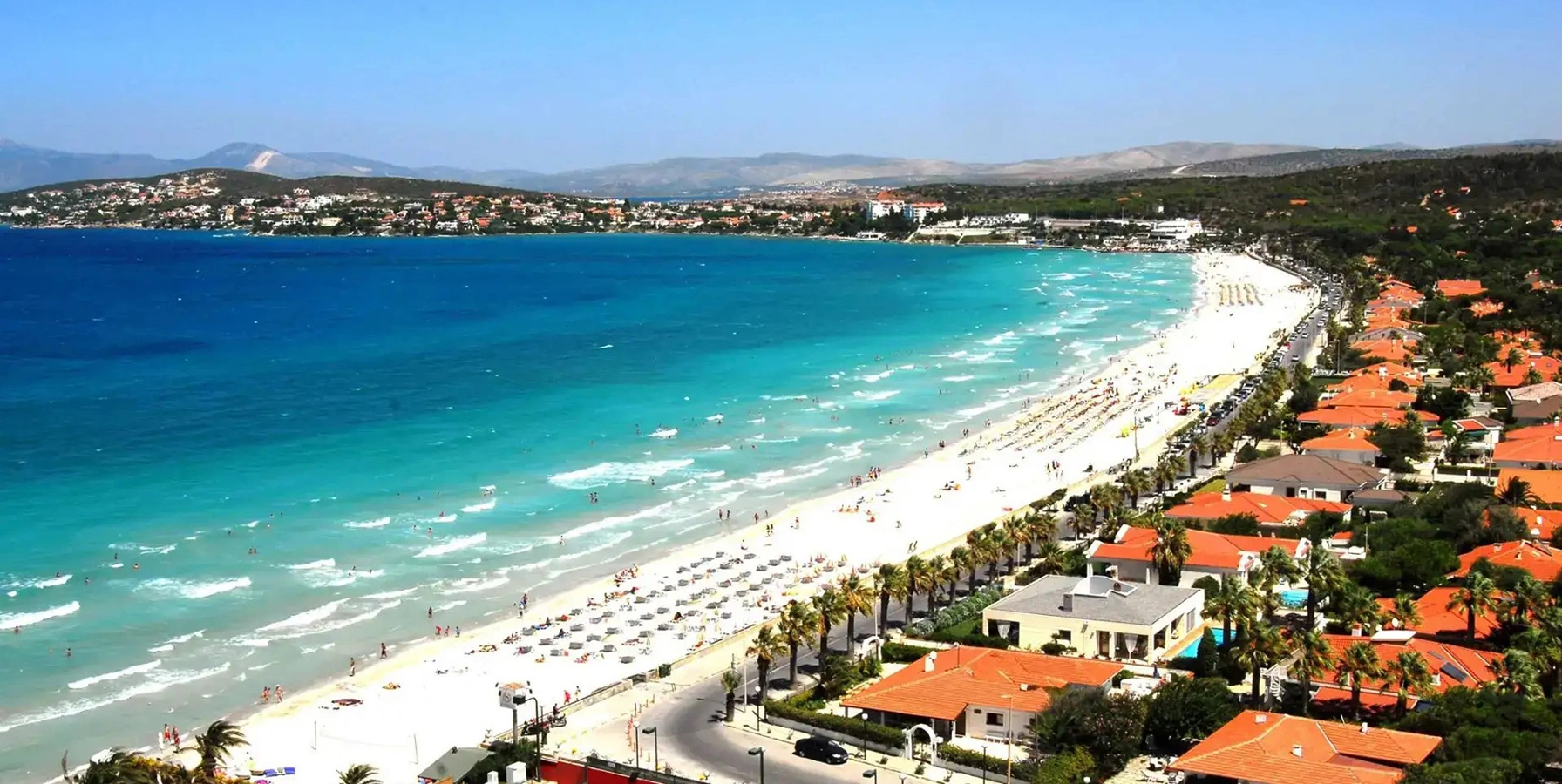
Continue west to Alaçatı for stone architecture, historic streets, windmills, restaurants and one of the Aegean coast's best-known towns.
Explore Alaçatı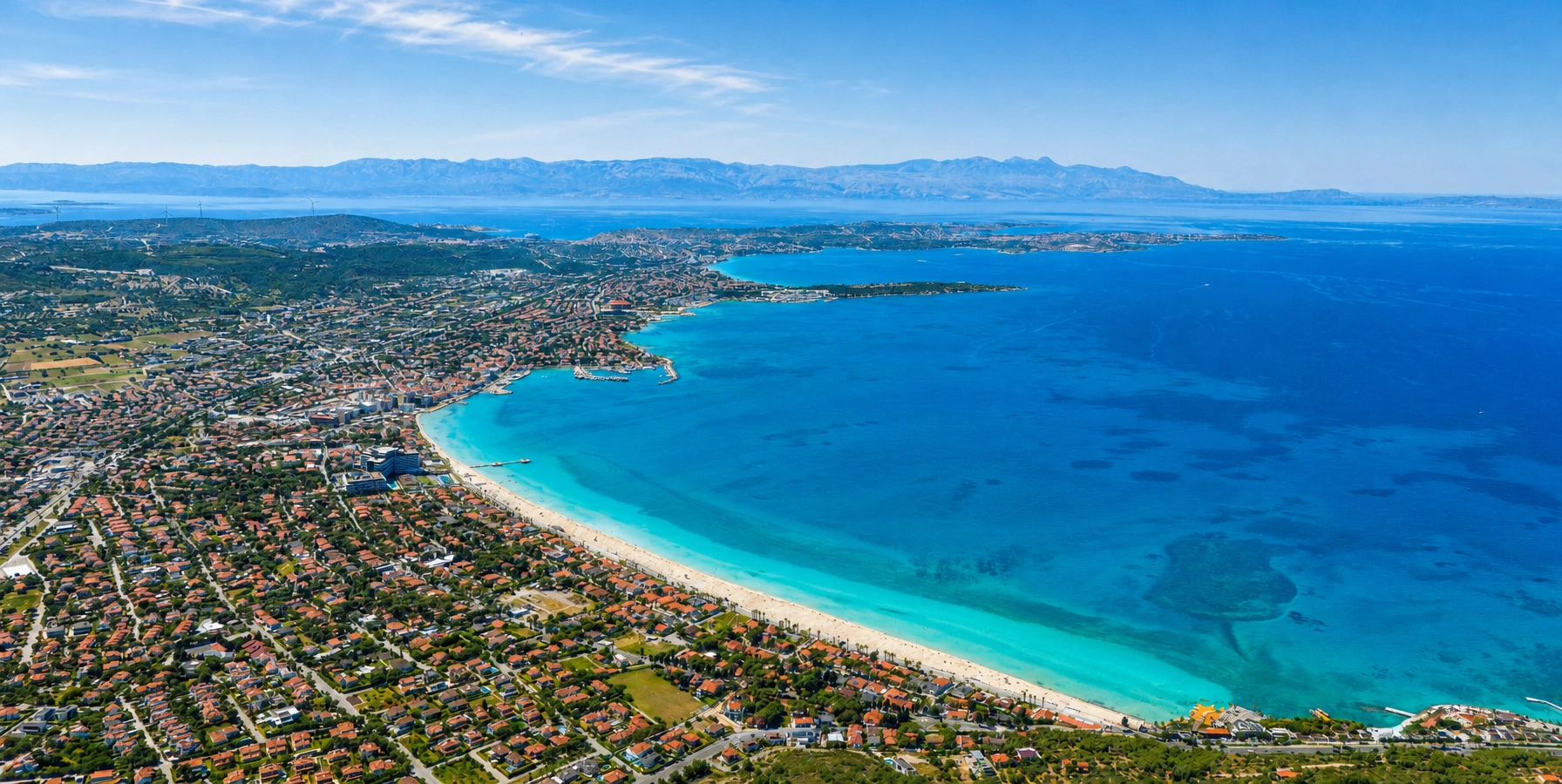
Continue across the peninsula for Çeşme Castle, the marina, thermal heritage, coastal villages and some of western Türkiye's most famous beaches.
Explore Çeşme