Private Mihrimah Sultan & Mimar Sinan Tour
Ask us about a tailor-made route focused on Mihrimah Sultan Mosque, Mimar Sinan, the Land Walls of Constantinople, Chora and the extraordinary historical layers of western Fatih.
Request a Custom Tour





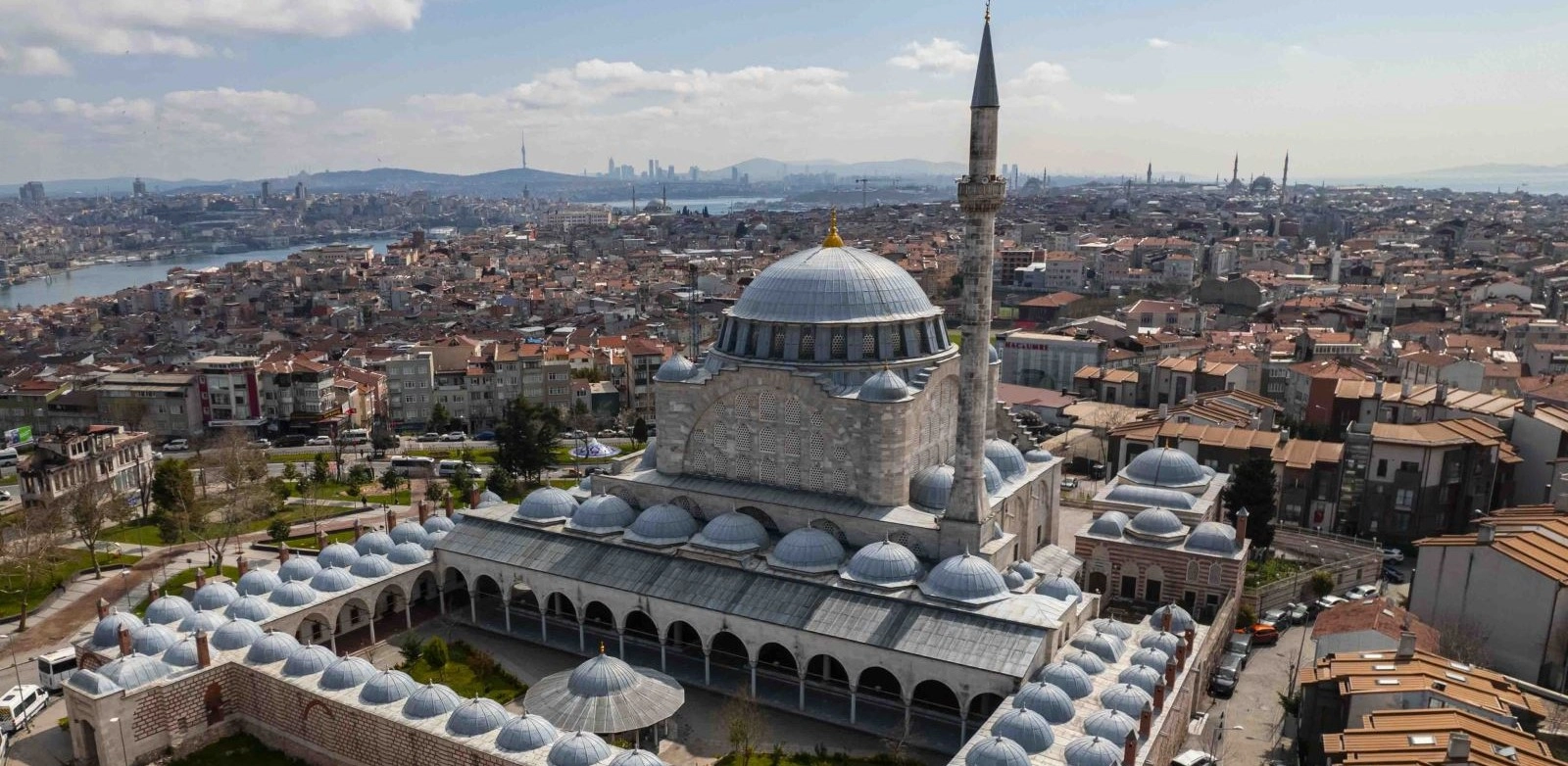
The Mihrimah Sultan Mosque at Edirnekapı, known in Turkish as Edirnekapı Mihrimah Sultan Camii, rises beside Istanbul's historic Land Walls of Constantinople in the Fatih district. Standing on one of the highest points of the historic peninsula, its great dome and slender single minaret form one of the most distinctive silhouettes in western old Istanbul.
The mosque was commissioned by Mihrimah Sultan, the influential daughter of Sultan Süleyman the Magnificent and Hürrem Sultan, and was designed by the great imperial architect Mimar Sinan. Construction belongs to the 1560s, with the monument generally dated to approximately 1562–1565 or 1563–1566.
Its architecture is remarkable for the way Sinan combines a monumental central dome with an unusually open structural system. Large arches, slender supports and an extraordinary concentration of windows flood the interior with daylight, creating a prayer hall that can feel almost weightless despite the enormous stone dome above.
The mosque formed the center of a larger külliye that included a madrasa, school, tombs, bath and commercial facilities. Today it remains an active mosque and an exceptional stop for travelers exploring Edirnekapı, Chora, Tekfur Palace and the Byzantine land walls.
Visit one of Mimar Sinan's great mature-period imperial mosque complexes.
Stand beneath a vast central dome approximately 20 meters in diameter.
Experience one of Istanbul's most dramatically light-filled Ottoman prayer halls.
Explore a commanding hilltop setting beside the historic Land Walls of Constantinople.
Essential information for visiting one of Mimar Sinan's most luminous and architecturally daring mosques in Istanbul.
Edirnekapı / Karagümrük, Fatih, immediately beside Istanbul's historic land walls.
Open on Google MapsMimar Sinan, chief imperial architect of the Ottoman Empire.
Mihrimah Sultan, daughter of Süleyman the Magnificent and Hürrem Sultan.
Built in the 1560s, commonly dated approximately 1562–1565 / 1563–1566.
No general admission fee; the building remains an active mosque and worshippers take priority.
Allow around 45–60 minutes, or longer when combining the mosque with Chora and the city walls.
The mosque combines one of the most commanding sites in historic Istanbul with a daring structural design and one of Mimar Sinan's brightest interiors.
Mihrimah Sultan Mosque is one of the most memorable demonstrations of how Mimar Sinan could use architecture to transform both space and skyline. Instead of relying primarily on massive interior supports, the building opens large portions of its walls to windows, allowing daylight to become one of the defining architectural materials of the prayer hall.
The mosque's location is equally important. It stands close to Edirnekapı, one of the principal historic gates through the Land Walls of Constantinople, on one of the highest ridges of the old city. Its elevated platform allows the dome and minaret to dominate long views across Fatih and the western approaches to Istanbul.
The complex also illustrates the remarkable cultural and financial power of Mihrimah Sultan. As the daughter of Süleyman the Magnificent and Hürrem Sultan, wife of Grand Vizier Rüstem Pasha and an important political figure in her own right, she became one of the most significant female architectural patrons of the 16th-century Ottoman world.
For travelers using our guide to places to visit in Istanbul, the mosque is particularly rewarding because it can be combined with Chora, Tekfur Palace and the city walls in a part of historic Istanbul that feels very different from Sultanahmet.
The Edirnekapı mosque was commissioned during the 1560s for Mihrimah Sultan, the daughter of Sultan Süleyman I and Hürrem Sultan. Ottoman architectural sources identify Mimar Sinan as its architect, placing the complex among the major works of his mature career.
Because the mosque does not preserve a simple foundation inscription giving a universally accepted construction date, modern sources vary slightly. It is commonly described as having been built between 1562 and 1565, while other sources place construction between 1563 and 1566. The safest historical description is therefore that the mosque belongs firmly to the mid-1560s.
The site was strategically chosen near the monumental land walls and the route leading through Edirnekapı toward Thrace and Edirne. The mosque originally stood more prominently above a relatively open district, turning the imperial foundation into both a religious center and a visual marker on the western edge of the walled city.
The foundation was not limited to the prayer hall. The wider complex included a madrasa, primary school, tombs, a double hamam and commercial units that helped support the charitable endowment. Some elements survive more completely than others, but the site still preserves the character of a major Ottoman külliye.
The mosque has suffered repeatedly from earthquakes over the centuries. Repairs followed major seismic events, and modern restoration and structural-strengthening campaigns have helped preserve the building after damage associated with the 1999 Marmara earthquake. It continues to serve as a working mosque.
The Edirnekapı complex was built for Mihrimah Sultan during the mature period of Mimar Sinan.
Mihrimah Sultan belonged to the highest level of Ottoman dynastic society and became an important architectural patron.
The site overlooks Edirnekapı, one of the historic gateways through Constantinople's land walls.
The mosque formed part of a wider charitable complex with education, bathing, funerary and commercial functions.
The building suffered damage in several historic earthquakes and required repeated repairs.
The restored mosque remains an active place of Islamic worship and welcomes respectful visitors.
Mihrimah Sultan was born around 1522, the daughter of Sultan Süleyman the Magnificent and Hürrem Sultan. As the sultan's surviving daughter, she grew up at the center of the Ottoman imperial court during one of the empire's most powerful periods.
In 1539 she married Rüstem Pasha, who later became grand vizier. The marriage connected Mihrimah directly with one of the most influential political figures of the reign, while her own position within the dynasty gave her considerable prestige and access.
After the death of Hürrem Sultan in 1558, Mihrimah became an increasingly important figure around her father. She continued to play a visible role during the reigns of her brother Selim II and her nephew Murad III. She died in 1578 and was buried near her father at the Süleymaniye complex.
Her architectural patronage extended beyond Edirnekapı. She funded religious buildings, water infrastructure and charitable works, and two major Istanbul mosque complexes bear her name: one at Üsküdar on the Asian shore and the later monumental complex at Edirnekapı.
Mihrimah Sultan was born to Süleyman the Magnificent and Hürrem Sultan.
She married Rüstem Pasha, who later served as Ottoman grand vizier.
She remained a powerful dynastic figure during the later reign of her father and the reigns that followed.
Mihrimah Sultan died and was buried in the Süleymaniye complex beside her father.
By the time he designed the Edirnekapı complex, Mimar Sinan had spent decades exploring how enormous domes could be supported while keeping Ottoman prayer halls open, centralized and visually coherent. Mihrimah Sultan Mosque presents one of his boldest solutions.
The building is dominated by a single great central dome approximately 20 meters in diameter. Rather than surround the prayer hall with heavy structural masses, Sinan concentrated the principal loads into large arches and carefully positioned supports, freeing extensive wall surfaces for windows.
This strategy gives the mosque a striking dual character. From outside, it appears monumental and almost fortress-like as it rises above the city walls. Inside, however, the structure seems to dissolve into arches, galleries and daylight. The contrast is one of the building's greatest architectural pleasures.
The mosque also demonstrates Sinan's sensitivity to urban topography. The high hilltop platform, low surrounding elements and carefully controlled silhouette ensure that the central dome remains visible from a great distance. The building was designed not only as an interior space but as a landmark within Istanbul itself.
The mosque belongs to the period when Sinan's structural experiments had developed into extraordinary confidence.
A single dominant dome organizes the entire interior and exterior composition.
Large structural arches allow unusually extensive window openings between the main supports.
The elevated Edirnekapı site turns the mosque into a skyline monument visible across western Istanbul.
The main prayer hall has a rectangular overall plan, but the eye is immediately drawn toward the central space beneath the great dome. The dome measures approximately 20–20.25 meters in diameter and rises high above the floor on monumental supporting arches.
Lower side zones extend the interior beneath groups of smaller domes. Because these side spaces are visually subordinate, the main dome retains overwhelming dominance and gives the mosque a strong centralized character.
The supporting system is unusually expressive. Instead of concealing the mechanics of the building, Sinan allows the great arches to define the interior. The spaces between and beneath them are pierced by windows, which substantially reduce the visual weight of the masonry.
The mosque has a single slender minaret, a feature that gives the silhouette a distinctive asymmetry. Together with the immense dome, the minaret makes the monument easy to recognize from viewpoints around the land walls and western Fatih.
The dominant dome is approximately 20 meters across and forms the architectural heart of the mosque.
Monumental arches carry the dome while opening the walls to extensive glazing.
Lower domed side spaces widen the prayer hall without competing with the central volume.
One tall, elegant minaret punctuates the mosque's powerful hilltop silhouette.
The qibla wall is centered on a finely worked stone prayer niche.
The pulpit reflects the refined stone craftsmanship expected of a major imperial foundation.
The feature most visitors remember is the light. The prayer hall is pierced by an exceptional number of windows, many of them arranged high within the great arches and around the dome zone. Historical and municipal architectural descriptions commonly count approximately 204 windows throughout the mosque.
This is not simply decoration. The windows are fundamental to the way the architecture works visually. They reduce the apparent mass of the walls, separate the central dome from the surfaces beneath it and allow daylight to enter from several directions at once.
As the sun moves across the sky, the interior changes constantly. The stone, painted decoration, calligraphy and carpet can appear softer in early light and more dramatic when stronger afternoon illumination enters the western side.
The result is very different from the darker, more enclosed atmosphere of many historic monuments. Mihrimah Sultan Mosque feels expansive and luminous, making it one of the best places in Istanbul to study Sinan's use of structure and daylight together.
Architectural descriptions commonly record more than two hundred windows throughout the mosque.
Rows of windows inside the arches and dome zone bring daylight deep into the central prayer hall.
Glazed wall surfaces make the huge dome seem lighter than its actual masonry construction.
The appearance of the interior shifts noticeably as daylight moves around the building.
The mosque's central dome is the dominant element of the entire design. With a diameter of roughly 20 meters, it creates an uninterrupted central volume that feels remarkably open from the prayer floor.
Four major arches define the dome's supporting system. The north and south sides are especially open, while lower side sections expand the prayer hall without obscuring the geometry of the main space. This creates a clear hierarchy: everything leads the eye upward toward the dome.
From outside, the dome appears particularly impressive because the mosque sits on a high platform. The lower elements of the külliye and surrounding urban fabric reinforce the impression that the dome rises directly above the ridge.
Mihrimah Sultan Mosque was never intended to stand alone. It formed the central religious building of a larger külliye, an endowed Ottoman complex that combined worship with education, charity, commerce and neighborhood services.
The mosque is approached through a spacious courtyard bordered by arcades and associated madrasa spaces. A covered şadırvan, or ablution fountain, occupies the courtyard and contributes to the ceremonial approach toward the prayer hall.
The wider foundation historically included a madrasa, sıbyan mektebi or primary school, tombs, a double hamam and commercial units. Some of the original shops have disappeared, while other parts of the complex have survived through repair, restoration and changing use.
Because the complex stands directly beside the ancient city walls, the relationship between Ottoman architecture and Byzantine urban infrastructure is especially striking. Few places in Istanbul allow visitors to move so quickly between a great Sinan mosque and the defensive architecture of Constantinople.
Religious education formed an important part of the original charitable foundation.
A covered ablution fountain creates a calm focal point within the courtyard.
The külliye included a sıbyan mektebi for elementary education.
A bath formed part of the broader social and income-producing functions of the complex.
Funerary spaces preserve another layer of the foundation's religious history.
Commercial units once helped provide revenue for the charitable endowment.
The history of the mosque is also a history of Istanbul's earthquakes. Its elevated masonry structure has been damaged by several major seismic events, including destructive earthquakes in the Ottoman period and the 1999 Marmara earthquake.
Historic repairs altered and renewed different parts of the building over time, especially the minaret and structural zones affected by seismic movement. Modern conservation therefore required more than cosmetic work: engineers and restoration specialists also addressed the stability of the monument.
A long restoration and strengthening campaign was undertaken after the 1999 earthquake. The work included structural interventions as well as conservation of stone, painted decoration, architectural elements and associated parts of the külliye. The mosque was subsequently reopened for worship.
These repairs are an important part of the visitor experience. Mihrimah Sultan Mosque is not a frozen 16th-century object; it is a living monument that has been repaired, strengthened and adapted repeatedly while retaining the essential spatial vision of Mimar Sinan.
Major earthquakes repeatedly damaged the mosque and its minaret over the centuries.
The modern earthquake caused significant concern and contributed to an extensive restoration program.
Modern conservation included engineering work intended to improve the monument's seismic resilience.
The restored mosque continues to function as a place of worship rather than a museum.
Travelers often encounter two major mosques in Istanbul bearing the name Mihrimah Sultan. They are separate buildings on opposite sides of the city, both associated with the same imperial princess and both designed by Mimar Sinan.
The earlier Üsküdar Mihrimah Sultan Mosque stands beside the Bosphorus on the Asian shore. The later Edirnekapı Mihrimah Sultan Mosque, covered on this page, rises high beside the land walls on the European side.
The contrast between them is remarkable. Üsküdar belongs to a waterfront setting where movement, sea traffic and the Bosphorus shape the experience. Edirnekapı is a hilltop monument: larger in spatial impact, more isolated from the water and dominated by its immense dome and exceptional daylight.
An earlier Mihrimah Sultan foundation on the Asian shore beside the Bosphorus.
A later hilltop complex beside Istanbul's land walls, completed during Sinan's mature period.
Both complexes are connected with Mihrimah Sultan, daughter of Süleyman the Magnificent.
Mimar Sinan designed both foundations at different stages of his long career.
The name Mihrimah, often explained through Persian roots meaning “sun and moon”, has inspired one of Istanbul's most popular architectural stories. According to modern folklore, Mimar Sinan secretly loved Mihrimah Sultan and expressed that love through the placement of her two mosques.
The story claims that at a particular time of year, the sun sets near the Edirnekapı mosque while the moon rises near the Üsküdar mosque, creating a celestial relationship between the two monuments and Mihrimah's name. Some versions connect this alignment with March 21.
It is a beautiful story, but it should be treated as legend rather than established Ottoman history. Contemporary records do not provide evidence of a romantic relationship between Sinan and Mihrimah Sultan, and the architecture can be understood fully through patronage, urban planning, topography and Sinan's structural experimentation.
Even so, the legend has become part of Istanbul's modern cultural memory and offers a poetic way to think about two very different monuments created for the same princess on opposite sides of the city.
The mihrab marks the direction of Mecca at the center of the qibla wall. Its carefully worked stone surface stands beneath the vast luminous structure of the central dome, creating a clear visual focus without overwhelming the architecture.
Beside it, the minbar is executed in refined marble and stone craftsmanship. The geometric carving, stairway and conical crown reflect the disciplined classical language of 16th-century Ottoman religious architecture.
Painted ornament and calligraphy add additional layers to the interior, but Mihrimah Sultan Mosque does not depend on a dense surface program to make an impression. The architecture itself — especially the arches, windows and daylight — remains the dominant experience.
The mosque deserves more than a quick stop. Its greatest qualities become clear when you move between the exterior, courtyard and prayer hall and then step back toward the land walls to see how the entire complex occupies the hill.
Stand near the center of the prayer hall and look upward into the enormous single-domed volume.
Trace the extraordinary groups of windows filling the arches and upper walls with daylight.
Notice how the great arches carry the dome while leaving large portions of the enclosure visually open.
Examine the restrained classical stonework at the spiritual center of the prayer hall.
Walk through the arcaded court and pause beside the covered ablution fountain.
Observe how the educational spaces form part of the wider architectural composition.
View the mosque from outside to appreciate the elegant asymmetry created by its one slender minaret.
Walk toward Edirnekapı to see the Ottoman mosque directly beside the defensive architecture of Byzantine Constantinople.
Shoulders and knees should be covered. Women should cover their hair when entering the main prayer hall.
Shoes must be removed before entering the carpeted prayer area. Follow the arrangements provided at the entrance.
Sightseeing is easiest between congregational prayer periods and away from the busy Friday midday service.
The dome and window system are best understood from several positions across the central prayer hall.
Walk toward the land walls and surrounding streets to appreciate the mosque's remarkable hilltop setting.
Chora, Tekfur Palace and the Land Walls of Constantinople make this one of Istanbul's best heritage walking areas.
Begin at Mihrimah Sultan Mosque in the morning, ideally between prayer periods. Spend time in the courtyard and prayer hall, then walk outside toward Edirnekapı to appreciate the mosque's relationship with the historic walls.
Continue south along the Land Walls of Constantinople and explore the surviving defensive structures around Edirnekapı. This is one of the best areas to understand how the Ottoman city reused, preserved and built directly beside the fortifications of Byzantine Constantinople.
From the walls, walk toward Tekfur Palace and then continue to Chora Church / Kariye Mosque. The route creates an extraordinary sequence of Byzantine military architecture, late Byzantine palace history, mosaics and frescoes, and classical Ottoman architecture.
If you have more time, continue east toward Fethiye Mosque / Pammakaristos Church or use public transport to connect with Fatih Mosque and the monumental Ottoman center of the historic peninsula.
Mihrimah Sultan Mosque is an active place of worship, not a ticketed museum. It is used for the five daily prayers, Friday congregational prayer and religious gatherings, so worship always takes priority over sightseeing.
There is normally no general admission fee. Visitors of all backgrounds can usually enter respectfully outside active congregational prayer periods, subject to temporary restrictions, religious events, maintenance or restoration arrangements.
Because the building follows a living religious schedule, it is better to plan around prayer times rather than rely on fixed museum-style opening hours. A weekday morning or mid-afternoon is generally the easiest time for an architectural visit.
The mosque stands in the Edirnekapı / Karagümrük area of Fatih, immediately beside the historic land walls. The surrounding district is urban and busy, but the mosque's elevated courtyard creates a noticeably calmer interior atmosphere.
Usually the calmest period for studying the dome, courtyard and structural system without large groups.
Strong natural light can make the huge window-filled arches especially dramatic.
The mosque becomes significantly busier around the main congregational prayer; choose another period for sightseeing.
The mosque and neighborhood can feel particularly atmospheric, but religious activity increases around prayers and evening worship.
Mild temperatures are ideal for combining the mosque with a longer walk along the city walls and Chora district.
Bright conditions emphasize the interior daylight and make exterior views from the hilltop setting more rewarding.
Enough for a quick look at the courtyard and luminous prayer hall if you are passing through Edirnekapı.
The best range for understanding the dome, windows, mihrab, minbar, courtyard and exterior silhouette.
Add a slower study of the wider külliye, cemetery areas and the relationship with the nearby city walls.
Combine the mosque with Chora, Tekfur Palace and the Land Walls of Constantinople.
Mihrimah Sultan Mosque is one of Istanbul's most rewarding buildings for architectural photography, especially because daylight is so fundamental to the design. Remember, however, that it remains an active place of worship. Photograph quietly, avoid flash and never interrupt people who are praying.
Use a wide view from the center or slightly off-center to capture the dome, arches and surrounding windows together.
Photograph the stacked window patterns to show how Sinan reduced the visual weight of the walls.
Use the şadırvan, arcades and mosque façade to create strong symmetrical or layered compositions.
Exterior views emphasize the elegant asymmetry between the huge dome and one slender minaret.
Step farther away to show the mosque rising beside Edirnekapı and the ancient land walls.
Afternoon and evening light can be especially beautiful on the western façade and skyline.
The mosque stands on a raised historic site and includes steps, thresholds and changes of level. The surrounding Edirnekapı district is also busy, with traffic, older pavements and uneven surfaces in parts of the heritage area.
The mosque occupies a high platform, and some approaches involve stairs or sloping access.
Stone paving and thresholds may require extra care for visitors with reduced mobility.
Shoe removal and the transition onto carpeted flooring can require additional assistance.
Edirnekapı is an active transport area, so road crossings and traffic can be more challenging than inside the mosque precinct.
A taxi can reduce walking distance, though exact drop-off conditions depend on current traffic and local restrictions.
If step-free access is essential, ask mosque staff for the most suitable current entrance before attempting the main route.
The mosque stands in Edirnekapı in the Fatih district, next to the historic land walls and close to Fevzi Paşa Caddesi. Unlike Sultanahmet's compact monument zone, this part of the old city is better reached by public transport or taxi before continuing on foot.
The Edirnekapı stop on the T4 tram line is one of the most practical rail connections for reaching the mosque area.
Use the T1 tram toward Topkapı and connect toward Edirnekapı, or take a taxi for a more direct journey.
Public transport via the historic peninsula is possible, while a taxi is often the simplest direct option when traffic is reasonable.
Use metro and connecting public transport toward Fatih/Edirnekapı, or travel directly by taxi depending on traffic.
Numerous municipal bus routes use the Edirnekapı and Fevzi Paşa corridor; check current route information for the most convenient connection.
Once in Edirnekapı, Chora, Tekfur Palace and sections of the land walls can be linked through a rewarding heritage walk.
Edirnekapı is one of the richest heritage districts outside the standard Sultanahmet circuit. Use our complete Istanbul visitor guide to connect Mihrimah Sultan Mosque with Byzantine fortifications, late Byzantine art and other major Ottoman monuments.
Walk directly into one of the world's most important surviving systems of late Roman and Byzantine fortifications.
See one of Istanbul's greatest surviving ensembles of late Byzantine mosaics and frescoes.
Explore the surviving late Byzantine palace beside the land walls and Blachernae district.
Continue into another major Byzantine church complex with important late medieval architectural history.
Travel east to the monumental Ottoman complex built on the site of the Church of the Holy Apostles.
Explore one of the largest surviving Byzantine religious complexes in Istanbul.
Compare the Edirnekapı masterpiece with one of Mimar Sinan's most important earlier imperial mosques.
Build a wider route through churches, mosques, palaces, walls, cisterns and archaeological monuments across the city.
It is in the Edirnekapı / Karagümrük area of Fatih, immediately beside Istanbul's historic Land Walls of Constantinople.
The mosque was designed by Mimar Sinan for Mihrimah Sultan, daughter of Sultan Süleyman the Magnificent and Hürrem Sultan.
The mosque was built in the mid-1560s. Modern sources commonly date construction to approximately 1562–1565 or 1563–1566.
Mihrimah Sultan was the daughter of Süleyman the Magnificent and Hürrem Sultan, wife of Grand Vizier Rüstem Pasha and one of the most important imperial women of 16th-century Ottoman history.
It is renowned for its enormous central dome, extraordinary number of windows, exceptionally luminous interior, hilltop position and masterful Mimar Sinan architecture.
The central dome is approximately 20–20.25 meters in diameter and dominates both the prayer hall and the exterior silhouette.
Architectural descriptions commonly record approximately 204 windows, making the mosque famous for the amount of daylight entering the prayer hall.
Mihrimah Sultan Mosque at Edirnekapı has one slender minaret.
No. Istanbul has two major Mihrimah Sultan mosque complexes designed by Mimar Sinan. This page covers the later hilltop mosque at Edirnekapı, not the waterfront mosque in Üsküdar.
The name is often explained through Persian roots associated with “sun” and “moon,” a meaning that later inspired popular stories linking Mihrimah Sultan's two Istanbul mosques.
This is a famous modern legend, but there is no firm contemporary historical evidence proving a romantic relationship. It is best understood as folklore surrounding the two mosques.
The relationship between sunset, moonrise and the two mosque locations is widely repeated in Istanbul folklore, but the idea that Sinan intentionally designed the monuments as a secret romantic message is not established historical fact.
Yes. The mosque suffered damage in several historic earthquakes and underwent major repair and strengthening after the 1999 Marmara earthquake.
There is normally no general admission fee because the building remains an active mosque rather than a ticketed museum.
Visitors of all backgrounds can normally enter respectfully outside congregational prayer periods, subject to current mosque arrangements.
Women should cover their hair inside the prayer hall, and all visitors should wear clothing that covers shoulders and knees.
Yes. Shoes must be removed before entering the carpeted prayer area.
Sightseeing may be restricted during congregational prayer. Visiting between prayer periods is more comfortable and respectful.
As an active mosque, visitor access follows worship rather than a fixed museum schedule. Plan sightseeing between prayer periods and allow for temporary changes.
A weekday morning or mid-afternoon is generally best. Clear daylight makes the mosque's famous window system especially impressive.
Allow around 45–60 minutes for the prayer hall, courtyard, architecture and exterior setting. A half day is ideal if you also visit Chora and the city walls.
Discreet architectural photography is generally possible, but visitors should avoid flash, noise and intrusive photographs of worshippers.
The mosque is in Edirnekapı and can be reached by public transport, including connections to the T4 tram, by bus or by taxi. Check current Istanbul transport information before travel.
Chora Church / Kariye Mosque, Tekfur Palace and the Land Walls of Constantinople are the most natural nearby heritage stops. Fethiye Mosque and Fatih Mosque can also be added to a longer route.
Absolutely. It is one of the best places in Istanbul to experience Mimar Sinan's structural genius, the dramatic use of natural light and a major Ottoman monument away from the busiest Sultanahmet circuit.
Never stand in front of someone praying or block prayer rows, doors and circulation routes.
Modest clothing is expected inside the mosque and respects its continuing religious function.
Avoid loud conversation, speakerphone use and disruptive group behavior in the prayer hall and courtyard.
Do not turn private prayer or devotion into intrusive photography.
Do not touch carved stone, painted decoration, old masonry or other fragile architectural surfaces.
Prayer services, funerals, religious events, restoration and maintenance can temporarily change visitor access.
Connect Mihrimah Sultan Mosque with Chora, the Land Walls of Constantinople, Ottoman architecture and the quieter historic neighborhoods of Fatih through a private route shaped around your interests and without compulsory shopping stops.
Choose a focused half-day route around Mihrimah Sultan Mosque, Chora and the city walls, or a deeper private experience tracing Mimar Sinan, imperial women patrons and Byzantine-Ottoman layers across historic Istanbul.
Ask us about a tailor-made route focused on Mihrimah Sultan Mosque, Mimar Sinan, the Land Walls of Constantinople, Chora and the extraordinary historical layers of western Fatih.
Request a Custom Tour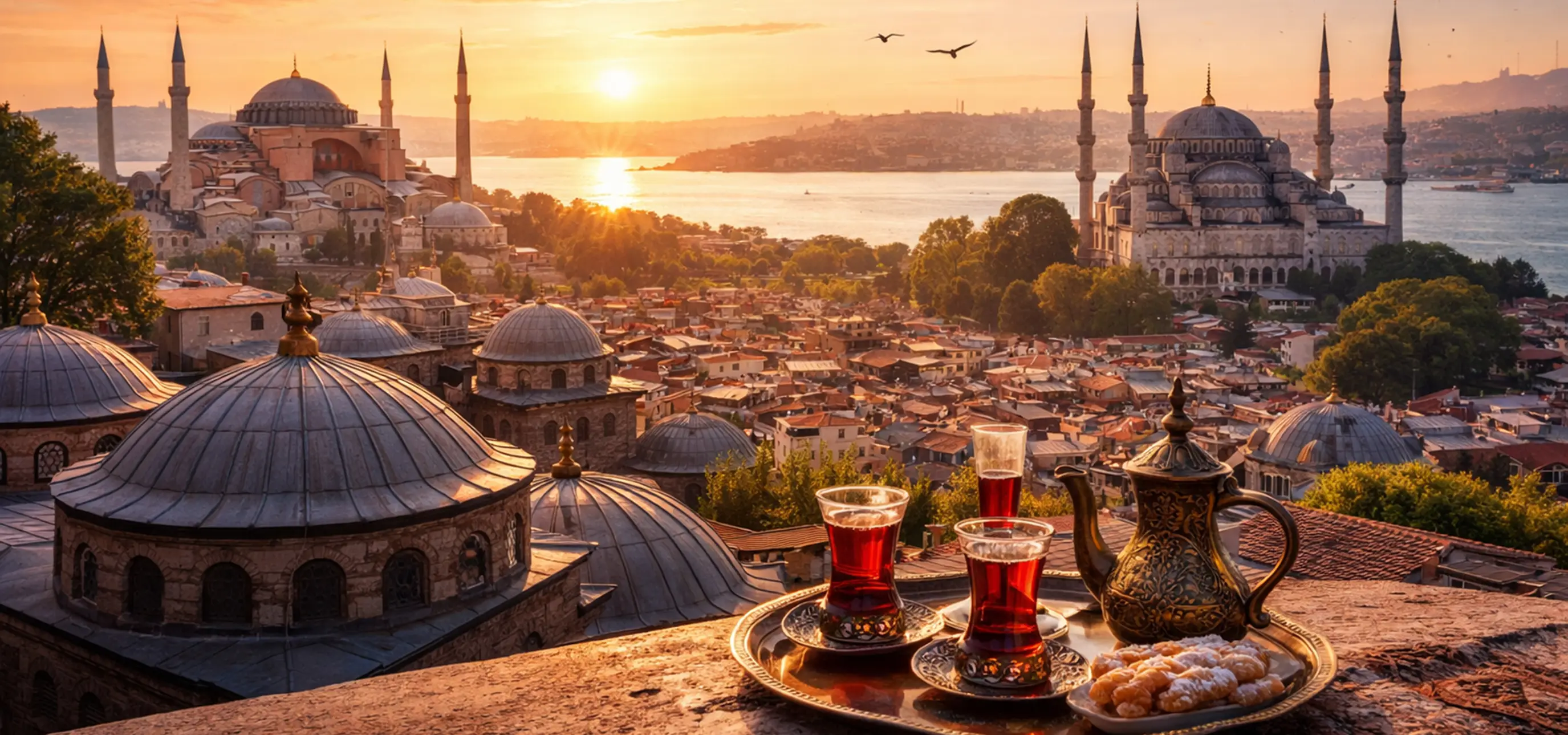
Discover imperial mosques, Byzantine churches, archaeological sites, historic neighborhoods, markets, palaces and waterfront districts across Istanbul.
View Istanbul GuideConnect Edirnekapı with Byzantine masterpieces, palace remains and the great defensive walls of Constantinople.
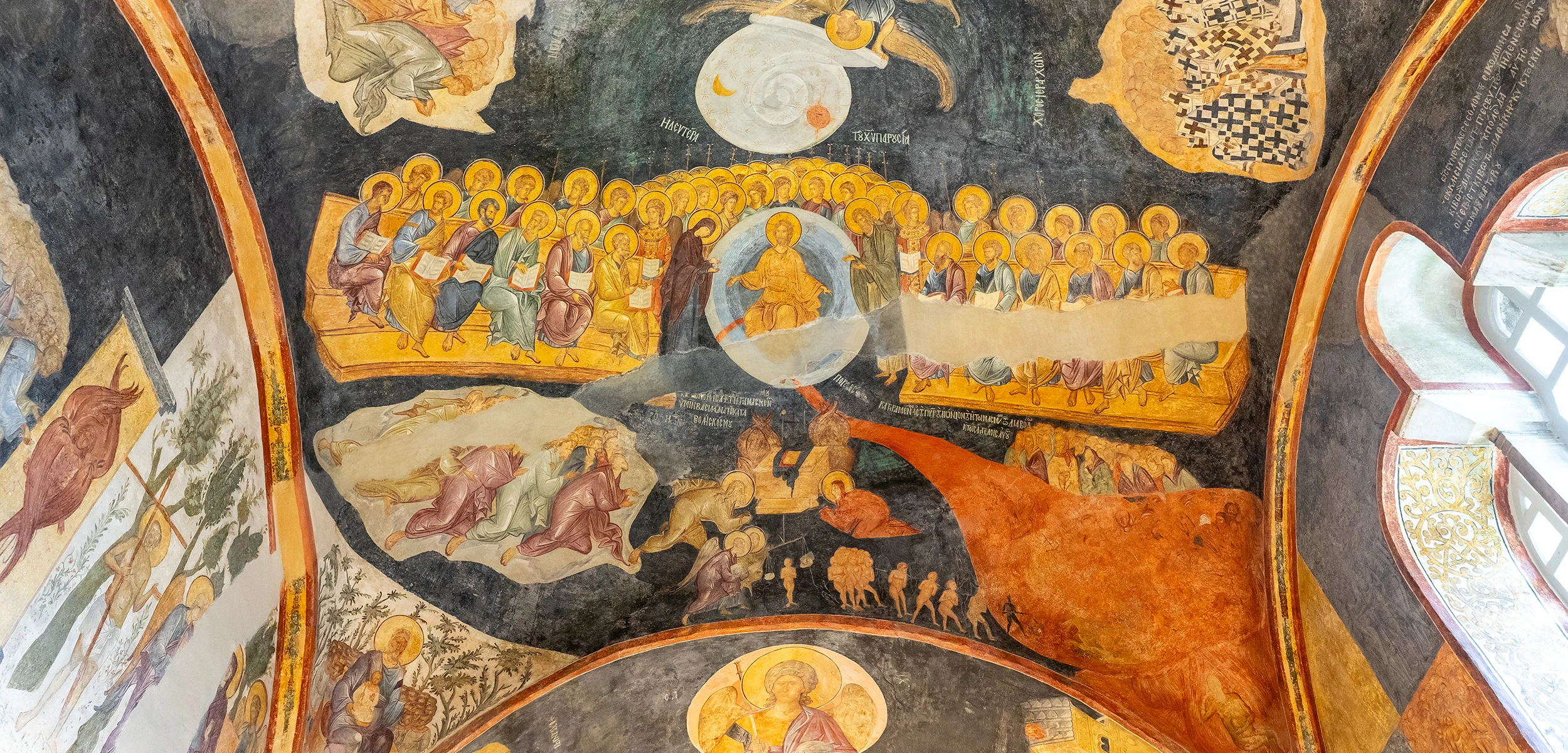
Continue into one of the world's greatest surviving ensembles of late Byzantine mosaics and frescoes.
Explore Chora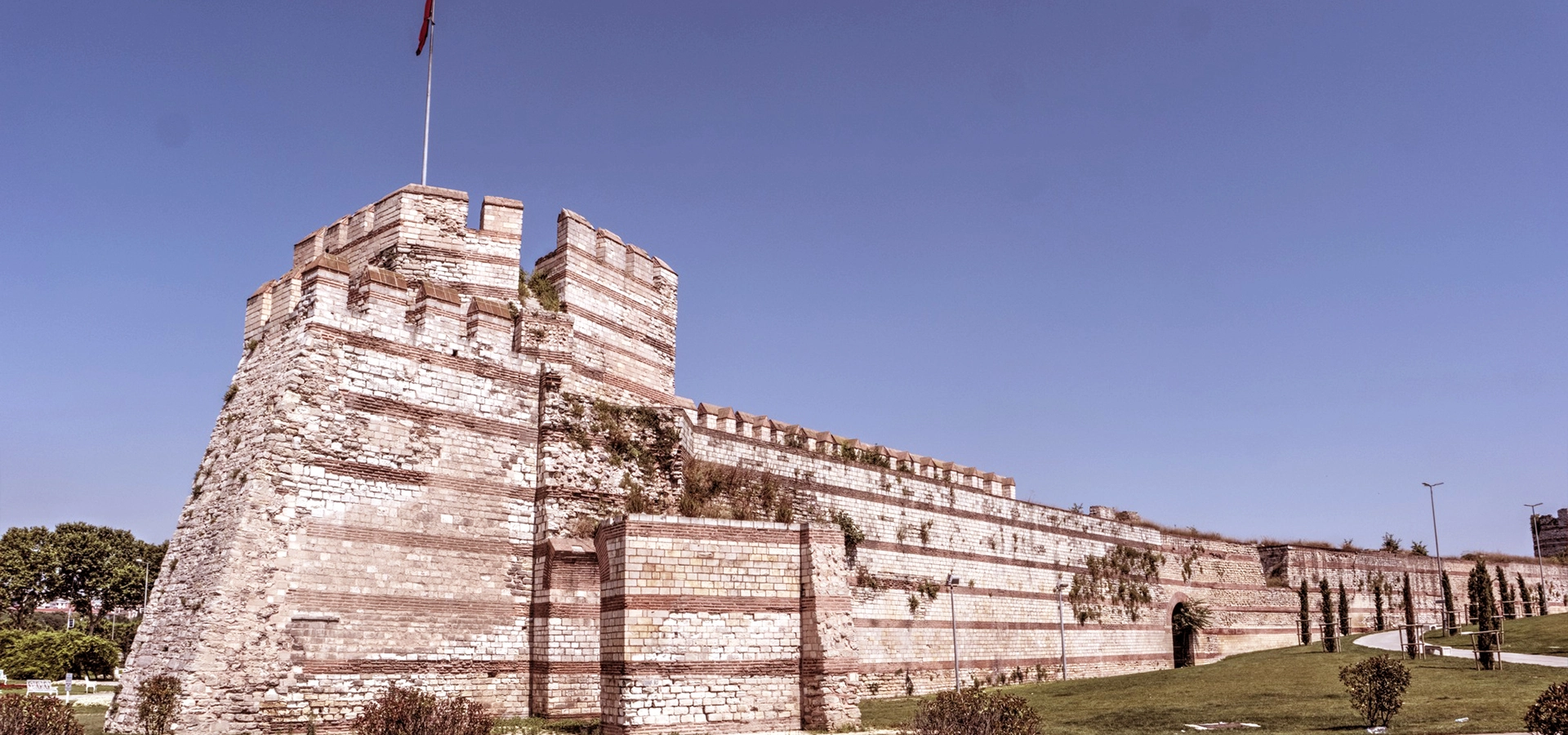
Explore the monumental fortifications that defended Constantinople for more than a thousand years.
Explore the City Walls
Discover another major Byzantine church complex and one of the most rewarding historic monuments in Fatih.
Explore Fethiye Mosque