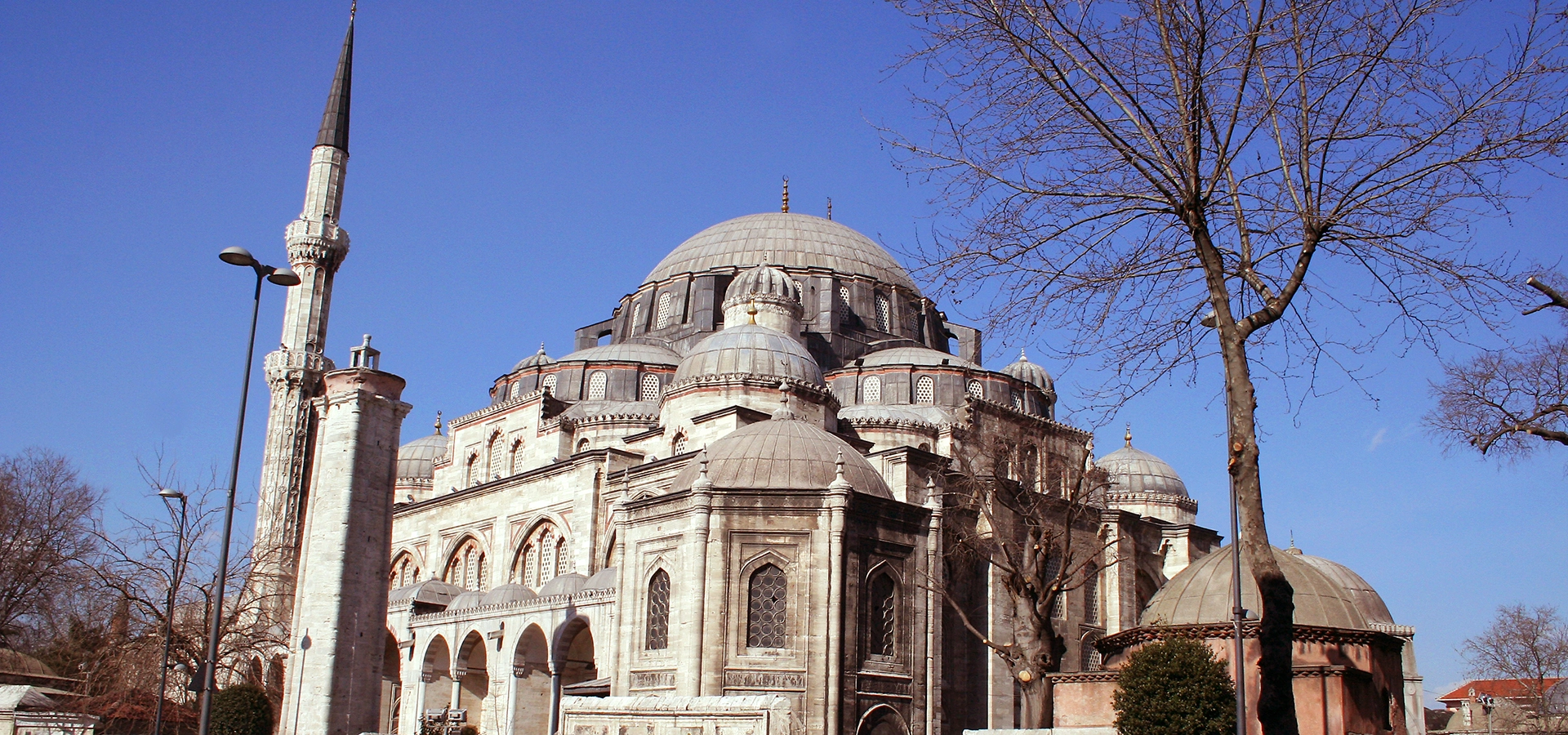
Private Mimar Sinan & Şehzade Tour
Ask us about a tailor-made route focused on Şehzade Mosque, Süleymaniye, Ottoman imperial architecture, Roman monuments and the historic neighborhoods beyond Sultanahmet.
Request a Custom Tour





The Şehzade Mosque, known in Turkish as Şehzade Camii, stands in the historic Şehzadebaşı quarter of Istanbul's Fatih district, close to Vezneciler, Saraçhane and the Valens Aqueduct. It was commissioned by Sultan Süleyman the Magnificent in memory of his son Şehzade Mehmed, who died unexpectedly in 1543 at only twenty-two years of age.
The mosque and its surrounding külliye were designed by Mimar Sinan, the greatest architect of the classical Ottoman age. Construction began in the 1540s and the mosque opened for worship in 1548. The complex became Sinan's first major imperial or selâtin commission and is traditionally remembered as his celebrated “apprenticeship work.”
Architecturally, Şehzade Mosque is one of the clearest demonstrations of Sinan's early search for a perfectly centralized worship space. A great central dome is supported by four large semi-domes, producing a powerful symmetry that can be understood both from inside the prayer hall and from the cascading exterior silhouette. The mosque's unusually ornate twin minarets are among the most distinctive minarets designed during Sinan's career.
Behind the mosque stands the richly decorated tomb of Şehzade Mehmed, famous for its fluted dome, colored stonework and brilliant İznik tiles. Together with the madrasa, imaret, tabhane, caravanserai, school, cemetery and later mausoleums, the complex tells a deeply human story of dynastic grief while also marking a turning point in the development of Ottoman imperial architecture.
Explore the imperial complex commissioned by Süleyman the Magnificent after the death of his son Şehzade Mehmed.
See the first great imperial complex of the architect who would later create Süleymaniye and Selimiye.
Experience the highly symmetrical central plan that became a landmark in the evolution of Ottoman mosque architecture.
Visit the extraordinary mausoleum of Şehzade Mehmed, one of the most richly decorated Ottoman tombs in Istanbul.
Essential information for visiting one of Mimar Sinan's most important early masterpieces in historic Istanbul.
Şehzadebaşı / Kalenderhane, Fatih, near Vezneciler and Saraçhane on Istanbul's historic peninsula.
Open on Google MapsSultan Süleyman the Magnificent, in memory of his son Şehzade Mehmed.
Mimar Sinan, chief imperial architect of the Ottoman Empire.
The complex was begun after Şehzade Mehmed's death in 1543; the mosque opened in 1548.
Free to enter; Şehzade Mosque remains an active place of worship.
Allow around 45–75 minutes for the mosque, courtyard, tombs and immediate külliye area.
Şehzade Mosque combines an intensely personal imperial memorial with one of the decisive architectural experiments of Mimar Sinan's career.
The importance of Şehzade Mosque begins with the tragedy that led to its construction. Şehzade Mehmed, a son of Süleyman the Magnificent, died in 1543 while serving as governor of Manisa. His death deeply affected the imperial family, and Süleyman commissioned a monumental complex in Istanbul to preserve his son's memory.
For Mimar Sinan, the commission was equally significant. Although he had already designed important buildings, Şehzade became his first great imperial mosque complex and one of the works through which he established the architectural language that would define the high classical Ottoman period.
The mosque's plan is remarkable for its clarity. A central dome is surrounded symmetrically by four semi-domes, producing a centralized interior in which the eye is drawn naturally toward the middle of the prayer hall. Sinan later refined questions of structure, light, mass and spatial unity in the Süleymaniye Mosque and eventually in the Selimiye Mosque at Edirne.
Şehzade is therefore valuable not only as a beautiful monument but as a building that allows visitors to see a great architect developing his ideas. Its cascading domes, sculptural buttresses, richly decorated minarets and monumental tombs reveal both experimentation and extraordinary confidence.
For travelers using our guide to places to visit in Istanbul, Şehzade Mosque is especially rewarding because it lies close to Roman, Byzantine and Ottoman landmarks that can be explored together on foot.
In the 1540s, the Ottoman Empire was at the height of its power under Sultan Süleyman I, known in Europe as Süleyman the Magnificent and in Ottoman tradition as Kanuni Sultan Süleyman. The succession of the dynasty, however, remained a deeply personal and politically important question within the imperial household.
Süleyman's son Şehzade Mehmed had governed Manisa, an important princely posting, before dying in 1543 at the age of twenty-two. His body was brought to Istanbul, and the sultan ordered the creation of an imperial funerary and religious complex in his memory. The prince's mausoleum was among the first parts of the foundation to be completed.
The mosque itself was begun in the mid-1540s and opened for worship in 1548. The wider complex was largely completed shortly afterward. The site lay along the historic route between Beyazıt and Edirnekapı, close to the monumental Valens Aqueduct and on land associated with the old Janissary barracks known as the Eski Odalar.
Over the centuries, the külliye was expanded with additional tombs, fountains and service structures. It also suffered from fires, earthquakes and the pressures of a changing city. Major restoration campaigns have helped preserve the mosque, mausoleums and surviving complex buildings for continued religious and cultural use.
Şehzade Mehmed dies while serving as governor of Manisa, prompting Süleyman to commission a memorial complex.
The prince's richly decorated mausoleum is among the first structures completed within the new foundation.
Construction of the great congregational mosque begins under the direction of Mimar Sinan.
The Şehzade Mosque opens for worship and becomes one of the defining monuments of the Şehzadebaşı district.
Repairs, fountains, tombs and additional structures gradually enrich the historic külliye.
The mosque remains active for worship while welcoming visitors interested in Sinan, Ottoman history and architecture.
Şehzade Mehmed was a son of Sultan Süleyman the Magnificent and Hürrem Sultan. Born in 1521, he belonged to a generation of Ottoman princes whose education and provincial governorships prepared them for the possibility of future rule.
Mehmed was appointed governor of Manisa, one of the most prestigious princely postings in the empire. His career was cut short when he died in 1543, only twenty-two years old. His death transformed what might otherwise have been a political biography into one of the most moving architectural memorials of Ottoman Istanbul.
The scale of the mosque complex was extraordinary for a prince who had never become sultan. Its two minarets, monumental congregational mosque, educational and charitable institutions and elaborate dynastic mausoleum gave Şehzade Mehmed a memorial landscape normally associated with the highest levels of Ottoman patronage.
The prince's tomb remains the emotional heart of the complex. Its unusually rich decoration, including colored stone and İznik tiles, expresses the grief and affection behind the commission far more directly than the restrained interior of the mosque itself.
Şehzade Mosque is traditionally described as Mimar Sinan's “apprenticeship work”, while the Süleymaniye Mosque in Istanbul is remembered as his “journeyman” work and the Selimiye Mosque in Edirne as his “masterpiece.” The famous sequence should not suggest that Şehzade is architecturally immature. By the time he designed it, Sinan was already an experienced engineer and chief imperial architect.
What makes Şehzade especially fascinating is that it records Sinan's early search for a new form of monumental central space. Instead of allowing a single directional axis to dominate the interior, he placed the principal dome over the center and surrounded it with four matching semi-domes. This created an unusually balanced composition with strong symmetry in every direction.
The experiment was highly successful, but Sinan did not simply repeat it in later mosques. At Süleymaniye, he developed a different structural hierarchy inspired partly by the great domed monuments of Constantinople. At Selimiye, he pushed the idea of a unified central dome to an even more radical conclusion.
Visiting Şehzade before Süleymaniye is therefore one of the best ways to understand Sinan as an architect who constantly tested, revised and refined his solutions rather than relying on a single formula.
Şehzade established Sinan as the architect of a monumental sultanic foundation in the capital.
The central dome and four semi-domes create a powerful geometric balance visible throughout the building.
Massive piers, arches, semi-domes and exterior buttressing work together to control the weight of the dome.
Ideas tested here would be reconsidered and refined in Sinan's later imperial mosques.
The prayer hall of Şehzade Mosque is organized around a central dome approximately 19 meters in diameter that rises to roughly 37 meters above the floor. Four massive piers carry the great arches beneath the dome, while one large semi-dome extends outward on each of its four sides.
This arrangement creates the mosque's most famous architectural feature: a strong sense of four-way symmetry. Smaller domed spaces fill the corners, allowing the central volume to expand gradually toward the exterior walls without losing visual unity.
The same logic can be read from outside. The roofline rises in carefully arranged stages from smaller domes and semi-domes toward the central dome, producing the pyramidal silhouette that would become one of the signatures of classical Ottoman imperial architecture.
The interior decoration is comparatively restrained. White stone, marble architectural elements, painted ornament and controlled daylight allow the geometry of the space to remain dominant. The mihrab and minbar are finely carved in marble, while the imperial and muezzin galleries add further layers to the ceremonial interior.
A dome about 19 meters wide forms the dominant center of the prayer hall.
Four large semi-domes extend the main volume equally in every direction.
Massive supports carry the principal arches beneath the central dome.
Smaller domes soften the transition between the central system and the square perimeter.
The prayer niche and minbar display elegant carving without overwhelming the architecture.
The exterior rises in rhythmic stages toward the main dome, creating one of Sinan's most recognizable compositions.
The two minarets of Şehzade Mosque are among the most visually distinctive features of the complex. Each rises beside the courtyard and has two balconies, a configuration appropriate to an imperial foundation of exceptional status.
Unlike many later Sinan minarets, whose shafts are comparatively restrained, the Şehzade minarets are covered with elaborate geometric carving and decorative bands. The surfaces create changing patterns of light and shadow throughout the day and make the minarets rewarding subjects for close architectural photography.
Their rich ornament has often been interpreted as part of the special commemorative character of the complex. The mosque is monumental enough to proclaim imperial patronage, yet the exceptional decoration also distinguishes it from more conventional religious foundations of the period.
Before entering the prayer hall, spend time in the mosque's fountain courtyard. The mosque and courtyard form two monumental square volumes, creating a strong architectural sequence from open sky to enclosed prayer space.
The courtyard is surrounded by a domed portico carried on columns and articulated with alternating light and reddish stone in the arches. At its center stands an elegant şadırvan, or ablution fountain, beneath a protective canopy. The fountain is associated with later Ottoman additions and repairs to the complex rather than the earliest phase of Sinan's design.
From the courtyard, visitors can study the relationship between the arcades, the great entrance portal, the richly carved minarets and the rising sequence of domes behind them. It is one of the best places to appreciate the carefully controlled geometry of the monument before stepping inside.
Rows of columns and domed bays create a calm transition between the city and the prayer hall.
The central ablution fountain forms the visual focus of the marble-paved courtyard.
Alternating stone colors add rhythm and depth to the surrounding arcade.
The monumental entrance aligns the courtyard with the great central space of the mosque.
Şehzade Mosque was never intended to stand alone. It formed the center of a large külliye that combined worship with education, hospitality, food distribution and dynastic commemoration.
The original foundation included a madrasa, an imaret or public kitchen, a sıbyan mektebi or elementary school, a tabhane for guests and a caravanserai with service spaces. The twenty-cell madrasa ranked among the important educational institutions of its period.
Later centuries added new mausoleums, fountains, sebils and other structures around the complex. The result is not a single frozen 16th-century ensemble but a layered Ottoman religious landscape that continued to evolve as generations of patrons, officials and worshippers used the site.
The arrangement also reflects the importance of Şehzadebaşı as a major urban corridor. The complex stood close to the historic route connecting the imperial center around Beyazıt with the neighborhoods toward Edirnekapı, while the Roman Valens Aqueduct rose only a short distance away.
A twenty-cell educational foundation formed an important scholarly component of the complex.
The public kitchen supported the charitable and social mission of the imperial endowment.
Guest rooms provided accommodation within the wider Ottoman tradition of endowed hospitality.
Stables and service spaces supported travelers, animals and the practical needs of the complex.
The sıbyan mektebi extended the educational role of the foundation beyond advanced madrasa study.
The tomb garden grew over time into an important landscape of Ottoman royal and elite memory.
One of the easiest details to miss at the Şehzade complex is a green stone column incorporated near the outer enclosure along the historic Divanyolu axis. Tradition associates this marker with the central point of Ottoman Istanbul from which distances could be understood within the imperial capital.
Whether visitors approach it as a practical urban marker or as a symbolic reminder of the city's historical geography, the column adds another layer to the complex. Şehzade was not placed in an isolated religious precinct: it stood on one of the major arteries of the old city and occupied a strategic position between Beyazıt, Saraçhane and the western districts.
Behind the qibla side of the mosque stands the magnificent tomb of Şehzade Mehmed, one of the finest 16th-century Ottoman mausoleums in Istanbul. The tomb was among the first structures completed in the complex and was designed to give the young prince an exceptionally prestigious dynastic memorial.
The mausoleum is octagonal and crowned by a distinctive fluted dome. Its exterior combines carefully cut stone, decorative panels and a ceremonial entrance porch, while the interior is enriched with brilliant İznik tiles in rare greens, yellows, blues and other colors.
At the center lies the prince's cenotaph beneath an extraordinary wooden canopy. The visual effect is unlike that of most Ottoman royal tombs and reinforces the special status accorded to Mehmed after his early death.
The mausoleum also contains the burials of members of the prince's family, including his daughter Hümaşah Sultan and his brother Şehzade Cihangir. Visitors should remember that the tomb remains part of a living religious and commemorative environment rather than simply a museum interior.
The ribbed exterior profile makes the mausoleum immediately recognizable within the tomb garden.
Rich polychrome tilework gives the interior exceptional color and ceremonial intensity.
A throne-like baldachin above the cenotaph is traditionally linked with the prince's unrealized future as ruler.
The mausoleum also preserves the memory of close members of Şehzade Mehmed's family.
The cemetery behind Şehzade Mosque gradually became an important burial area for members of the Ottoman dynasty and high-ranking officials. Several mausoleums stand close together, creating one of the richest historic tomb groups on the central part of the peninsula.
Among the best known is the tomb of Rüstem Pasha, grand vizier and son-in-law of Süleyman the Magnificent. Designed by Mimar Sinan, it is especially notable for its refined İznik tile decoration and can be compared with the far more famous tilework of the Rüstem Pasha Mosque near the Spice Bazaar.
Other mausoleums and graves commemorate princes, religious scholars, statesmen and members of the extended imperial household. Their different plans, domes, inscriptions and decorative programs show how Ottoman funerary architecture developed across several generations.
See the octagonal mausoleum of Süleyman's powerful grand vizier, also designed by Mimar Sinan.
A later princely mausoleum adds another chapter to the dynastic history of the burial garden.
Several tombs commemorate senior religious and administrative figures connected with the imperial court.
Carved inscriptions, headgear forms and stone decoration reveal changing Ottoman funerary traditions.
A rewarding visit should include much more than a quick look inside the prayer hall. The architecture becomes clearer when the mosque, courtyard, minarets, tomb garden and surviving külliye buildings are explored together.
Stand near the center and look upward to understand how the main dome and four semi-domes create a unified space.
Examine the unusually rich geometric carving that makes these among Sinan's most decorative minarets.
Use the central şadırvan and arcades to appreciate the mosque's symmetry before entering the prayer hall.
See the fluted dome, colored stone, İznik tiles and extraordinary wooden canopy above the prince's cenotaph.
Look for another refined Sinan mausoleum with beautiful Ottoman tile decoration.
Walk around the enclosure to understand the educational, charitable and social scale of the original foundation.
Shoulders and knees should be covered. Women should cover their hair when entering the prayer hall.
Shoes must be removed before entering the carpeted prayer space. Follow the arrangements provided at the entrance.
Sightseeing is easiest between congregational prayer periods, particularly outside the busy Friday midday prayer.
The mausoleum of Şehzade Mehmed is essential to understanding why the complex was created.
Exterior viewpoints reveal the mosque's symmetrical massing and the rich carving of the minarets far better than the doorway alone.
The Valens Aqueduct, St. Polyeuktos, Süleymaniye and Zeyrek can all be connected in a rewarding historic walk.
Begin at Şehzade Mosque in the morning, ideally between congregational prayer periods. Start in the outer garden, enter the fountain courtyard and then spend time beneath the central dome before continuing to the tomb of Şehzade Mehmed and the surrounding mausoleums.
From the mosque, walk only a short distance toward the Valens Aqueduct at Saraçhane. The contrast is remarkable: within minutes you move from the monumental infrastructure of Roman Constantinople to one of the defining mosques of the classical Ottoman age.
Continue to the nearby remains of the Church of St. Polyeuktos, a once-magnificent 6th-century Byzantine church whose surviving foundations reveal another layer of the city's religious and architectural history.
From Saraçhane, continue toward Süleymaniye Mosque. Seeing Şehzade and Süleymaniye on the same day is especially rewarding because it allows you to compare two major stages in Mimar Sinan's architectural development.
If you have additional time, extend the route downhill toward Zeyrek Mosque / Pantokrator Monastery or continue toward Beyazıt and the Grand Bazaar.
Şehzade Mosque is a working mosque rather than a ticketed museum. It is used for the five daily prayers, Friday congregational prayer and religious gatherings, so sightseeing should always be organized around active worship.
There is no general admission fee. Visitors of all backgrounds can normally enter respectfully outside congregational prayer periods, subject to any temporary arrangements in place on the day.
Current public information commonly lists the mosque as open daily from around 07:00 to 20:00, but mosque access is better understood in relation to prayer times rather than fixed museum hours. Friday midday is the busiest regular period, and access to the main prayer hall may be restricted before and during congregational prayer.
The tomb area is normally visited as part of the same stop, but individual mausoleums can occasionally have different access arrangements because of conservation, staffing or ceremonies. If Şehzade Mehmed's tomb is a priority, allow enough flexibility in your schedule.
Usually the calmest period for appreciating the courtyard, interior symmetry and tomb garden without large prayer crowds.
A good choice for continuing afterward toward Süleymaniye, the Valens Aqueduct or Zeyrek.
An important day for worship but much busier around the midday congregational prayer; sightseeing is easier at another time.
The mosque and neighborhood can be especially atmospheric, but expect more activity around prayer and evening worship.
Mild weather is ideal for combining the mosque with a longer walking route across the historic peninsula.
Soft light brings out the carved decoration of the minarets and the layered geometry of the domes.
Enough for a quick look at the courtyard and prayer hall if you are passing through Şehzadebaşı.
The best range for the prayer hall, courtyard, minarets, Şehzade Mehmed's tomb and nearby mausoleums.
Add a slower walk around the outer enclosure, surviving külliye buildings and architectural details.
Combine Şehzade with the Valens Aqueduct, St. Polyeuktos and Süleymaniye Mosque.
Şehzade Mosque is exceptionally rewarding for architectural photography because its design can be read from many different scales: from the full dome-and-minaret silhouette to carved stone details, courtyard symmetry and the intimate tilework of the mausoleums.
Use the central şadırvan and surrounding arcades to frame the mosque's main entrance and rising domes.
A longer focal length helps isolate the geometric relief patterns carved into the richly decorated minaret shafts.
Photograph upward from the side of the prayer hall while keeping clear of people engaged in prayer.
The fluted dome of Şehzade Mehmed's mausoleum is especially striking from the garden.
If photography is permitted inside the tomb, work discreetly and avoid flash around delicate surfaces and worshippers.
Step back toward Saraçhane and the surrounding streets to photograph the layered domes rising above the neighborhood.
Şehzade Mosque occupies a relatively open site beside major streets in central Fatih. The outer garden and courtyard are easier to navigate than many steep historic neighborhoods, but thresholds, shoe removal and older paving can still create difficulties for some visitors.
Broad paths provide relatively straightforward circulation around much of the mosque enclosure.
The marble-paved courtyard is mostly level, though thresholds at historic gates require attention.
Shoe removal and the transition onto carpeted flooring can require extra care for visitors with limited mobility.
Individual mausoleums may have narrow entrances or small level changes even when the surrounding garden is accessible.
Vezneciler metro station provides one of the easiest public-transport approaches with relatively little uphill walking.
If step-free access is essential, confirm the most suitable current entrance with mosque staff on arrival.
Şehzade Mosque stands in a very central position on Istanbul's historic peninsula, close to Vezneciler, Saraçhane and the Valens Aqueduct. It is easier to reach by public transport than many monuments deeper inside the old neighborhoods.
The M2 Vezneciler–İstanbul Üniversitesi station is only a short walk from the mosque and is usually the easiest option.
Take the T1 tram toward Laleli–Üniversite, then continue on foot toward Vezneciler and Şehzadebaşı.
Use the T1 tram toward Laleli or take a city bus toward Saraçhane, depending on traffic and your preferred walking route.
The M2 metro provides a direct connection to Vezneciler, followed by a short walk to the mosque.
Numerous routes serve Saraçhane, Vezneciler and Atatürk Boulevard close to the mosque complex.
Ask for “Şehzade Camii” or “Şehzadebaşı.” Traffic can be heavy around Saraçhane and central Fatih at peak hours.
Şehzade Mosque stands in one of the most historically layered parts of Istanbul's old city. Use our complete Istanbul visitor guide to connect Mimar Sinan's early imperial masterpiece with Roman infrastructure, Byzantine archaeology and later Ottoman monuments.
Walk to the monumental Roman water bridge rising immediately north of the Şehzade and Saraçhane area.
Explore the archaeological remains of a magnificent 6th-century Byzantine church only a short walk away.
Compare Şehzade with Mimar Sinan's later imperial masterpiece overlooking the Golden Horn.
Continue downhill to one of Constantinople's greatest surviving Middle Byzantine monastic complexes.
Walk south toward Beyazıt and explore Istanbul's historic covered market and surrounding commercial streets.
Continue along the historic peninsula toward Çemberlitaş and one of the great surviving monuments of Constantine's capital.
Follow the old ceremonial route toward Sultanahmet and the surviving marker associated with distances from Constantinople.
Build a wider route through imperial mosques, Byzantine churches, cisterns, palaces, markets and archaeological sites.
Şehzade Mosque is in the Şehzadebaşı / Kalenderhane area of Fatih on Istanbul's historic peninsula, close to Vezneciler, Saraçhane and the Valens Aqueduct.
The mosque was commissioned by Sultan Süleyman the Magnificent and designed by the great Ottoman imperial architect Mimar Sinan.
Süleyman commissioned the complex in memory of his son Şehzade Mehmed, who died in 1543 at only twenty-two years of age.
The complex was begun after Şehzade Mehmed's death in 1543, and the mosque was completed and opened for worship in 1548.
Şehzade Mehmed was a son of Sultan Süleyman the Magnificent and Hürrem Sultan. He served as governor of Manisa before his death in 1543.
It is traditionally described that way in the famous sequence that calls Şehzade his apprenticeship work, Süleymaniye his journeyman work and Selimiye his masterpiece.
Its central dome supported symmetrically by four large semi-domes created an exceptionally unified central space and became an important stage in Sinan's development of Ottoman imperial mosque architecture.
The main dome is approximately 19 meters in diameter and rises to roughly 37 meters above the floor.
The two minarets are exceptionally richly decorated with geometric carving and relief patterns, making them among the most ornate associated with Mimar Sinan.
He is buried in a richly decorated mausoleum behind the mosque, recognizable by its fluted dome and elaborate İznik tile interior.
The mausoleum also contains burials associated with his close family, including his daughter Hümaşah Sultan and his brother Şehzade Cihangir.
Yes. Rüstem Pasha has a separate octagonal mausoleum in the complex, also associated with Mimar Sinan and notable for İznik tile decoration.
Yes. It is an active mosque rather than a ticketed museum, so there is no general admission fee.
Visitors of all backgrounds can normally enter respectfully outside congregational prayer periods, subject to current mosque arrangements.
Women should cover their hair inside the main prayer hall, and all visitors should wear clothing that covers shoulders and knees.
Yes. Shoes must be removed before entering the carpeted prayer area.
Sightseeing may be restricted during congregational prayer. Visiting between prayer periods is more comfortable and respectful.
Current public information commonly lists daily access around 07:00–20:00, but the mosque follows a living prayer schedule and visitor access can change around worship, religious events or maintenance.
A weekday morning or mid-afternoon is usually best for a quieter architectural visit. Friday around midday is much busier.
Allow around 45–75 minutes for the mosque, courtyard, Şehzade Mehmed's tomb and the main historic structures around the complex.
Discreet architectural photography is generally possible, but visitors should avoid disturbing worshippers, using intrusive flash or photographing people engaged in private prayer without permission.
The Valens Aqueduct, St. Polyeuktos, Süleymaniye Mosque, Zeyrek Mosque / Pantokrator Monastery and the Grand Bazaar can all be combined with the mosque.
Absolutely. It is one of the best places in Istanbul to understand Mimar Sinan's development, classical Ottoman architecture and the personal history of Süleyman the Magnificent's family.
Never stand in front of someone praying or block prayer rows, doors and circulation routes.
Modest clothing is expected inside the mosque and respects its continuing religious function.
Avoid loud conversation, speakerphone use and disruptive group behavior in the prayer hall and tombs.
Do not turn prayer, remembrance or private devotion into intrusive photography.
Do not touch tile panels, carved stone, painted decoration or fragile elements inside the mausoleums.
Prayer services, funerals, religious events and conservation work can temporarily change normal visitor routes.
Connect Şehzade Mosque with Mimar Sinan, Süleymaniye, Roman Constantinople, Byzantine archaeology and the historic neighborhoods of Fatih through a private route shaped around your interests and without compulsory shopping stops.
Choose a focused half-day route around Şehzade Mosque, the Valens Aqueduct and Süleymaniye, or a deeper private experience tracing the architectural development of Ottoman Istanbul through the works of Mimar Sinan.
Ask us about a tailor-made route focused on Şehzade Mosque, Süleymaniye, Ottoman imperial architecture, Roman monuments and the historic neighborhoods beyond Sultanahmet.
Request a Custom Tour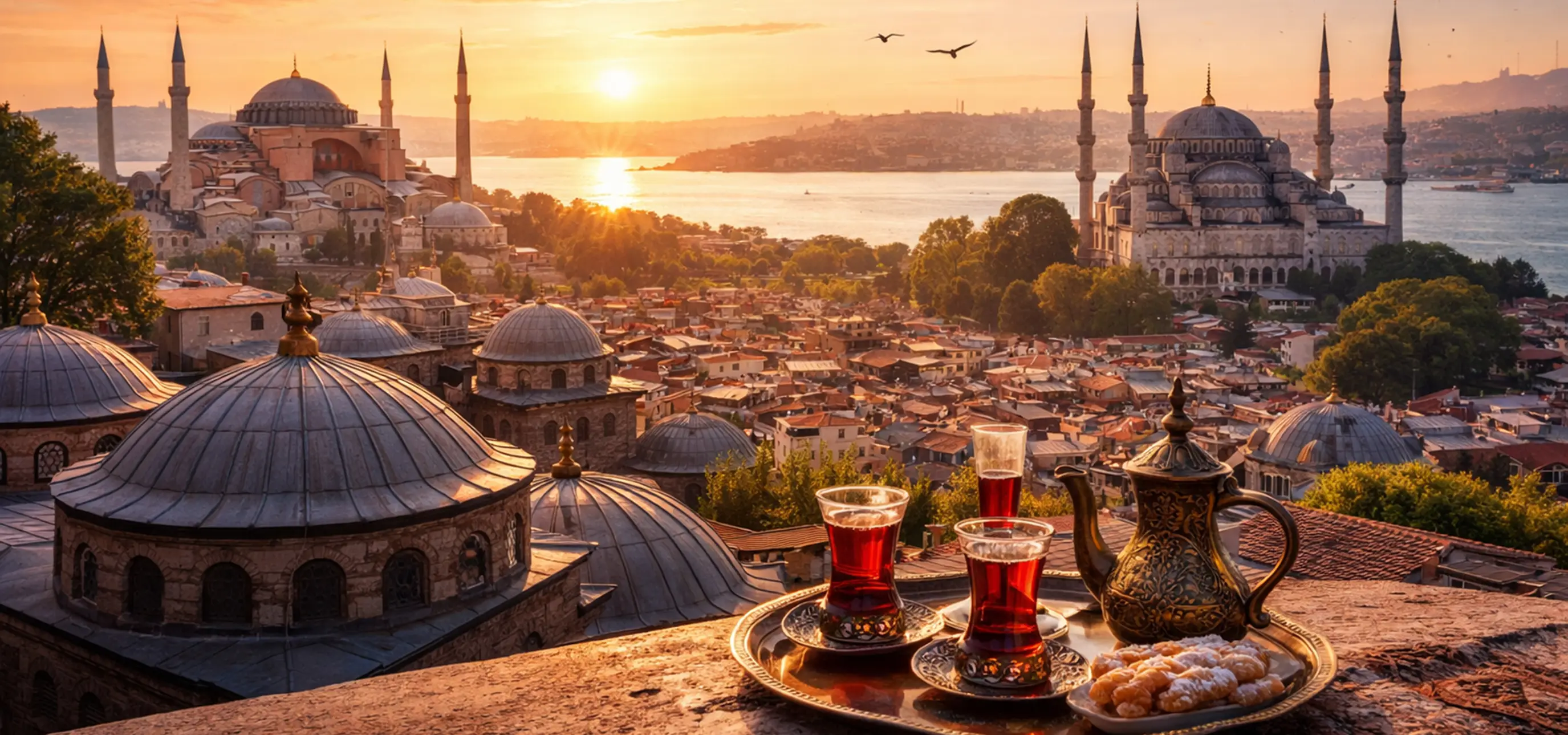
Discover imperial mosques, Byzantine churches, archaeological sites, historic neighborhoods, markets, palaces and waterfront districts across Istanbul.
View Istanbul GuideFollow Mimar Sinan's architectural story while connecting Roman, Byzantine and Ottoman monuments across the historic peninsula.
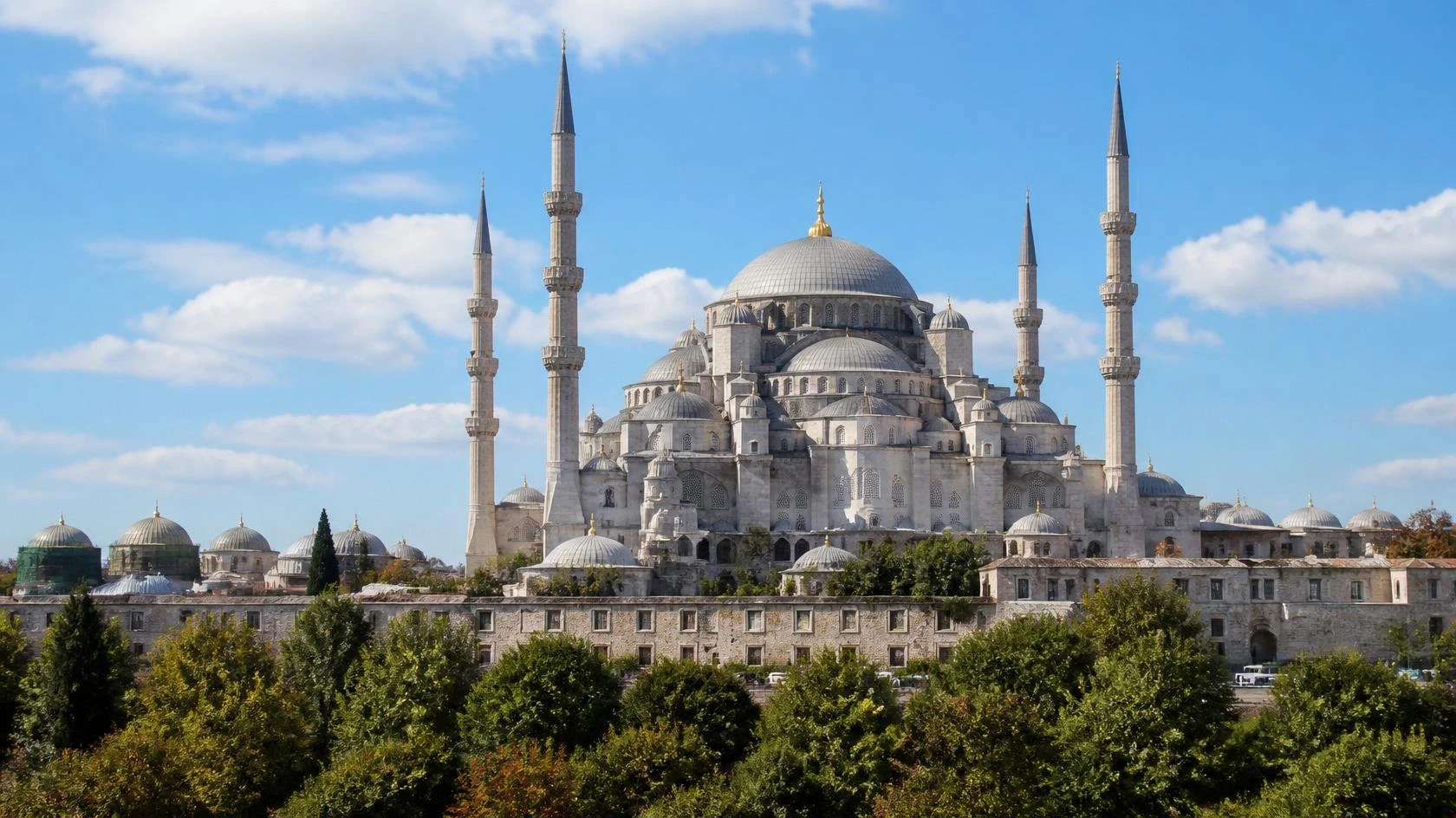
Continue from Sinan's celebrated early imperial work to his monumental complex built for Sultan Süleyman the Magnificent.
Explore Süleymaniye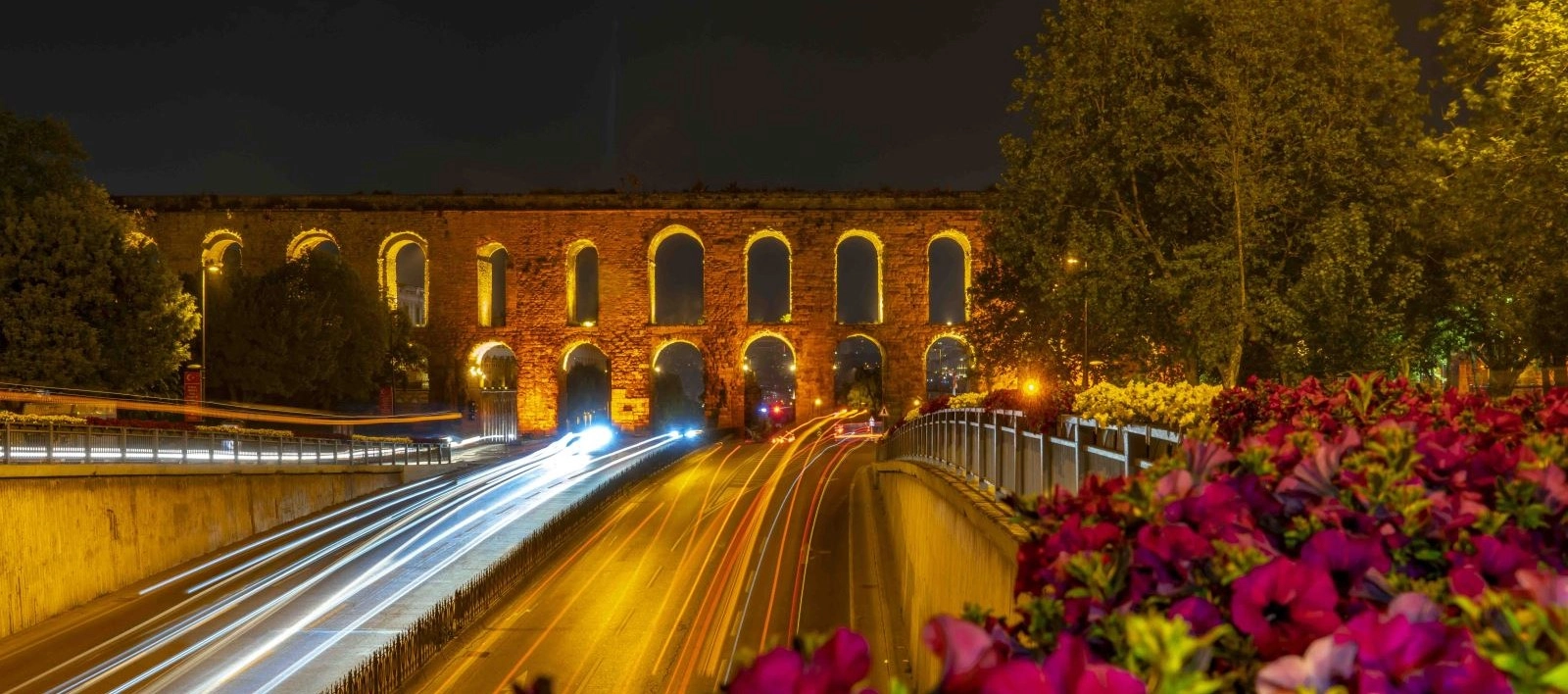
See the monumental Roman water bridge standing only a short walk from the Şehzade Mosque complex.
Explore the Aqueduct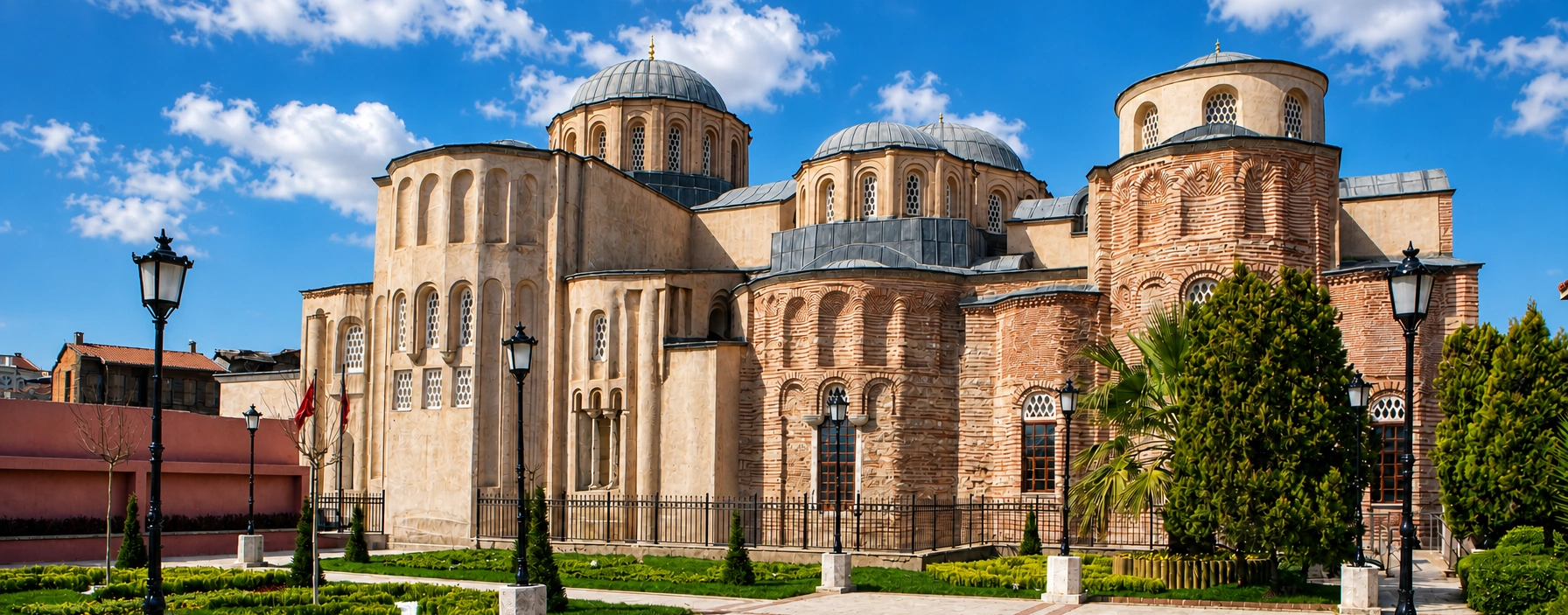
Continue into Byzantine Constantinople at one of the city's greatest surviving Middle Byzantine monastic complexes.
Explore Zeyrek