Private Imperial Constantinople Walk
Ask us about a tailor-made route focused on the Milion, the Augusteion, the Hippodrome, Hagia Sophia, the Mese and surviving Byzantine monuments.
Request a Custom Tour





The Milion, often called the Milion Stone or Million Stone, marked the ceremonial starting point of roads and measured distances in Constantinople. It stood beside the Augusteion, close to Hagia Sophia and the entrance to the city's principal avenue, the Mese.
The original 4th-century monument was far more impressive than the modest remains visible today. Rather than a single milestone, it was probably a monumental tetrapylon—four piers connected by arches and covered by a domical vault—decorated with inscriptions and imperial statues.
Like the Milliarium Aureum in Rome, the Milion expressed the idea that the capital stood at the center of an empire-wide road network. Distances to important cities were associated with this point, while emperors, officials, ceremonial processions and crowds passed through the surrounding district.
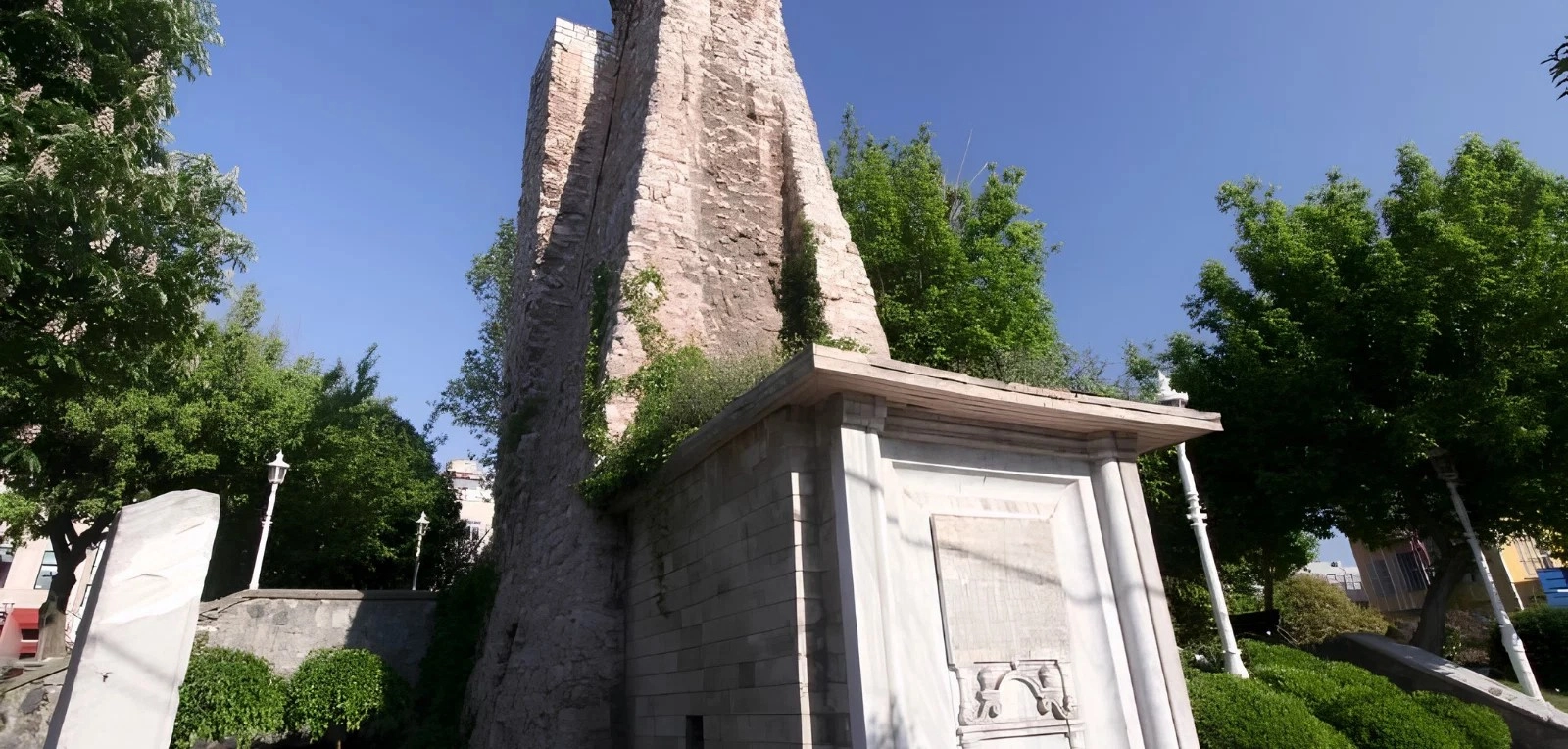
Only a re-erected stone fragment and archaeological remains now mark the site. Its scale may be small, but its meaning is immense: this was the threshold between Constantinople's monumental center and the avenue that crossed the imperial city.
Stand near the reference point from which Constantinople's road distances were reckoned.
Discover a landmark probably created during the foundation of Constantine's new capital.
See where the city's great ceremonial avenue began beside the Augusteion.
Visit the surviving fragment at any time near the Basilica Cistern and Hagia Sophia.
Essential information for finding and understanding this easily overlooked Byzantine landmark.
Alemdar Street, Sultanahmet, beside the Basilica Cistern in Fatih.
Open on Google MapsProbably established during the reign of Constantine I in the early 4th century.
Symbolic starting point for imperial roads and distances from Constantinople.
A domed tetrapylon formed by four piers joined with arches.
Free outdoor monument; no ticket or interior visit is required.
Allow 10–20 minutes, or include it in a longer Sultanahmet heritage walk.
The Milion translated Constantinople's claim to be New Rome into architecture, ceremony and geography.
When Constantine transformed Byzantium into an imperial capital, he borrowed institutions, monuments and symbols associated with Rome. The Milion echoed Rome's Golden Milestone and announced that the new capital was now a central reference point for the Roman world.
The monument stood at an exceptionally important urban junction. To the east lay the Augusteion, Hagia Sophia, the imperial palace district and the Hippodrome; to the west began the Mese, the broad processional avenue that crossed forums and eventually divided toward the city's great land gates.
The Milion was therefore more than a practical road marker. Its inscriptions, statues and ceremonial setting presented political geography as imperial ideology: Constantinople was not at the edge of the Roman world but at its governing center.
For travelers using our guide to places to visit in Istanbul, the surviving fragment provides a valuable key to reading Sultanahmet as the monumental heart of ancient Constantinople rather than simply a collection of separate attractions.
The Milion probably dates from the rebuilding of Constantinople under Constantine I in the early 4th century. Its position near the Augusteion and at the beginning of the Mese made it one of the defining landmarks of the new capital inaugurated in AD 330.
The monument was modeled conceptually on the Milliarium Aureum in Rome. Ancient descriptions indicate that distances to important cities were inscribed or displayed there, turning the site into both the official beginning of the road system and a symbolic image of the empire gathered around its capital.
The Milion changed repeatedly during Byzantine rule. It was associated with statues of Constantine and his mother Helena, with a cross between them, and with a personification of Constantinople. Emperor Justinian I added or restored a horologion, generally understood as a clock or sundial installation, while later rulers introduced additional statues and painted decoration.
The surrounding area played a role in imperial ceremonies and political conflict. Members of the Blue faction greeted emperors here during formal processions, and the monument witnessed unrest, public punishment and struggles for power in the ceremonial center of the capital.
Its later history is less certain. The structure was damaged or substantially altered during the medieval period and disappeared from the cityscape after the Ottoman conquest, possibly during changes to the nearby water system. Excavations in 1967–1968 revealed foundations and fragments generally identified with the Milion. One stone element was subsequently re-erected to mark the ancient location.
The Milion is probably created as part of Constantine's new imperial capital.
Constantinople is formally inaugurated with the monument beside its ceremonial center.
Justinian I restores or adds a horologion near the Milion.
Religious images are replaced during the Iconoclastic controversies.
Damage and urban change gradually erase the monumental structure.
Excavations uncover remains generally identified as part of the Milion.
The modern phrase “Milion Stone” can create the impression of a single roadside marker. The ancient monument was instead a substantial architectural structure known from written descriptions and limited archaeological evidence.
It probably took the form of a tetrapylon: four strong piers arranged in a square and connected by arches. A domical vault covered the central crossing, allowing movement through the monument from several directions. This form suited its position between the Augusteion and the beginning of the Mese.
Inscriptions recording distances gave the building its practical and symbolic identity. Statues and paintings transformed it into an evolving display of imperial authority, dynastic memory and religious policy. Its appearance was therefore not fixed; different emperors restored, embellished and reinterpreted the monument over centuries.
A square arrangement of supports created passages through the monument.
Connected arches made the Milion resemble a ceremonial gateway.
A vaulted roof covered the central space of the tetrapylon.
Recorded routes linked Constantinople symbolically with important imperial cities.
Constantine, Helena and later members of the imperial family were represented here.
Crosses, political images and ceremonial additions reflected successive reigns.
The Milion marked the point from which road distances associated with Constantinople were measured. Its Roman model was the Golden Milestone in the Forum Romanum, and the parallel strengthened Constantine's presentation of his city as New Rome.
Immediately west of the monument began the Mese, meaning the “Middle Street.” This was not one narrow road but the principal ceremonial and commercial axis of Constantinople. It passed the Forum of Constantine, the Forum of Theodosius and other major public spaces before dividing into routes toward the land walls.
One branch ultimately led toward the Golden Gate and the great road west through Thrace; another continued northwest toward the Adrianople Gate. In this way, the Milion connected the emperor's palace district with the streets of the capital and the highways beyond its walls.
The monumental square beside Hagia Sophia formed the eastern setting of the Milion.
Constantinople's principal avenue began here and crossed the imperial city.
The first great forum westward centered on today's Column of Constantine.
The avenue continued through the monumental square beneath modern Beyazıt.
The southern branch connected the ceremonial center with the empire's grand western entrance.
Measured distances made distant cities part of a road network centered on Constantinople.
The surviving remains are modest and can easily be missed among Sultanahmet's major monuments. Approach the site as an archaeological marker of a lost building and use the surrounding streets to reconstruct its original context.
Examine the vertical stone element that now identifies the location of the ancient Milion.
Notice how the archaeological level sits below the pavement of the modern city.
Use the on-site explanation to connect the fragment with the lost tetrapylon.
A nearby sign recalls the monument's ancient function by pointing toward world cities.
Observe how closely the site stands to one of Constantinople's great water monuments.
Look east to understand the Milion's relationship with the Augusteion and cathedral.
Turn west toward Divan Yolu and imagine the monumental avenue leaving the imperial center.
Compare the buried remains with today's pavement to visualize centuries of urban accumulation.
The Milion occupied one of the most politically charged spaces in Constantinople. Imperial processions moved between the palace, Hagia Sophia, the Hippodrome and the Mese, and the Blues traditionally acclaimed the emperor near the monument during formal ceremonies.
Its decoration expressed changing ideas of dynasty and faith. Sources associate the monument with Constantine and Helena, the city's personification or Tyche, and later statues of imperial women installed under Justin II. A horologion added in Justinian's reign further increased its public presence.
During the 8th-century Iconoclastic controversies, images of church councils were reportedly removed and replaced with scenes connected with the Hippodrome. This episode shows that the Milion remained a prominent surface on which rulers could reshape public memory.
Dynastic statues connected the monument with the founder of the capital.
Christian imagery helped reinterpret Roman imperial geography for Constantinople.
A personification of the city represented Constantinople's fortune and identity.
A timekeeping installation associated with Justinian added another civic function.
Representatives acclaimed emperors here during movement through the ceremonial center.
Altered paintings reveal how public monuments became instruments of religious policy.
The Milion is free, central and simple to reach, but its surviving fragment is visually modest. A little historical preparation transforms it from an unexplained stone into one of Sultanahmet's most meaningful urban markers.
Find the remains near the Basilica Cistern entrance on Alemdar Street.
The surviving stone makes more sense when viewed as one fragment of a lost four-arched monument.
Natural light makes the stone, archaeological level and surrounding context easier to examine.
Use the pavement to relate the site to Hagia Sophia, the cistern and Divan Yolu.
The visible remains require little time; their historical context provides the real experience.
Continue west toward Çemberlitaş to trace Constantinople's main ceremonial avenue.
Early morning offers a calmer view in one of Istanbul's busiest visitor districts.
Do not sit, climb or place belongings on the archaeological stonework.
This compact route connects the Milion with the monuments that defined Constantinople's ceremonial core. Adjust the order around current opening hours, prayer times, ticket queues and access arrangements.
Begin at Hagia Sophia Square, part of the ceremonial landscape surrounding the former Augusteion. Walk to the Milion beside the Basilica Cistern, then cross Sultanahmet Square to study the surviving monuments of the Hippodrome.
Return to the Milion and continue west along Divan Yolu, following the broad corridor of the Byzantine Mese. Pause at the Column of Constantine before continuing to Nuruosmaniye Mosque and the Grand Bazaar.
The surviving Milion remains are displayed outdoors beside a public street. There is no ticket office, controlled entrance, interior, visitor platform or separate archaeological museum at the monument.
The remains can be seen throughout the year. Daylight and quieter pedestrian conditions are more important than season because the site is small and surrounded by a busy visitor district.
Enjoy the clearest pavements and easiest views before Sultanahmet becomes crowded.
Softer light can improve photographs after the busiest sightseeing period.
Mild weather suits a longer walk along the Mese and across the Historic Peninsula.
Comfortable temperatures make combined outdoor and museum visits easier.
Arrive early to avoid heat, queues and dense midday excursion crowds.
The area remains atmospheric, but the fragment and lower archaeological level are harder to study.
Enough to locate the fragment and take a quick photograph while passing.
Read the on-site information and examine the surviving stonework.
Study the context and identify the Augusteion, Mese and surrounding monuments.
Add Hagia Sophia Square and the principal monuments of the Hippodrome.
Include a timed visit to the Basilica Cistern and a careful Sultanahmet walk.
Follow the Mese to the Column of Constantine, Nuruosmaniye Mosque and Grand Bazaar.
The Milion is more effective in contextual photographs than in isolated close-ups. Use nearby landmarks, pedestrians and street lines to communicate the relationship between the surviving fragment and the living city.
Use a portrait frame to emphasize the re-erected fragment and its weathered surface.
Include Alemdar Street to show how the archaeological marker survives within modern Istanbul.
Frame the remains against the pavement to reveal the accumulated rise in street level.
Use the modern directional marker as a visual echo of the ancient mile-zero function.
Early daylight and fewer people make clean architectural compositions easier.
Do not block pedestrian movement or step into the road while composing photographs.
The monument is viewed from public pavement and does not require entry into a historic building. Crowds, curb changes, uneven surfaces and the sloping streets of Sultanahmet may nevertheless affect visitors with limited mobility.
The remains can be seen without tickets, stairs or an interior route.
Sultanahmet T1 station reduces the walking distance from other central districts.
Large tour groups and queues can narrow the available space during peak hours.
Historic paving, curbs and gradients require attention from wheelchair and stroller users.
There is no lift, staircase or dedicated elevated viewpoint at the monument.
Benches, cafés and public spaces are available throughout central Sultanahmet.
The Milion stands in Sultanahmet near the Basilica Cistern, on the short route between the T1 tram stop and Hagia Sophia. Public transport or walking is generally easier than driving through the congested Historic Peninsula.
Leave at Sultanahmet and walk downhill toward Hagia Sophia and the Basilica Cistern.
Walk west toward the Basilica Cistern; the remains are only a few minutes away.
Cross Sultanahmet Square and continue past the Hippodrome toward Hagia Sophia.
Take the T1 tram toward Bağcılar and leave at Sultanahmet.
Use the F1 funicular to Kabataş, then take the T1 tram to Sultanahmet.
Ask for the Basilica Cistern area, but expect restricted access, congestion and a short walk.
The Milion stands within one of the richest concentrations of historic monuments anywhere in Istanbul. Use our complete Istanbul visitor guide to connect its mile-zero story with Byzantine, Roman and Ottoman landmarks nearby.
Descend into the vast 6th-century reservoir located immediately beside the Milion.
See the architectural masterpiece that dominated the nearby Augusteion.
Visit the great Ottoman mosque facing Hagia Sophia across Sultanahmet Square.
Explore Constantinople's ceremonial arena and its surviving ancient monuments.
Continue into the palace of the Ottoman sultans beyond Hagia Sophia.
Discover exceptional collections from Anatolia, the Mediterranean and the ancient Near East.
Follow the Mese west to the porphyry monument at the center of Constantine's forum.
Continue beyond Çemberlitaş to Istanbul's monumental covered market.
The Milion was Constantinople's monumental mile-zero marker, associated with the starting point of imperial roads and distances from the capital.
It stands on Alemdar Street in Sultanahmet, beside the Basilica Cistern and a short walk from Hagia Sophia.
Milion is the historical name. “Milion Stone” and “Million Stone” are common modern English search terms for the surviving remains.
The monument is generally associated with Constantine I and the creation of Constantinople as a Roman imperial capital in the early 4th century.
It was probably established during Constantine's rebuilding of the city before or around the formal inauguration of Constantinople in AD 330.
No. Historical descriptions indicate a monumental tetrapylon with four piers, arches and a domical vault rather than one simple roadside stone.
It means the symbolic reference point from which road distances connected with the capital were measured or officially reckoned.
The Milion served as Constantinople's official and symbolic road reference. The practical measurement of routes across the empire was more complex than one physical calculation point.
The Mese was Constantinople's main ceremonial and commercial avenue. It began near the Milion and ran west through the city's principal forums.
The Augusteion was the monumental square beside Hagia Sophia and the imperial palace district. The Milion stood near its western edge.
Sources describe distance inscriptions, imperial statues, a cross, a personification of Constantinople, later dynastic monuments and changing painted decoration.
It was damaged and altered during the medieval period and eventually disappeared, possibly in connection with Ottoman-era changes to the nearby water system.
Excavations in 1967–1968 uncovered foundations and fragments generally identified with the ancient monument.
The displayed element is a re-erected archaeological fragment associated with the site. It represents only a very small part of the former structure.
No. The Milion is an outdoor archaeological monument visible free of charge from the public pavement.
The remains are outdoors and visible at all times. Daylight is best for studying the stonework and reading the site.
Most visitors need 10–20 minutes. Allow longer if you want to reconstruct the ancient setting or begin a walk along the Mese.
Take the T1 tram to Sultanahmet and walk toward the Basilica Cistern. The fragment stands nearby on Alemdar Street.
It can be viewed from street level without stairs, although crowds, curbs, gradients and uneven paving may require care.
No. Visitors should remain on the public pavement and avoid touching, sitting or climbing on the archaeological stonework.
The Basilica Cistern, Hagia Sophia, the Blue Mosque, Hippodrome and Topkapı Palace are all within easy walking distance.
Yes for travelers interested in Roman and Byzantine Constantinople. The remains are small, but the free stop adds important meaning to the surrounding imperial landscape.
Observe the remains from the designated public area without entering protected space.
Weathered archaeological stone can be damaged by repeated physical contact.
Do not block busy pavements, neighboring entrances or pedestrian movement.
Use public bins and help keep the small archaeological display clean.
Respect any conservation fencing, coverings or municipal instructions.
Sultanahmet is a working neighborhood and religious center as well as a visitor destination.
Connect the Milion with the Augusteion, Hagia Sophia, Hippodrome, Byzantine cisterns and the ancient Mese through a private route shaped around your interests and without compulsory shopping stops.
Choose a focused Sultanahmet walk or a deeper exploration of the streets, monuments and ceremonies of the Byzantine capital.
Ask us about a tailor-made route focused on the Milion, the Augusteion, the Hippodrome, Hagia Sophia, the Mese and surviving Byzantine monuments.
Request a Custom Tour
Discover Byzantine churches, Ottoman palaces, historic mosques, underground cisterns, markets and remarkable views across two continents.
View Istanbul GuideMove from Constantinople's symbolic mile zero into the great monuments surrounding its ceremonial center.
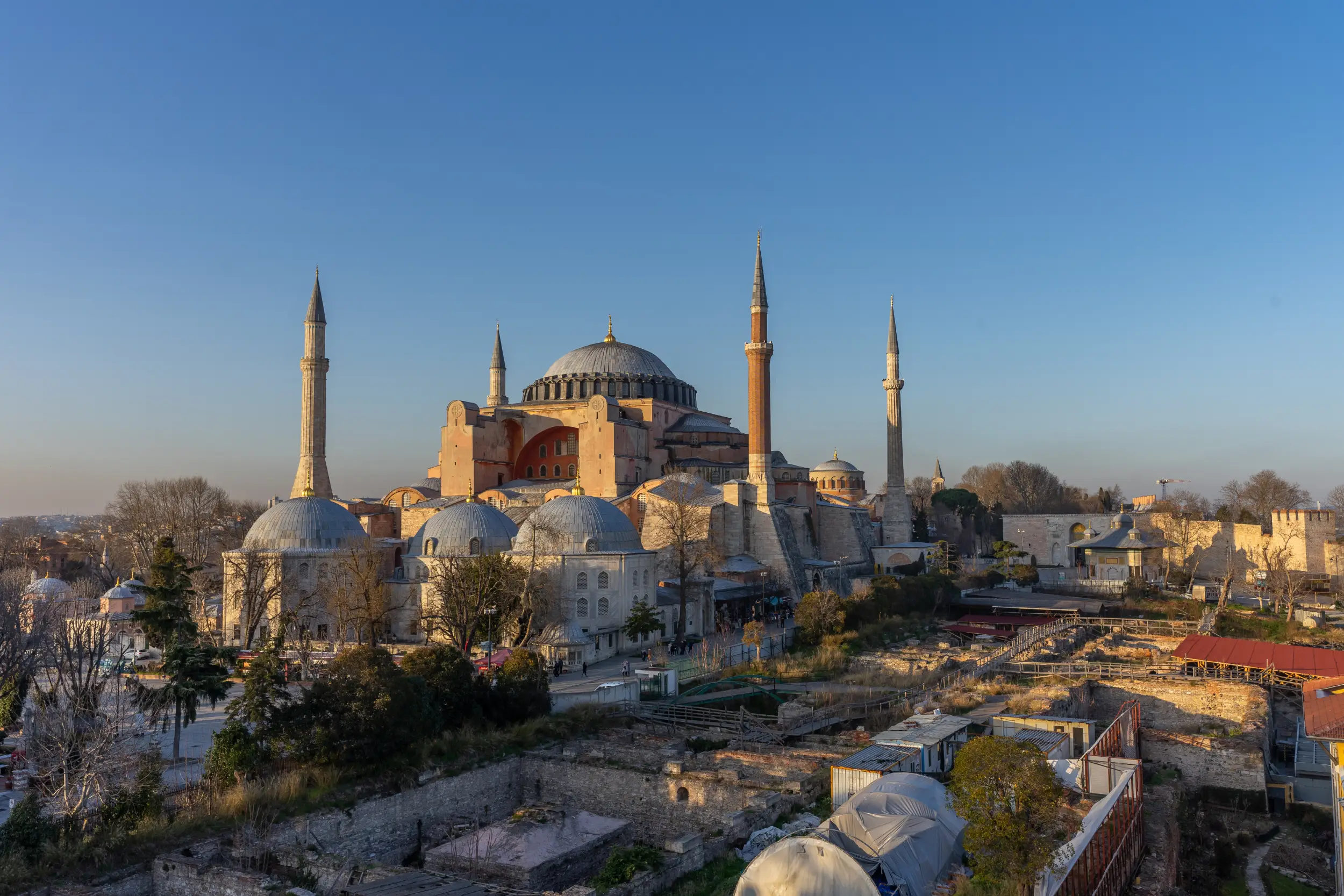
Explore the architectural masterpiece beside the Augusteion and imperial palace district.
Explore Hagia Sophia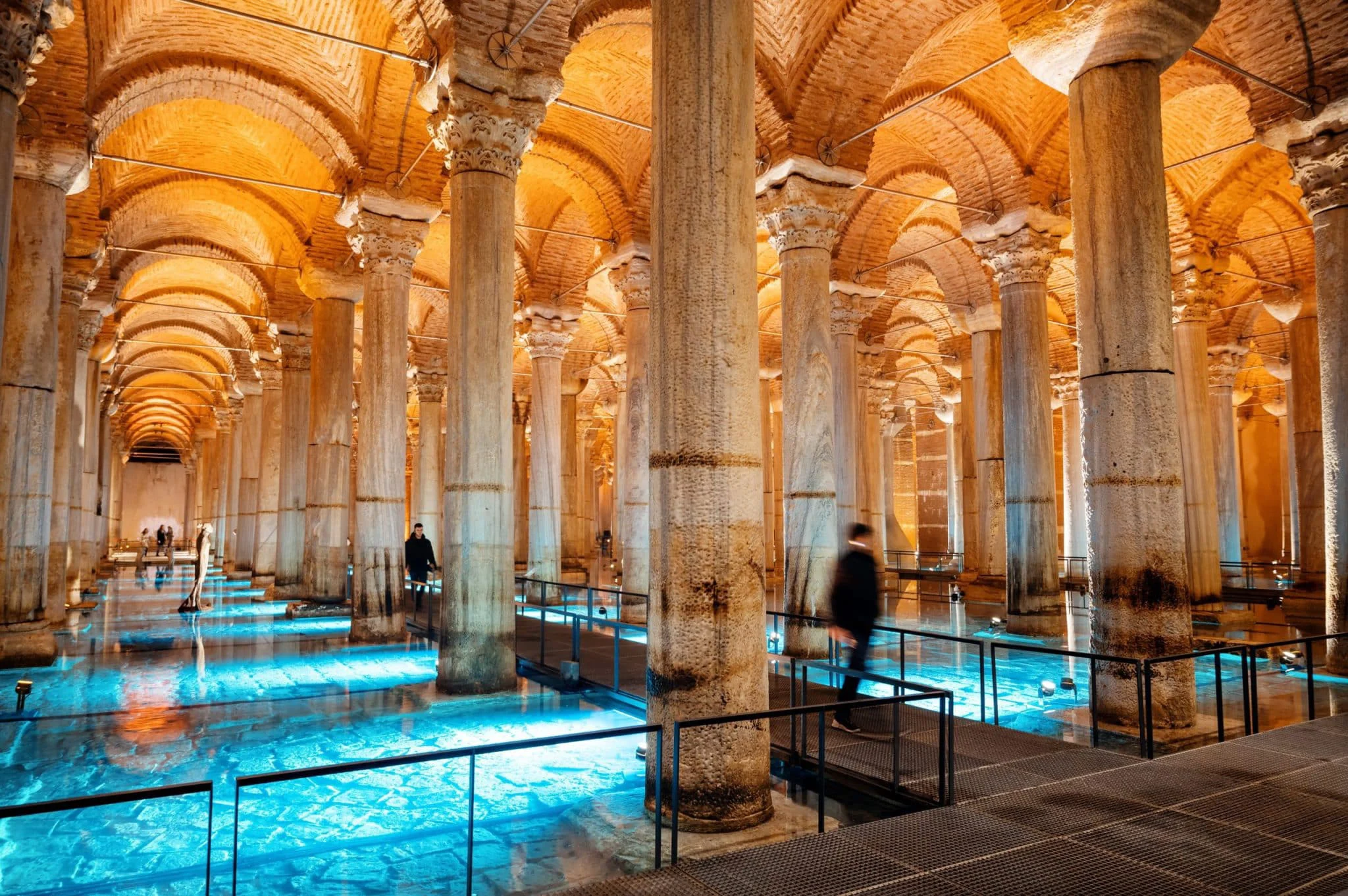
Descend into the extraordinary Byzantine reservoir immediately beside the Milion.
Explore Basilica Cistern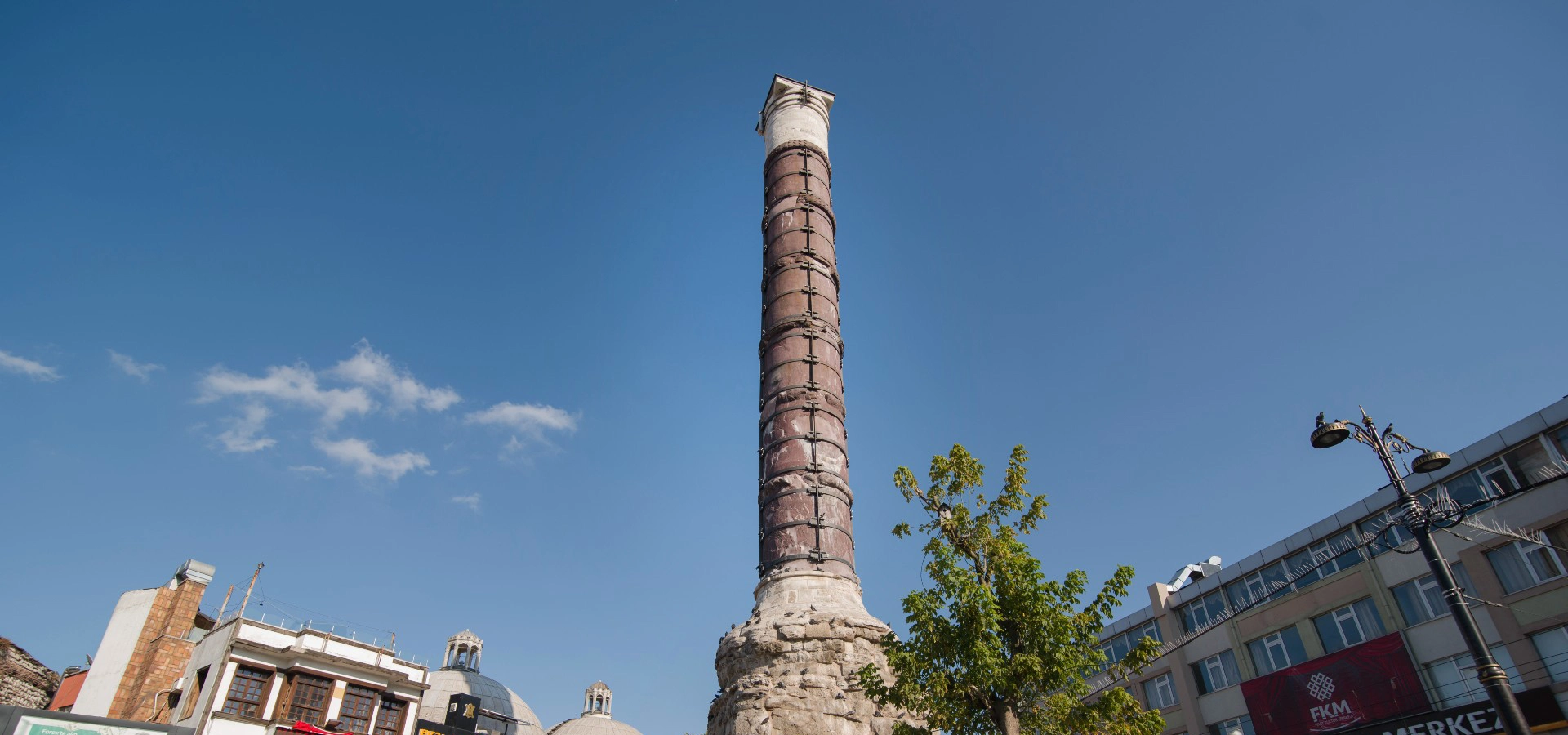
Follow the ancient Mese west to the surviving centerpiece of Constantine's imperial forum.
Explore Çemberlitaş