Private Nazarköy Craft Experience
Discover the story of Türkiye's famous nazar boncuğu, explore the colorful bead bazaar and learn how artisans transform molten glass into the traditional eye symbol.
Request a Private Experience





Hidden in the green countryside near Kemalpaşa east of İzmir, Nazarköy is a small village with an extraordinary identity.
Here, one of Türkiye's most recognizable cultural symbols—the nazar boncuğu, or evil eye bead—is still created using traditional glassmaking methods passed from master to apprentice.
Inside simple workshops known as boncuk ocakları, intense wood-fired furnaces transform pieces of colored glass into glowing molten material.
Artisans gather the softened glass on long iron rods, shape it by hand and carefully build the concentric circles that form the familiar eye motif.
The craft became so closely identified with the village that its former name, Kurudere, was officially changed to Nazarköy in 2007.
Traditional nazar beads have been produced in the village for generations using wood-fired furnaces.
The village officially adopted the name Nazarköy in 2007 because of its close association with bead production.
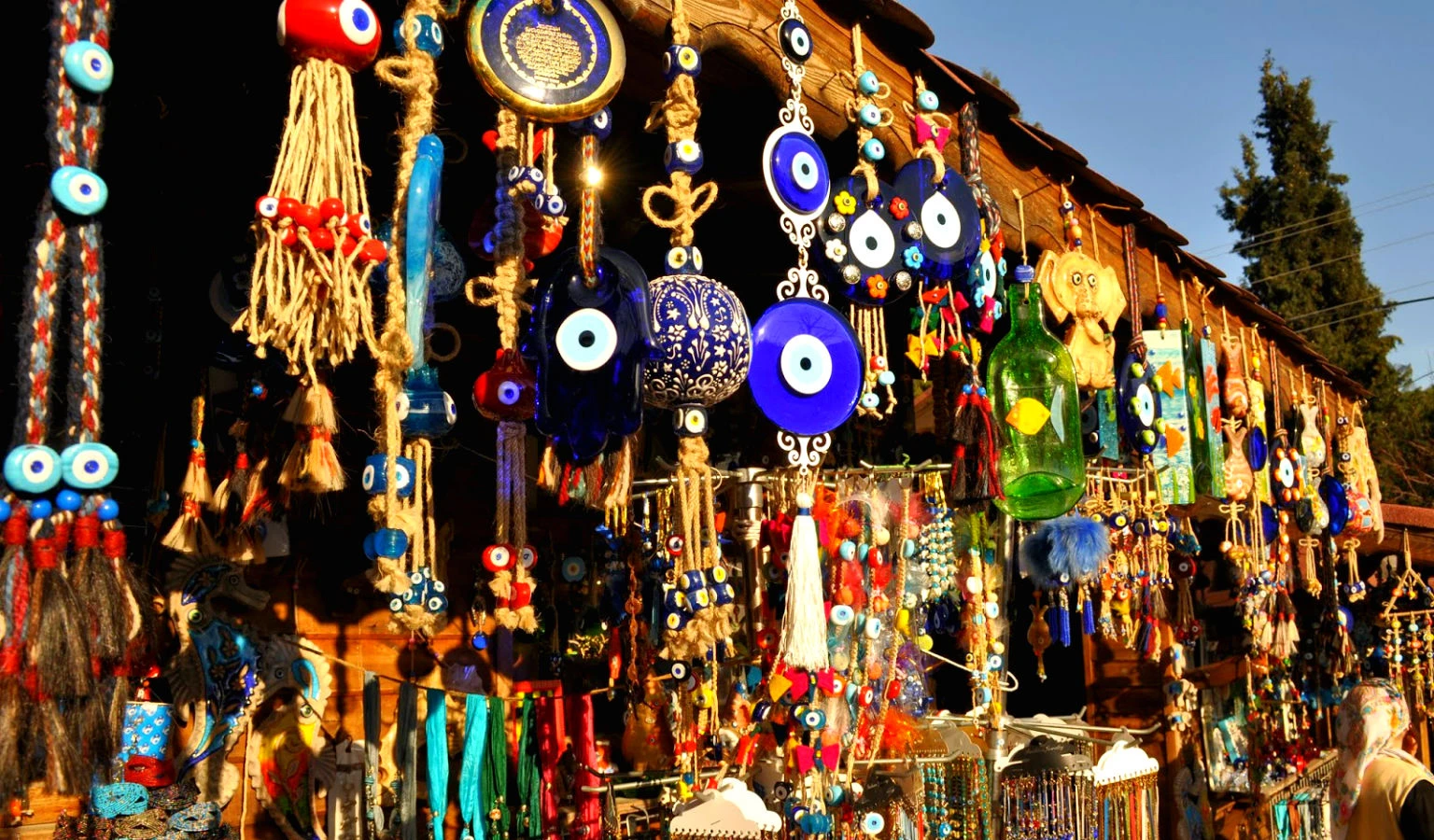
Colorful stalls display beads, jewelry, ornaments and decorative objects produced around the village.
Nazarköy preserves traditional knowledge transmitted through generations of skilled bead makers.
Essential information about İzmir's famous village of traditional glass evil eye beads.
Nazarköy, approximately 5 kilometers from Kemalpaşa in İzmir Province.
Open on Google MapsTraditional handmade glass nazar boncuğu—Türkiye's iconic evil eye bead.
The village was historically known as Kurudere.
Kurudere officially became Nazarköy in 2007 because of its bead-making tradition.
Glass is melted in extremely hot wood-fired bead furnaces and shaped manually by artisans.
Explore the village, watch traditional production when workshops are operating and browse the colorful Boncuk Çarşısı.
Nazarköy offers something increasingly rare: the opportunity to encounter a familiar cultural symbol where traditional knowledge behind it is still practiced.
Millions of travelers recognize the deep blue eye symbol found throughout Türkiye.
It hangs above doors, appears in homes, decorates jewelry and is frequently given as a gift.
Yet relatively few visitors ever see how a traditional glass nazar bead is actually made.
Nazarköy provides that missing part of the story.
The village is not simply a souvenir market. Its identity developed around generations of craftspeople who learned to control fire, molten glass, color and timing inside traditional bead furnaces.
That combination of living craftsmanship, village atmosphere and cultural symbolism makes Nazarköy one of the most rewarding short excursions in the Kemalpaşa region.
The Turkish expression nazar boncuğu refers to the glass bead commonly known internationally as the evil eye bead.
Its most familiar design consists of several concentric circles that resemble an eye, typically combining shades of blue with white, black or other colors.
Within traditional belief, the bead is associated with protection against nazar—the harmful influence traditionally connected with an envious or admiring gaze.
The concept belongs to a much broader Mediterranean, Middle Eastern and Anatolian world of beliefs surrounding the symbolic power of the eye.
In contemporary Türkiye the nazar boncuğu functions simultaneously as a cultural symbol, decorative object, traditional amulet and popular gift.
A traditional concept referring to harmful influence associated in folk belief with an envious or intensely admiring gaze.
The Turkish word for a bead, particularly a small decorative object made from materials such as glass.
The concentric circular pattern creates the recognizable symbolic eye at the center of the bead.
Deep blues have become strongly associated with the most familiar forms of the traditional Turkish nazar boncuğu.
The village visitors know today as Nazarköy was historically called Kurudere.
The older name was connected with the village's location around a stream valley in the foothills of the Kemalpaşa landscape.
During the twentieth century, glass bead production became increasingly important to the identity and economy of the settlement.
Official cultural sources describe traditional bead production here as extending back to approximately the 1950s.
Over time, Kurudere became so strongly associated with handmade nazar beads that the village itself came to symbolize the craft.
On 20 March 2007, the name was officially changed from Kurudere to Nazarköy—literally the “village of nazar.”
At the center of traditional Nazarköy craftsmanship stands the boncuk ocağı—the bead furnace.
These furnaces are generally constructed in round or oval forms by craftspeople familiar with the requirements of glass production.
Traditional furnaces contain separate heated compartments sometimes referred to as tava, where different colors of glass can be softened and melted.
Official descriptions of the craft emphasize the traditional use of pine wood as furnace fuel.
Temperatures can reach approximately 1,200°C, producing the extreme heat necessary to soften glass sufficiently for shaping.
Working beside such a furnace demands experience, concentration and an instinctive understanding of temperature.
Traditional bead furnaces are heated with wood rather than behaving like modern automated glassmaking equipment.
The working environment around the furnace can reach very high temperatures required for molten glass production.
Different sections of the furnace allow artisans to work with several colors of heated glass.
Knowledge of furnace construction is itself part of the traditional expertise surrounding bead production.
Making a handmade nazar bead appears deceptively simple when watched from a distance.
In reality, each stage depends on precise timing and years of experience.
Traditional nazar bead production does not depend on complicated industrial machinery.
Much of its character comes from the combination of a very hot furnace, molten glass and relatively simple hand tools.
Official descriptions of the technique mention long iron rods used to gather molten glass from the furnace.
The glass can then be shaped against a metal working surface traditionally associated with a piece of rail iron.
The simplicity of the equipment makes the artisan's experience particularly important.
Used to gather and manipulate softened glass close to the furnace.
A sturdy metal surface traditionally used while shaping hot glass.
Provides the intense heat required to transform solid glass into workable material.
Experience determines how quickly glass is gathered, layered, shaped and removed from the heat.
The famous eye is not simply painted onto the finished object.
In traditional production, the pattern is created by applying successive layers of differently colored hot glass.
A darker or brightly colored body may first be shaped into the bead.
Contrasting circles are then carefully placed on the hot surface, producing the concentric pattern associated with the protective eye.
Because each stage takes place while the glass is hot and workable, the artisan must control both placement and timing.
This layered construction is one of the most fascinating details to observe when traditional production can be seen inside a workshop.
Visitors quickly discover that the familiar round blue eye is only one expression of Nazarköy's glass tradition.
Official cultural inventories record numerous traditional forms, with names referring to shape, color, size or appearance.
One of the traditional bead forms produced by experienced glass artisans.
A bead form whose traditional name means “walnut.”
A cylindrical form demonstrating that nazar beads are not limited to flat circular designs.
An egg-shaped form within the traditional vocabulary of the bead makers.
A flattened form that has become particularly recognizable in Turkish decorative culture.
Another traditional bead type whose name refers directly to the appearance of a large eye.
Other recorded forms include heart-shaped plates, dice-like forms and additional variations whose names may change according to the combination of shape, color and size.
Traditional workshops also produce objects beyond individual beads, including decorative figures and small glass items.
After seeing the workshops, most visitors naturally continue toward the village's colorful Boncuk Çarşısı.
Stalls and small shops display long strings of blue glass eyes alongside necklaces, bracelets, earrings, key rings, wall ornaments, decorative trees and other handmade objects.
The effect is unmistakably Nazarköy.
Hundreds of blue, turquoise, white and multicolored glass pieces hang from stalls and move gently in the breeze.
Some objects are produced from beads made in local furnaces, while artisans and designers transform individual glass pieces into finished jewelry and decorative compositions.
For travelers interested in traditional crafts, the market is much more meaningful after first understanding the work required to create the glass itself.
Removing a finished bead from the furnace is not always the end of the creative process.
Individual glass pieces are frequently combined with metal, cord, leather, fabric and other decorative materials.
They become necklaces, bracelets, earrings, hanging ornaments and elaborate compositions for homes and gardens.
Official descriptions of Nazarköy have long highlighted the relationship between the artisans producing the glass and other villagers transforming the beads into finished decorative products.
This second stage of creativity gives the village market much of its remarkable visual variety.
Small beads become necklaces, bracelets and earrings.
Larger eye motifs are combined into striking pieces designed for homes and workplaces.
Glass eyes are combined with cords, beads and decorative elements.
Traditional symbols continue to inspire new forms and combinations.
The most valuable element inside a traditional bead workshop is not the furnace itself.
It is knowledge.
The correct temperature of the glass, the movement of the iron rod, the speed of shaping and the timing of each additional color cannot be learned simply by reading instructions.
Traditionally, these skills developed through a master-apprentice relationship.
Young craftspeople watched experienced artisans, repeated movements, learned from mistakes and gradually developed the ability to understand molten glass almost instinctively.
Preserving this transmission of knowledge is essential if handmade furnace-produced nazar beads are to remain a living tradition rather than only a historical memory.
Among the artisans associated with Nazarköy, Mahmut Sür holds particular cultural significance.
Born in Nazarköy in 1962, Sür began learning the craft as a teenager while working with members of his family.
His career has included not only the production of traditional beads but also experimentation with designs, techniques and the construction of the specialized furnaces required by the craft.
He has also trained apprentices, helping transmit technical knowledge to another generation.
Mahmut Sür was included in Türkiye's Living Human Treasures National Inventory for nazar bead making in 2012.
The program operates within Türkiye's work to safeguard intangible cultural heritage under the framework associated with the UNESCO Convention for the Safeguarding of the Intangible Cultural Heritage.
Archaeological sites preserve objects left by earlier societies.
Living heritage is different.
It survives because people continue to practice, teach, adapt and transmit a tradition.
Nazarköy's cultural importance therefore lies not only in finished beads but in the knowledge behind them.
The construction of the furnace, management of wood fire, preparation of glass, coordination of tools and creation of recognizable forms all represent accumulated experience.
When a visitor watches a bead being made, they are witnessing a process rather than simply viewing an object.
A workshop demonstration can become the highlight of a visit to Nazarköy.
The atmosphere is completely different from the colorful market outside.
Inside, attention moves toward the orange glow of the furnace.
An artisan reaches toward the heat with an iron rod, gathers softened glass and begins shaping it with rapid but controlled movements.
Layers of color are added while the material remains hot.
Within minutes, what began as glowing glass begins to resemble the familiar eye seen throughout Türkiye.
Deep blue is the color most strongly associated with the Turkish nazar boncuğu.
Against the blue body, white and darker circles make the central eye particularly visible.
Traditional artisans, however, work with a much wider palette.
Turquoise, green, yellow, red, white, black and translucent glass can all appear in different combinations and forms.
Historic craft terminology can even identify a bead according to its color, shape and size together.
Walking through Nazarköy's market therefore reveals far more variety than the classic blue-and-white symbol alone might suggest.
The eye symbol is now reproduced around the world on countless materials.
It may appear on printed fabric, plastic objects, ceramics, stickers, jewelry and mass-produced decorative products.
Nazarköy tells a more specific story.
Its heritage is connected with glass, fire and handmade production.
For travelers interested in the traditional craft, it is worth asking shopkeepers about where a particular glass piece was produced and whether it came from a local furnace.
That simple conversation often reveals far more about the village than browsing the market without context.
Nazarköy's appeal is strengthened by its natural setting.
The village lies within the greener inland landscape of Kemalpaşa, surrounded by hills, vegetation and agricultural land beneath the wider mass of Nif Mountain.
The contrast with central İzmir can be striking.
Within a relatively short journey, the urban Aegean metropolis gives way to village roads, orchards, wooded slopes and craft workshops.
This makes Nazarköy particularly suitable for travelers who enjoy combining cultural heritage with a slower countryside experience.
Nazarköy is easy to explore at a relaxed walking pace rather than requiring a full day on its own.
Expect stalls filled with nazar beads, jewelry and decorative objects.
Traditional bead furnaces remain the most culturally important part of the experience.
The village provides an opportunity to purchase glass objects close to their place of production.
Green hills and the Kemalpaşa landscape create a pleasant contrast with İzmir city.
Nazarköy works particularly well as part of a broader Kemalpaşa history and culture day.
A quick walk through the village can be completed relatively easily, but rushing misses the most interesting part of Nazarköy.
Enough for a short walk through the market if Nazarköy is only one stop on a larger itinerary.
A better choice for exploring the market, talking with craftspeople and looking for an operating workshop.
Suitable for travelers especially interested in traditional crafts, photography and a slower village experience.
Green vegetation and comfortable temperatures make the Kemalpaşa countryside particularly attractive.
Long daylight hours make it easy to combine Nazarköy with several nearby historical sites.
The outdoor village can be hot, while the working area beside a traditional furnace is naturally much warmer.
Milder temperatures and softer light create excellent conditions for walking and photography.
A quieter atmosphere may appeal to visitors primarily interested in the village and craft tradition.
The village can feel livelier as visitors arrive from İzmir and surrounding towns.
Buying a nazar bead in Nazarköy can carry a very different meaning from purchasing one at an airport or large souvenir shop.
Here, visitors can connect the finished object with the people, furnace and knowledge required to create it.
Ask where the glass was produced.
Look for information about the artisan or workshop.
Take time to compare traditional beads with the enormous variety of decorative objects available in the village.
Purchasing directly from craftspeople and small local businesses can help support the continued survival of specialist knowledge.
A short conversation can help you understand whether an object has a direct connection with local production.
Focus on the bead itself before deciding how it will be used in jewelry or decoration.
Traditional and contemporary workshops use an impressive range of colors and shapes.
Buying thoughtfully helps keep specialist glassmaking knowledge economically meaningful.
Nazarköy offers some of the most colorful craft photography opportunities around İzmir.
Rows of hanging blue eyes create strong patterns and instantly recognizable compositions.
The orange glow of molten glass creates dramatic contrast inside darker workshops.
Close details of tools, glass rods and careful hand movements communicate the craft particularly well.
Include stalls, houses, trees and surrounding hills to show the cultural setting rather than only the finished product.
Individual beads reveal bubbles, layers, colors and textures that disappear in wider photographs.
Always request permission before closely photographing craftspeople at work or entering private workshop areas.
Traditional furnaces are working environments rather than staged museum installations.
Never approach furnaces, molten glass or tools unless invited by the artisan.
Craftspeople should be able to decide whether close photography or video is appropriate while they work.
Consider purchasing directly from artisans and village businesses when something genuinely appeals to you.
Dispose of rubbish responsibly and respect residential areas beyond the market.
The greatest souvenir from Nazarköy is understanding how much knowledge exists behind a small piece of glass.
Nazarköy lies in the Kemalpaşa district of İzmir Province, approximately 5 kilometers from Kemalpaşa town.
Its location makes it an easy cultural stop when exploring the inland landscapes east of İzmir.
Travel east toward Kemalpaşa before continuing the short distance toward Nazarköy.
The village is only a short drive from the district center.
A car provides the easiest way to combine Nazarköy with Ulucak Höyük, Laskaris Palace and Karabel.
A private itinerary can connect the village craft with the much older archaeological history of the Kemalpaşa region.
Open Nazarköy in Google Maps and plan your route from Kemalpaşa or İzmir.
View LocationNazarköy becomes even more interesting when placed within the much larger cultural landscape surrounding Kemalpaşa.
The countryside around Nazarköy contains an unusually rich sequence of archaeology, Byzantine history and living cultural traditions.
Explore historic Nymphaion, Nif Mountain, orchards and the wider cultural landscape east of İzmir.
Discover the extraordinary Byzantine imperial residence associated with the rulers of the Empire of Nicaea.
Travel thousands of years deeper into the past at one of western Anatolia's important Neolithic settlements.
Encounter the monumental Late Bronze Age image associated with Tarkasnawa, King of Mira.
Discover the dramatic mountain landscape rising above Kemalpaşa and the surrounding valleys.
Continue east toward the spectacular ancient capital of Lydia beneath Mount Tmolus.
Few short routes near İzmir demonstrate the depth of Anatolian history as clearly as Kemalpaşa.
At Ulucak Höyük, visitors encounter the distant world of Neolithic farming communities.
At Karabel, the landscape preserves the image of a Late Bronze Age ruler connected with the kingdom of Mira.
At the Laskaris Palace, medieval Nymphaion reveals the imperial world of the Byzantine Empire of Nicaea.
Finally, Nazarköy demonstrates that heritage is not always archaeological.
Here, tradition survives through people who still transform raw glass into objects whose symbolism remains recognizable throughout Türkiye.
Neolithic settlement and early agricultural communities.
Late Bronze Age kingship and western Anatolia's kingdom of Mira.
Byzantine imperial life and the thirteenth-century Empire of Nicaea.
Living glass craftsmanship and traditional cultural heritage.
Do not begin your Nazarköy visit by asking what to buy.
Begin by asking how the bead is made.
Find a workshop if one is operating.
Watch the furnace.
Notice how close the artisan works to the heat and how quickly the molten glass begins to change when it leaves the fire.
Look at the iron rods, the furnace openings and the pieces of colored glass waiting to be used.
Then return to the market.
The hundreds of finished beads will suddenly look different because you now understand the process behind them.
That transformation—from souvenir to cultural object—is the real reason to visit Nazarköy.
A handmade object can preserve enormous amounts of knowledge.
The nazar bead contains knowledge of furnace construction, fuel, glass temperature, colors, hand movements and traditional terminology.
It also connects craftsmanship with a symbol that remains deeply visible in Turkish everyday culture.
Nazarköy therefore demonstrates how material craft and intangible cultural heritage meet.
The glass object is tangible.
The knowledge required to make it is not.
That knowledge survives only when people continue to learn and practice the craft.
Skills are learned through observation, repetition and experience.
The craft became so important that it ultimately gave the village its modern name.
The eye motif remains one of the most internationally recognizable symbols associated with Türkiye.
Craft production also supports workshops, designers, sellers and other village businesses.
Technical knowledge survives through human transmission rather than machinery alone.
Nazarköy shows that cultural heritage can continue evolving rather than remaining frozen in the past.
Nazarköy is located in the Kemalpaşa district of İzmir Province in western Türkiye, approximately 5 kilometers from Kemalpaşa town.
Nazarköy is famous for the traditional production of handmade glass nazar boncuğu, commonly called Turkish evil eye beads.
The name can be understood as the “village of nazar,” reflecting the settlement's strong connection with traditional evil eye bead production.
The village was historically known as Kurudere.
The village's name was officially changed to Nazarköy in 2007 because of its strong association with nazar bead production.
Official cultural sources describe traditional glass bead production in the village as dating from around the 1950s.
Yes. Nazarköy remains one of the best-known traditional production centers in İzmir, together with Görece in Menderes.
Colored glass is softened in very hot wood-fired furnaces, gathered with iron rods and shaped by hand before additional layers of glass create the eye motif.
Official tourism descriptions of Nazarköy refer to furnace temperatures of approximately 1,200°C.
Official descriptions of the traditional technique specifically mention pine wood.
Traditional glassmakers create the eye by applying layers of contrasting hot glass while forming the bead.
Boncuk Çarşısı is the colorful village market area where beads, jewelry, ornaments and other decorative products are displayed and sold.
It may be possible to observe artisans in working bead workshops, but Nazarköy is a living production village rather than a museum with a guaranteed demonstration schedule.
No. Nazarköy is not a UNESCO World Heritage Site. Its craft tradition is connected with Türkiye's work to safeguard intangible cultural heritage, and Nazarköy master Mahmut Sür is included in Türkiye's Living Human Treasures National Inventory.
Mahmut Sür is a respected nazar bead master born in Nazarköy who was recognized in Türkiye's Living Human Treasures National Inventory for his bead-making craftsmanship.
He was entered into Türkiye's Living Human Treasures National Inventory for nazar bead making in 2012.
No. Traditional workshops produce numerous shapes, colors and sizes including forms known as karagöz, ceviz, silindir, yumurta, plaka and danagöz.
Yes. The village contains shops and stalls selling glass beads, jewelry and decorative objects. Travelers specifically seeking locally made pieces can ask individual sellers about the origin of the glass.
A short visit may take 30–45 minutes, while approximately 1–2 hours allows more time for the market, workshops, photography and conversations with craftspeople.
For travelers interested in traditional crafts, local culture, photography and places beyond İzmir's major archaeological attractions, Nazarköy provides a distinctive and highly visual experience.
Excellent nearby combinations include Kemalpaşa, Laskaris Palace, Ulucak Höyük, Karabel Rock Relief and the landscapes around Nif Mountain.
The village is approximately 5 kilometers from Kemalpaşa.
A guide is not essential for walking through the village, but cultural interpretation can make the glassmaking process, symbolism and wider history of Kemalpaşa considerably more meaningful.
Go beyond İzmir's famous classical ruins and discover traditional craftsmanship, Byzantine Nymphaion and thousands of years of Anatolian history on a private journey through Kemalpaşa.
Combine Nazarköy's living nazar bead tradition with some of the most fascinating archaeological and historical sites east of İzmir.
Discover the story of Türkiye's famous nazar boncuğu, explore the colorful bead bazaar and learn how artisans transform molten glass into the traditional eye symbol.
Request a Private Experience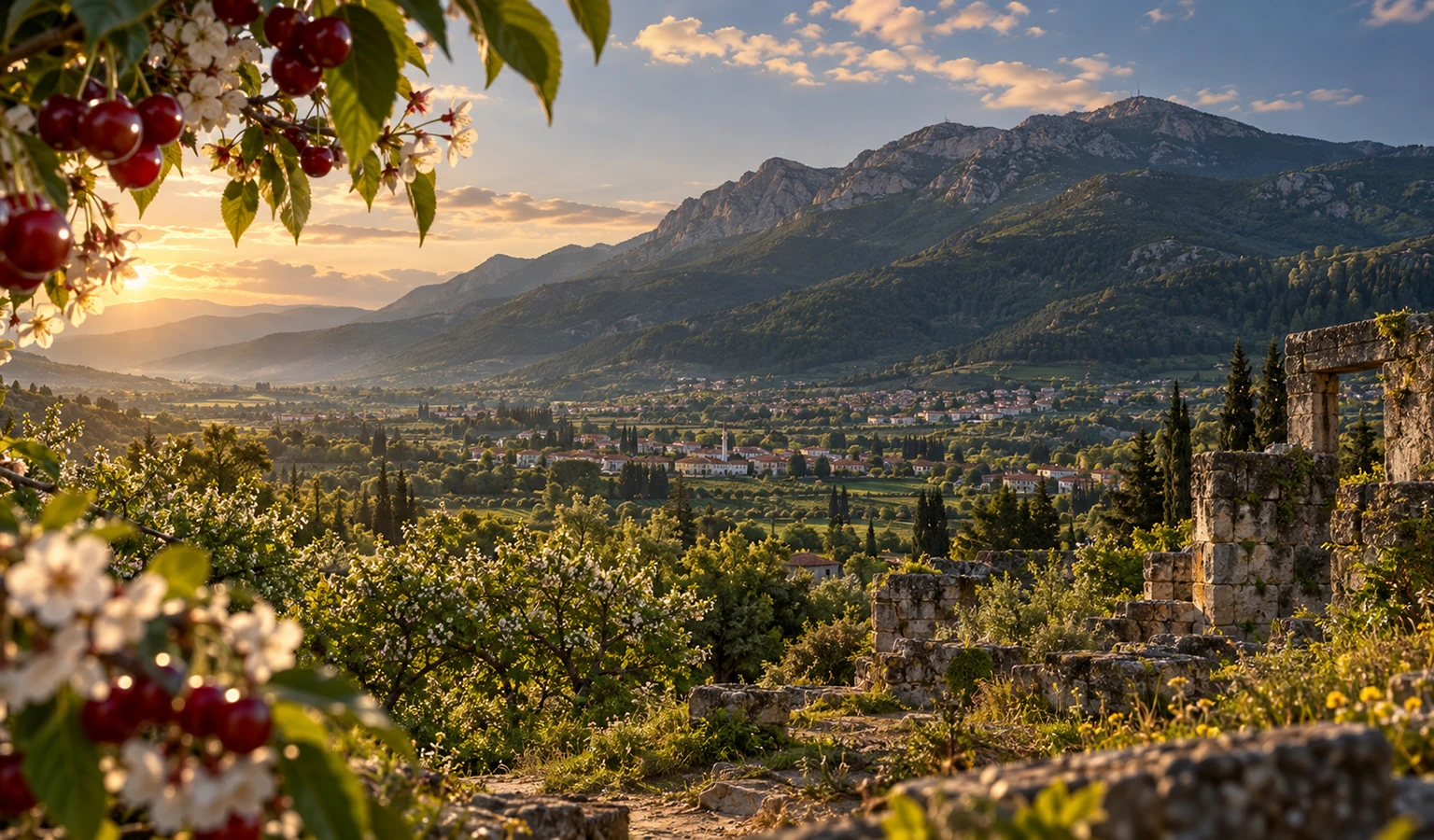
Journey from Neolithic Ulucak and Bronze Age Karabel to Byzantine Nymphaion before finishing among the glass furnaces and colorful stalls of Nazarköy.
Plan Your Kemalpaşa Day