Private Persian Foça & Ancient Phokaia Tour
Explore Taş Kule with historical context before continuing into Old Foça to discover the Ionian city conquered by Persian forces in 546 BC.
Request a Private Tour





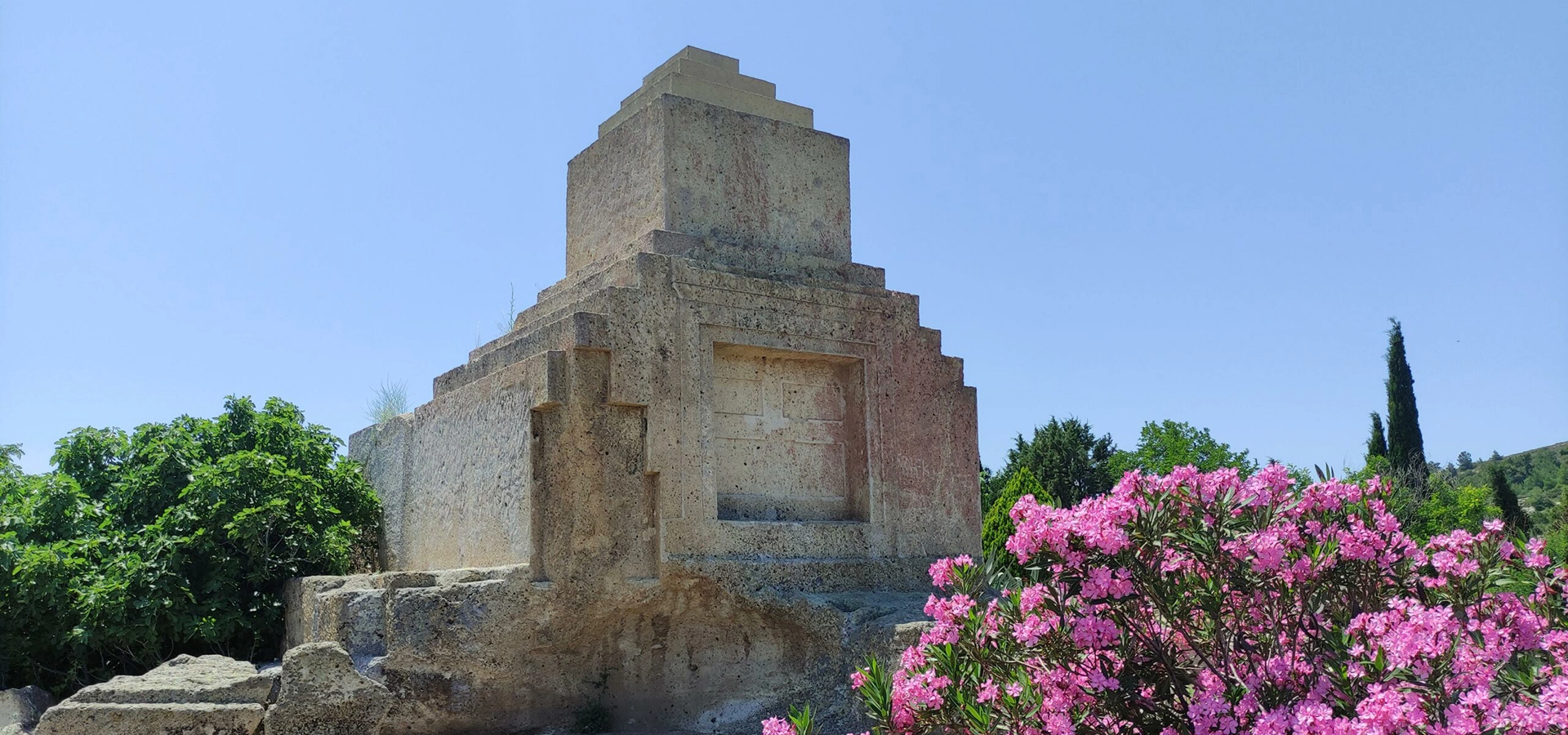
Around seven kilometres east of Foça stands one of the most intriguing archaeological monuments on İzmir's northern Aegean coast: the Persian Tomb Monument, widely known as Taş Kule or the Stone Tower.
Unlike the temples, theatres and fortifications normally associated with ancient Ionian cities, Taş Kule belongs to a completely different architectural world.
The monument was carved from a large mass of local tuff bedrock and transformed into a freestanding, multi-level funerary structure with stepped forms, a false doorway and an interior burial chamber.
Its unusual architecture reflects the complex cultural environment of western Anatolia during the period when the Achaemenid Persian Empire controlled much of the region.
The monument is particularly important because ancient Phokaia was conquered by Persian forces in 546 BC after resisting the army of the Persian commander Harpagus.
Exactly when Taş Kule was constructed remains debated. Different archaeological studies have proposed dates ranging from the later 6th or early 5th century BC to the 4th century BC.
Its original occupant is also unknown. Rather than belonging securely to a named Persian ruler, the tomb is generally understood within the world of Persian officials, aristocrats or Persian-influenced local elites living in western Anatolia.
For modern visitors, Taş Kule offers something exceptionally rare: a physical reminder of the moment when Greek Ionia and the Persian Empire met on the Aegean coast.
Discover an extraordinary funerary structure connected with the period of Achaemenid rule in western Anatolia.
See how a massive block of local tuff was transformed into an architectural monument.
Understand the monument within the turbulent history of the prosperous Ionian city conquered by Persia.
Explore a building combining Persian influence with architectural traditions of western Anatolia.
Essential information for understanding one of the most unusual archaeological monuments surrounding ancient Phokaia.
Approximately 7 km east of Foça, beside an ancient dry stream valley in İzmir Province.
Open on Google MapsPersian Tomb Monument, Taş Kule, Taş Ev or the Stone Tower.
The monument belongs to the cultural landscape of western Anatolia during Achaemenid Persian rule.
The chronology remains debated, with scholarly proposals ranging from the later 6th/early 5th century BC to the 4th century BC.
The monument was created largely by carving a massive body of porous local tuff stone.
A monumental tomb containing an entrance area and internal burial chamber.
Taş Kule reveals a side of Foça's history that is very different from the fishing harbors and Mediterranean atmosphere visitors see today.
The importance of Taş Kule begins with its historical setting.
During the 6th century BC, Phokaia was one of the most successful maritime cities of the Ionian world.
Its sailors established settlements across the Mediterranean, its merchants participated in international trade, and its coinage circulated far beyond the Aegean.
That prosperity was dramatically interrupted when Persian power expanded westward across Anatolia.
After the Persian capture of Sardis, the forces of Harpagus advanced toward the Ionian coast. Phokaia was conquered in 546 BC.
Taş Kule stands outside the ancient city in precisely this broader historical landscape.
Its architecture does not resemble a conventional Greek temple or a typical local tomb. Instead, Persian ideas appear to have been combined with architectural traditions already present in Anatolia.
The result is one of the most distinctive monuments associated with the Persian period in western Türkiye.
Taş Kule is a monumental freestanding tomb created from a large natural mass of tuff stone.
Rather than assembling the entire building from individual masonry blocks, ancient craftsmen shaped much of the monument directly from the existing bedrock.
The surviving structure rises in several architectural levels.
A broad lower body supports a smaller, more compact upper mass, while a sequence of steps creates the distinctive pyramidal appearance of the monument.
The front façade contains one of its most fascinating features: a monumental false door.
The true entrance lies on another side of the structure and leads into an entrance space and burial chamber.
This combination of symbolic façade, internal tomb architecture and stepped exterior form has made Taş Kule extremely difficult to classify within any single ancient architectural tradition.
The tomb appears as an independent architectural structure rather than an ordinary cave cut into a hillside.
Much of the monument was shaped directly from a substantial body of natural tuff stone.
The monument combines a broad lower section with a smaller elevated upper architectural mass.
Successive steps create the distinctive pyramidal silhouette visible today.
A symbolic doorway dominates the façade while the functional entrance is located elsewhere.
The interior arrangement includes an entrance area leading toward the chamber associated with burial.
The date of Taş Kule is one of the most important questions surrounding the monument.
It is tempting to assign a single precise year to such a dramatic structure, but archaeological scholarship has produced different interpretations.
Some studies traditionally placed the monument in the 4th century BC.
Archaeologist Nicholas Cahill, whose major study of Taş Kule was published in the American Journal of Archaeology, argued that architectural parallels make an earlier date possible.
He suggested that the monument probably belongs to the second half of the 6th century or early 5th century BC, during the first major period of Persian control over Phokaia.
Excavator Ömer Özyiğit later proposed an even more specific historical association: that the monument may have been constructed around 546 BC, the year Persian forces conquered Phokaia.
Other modern publications continue to describe the structure as 4th century BC.
For visitors, the most responsible conclusion is therefore simple: Taş Kule is securely connected with the Persian-period cultural world, but its exact construction date remains debated.
To understand Taş Kule, it helps to understand what happened to ancient Phokaia during the 6th century BC.
By this period the city had become one of the most successful maritime communities of Ionia.
Phokaian sailors travelled throughout the Mediterranean and founded settlements far from their homeland.
But events in the interior of Anatolia transformed the political landscape.
The Achaemenid Persians defeated the kingdom of Lydia and captured its capital at Sardis.
Persian control then expanded toward the Greek-speaking cities of the western coast.
According to the ancient historical tradition, the Persian commander Harpagus besieged Phokaia in 546 BC.
Archaeological investigations around the city's archaic fortifications have revealed evidence associated with violent conflict, including Persian weaponry and destruction.
Many inhabitants are traditionally said to have left the city, although some later returned.
Phokaia then entered a new political world in which Persian power and local Anatolian traditions existed alongside the city's older Ionian identity.
Taş Kule should be understood within this complex environment.
Phokaia was a wealthy Ionian maritime city with extensive Mediterranean trade connections.
Persian forces under Harpagus captured the city during Achaemenid expansion across western Anatolia.
Archaeology around Phokaia's archaic defenses has provided evidence connected with the conflict.
Phokaia became part of a much larger political system stretching deep into western Asia.
Persian authority did not erase local traditions; the period produced complex artistic and architectural combinations.
The monument is one of the clearest physical reminders of this Persian-period landscape near Foça.
The appearance of Taş Kule is remarkably geometric.
Its large rectangular lower body rises from the bedrock, while increasingly smaller architectural elements above it produce a stepped silhouette.
Between the main body and the upper cubic section are several substantial steps.
The upward reduction in size gives the monument a strongly pyramidal profile.
The structure does not fit comfortably into the standard funerary architecture of any single neighboring region.
Instead, scholars have compared individual features with traditions found in Persia, Lydia and other parts of Anatolia.
This is precisely what makes the monument so valuable.
Rather than copying one architectural model, Taş Kule appears to represent a world in which craftsmen, patrons and visual ideas moved between different cultures.
A broad lower body gives the monument the appearance of a compact stone building.
A smaller cubic mass rises above the principal body of the tomb.
Large steps separate the principal levels and contribute to the monument's unusual profile.
The architecture becomes progressively smaller toward the top.
The front face was carefully shaped to appear architectural despite being carved largely from natural stone.
Scholars interpret the monument through a mixture of Persian and western Anatolian architectural traditions.
One of the most striking elements of Taş Kule is the false door carved into its principal façade.
At first glance it looks like the formal entrance to the tomb.
It is not.
The true entrance is located on the western side of the monument.
False doors appear in several ancient funerary traditions and may symbolically separate the world of the living from the realm of the dead.
At Taş Kule, the feature is particularly important because similar architectural ideas have been discussed in connection with Persianizing tomb traditions in Anatolia.
Archaeological observations have also identified evidence of small fire-related installations in front of the false-door façade, suggesting that activities may once have taken place outside the monument.
Exactly what ceremonies were performed, and how frequently, cannot be reconstructed with certainty.
Taş Kule was not constructed simply as a visual memorial.
It functioned as a tomb.
The actual entrance on the western side leads first into an entrance chamber and then toward the principal burial space.
Within the burial chamber, the grave itself was cut into the floor.
The arrangement demonstrates the extraordinary amount of planning required to transform a natural mass of stone into both an external monument and an internal funerary structure.
Unfortunately, the identity of the person originally buried here has not survived.
There is no securely identified inscription naming an occupant, and no archaeological evidence allows the tomb to be assigned with certainty to a specific Persian ruler.
Most interpretations therefore focus on the broader social world of Persian aristocrats, administrators or local elites influenced by Persian culture.
The functioning doorway is situated on the western side of the monument.
An internal room creates a transition between the exterior and the burial chamber.
The burial installation was carved directly into the floor of the interior chamber.
No surviving evidence securely identifies the individual for whom the monument was constructed.
The scale and architectural ambition strongly distinguish Taş Kule from an ordinary grave.
The monument stood outside the principal urban center of ancient Phokaia.
One of the most interesting aspects of Taş Kule is that it should not be imagined as a miniature copy of a tomb from Iran.
Its design appears to belong to the multicultural environment created by Persian rule in Anatolia.
Persian administrators and aristocrats living in Asia Minor encountered local architectural traditions that had developed for centuries before their arrival.
Likewise, Anatolian elites could adopt elements associated with the political and visual language of the Persian Empire.
Taş Kule appears to emerge from this interaction.
Its stepped mass, false-door symbolism, monumental form and regional construction techniques have encouraged comparisons with several different traditions.
Archaeologists therefore sometimes describe this cultural world as Persianizing: not necessarily architecture imported directly from the Persian heartland, but architecture shaped by Persian identity, authority and cultural influence within Anatolia.
The monument belongs to a region governed within the Achaemenid imperial system.
Construction techniques and individual architectural elements reveal strong regional traditions.
The structure was shaped from the tuff geology characteristic of the Foça area.
The architecture may have communicated status as well as funerary meaning.
Taş Kule illustrates how imperial and local traditions could combine rather than simply replace one another.
The monument remains difficult to classify precisely because no exact architectural twin is known.
Visitors sometimes encounter claims connecting the Foça monument directly with Cyrus the Great, founder of the Achaemenid Persian Empire.
This idea comes from an archaeological interpretation rather than from an ancient inscription identifying Cyrus as the builder.
Following the excavations and restoration of the monument, archaeologist Ömer Özyiğit proposed that Taş Kule may have been constructed around 546 BC, the period of the Persian conquest of Phokaia.
Architectural comparisons with Persian monuments, including features associated with Pasargadae, formed part of this interpretation.
Other scholars have suggested different dates, and there is currently no evidence proving that Cyrus himself ordered the monument or that he was its intended occupant.
It is therefore much more accurate to describe the Cyrus connection as an important archaeological hypothesis rather than an established historical fact.
The physical character of Taş Kule is inseparable from the geology of the Foça region.
The monument was shaped from porous tuff stone with naturally yellowish and pinkish tones.
This material can be easier to work than many harder stones, allowing ancient craftsmen to carve large architectural forms directly from the natural rock mass.
But the same porous structure also makes tuff vulnerable to long-term weathering.
Water penetration, temperature changes, surface biological growth and human intervention have all affected the monument during its long history.
When visiting today, look closely at the texture of the walls.
The surface is not simply a stack of perfectly cut stone blocks. Much of what appears architectural was created by sculpting the bedrock itself.
The monument was largely formed from naturally occurring porous stone found in the Foça landscape.
Tuff can be comparatively workable, allowing large geometric forms to be carved by hand.
The original stone displays subtle yellowish and pinkish coloration.
The material can absorb moisture and remains vulnerable to environmental deterioration.
Ancient craftspeople transformed the natural stone mass through extensive manual carving.
Weathering continues today, making conservation an ongoing responsibility.
The Taş Kule seen today is the result not only of ancient craftsmanship but also of modern archaeological conservation.
By the end of the 20th century, the monument had suffered from weathering, cracking, biological growth, vandalism and damage associated with treasure hunting.
Archaeological excavation, conservation and environmental landscaping began in 2000.
The main restoration campaign was completed in 2001.
Damaged surfaces were cleaned, cracks and missing areas were treated, and sections necessary for understanding the architectural form were reconstructed.
The missing upper portion of the pyramidal roof was recreated using modern material designed to visually integrate with the surviving ancient structure.
This means visitors should remember that not every visible surface belongs unchanged to antiquity.
The monument combines original tuff bedrock with identifiable conservation additions.
Step back first and study how the structure becomes progressively smaller toward the top.
Examine the ceremonial-looking doorway carved into the principal façade.
Notice how the functional access to the burial spaces differs from the symbolic façade.
The stepped transition between architectural levels is one of the monument's most characteristic features.
Look closely at the porous surface and natural color variation of the ancient stone.
Observe where natural rock and intentionally shaped architectural surfaces merge together.
Some reconstructed areas can be distinguished from the original monument when viewed carefully.
Remember that this tomb originally stood outside ancient Phokaia in a very different historical setting.
Taş Kule lies outside the historic center of Old Foça, so it is most convenient to visit by private vehicle, taxi or as part of a wider archaeological itinerary.
The monument itself does not require the amount of time needed for a large ancient city.
Its value lies in understanding what you are seeing.
Without historical context, Taş Kule may appear to be simply a mysterious stone building beside the road.
Once its connection with Persian-period Phokaia, Achaemenid Anatolia, ancient funerary architecture and the 546 BC conquest is understood, the monument becomes considerably more powerful.
Because access arrangements, site conditions and conservation restrictions can change, visitors should check current local information before travelling.
The physical site is compact, although history and architectural interpretation reward a slower visit.
Read about Persian Phokaia before arriving or visit with a knowledgeable archaeological guide.
The monument lies several kilometres east of the historic coastal center.
It works particularly well before or after exploring the archaeological heritage of ancient Phokaia.
Do not climb onto the monument or enter restricted archaeological areas.
Current access arrangements may change according to conservation or local site management.
Mild temperatures and greener surroundings make spring particularly pleasant for combining archaeological sites around Foça.
Long daylight hours make it easy to combine Taş Kule with Old Foça and the coast.
Expect strong sun and high temperatures, particularly around the middle of the day.
Warm weather normally continues while the wider Foça area gradually becomes quieter.
Comfortable temperatures can create excellent conditions for historical sightseeing.
The monument can feel especially atmospheric in quieter months, although weather conditions are less predictable.
Because Taş Kule is an architectural monument, changing sunlight can dramatically alter its appearance.
Cooler temperatures can make the visit more comfortable during the warmer months.
Strong overhead light clearly reveals the overall geometry but can create harsh photographic contrast.
Lower light can begin to emphasize the stepped form and carved architectural surfaces.
Warm light works beautifully with the yellowish and pink tones of the tuff stone.
Side lighting is particularly useful for revealing the depth of the false doorway and architectural steps.
Avoiding the hottest part of the day generally creates a more comfortable archaeological visit.
Taş Kule is an unusually rewarding subject for architectural photography.
Its stepped profile, strong geometric surfaces, recessed false doorway and rough tuff texture respond dramatically to changing light.
Photograph the false door directly to emphasize the symmetry and monumental character.
A slightly angled composition reveals both the façade and the depth of the structure.
A lower viewpoint can emphasize the monument's stepped upper profile against the sky.
Close photographs reveal weathering, tool shaping and the porous texture of the tuff.
Include the surrounding terrain to show that the tomb originally stood beyond ancient Phokaia's urban center.
Never climb onto ancient surfaces simply to obtain a different camera angle.
A basic understanding of Phokaia's Persian history transforms the experience of the monument.
Carry drinking water during warm-weather visits, particularly when combining multiple archaeological sites.
Shade around exposed archaeological monuments can be limited during summer.
Uneven archaeological terrain requires more care than a conventional paved visitor attraction.
Ancient tuff is vulnerable and visitors should remain on appropriate access areas.
Repeated physical contact contributes gradually to deterioration of historic stone.
Opening arrangements and conservation restrictions can change, so verify local conditions before visiting.
The monument makes much more sense when experienced as part of the wider story of ancient Phokaia.
Taş Kule has survived for more than two millennia, but that does not make it indestructible.
Its porous stone remains sensitive to weathering and physical damage.
Never climb onto the stepped roof, walls or carved bedrock.
Writing, scratching or carving ancient stone causes permanent archaeological damage.
Any protective fencing or restricted areas exist to protect both visitors and the monument.
Stone fragments, pottery or other archaeological material must remain exactly where found.
Ancient surfaces are better appreciated visually rather than repeatedly touched.
Take all litter away and help preserve the archaeological landscape around the tomb.
The Persian Tomb is most rewarding when combined with the wider historical landscape of Foça.
Begin with Taş Kule outside the town, where the monument introduces the story of Persian expansion into western Anatolia.
Then continue toward ancient Phokaia, whose citizens experienced that conquest directly.
Explore the historic waterfront, archaeological remains and surviving traces of a city that became one of the greatest maritime communities of ancient Ionia.
Later visit Foça Castle & Beşkapılar to follow the city's story into the medieval period.
Finish beside the old harbor, where the maritime landscape that shaped Phokaia for thousands of years remains visible today.
Taş Kule is only one chapter in the remarkably long history of Foça.
Explore one of ancient Ionia's great maritime cities and discover its harbors, archaeology and historic streets.
Discover the fortifications that protected Foça's strategically important harbor through later periods.
Continue from Persian history into the mythological and natural landscape of Foça's offshore islands.
Travel farther north for historic houses, beaches and relaxed Aegean waterfront scenery.
Learn about the powerful defenses associated with the city conquered by Persian forces in 546 BC.
Look for surviving traces of the ancient city that once dominated maritime trade along this section of the Aegean.
Taş Kule is easy to overlook because it is not part of a vast ruined city.
Yet its historical significance is much larger than its physical size suggests.
The monument belongs to an age when the Aegean coast was becoming part of the enormous Achaemenid Persian imperial system.
Greek-speaking communities did not disappear.
Persian culture did not simply replace Anatolian culture.
Instead, people, ideas, architectural styles and political identities interacted.
Taş Kule captures that complexity in stone.
Its form is Persian without being purely Iranian.
It is Anatolian without belonging comfortably to a single local tradition.
It stands beside an Ionian city, yet represents the elite world created by Persian domination.
That ambiguity is precisely what makes the monument extraordinary.
More than two thousand years later, Taş Kule remains one of the clearest reminders that Anatolia has always been a meeting place between cultures rather than a boundary between them.
It is a monumental ancient tomb associated with the Persian period in western Anatolia and commonly known as Taş Kule or the Stone Tower.
The monument lies approximately seven kilometres east of Foça in İzmir Province.
Taş Kule translates approximately as Stone Tower in Turkish, a name inspired by the monument's distinctive appearance.
The monument is strongly associated with the Achaemenid Persian period and Persian or Persianizing elite culture in western Anatolia. Its exact patron and occupant remain unidentified.
Its precise date is debated. Scholarly proposals range from the later 6th or early 5th century BC to the 4th century BC.
One archaeological interpretation proposes that the monument was constructed around 546 BC, the year Persian forces conquered Phokaia. Other scholars have suggested different dates, so this should be treated as a hypothesis rather than a proven date.
An archaeological theory has connected the monument with the period of Cyrus the Great and the Persian conquest of Phokaia. However, there is no surviving inscription proving that Cyrus personally commissioned it.
The identity of the original occupant is unknown. The monument is generally discussed in relation to Persian aristocrats, administrators or Persian-influenced local elites.
The monument was created largely from porous local tuff stone, with much of the architecture carved from a natural rock mass.
A substantial part of the monument was created by shaping the natural tuff bedrock rather than assembling an ordinary building entirely from separate masonry blocks.
The monument becomes progressively smaller toward the top, with stepped architectural transitions creating its characteristic pyramidal silhouette.
The principal façade contains a doorway-like architectural feature that was symbolic rather than functional. The actual entrance to the tomb lies elsewhere.
Archaeological descriptions place the functioning ancient entrance on the western side of the monument.
Yes. The internal arrangement includes an entrance area and burial chamber, with the grave cut into the floor.
Persian forces led by Harpagus captured the Ionian city during the Achaemenid expansion across western Anatolia.
Its architecture is best understood as a culturally mixed monument. Persian influence is strong, but local and broader Anatolian architectural traditions also played an important role.
Major archaeological excavation and conservation work began in 2000 and was completed in 2001.
No. Substantial ancient tuff survives, but modern conservation materials were also used to stabilize and reconstruct missing portions of the monument.
Around 20–40 minutes is normally enough for the physical site, although visitors interested in archaeology may wish to spend longer examining the architectural details.
No. Visitors should remain off the ancient structure because the porous tuff is vulnerable to damage.
It is particularly rewarding for travelers interested in Achaemenid Persia, ancient Phokaia, archaeology, architecture and the cultural connections between Anatolia and the ancient Near East.
The most natural combination is Old Foça, followed by Foça Castle & Beşkapılar and, with additional time, the Siren Rocks.
Discover Foça through private experiences combining Persian history, ancient Phokaia, archaeological monuments and the extraordinary Aegean landscape without compulsory shopping stops.
Follow the transformation of one of ancient Ionia's greatest maritime cities during the period of Achaemenid Persian expansion.
Explore Taş Kule with historical context before continuing into Old Foça to discover the Ionian city conquered by Persian forces in 546 BC.
Request a Private Tour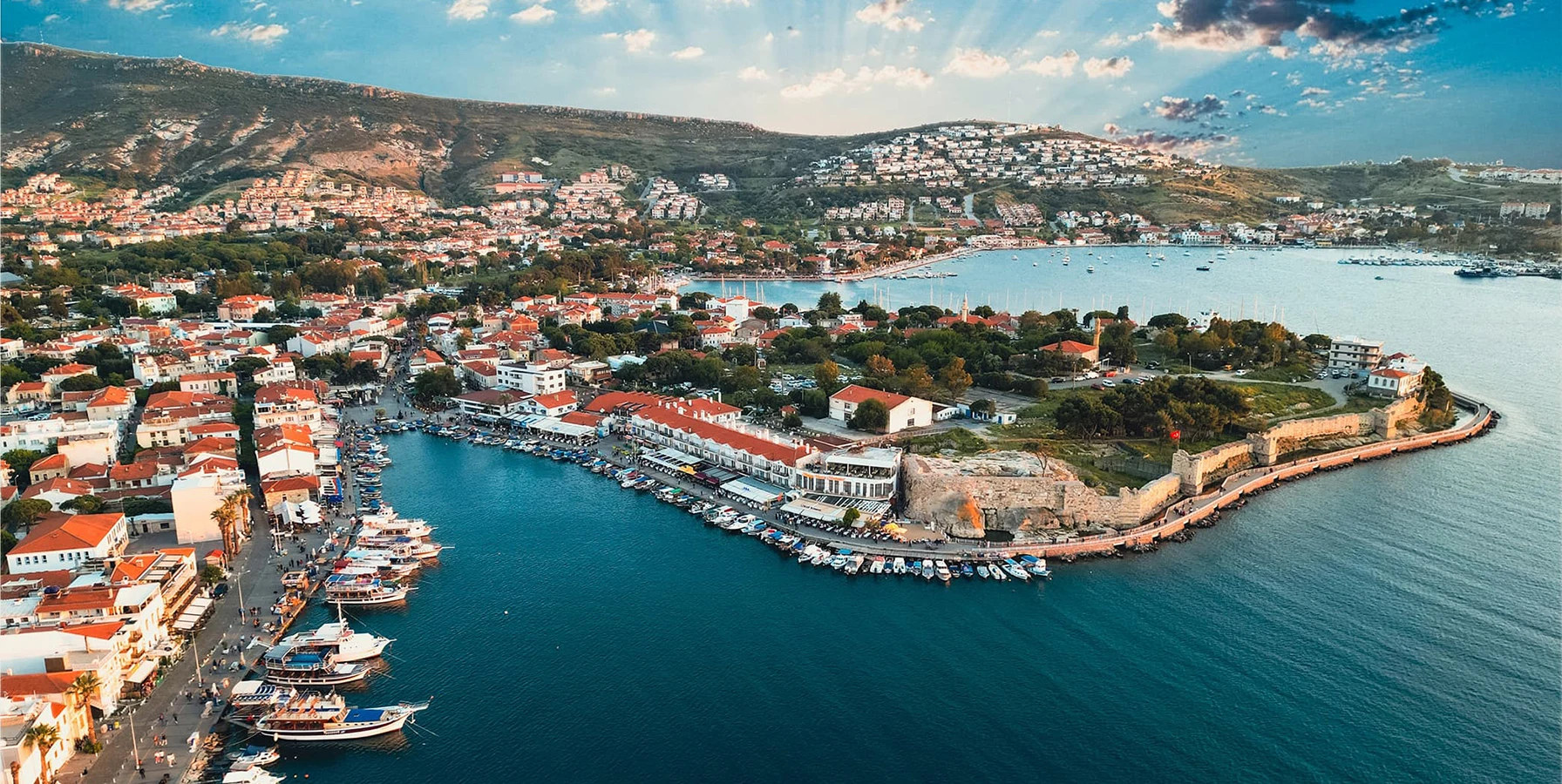
Continue into ancient Phokaia, where maritime trade, Ionian culture and Persian conquest shaped one of the Aegean's most fascinating cities.
Explore Old FoçaContinue through the many historical layers that followed Phokaia's Persian-period story.
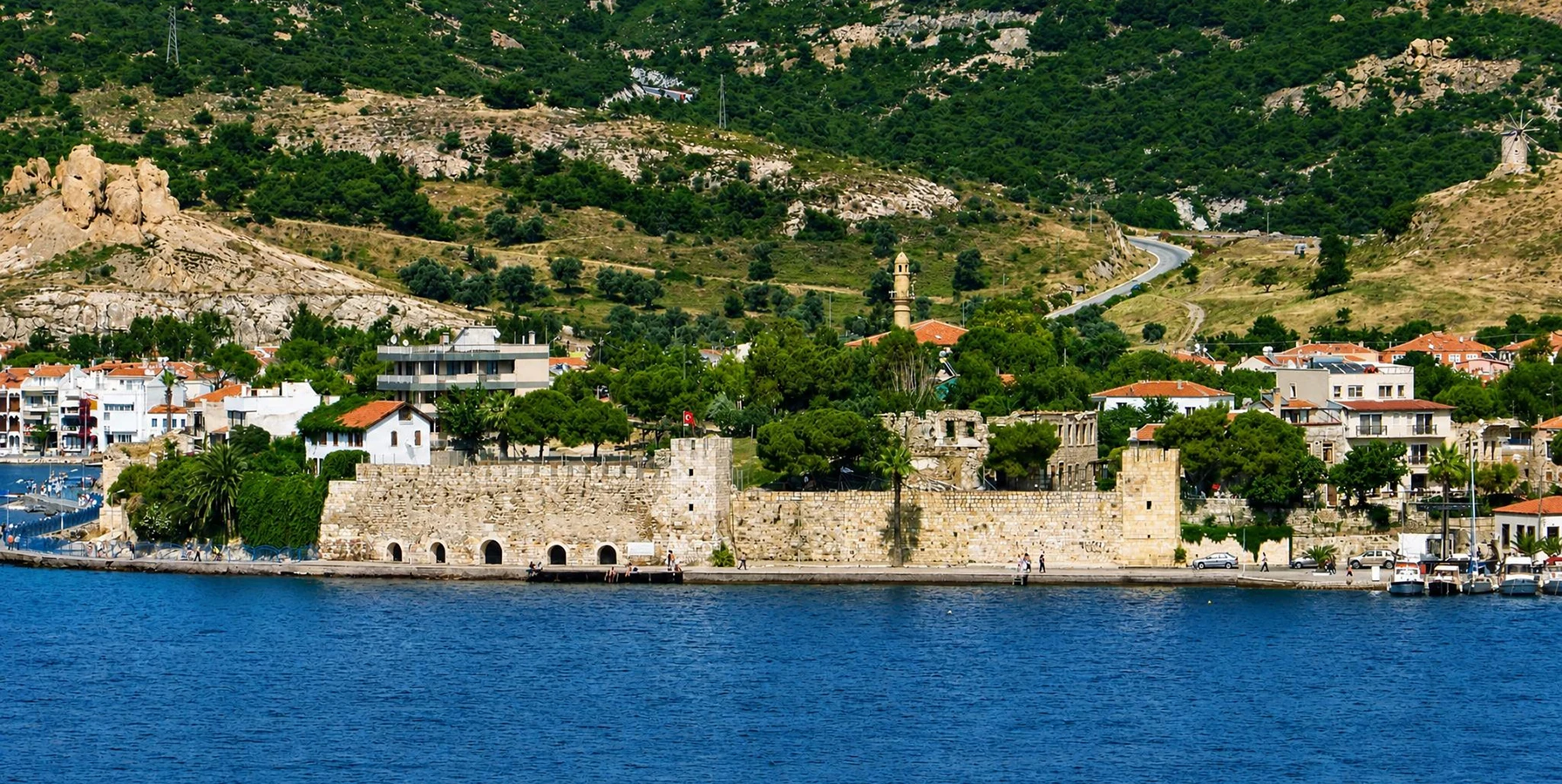
Move from Persian-period archaeology into the medieval and later fortifications protecting Foça's strategically important harbor.
Explore Foça Castle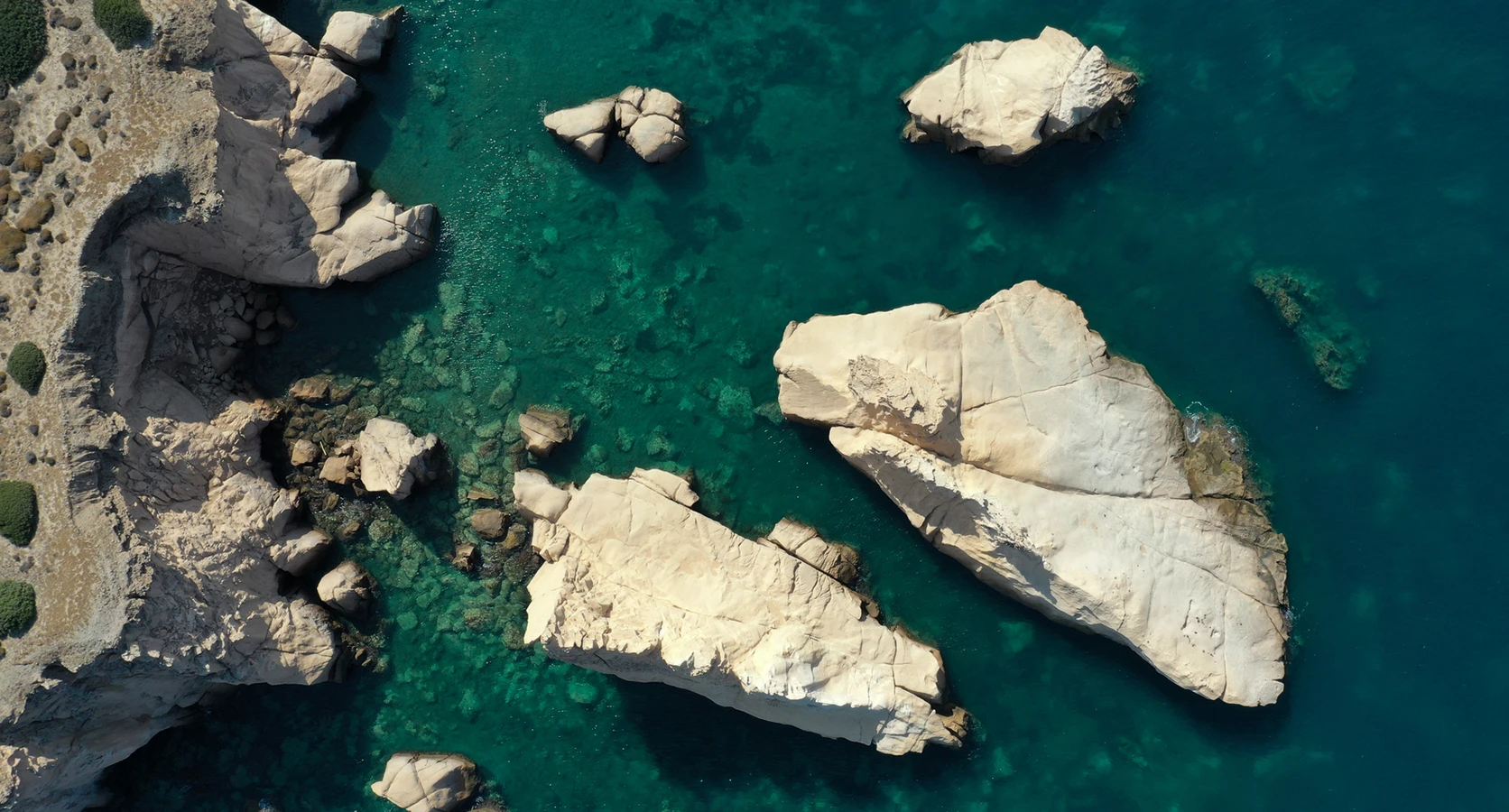
After exploring Persian history on land, discover Foça's mythological and natural maritime landscape from the Aegean Sea.
Explore the Siren RocksCombine archaeology, maritime history and the extraordinary northern Aegean coastline in one private journey.
Follow the history of Phokaia from its Ionian maritime prosperity through Persian conquest and the later historical layers of Foça.
Plan Your Archaeological Day
Combine Taş Kule, ancient Phokaia, Foça Castle, historic harbors and the Aegean coastline in a private itinerary designed around your interests.
Create Your Private Foça ExperienceTravel beyond Foça through ancient settlements, fortresses and quieter landscapes of the northern Aegean.
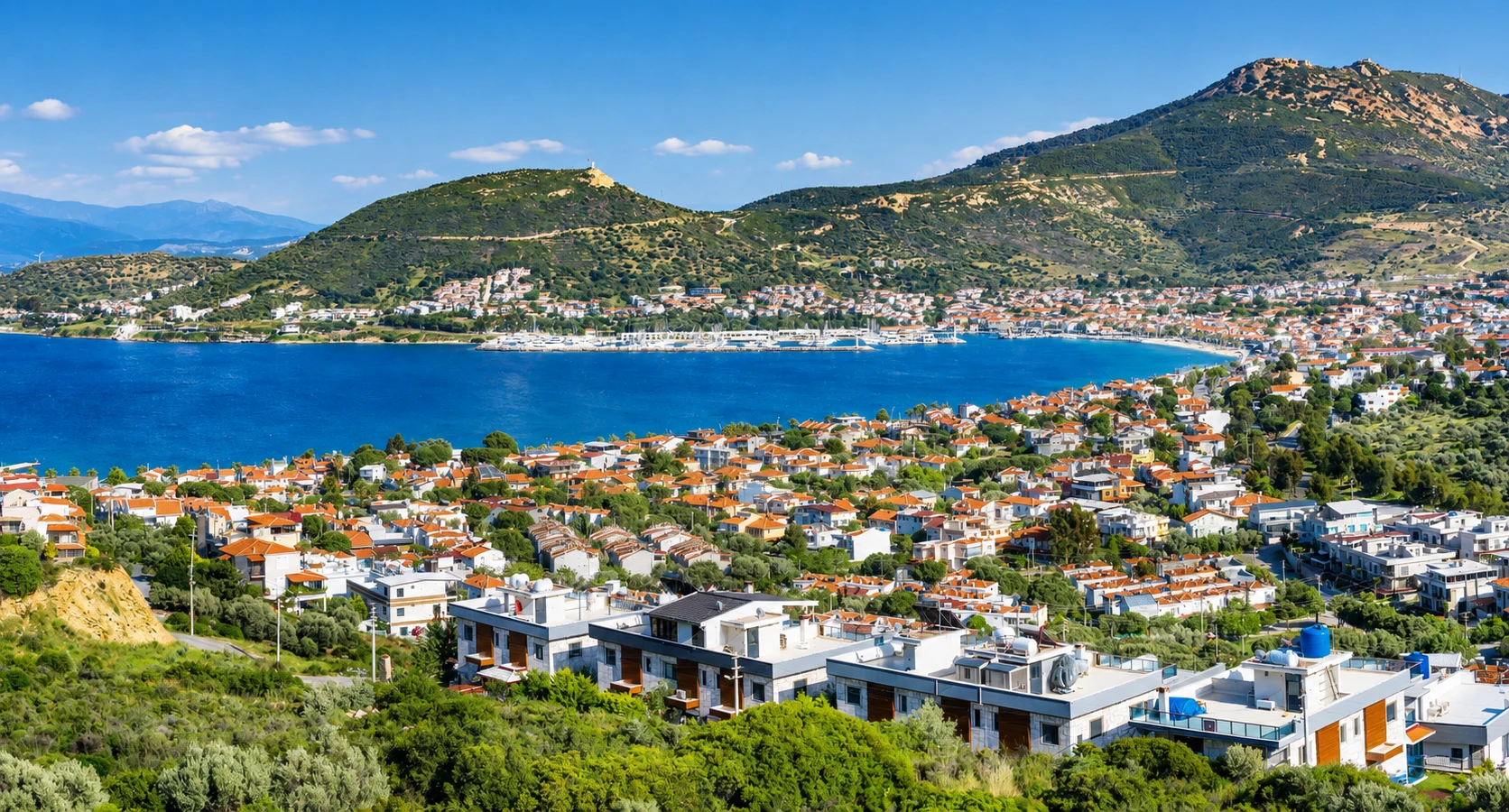
Continue north toward historic residential streets, beaches and the relaxed waterfront atmosphere of Yeni Foça.
Explore New Foça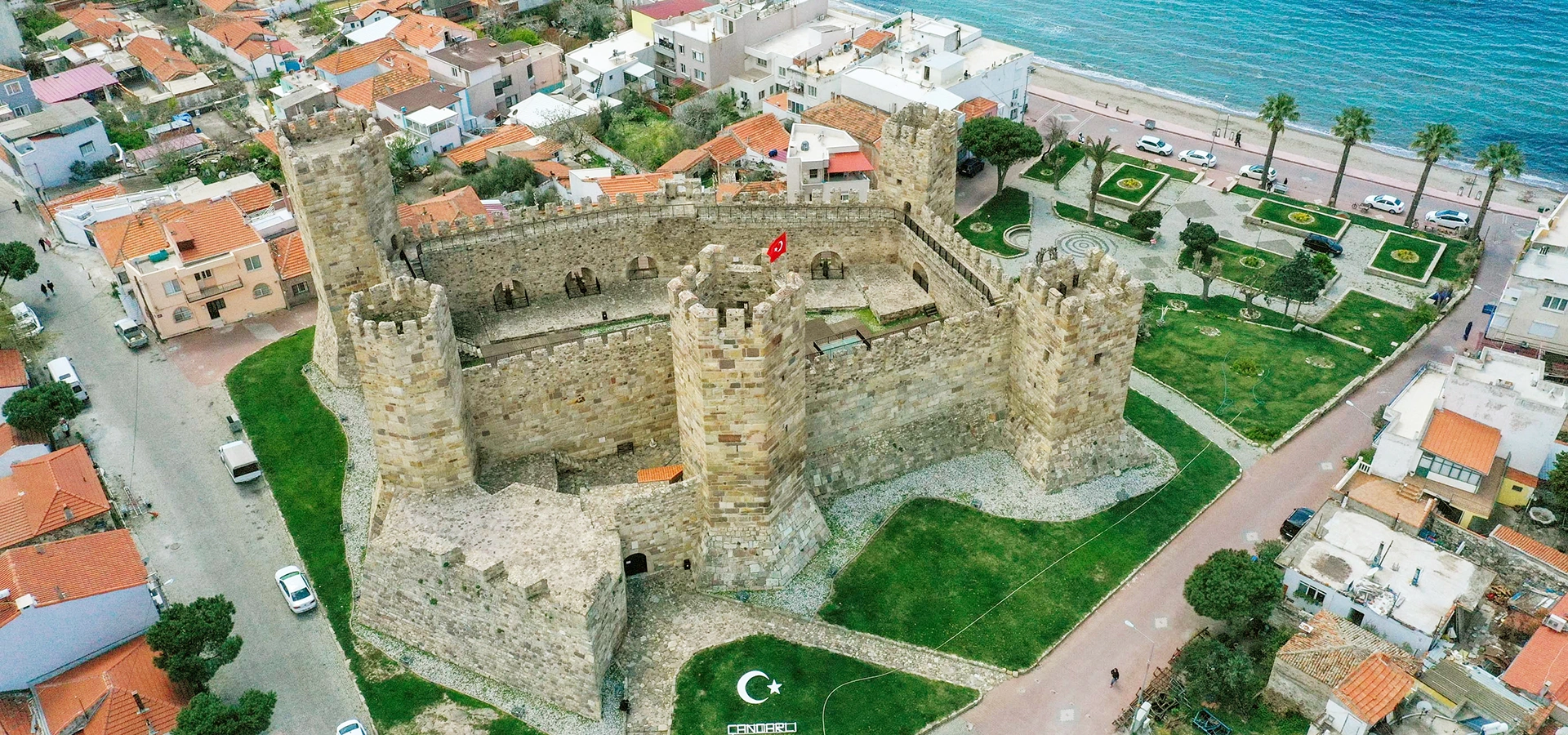
Continue along the northern Aegean toward another strategic coastal settlement dominated by an impressive historic fortress.
Explore Çandarlı Castle