Private Foça & Siren Rocks Experience
Combine Old Foça with a private maritime experience offering views of Orak Island and the legendary Siren Rocks whenever sea conditions permit.
Request a Custom Experience





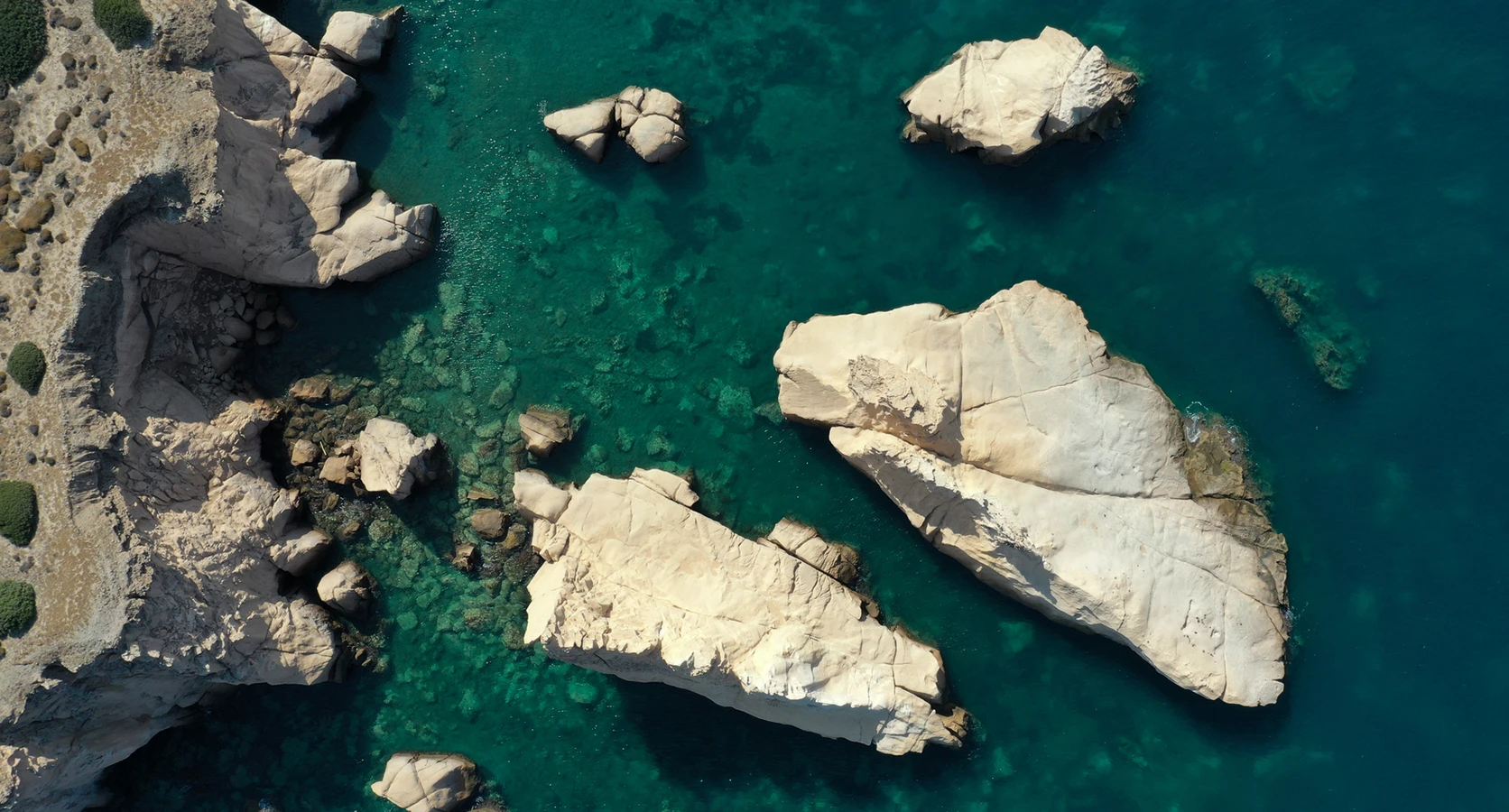
Off the coast of Foça lies one of the most distinctive natural landmarks of the northern Aegean: the Siren Rocks, known in Turkish as Siren Kayalıkları.
These dramatic volcanic formations rise from the sea near Orak Island, their unusual shapes created by centuries of wind, waves and natural erosion.
But the fascination of the Siren Rocks extends far beyond geology.
Local tradition connects these isolated rocks with the legendary Sirens of Homer's Odyssey — mysterious beings whose extraordinary songs were believed to enchant passing sailors and draw their ships toward dangerous rocky shores.
Today, the same coast is important for a very different reason. The islands, cliffs and sea caves around Foça form part of an ecologically sensitive marine environment associated with the endangered Mediterranean monk seal.
For visitors, the Siren Rocks are therefore best understood not simply as another sightseeing stop, but as a meeting point between mythology, geology, wildlife and the maritime identity of ancient Phokaia.
Discover the local tradition connecting Foça's offshore rocks with the mysterious Sirens of the Odyssey.
See extraordinary rock formations sculpted over centuries by wind and Aegean waves.
Experience one of the most environmentally sensitive sections of the Foça coastline.
View the rocks from the sea as part of a responsible boat journey around Foça's islands.
Essential information for discovering one of the most legendary natural formations along İzmir's northern Aegean coastline.
Off the Foça coast near the western and northwestern side of Orak Island in İzmir Province.
Open on Google MapsThe formations are primarily experienced from the sea during boat trips around the Foça islands.
Local traditions connecting the dramatic offshore rocks with the Sirens of ancient Greek mythology.
Volcanic formations transformed into remarkable shapes through long-term natural erosion.
The surrounding cliffs and caves form sensitive habitat associated with the Mediterranean monk seal.
The rocks lie within the environmentally important and protected coastal landscape of Foça.
Few places around Foça bring together mythology, geology, wildlife and the maritime character of the Aegean so completely.
The fascination of the Siren Rocks begins with their appearance.
Rising directly from the blue Aegean Sea, the pale and weathered formations create an almost sculptural landscape that looks very different from the gentler bays surrounding Old Foça.
Their isolation has also encouraged stories for generations.
Ancient mythology described Sirens as supernatural beings whose voices were so beautiful that sailors could lose control of their ships while attempting to reach them.
Foça's maritime setting and unusual offshore rocks naturally became associated with this legend in local historical tradition.
The experience today is especially memorable from a boat, where visitors can see the formations in the wider context of Orak Island, open water, sea caves and the wild coastal landscape.
At the same time, the area requires particular respect because it belongs to one of the most ecologically sensitive marine environments around Foça.
The Sirens are among the most famous supernatural beings of ancient Greek mythology.
In early artistic and literary traditions they were commonly imagined not as the mermaids of modern popular culture, but as strange beings combining female and bird-like characteristics.
Their greatest power was their voice.
According to legend, their songs were so irresistible that sailors who heard them abandoned reason and steered toward the rocky shores from which the music came.
The result was destruction. Ships struck the rocks, and the sailors never returned.
This combination of beauty and danger made the Sirens one of antiquity's most enduring symbols of temptation.
The earliest Sirens were traditionally represented with a woman's head and bird-like body.
The Sirens did not physically attack ships; their irresistible song drew sailors toward danger.
Ancient tradition placed the Sirens in isolated maritime landscapes surrounded by dangerous rocks.
The story became a powerful metaphor for temptation, desire and the dangers of losing self-control.
The unusual rocks near Orak Island became associated locally with this ancient Mediterranean legend.
The story adds another layer of meaning to an already dramatic natural environment.
The most famous story involving the Sirens appears in Homer's Odyssey, the epic account of Odysseus and his long journey home after the Trojan War.
Before approaching the Sirens, Odysseus receives a warning from Circe.
He wants to hear their legendary song without allowing it to destroy him or his crew.
His solution becomes one of the most memorable episodes in ancient literature.
The sailors protect themselves from hearing the Sirens while Odysseus is securely restrained to the mast of his ship.
He can therefore experience their voices without being able to steer the ship toward the dangerous rocks.
The vessel continues safely onward.
Local Foça tradition associates the extraordinary formations near Orak Island with this legendary world. However, the precise geography of locations described in Homeric epic has been debated for centuries, so the connection is best understood as an important local mythological tradition rather than a securely established archaeological identification.
This is one of the most interesting questions surrounding the site.
Foça tourism tradition has long connected the rocks near Orak Island with the Sirens described in ancient mythology.
The setting certainly feels appropriate: isolated volcanic rocks, caves, open sea and a landscape that could easily have inspired stories among ancient sailors.
However, the Odyssey belongs to an epic storytelling tradition whose geography cannot always be mapped precisely onto modern locations.
Different places throughout the Mediterranean have been associated with individual episodes from Odysseus's journey.
For that reason, it is more accurate to say that Foça's Siren Rocks are traditionally associated with the Homeric legend rather than claiming that their identification can be proven historically.
The strange appearance of the Siren Rocks is the result of natural geological processes rather than human construction.
Official regional descriptions identify the formations as volcanic.
Over long periods, wind, rain, salt and repeated wave action have eroded the exposed rock surfaces.
Harder sections have resisted erosion more successfully while weaker areas have gradually disappeared.
The result is a landscape of projections, cavities, steep faces, isolated rocks and sculptural forms rising directly from the sea.
Viewed from different directions, the formations can appear almost completely different — one reason a boat journey provides such an effective way to experience them.
The Siren Rocks form part of the volcanic geology visible around the Foça islands.
Constant contact with the Aegean has gradually reshaped exposed sections of rock.
Atmospheric conditions continue the slow process of erosion above the waterline.
Natural cavities and caves occur within the rocky coastal environment around Orak Island.
The formations reveal different silhouettes according to viewing position and light.
Erosion continues today, meaning the coastline is still being shaped by natural forces.
The Siren Rocks cannot be fully understood without looking at the larger island landscape surrounding Foça.
Several islands and smaller islets lie offshore from the historic town, creating the distinctive maritime horizon visible from its harbors.
Orak Island is the largest and one of the most prominent features within this group.
The Siren Rocks are associated particularly with the island's western and northwestern rocky coastline.
From the sea, visitors can appreciate how the formations form part of a much wider system of cliffs, coves, exposed rocks and marine habitat.
This landscape also helps explain the extraordinary maritime identity of ancient Phokaia, whose inhabitants became famous throughout antiquity as sailors and colonists.
The largest of the principal islands offshore from Foça and the immediate setting of the Siren Rocks.
Steep natural sections of coastline create a much wilder environment than the town's sheltered harbors.
The western side faces a broader maritime landscape exposed to wind and waves.
The islands are an essential part of the historic town's distinctive coastal panorama.
Undisturbed rocky areas provide valuable refuge for marine and coastal wildlife.
Seeing the island from the water reveals a landscape invisible from central Foça.
The greatest modern importance of the Siren Rocks may not be mythological at all.
The surrounding cliffs and marine caves belong to habitat used by the Mediterranean monk seal, one of the most remarkable mammals of the Mediterranean.
Foça has become strongly associated with these animals, and the wider coast is internationally important for their conservation.
Official environmental planning documents identify caves along the Siren Rocks and the western coast of Orak Island as particularly sensitive areas for monk seals.
This is why visitors should never treat the cliffs or caves as ordinary tourist spaces.
Wildlife should be observed only from an appropriate distance and boat captains should follow all current navigation, access and environmental protection rules.
Mediterranean monk seals are among the most important wildlife species associated with Foça.
Remote coastal caves can provide essential shelter and breeding habitat.
Never attempt to approach, touch, follow or feed a monk seal.
Sensitive caves should remain undisturbed, particularly when wildlife may be present.
Respectful wildlife encounters should be calm and guided by current local regulations.
These are wild animals, and seeing one should never be expected or promised during a boat trip.
Because the Siren Rocks are offshore, the most rewarding way to see them is from the sea.
Boat journeys from Old Foça can reveal the island landscape that cannot be appreciated fully from land.
As the boat moves toward Orak Island, the protected harbor environment gradually gives way to a more dramatic coastline of open water, rock formations and steep cliffs.
Approaching the Siren Rocks from a respectful distance allows visitors to see the unusual shapes created by erosion while also understanding their relationship with the surrounding island.
Routes depend on weather, wind, sea conditions, environmental rules and the individual boat operator.
Visitors should therefore think of the rocks as part of a wider Foça islands experience rather than expecting a fixed landing or swimming stop directly beside the formations.
Boat experiences generally begin from the historic waterfront area of Old Foça.
The journey provides panoramic perspectives of Foça's offshore islands and rocky coastline.
View the formations from the water while respecting protected wildlife areas.
Wind and waves may alter the route or determine how closely boats can safely approach.
Swimming stops may be possible elsewhere on suitable routes but should follow the captain's instructions.
A private charter provides greater flexibility while remaining subject to conservation and navigation regulations.
Observe the extraordinary eroded volcanic shapes that gave the location its legendary character.
See the larger island landscape surrounding the rocks and understand their geographical setting.
View natural cavities from a respectful distance without disturbing sensitive marine habitat.
Experience a dramatically different coastal environment from Foça's sheltered historic harbor.
Watch for seabirds and other wildlife while remembering that sightings of monk seals are rare and unpredictable.
Return to ancient Phokaia for historic harbors, archaeological heritage and traditional streets.
Explore the historic fortifications protecting the harbor from land after your boat journey.
Continue along the northern coastline for beaches, historic houses and relaxed waterfront life.
Milder weather can make Foça particularly pleasant, although boat conditions always depend on wind and sea state.
Long daylight hours provide excellent conditions for combining a boat journey with sightseeing in Old Foça.
Peak summer brings warm weather, stronger visitor demand and a lively harbor atmosphere.
Warm conditions often continue while the coastal atmosphere gradually becomes quieter.
Clear days can be beautiful, but changing weather makes checking marine conditions especially important.
Rougher conditions and reduced seasonal boat activity may make offshore sightseeing less predictable.
There is no single guaranteed best hour because conditions depend heavily on wind, waves and the season.
However, the changing light throughout the day can completely transform the appearance of the formations.
Earlier departures may offer quieter conditions and pleasantly soft light during summer.
Strong sunlight can reveal extraordinary blue and turquoise tones in clear water.
Conditions can become windier, so always follow the advice of experienced local captains.
Low sunlight adds texture, shadows and warmer tones to the eroded rock surfaces.
The most dramatic light is not always the calmest sea, so safety should remain the priority.
Ask about the day's actual wind and marine conditions rather than relying only on a general seasonal rule.
The Siren Rocks are among the most distinctive natural photography subjects around Foça.
Their pale volcanic surfaces contrast strongly with the blue Aegean, while changing angles from a moving boat continually produce new compositions.
Include Orak Island and open sea to show the scale and isolation of the formations.
Use longer focal lengths to capture textures, cavities and erosion patterns from a safe distance.
Clear conditions can create striking contrasts between pale stone and Aegean blues.
Changing position naturally reveals different silhouettes without needing to approach the rocks closely.
Lower-angle sunlight emphasizes the irregular surfaces and shadows of the cliffs.
Never pressure a captain to approach sensitive caves or wildlife simply to obtain a closer photograph.
The offshore position of the Siren Rocks means that the experience is more dependent on weather than a normal land-based attraction.
Foça is exposed to changing Aegean winds, and conditions around the islands can differ noticeably from those inside the sheltered harbor.
A day that feels calm while walking through town may still produce stronger wind or waves farther offshore.
For this reason, experienced captains may alter, shorten or cancel a route when necessary.
This should be understood as a normal part of responsible maritime travel.
Select an experienced operator familiar with local weather and protected marine areas.
Use a hat, sunglasses and appropriate sun protection because shade may be limited at sea.
Bring drinking water, particularly during hot summer departures.
A waterproof pouch is useful for phones, cameras and other valuables.
Use shoes with reasonable grip when boarding and moving around the boat.
Travelers sensitive to boat movement should prepare before departure and discuss concerns with their doctor or pharmacist.
Respect sensitive wildlife habitat and follow all current restrictions around protected areas.
Do not plan an extremely tight schedule immediately after a boat trip because sea conditions can affect timing.
The Siren Rocks are not simply a scenic photo stop.
They belong to an ecologically sensitive island and marine environment that survives precisely because sections of the coast remain relatively undisturbed.
Never chase, surround, touch or feed marine mammals or other wild animals.
Caves may provide essential wildlife refuge and should not be treated as sightseeing interiors.
Avoid unnecessary shouting, loud music or disturbance near sensitive cliffs.
Nothing should enter the sea from the boat, including plastics, cigarette ends or food packaging.
Local skippers understand changing conditions and current navigation restrictions.
Protected or unsuitable rocky areas should be appreciated from the water rather than treated as landing sites.
A wildlife photograph is never worth disturbing the animal being photographed.
The goal is for the landscape to remain exactly as it was before your visit.
The Siren Rocks work particularly well as part of a complete day exploring both the maritime and historical character of Foça.
Begin in Old Foça with a walk through the historic harbor before departing on a boat experience around the islands.
From the water, discover the changing coastline around Orak Island and view the Siren Rocks in their natural setting.
After returning to town, continue through the streets of ancient Phokaia and visit Foça Castle & Beşkapılar.
Finish the afternoon beside one of Foça's historic harbors for dinner and sunset.
The Siren Rocks are best combined with the extraordinary historical and coastal landscape surrounding Foça.
Explore ancient Phokaia, traditional fishing harbors, archaeological heritage and atmospheric streets.
Discover the fortifications that protected Foça's strategically important harbor.
Experience the broader island landscape surrounding Orak Island and the Siren Rocks.
See the island whose rugged western coastline forms the immediate setting of the Siren Rocks.
Continue north for beaches, historic houses, waterfront restaurants and relaxed Aegean coastal life.
Travel farther north toward another historic fortified harbor overlooking the Aegean.
Few natural landmarks fit the history of Foça as perfectly as the Siren Rocks.
Ancient Phokaia was one of the great maritime cities of Ionia. Its sailors crossed the Mediterranean and established settlements far beyond the Aegean.
For people whose prosperity depended on ships, harbors and navigation, the sea represented opportunity — but also danger.
Rocky islands, sudden winds and difficult coastal passages naturally became places around which stories could develop.
The legend of mysterious voices drawing sailors toward dangerous rocks therefore feels particularly powerful in the landscape of Foça.
Today the story continues in another form. The islands remain central to the identity of the town, while conservation of their marine environment protects a wild landscape that ancient sailors themselves would still recognize.
The Siren Rocks are offshore from Foça, associated with the western and northwestern coastline of Orak Island in İzmir Province.
They are known as Siren Kayalıkları.
Foça tradition associates the formations with the Sirens of Homer's Odyssey. However, exact geographical identifications of places within the epic remain a matter of interpretation rather than established archaeological fact.
In ancient Greek mythology, the Sirens were supernatural beings famous for songs so captivating that sailors could be drawn toward dangerous rocks.
Not originally. Early Greek tradition commonly represented them with female and bird-like characteristics rather than the fish-tailed form associated with later mermaid imagery.
According to the Odyssey, Odysseus arranged to hear their song while preventing himself and his crew from steering toward danger.
They are offshore formations and are best viewed from the sea during a suitable boat journey around the Foça islands.
Boat trips can provide views of the formations, but routes and approach distances depend on weather, navigation conditions and environmental protection requirements.
Visitors should not assume that landing is permitted or appropriate. The area contains sensitive rocky and wildlife habitat and should primarily be appreciated from the water.
Swimming should take place only at appropriate locations selected by the boat crew and where current conditions and protection rules allow it. Sensitive caves and wildlife areas should remain undisturbed.
Official regional tourism information describes the formations as volcanic rocks that have acquired unusual shapes through long-term erosion.
Wind, waves, salt and natural weathering have gradually eroded the volcanic formations into irregular cliffs, cavities and isolated shapes.
Orak Island is one of the principal islands offshore from Foça and forms the immediate geographical setting of the Siren Rocks.
The surrounding cliffs and caves form important habitat associated with Mediterranean monk seals. However, they are wild animals and sightings during a visitor's boat trip are never guaranteed.
No visitor should enter or approach sensitive wildlife caves. Disturbance can be particularly harmful in areas used for resting, breeding or raising young.
Late spring through early autumn generally provides the broadest opportunities for boat trips, but actual wind and sea conditions are more important than the calendar.
Morning can sometimes provide calmer summer conditions, while later light may create more dramatic photography. Always prioritize the captain's assessment of the day's weather.
The Siren Rocks themselves are normally experienced as part of a wider boat route. Allow additional time to explore Old Foça before or after the marine excursion.
A private boat can provide a more flexible experience and additional time for photography, although all routes remain subject to weather, safety and environmental protection regulations.
A suitable boat experience can work well for families, provided children are comfortable at sea and all safety instructions and life-jacket requirements are followed.
The most natural combination is Old Foça, followed by Foça Castle, the historic harbors and, with more time, New Foça.
They are especially rewarding for travelers interested in mythology, dramatic coastal scenery, geology, photography and Foça's relationship with the Aegean Sea.
Discover Foça through private experiences combining mythology, historic Phokaia, coastal scenery and responsible exploration of the extraordinary island landscape without compulsory shopping stops.
Combine the legendary offshore landscape with the historic streets, harbors and ancient maritime heritage of Foça.
Combine Old Foça with a private maritime experience offering views of Orak Island and the legendary Siren Rocks whenever sea conditions permit.
Request a Custom Experience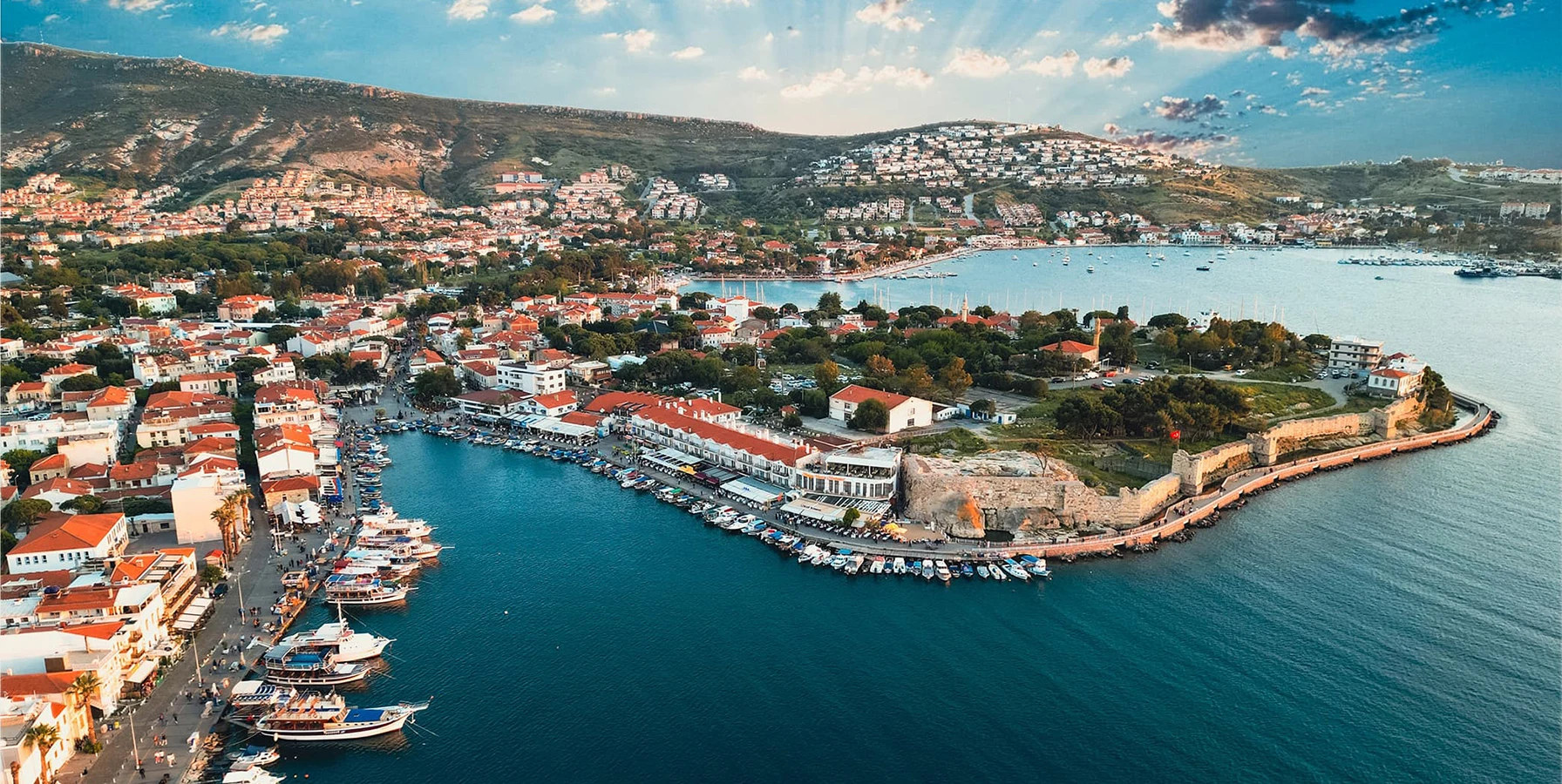
Continue through the historic center of ancient Phokaia, where maritime archaeology, traditional harbors and stone streets reveal thousands of years of Aegean history.
Explore Old FoçaGo deeper into the history of one of the ancient Aegean's most important maritime settlements.
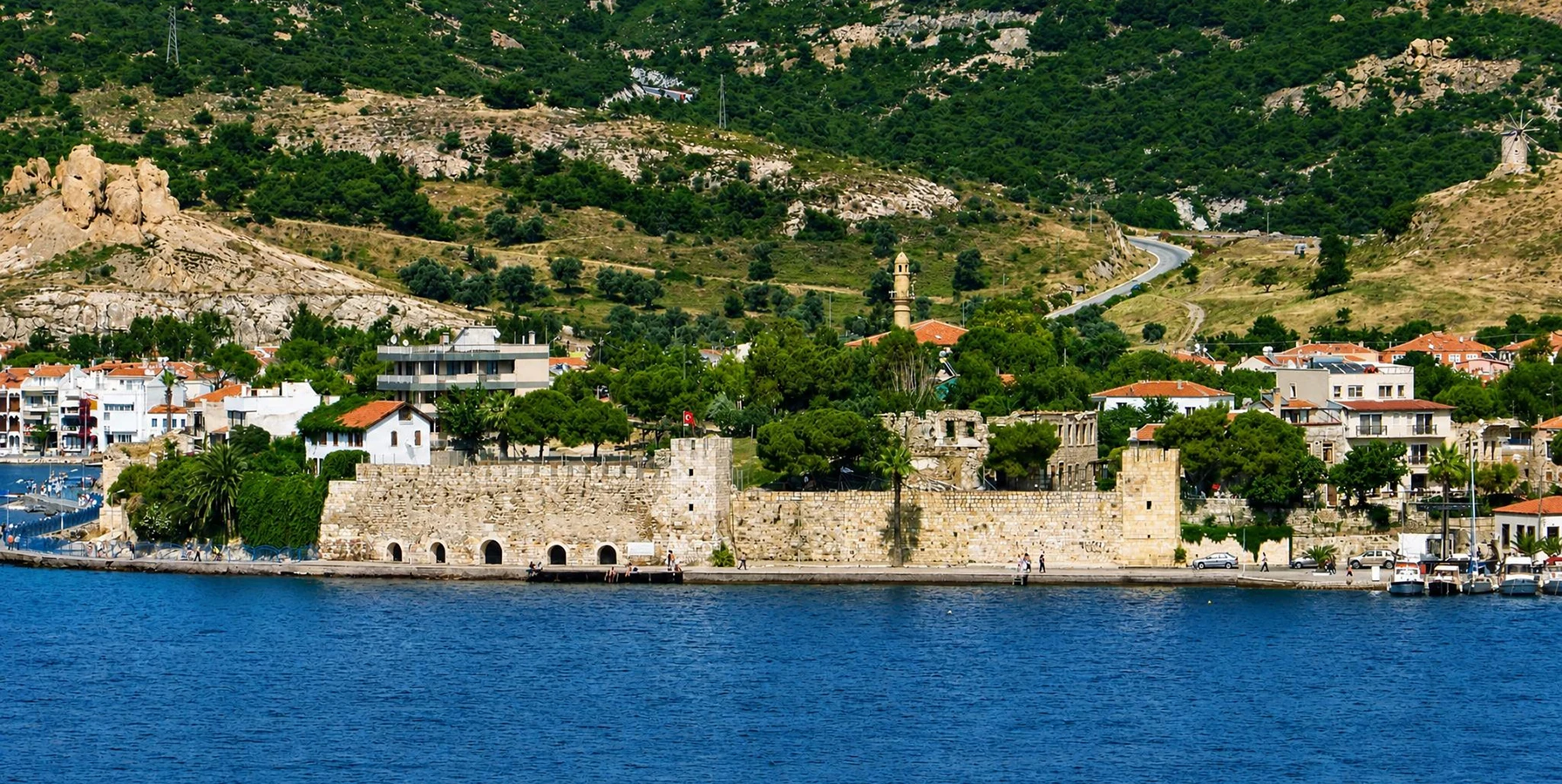
Explore the fortifications protecting Foça's strategic harbor and discover another layer of the town's extraordinary maritime history.
Explore Foça Castle
Explore Foça's island landscape from the water with a flexible route designed around sea conditions, scenery and responsible wildlife viewing.
Plan Your Boat ExperienceCombine Foça's mythological and archaeological heritage with the relaxed coastline of Yeni Foça.
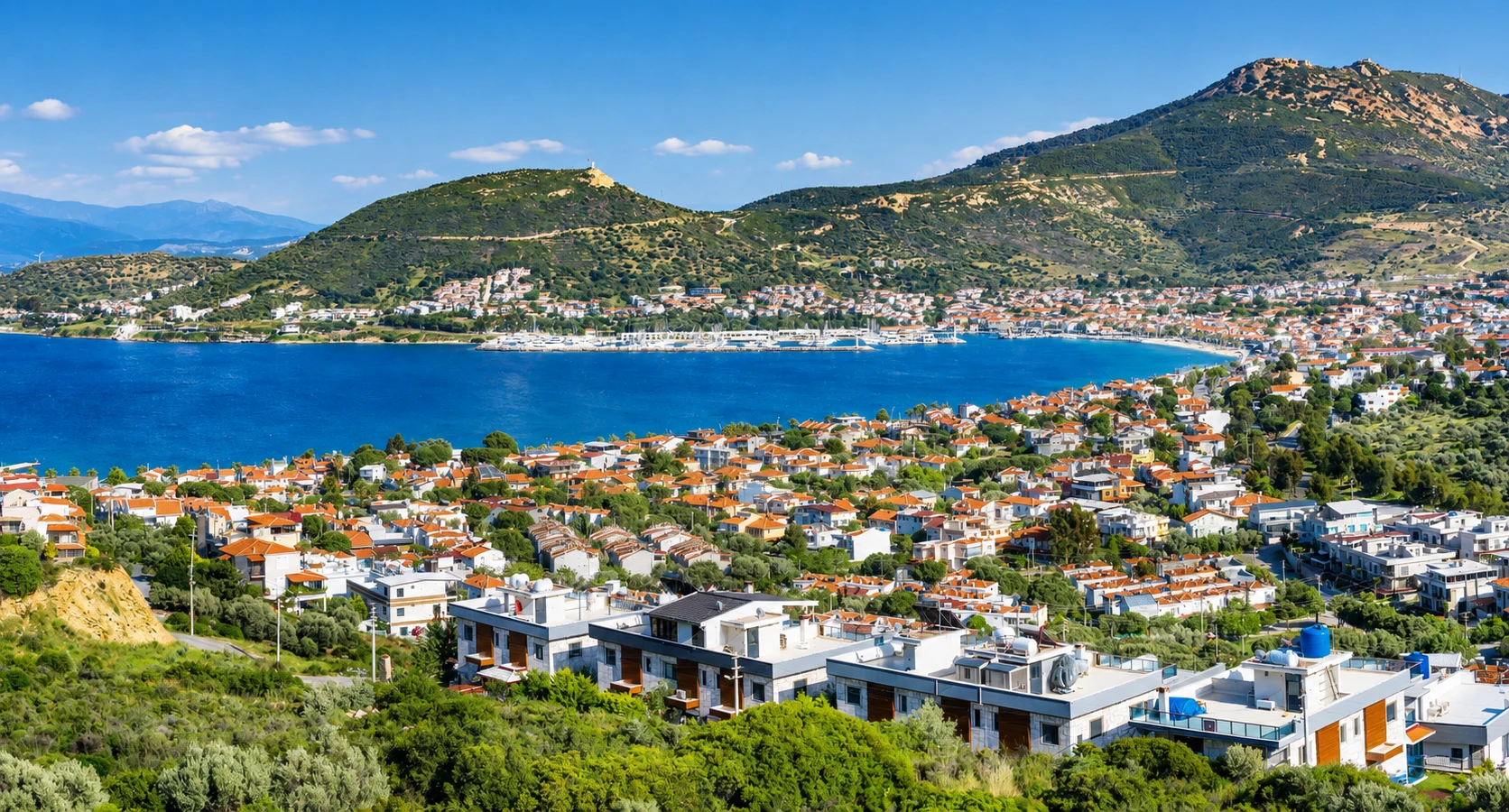
Discover beaches, historic residential streets and a relaxed waterfront atmosphere farther along the northern Foça coastline.
Explore New Foça
Combine ancient Phokaia, the historic harbor, coastal viewpoints and the relaxed seaside atmosphere of Yeni Foça.
Plan Your Private DayFollow the northern Aegean coastline through historic fortresses, traditional settlements and dramatic coastal landscapes.
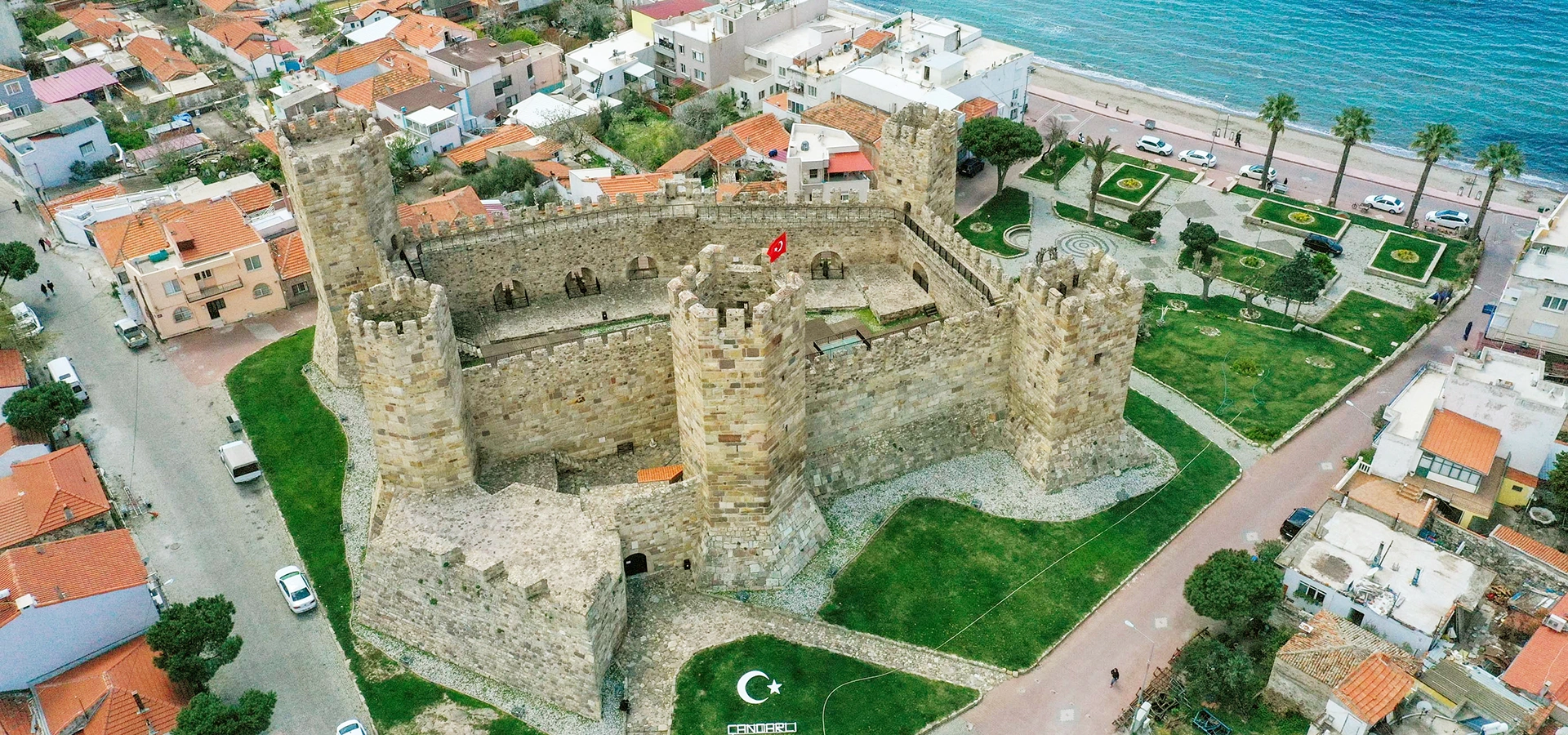
Continue north toward another historic Aegean harbor dominated by one of the region's most impressive coastal fortresses.
Explore Çandarlı Castle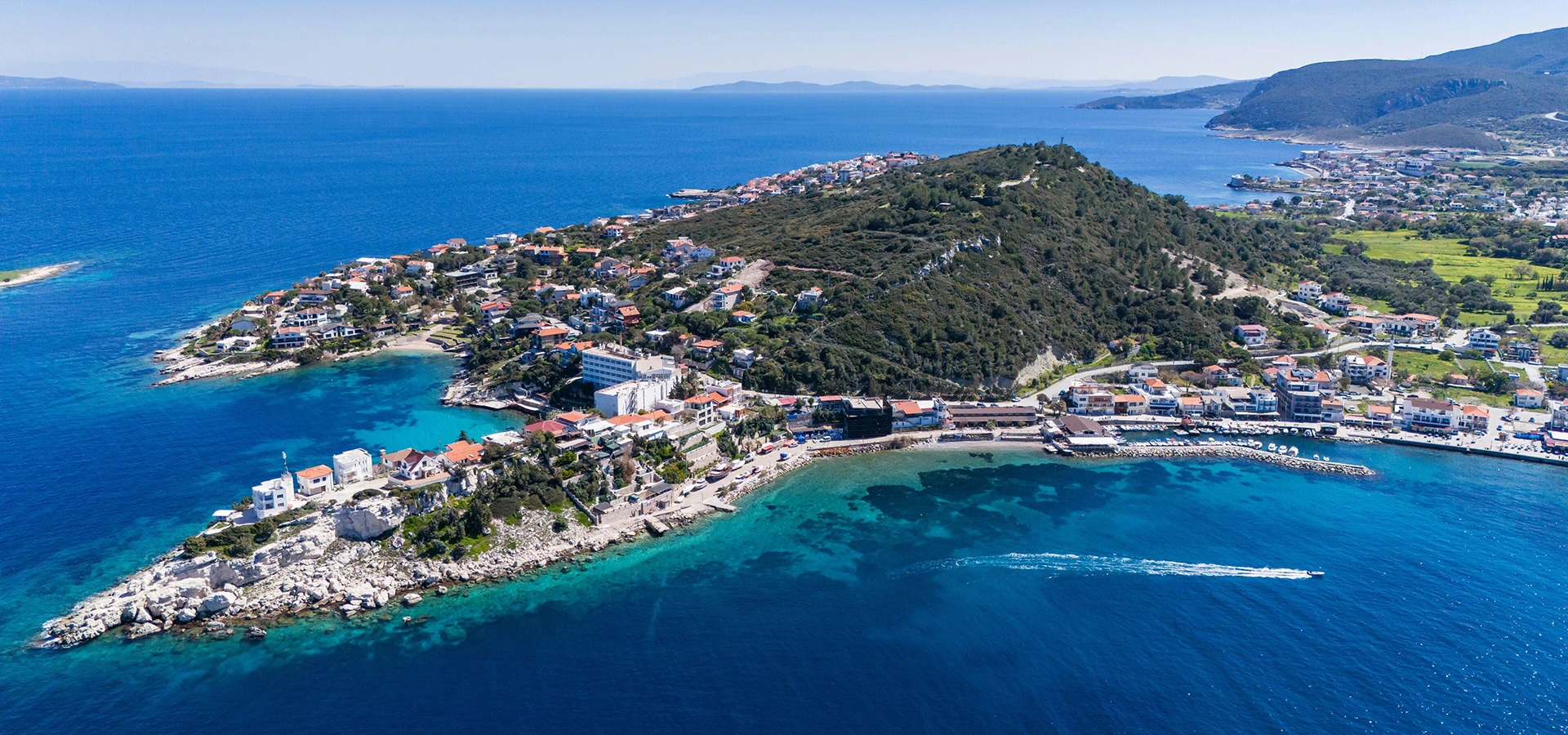
Discover another quieter part of İzmir defined by rugged coastline, traditional villages and spectacular Aegean scenery.
Explore Karaburun