The Ancient Aeolian Port beneath Modern Çandarlı

Pitane Ancient City Çandarlı – Complete Visitor Guide

Discover ancient Pitane on the Çandarlı Peninsula,
where Aeolian history, lost harbours and remarkable pottery traditions meet the Aegean Sea.

Discover Ancient Pitane

Pitane – The Ancient City Hidden beneath Çandarlı

On the northern shore of the beautiful Çandarlı Gulf, the modern coastal town of Çandarlı occupies the landscape of one of ancient Aeolis' important maritime settlements.

Its ancient name was Pitane.

Unlike Ephesus, Pergamon or nearby Aigai, Pitane does not survive today as a large archaeological park filled with standing temples and colonnaded streets.

Much of the ancient city lies beneath or around the modern settlement on the Çandarlı Peninsula.

Yet archaeology has revealed a remarkable story.

Ancient authors described Pitane as an Aeolian city with two harbours, while excavations uncovered an exceptionally rich necropolis containing Archaic pottery, imported ceramics, burial vessels and an important Archaic male statue.

The city later became famous for another reason.

During the Roman period, Pitane developed into a major production center for the glossy red tableware traditionally known as Çandarlı Ware and now studied within the wider family of Eastern Sigillata C.

Today the experience of Pitane is therefore different from visiting a conventional ruin.

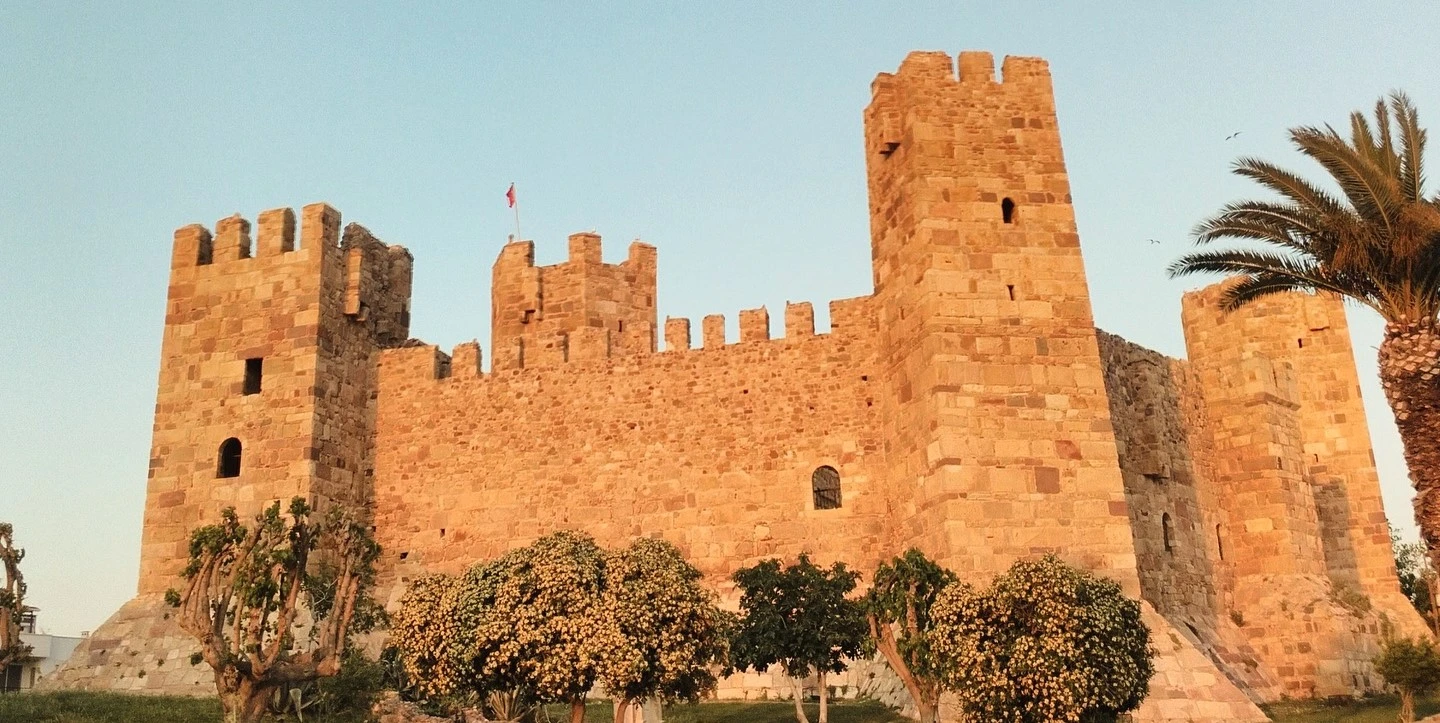
Ancient history survives beneath streets, around archaeological zones, in museum collections, within the peninsula's landscape and beside the striking medieval Çandarlı Castle.

Ancient Aeolis

Pitane was one of the historic Aeolian communities of the northern Aegean coast of western Anatolia.

Two Ancient Harbours

Strabo specifically described Pitane as an Aeolian city possessing two harbours.

Remarkable Necropolis

Excavations revealed extraordinary Archaic burials, ceramics and objects dating particularly to the seventh and sixth centuries BC.

Roman Pottery Center

Pitane became an important production center for red-slip tableware distributed through the ancient Mediterranean world.


Know Before You Go

Pitane Ancient City – Quick Facts

Essential information for understanding the ancient city beneath and around modern Çandarlı on İzmir's northern Aegean coast.

📍

Location

Çandarlı, Dikili district, İzmir Province, western Türkiye.

Open on Google Maps
🏛️

Ancient Region

Aeolis, on the northern shore of the ancient Elaitic Gulf — today's Çandarlı Gulf.

⚓

Ancient Harbours

The geographer Strabo described Pitane as an Aeolian city possessing two harbours.

🏺

Famous For

Its rich necropolis, Archaic ceramics, Mycenaean connections and Roman red-slip pottery production.

🧠

Famous Native

Arcesilaus, one of the most influential philosophers of Plato's Academy, came from Pitane.

🌊

Modern Setting

The ancient settlement lies within the landscape of the present-day Çandarlı Peninsula and coastal town.


Ancient History beneath a Living Aegean Town

Why Discover Pitane Ancient City?

Pitane reveals how an ancient city can survive not only through monumental ruins but through archaeology, landscape, objects and the continuity of a living settlement.

The first thing to understand about Pitane is that the ancient city and modern Çandarlı occupy essentially the same coastal landscape.

Ancient streets and buildings were gradually covered, reused, dismantled or incorporated into later settlement.

As a result, visitors should not expect a clearly separated archaeological park.

Instead, Pitane rewards travelers who enjoy discovering the hidden layers beneath a modern town.

The peninsula still explains why the city developed here.

Sheltered waters, access to the Aegean, proximity to the fertile Kaikos — Bakırçay — plain and connections with Pergamon created an excellent environment for trade and settlement.

Archaeological finds then add extraordinary detail to that landscape.

Burials, pottery, imported vessels, sculpture and evidence of large-scale ceramic manufacture transform apparently ordinary ground into the remains of a city with a history spanning many centuries.

Understanding the Name Pitane

The ancient settlement is normally known in English archaeological literature as Pitane.

Turkish sources may also use the spelling Pitana.

Its ancient Greek name was Πιτάνη.

The precise origin of the name is uncertain.

Regional traditions sometimes connect Pitane with the legendary Amazons, female warriors whom ancient mythology associated with several cities of western Anatolia.

Such traditions belong to the mythological landscape surrounding the city rather than providing archaeological evidence for its historical foundation.

The modern name Çandarlı became associated with the settlement through the Ottoman period and the Çandarlı family, particularly Grand Vizier Çandarlı Halil Pasha.

Useful search tip: when researching the site academically, search for both “Pitane” and “Pitana,” together with “Çandarlı,” “Aeolis” or “Aeolia.”

Pitane and the Landscape of Çandarlı

Pitane occupied a naturally strategic coastal position on the Çandarlı Peninsula.

The peninsula projects into the northern side of the Çandarlı Gulf, known in antiquity as the Elaitic Gulf.

To the southeast lies the broad valley of the Bakırçay, the ancient Kaikos River.

This geography placed Pitane between maritime and inland worlds.

Ships could move through the Aegean and across the gulf, while routes inland connected the coast with the fertile Kaikos valley and the territory that would later be dominated by Pergamon.

The shape of the peninsula also provided naturally protected maritime approaches.

That relationship between land and sea is essential for understanding why Strabo remembered Pitane specifically as a city with two harbours.

The Earliest Settlement at Pitane

Pitane's history extends deeper than the surviving literary references to the Aeolian city.

Archaeological discoveries in and around Çandarlı indicate activity reaching back well before the Classical Greek period.

One of the most remarkable discoveries associated with Pitane is a Mycenaean stirrup jar.

The vessel demonstrates contact between this part of northwestern Anatolia and the wider Aegean cultural world during the Late Bronze Age.

Later archaeological work also produced material belonging to the Protogeometric and Early Iron Age.

Exactly how the earliest settlement developed into the historical city known as Pitane remains an important archaeological question.

What is clear is that Çandarlı's peninsula participated in regional exchange long before the city's best-documented Archaic and Classical centuries.

Pitane and Ancient Aeolis

Pitane belonged to the cultural landscape known in antiquity as Aeolis.

Aeolian settlements occupied sections of the northern Aegean coast of western Anatolia together with nearby islands.

The cities were politically independent communities rather than components of one centralized state.

Yet language, religious traditions, maritime connections and shared cultural practices linked them to a broader Aeolian world.

Pitane's coastal position connected it with several important neighboring communities.

Elaia

The important harbour of Pergamon lay farther east around the same ancient gulf.

Gryneion

An Aeolian settlement famous for the sanctuary and oracle of Apollo stood on the southern side of the gulf.

Myrina

A major coastal city farther south participated in the same interconnected northern Aegean world.

Aigai

Inland among the Yunt Mountains, Aigai preserves one of the region's most dramatic Aeolian archaeological landscapes.

Pitane Ancient City Timeline

Late Bronze Age Mycenaean material associated with Pitane provides evidence for connections with the wider Aegean world.
Early Iron Age Protogeometric and other early ceramic material documents activity before the city's best-known Archaic period.
7th–6th Centuries BC Pitane flourishes within the Aeolian cultural landscape; its necropolis preserves exceptionally rich burial assemblages.
Classical Period The city continues as an important coastal community within the changing political world of western Anatolia.
c. 318 BC Arcesilaus, later a major philosopher of Plato's Academy in Athens, is traditionally dated to around this period and was a native of Pitane.
Hellenistic Period Pitane develops within the political and economic orbit of the Pergamon region.
85 BC Mithridates VI of Pontus retreats to Pitane and escapes by sea after being besieged on land by the Roman commander Fimbria.
Roman Imperial Period Pitane becomes particularly important for the manufacture of red-slip tablewares traditionally known as Çandarlı Ware.
Late Antiquity Recent archaeological research indicates that tableware production and activity continued later than previously recognized.
1911 Siegfried Loeschcke identifies archaeological evidence for Roman pottery manufacture at Çandarlı.
1958–1965 Ekrem Akurgal and his team investigate Pitane's archaeological landscape and exceptionally rich necropolis.
2019–2021 Intensive archaeological survey re-examines Pitane's pottery production, chronology and settlement context.

Pitane during the Archaic Period

The seventh and sixth centuries BC are among the best represented periods in Pitane's archaeological record.

Much of this knowledge comes not from monumental public buildings but from cemeteries.

Burials excavated around the peninsula contained remarkable quantities of ceramics and small finds.

The objects demonstrate that Pitane participated in extensive networks of production, exchange and artistic influence.

Locally produced objects appear beside vessels reflecting traditions from other parts of the Aegean.

Some of the most important material belongs approximately to the period between 625 and 500 BC.

These discoveries make Pitane an especially significant site for understanding everyday life, burial traditions and cultural interaction in Archaic Aeolis.

The Two Harbours of Ancient Pitane

One of the clearest descriptions of Pitane comes from the ancient geographer Strabo.

He identifies Pitane as an Aeolian city possessing two harbours.

The statement immediately explains part of the city's importance.

A settlement with access to two protected maritime areas could support fishing, coastal travel, commercial shipping and communication across the northern Aegean.

The shape of the Çandarlı Peninsula makes this maritime character easy to appreciate even today.

Ancient shorelines and harbour installations have naturally changed through erosion, construction and centuries of settlement.

Nevertheless, the peninsula remains one of the most important surviving clues to the organization of ancient Pitane.

Look at the landscape: when walking around Çandarlı, notice the sheltered waters on different sides of the peninsula. The geography helps make Strabo's description of a two-harboured city immediately understandable.

The Ancient Necropolis of Pitane

Pitane is particularly famous among archaeologists for its necropolis.

Ancient cemeteries were located around the mainland side of the peninsula and its approaches.

The burial areas produced an exceptional collection of vessels, urns, cups, figurines and other objects.

A number of burials belong to the Archaic period and preserve material dating particularly to the seventh and sixth centuries BC.

The quantity and variety of the discoveries provide far more than attractive museum objects.

They allow researchers to examine burial ritual, trade, ceramic production, wealth and cultural interaction within an Aeolian coastal community.

Today the ancient cemetery should not be imagined as a clearly marked archaeological park.

Modern settlement, roads, vegetation and later land use have transformed the area substantially.

Burial Customs at Ancient Pitane

The excavated graves of Pitane reveal several ways in which ancient communities remembered and buried their dead.

Large ceramic vessels were sometimes connected with burial practices.

Other graves contained groups of smaller vessels that may have held liquids, food, perfumes or offerings.

Ceramic assemblages are particularly important because their changing forms and decorative styles help archaeologists establish chronology.

The cemetery therefore acts almost like an archive.

Individual graves preserve moments in the cultural history of Pitane that are difficult to recover from the heavily occupied urban peninsula itself.

Large Vessels

Large ceramic containers formed part of some ancient burial traditions represented at Pitane.

Drinking Vessels

Cups and related forms offer evidence for both burial ritual and ancient ceramic traditions.

Imported Pottery

Vessels from wider Aegean traditions reveal Pitane's participation in regional exchange networks.

Small Finds

Figurines and other objects help reconstruct beliefs, identity and social practice.

The Extraordinary Ceramics of Pitane

Few subjects are as important to understanding Pitane as pottery.

Ceramics document the city's history from its early settlement phases through the Archaic period and into Roman and Late Antique times.

The necropolis produced decorated vessels belonging to different artistic traditions.

Among them are important examples connected with Chian and Orientalizing ceramic traditions.

Later centuries reveal another story entirely.

Pitane was no longer simply consuming pottery.

It became one of the most important places in the eastern Mediterranean for the archaeological study of Roman red-slip tableware production.

This continuity makes ceramics one of the strongest threads running through the entire history of the ancient settlement.

The Mycenaean Vessel from Pitane

One of the best-known early objects associated with Pitane is a Mycenaean stirrup jar.

The vessel was recovered during early archaeological work connected with the necropolis.

Its form and decoration belong to the Mycenaean ceramic world of the Late Bronze Age.

The discovery is significant because it demonstrates that objects, people or cultural influences were moving between the Aegean and this section of the western Anatolian coast long before the historical Classical period.

It should not be interpreted as proof that Pitane was simply a Mycenaean city.

Instead, the vessel forms part of wider archaeological evidence for interaction between local Anatolian communities and the Aegean world.

Where is it today? the famous Pitane stirrup jar is preserved in the İstanbul Archaeological Museums.

Arcesilaus of Pitane

Pitane was the birthplace of one of the most important philosophers associated with Plato's Academy.

His name was Arcesilaus.

Born in Pitane during the early Hellenistic period, Arcesilaus later travelled to Athens and became head of the Academy.

Ancient biographical tradition associated him with the development of what is commonly called the Middle Academy.

He became especially famous for questioning whether certainty could genuinely be achieved.

Rather than presenting a fixed doctrine, Arcesilaus became associated with argument, counterargument and the suspension of judgment.

His intellectual career makes Pitane more than a commercial and archaeological site.

The small Aegean city also contributed directly to one of the most influential philosophical institutions of the ancient Mediterranean.

A remarkable connection: a traveler walking through modern Çandarlı is standing in the homeland of a philosopher who would later lead Plato's Academy in Athens.

Did Bricks from Pitane Really Float?

Ancient Pitane was associated with a curious technological story.

Strabo records the claim that bricks made at Pitane could float on water.

According to his explanation, the local clay or earth used to make them was lighter than an equivalent volume of water.

Ancient writers occasionally recorded unusual natural materials and technological phenomena of this kind.

Whether every detail can be reconstructed archaeologically today is another question.

Nevertheless, the story is fascinating when considered alongside what modern archaeology has demonstrated about Pitane's genuine importance as a major center of ceramic manufacture.

For ancient readers, Pitane was apparently associated not only with pottery but with unusual properties of the earth itself.

Pitane during the Hellenistic Period

The Hellenistic centuries transformed the political geography surrounding Pitane.

The nearby inland city of Pergamon developed into the capital of the powerful Attalid kingdom.

The wider Çandarlı Gulf became deeply connected with Pergamon's economy and maritime communications.

Elaia on the eastern side of the gulf functioned as Pergamon's principal naval harbor.

Pitane occupied another strategically valuable coastal position within the same regional system.

Archaeological material demonstrates continuing activity during the Hellenistic period, even though the exact organization and appearance of the city remain difficult to reconstruct beneath modern Çandarlı.

The city's history must therefore be understood as part of a wider network connecting Pergamon, Elaia, Pitane and the northern Aegean.

Mithridates VI and the Siege of Pitane

One of Pitane's most dramatic appearances in ancient history occurred during the First Mithridatic War.

In approximately 85 BC, King Mithridates VI of Pontus was forced to retreat from Pergamon.

He reached Pitane, where the Roman commander Fimbria pursued and besieged him from the land.

The king's position appeared extremely dangerous.

Fimbria, however, did not possess the naval power required to close the escape route by sea.

He therefore sought cooperation from Lucullus, whose Roman fleet was nearby.

Lucullus refused.

Mithridates was consequently able to escape from Pitane by ship and continue toward Mytilene on Lesbos.

The episode vividly demonstrates the importance of Pitane's maritime position.

A city protected by the sea could become both a refuge and an escape point during one of the great conflicts of the late Roman Republic.

Pitane during the Roman Period

Under Roman rule, Pitane developed a different kind of archaeological importance.

The city became closely associated with the production of high-quality red-slip tableware.

These glossy vessels included forms used for eating, drinking and serving food.

For archaeologists, the products became so closely connected with the modern name of the site that the term Çandarlı Ware entered scholarly literature.

Modern research more commonly discusses much of the material within the broader classification Eastern Sigillata C.

The difference is more than terminology.

New scientific analysis suggests that ceramic manufacture should be understood as part of a wider regional production landscape connected with Pitane and Pergamon rather than as the activity of one completely isolated workshop.

Roman Pottery Production at Pitane

Pitane occupies an important place in the history of Roman pottery research.

Evidence for ceramic production at Çandarlı was identified archaeologically in the early twentieth century.

Later research confirmed that substantial quantities of red-slip tableware were manufactured in the area.

The manufacturing process generated archaeological traces beyond finished vessels.

Kiln waste, fragments damaged during firing, firing equipment and pieces associated with kiln construction all help researchers reconstruct how ancient workshops functioned.

Eastern Sigillata C

Glossy red tableware formed one of Pitane's best-known Roman-period ceramic products.

Vessel Wasters

Misfired and discarded vessels provide direct evidence that pottery was manufactured locally.

Kiln Slag

Heat-altered material helps identify areas associated with ancient firing activity.

Firing Equipment

Specialized ceramic pieces reveal practical aspects of stacking and firing vessels inside ancient kilns.

Pitane and Late Roman C Ware

Recent archaeological research has significantly changed understanding of Pitane's pottery industry.

For many years, the site was especially associated with Eastern Sigillata C production during the first centuries AD.

The intensive survey conducted between 2019 and 2021 identified archaeological evidence connected with the manufacture of Late Roman C ware.

This discovery indicates that tableware production at Pitane continued into Late Antiquity.

The result is important because it transforms the chronology of the industrial landscape.

Pitane was not simply a workshop center that flourished briefly during the early Roman Empire.

Its ceramic tradition formed part of a much longer history of production, distribution and changing regional economies.

Early Archaeological Research at Pitane

Pitane attracted archaeological interest long before modern systematic surveys.

Burial areas were investigated during the nineteenth century, when important ceramic material began entering museum collections.

One of the best-known early discoveries was the Mycenaean vessel later preserved in İstanbul.

The beginning of the twentieth century brought another major development.

In 1911, Siegfried Loeschcke investigated archaeological evidence connected with Roman ceramic manufacture at Çandarlı.

The work made Pitane one of the earliest securely recognized production centers for Roman red-slip tableware in the eastern Mediterranean.

From that point onward, Çandarlı became an important reference site for archaeologists studying Roman ceramics far beyond Türkiye.

Ekrem Akurgal and the Pitane Excavations

A major new phase of archaeological research began during the late 1950s.

The discovery of an Archaic male statue attracted the attention of the distinguished Turkish archaeologist Ekrem Akurgal.

Work in the area soon revealed the richness of Pitane's ancient cemetery.

Excavation campaigns carried out through the first half of the 1960s recovered large quantities of pottery and small finds.

Many objects belonged to the Archaic period.

Together they transformed Pitane into one of the most important archaeological reference points for the study of ancient burial practices and ceramics in northwestern Anatolia.

The discoveries were distributed among major archaeological museums, where the material could be preserved and studied.

1958–1959 Archaeological investigations focus renewed attention on the Çandarlı necropolis and its extraordinary finds.
1960s Continued excavation documents numerous ancient burials and rich ceramic assemblages.
Archaic Sculpture An important Archaic male statue discovered at Çandarlı is now preserved in the Bergama Museum.
Museum Collections Objects from Pitane entered archaeological collections in Bergama, İzmir and İstanbul.

The 2019–2021 Pitane Survey

Modern archaeology has returned to Pitane with very different questions and technologies.

As part of research into the wider Pergamon micro-region, archaeological teams systematically surveyed areas of the Çandarlı Peninsula in 2019 and 2020.

The collected material was then studied in detail during 2021.

Rather than searching only for monumental architecture, researchers examined the entire production landscape.

Surface pottery was mapped.

Kiln waste was documented.

Misfired vessels and technical equipment were analyzed.

The distribution of material across individual fields was compared.

This approach made it possible to reconstruct not simply what pottery looked like but where and how it was manufactured.

The research also demonstrated that Pitane's ceramic story continued into Late Antiquity.

What Can You See of Pitane Today?

Visitors should approach Pitane differently from large excavated archaeological parks.

Much of the ancient settlement survives beneath modern Çandarlı or within protected archaeological zones rather than as reconstructed monuments.

Ancient Landscape

The peninsula itself remains the clearest way to understand the strategic and maritime setting of Pitane.

Archaeological Areas

Registered archaeological zones preserve traces of ancient settlement and ceramic production around Çandarlı.

Necropolis Landscape

The mainland approach to the peninsula preserves the broader setting of the cemetery areas explored by archaeologists.

Surface Ceramics

Archaeological surveys have documented extensive ceramic material across parts of the peninsula.

Reused Ancient Stone

Later construction around Çandarlı reflects centuries of reuse within a settlement continuously reshaped through time.

Museum Finds

Many of the most spectacular objects from Pitane are best understood through collections in regional and national museums.

Is Çandarlı Castle Part of Ancient Pitane?

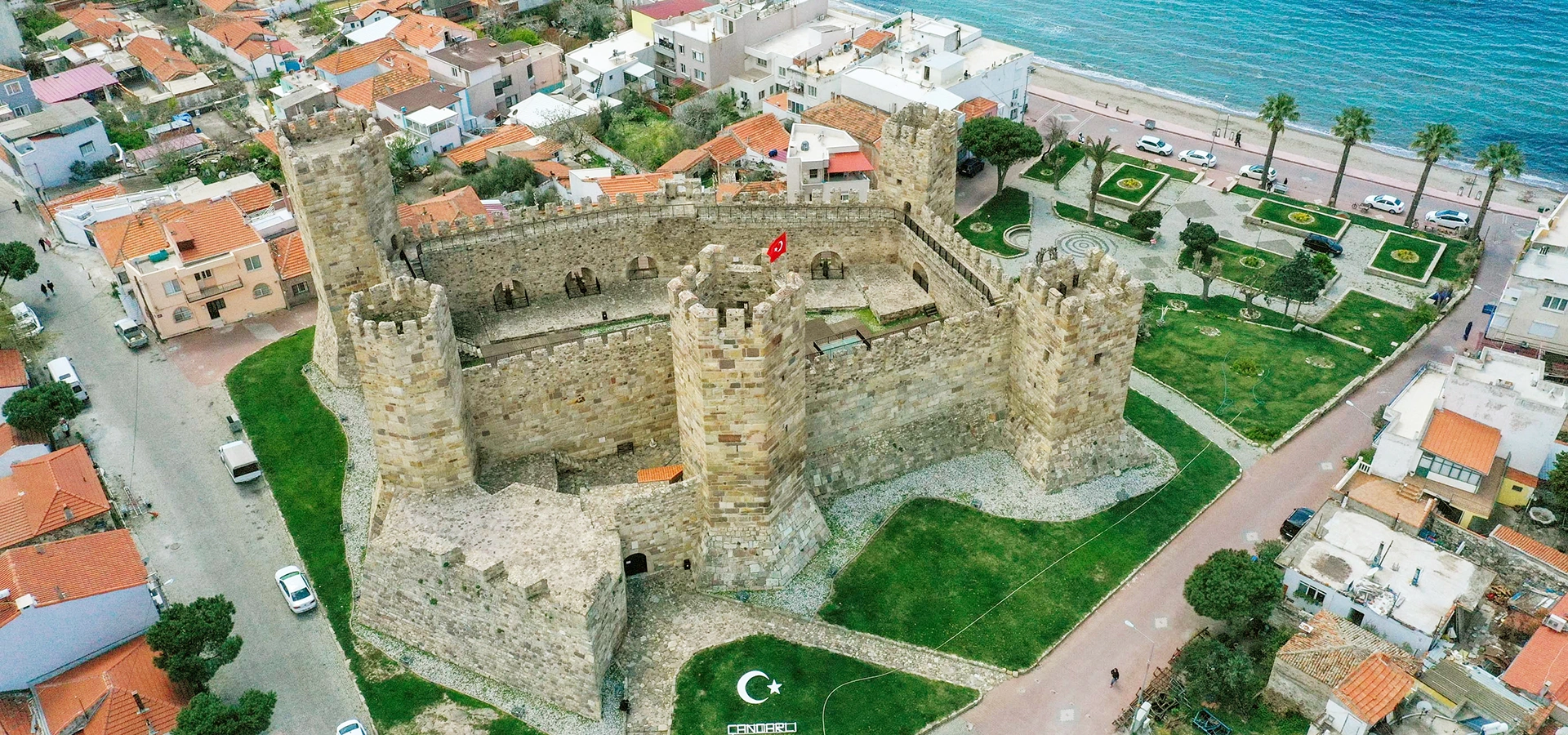
The impressive fortress standing beside the waterfront is the most visible historical monument in Çandarlı.

However, visitors should distinguish Çandarlı Castle from the surviving archaeology of ancient Pitane.

The castle seen today is principally associated with the medieval and Ottoman history of the settlement.

The Genoese controlled the harbor during the Middle Ages, and the fortress was later extensively restored during the Ottoman period.

Ancient architectural material was reused in later construction, reflecting a common practice seen at settlements occupied over many centuries.

The castle therefore occupies the landscape of ancient Pitane without simply being an intact ancient Greek fortress.

Why visit both? Pitane explains why the peninsula became important in antiquity, while Çandarlı Castle demonstrates how the same maritime geography continued to matter during the medieval and Ottoman periods.

Where Are the Finds from Pitane Today?

Because relatively little monumental architecture remains visible in modern Çandarlı, museum collections are especially important for understanding Pitane.

Objects recovered during different archaeological campaigns were transferred to several museums.

Bergama Museum

The collection includes important material associated with Pitane, including the famous Archaic male statue discovered at Çandarlı.

İzmir Archaeology Museum

Archaeological material from Pitane helps represent the ceramic and cultural history of northern İzmir.

İstanbul Archaeological Museums

Important early discoveries include the celebrated Mycenaean stirrup jar associated with Pitane.

For archaeology enthusiasts: combining Çandarlı with the Bergama Museum is particularly rewarding because objects preserved indoors help reconstruct the ancient culture that is difficult to visualize from the modern peninsula alone.

How to Explore Ancient Pitane

Do not search Çandarlı for a monumental entrance marked “Pitane Ancient City.”

Instead, begin by understanding the peninsula.

Walk toward the waterfront and observe how protected maritime areas surround different sides of the settlement.

Imagine ancient ships approaching a city Strabo described as possessing two harbours.

Continue toward the landscape associated with the archaeological zones and ancient cemetery.

Then visit Çandarlı Castle to understand the much later continuation of the town's maritime importance.

Finally, if your itinerary allows, see archaeological finds from Pitane in the museums of Bergama or İzmir.

The complete experience therefore combines landscape, archaeology, museum objects and later architecture.

Best approach: Pitane makes much more sense when the peninsula is treated as one historical landscape rather than when visitors search only for standing Greek or Roman monuments.

What to Expect When Visiting Pitane

No Monumental Archaeological Park

Pitane is not presented like Ephesus, Pergamon or another large excavated ticketed site.

Living Settlement

Modern Çandarlı occupies much of the ancient urban landscape.

Archaeological Zones

Protected areas and buried remains preserve archaeology that may not always be directly visible to visitors.

Museum-Based Archaeology

Many of Pitane's most important discoveries are preserved away from the site itself.

Beautiful Coastal Setting

The peninsula and surrounding Aegean waters remain central to understanding the ancient city's development.

Layered History

Ancient, medieval, Ottoman and modern Çandarlı occupy the same strategically important coastline.

Pitane Ancient City Opening Hours & Entrance Information

Ancient Pitane is not organized as one conventional archaeological park with a single ticket office and clearly defined visitor circuit.

Its archaeology is distributed across and beneath modern Çandarlı, including protected archaeological zones and areas associated with ancient cemeteries and ceramic production.

For that reason, there is no single standard admission ticket covering “Pitane Ancient City” as a whole.

Specific protected parcels, archaeological work areas or privately controlled land should not be entered without authorization.

Çandarlı Castle should also be treated as a separate historical attraction with its own current visitor arrangements.

Important: respect archaeological protection areas, fences, private property and any local restrictions. Do not enter excavation or survey areas simply because archaeological material is visible.

How Long Should You Spend Exploring Pitane?

30–45 Minutes

Enough for a brief introduction to the peninsula and the historical setting of ancient Pitane.

1–2 Hours

A comfortable amount of time for the waterfront, ancient landscape and historical center of Çandarlı.

2–3 Hours

Ideal when combining the story of Pitane with Çandarlı Castle, photography and a relaxed walk through the coastal town.

Our suggestion: allow approximately two hours in Çandarlı if archaeology is your main interest, and longer if you want to combine Pitane with the castle, waterfront and lunch beside the Aegean.

How to Get to Pitane Ancient City

Ancient Pitane lies beneath and around the modern neighborhood of Çandarlı in the Dikili district of İzmir Province.

Çandarlı is approximately 100 kilometers north of central İzmir and around 20–25 kilometers from Dikili, depending on the route used.

The settlement is reached from the main İzmir–Çanakkale road corridor by turning toward Çandarlı.

Once in town, the ancient landscape is centered around the peninsula and its approaches.

From İzmir

Drive north toward Aliağa and the Çandarlı–Dikili region before following signs into Çandarlı.

From Dikili

Çandarlı lies south of Dikili and can be combined easily with a wider exploration of the district's coastline.

From Bergama

The coastal route makes Pitane a natural addition to an itinerary focused on Pergamon and the ancient Kaikos region.

By Private Vehicle

A private car or arranged vehicle provides the easiest way to combine Pitane with nearby archaeological destinations.

🗺️

Pitane & Çandarlı Map

Open Çandarlı on Google Maps and explore the peninsula where the ancient settlement developed.

View Location

Pitane Ancient City by Public Transport

Çandarlı is a living coastal settlement rather than an isolated archaeological site, so public transport is more practical here than at many remote ancient cities.

Regional buses and local services connect the wider Dikili, Aliağa and northern İzmir area.

Connections and seasonal frequencies can change.

Visitors should therefore check current routes before departure rather than relying on historical timetable information.

Once you arrive in central Çandarlı, much of the peninsula and waterfront can be explored on foot.

Public transport tip: check the latest regional and municipal transport information on the day of travel, especially if returning to İzmir or Dikili in the evening.

Walking around Ancient Pitane & Çandarlı

Because Pitane survives beneath a modern town, walking conditions differ from those at a conventional archaeological ruin.

Central Çandarlı has paved streets, waterfront promenades and ordinary urban surfaces.

Archaeological zones outside the developed center may be very different.

Natural ground can include vegetation, loose soil, stones and uneven surfaces.

Visitors should remain on legitimate public routes and avoid crossing protected or private areas simply to search for ancient remains.

Town Center

Normal comfortable footwear is sufficient for most streets and waterfront areas.

Archaeological Terrain

Where legitimate access exists, stronger walking shoes are useful on rough natural ground.

Summer Heat

Carry water and sun protection when exploring the peninsula during the hottest months.

Respect Boundaries

Protected archaeological parcels and private property should never be entered without permission.

Accessibility at Pitane & Çandarlı

The modern streets and waterfront of Çandarlı are substantially easier to navigate than undeveloped archaeological terrain.

Visitors with limited mobility can still experience much of Pitane's geographical setting by exploring accessible parts of the coastal town.

Individual archaeological areas may include natural terrain, slopes or surfaces unsuitable for wheelchairs.

The historic castle also has architectural features that may restrict full access to some areas.

Travelers with specific mobility requirements should verify current access conditions for individual monuments before arrival.

Best Time to Visit Pitane & Çandarlı

Spring

Mild temperatures make walking especially pleasant and the surrounding landscapes are often green.

Early Summer

Warm weather and long evenings create excellent conditions for combining history with the waterfront.

High Summer

Çandarlı becomes livelier and hotter, so morning or late-afternoon historical exploration is more comfortable.

Autumn

Warm sea conditions and softer temperatures often create an excellent balance for cultural sightseeing.

Winter

The town becomes quieter and atmospheric, although wind and rain can affect exposed coastal walking.

Golden Hour

Late-afternoon light works beautifully across the castle walls, harbor and Aegean coastline.

Photography at Pitane & Çandarlı

Pitane is especially rewarding for photographers who enjoy combining history with coastal landscapes.

Çandarlı Peninsula

Wide compositions reveal the maritime geography that made ancient Pitane strategically important.

Castle & Waterfront

The medieval fortress creates one of northern İzmir's most recognizable historical coastal scenes.

Harbor Views

Modern boats provide a visual reminder of the maritime character that has shaped the settlement for centuries.

Aegean Sunset

Evening light can create beautiful silhouettes across the peninsula and surrounding sea.

Historical Details

Look for reused masonry, architectural fragments and changing building materials throughout the old settlement.

Landscape Photography

Elevated viewpoints around the wider area help explain the relationship between Pitane and Çandarlı Gulf.

Important: never move archaeological fragments for photographs or enter protected land to obtain a better angle. Drone flights must comply with current Turkish aviation and heritage-site restrictions.

Visiting Pitane with Children

Pitane can work particularly well for families because ancient history is combined with an active seaside town.

Rather than asking children to examine long rows of foundations, begin with the geography.

Why would an ancient community build here?

Why were two harbours useful?

How did ships move people and pottery across the Aegean?

Then visit Çandarlı Castle and explain that the same location remained strategically important many centuries after ancient Pitane.

The story of Strabo's supposedly floating bricks can also provide an entertaining introduction to ancient materials and technology.

Responsible Visiting at Pitane

Take Nothing

Ancient pottery fragments and worked stones remain archaeological material even when found lying on the surface.

Do Not Dig

Disturbing archaeological soil destroys the context that gives ancient objects their scientific meaning.

Respect Protected Areas

Registered archaeological zones may have access restrictions even when no large fence or ticket gate is visible.

Respect Private Property

Modern homes, gardens and agricultural parcels occupy parts of the ancient landscape.

Protect the Coast

Carry litter away and help preserve the coastal environment surrounding the archaeological settlement.

Visit Museums

Museum collections provide the safest and most informative way to experience Pitane's excavated artifacts.

Pitane for Slow Travelers

Pitane rewards imagination.

Begin beside the Aegean.

Look across the sheltered water and picture ancient vessels approaching the peninsula.

Walk slowly through Çandarlı and remember that houses and modern streets occupy land that has been inhabited for centuries.

Think about the cemetery beyond the ancient town where families once placed decorated vessels beside their dead.

Imagine the smoke of Roman pottery kilns rising from workshops manufacturing thousands of red table vessels.

Then stand beside Çandarlı Castle.

Its walls belong to a much later age, yet they occupy the same maritime landscape that originally gave Pitane its importance.

Few places demonstrate more clearly that archaeological history does not always survive as an abandoned city.

Sometimes it survives beneath a living one.

Why Pottery Made Pitane Important

Pottery may appear ordinary compared with temples, statues or monumental tombs.

For archaeologists, however, it is one of the most powerful sources of information available.

Ceramics survive in enormous quantities.

Their shapes change over time.

Different production centers use distinctive clays, firing techniques and surface treatments.

This allows ceramic fragments from Pitane to connect the city with archaeological sites far beyond Çandarlı.

A bowl recovered hundreds of kilometers away may preserve evidence of manufacturing traditions rooted in the Pergamon–Pitane region.

In this sense, Pitane's pottery industry allows archaeologists to reconstruct ancient trade and economic relationships on a scale far larger than the surviving city itself.

The Archaeological Significance of Pitane

Pitane contributes to several major archaeological questions.

Its early finds illuminate connections between western Anatolia and the Late Bronze Age Aegean.

Its Archaic necropolis preserves evidence for burial traditions, imported pottery and local cultural identity.

Its coastal setting demonstrates the importance of maritime geography within ancient Aeolis.

Its association with Arcesilaus connects a small Anatolian city with the intellectual history of Hellenistic Athens.

Its Roman pottery workshops provide essential evidence for ancient manufacturing and distribution.

And its modern setting demonstrates one of archaeology's greatest challenges: understanding an ancient city that lies beneath a continuously occupied settlement.

Aeolian History

Pitane contributes to understanding the network of coastal communities surrounding the northern Aegean.

Archaic Necropolis

Rich burial assemblages preserve exceptional evidence for society and material culture.

Aegean Connections

Mycenaean material demonstrates the long history of contact across western Anatolia and the Aegean.

Ancient Philosophy

Arcesilaus carried the name of Pitane into the history of Plato's Academy.

Roman Industry

Red-slip pottery production makes Pitane internationally significant to Roman ceramic studies.

Modern Research

Recent survey continues to transform understanding of production, settlement and Late Antique activity.

Combine Pitane with Çandarlı Castle

The most rewarding way to experience Çandarlı is to treat ancient Pitane and the medieval castle as two chapters of the same geographical story.

Pitane developed because the peninsula offered maritime access and protected coastal waters.

Centuries later, the same advantages made the harbor strategically valuable to medieval powers.

Çandarlı Castle dominates the waterfront today and preserves the most visually impressive historical architecture in town.

The fortress is associated particularly with Genoese activity and later Ottoman reconstruction.

It is also included within Türkiye's UNESCO World Heritage Tentative List grouping connected with Genoese trading routes and fortified settlements.

Morning Explore the peninsula and discover the historical landscape of ancient Pitane.
Late Morning Visit Çandarlı Castle and examine the later fortifications overlooking the harbor.
Lunch Enjoy the coastal atmosphere around Çandarlı's waterfront and fishing harbor.
Afternoon Continue toward Dikili, Atarneus, Pergamon or the ancient cities along Çandarlı Gulf.

Frequently Asked Questions About Pitane Ancient City

Where is Pitane Ancient City?

Pitane is located beneath and around modern Çandarlı in the Dikili district of İzmir Province on Türkiye's northern Aegean coast.

Is Pitane the ancient name of Çandarlı?

Yes. The ancient settlement occupying the Çandarlı Peninsula was known as Pitane, while the modern coastal town is called Çandarlı.

Was Pitane an Aeolian city?

Yes. Ancient authors and archaeological scholarship identify Pitane as one of the Aeolian settlements of western Anatolia.

What was Pitane famous for?

Pitane is particularly important for its ancient harbours, rich Archaic necropolis, ceramics, philosopher Arcesilaus and Roman red-slip pottery production.

Did Pitane really have two harbours?

Yes. The ancient geographer Strabo specifically described Pitane as an Aeolian city possessing two harbours.

Who was Arcesilaus of Pitane?

Arcesilaus was a Hellenistic philosopher born in Pitane who later became head of Plato's Academy in Athens and one of the major figures associated with Academic skepticism.

What is Çandarlı Ware?

Çandarlı Ware is the traditional archaeological name applied to important Roman red-slip tableware associated with production at Pitane and the wider Pergamon region. Much of the material is now discussed as Eastern Sigillata C.

Was pottery manufactured at Pitane?

Yes. Archaeological evidence includes kiln-related material, vessel wasters and manufacturing debris demonstrating substantial local ceramic production during the Roman period.

Did pottery production continue into Late Antiquity?

Recent archaeological research has identified evidence for Late Roman C production at Pitane, indicating that tableware manufacture continued later than previously understood.

What was discovered in the Pitane necropolis?

Excavations produced large quantities of ceramics, burial vessels, small objects and other material, particularly from the Archaic period.

Where is the famous Pitane kouros?

The important Archaic male statue discovered at Çandarlı is preserved in the Bergama Museum.

Was Mycenaean pottery found at Pitane?

Yes. A Mycenaean stirrup jar associated with Pitane provides important evidence for Late Bronze Age connections between the region and the wider Aegean world.

Where is the Mycenaean vessel from Pitane today?

The famous Pitane stirrup jar is preserved in the İstanbul Archaeological Museums.

What is the story of the floating bricks of Pitane?

Strabo reported an ancient claim that bricks made from unusually light earth at Pitane could float on water. The story became one of the city's most curious descriptions in ancient geographical literature.

What happened to Mithridates VI at Pitane?

During the First Mithridatic War, Mithridates VI retreated to Pitane and was besieged on land by the Roman commander Fimbria. Because the Romans did not successfully close his maritime escape route, the king escaped by sea.

Can you see the ancient city of Pitane today?

Only in a limited sense. Much of ancient Pitane lies beneath modern Çandarlı or within archaeological zones, so visitors should not expect a large excavated city with standing monumental buildings.

Is Çandarlı Castle the ancient acropolis of Pitane?

No. The visible castle principally represents later medieval and Ottoman fortification history, although it occupies the same historically important peninsula and incorporates a landscape shaped by much earlier settlement.

Is Pitane Ancient City free to visit?

Ancient Pitane is not organized as one single ticketed archaeological park. Public areas of modern Çandarlı can be explored normally, while protected archaeological parcels and individual monuments may have separate access restrictions.

What are Pitane Ancient City's opening hours?

There is no single standard opening-hours schedule for the ancient settlement because its remains are distributed across modern Çandarlı. Individual attractions such as Çandarlı Castle may have their own visitor hours.

How long should I spend in Pitane and Çandarlı?

Approximately two hours is comfortable for exploring the historical peninsula and waterfront, while a longer visit allows time for Çandarlı Castle and a relaxed coastal lunch.

Can I visit Pitane from İzmir?

Yes. Çandarlı is approximately 100 kilometers north of central İzmir and can be visited as a day trip or as part of a wider northern İzmir itinerary.

Can Pitane be combined with Pergamon?

Yes. Pitane and Pergamon make an especially interesting combination because the two settlements belonged to the same wider regional landscape and were connected economically during the Hellenistic and Roman periods.

Can Pitane be combined with Gryneion?

Yes. Pitane and Gryneion allow travelers to explore two contrasting Aeolian settlements positioned around the ancient Çandarlı Gulf.

Is Pitane worth visiting?

Pitane is particularly rewarding for travelers interested in hidden archaeology, ancient Aeolis, ceramic history, maritime landscapes and places where ancient settlement survives beneath a living modern town.

Private Pitane & Çandarlı Experiences

Discover the ancient Aeolian city hidden beneath Çandarlı and explore the extraordinary archaeological and maritime landscape surrounding the northern Aegean coast.

Ancient Harbours, Archaeology & Coastal Heritage

Follow the history of Çandarlı from ancient Pitane and its two harbours to Roman pottery workshops, medieval fortifications and the living Aegean town of today.