Grand Vizier Rüstem Pasha
The mosque was commissioned by Rüstem Pasha, one of the leading political figures of the reign of Sultan Süleyman I.
- Lived: c.1500–1561
- Office: Grand Vizier of the Ottoman Empire
- Family: Husband of Mihrimah Sultan






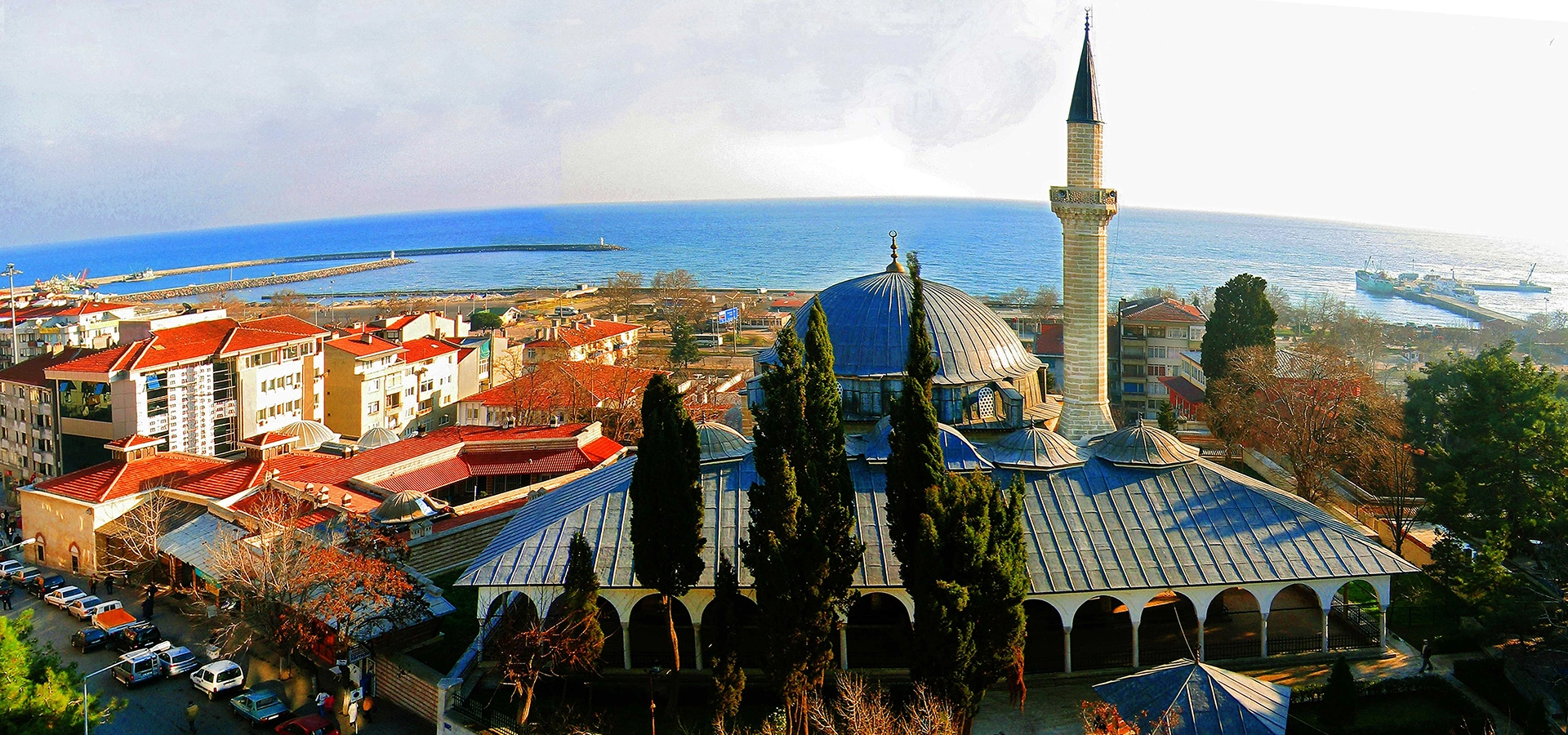
The Rüstem Pasha Mosque stands in the historic centre of Tekirdağ and is one of the city's most important surviving monuments from the classical Ottoman period. Commissioned by Grand Vizier Rüstem Pasha, son-in-law of Sultan Süleyman the Magnificent, the mosque is traditionally attributed to the great imperial architect Mimar Sinan.
Official Turkish cultural sources date the mosque to 1553–1554. Built of finely cut stone and crowned by a single dome, the building combines the disciplined proportions of sixteenth-century Ottoman architecture with refined details such as its walnut entrance door with ivory inlay, geometric decoration and a single-balcony minaret.
The mosque originally formed part of a much larger külliye, or charitable complex, associated with facilities such as a medrese, imaret, caravanserai, bath, library and commercial buildings. Much of that wider complex has disappeared, but the mosque and the impressive six-domed bedesten to its west remain important witnesses to Tekirdağ's Ottoman urban history.
Official sources date the construction of the mosque to the middle of the sixteenth century.
The mosque is attributed to the chief architect of the Ottoman classical age.
The complex was commissioned by the powerful grand vizier and son-in-law of Sultan Süleyman I.
The surviving covered market beside the mosque preserves the commercial character of the original complex.
Essential information about one of Tekirdağ's finest Ottoman monuments.
Ertuğrul Mahallesi, Mimar Sinan Caddesi, in central Süleymanpaşa, Tekirdağ.
Open Rüstem Pasha Mosque on Google MapsClassical Ottoman period, with official sources dating the mosque to 1553–1554.
Traditionally and officially attributed to Mimar Sinan, chief architect of the Ottoman Empire.
Grand Vizier Rüstem Pasha, one of the most influential statesmen of Sultan Süleyman the Magnificent's reign.
The story of the mosque connects Tekirdağ with the political power, architecture and charitable foundations of the Ottoman classical age.
The mosque was commissioned by Rüstem Pasha, one of the most powerful grand viziers of the sixteenth century and the husband of Mihrimah Sultan, daughter of Sultan Süleyman the Magnificent and Hürrem Sultan.
Official Tekirdağ tourism sources date the mosque to 1553, while the Türkiye Cultural Portal records 1554. For visitors, the safest way to understand the monument is as a work of the mid-1550s, created during the mature classical phase of Ottoman architecture.
The mosque is attributed to Mimar Sinan, whose long career transformed the architectural language of the Ottoman Empire. Although the Tekirdağ mosque is more modest than Sinan's great imperial mosques in Istanbul and Edirne, it reflects the same concern for proportion, clarity and integration with the surrounding urban environment.
Rüstem Pasha's foundation was not limited to a place of worship. It formed part of a wider külliye that supported religious, educational, charitable and commercial life. Sources associate the complex with a medrese, imaret, caravanserai and other buildings, while the surviving bedesten shows how trade helped support the life of the foundation.
The mosque continued to serve Tekirdağ through later centuries. During the reign of Sultan Abdülmecid, it underwent repair, and the marble şadırvan in the courtyard belongs to this later phase of Ottoman patronage.
The mosque is valuable not only as a work of architecture, but also as part of an Ottoman urban complex connecting worship, charity, education and commerce.
The mosque was commissioned by Rüstem Pasha, one of the leading political figures of the reign of Sultan Süleyman I.
Official cultural sources identify the mosque as a work of Mimar Sinan, the most celebrated architect of the classical Ottoman period.
The mosque uses a restrained architectural language built around a domed prayer hall, stone masonry, balanced openings and a single minaret.
One of the most distinctive details mentioned by official sources is the entrance door, made of walnut and decorated with ivory inlay.
The covered market west of the mosque is the most important surviving commercial element of the Rüstem Pasha complex.
The courtyard fountain belongs to a later Ottoman phase and was commissioned during the reign of Sultan Abdülmecid.
Historical sources associate the foundation with religious, educational, charitable and commercial buildings around the mosque.
The complex is one of the clearest surviving reminders of Tekirdağ's importance as an Ottoman port and regional urban centre on the Sea of Marmara.
Rüstem Pasha was one of the most influential Ottoman statesmen of the sixteenth century. Rising through the imperial administrative system, he became grand vizier under Sultan Süleyman the Magnificent and married the sultan's daughter, Mihrimah Sultan.
Rüstem Pasha served at the highest level of Ottoman government and became one of the central political figures of Süleyman's reign.
His marriage to Mihrimah Sultan linked him directly to the Ottoman dynasty and strengthened his political position.
Rüstem Pasha sponsored mosques, commercial buildings and charitable foundations in several parts of the empire.
His name survives in monuments from Istanbul to Tekirdağ, many of them associated with the architectural circle of Mimar Sinan.
The Tekirdağ complex demonstrates how leading Ottoman officials used architectural patronage to support worship, public services and urban commerce while also creating a lasting public legacy.
The mosque is officially identified as a work of Mimar Sinan, the chief architect whose buildings define the mature classical style of the Ottoman Empire.
Sinan's most famous monuments are monumental imperial foundations such as the Süleymaniye Mosque in Istanbul and the Selimiye Mosque in Edirne. Tekirdağ's Rüstem Pasha Mosque operates at a different scale, but it is valuable precisely because it shows how the architectural language of the period could be adapted to a provincial port city.
The building is organized around a compact domed prayer hall with a strong sense of balance and proportion.
Finely cut stone gives the exterior the durable and disciplined appearance associated with major Ottoman religious buildings.
The mosque was conceived within a larger foundation that connected religious life with education, charity and commerce.
Unlike Sinan's great imperial mosques, the Tekirdağ monument offers visitors a more intimate encounter with sixteenth-century Ottoman architecture.
Rüstem Pasha Mosque is built primarily of cut stone and presents a compact, dignified exterior. Its architecture is relatively restrained, allowing proportion, masonry and carefully executed details to create the visual impact.
Visitors accustomed to the richly tiled Rüstem Pasha Mosque in Istanbul should remember that Tekirdağ's monument has a very different character. Its appeal lies in architectural clarity, local urban context and the survival of elements from the wider complex.
The mosque's entrance is one of its most frequently noted artistic features. Official cultural information describes the main door as walnut wood decorated with ivory inlay.
The use of walnut gives the entrance a rich surface and connects the building with the sophisticated woodworking traditions of Ottoman architecture.
Ivory details add refinement to a doorway that otherwise belongs to the mosque's restrained architectural composition.
Door and window elements use geometric ornament characteristic of Ottoman decorative design.
The fine joinery provides an important counterpoint to the large-scale simplicity of stone walls and dome.
In Ottoman cities, major mosques frequently formed the centre of a külliye: a group of buildings established through a charitable foundation and designed to serve different needs of urban society.
The Rüstem Pasha foundation in Tekirdağ is associated with a mosque, medrese, imaret, caravanserai, bath, library and bedesten. Historical architectural texts do not necessarily attribute every component to Sinan, suggesting that parts of the complex may have been added or altered at different times.
The spiritual centre of the foundation and the most important surviving monument of the complex.
An educational building traditionally associated with the foundation, though it has not survived intact.
A charitable kitchen or food-distribution function reflects the social-service role of Ottoman religious foundations.
Lodging for merchants and travelers would have linked the complex directly with Tekirdağ's commercial life and regional roads.
Sources record additional facilities on the eastern side of the complex, though these have been lost or survive only in altered condition.
The six-domed covered market west of the mosque remains the most visible commercial element of the historic foundation.
Immediately west of the mosque stands the Rüstem Pasha Bedesten, an important surviving element of the complex. A bedesten was a secure covered market used for valuable goods and formed an important part of the commercial life of many Ottoman towns.
Official heritage information describes the Tekirdağ bedesten as a rectangular building measuring approximately 25.5 × 19 metres, supported internally by two substantial piers and covered by six domes.
The roof is divided into six domed bays, creating the building's distinctive silhouette.
Two major interior supports help carry the domed roof system.
The building reflects the close connection between religious foundations and income-producing commercial property.
The bedesten was restored by the General Directorate for Foundations in the twentieth century and continues to form part of central Tekirdağ's urban fabric.
The survival of both mosque and market makes the site especially valuable. Visitors can still understand that the original foundation was designed as part of a living city rather than as an isolated religious monument.
The courtyard contains a graceful marble şadırvan, or ablution fountain. Official sources associate it with repairs carried out during the reign of Sultan Abdülmecid in the nineteenth century.
The fountain is a useful reminder that historic monuments are rarely frozen in a single moment. The Rüstem Pasha Mosque remained an active place of worship for centuries and was repaired, maintained and adapted by later generations.
Tekirdağ's position on the northern coast of the Sea of Marmara made it an important regional port and stopping point on routes between Istanbul, Thrace and the Balkans.
A complex combining a mosque, market, educational buildings, hospitality and charitable services made practical sense in such a city. Merchants, travelers, local residents, officials and religious communities all moved through the same urban spaces.
Tekirdağ's maritime setting connected the town with Istanbul and other ports around the Sea of Marmara.
The bedesten and other commercial facilities reflect the economic life surrounding the religious foundation.
The association with a caravanserai shows the importance of accommodating people and goods moving through the city.
Today the mosque remains a central landmark linking modern Tekirdağ with its Ottoman past.
Rüstem Pasha Mosque is located in central Süleymanpaşa and is easy to include in a walking route through Tekirdağ's historic centre.
The mosque itself is compact, but the surviving bedesten, surrounding streets and nearby historic attractions make it worth allowing more than a very quick stop.
Allow around 20–30 minutes to see the mosque exterior, courtyard, prayer hall and principal architectural details.
Allow 30–45 minutes if you want to study the entrance, dome, minaret, stonework and şadırvan carefully.
Allow around 45–60 minutes to explore the mosque together with the surviving covered market and immediate surroundings.
Set aside half a day to combine the mosque with the Rákóczi Museum, Namık Kemal House, historic streets and the waterfront.
Non-Muslim visitors should plan around the daily prayer schedule and avoid entering during congregational worship.
Shoulders and knees should be covered. Women may be asked to cover their hair inside the prayer hall.
Shoes should be removed before stepping onto the carpeted prayer area.
Do not miss the walnut door, ivory inlay and geometric decoration mentioned in official descriptions of the mosque.
The stone façades, dome and minaret are easier to understand when viewed from several angles.
The six-domed covered market is essential for understanding the mosque as part of a larger Ottoman urban complex.
The marble courtyard fountain represents the nineteenth-century history of repair and continued use of the mosque.
The nearby Hungarian memorial house adds a completely different but equally important layer to Tekirdağ's historical story.
The mosque stands in central Tekirdağ, making it easy to combine with several of the city's most interesting cultural and historic attractions.
Explore the wider city, Marmara waterfront, museums, Ottoman monuments, historic streets and regional food culture.
Visit the Tekirdağ home associated with Ferenc II Rákóczi and discover the remarkable history of the Hungarian exile community of Rodostó.
See archaeological finds and ethnographic material that reveal the much longer history of Tekirdağ and eastern Thrace.
Discover the memorial house dedicated to the influential Ottoman writer, poet and intellectual Namık Kemal.
Explore older neighbourhoods where traditional houses, religious buildings and traces of the city's layered urban history survive.
Walk downhill toward the sea to experience the port landscape that shaped Tekirdağ's history and commercial life.
Central Tekirdağ is also a good place to discover some of the province's best-known regional foods. A mosque and heritage walk can easily be combined with lunch, dessert or a local specialty.
Try the city's famous grilled meatballs, one of the most recognizable regional specialties in Turkish cuisine.
Discover a distinctive local dessert prepared with fresh unsalted cheese, flour and sugar.
Explore a traditional fermented cereal drink associated with Tekirdağ's Thracian food culture.
Continue to our Tekirdağ guide for more regional foods, attractions and travel ideas across the province.
Rüstem Pasha Mosque is a sixteenth-century Ottoman mosque in central Tekirdağ commissioned by Grand Vizier Rüstem Pasha and attributed to Mimar Sinan.
It is located in Ertuğrul Mahallesi on Mimar Sinan Caddesi in the central Süleymanpaşa district of Tekirdağ.
Official sources differ slightly, giving 1553 and 1554. The mosque therefore dates to the middle of the sixteenth century.
The mosque was commissioned by Grand Vizier Rüstem Pasha, an important Ottoman statesman and the husband of Mihrimah Sultan.
Yes. Official Turkish cultural and tourism sources attribute the Tekirdağ Rüstem Pasha Mosque to Mimar Sinan.
No. The best-known Rüstem Pasha Mosque in Istanbul is famous for its İznik tiles. Tekirdağ has a separate Rüstem Pasha foundation with its own mosque and surviving bedesten.
Rüstem Pasha was a powerful sixteenth-century Ottoman grand vizier and the son-in-law of Sultan Süleyman the Magnificent through his marriage to Mihrimah Sultan.
Official descriptions note a walnut entrance door decorated with ivory inlay, together with geometric ornament on wooden architectural elements.
The mosque was constructed primarily from finely cut stone, giving the exterior its strong and restrained classical Ottoman appearance.
The bedesten is the historic covered market west of the mosque. It has a rectangular plan and is roofed with six domes.
Yes. Historical sources associate the Rüstem Pasha foundation with a wider külliye containing religious, educational, charitable, lodging and commercial functions.
Many of the original or later associated structures have disappeared or survive only in altered condition. The mosque and six-domed bedesten are the most important surviving elements.
Official cultural information records restoration by the General Directorate for Foundations in the twentieth century.
It is a marble şadırvan associated with nineteenth-century repairs during the reign of Sultan Abdülmecid. Official descriptions note its circular form and five columns.
Yes. It remains a functioning mosque, so sightseeing should always be planned respectfully around prayer times.
Generally yes, outside prayer times and subject to local conditions. Visitors should dress modestly, remove their shoes and respect worshippers.
Active mosques in Türkiye are normally entered without a sightseeing ticket. Local access arrangements can change, so follow any information posted at the site.
Around 20–45 minutes is suitable for the mosque itself. Allow closer to an hour if you also want to explore the bedesten and surrounding streets.
Yes, especially for travelers interested in Mimar Sinan, Ottoman architecture, historic mosques and the urban history of Tekirdağ.
Combine the mosque with Rákóczi Museum House, Tekirdağ Archaeology and Ethnography Museum, Namık Kemal House, the historic centre and the Marmara waterfront.
The mosque, courtyard, minaret, bedesten and surrounding historic streets offer excellent opportunities for architectural photography. Because the building is still an active place of worship, interior photography should always remain discreet and respectful.
Step back to include the dome, stone walls and minaret in a single composition.
The walnut door, ivory inlay and geometric ornament provide some of the site's best close-up subjects.
Use the marble fountain as a foreground element to place the mosque within its later Ottoman setting.
The six-domed covered market helps tell the larger story of the Rüstem Pasha complex beyond the mosque itself.
If photography is permitted, avoid flash, avoid photographing people at prayer and never interrupt worship.
Wider street views help show how the monument remains embedded in the everyday fabric of central Tekirdağ.
Rules can change during prayers, religious holidays or special events. If you are unsure whether interior photography is appropriate, ask before taking photographs.
Rüstem Pasha Mosque can be included in a private cultural route through Tekirdağ, Edirne, Gallipoli, Troy and the wider heritage landscapes of western Türkiye.
Tell us your interests and we can design a private route focused on Ottoman architecture, Mimar Sinan, Hungarian heritage, local museums, regional food and the Marmara coast.
Ask us about a tailor-made visit combining Rüstem Pasha Mosque, Rákóczi Museum House, Tekirdağ's museums, historic neighbourhoods, local cuisine and the Marmara waterfront.
Request a Custom Tour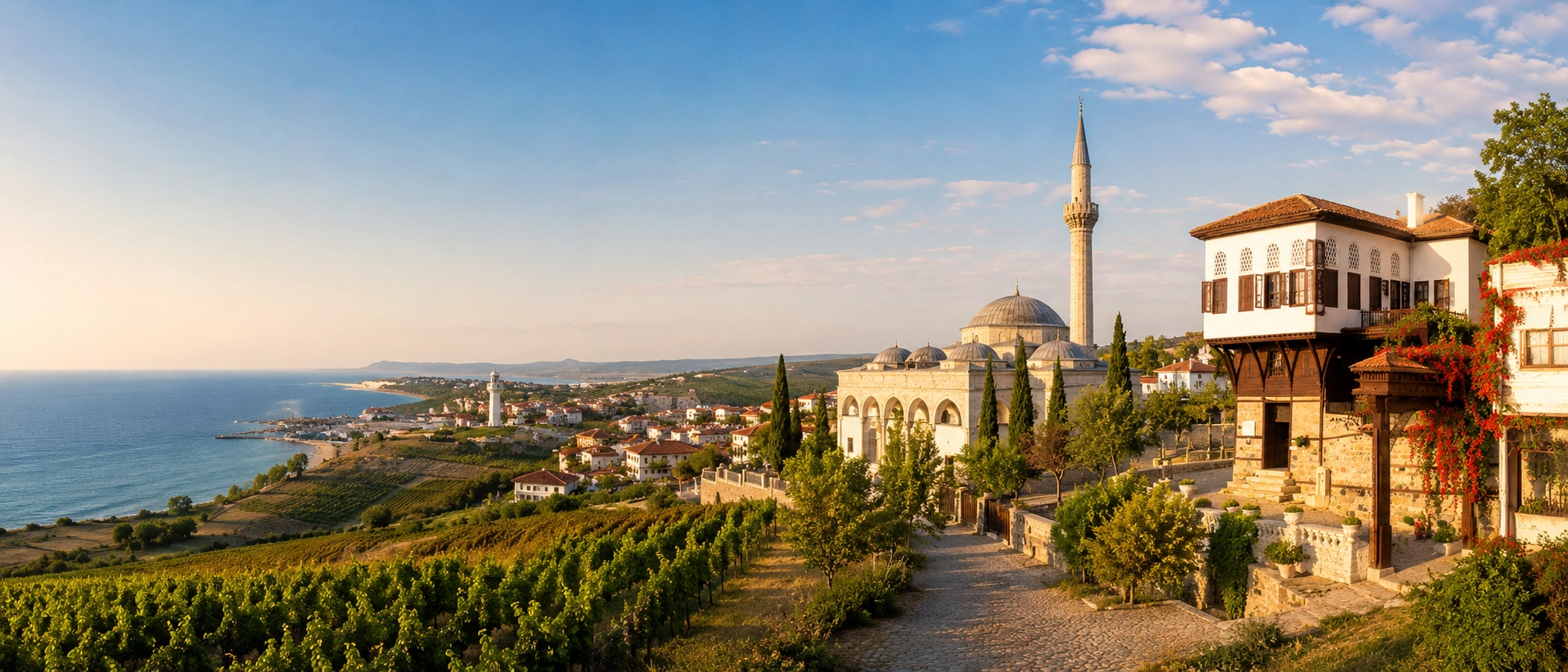
Continue planning your journey with our Tekirdağ guide covering historic attractions, regional foods, the Marmara coastline and places to visit across the province.
View Tekirdağ GuideTekirdağ sits naturally between Istanbul, Edirne and the Dardanelles, making Rüstem Pasha Mosque an excellent addition to a broader historical route through Thrace and western Türkiye.
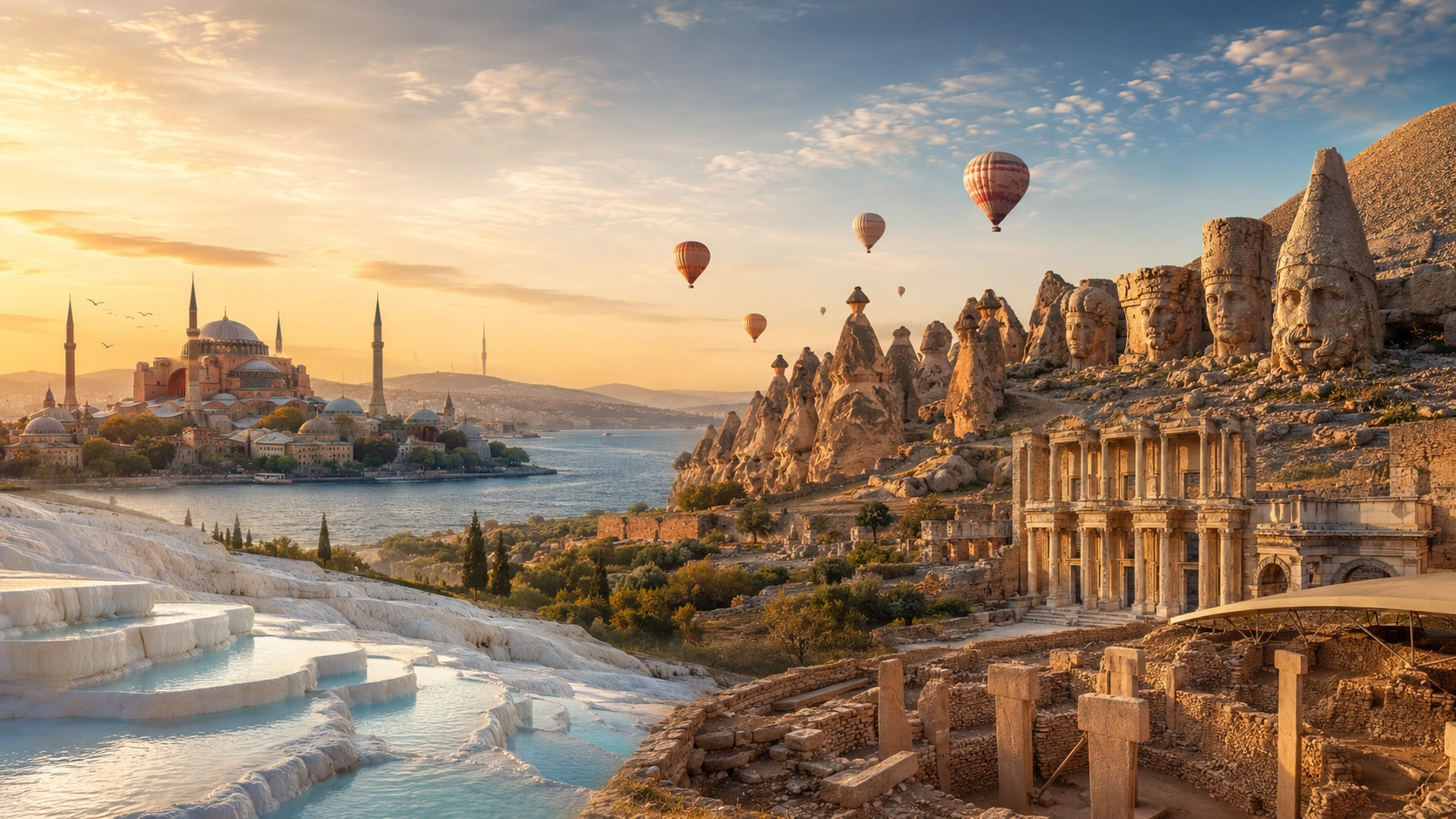
Explore a broad route through Türkiye's historic landscapes, combining major archaeological sites, Ottoman cities, cultural regions and exceptional heritage destinations.
View Tour
Create a private itinerary linking Istanbul with Tekirdağ and Edirne, with the option to continue toward Gallipoli, Troy and the northern Aegean.
Plan Your Route