A triangular fold
Small squares are closed diagonally around the filling.






Hıngel is a handmade dumpling with a thin wheat dough folded around seasoned potato or minced meat. Its Sivas version is boiled and commonly served with buttery sauce and, depending on the filling, garlic yoghurt.
Small squares are closed diagonally around the filling
Mash, onion and pepper make a particularly common meat-free filling
The provincial source links a mince-filled version with the name yapma sübüra
The classic local recipe uses egg in the pasta dough
Its place in Sivas cuisine and the defining preparation details.
Sivas province, Türkiye
Regional food
Knead flour, eggs, water and salt into a smooth, fairly firm dough.
No confirmed registration claimed for this specific dish
Sivas hıngel is closely related to Anatolian filled-dough traditions, but the provincial recipe gives a clear local method: a firm dough made with flour, water, egg and salt is rolled to approximately 1 mm, cut into small squares and closed into triangular parcels.
Potato filling is common and is made from boiled mashed potatoes, chopped onion and spices. The province also records a minced-meat filling; in local terminology this is associated with yapma sübüra. That distinction helps prevent hıngel from being confused with unfilled sübüra, made from much smaller dough squares.
The finishing sauces change with the filling. The provincial account allows potato hıngel without yoghurt, but describes garlic yoghurt as an accompaniment to the minced-meat form. The dumplings are boiled rather than baked, and their folded edges should remain intact.
Small squares are closed diagonally around the filling.
Mash, onion and pepper make a particularly common meat-free filling.
The provincial source links a mince-filled version with the name yapma sübüra.
The classic local recipe uses egg in the pasta dough.
More typical with the minced-meat version, although family habits vary.
These are ingredients documented in the local culinary sources or used in the explained traditional method. Amounts are included only where the available source specifies them; household quantities vary.
Wheat flour, sufficient for a firm dough
2 eggs and 1 glass water in the local dough example
Salt
3 boiled potatoes for a potato filling
1 finely chopped onion, red pepper and black pepper
Butter for finishing
Yoghurt and garlic where serving with a yoghurt topping
A fine sheet of egg dough can be folded diagonally without making a thick, chewy seam. The filling should be dry enough not to wet the edges; pressing the triangle firmly reduces the risk that the potato or meat escapes during boiling.
The provincial potato version uses cooked mashed potato, finely chopped onion and pepper. The mince-filled version belongs to a related local naming tradition and is commonly paired with garlic yoghurt. Those differences matter when describing a vegetarian option.
A good choice for travelers avoiding meat; confirm the final sauce and butter separately.
Usually paired with garlic yoghurt and red-pepper butter.
Ordinary sübüra consists of tiny unfilled square pasta pieces rather than filled triangular parcels.
Bring hıngel to the table freshly drained with warm butter. Garlic yoghurt contributes acidity and creaminess, while pepper butter adds aroma. A plate should reveal the folded triangular shape rather than a collection of large dough balls.
Every small square must be filled and folded by hand. The result is best served straight after draining, with warm butter that gathers in the folds and a little tangy yoghurt if the filling calls for it.
Roll dough thinly but not so thin that it splits at the filled edges.
Boil gently enough to preserve the folds.
Ask local restaurants, bakers or specialist food shops for Hıngel. Availability depends on the dish and preparation schedule; slow-cooked, preserved and festival foods are not necessarily offered every day. For historical context and other Sivas places, browse our Sivas food and craft guide.
Typically triangular, folded from small squares.
Yes, a potato-filled version can be meat-free, although butter or yoghurt is often added.
No. Sübüra is typically tiny, unfilled dough squares.
The traditional recipe describes boiling the dumplings.
The Sivas Provincial Directorate of Culture and Tourism publishes a documented introduction to Hıngel or the relevant Sivas culinary tradition, linked in the sources below.
This guide draws on the provincial Culture and Tourism Directorate’s culinary documentation and, where the product is registered, TÜRKPATENT’s official geographical-indication register. Historical traditions are identified as local culinary accounts, not dated archaeological proofs.
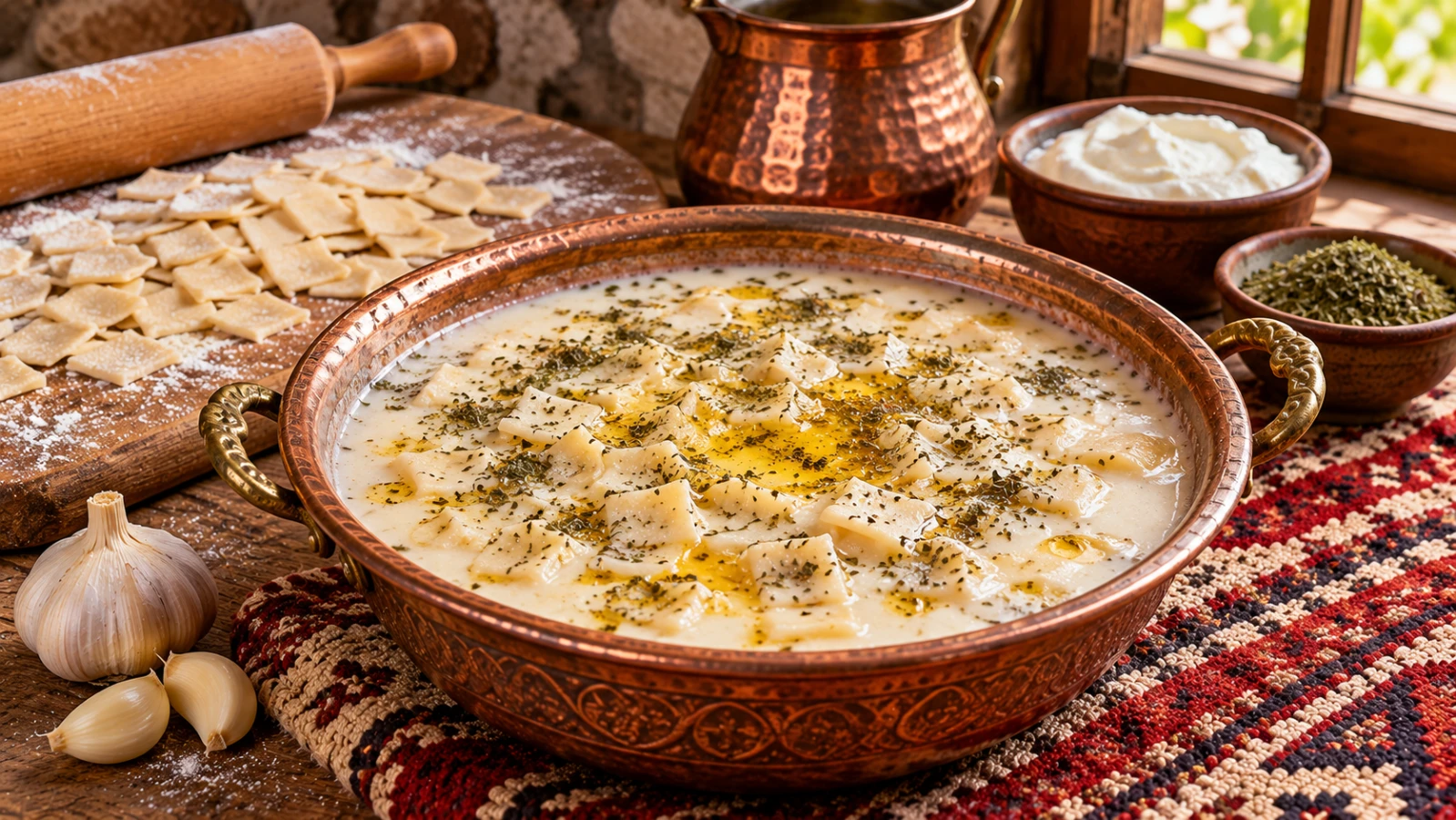
Sübüra is a traditional Sivas dough dish made from exceptionally small squares of egg-and-flour pasta. The boiled pieces are usually dressed with garlic yoghurt and red-pepper butter.
Read Food Guide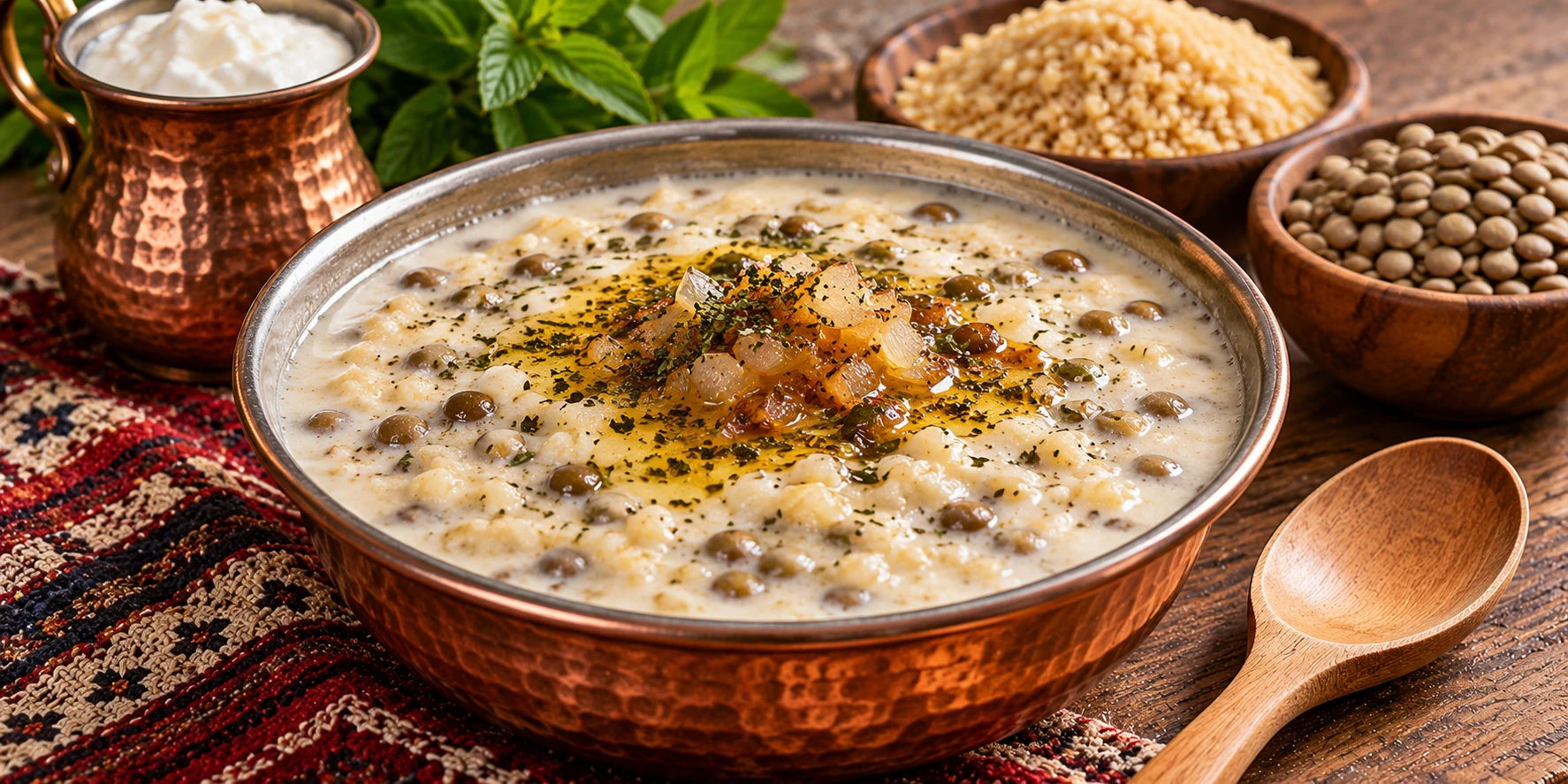
Peskütan Çorbası is a characteristic Sivas soup based on locally prepared peskütan, diluted to an ayran-like consistency and cooked with wheat and green lentils. Onion, mint and butter complete the dish.
Read Food Guide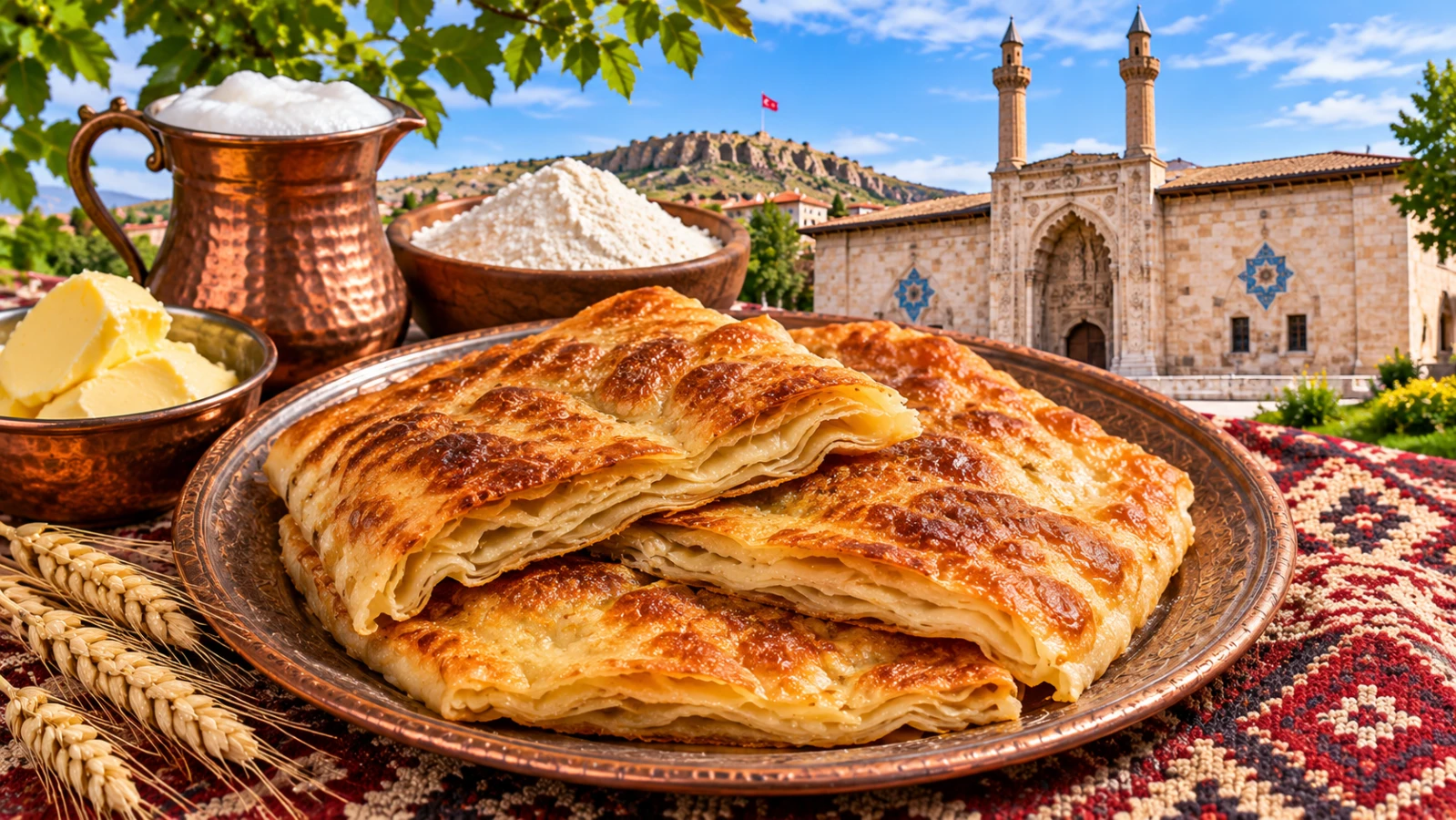
Sivas Katmeri is a savoury, butter-layered pastry associated with local ovens and breakfast tables. Its crisp surface and separated inner layers are created by repeated oiling, folding and shaping of dough.
Read Food Guide