Peskütan rather than fresh yoghurt
The base is a preserved concentrated dairy product.






Peskütan Çorbası is a characteristic Sivas soup based on locally prepared peskütan, diluted to an ayran-like consistency and cooked with wheat and green lentils. Onion, mint and butter complete the dish.
The base is a preserved concentrated dairy product
Cracked wheat and green lentils are both integral to the local soup
Continuous stirring helps maintain a smooth sour-dairy soup
Butter, softened onion and dried mint are added separately
Its place in Sivas cuisine and the defining preparation details.
Sivas province, Türkiye
Regional food
Dilute the peskütan gradually in cold water until it is similar to ayran.
No confirmed registration claimed for this specific dish
Peskütan is a concentrated, preserved dairy ingredient associated with winter provisions in Sivas. In the provincial account, the base is diluted with water to resemble ayran before it is cooked. This sour dairy character distinguishes the soup from plain lentil or grain soups.
The traditional method combines çekilmiş yarma, or broken wheat, green lentils and the loosened peskütan. Some households use a small amount of bone-in meat. The soup is stirred carefully as it heats so the dairy does not split or boil over.
Sivas sources mention a useful older kitchen measure: a small piece of bread crust can be added during cooking in an effort to prevent splitting. A separate soharıç, or buttery topping, is prepared with onion and dried mint, adding sweetness and fragrance to the sour base.
The base is a preserved concentrated dairy product.
Cracked wheat and green lentils are both integral to the local soup.
Continuous stirring helps maintain a smooth sour-dairy soup.
Butter, softened onion and dried mint are added separately.
Saltiness depends on the peskütan itself.
These are ingredients documented in the local culinary sources or used in the explained traditional method. Amounts are included only where the available source specifies them; household quantities vary.
Peskütan, diluted with cold water until pourable
Cracked wheat or çekilmiş yarma
Green lentils
Optional small pieces of bone-in meat
Butter or clarified butter
1 onion, finely chopped
Dried mint
Salt only after tasting the peskütan
Diluting peskütan in cold water before heating lets it distribute throughout the pot. Thick dairy put directly into boiling liquid is more likely to form lumps or split. Frequent stirring keeps the cracked wheat from settling on the bottom.
The base soup is sour and grainy. The topping is made independently: chopped onion browns in fat, then dried mint is added. Pouring this warm soharıç over the finished bowls gives fragrance without boiling the mint for the entire cooking time.
Some traditional preparations enrich the pot with small meaty bones.
Omit the bone-in meat and keep the dairy, wheat, lentils and onion-mint topping.
The preserved dairy ingredient affects the final level of tanginess.
Serve steaming but not aggressively boiling, so the dairy stays smooth. This is a substantial soup with wheat and lentils, and it is particularly associated with the hearty food of Sivas households.
Peskütan may already be preserved with salt, and the provincial recipe explicitly warns against automatic extra salting. A cook should finish the soup, taste, then season rather than copying the salt quantity of a fresh-yoghurt soup.
Do not add a full amount of salt until you have tasted the diluted peskütan.
The soup contains dairy and wheat; a meat-free version still is not vegan.
Ask local restaurants, bakers or specialist food shops for Peskütan Soup. Availability depends on the dish and preparation schedule; slow-cooked, preserved and festival foods are not necessarily offered every day. For historical context and other Sivas places, browse our Sivas food and craft guide.
A concentrated preserved dairy ingredient used in Sivas cooking.
The peskütan contributes a sour fermented-dairy flavour.
Yes, cracked wheat or yarma is a typical ingredient.
The dairy base can separate or catch as it heats.
The Sivas Provincial Directorate of Culture and Tourism publishes a documented introduction to Peskütan Soup or the relevant Sivas culinary tradition, linked in the sources below.
This guide draws on the provincial Culture and Tourism Directorate’s culinary documentation and, where the product is registered, TÜRKPATENT’s official geographical-indication register. Historical traditions are identified as local culinary accounts, not dated archaeological proofs.
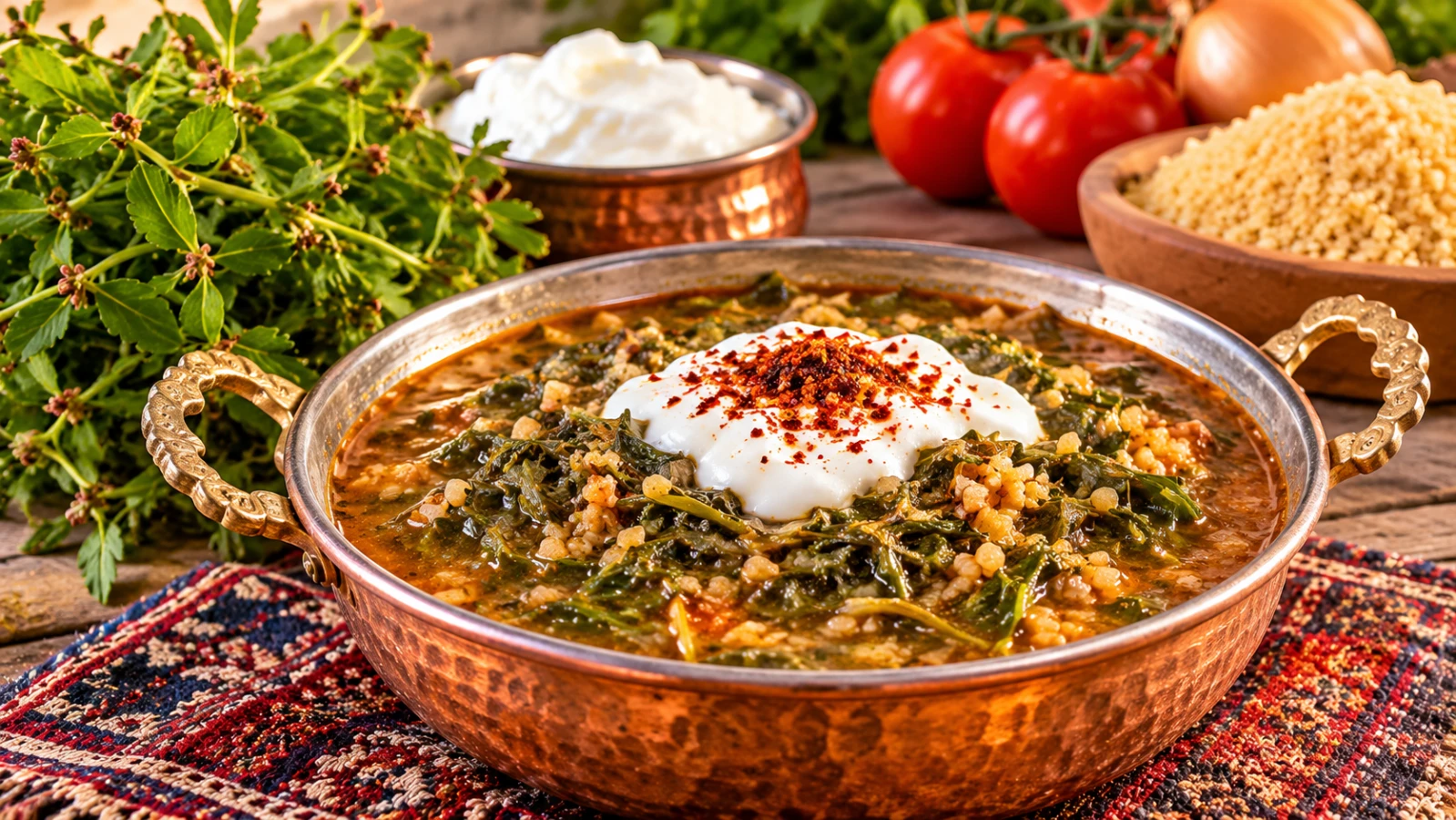
Madımak Aşı is a seasonal dish prepared from young madımak leaves, a wild edible green collected in the Sivas countryside. Bulgur, onion, butter and sometimes pastırma or çemen build the cooked flavour.
Read Food Guide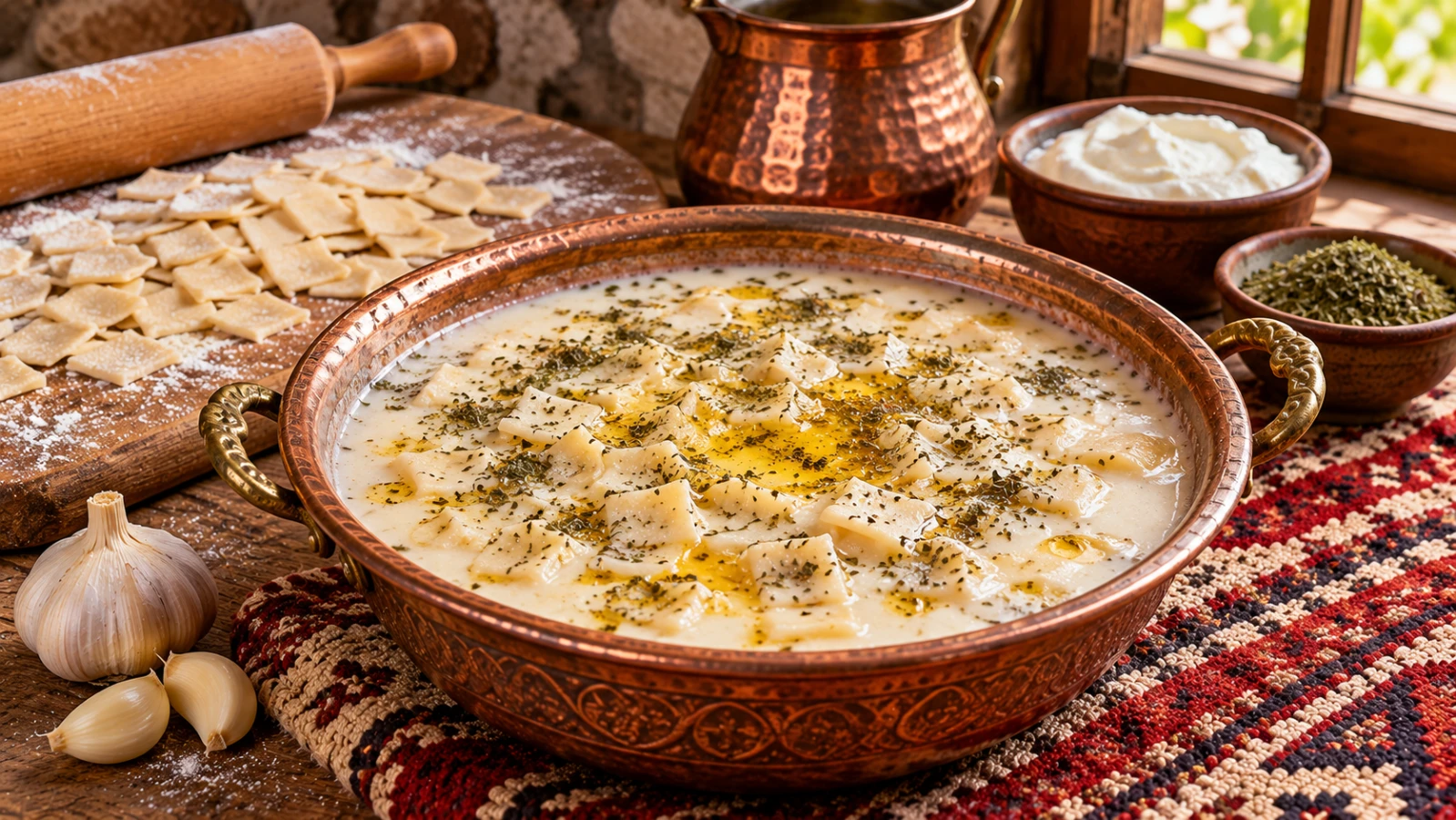
Sübüra is a traditional Sivas dough dish made from exceptionally small squares of egg-and-flour pasta. The boiled pieces are usually dressed with garlic yoghurt and red-pepper butter.
Read Food Guide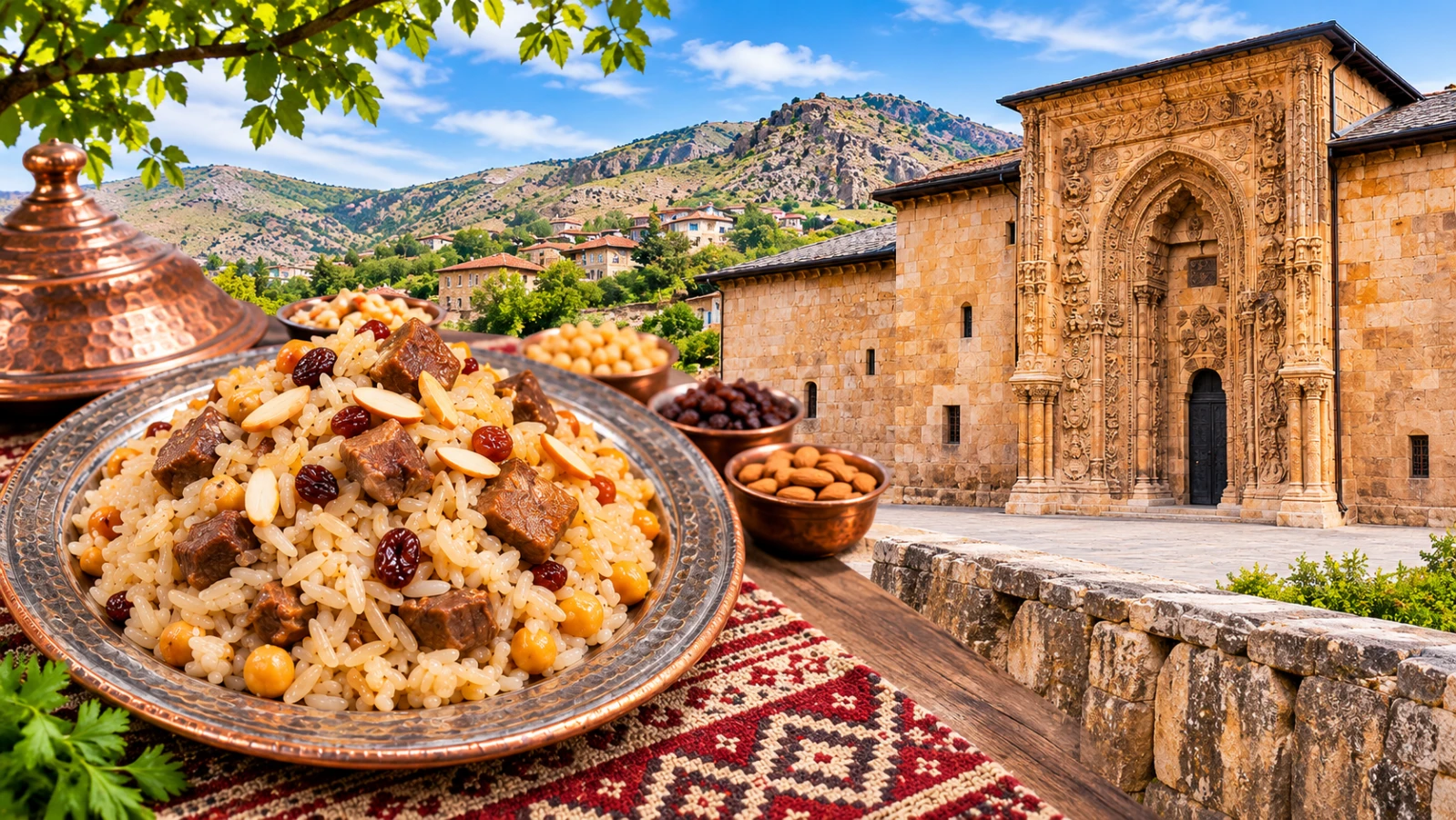
Divriği Pilavı, also called Alatlı Pilavı, is a layered rice dish associated with celebrations in Divriği. Cooked meat, chickpeas, dried grapes and carefully measured warm spices transform pilaf into an occasion dish.
Read Food Guide