Wild spring green
Madımak is a gathered leafy plant rather than a standard cultivated vegetable.






Madımak Aşı is a seasonal dish prepared from young madımak leaves, a wild edible green collected in the Sivas countryside. Bulgur, onion, butter and sometimes pastırma or çemen build the cooked flavour.
Madımak is a gathered leafy plant rather than a standard cultivated vegetable
The grain gives body and changes the dish’s final texture
Both appear as flavouring options in Sivas recipes
The same preparation can be called madımak soup, meal or pilaf depending on liquid and grain
Its place in Sivas cuisine and the defining preparation details.
Sivas province, Türkiye
Regional food
Use correctly identified edible madımak from a safe food source; wash it very carefully.
No confirmed registration claimed for this specific dish
Madımak belongs to a well-established wild-plant gathering tradition on the Central Anatolian plateau. The edible shoots are collected when young and tender, cleaned thoroughly and chopped very finely before cooking. This work explains why madımak is an especially recognisable home-cooking dish.
Sivas recipes commonly combine chopped madımak with a butter-and-onion base, garlic, pastırma or çemen and a modest amount of coarse bulgur. Older village practice could add milk in the cooking liquid, while contemporary versions often contain tomato or pepper paste; these are documented alternatives, not a single timeless fixed recipe.
The provincial account distinguishes three outcomes by the ratio of liquid to bulgur: a more liquid madımak soup, a less watery madımak meal and a thicker bulgur-forward madımak pilaf. Each is related to the same harvested green but offers a different texture.
Madımak is a gathered leafy plant rather than a standard cultivated vegetable.
The grain gives body and changes the dish’s final texture.
Both appear as flavouring options in Sivas recipes.
The same preparation can be called madımak soup, meal or pilaf depending on liquid and grain.
The provincial source notes both older milk-enriched cooking and more recent tomato-paste use.
These are ingredients documented in the local culinary sources or used in the explained traditional method. Amounts are included only where the available source specifies them; household quantities vary.
Around 500 g carefully identified, cleaned young madımak greens
A small amount of coarse bulgur (the provincial recipe suggests half a tea glass)
Butter and chopped onions
Garlic
Pastırma, or çemen as a seasoning alternative
Pepper paste or tomato paste in modern variations
Water, salt and red pepper
Young madımak grows close to the soil, so careful sorting and washing are part of the actual work of cooking it. Mature stems are tougher than tender shoots. Foraging without reliable botanical identification is unsafe; a purchased culinary source is preferable.
Sivas cookbooks distinguish madımak çorbası from the less liquid madımak yemeği and from bulgur-heavy madımak pilavı. This is a useful way to read local menus: the name often describes how much grain and broth the cook chose to use.
A higher water ratio produces madımak çorbası.
Less liquid gives a soft, spoonable green dish.
A greater proportion of bulgur results in a thicker preparation.
Serve warm with bread or other simple accompaniments. Because a dish may include pastırma, çemen or meat, visitors seeking a vegetarian version should ask about the base before ordering.
Pastırma or a little çemen seasons the cooking fat before the chopped greens go in. It adds a savoury cured-meat or fenugreek note that is particularly characteristic of the winter use of dried madımak.
Avoid self-foraging unfamiliar plants; incorrect identification can be dangerous.
There is no credible basis to assign the recipe to a precise ancient century without documentary evidence.
Ask local restaurants, bakers or specialist food shops for Madımak Aşı. Availability depends on the dish and preparation schedule; slow-cooked, preserved and festival foods are not necessarily offered every day. For historical context and other Sivas places, browse our Sivas food and craft guide.
A wild edible leafy plant gathered and cooked in parts of Central Anatolia.
No. Many local versions include pastırma or a meat-based flavouring.
The amount of cooking liquid and bulgur changes the consistency.
Common preparations include bulgur, which contains wheat gluten.
The Sivas Provincial Directorate of Culture and Tourism publishes a documented introduction to Madımak Aşı or the relevant Sivas culinary tradition, linked in the sources below.
This guide draws on the provincial Culture and Tourism Directorate’s culinary documentation and, where the product is registered, TÜRKPATENT’s official geographical-indication register. Historical traditions are identified as local culinary accounts, not dated archaeological proofs.
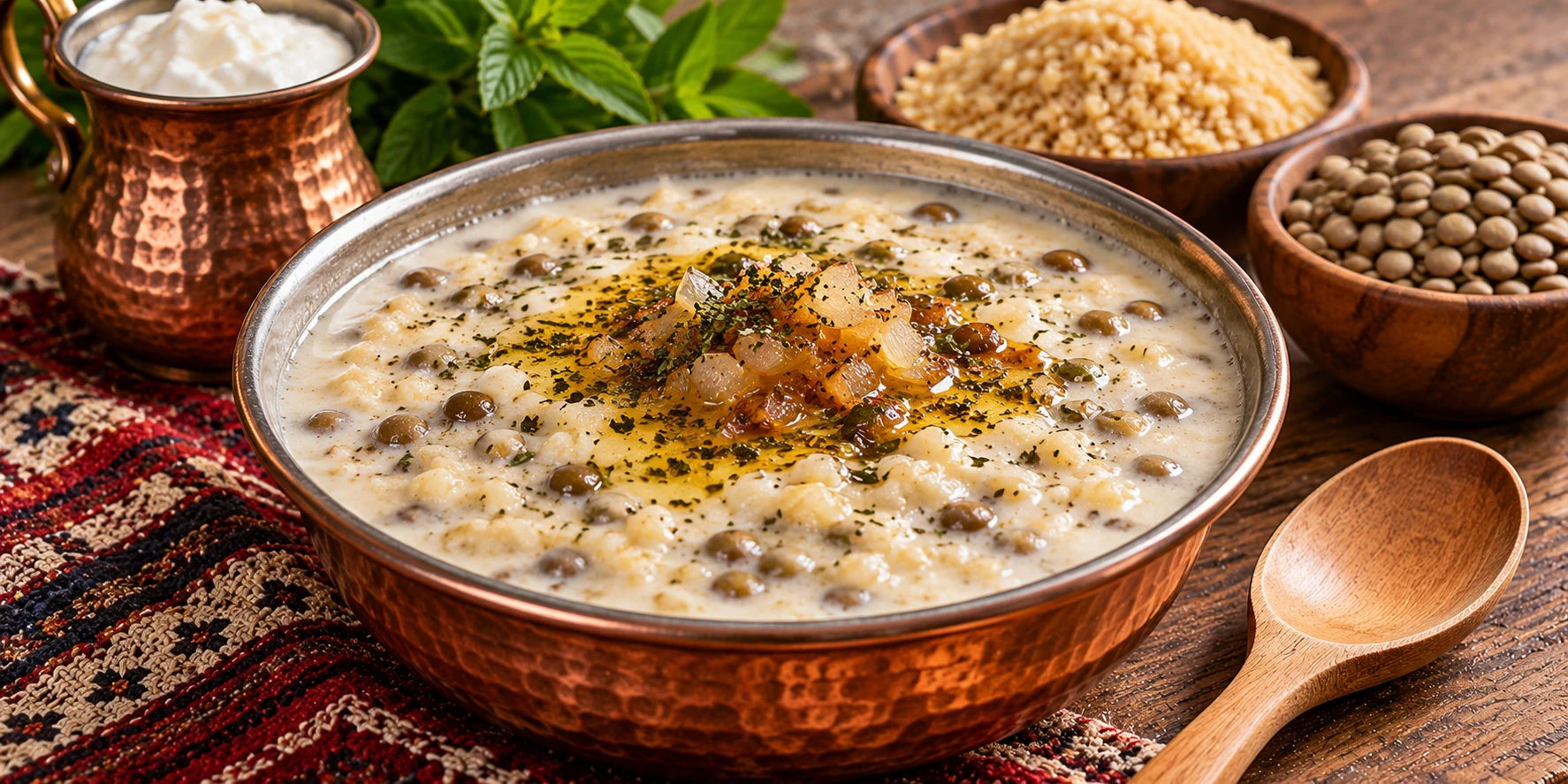
Peskütan Çorbası is a characteristic Sivas soup based on locally prepared peskütan, diluted to an ayran-like consistency and cooked with wheat and green lentils. Onion, mint and butter complete the dish.
Read Food Guide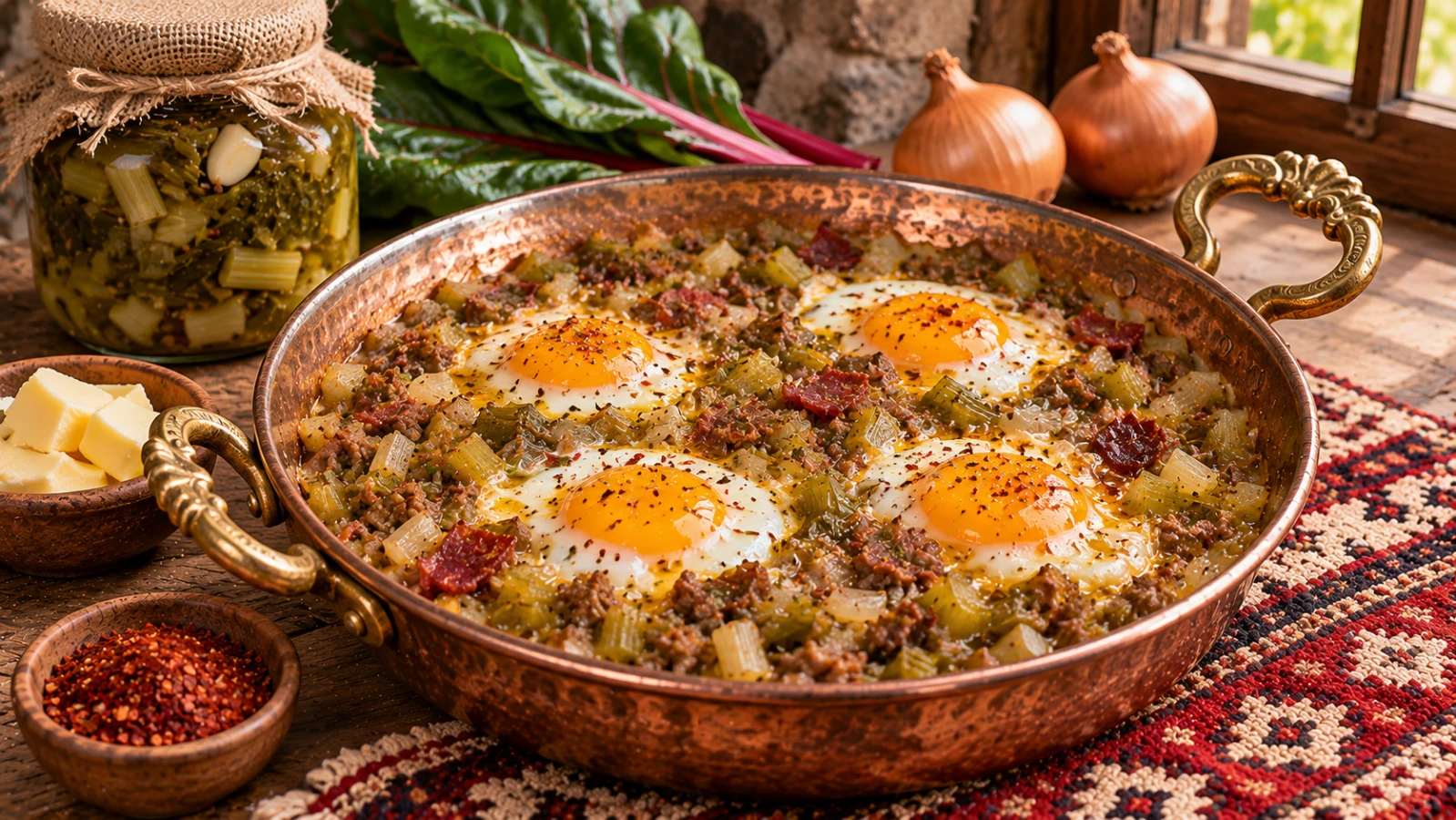
Turşu Mıhlaması is a distinctly Sivas winter dish made by sautéing chopped pezik pickle with onions, meat and pastırma, then cooking eggs directly over the mixture.
Read Food Guide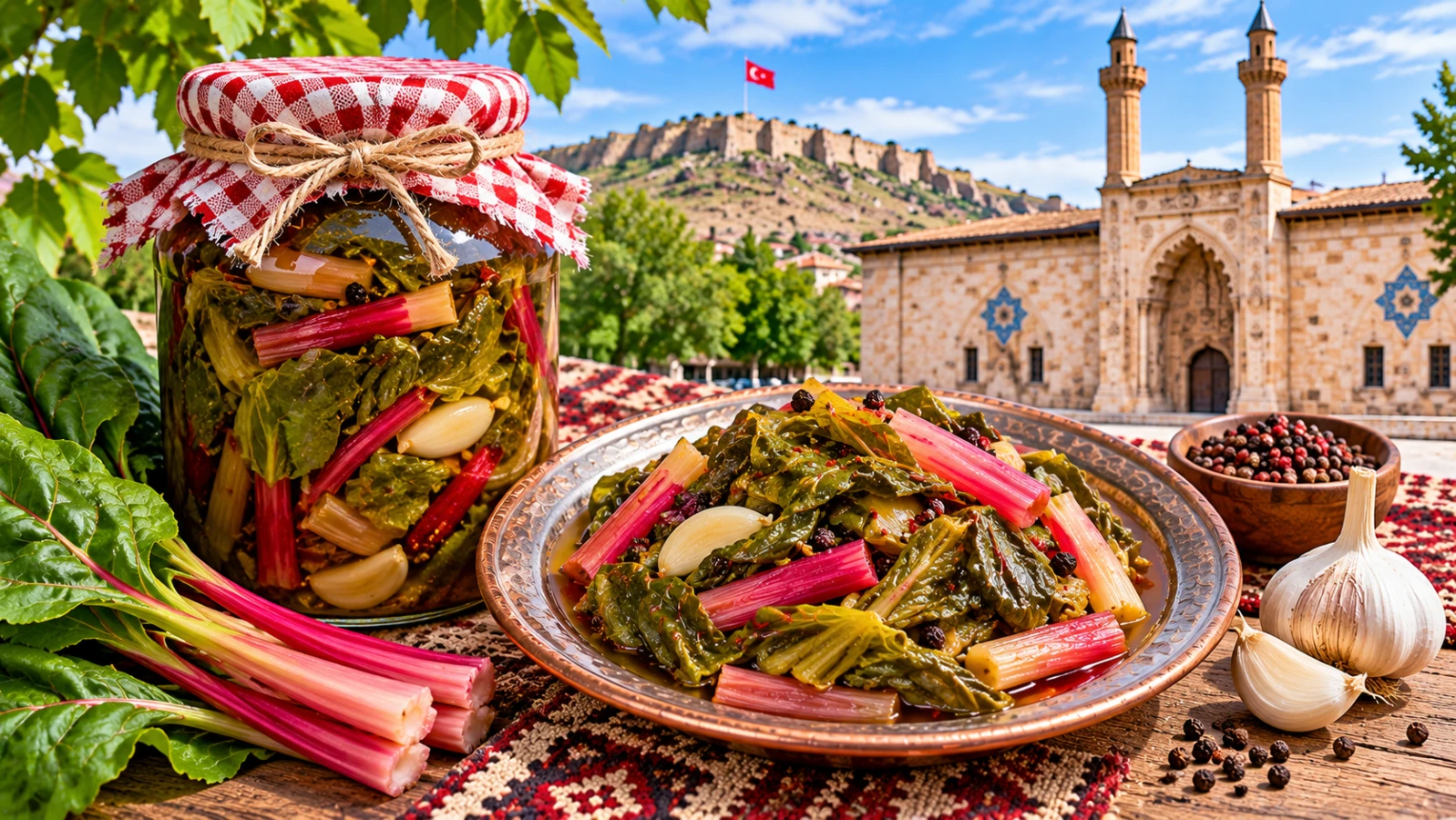
Sivas Pezik Turşusu is made from the stems of suitable beet and chard-type greens, briefly blanched before being preserved with garlic, salt, vinegar and other seasonings. It is a foundation of the city’s winter cooking.
Read Food Guide