Stems, not the root
The defining vegetable part is the long stalk.






Sivas Pezik Turşusu is made from the stems of suitable beet and chard-type greens, briefly blanched before being preserved with garlic, salt, vinegar and other seasonings. It is a foundation of the city’s winter cooking.
The defining vegetable part is the long stalk
A brief boil softens the stalks before pickling
Cooling helps preserve colour and a pleasant bite
Garlic, vinegar, lemon and rock salt give a sharp, aromatic profile
Its place in Sivas cuisine and the defining preparation details.
Sivas province, Türkiye
Regional food
Trim off the leaves and the tough root ends, retaining clean stalks.
Registered: Sivas Pezik Turşusu / Sivas Pezik Dal Turşusu (no. 492)
Pezik in this culinary context refers to the stems of appropriate beet-family greens rather than the root itself. The protected recipe specifically excludes sugar beet stalks. The stems are separated from their leaves and blanched so they remain recognisably firm after pickling.
The local registration recalls large cauldrons once set up in front of Sivas houses for seasonal batches. The vegetable stems are boiled briefly, then cooled immediately to prevent darkening. Fermentation and seasoning transform an autumn harvest into a winter food.
Sivas Pezik Turşusu, also registered under the longer name Sivas Pezik Dal Turşusu, was registered as a mahreç işareti on 12 March 2020, number 492. It is also used as the principal ingredient of Turşu Mıhlaması.
The defining vegetable part is the long stalk.
A brief boil softens the stalks before pickling.
Cooling helps preserve colour and a pleasant bite.
Garlic, vinegar, lemon and rock salt give a sharp, aromatic profile.
The pickle becomes the vegetable base of Sivas turşu mıhlaması.
The official TÜRKPATENT registration uses the product name Sivas Pezik Turşusu / Sivas Pezik Dal Turşusu. This status belongs to the defined local product and production specification, not to every vaguely similar dish.
Sivas Pezik Turşusu / Sivas Pezik Dal Turşusu
492
Mahreç işareti
12 March 2020
Read the official TÜRKPATENT record for the detailed specification and current register.
These are ingredients documented in the local culinary sources or used in the explained traditional method. Amounts are included only where the available source specifies them; household quantities vary.
Tender stalks of suitable beet or chard greens, excluding sugar-beet stems
Garlic, often in generous quantities
Rock salt
Water
Vinegar
Lemon juice
Red pepper flakes
Optional dill, parsley and other spices according to the registered method
The registration specifies a short boil followed by a cold-water shock. This softens the fibre while limiting excessive colour loss. Skipping straight from a long boil into a sealed jar would produce a very different texture.
The official account remembers cauldrons outside Sivas homes. Preparing many stems at once made sense when beets were harvested and households needed preserved vegetables for colder months. The history is associated with the process, not an invented date of origin.
Pezik turşusu can accompany bulgur, meat or other winter dishes.
Chopped pezik pickle is cooked with onion and eggs.
The registered preparation allows a range of optional spices rather than one mandatory blend for every household.
Serve chilled or at room temperature as a sharp accompaniment. The pickle is also cooked in egg dishes, where its briny character seasons the pan. Because sodium levels vary, taste the pickle before adding salt to another recipe.
Pezik stems are eaten as a tart accompaniment, but a second Sivas speciality—turşu mıhlaması—chops them into a hot pan with onions, pastırma and eggs. That connection is worth explaining on both pages.
Correctly identify the stalks; the registered preparation excludes sugar-beet material.
Use clean containers and food-safe pickling practices; visible mould or foul odours are signs to discard a batch.
Ask local restaurants, bakers or specialist food shops for Sivas Pezik Turşusu. Availability depends on the dish and preparation schedule; slow-cooked, preserved and festival foods are not necessarily offered every day. For historical context and other Sivas places, browse our Sivas food and craft guide.
No. The stems are used, not the edible root.
The registered description specifically excludes sugar-beet stalks.
It is eaten as a pickle and cooked into turşu mıhlaması.
Yes, registration number 492.
The Sivas Provincial Directorate of Culture and Tourism publishes a documented introduction to Sivas Pezik Turşusu or the relevant Sivas culinary tradition, linked in the sources below.
This guide draws on the provincial Culture and Tourism Directorate’s culinary documentation and, where the product is registered, TÜRKPATENT’s official geographical-indication register. Historical traditions are identified as local culinary accounts, not dated archaeological proofs.
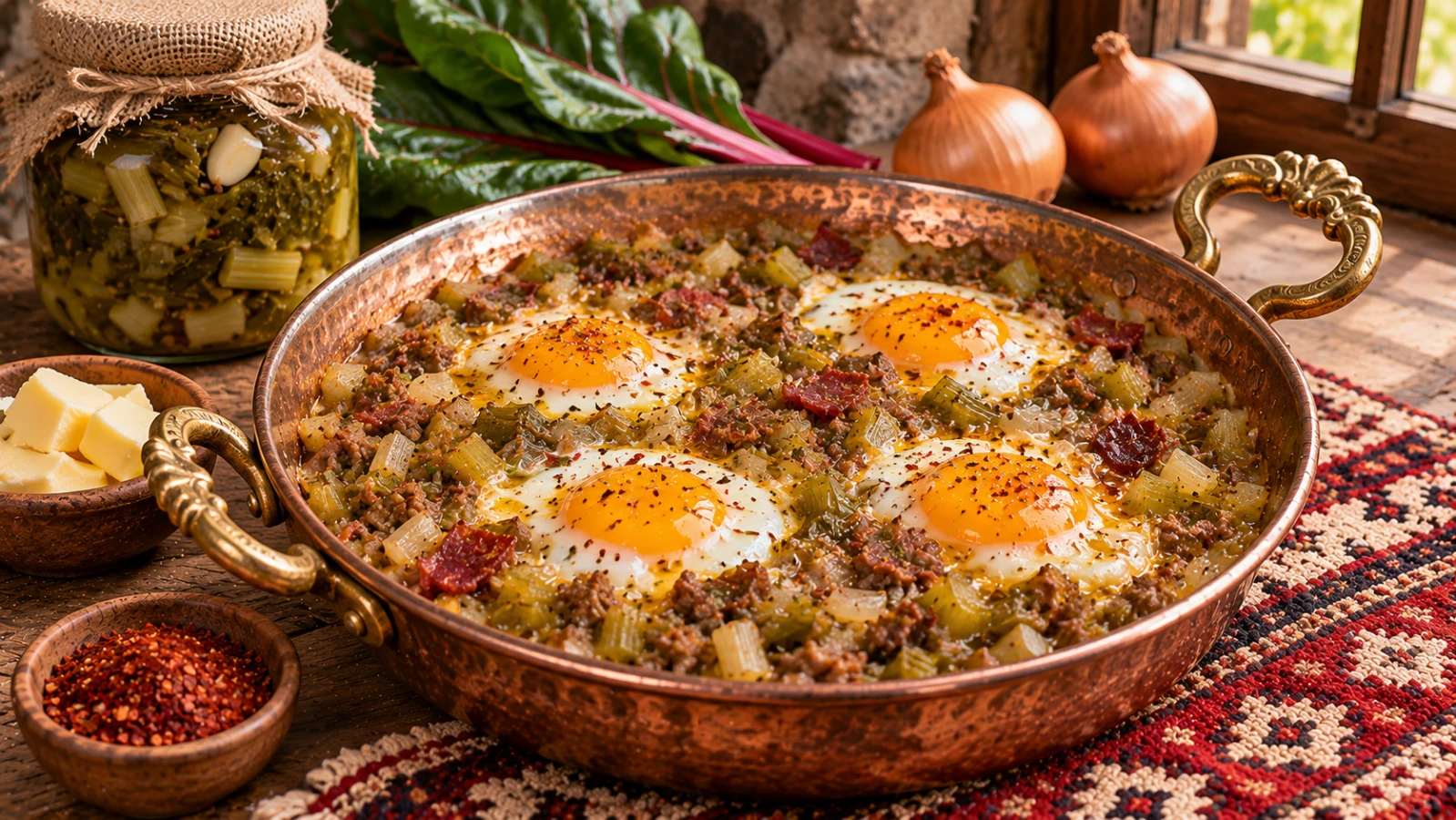
Turşu Mıhlaması is a distinctly Sivas winter dish made by sautéing chopped pezik pickle with onions, meat and pastırma, then cooking eggs directly over the mixture.
Read Food Guide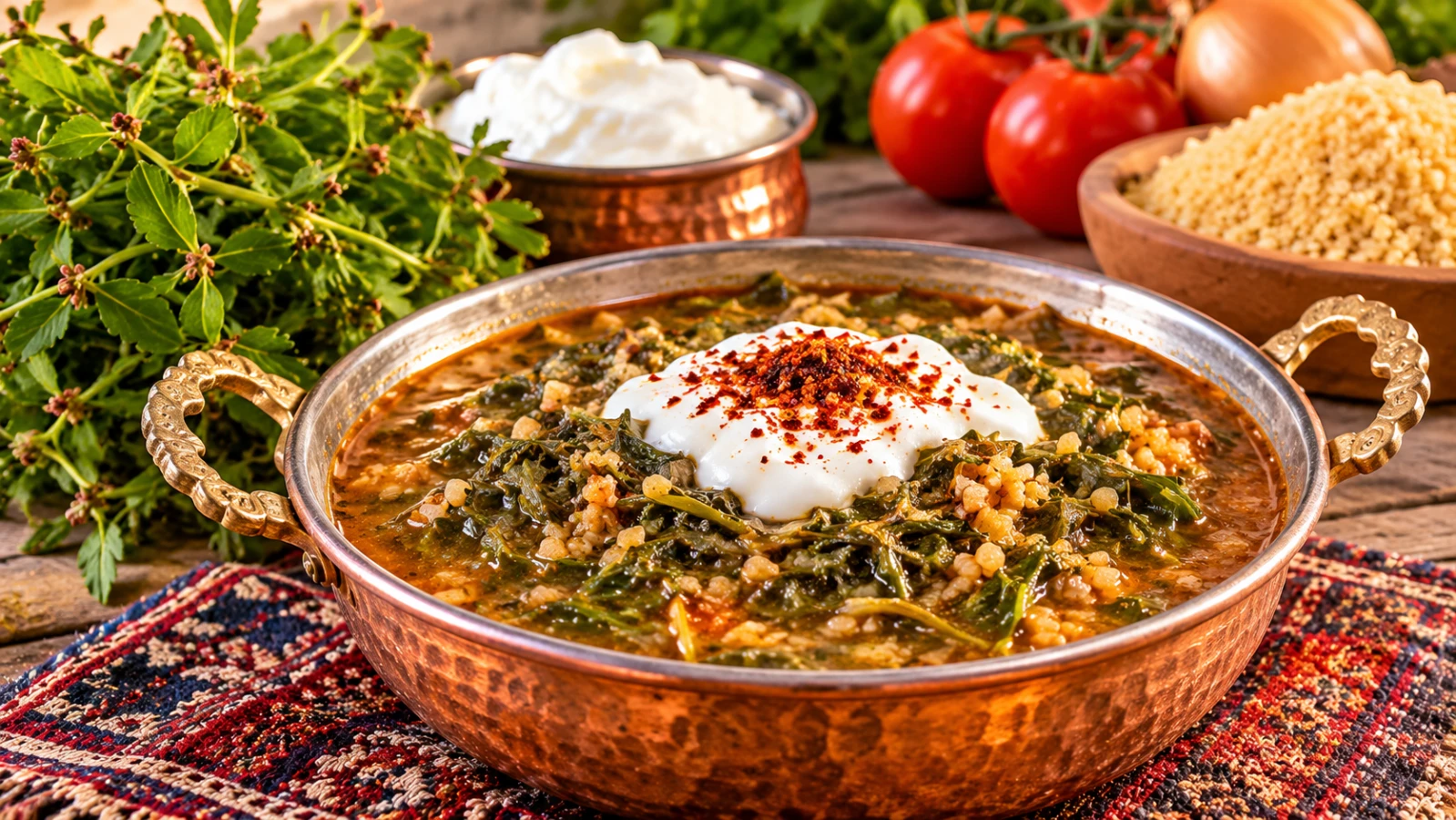
Madımak Aşı is a seasonal dish prepared from young madımak leaves, a wild edible green collected in the Sivas countryside. Bulgur, onion, butter and sometimes pastırma or çemen build the cooked flavour.
Read Food Guide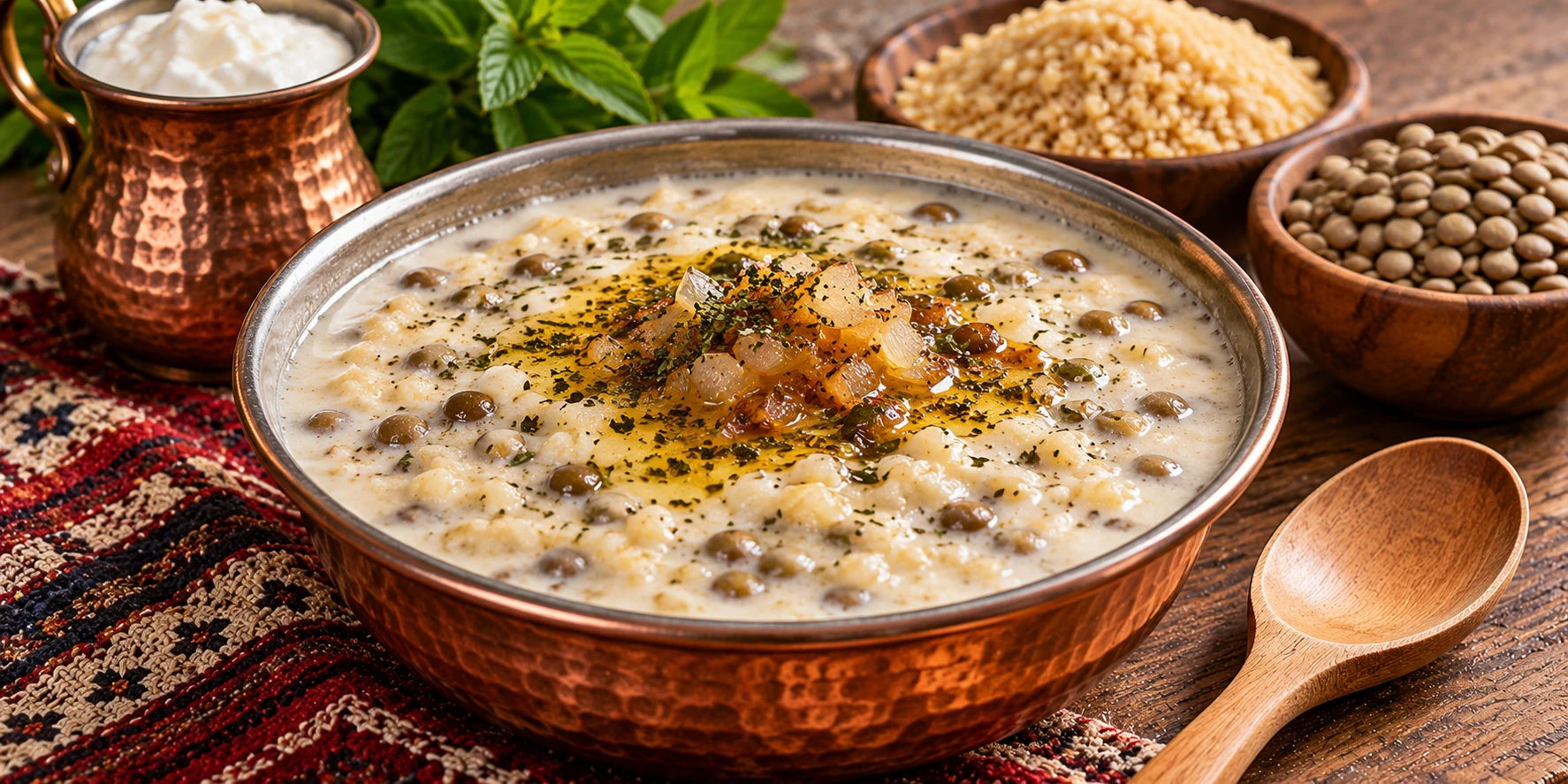
Peskütan Çorbası is a characteristic Sivas soup based on locally prepared peskütan, diluted to an ayran-like consistency and cooked with wheat and green lentils. Onion, mint and butter complete the dish.
Read Food Guide