The pickle is central
Its sour salty character seasons the whole skillet.






Turşu Mıhlaması is a distinctly Sivas winter dish made by sautéing chopped pezik pickle with onions, meat and pastırma, then cooking eggs directly over the mixture.
Its sour salty character seasons the whole skillet
A small quantity of minced meat adds savouriness
Cured beef brings concentrated flavour
The eggs are placed into gaps in the pickle mixture, not scrambled into it
Its place in Sivas cuisine and the defining preparation details.
Sivas province, Türkiye
Regional food
Drain the pezik pickle and briefly rinse if it is excessively salty.
No confirmed registration claimed for this specific dish
This is not an ordinary fresh-vegetable omelette. The defining base is pezik dal turşusu—pickled beet or chard stems prepared during the autumn preserving season. By cooking that pickle with winter staples, households turn a stored vegetable into a hot main dish.
In the documented Sivas preparation, pickled stems are chopped and gently fried with onion, a little minced meat and strips of pastırma. The cook then transfers the mixture to a wide shallow mıhlama pan and creates small wells for the eggs.
The dish illustrates the connection between two regional traditions: pezik pickling and the hearty egg-based cooking of a cold-weather pantry. The pickle itself is geographically indicated, but the mixed egg dish should not automatically be claimed as separately registered.
Its sour salty character seasons the whole skillet.
A small quantity of minced meat adds savouriness.
Cured beef brings concentrated flavour.
The eggs are placed into gaps in the pickle mixture, not scrambled into it.
It uses a preserved autumn vegetable in winter cooking.
These are ingredients documented in the local culinary sources or used in the explained traditional method. Amounts are included only where the available source specifies them; household quantities vary.
About 4 glasses of pezik pickle in the provincial recipe
2 onions
Butter
A small amount of minced meat
7–8 slices pastırma
4–6 eggs, depending on pan and portions
Additional salt only after tasting the pickle
The sliced stems are warmed with onion and pastırma first so their brine loses some harshness and their flavours blend with the butter. Eggs are added only after that base is ready, avoiding the problem of overcooking eggs while the pickles are still cold.
Instead of stirring the eggs into a scramble, the cook pushes gaps into the vegetable mixture, adds small amounts of butter and breaks an egg into each well. The shallow pan is covered until the eggs cook.
Some families may reduce the cured meat but the document describes both mince and pastırma.
Pickle and pastırma may make additional salt unnecessary.
The same pickle is eaten cold separately from the cooked mıhlama.
Serve straight from the shallow pan with plenty of bread. Taste before adding salt; both the pickle and pastırma are already strongly seasoned. The mixture is tangy, buttery and savoury.
The preserved pezik stems are prepared in the autumn, then opened for a nourishing winter meal. The local cook can bring together preserved vegetables, pastırma, eggs and bread without needing fresh summer produce.
Do not salt automatically; the pickled vegetable and pastırma may already be salty.
The egg dish is different from the geographically indicated pezik pickle itself.
Ask local restaurants, bakers or specialist food shops for Turşu Mıhlaması. Availability depends on the dish and preparation schedule; slow-cooked, preserved and festival foods are not necessarily offered every day. For historical context and other Sivas places, browse our Sivas food and craft guide.
No. The characteristic base is chopped pezik pickle, not fresh tomato and pepper.
The pickled stems retain their fermented or vinegar-based acidity.
Yes, eggs are cooked in wells over the sautéed pickle.
The documented traditional version includes minced meat and pastırma.
The Sivas Provincial Directorate of Culture and Tourism publishes a documented introduction to Turşu Mıhlaması or the relevant Sivas culinary tradition, linked in the sources below.
This guide draws on the provincial Culture and Tourism Directorate’s culinary documentation and, where the product is registered, TÜRKPATENT’s official geographical-indication register. Historical traditions are identified as local culinary accounts, not dated archaeological proofs.
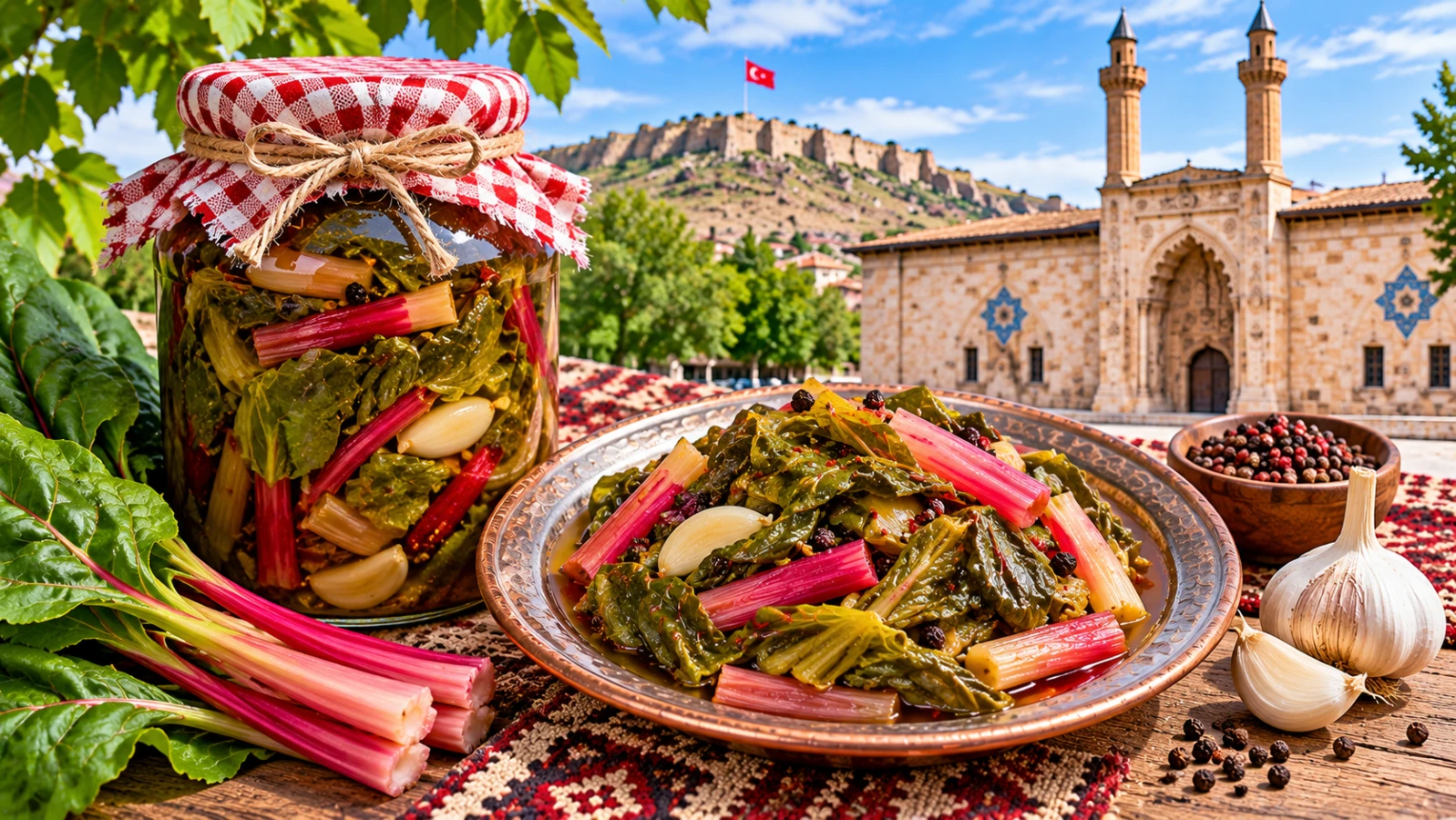
Sivas Pezik Turşusu is made from the stems of suitable beet and chard-type greens, briefly blanched before being preserved with garlic, salt, vinegar and other seasonings. It is a foundation of the city’s winter cooking.
Read Food Guide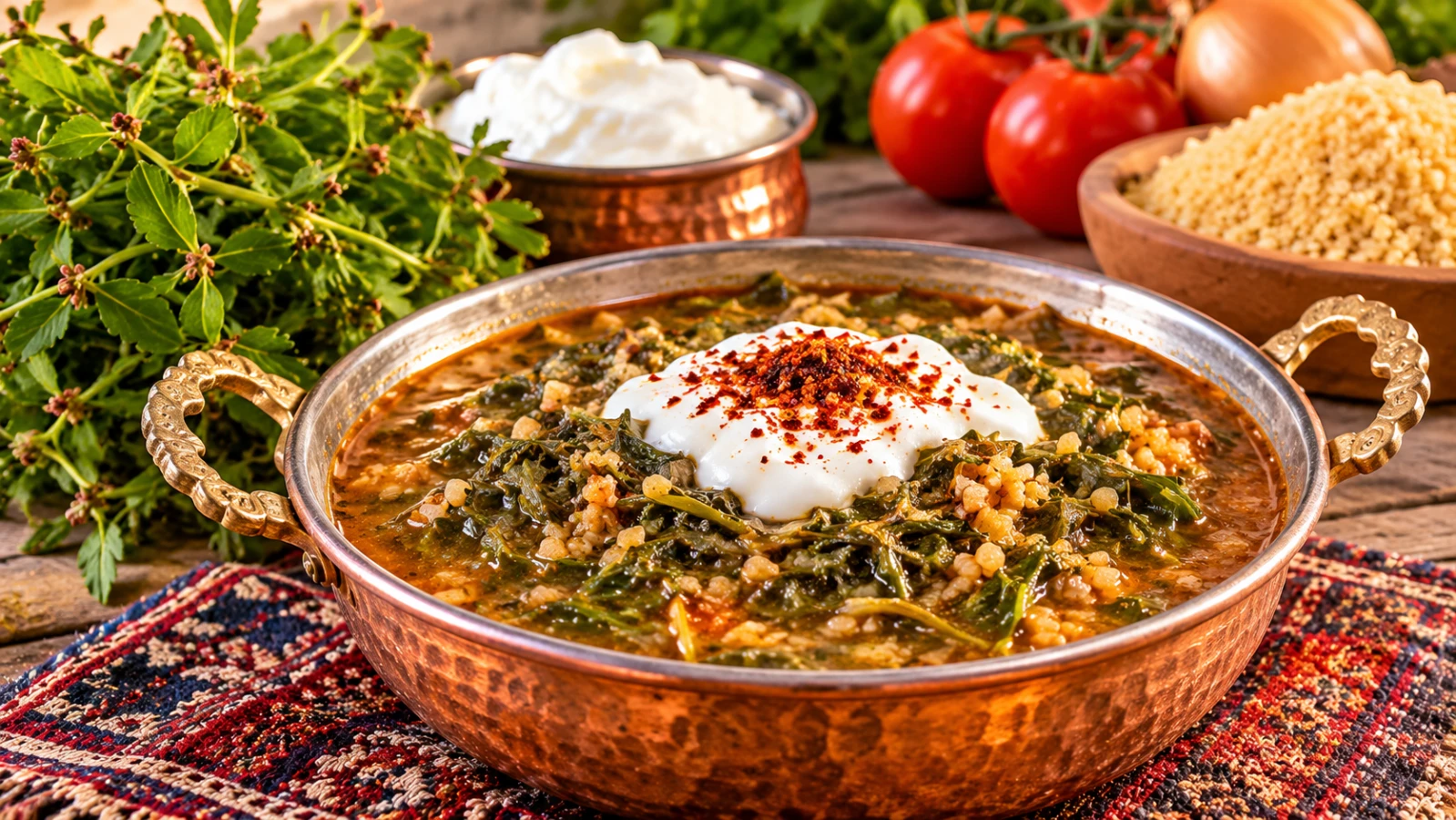
Madımak Aşı is a seasonal dish prepared from young madımak leaves, a wild edible green collected in the Sivas countryside. Bulgur, onion, butter and sometimes pastırma or çemen build the cooked flavour.
Read Food Guide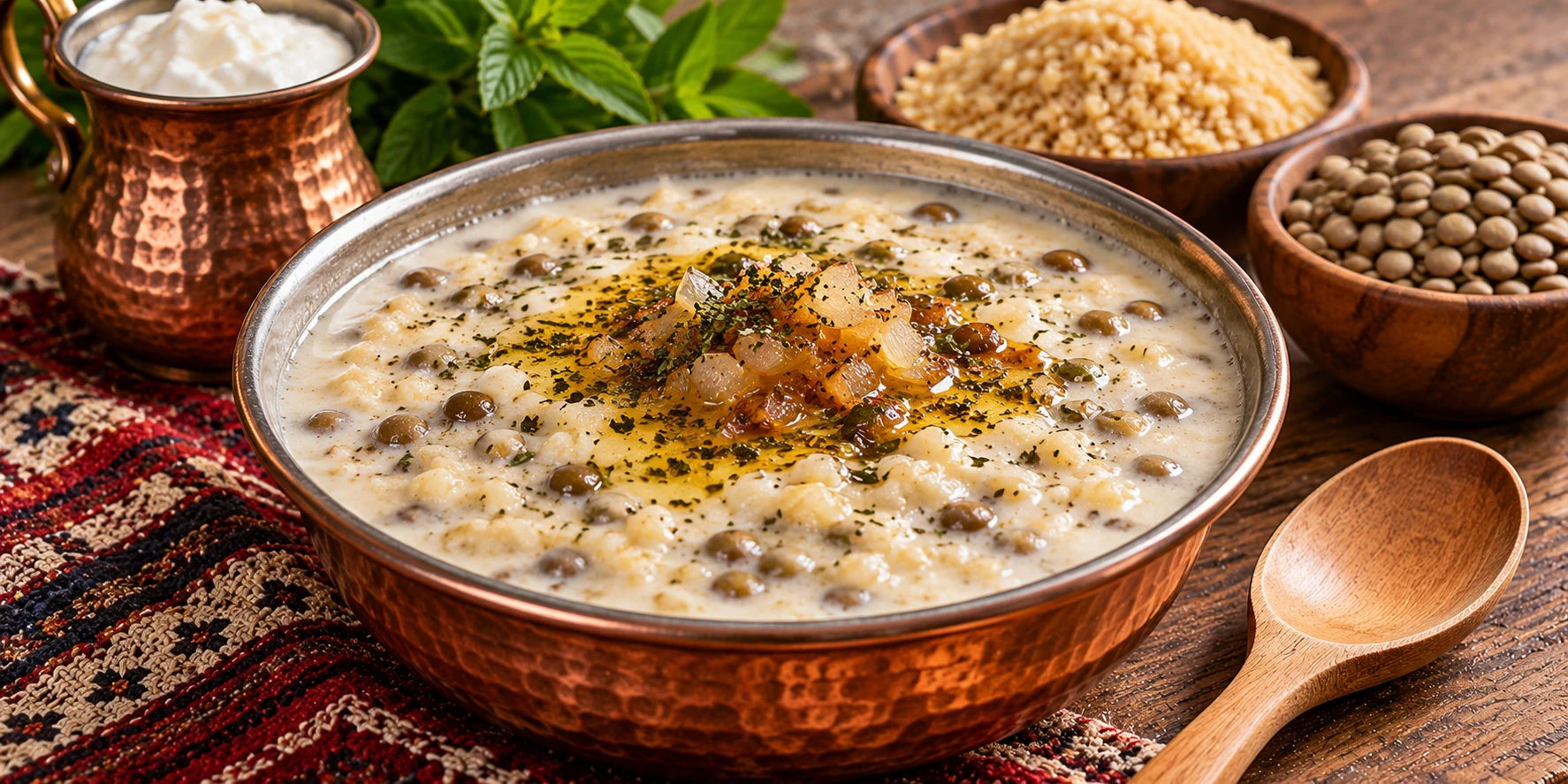
Peskütan Çorbası is a characteristic Sivas soup based on locally prepared peskütan, diluted to an ayran-like consistency and cooked with wheat and green lentils. Onion, mint and butter complete the dish.
Read Food Guide