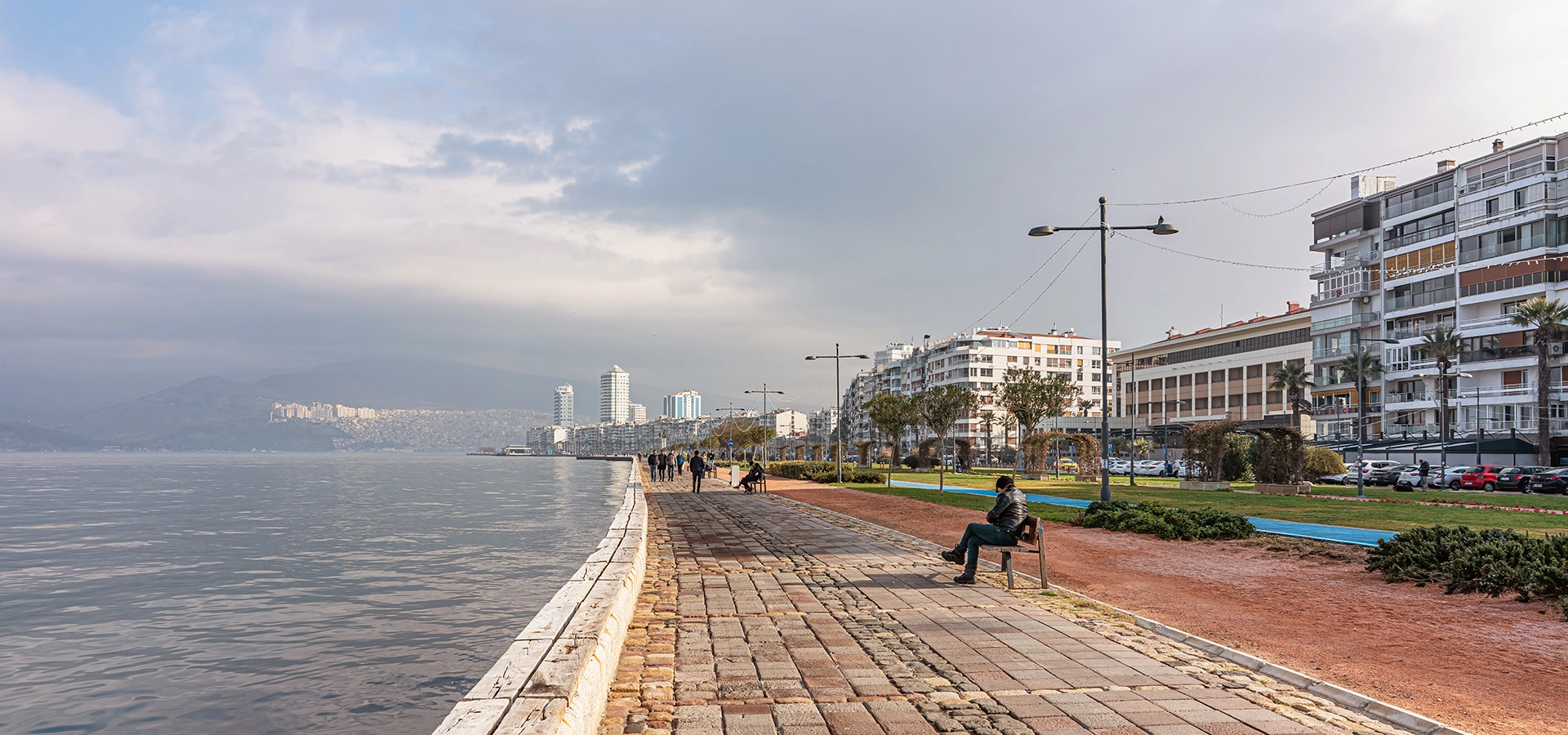
Kordon & Alsancak
Step directly from the museum onto İzmir's famous waterfront and continue through historic Alsancak, cafés, restaurants and lively neighbourhood streets.
Explore Kordon & Alsancak





Standing directly on İzmir's celebrated First Kordon, the İzmir Atatürk Museum — İzmir Atatürk Müzesi occupies a late-19th-century residence whose history became closely connected with several important moments in the city's 20th-century story.
Built between 1875 and 1880 as a private residence for carpet merchant Takfor, the building later served as a military headquarters following September 1922.
During the period of the İzmir Economic Congress in 1923, Mustafa Kemal Atatürk conducted personal work in the building. It was subsequently converted into a hotel known as Naim Palas, where Atatürk and İsmet Paşa stayed during a visit to İzmir in June 1926.
Later that year, the İzmir Municipality purchased the building and presented it to Atatürk. During his visits to İzmir between 1930 and 1934, he used the residence as his place of stay.
Today the museum preserves rooms associated with those visits together with period furniture, carpets, decorative objects and personal-use items displayed within their historic architectural setting.
Explore the rooms associated with Atatürk's stays in İzmir during the early years of the Turkish Republic.
Discover the building's connection with the important economic congress held in İzmir in 1923.
See preserved reception rooms, a study, bedroom, dining room, library and other period spaces.
Visit the museum directly on İzmir's historic waterfront and combine it easily with Alsancak and Kordon.
Essential information about the historic residence, its museum collection and its connection with Mustafa Kemal Atatürk's visits to İzmir.
İzmir Atatürk Museum — İzmir Atatürk Müzesi.
First Kordon, Alsancak, in central İzmir.
Constructed as a private residence for carpet merchant Takfor.
Approximately 1875–1880.
Neoclassical architecture incorporating Ottoman and Levantine elements.
Atatürk used the building for personal work during the period of the İzmir Economic Congress.
The building later operated as a hotel and was known as Naim Palas.
İzmir Municipality purchased the building on 13 October 1926 and presented it to Atatürk.
Atatürk stayed here during his visits to İzmir in this period.
The building first opened to the public as a museum on 11 September 1941.
Current official museum information lists admission as free.
Allow approximately 45–75 minutes for a comfortable visit.
The museum allows visitors to encounter the history of early 20th-century İzmir through an actual residence connected with Mustafa Kemal Atatürk's time in the city.
Unlike a conventional museum built specifically for exhibitions, this is a historic house museum.
The architecture, marble floors, fireplaces, staircases, carpets, furniture and individual rooms all contribute to understanding how the building functioned during the period in which Atatürk used it.
The house is also connected with the political and economic transformation taking place in Türkiye during the early 1920s.
When the İzmir Economic Congress met in 1923, Atatürk carried out personal work in this building. Several years later, İzmir Municipality acquired the residence and presented it to him.
Its later transformation into a museum preserved that relationship between the building, Atatürk and İzmir.
For visitors exploring the city's archaeology, Ottoman heritage and cosmopolitan port history, the museum adds a very different layer: İzmir during the transition into the Republican period.
The story of the building begins several decades before the establishment of the museum.
Between approximately 1875 and 1880, a carpet merchant known as Takfor commissioned the building as a private residence on İzmir's waterfront.
Its position on the First Kordon placed it within one of the most prominent districts of the late Ottoman port city.
On 9 September 1922, the property was abandoned by its owner and subsequently passed into the ownership of the Treasury.
The Turkish army then used the building as a headquarters.
When the İzmir Economic Congress convened in February 1923, Mustafa Kemal Atatürk conducted personal work in the building.
Following the congress, the headquarters moved elsewhere and the Treasury leased the property to Naim Bey, who operated it as a hotel called Naim Palas.
On 16 June 1926, Atatürk visited İzmir and stayed at Naim Palas together with İsmet Paşa.
A few months later, on 13 October 1926, İzmir Municipality purchased the property, furnished it and presented it to Atatürk.
During his later visits to İzmir between 1930 and 1934, Atatürk stayed in this residence.
The building itself is an important part of the museum experience.
Official descriptions classify it as a Neoclassical structure combining Ottoman and Levantine architectural characteristics.
It contains a basement, ground floor, first floor and attic and occupies an approximately 852-square-metre site.
The rectangular building includes a rear courtyard and an arcaded section, while the waterfront façade is distinguished by its symmetrical arrangement, tall windows, balconies and projecting upper-floor bay window.
Balanced proportions, stonework and formal window arrangements give the waterfront elevation its distinctive appearance.
The building belongs to the architectural environment of late Ottoman İzmir and incorporates features familiar from urban residences of the period.
Its design reflects the architectural interaction that characterised cosmopolitan late-19th-century İzmir.
The projecting central section of the upper façade is one of the most recognisable architectural features of the house.
Large marble slabs cover the floor of the principal ground-floor hall.
Several rooms preserve decorative fireplaces dating stylistically from the 19th century.
The plan extends beyond the formal Kordon façade into a courtyard area at the rear.
Furniture, carpets, chandeliers, sculpture and decorative objects complement the architecture of the residence.
One of the most significant chapters in the building's history is its connection with the İzmir Economic Congress.
The congress took place in İzmir in early 1923, during the period between the end of the Turkish War of Independence and the proclamation of the Republic later that year.
Representatives from different economic sectors gathered to discuss questions concerning the country's future economic direction.
The Atatürk Museum building was not the principal congress venue.
Its connection comes from its use as part of the military headquarters infrastructure and from Atatürk carrying out personal work here during the congress period.
After the military headquarters left the building, its function changed once again.
The Treasury leased the property to Naim Bey, who operated it as a hotel under the name Naim Palas.
On 16 June 1926, Mustafa Kemal Atatürk came to İzmir and stayed at Naim Palas together with İsmet Paşa.
Only a few months later, İzmir Municipality acquired the property.
On 13 October 1926, the municipality purchased the building, added new furnishings and presented it to Atatürk.
This changed the house from a temporary place of accommodation into his official residence when staying in İzmir.
Official museum records state that Atatürk subsequently used the house whenever he visited the city between 1930 and 1934.
After Atatürk's death on 10 November 1938, the property passed by inheritance to his sister, Makbule Baysan.
İzmir Municipality later decided to preserve the building as a museum.
The municipality expropriated the property on 25 September 1940, and the museum officially opened to the public on 11 September 1941.
Its institutional identity continued to evolve.
From 5 October 1962, it was known as the Atatürk Provincial Public Library and İzmir City Atatürk Museum.
The building was reorganised and restored again during the 1970s and reopened on 29 October 1978 as the Atatürk and Ethnography Museum.
When the ethnographic collections were transferred to the new İzmir Ethnography Museum in 1988, the historic residence continued under the simpler name Atatürk Museum.
A further restoration campaign was carried out between 1999 and 2001, after which the museum reopened in 2002.
The ground floor provides the first impression of the residence and introduces visitors to its late-19th and early-20th-century decorative environment.
The central hall is paved with large marble slabs and contains several of the building's most immediately noticeable interior features.
A large Uşak carpet measuring approximately 34.5 square metres forms an important part of the entrance-hall display.
A large crystal mirror contributes to the formal residential character of the hall.
Decorative marble statues occupy niches within the interior.
A bust of Mustafa Kemal Atatürk forms part of the museum's introductory display.
Several rooms preserve decorative fireplaces characteristic of 19th-century interior design.
Two bronze figures positioned near the staircase function as decorative wall lights.
The staircase leads toward the upper floor containing the rooms principally associated with Atatürk's use of the residence.
A prominent portrait of Atatürk is displayed around the stair landing.
The upper floor is the central part of the museum visit because it contains the rooms directly associated with Atatürk's stays in the residence.
Official museum descriptions identify spaces including a meeting room, study, bedroom, guest room, barber room, guard or aide room, reception area, library, dining room and bathroom.
The work room preserves a substantial desk together with a writing set associated with Atatürk's use of the house.
A formal meeting space contains an unusual green-covered roulette table surrounded by period chairs.
The bedroom retains period furniture including a mahogany bed, seating and wardrobes.
A large dining table and formal seating evoke the residential and official functions of the house.
The library includes French-language reference works together with historic furniture and decorative pieces.
The guest accommodation forms part of the preserved domestic arrangement of the upper floor.
The bathroom preserves period fixtures and personal-use objects associated with the historical residence.
Waiting and reception rooms demonstrate how the house combined private residence with official hospitality.
Among the most historically evocative rooms is the study.
The room contains an oak-veneered work desk together with objects associated with Atatürk's use of the residence.
Official descriptions record a writing set displayed on the desk, while more detailed museum inventories also identify items such as a telephone and ashtray.
The surrounding furniture includes chairs, guest seating and storage cabinets.
Rather than viewing the room simply as a display of antique furniture, consider its practical role.
This was a working environment within a residence that also accommodated official meetings, visitors and social occasions.
The meeting room contains some of the most distinctive furniture in the museum.
At its centre stands a roulette table covered with green cloth, surrounded by twelve Cosmos-brand chairs.
Another unusual group consists of small mahogany chairs positioned along the room.
Ceramic panels incorporated into the backs of these chairs depict scenes inspired by works of William Shakespeare.
The bedroom offers a more personal view of the residence than its reception and meeting spaces.
Official museum descriptions identify a substantial group of surviving period furnishings.
The principal bed is made from mahogany and forms the central piece of the bedroom arrangement.
Nightstands and other smaller furnishings remain part of the reconstructed period interior.
Upholstered seating demonstrates the domestic character of the room.
A chaise longue forms part of the bedroom's early-20th-century furniture ensemble.
Large wardrobes complete the room's functional domestic arrangement.
The room is furnished according to the decorative fashion of its historical period.
The library and dining room reveal the intellectual and social functions of the residence.
Official descriptions of the library mention a substantial French-language encyclopedia collection, alongside works connected with Atatürk's life and period.
The dining area contains a formal table and period seating, while decorative objects, mirrors, sculpture and paintings continue throughout the upper floor.
Traditional Isparta and Uşak carpets provide another important element of the interiors.
The library preserves French-language encyclopedic material reflecting the intellectual environment of the period.
Dark hardwood furniture appears repeatedly throughout the upper-floor interiors.
The formal dining arrangement illustrates the house's role in receiving guests as well as accommodating its resident.
Bronze and cast figures appear alongside other European-influenced decorative objects.
Paintings contribute to the richly furnished character of the principal rooms.
Isparta and Uşak carpets provide a contrasting local textile tradition within the European-influenced interiors.
Before entering, study the symmetry, balconies, stonework and projecting upper-floor bay window.
The ground-floor marble surfaces immediately establish the formal character of the residence.
Look closely at the scale and textile craftsmanship of the approximately 34.5-square-metre carpet.
The large mirror is one of the decorative focal points of the ground-floor interior.
Notice the ornamental fireplaces preserved within several rooms.
The sculptural light fittings near the staircase are easy to overlook but particularly distinctive.
Pay attention to the relationship between the desk, writing objects and the room's practical working arrangement.
The green-covered table in the meeting room is one of the museum's most unusual surviving furnishings.
Look carefully at the ceramic panels incorporated into the backs of the mahogany chairs.
The preserved private furnishings contrast with the more formal reception and meeting spaces.
The French-language reference collection provides another perspective on the intellectual culture represented by the house.
Do not overlook the Isparta and Uşak carpets when concentrating on the furniture and historic rooms.
Enough for a quick walk through the principal rooms and major displays.
A comfortable highlights visit for travellers combining the museum with Kordon and Alsancak.
Recommended if you want time to examine the architecture, furnishings and historical interpretation.
Suitable for visitors who enjoy historic interiors and wish to look carefully at individual objects.
Allow this if you prefer reading most available interpretation and studying the rooms in detail.
Combine the museum with Kordon, Alsancak, Cumhuriyet Square and nearby cultural attractions.
İzmir Atatürk Museum is administered within the Ministry of Culture and Tourism museum system.
Opening hours can change seasonally or during public holidays, so visitors making a special journey should always confirm the latest official information shortly before arrival.
The museum's position directly on First Kordon in Alsancak makes it easy to include in a day exploring central İzmir.
The museum is conveniently reached while walking along Kordon and through central Alsancak.
İzmir's tram network provides useful access to the Alsancak and waterfront area, followed by a walk to the museum.
Visitors arriving through Alsancak Railway Station can continue through Alsancak toward the First Kordon.
Numerous municipal routes serve central Alsancak and surrounding neighbourhoods.
Ask for İzmir Atatürk Müzesi on Birinci Kordon or Atatürk Caddesi in Alsancak.
Central Alsancak can be busy, so public transport and walking are often more convenient for a museum-and-Kordon itinerary.
A practical choice if you want to explore the historic rooms before continuing through Alsancak.
Works well before lunch in Alsancak or a longer walk along Kordon.
The museum provides an indoor historical stop during the warmer part of the day.
Visit the museum first and continue directly onto Kordon for İzmir's waterfront atmosphere later in the day.
An indoor museum visit can be combined effectively with outdoor sightseeing earlier or later in the day.
The museum is a useful central İzmir option during cooler or rainy weather.
Often convenient for visitors who prefer exploring central museums outside peak weekend activity.
Combine the museum with other sites connected with İzmir's late Ottoman and early Republican urban history.
The symmetrical Kordon façade works especially well when photographed directly from the waterfront side.
Look for balconies, shutters, stone details and the central projecting upper-floor section.
Wide compositions can show how furniture, carpets and decorative objects relate to the architecture.
When permitted, closer photographs can document craftsmanship that is easy to miss in a wider room view.
Flash can disturb visitors and may be restricted around historic objects and interiors.
Do not cross ropes or protective boundaries to obtain a photograph.
Historic house museums contain relatively compact rooms, so avoid blocking circulation while taking photographs.
Photography and video regulations can change, so follow museum signage and staff instructions during your visit.
The museum stands directly on İzmir's famous waterfront, making Kordon the natural continuation of your visit.
Continue along the waterfront toward one of the principal public spaces of modern Alsancak.
Walk south along Kordon toward one of central İzmir's prominent Republican-era urban spaces.
Explore the restored former Tekel Factory complex with museums, exhibitions, libraries and cultural spaces.
Continue into the development of modern Turkish painting, sculpture, ceramics and printmaking.
Move from modern history into the much longer archaeological story of İzmir and western Anatolia.
Add another layer of İzmir's religious and urban history through one of the city's historic churches.
Combine the waterfront with one of central İzmir's largest green spaces and an important part of the modern city's cultural history.
Visit the historic house and continue immediately onto İzmir's waterfront promenade.
Combine history with the streets, cafés and urban atmosphere of central Alsancak.
Move from early Republican history into archaeology, ethnography, visual art and restored industrial heritage.
Pair the residence with İzmir Painting and Sculpture Museum for a broader view of 20th-century Turkish cultural history.
Follow the waterfront south and connect the house with another important urban space associated with Republican İzmir.
Combine several central museums for an itinerary that requires relatively little outdoor sightseeing.
Visiting hours can change according to season, holidays or administrative decisions.
The official museum listing currently identifies admission to İzmir Atatürk Museum as free.
Spend a minute with the exterior before entering so the original residential architecture is easier to understand.
The sequence from private residence to headquarters, hotel, Atatürk residence and museum makes the rooms much easier to interpret.
The working room is particularly useful for understanding the building as a functioning residence rather than only a memorial display.
The carpets, fireplaces, mirrors and furniture are also important evidence for the domestic culture of the period.
The ceramic-backed mahogany chairs are among the museum's more unusual decorative furnishings.
Keep behind barriers and avoid touching furniture, textiles or displayed objects.
The location makes it unnecessary to treat the museum as an isolated sightseeing stop.
Most visitors should have enough time to understand the house without rushing in approximately 45–75 minutes.
Younger visitors can focus on unusual furniture, architectural details and differences between modern homes and historical interiors.
Always follow current museum instructions concerning photography, video, flash and professional equipment.
It is a historic house museum in Alsancak preserving a residence used by Mustafa Kemal Atatürk during his visits to İzmir.
The museum is located on First Kordon at Atatürk Caddesi No: 248 in Alsancak, İzmir.
The residence was built between approximately 1875 and 1880.
Official museum records state that it was built as a residence for a carpet merchant named Takfor.
Official descriptions identify it as Neoclassical architecture combining Ottoman and Levantine characteristics.
It was abandoned by its owner on 9 September 1922, passed into Treasury ownership and was subsequently used as a military headquarters.
Atatürk carried out personal work in the building during the period of the İzmir Economic Congress in 1923.
The house should not be confused with the principal congress venue. Its importance lies in Atatürk's documented use of the building during the congress period.
After its headquarters function ended, the building was leased to Naim Bey and operated as a hotel known as Naim Palas.
Yes. Official records state that Atatürk and İsmet Paşa stayed there during a visit to İzmir on 16 June 1926.
İzmir Municipality purchased the property on 13 October 1926, furnished it and presented it to Atatürk.
Official museum information states that he stayed in the house during his visits to İzmir between 1930 and 1934.
The building first opened to the public as a museum on 11 September 1941.
No. Its institutional names and functions changed several times, including periods as a public library and as the Atatürk and Ethnography Museum.
After the ethnographic collections were transferred to İzmir's new Ethnography Museum in 1988, the residence continued as Atatürk Museum.
Visitors can see historic reception spaces, Atatürk's study, bedroom, meeting room, dining room, library, bathroom and other preserved rooms.
The museum displays period furnishings and objects associated with Atatürk's use of the residence, together with carpets, sculpture, paintings and decorative objects.
It contains a green-covered roulette table, twelve Cosmos-brand chairs and mahogany chairs decorated with ceramic panels depicting scenes from Shakespeare's works.
The study contains an oak-veneered desk and a writing set associated with his use of the house, together with other period furniture.
The room includes a mahogany bed and a collection of period furniture such as armchairs, a chaise longue and wardrobes.
Yes. The library includes French-language encyclopedic material and books connected with Atatürk and the historical period.
The current 2026 seasonal official listing shows visiting hours of 08:30–19:00, with last admission or ticket-desk service at 18:30. Hours can change seasonally.
Yes. Current official information lists the museum as open every day of the week.
Yes. The current official museum listing identifies admission as free.
Approximately 45–75 minutes is suitable for most visitors, while architecture and history enthusiasts may prefer longer.
Yes. Historic rooms, unusual furniture, large mirrors, carpets and architectural details can make the house accessible to younger visitors.
Photography arrangements can change, so visitors should follow current museum signage and staff instructions regarding photography, video and flash.
Yes. The museum stands directly on First Kordon, making the waterfront the easiest continuation of a visit.
Kordon, Alsancak, Gündoğdu Square, Cumhuriyet Square and İzmir Kültür Sanat Fabrikası can all be incorporated into the same central İzmir itinerary.
The building connects late Ottoman İzmir architecture with the events of 1922–1923, Atatürk's later visits to the city and the preservation of an early Republican-period residence.
Use İzmir Atatürk Museum as the starting point for a wider journey through the waterfront, historic neighbourhoods, museums and cultural heritage of central İzmir.
Continue from the historic residence into Kordon, restored cultural buildings, Turkish art, archaeology and the wider history of the Aegean metropolis.
Step directly from the museum onto İzmir's famous waterfront and continue through historic Alsancak, cafés, restaurants and lively neighbourhood streets.
Explore Kordon & Alsancak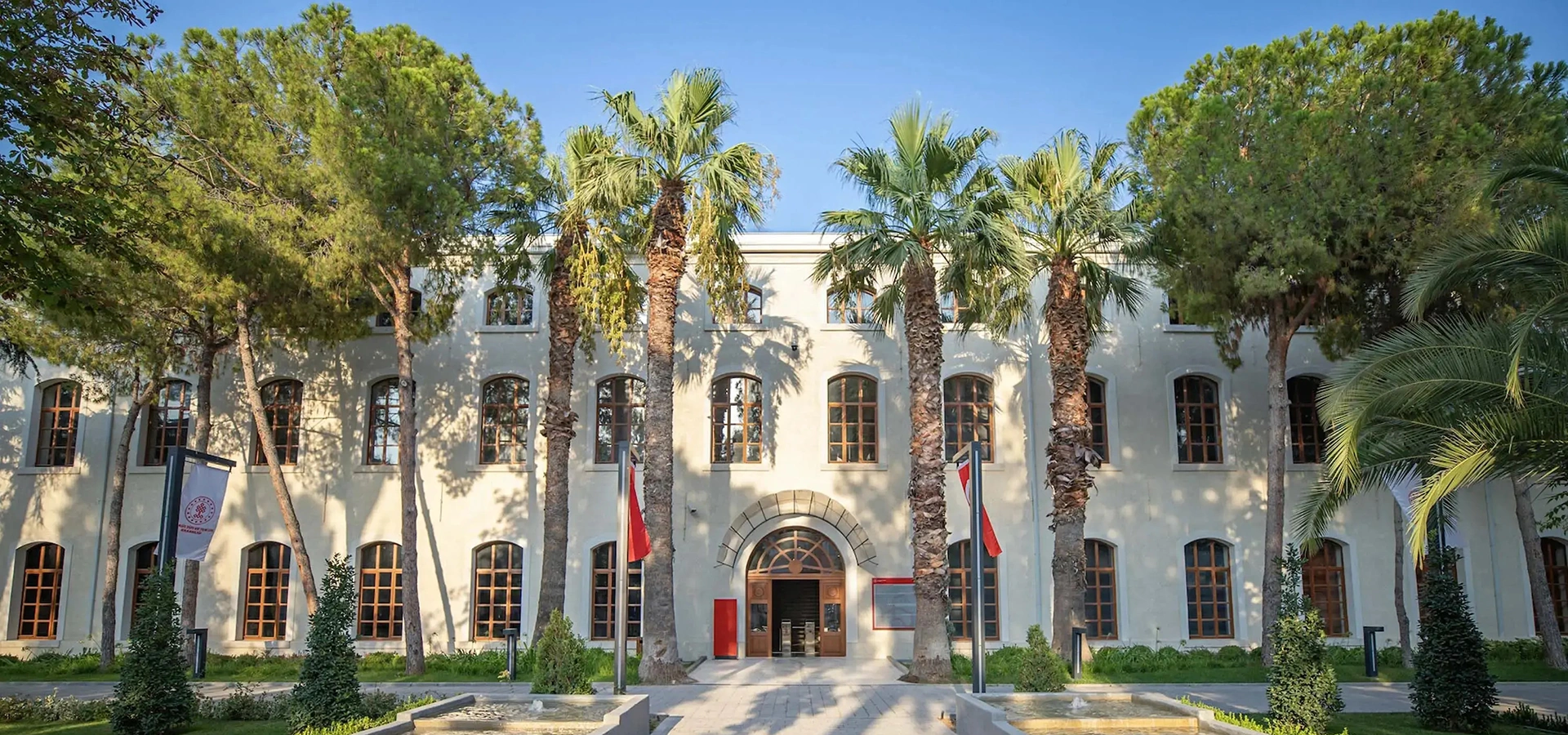
Explore İzmir's restored former Tekel Factory complex with museums, galleries, libraries, exhibition spaces and industrial heritage.
Explore the Culture Factory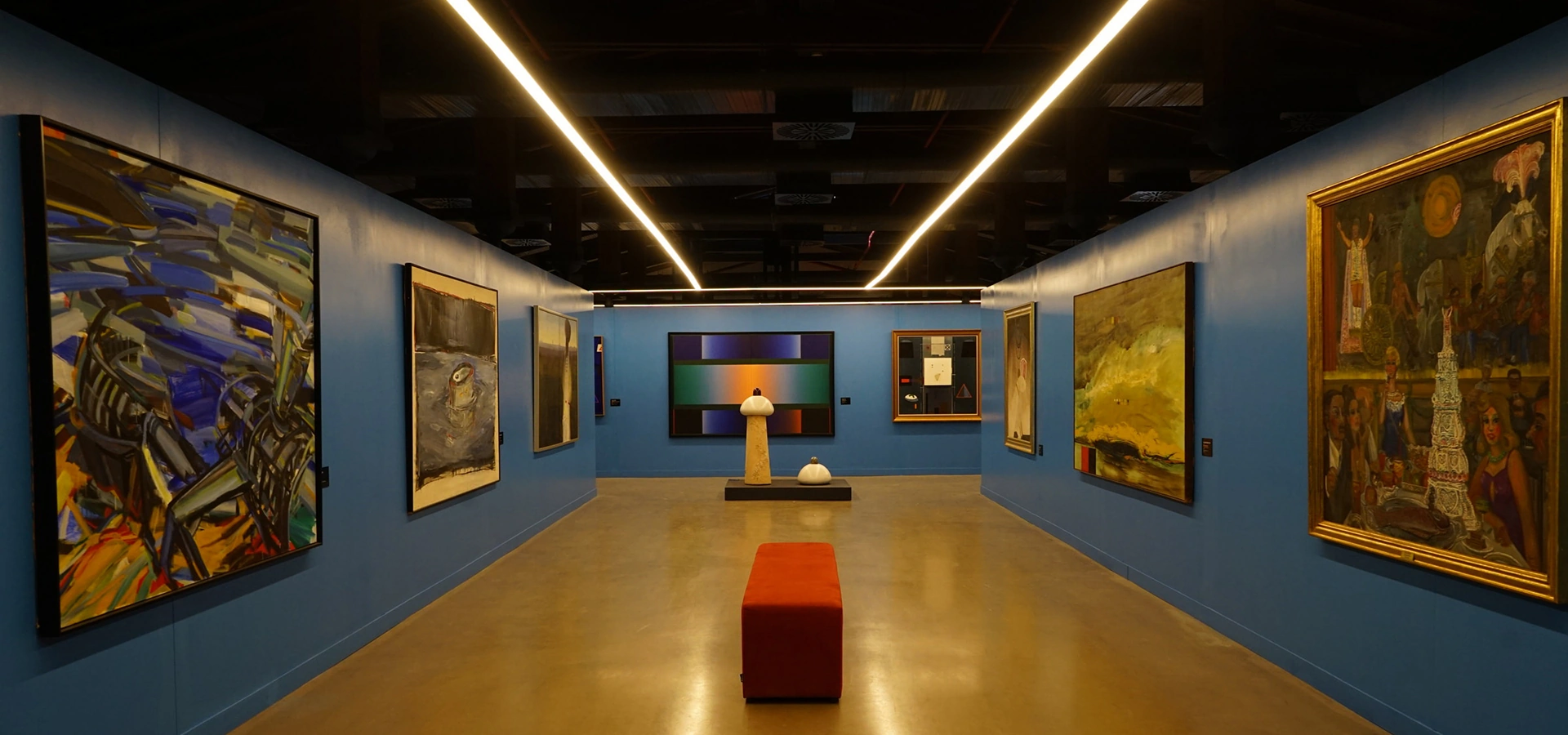
Trace the development of modern Turkish visual culture through painting, sculpture, ceramics and original prints.
Explore İzmir Painting & Sculpture Museum
Continue with our complete İzmir guide covering archaeology, museums, churches, synagogues, historic neighbourhoods, waterfront districts, cuisine and day trips.
View İzmir Guide