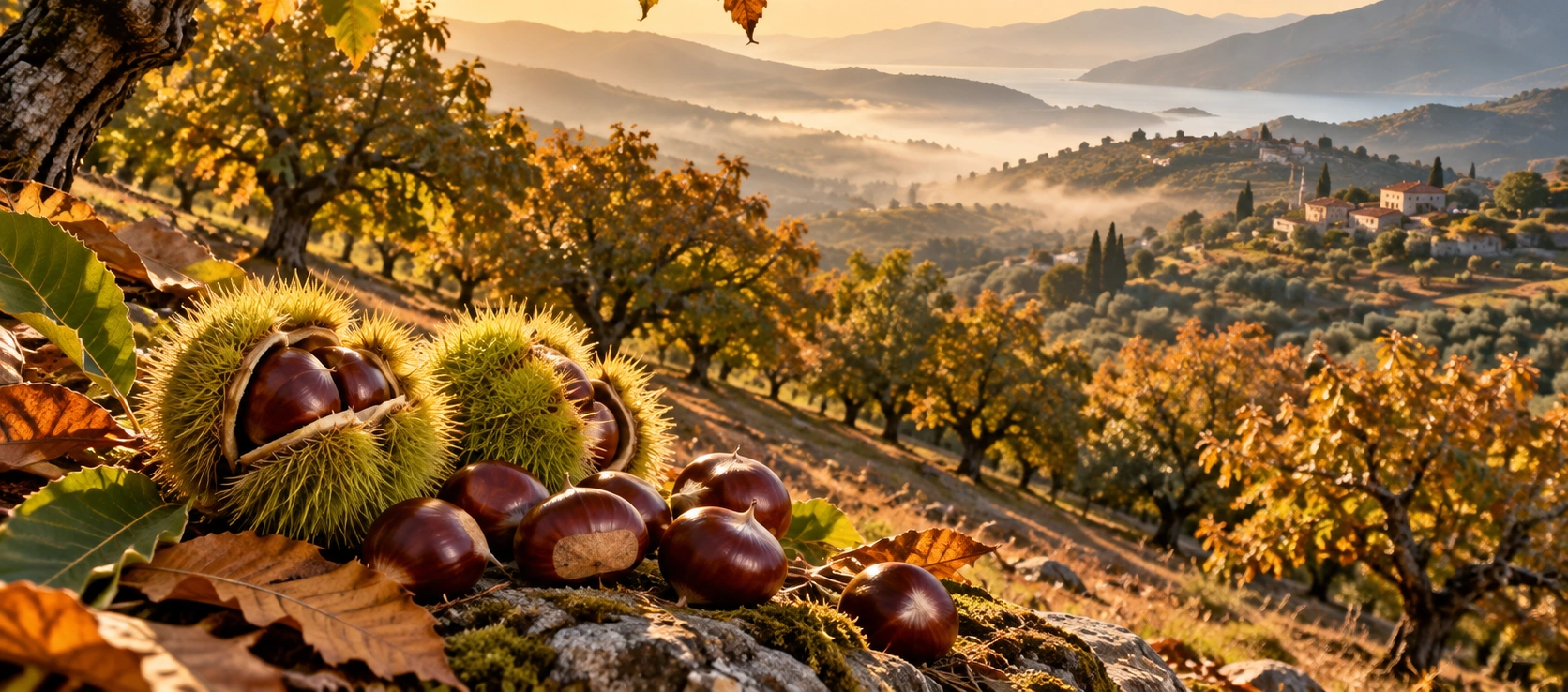
Aydın Chestnut – A Protected Treasure of the Aegean Mountains
Aydın Chestnut, officially registered under its Turkish name Aydın Kestanesi, is one of the most distinctive agricultural products of western Türkiye. Cultivated in the mountain landscapes of Aydın Province, these chestnuts are valued for their relatively large size, attractive outer shell, soft flesh and particularly favorable peeling characteristics.
Although Aydın is frequently associated with its fertile valleys, olive groves and internationally renowned figs, the province's higher elevations support another important agricultural tradition: chestnut cultivation.
Across the mountainous countryside, chestnut trees grow in orchards and traditional agricultural landscapes that have been managed by local communities for generations.
The region's combination of altitude, environmental conditions and locally selected chestnut ecotypes contributes to a product with characteristics recognized under both Turkish and European geographical indication systems.
Aydın Kestanesi is produced from local ecotypes of the European sweet chestnut species Castanea sativa Mill. Among the locally recognized types are Işıklar, Sarıaşı and Kemer, which form part of the region's established chestnut-growing heritage.
The chestnuts are particularly appreciated for their size and the ease with which the outer shell and inner seed skin can be removed. The edible kernel is typically light creamy-white in color and develops a pleasant texture and natural sweetness when appropriately prepared.
Chestnut production is especially associated with the elevated agricultural areas around Nazilli, Köşk and Sultanhisar, alongside other suitable parts of Aydın Province.
The harvest is a significant seasonal activity. Farmers work among tall trees and steep hillsides, collecting chestnuts protected within distinctive spiny husks, commonly known as burrs.
One of the notable traditions associated with Aydın chestnuts is the regional method of storing harvested chestnuts in covered piles. This historical approach reflects practical agricultural knowledge developed before modern refrigeration systems became widely available.
In recognition of its regional identity, Aydın Kestanesi received Turkish geographical indication registration number 180 on December 30, 2013, with protection dating from its original application in December 2010.
The product achieved an additional milestone in September 2020, when the European Union registered Aydın Kestanesi as a Protected Designation of Origin (PDO) under Commission Implementing Regulation (EU) 2020/1321.
This recognition formally connects the product's distinctive characteristics with its geographical origin and specified traditional production practices.
Today, Aydın Chestnut represents much more than a seasonal agricultural crop. It reflects mountain agriculture, rural livelihoods, local food culture and the enduring relationship between communities and the natural landscapes of western Anatolia.
For visitors interested in the authentic culinary heritage of Türkiye, discovering Aydın chestnuts offers an opportunity to experience a product that brings together regional geography, traditional knowledge and the flavors of autumn.
Distinctive Large Chestnuts
Recognized for substantial fruit size, attractive shells and soft edible kernels.
Mountain-Grown Heritage
Traditionally cultivated in Aydın's elevated chestnut-growing landscapes.
European PDO Recognition
A geographically protected Turkish agricultural product recognized by the European Union in 2020.
Traditional Autumn Harvest
A seasonal agricultural tradition connected with rural communities and local food culture.