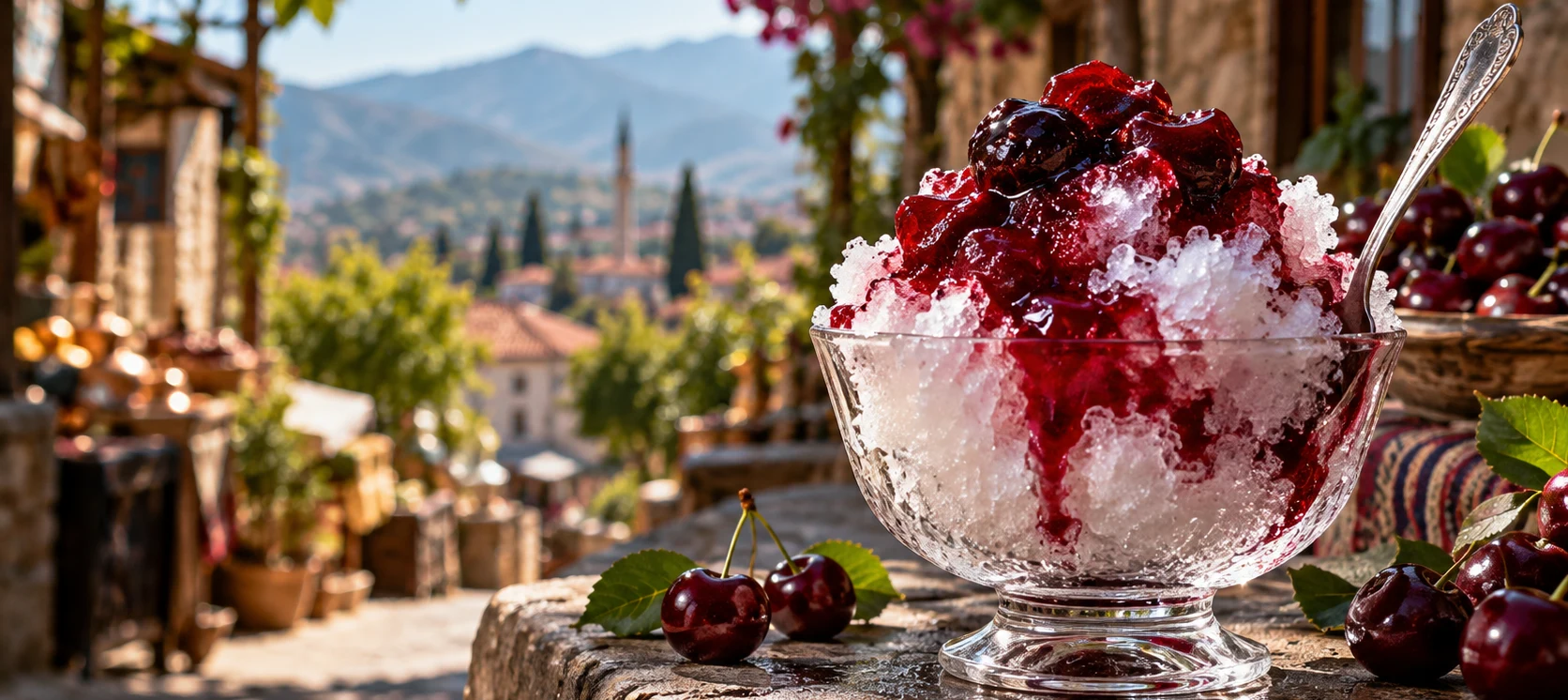
A Refreshing Mountain-Snow Tradition of Aydın

Nazilli Snow Halva – Complete Food Guide

Discover natural mountain snow, rich sour-cherry syrup,
centuries-old snow-preservation traditions, and one of the Aegean region's most refreshing summer specialities.

Discover Nazilli Snow Halva

Discover the Traditional Snow Halva of Nazilli

Nazilli Snow Halva, known locally as Nazilli Kar Helvası, is one of the most distinctive traditional refreshments of Aydın in western Türkiye. Prepared by combining natural mountain snow with sweet and tangy sour-cherry syrup, this remarkable speciality brings together the cold of the Anatolian mountains and the warmth of the Aegean summer.

Unlike conventional Turkish halva, which is commonly made with flour, semolina, tahini, or sugar, Nazilli Snow Halva is a frozen refreshment. Its essential ingredients are natural snow collected from high mountain areas and a deep-red syrup prepared from sour cherries. The finished product is traditionally presented in a glass and eaten immediately with a small spoon.

What makes this speciality extraordinary is the traditional method used to preserve snow from winter until summer. For generations, people living around Nazilli and Bozdoğan have stored snow in sheltered mountain pits, allowing it to be transported to towns and markets during the hottest months of the year.

Officially recognised as a geographically indicated product, Nazilli Kar Helvası represents an unusual connection between natural geography, traditional preservation techniques, local agriculture, and everyday food culture.

This complete guide explores its history, mountain-snow tradition, registered preparation method, sour-cherry syrup, geographical-indication status, traditional serving style, cultural significance, visitor tips, and the best places to experience this refreshing Aegean speciality.

Natural Mountain Snow

Traditionally collected from high mountain settlements and preserved through the summer.

Sour-Cherry Syrup

A rich, deep-red fruit syrup provides sweetness, acidity, colour, and the signature flavour.

Ancient Cooling Tradition

Snow-storage pits preserve winter snow for use during the region's hot summer months.

Protected Local Heritage

Registered by TÜRKPATENT as Nazilli Kar Helvası, geographical-indication number 354.

Know Before You Taste

Nazilli Snow Halva – Quick Facts

Essential information about one of Aydın's most unusual and refreshing traditional foods.

📍

Origin

Nazilli and six surrounding districts of Aydın Province in western Türkiye.

Open Nazilli on Google Maps
❄️

Main Ingredients

Natural mountain snow and traditional sour-cherry syrup.

☀️

Traditional Season

Primarily enjoyed during late spring and the hot summer months.

🏅

Geographical Indication

Registered as Nazilli Kar Helvası, number 354, on 31 May 2018.


A Taste of Regional History

The History and Tradition of Nazilli Snow Halva

Discover how winter snow became a treasured summer refreshment in the Aegean countryside.

Before modern refrigeration transformed everyday life, obtaining something genuinely cold during the summer required ingenuity. In regions with hot lowlands and snow-covered mountains, natural snow and ice were valuable seasonal resources.

In the mountains surrounding Nazilli and Bozdoğan, communities developed traditional methods of collecting and preserving winter snow. Sheltered locations, carefully prepared snow pits, and insulating vegetation helped slow melting, allowing snow to remain available during warmer months.

When summer arrived, preserved snow could be brought down from the highlands and mixed with fruit syrups. The resulting refreshment offered an immediate contrast to the intense heat of the Büyük Menderes Valley and surrounding agricultural settlements.

Over time, kar helvası became closely associated with Nazilli's markets, town centres, neighbourhood streets, and seasonal food vendors. Its preparation required only a few ingredients, but considerable work was involved in obtaining and protecting the snow.

The tradition also reflects the region's relationship with fruit growing and homemade preserves. Sour cherries were transformed into concentrated syrup, allowing their flavour to be enjoyed together with the mountain snow.

Although the practice is widely described as centuries old, its exact beginning cannot be established with certainty. Its importance lies in the survival of the knowledge associated with snow collection, preservation, transport, and serving.

Recognition through Türkiye's geographical-indication system has helped document the traditional ingredients and preparation of Nazilli Snow Halva as an important part of the region's living culinary heritage.

What Makes It Special

Distinctive Features of Nazilli Snow Halva

A seemingly simple combination of snow and fruit syrup becomes something distinctive through its ingredients, preparation, texture, and heritage.

Natural Mountain Snow

The defining ingredient of the registered product is natural snow obtained from high mountain villages and plateaus associated with the Nazilli region.

  • Ingredient: Natural mountain snow
  • Origin: Regional highlands
  • Importance: Essential to the traditional identity

Traditional Sour-Cherry Syrup

Sour cherries provide the characteristic deep-red colour and the refreshing balance between sweetness and fruit acidity.

  • Turkish: Vişne şurubu
  • Colour: Deep ruby red
  • Flavour: Sweet and pleasantly tart

Snow Preserved from Winter

The traditional supply depends on snow collected and protected during winter, long before it is served in summer.

  • Collection: Winter months
  • Preservation: Sheltered snow pits
  • Use: Summer refreshments

A Fine, Loose Texture

The snow should retain its delicate, granular structure rather than becoming a solid block of ice in the serving glass.

  • Texture: Loose snow particles
  • Serving: Spoonable
  • Quality: Not heavily compacted

Traditional Glass Presentation

The registered serving method uses a glass container, revealing the beautiful contrast between the white snow and dark-red syrup.

  • Container: Glass
  • Utensil: Dessert spoon
  • Appearance: White, pink, and red layers

Immediately Prepared

Snow Halva is assembled shortly before consumption. Its original consistency begins changing as the snow melts.

  • Preparation: Fresh to order
  • Consumption: Immediately
  • Storage: Not intended for later serving

Summer Street-Food Culture

Seasonal vendors traditionally introduce the refreshment to customers in markets, commercial streets, and town centres.

  • Setting: Markets and streets
  • Season: Warm-weather months
  • Character: A local everyday tradition

Geographically Indicated Heritage

Nazilli Kar Helvası has official geographical-indication recognition, documenting its regional identity and traditional production characteristics.

  • Registration: 354
  • Date: 31 May 2018
  • Registrant: Nazilli Chamber of Commerce

The Mountain Origins of Nazilli Snow Halva

One of the most fascinating features of Nazilli Snow Halva is the journey taken by its principal ingredient. The snow originates in mountainous landscapes that experience markedly different winter conditions from the warmer towns and plains below.

The registered product specification describes snow collected from high mountain villages and plateaus, including sheltered locations in the Aydın Mountains at elevations of approximately 1,800 metres.

Nearby Madran Mountain, associated particularly with Bozdoğan, also has a longstanding connection with the traditional production and supply of snow used for kar helvası.

Aydın Mountains

The northern mountain landscape of the Büyük Menderes Valley includes high, sheltered areas historically used for snow preservation.

Madran Mountain

Rising to approximately 1,792 metres, Madran Mountain is particularly associated with the traditional snow-collection culture around Bozdoğan.

Mountain Villages

Rural communities maintained knowledge of where snow accumulated and how suitable quantities could be preserved.

Summer Transport

Preserved snow was removed in blocks and transported from the highlands to vendors serving local communities.


The remarkable contrast between snowy mountain environments and hot valley settlements forms an essential part of the story. A glass of Snow Halva connects two different seasons and landscapes in a single local speciality.

How Was Snow Preserved Until Summer?

Traditional snow preservation required careful selection of locations and attention to insulation. The registered Nazilli Kar Helvası specification describes the use of specially prepared snow pits in sheltered high-mountain areas.

1. Select a Sheltered Location Choose suitable shaded or protected areas where winter snow accumulates in the mountains
2. Prepare Snow Pits Traditional pits, known as kar kuyuları, are used to collect and preserve snow
3. Collect Suitable Winter Snow Accumulated snow is gathered after the beginning of winter; the registered method excludes the first snowfall
4. Insulate the Snow The specification describes covering the preserved snow with oak leaves to help slow melting
5. Preserve Through the Warm Months Suitable protected snow can remain available into the summer season
6. Remove the Compacted Snow The stored snow is cut into blocks using suitable tools
7. Prepare for Transportation Snow blocks are traditionally packed into securely closed sacks for delivery to vendors
8. Prepare the Finished Refreshment The snow is loosened and combined with chilled sour-cherry syrup immediately before serving

These traditional methods help explain the cultural significance of the dessert. Preserving snow without modern refrigeration required local environmental knowledge, seasonal planning, and physical labour.

Food safety: Traditional preservation is part of the product's history, but natural snow is not automatically safe for consumption. The registered product requires compliance with applicable microbiological standards. Visitors should choose reputable suppliers following appropriate food-handling procedures.

Nazilli Snow Halva's Geographical Indication

Nazilli Kar Helvası is officially registered by the Turkish Patent and Trademark Office (TÜRKPATENT) as a geographical indication.

Its registration documents the relationship between the product, its regional snow supply, traditional sour-cherry syrup, serving method, and longstanding local identity.

Registered Name

Nazilli Kar Helvası

Registration Number

354

Registration Date

31 May 2018

Application Date

9 March 2012

Type of Protection

Mahreç İşareti, a Turkish geographical-indication designation.

Registered Institution

Nazilli Chamber of Commerce


Geographical Area Covered by the Registration

The registered geographical boundary includes Nazilli and six surrounding districts of Aydın Province.

Nazilli The principal district associated with the registered name
Kuyucak Neighbouring district within the designated area
Karacasu Southern Aydın district included in the registration
Bozdoğan Known for its mountain landscapes and snow-preservation tradition
Yenipazar Part of the registered regional production area
Sultanhisar Büyük Menderes Valley district included in the geographical boundary
Buharkent Eastern Aydın district included in the registration

The geographical indication emphasises the traditional use of natural snow from the region's highland areas, together with the specified sour-cherry syrup and preparation method.

Visitors can consult the official TÜRKPATENT registration for the protected product's details.

Traditional Ingredients of Nazilli Snow Halva

Authentic Nazilli Snow Halva is remarkable for its simplicity. The registered preparation combines two principal components: natural mountain snow and sour-cherry syrup.

Natural Snow

Snow collected from the regional highlands and preserved according to the traditional method.

Sour Cherries

Fresh sour cherries, known as vişne, form the fruity base of the syrup.

Granulated Sugar

Sugar is used to extract the cherry juices and produce the traditional concentrated preserve.

Drinking Water

Potable water is added to the strained cherry preserve to create the required syrup consistency.


The registered method does not use milk, cream, eggs, flour, semolina, or tahini. This makes it fundamentally different from many other desserts carrying the name halva.

The Importance of Ingredient Quality

Because the finished refreshment contains so few ingredients, the quality of each one is especially important. The syrup should have a recognisable sour-cherry flavour and naturally derived deep-red colour, while the snow should retain its characteristic loose crystalline texture.

The registered sour-cherry syrup must not contain added natural or synthetic colourants. Its appearance comes from the fruit itself.

How Traditional Sour-Cherry Syrup Is Prepared

The sour-cherry syrup is much more than a sweet topping. It is one of the two essential components of registered Nazilli Snow Halva.

According to the official product specification, the syrup is prepared from a traditional sour-cherry preserve that is strained and diluted with drinking water.

1. Select Sour Cherries Use ripe sour cherries, preferably harvested during their natural season
2. Wash and Remove Stems Wash the fruit thoroughly and remove the stems before preparation
3. Add Sugar Combine sour cherries and granulated sugar in equal weights; for example, 1 kilogram of each
4. Arrange in Layers Place alternating layers of fruit and sugar in a suitable covered preparation container
5. Allow the Fruit to Release Juice Leave the covered mixture for approximately one day
6. Cook the Preserve Heat the mixture until it reaches a traditional jam-like consistency
7. Strain the Mixture Separate the syrup base from the remaining fruit solids and stones
8. Adjust the Consistency Add safe drinking water to the strained preserve until the required syrup concentration is achieved
9. Chill the Syrup Store the finished syrup hygienically in suitable covered glass containers under refrigeration
10. Add to Snow When Serving Pour the cold syrup onto the prepared snow immediately before consumption

What Makes the Registered Syrup Different?

The official specification describes a traditional sour-cherry preserve with a fruit content between 35% and 50%, diluted to a prescribed soluble-solids concentration of 55 ± 10 °Brix.

This technical measurement helps define the concentration of the registered syrup. It is not necessary for visitors to measure the syrup themselves, but it explains why the traditional topping has a rich texture and concentrated flavour.

A well-prepared syrup should balance the refreshing acidity of sour cherries with sweetness, providing a striking contrast to the almost neutral flavour of the snow.

How Nazilli Snow Halva Is Traditionally Prepared

The final assembly of Nazilli Snow Halva is simple, but the registered method pays particular attention to snow texture, syrup quantity, and serving immediately after preparation.

1. Prepare a Clean Glass Select a suitable glass container for the traditional serving
2. Prepare the Snow Ensure that the food-safe snow is loose enough to be served without forming a solid block
3. Fill Two-Thirds of the Glass Place natural snow into approximately two-thirds of the serving glass
4. Avoid Heavy Compression Keep the snow relatively loose, preserving its fine, spoonable texture
5. Add Cold Sour-Cherry Syrup Pour the previously prepared and chilled syrup over the snow
6. Complete the Glass Continue adding the syrup until the glass is filled according to the traditional presentation
7. Add a Dessert Spoon Serve with a small spoon suitable for mixing and eating the refreshment
8. Enjoy Immediately Consume before the snow melts and the characteristic texture disappears

As the syrup moves between the snow crystals, the mixture develops beautiful shades of white, pale pink, crimson, and deep cherry red.

The result can be enjoyed with a spoon, and it becomes increasingly drinkable as the snow melts. The official description also identifies it as a refreshing beverage.

Why Is Nazilli Snow Halva Served in a Glass?

The traditional glass presentation is specifically described in the registered production method.

Glass allows the distinctive colours of the snow and syrup to remain visible and helps maintain the coldness of the serving for a short period.

Visual Appearance

A transparent glass reveals the contrast between white snow and dark-red fruit syrup.

Temperature

The traditional presentation is intended to help preserve the refreshing cold character.

Convenient Serving

The compact glass allows vendors to prepare individual portions immediately before consumption.

Changing Texture

A spoon allows customers to enjoy the loose snow and syrup as they gradually combine.


Snow Halva is not intended to remain in storage after assembly. Even refrigeration cannot fully restore the original consistency once the snow begins to melt.

What Does Nazilli Snow Halva Taste Like?

Nazilli Snow Halva has a distinctly refreshing flavour. The cold, delicate snow softens the sweetness of the syrup, while sour cherries introduce a pleasant fruity acidity.

Sweetness

Concentrated cherry syrup provides a pronounced but adjustable perception of sweetness.

Fruit Acidity

Sour cherries contribute the tangy character that makes the refreshment particularly lively.

Snow Texture

Fine snow particles create a delicate icy texture that melts quickly in the mouth.

Refreshing Finish

The combination of intense cold and fruit flavour creates a light, refreshing finish.


The taste is different from rich, creamy ice cream. Instead of dairy richness, it offers fruit flavour, cold snow crystals, and the immediate refreshment of an icy summer treat.

As the snow melts, the consistency becomes softer and more liquid, gradually resembling a chilled sour-cherry drink.

Why Is It Called Snow Halva?

Visitors familiar with traditional Turkish halva may be surprised to discover that Nazilli Kar Helvası contains neither flour nor semolina.

The Turkish word kar means snow, while helva is commonly associated with sweet foods and traditional desserts. In this regional name, the word refers to a distinctive cold speciality rather than a conventional cooked halva.

Traditional Flour Halva

Usually prepared by cooking flour with fat and a sweetened liquid.

Semolina Halva

Commonly made with toasted semolina, butter or oil, sugar, and liquid.

Tahini Halva

A dense, sweet confection based primarily on sesame paste and sugar.

Nazilli Snow Halva

An icy fruit refreshment made with natural mountain snow and sour-cherry syrup.


The name is therefore part of the local culinary tradition. Its unusual meaning makes Nazilli Snow Halva especially interesting to visitors discovering the diversity of Turkish food.

Sour Cherry, Black Mulberry, and Molasses

While the geographically indicated Nazilli Kar Helvası is specifically defined by natural snow and sour-cherry syrup, other forms of kar helvası can be found in Aydın and surrounding districts.

Regional vendors and households have also used other sweet fruit preparations and molasses to flavour snow.

Sour-Cherry Snow Halva

The registered Nazilli preparation, characterised by its deep-red cherry syrup and natural snow.

Black-Mulberry Snow Halva

A regional variation that combines snow with dark purple-black mulberry syrup.

Molasses-Flavoured Snow

A traditional alternative using pekmez for a deeper, more concentrated sweetness.

Other Fruit Syrups

Some vendors may offer alternative fruit flavours, depending on local practice and availability.


These variations demonstrate the wider popularity of snow-based refreshments. However, the specific registered Nazilli product should not be confused with every flavoured-snow preparation sold elsewhere in Türkiye.

Nazilli Snow Halva vs Ice Cream and Sorbet

Snow Halva may resemble other frozen desserts, but its ingredients, history, and method of preparation give it a different identity.

Nazilli Snow Halva

Traditionally preserved natural snow combined with sour-cherry syrup immediately before serving.

Turkish Ice Cream

A dairy-based frozen dessert generally associated with a creamy, elastic, or dense texture.

Fruit Sorbet

A frozen preparation made by freezing and processing a sweetened fruit mixture.

Modern Shaved Ice

Machine-shaved or crushed ice topped with flavoured syrup, similar in appearance but different from the protected regional snow tradition.


What distinguishes Nazilli Snow Halva is not simply its icy appearance. It is the historical relationship between winter snow preservation, the regional landscape, traditional sour-cherry syrup, and summer street-food culture.

The Cultural Importance of Snow Halva in Nazilli

In Nazilli, Snow Halva represents much more than a sweet refreshment. It is a seasonal reminder of traditional relationships between mountain villages and the towns of the Büyük Menderes Valley.

Mountain Knowledge

Knowing where snow could be found and preserved was an important traditional skill.

Seasonal Preparation

Winter snow collection was linked directly to the anticipated needs of summer.

Street-Vendor Traditions

Local vendors introduced the refreshing speciality to generations of customers.

Regional Identity

The geographical-indication registration formally recognises its longstanding association with Nazilli and neighbouring districts.


Its appeal is closely connected with childhood memories, summer markets, neighbourhood streets, and the familiar sight of vendors preparing snow-filled glasses.

The survival of this practice illustrates how traditional food culture can preserve knowledge about the landscape, climate, agriculture, and seasonal rhythms of a region.

When Is the Best Time to Try Nazilli Snow Halva?

Nazilli Snow Halva is most closely associated with the warm months, when its intense cold provides welcome refreshment.

Spring

Seasonal vendors may begin appearing as temperatures rise, depending on weather and supply.

Early Summer

A good period to look for the speciality in local markets and town centres.

Mid-Summer

The refreshing drink is particularly appreciated during the hottest weather.

Late Summer

Availability may continue while suitable snow supplies and seasonal vendors remain.


The precise selling season varies from year to year. Snow conditions, preservation success, weather, and individual vendors all influence availability.

Visitors travelling outside the usual warm-weather season should not assume that traditional snow halva will be available.

Where to Try Nazilli Snow Halva

Traditionally, Snow Halva is associated with street vendors, seasonal stalls, markets, and busy town centres rather than formal dessert restaurants.

Nazilli Town Centre

Explore central commercial streets and established market areas during summer.

Traditional Markets

Seasonal food vendors may offer freshly prepared glasses during market days.

Bozdoğan

The nearby district has a strong relationship with the Madran Mountain snow tradition.

Surrounding Aydın Districts

Similar snow-based refreshments may appear in regional markets and seasonal food stalls.


One traditional place to look is Nazilli's Thursday Market, where seasonal kar helvası vendors have been documented. Vendor positions and attendance can change.

Rather than relying on a permanently fixed address, visitors should ask locally whether a kar helvacısı is operating on the day of their visit.

Choosing a vendor with safe ingredient storage, clean utensils, and good handling practices is particularly important because the finished refreshment is not cooked.

Nazilli Snow Halva Visitor Tips

Visit During Summer

The speciality is traditionally most available during warm weather and seasonal market activity.

Ask for Kar Helvası

Use the Turkish name kar helvası when asking local vendors.

Choose Sour Cherry

Vişne syrup is the defining flavour of registered Nazilli Kar Helvası.

Eat It Immediately

Snow Halva is best enjoyed while the snow is still cold, loose, and crystalline.

Check Hygiene

Choose reputable vendors with hygienic preparation, safe ingredients, and protected storage.

Ask About the Snow

Traditional natural snow is central to the registered product and must meet food-safety standards.

Bring Some Cash

Small seasonal street vendors may not always accept card payments.

Explore the Local Market

Combine your refreshment with a walk through Nazilli's traditional shopping streets.

Try Regional Variations

Compare sour cherry with black mulberry or molasses where alternative flavours are available.

Photograph Before Mixing

The white snow and dark-red syrup create an especially attractive appearance immediately after preparation.

Can You Make Snow Halva at Home?

It is possible to prepare a dessert inspired by Snow Halva using food-safe finely shaved ice and homemade sour-cherry syrup.

However, a modern shaved-ice version is not identical to geographically indicated Nazilli Kar Helvası, whose registered identity depends on the traditional regional natural-snow ingredient.

A Simple Home-Inspired Version

Prepare the Syrup Use a properly prepared sour-cherry syrup and chill it thoroughly
Prepare Food-Safe Ice Make finely shaved ice using potable water and hygienic equipment
Fill a Glass Add loose shaved ice to approximately two-thirds of a serving glass
Pour Over the Syrup Add cold sour-cherry syrup until the desired sweetness and consistency are achieved
Serve Immediately Add a spoon and enjoy the refreshment before the ice melts

Never assume that freshly fallen snow or snow collected outdoors is suitable for eating. Outdoor snow may contain environmental contaminants or microorganisms.

For ordinary home preparation, using food-safe ice produced from drinking water is the more appropriate option.

Other Traditional Foods to Try Around Nazilli

Snow Halva is only one of the traditional specialities associated with Nazilli and its surrounding districts. The region's cuisine reflects agricultural abundance, seasonal produce, village cooking, and Aegean traditions.

Nazilli Pidesi

A recognised local speciality prepared in the region's traditional pide ovens.

Dedebağ Keşkeği

A traditional wheat-and-meat dish closely associated with local celebrations and regional food heritage.

Paşa Böreği

A rich Aydın speciality made with layers of dough and a savoury topping.

Olukbaşı Oğlak Çevirme

A geographically indicated regional speciality featuring traditionally roasted young goat.

Local Fig Preserves

The agricultural landscape of Aydın is renowned for figs and traditional fruit-preserving techniques.

Aegean Olive-Oil Dishes

Seasonal vegetables, olive oil, herbs, and locally grown produce contribute to the wider regional cuisine.


A culinary visit to Nazilli can begin with traditional pide or another regional meal, followed by a glass of Snow Halva during the warmer months.

Places to Visit Around Nazilli

Discovering Snow Halva can become part of a wider journey through the historic towns, ancient settlements, mountain landscapes, and traditional villages of inland Aydın.


These destinations illustrate the remarkable range of experiences available around Nazilli, from living food traditions to ancient history and rural heritage. Access conditions at archaeological and historical sites should be confirmed before visiting.

Frequently Asked Questions About Nazilli Snow Halva

What is Nazilli Snow Halva?

Nazilli Snow Halva is a traditional Aegean refreshment prepared by combining natural mountain snow with sour-cherry syrup. It is associated with Nazilli and neighbouring districts of Aydın.

What is Nazilli Snow Halva called in Turkish?

It is called Nazilli Kar Helvası, while the shorter name kar helvası is also commonly used.

What does kar helvası mean?

The literal meaning is "snow halva". Despite the name, the registered product is a frozen fruit refreshment rather than a conventional cooked halva.

Where does Nazilli Snow Halva come from?

It originates from the Nazilli region of Aydın Province. Its registered geographical boundary also includes Kuyucak, Karacasu, Bozdoğan, Yenipazar, Sultanhisar, and Buharkent.

Is Nazilli Snow Halva geographically indicated?

Yes. It is registered by the Turkish Patent and Trademark Office under geographical-indication registration number 354.

When was Nazilli Snow Halva registered?

According to the official TÜRKPATENT registry, its registration date is 31 May 2018. The original application was submitted on 9 March 2012.

Who registered Nazilli Snow Halva?

Nazilli Chamber of Commerce is the registered institution responsible for the geographical-indication application.

What are the main ingredients?

The two main components are natural mountain snow and sour-cherry syrup. The syrup is traditionally prepared with sour cherries, sugar, and drinking water.

Where does the snow come from?

The registered tradition uses natural snow collected from high mountain villages and plateaus of the region, particularly the surrounding Aydın mountain landscape.

What is the connection with Madran Mountain?

Madran Mountain near Bozdoğan has a longstanding local association with collecting and preserving winter snow for summer kar helvası.

How was snow kept until summer?

Traditional collectors used sheltered mountain snow pits. The registered method describes insulating stored snow with oak leaves to slow melting.

Is the first snowfall used?

No. The official Nazilli Kar Helvası specification states that the first snowfall is not used in the registered preparation.

Why is sour-cherry syrup important?

Sour-cherry syrup gives the traditional refreshment its distinctive flavour, sweetness, acidity, and deep-red colour.

Can black-mulberry syrup be used?

Black-mulberry syrup is used in some regional snow-halva variations. However, the registered Nazilli Kar Helvası specification identifies sour-cherry syrup.

What does Nazilli Snow Halva taste like?

It has a sweet, tangy, intensely cold fruit flavour with a delicate icy texture. Sour cherry gives the traditional version its characteristic refreshing taste.

Is Nazilli Snow Halva the same as ice cream?

No. It is not a milk-based frozen dessert. The traditional preparation uses natural snow and fruit syrup.

Does Nazilli Snow Halva contain dairy?

The registered preparation does not include milk, cream, or other dairy ingredients. Visitors with allergies should still confirm ingredients and cross-contact risks with the individual vendor.

Is Nazilli Snow Halva vegan?

The registered ingredients are plant-based sour-cherry syrup and natural snow. Visitors following a strict vegan diet should confirm the ingredients of any commercial variation.

Is Nazilli Snow Halva gluten-free?

The registered preparation does not contain flour or wheat ingredients. People with coeliac disease or gluten sensitivity should confirm preparation and cross-contact conditions.

Is Snow Halva safe to eat?

It should be prepared using snow and syrup that comply with applicable food-safety requirements. Natural snow is not inherently safe, so hygienic sourcing, storage, and handling are essential.

How is Nazilli Snow Halva served?

The traditional registered presentation uses a glass filled approximately two-thirds with loose snow and completed with cold sour-cherry syrup. It is served with a dessert spoon.

Why should it be eaten immediately?

Its distinctive texture depends on the snow crystals. As they melt, the refreshment loses the loose structure that makes it special.

What is the best time of year to try it?

Summer is the most characteristic season. Availability depends on snow preservation, local weather, and seasonal vendors.

Where can visitors find Nazilli Snow Halva?

Look for seasonal vendors in Nazilli's central streets, traditional markets, and surrounding towns. Exact locations and opening times vary.

Can I make Snow Halva using ordinary ice?

Yes, a similar home refreshment can be made with food-safe shaved ice and sour-cherry syrup. However, it does not reproduce the registered natural mountain-snow tradition.

Is Nazilli Snow Halva worth trying?

Yes. It offers visitors a distinctive introduction to Nazilli's regional food culture, traditional snow preservation, and the flavours of an Aegean summer.

Best Photos of Nazilli Snow Halva

Nazilli Snow Halva offers beautiful photographic opportunities, particularly because of its contrast between white snow, ruby-red syrup, and the lively atmosphere of traditional street markets.

The Finished Glass

Capture the layered colours of snow and sour-cherry syrup immediately after serving.

Syrup Pouring

Photograph the moment when the dark-red syrup flows over the white snow.

Snow Texture

Use close-up photography to reveal the tiny snow crystals and changing colour.

The Traditional Vendor

Capture the preparation process and the atmosphere of a seasonal street stall.

Nazilli Market Streets

Include traditional shops, stalls, and daily street life to show the local context.

Mountain Landscapes

Photograph the highland environments that help explain the traditional origins of the snow.


Always ask permission before photographing vendors, workers, or other customers. Take photographs promptly, as the snow begins melting soon after the syrup is added.

Private Nazilli and Aydın Cultural Experiences

Discover the culinary traditions, historic towns, ancient sites, and beautiful countryside of inland Aydın through a privately arranged journey.

Custom-Designed Aegean Experiences

Explore Nazilli, Bozdoğan, Karacasu, and the surrounding Büyük Menderes Valley with private transportation, professional guiding, and flexible itineraries.

Personalised Aegean Journeys

Our Turkey travel specialists can help design a private itinerary combining local food experiences with archaeology, traditional villages, historic towns, and the cultural heritage of western Türkiye. Seasonal food availability is confirmed locally.