A Bazaar of Commerce, Memory and Identity
The History of Aynalı Çarşı
From the cosmopolitan late Ottoman city to the memory of 1915, Aynalı Çarşı reflects several layers of Çanakkale's urban history.
The story of Aynalı Çarşı belongs to the final decades of the Ottoman Empire, when Çanakkale was an important port and garrison town on the Dardanelles. Muslims, Jews, Greeks, Armenians and other communities contributed to the commercial and cultural life of the city.
The most important documentary evidence for the bazaar's foundation survives directly above its entrance. The monumental inscription records the reign of Sultan Abdülhamid II and identifies İlyo / Eliyau Halyo as the individual whose efforts were responsible for the construction of the bazaar.
The inscription gives the date as Muharrem 1307 in the Islamic calendar, corresponding to November–December 1889. For this reason, careful descriptions often date Aynalı Çarşı to 1889–1890, while many modern references simply use 1890.
The bazaar became part of Çanakkale's central commercial district and is also known in historical references by names connected with the Halyo family, including Halyo Çarşısı and Passage Hallio.
The First World War transformed Çanakkale into a military frontline. The city suffered bombardment and disruption during the Dardanelles Campaign, and the bazaar's later history reflects the upheavals experienced by the wider urban centre during and after the conflict.
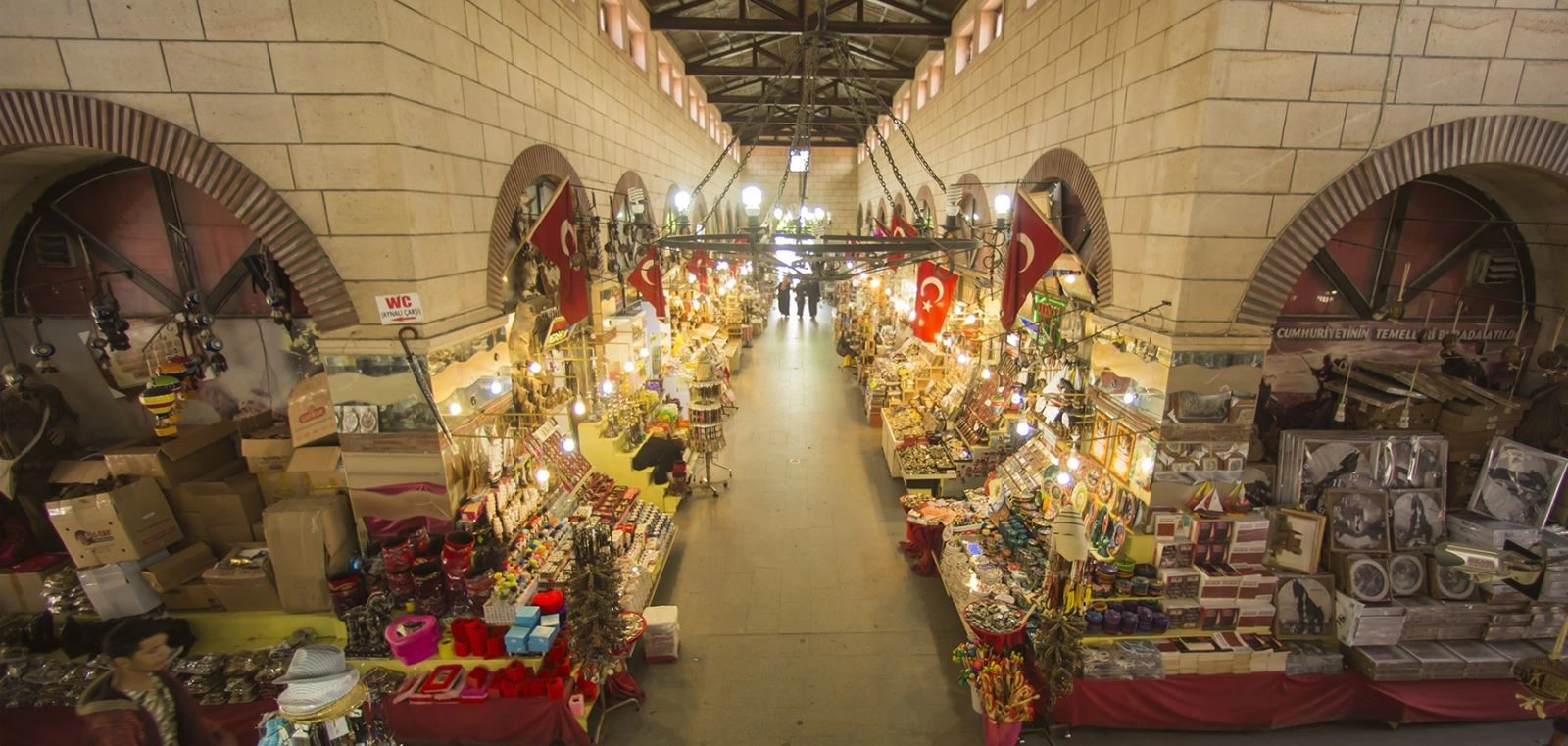
Over the twentieth century the structure underwent periods of change, repair and reconstruction. The entrance survived as its most important historical element, while the bazaar itself was eventually restored and reorganised as a commercial and cultural attraction.
A major municipal restoration was completed in 2007. Today Aynalı Çarşı continues to function as a shopping passage while also serving as one of the most visited heritage landmarks in central Çanakkale.
Its survival is especially meaningful because the bazaar is remembered not only through architecture but also through music. The words “Çanakkale içinde Aynalı Çarşı” made the name known throughout Türkiye and connected this modest urban marketplace forever with the memory of the Gallipoli generation.