The Ottoman Fortress That Guarded the Dardanelles

Çimenlik Castle (Kale-i Sultaniye) – Complete Visitor Guide

Discover Mehmed II's 15th-century fortress, its 1915 battle scars,
Ottoman artillery defences and the Çanakkale Naval Museum.

Explore Çimenlik Castle

Discover Kale-i Sultaniye – The Fortress at the Heart of Çanakkale

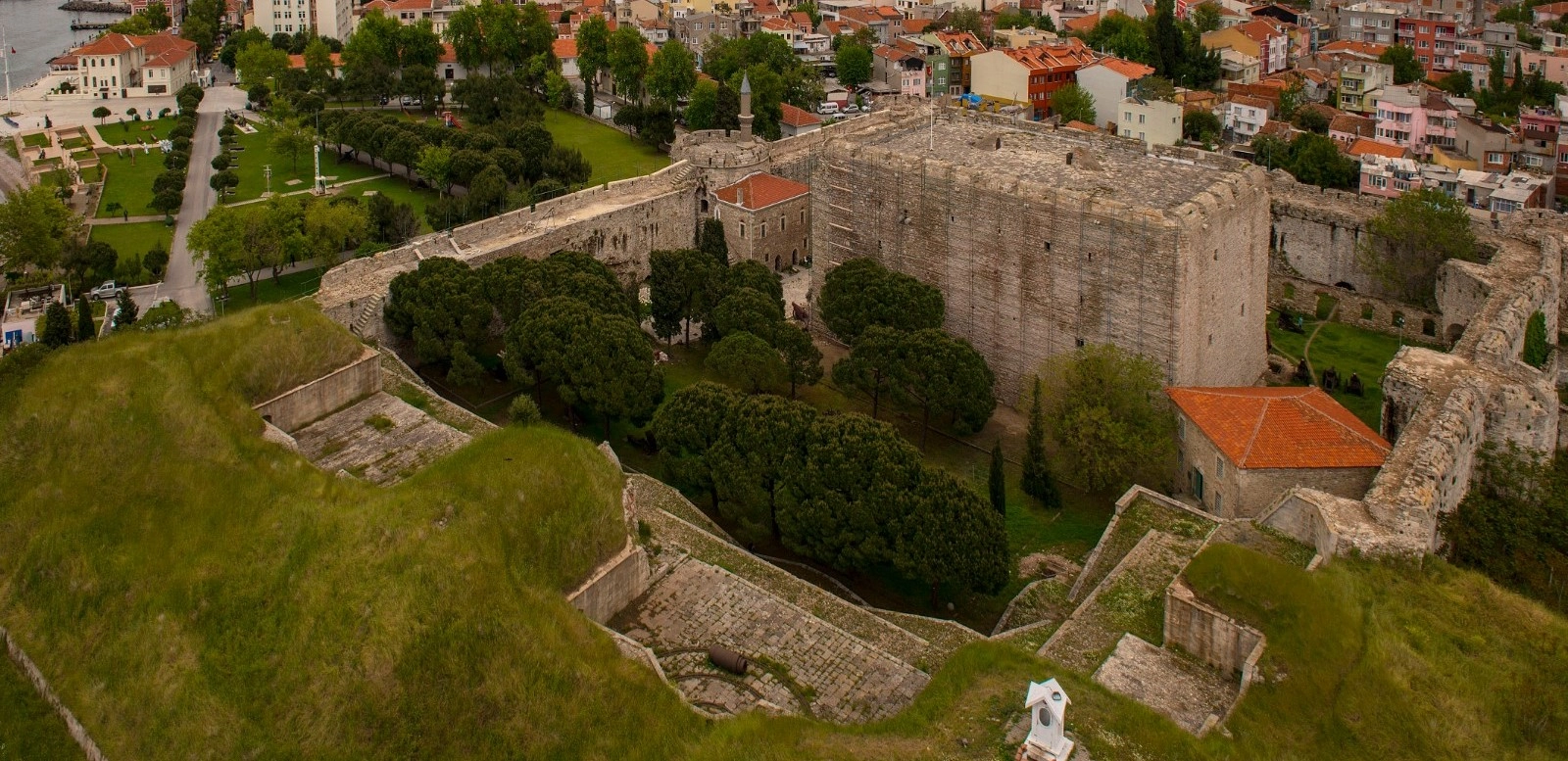
Standing beside the mouth of Sarıçay in the centre of Çanakkale, Çimenlik Castle is far more than an old stone fortress. Known historically as Kale-i Sultaniye, it was created by Sultan Mehmed II (Mehmed the Conqueror) after the conquest of Constantinople as part of a new Ottoman strategy for controlling the Dardanelles.

Directly across the strait stands Kilitbahir Castle. Together, the two fortresses transformed the narrow waterway into a controlled military passage. Ships moving between the Aegean and the Sea of Marmara could be watched, challenged and, if necessary, brought under artillery fire.

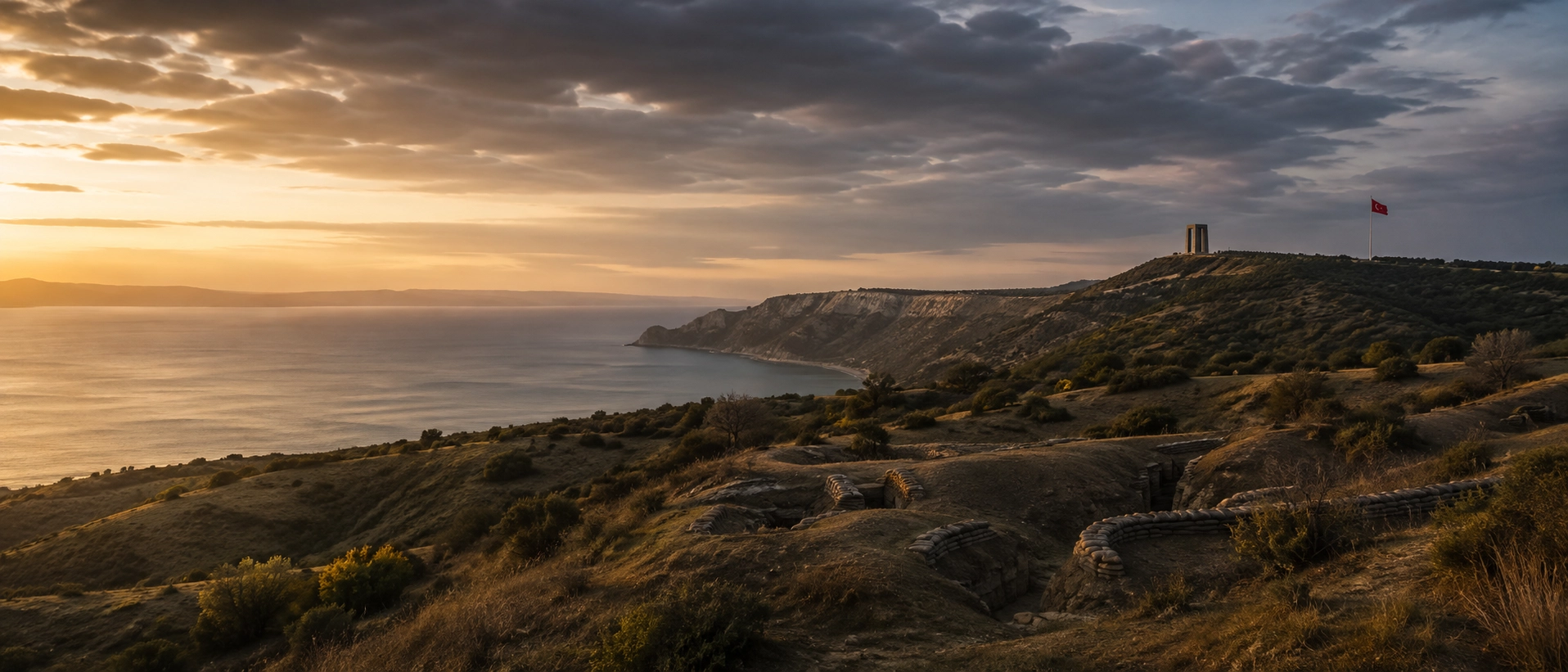
The castle did not remain frozen in the fifteenth century. As artillery technology changed, its walls, towers and seaward defences were repeatedly adapted. New batteries were added during the Ottoman period, and the fortress eventually became part of the defensive network that confronted the Allied fleet during the Gallipoli Campaign of 1915.

Today the castle forms one of the most evocative parts of the Çanakkale Naval Museum. Visitors can explore Ottoman military architecture, historic mosques, former ammunition spaces, artillery displays and physical traces of the 18 March 1915 naval battle—including one of the most extraordinary surviving battle scars anywhere in Çanakkale.

Built by Mehmed II

Explore a fortress created in 1462 as part of the Ottoman system for controlling the narrowest section of the Dardanelles.

Paired with Kilitbahir

Stand on the Asian shore and look directly across to the European fortress that completed the strategic cross-strait defence.

1915 Battle Heritage

See a fortress that served as a command point during the Dardanelles battles and still preserves a remarkable shell impact from 18 March.

Naval Museum

Discover artillery, mines, naval weapons and other objects that connect the castle with centuries of maritime defence.

Plan Your Visit

Çimenlik Castle – Quick Facts

Essential information for understanding one of the most important Ottoman fortresses on the Dardanelles.

🏰

Historic Name

Kale-i Sultaniye, meaning the Sultan's Castle; today it is commonly known as Çimenlik Castle.

📅

Construction

Built in 1462 under Sultan Mehmed II shortly after the Ottoman conquest of Constantinople.

📍

Location

Çanakkale city centre, on the Asian shore of the Dardanelles beside the mouth of Sarıçay.

Today

The fortress is incorporated into the Çanakkale Naval Museum and preserves Ottoman and First World War military heritage.


From Mehmed II to the Gallipoli Campaign

The History of Çimenlik Castle

More than five centuries of military adaptation turned Kale-i Sultaniye from a fifteenth-century gunpowder fortress into a witness to modern naval warfare.

The story of Çimenlik Castle begins in the decades immediately after the Ottoman conquest of Constantinople in 1453. Sultan Mehmed II understood that possession of the imperial capital could not be separated from control of the waterways that connected it with the Aegean and Mediterranean worlds.

To strengthen Ottoman authority over the Dardanelles, two major fortresses were established opposite one another at the narrow part of the strait. On the European side stood Kilitbahir—the "Lock of the Sea"—while on the Asian shore rose Kale-i Sultaniye.

Official regional records date Çimenlik Castle to 1462. Its position beside Sarıçay allowed the Ottomans to combine a powerful fortified base with artillery capable of covering the waterway together with the guns of Kilitbahir Castle.

The fortress became more than a military installation. Settlement expanded around it, and the castle played an important role in the development of the town that became modern Çanakkale. For a period, the settlement itself was known by the name Kale-i Sultaniye.

During later Ottoman centuries, the castle was repaired and altered repeatedly. The most dramatic transformations came as naval artillery developed and the original medieval-style walls became increasingly vulnerable to modern cannon fire. Sections facing the sea were removed or reworked and new coastal battery positions were introduced.

By the nineteenth century, the castle had become part fortress and part artillery battery. New defensive structures reflected the changing logic of warfare: lower, heavier positions protected by earth and masonry were better suited to increasingly powerful naval guns than high medieval walls.

The castle returned to the centre of world history in 1915. During the Allied attempt to force the Dardanelles, Kale-i Sultaniye served within the Ottoman central defensive system and became a command and coordination point during the naval operations.

One extraordinary reminder of that battle survives in the fabric of the fortress. On 18 March 1915, a shell fired from the British battleship HMS Queen Elizabeth struck the northern wall. The projectile failed to explode and remains associated with the impact cavity in the masonry—a direct physical connection between the surviving Ottoman fortress and the great naval battle fought in the strait.

Today Çimenlik Castle is preserved as part of the Çanakkale Naval Museum, allowing visitors to move through layers of Ottoman military history, maritime technology and First World War memory in the very place where those histories intersected.


Why Kale-i Sultaniye Was Strategically Important

The castle's importance becomes immediately clear when you stand beside the Dardanelles. Çimenlik and Kilitbahir occupy opposite shores near the narrow section of the strait, creating a coordinated defensive line across one of the most important maritime corridors in the eastern Mediterranean.

The Dardanelles

The strait links the Aegean Sea with the Sea of Marmara and, through the Bosphorus, the Black Sea—making it strategically important for trade, naval movement and imperial defence.

Cross-Fire Defence

Artillery positioned at Çimenlik and Kilitbahir could cover the waterway from both shores, making uncontrolled passage far more difficult.

Protecting Istanbul

Control of the Dardanelles formed part of the wider defence of the Ottoman capital and the sea route leading toward the Sea of Marmara.

Strategic Continuity

The same geography that mattered to Mehmed II remained crucial during later Ottoman conflicts and again during the First World War.


Few places explain the military geography of Çanakkale as clearly as this pair of fortresses. The architecture may belong to different phases, but the fundamental strategic idea is simple: control the narrow waterway by controlling both shores.

What to See

Highlights of Çimenlik Castle & the Naval Museum

The castle combines fifteenth-century Ottoman fortification, later artillery works, religious buildings, wartime traces and museum displays.

The Main Tower

The massive central keep is the architectural heart of Kale-i Sultaniye and one of the clearest surviving expressions of Mehmed II's fortress-building programme.

  • Plan: Rectangular
  • Scale: Approximately 30 x 42 metres
  • Height: About 20 metres

Outer Walls & Towers

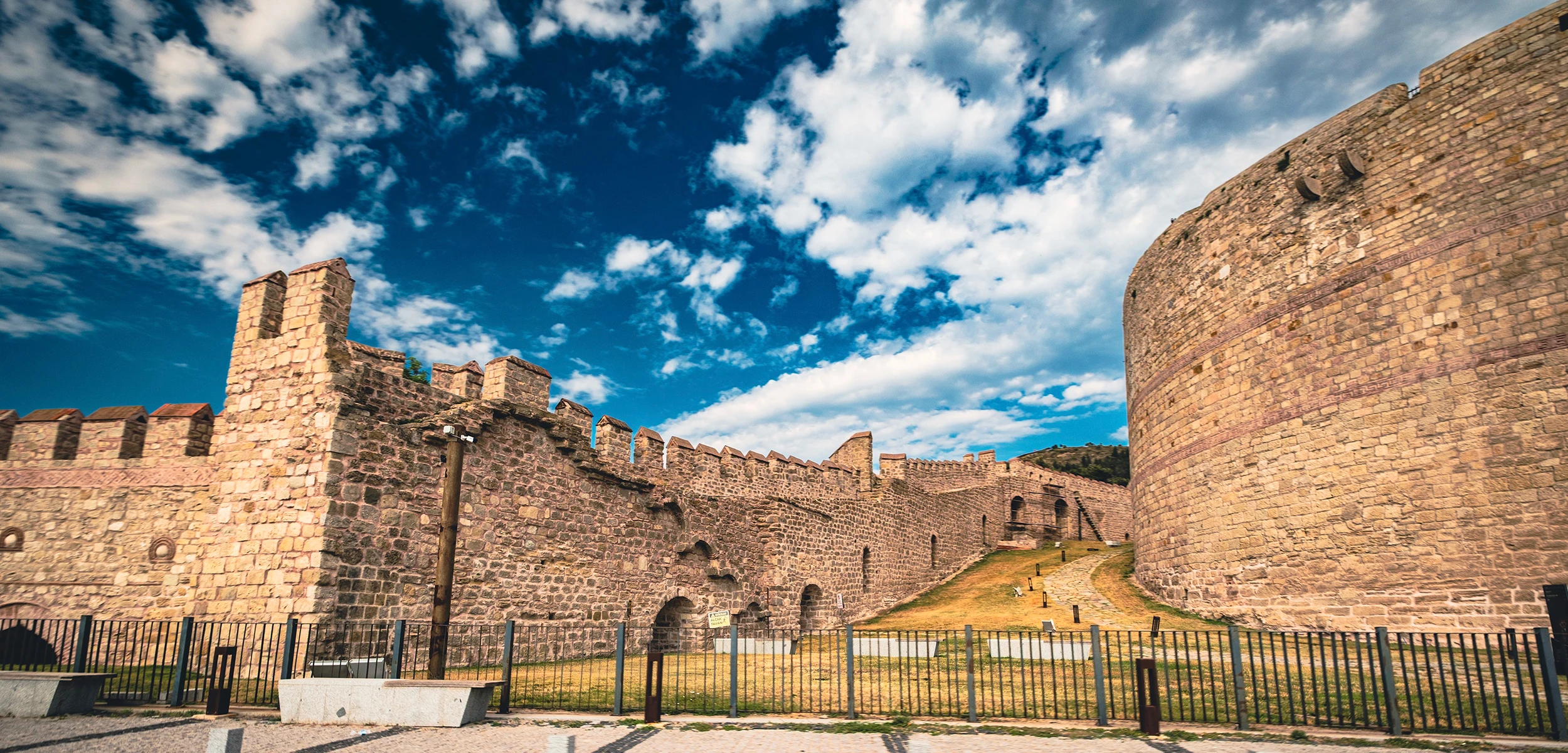
The outer enclosure was strengthened by polygonal and circular towers and smaller bastions, creating a fortified perimeter around the central tower.

  • Overall dimensions: Approximately 110 x 160 metres
  • Form: Rectangular fortified enclosure
  • Purpose: Defence of garrison, artillery and inner structures

Fatih Mosque

Located in the northern part of the fortress, the Fatih Mosque belongs to the original foundation period and reflects the everyday religious life of the Ottoman garrison.

  • Founder: Sultan Mehmed II
  • Location: Attached to the northern bastion
  • Interest: Early Ottoman military-religious architecture

Abdülaziz Mosque

A later Ottoman mosque stands near the southwest corner of the main tower, illustrating how the military complex remained active and continued to develop in the nineteenth century.

  • Period: Reign of Sultan Abdülaziz
  • Date: Nineteenth century
  • Feature: Lower level arranged as a storage space

Piri Reis Gallery

A former gunpowder or ammunition-related structure within the walls is used as the Piri Reis Gallery, linking the castle with the wider maritime history presented by the museum.

  • Historic function: Baruthane / powder magazine
  • Present use: Museum gallery
  • Theme: Ottoman and Turkish maritime heritage

19th-Century Coastal Battery

Parts of the western and seaward fortifications were altered to make room for artillery positions better suited to the age of modern naval guns.

  • Period: Nineteenth century
  • Feature: Four protected battery chambers
  • Importance: Evidence of adaptation to changing weapons technology

The 18 March 1915 Shell Impact

One of the castle's most powerful historical traces is the impact associated with an unexploded shell fired from HMS Queen Elizabeth during the great naval attack of 18 March 1915.

  • Date: 18 March 1915
  • Ship: HMS Queen Elizabeth
  • Location: Northern wall of the fortress

Open-Air Military Displays

The museum grounds display artillery pieces, gun carriages, mines, anti-tank weapons and other military objects connected with the defence of the Dardanelles.

  • Focus: Naval and coastal defence
  • Setting: Castle garden and museum grounds
  • Experience: Large-scale military objects in their strategic landscape

The Architecture of Çimenlik Castle

Çimenlik Castle belongs to an important moment in the history of fortification. Mehmed II's military architecture was shaped by the increasing importance of gunpowder artillery, and the fortress was designed not simply as a defensive residence but as a platform for controlling a major waterway with cannon.

The enclosure is approximately 110 x 160 metres. Within it rises a substantial central tower, while the outer curtain is reinforced with different forms of towers and bastions. The result is a fortress that combines medieval-looking masonry with the emerging needs of artillery warfare.

Outer Enclosure

A strong rectangular perimeter protected the garrison and created a controlled military space beside the Dardanelles.

Central Keep

The three-storey main tower formed the heavily built core of the fortress and survives as one of its most impressive architectural elements.

Mixed Tower Forms

Polygonal and rounded towers demonstrate the varied defensive geometry used along the outer walls.

Later Adaptation

As cannon technology advanced, parts of the earlier fortress were sacrificed or rebuilt to create lower and more effective coastal batteries.


The value of Çimenlik Castle lies partly in this architectural layering. Visitors are not looking at a single building frozen in 1462, but at a defensive complex repeatedly modified because the weapons, ships and political threats of the Dardanelles kept changing.

The Main Tower of Kale-i Sultaniye

At the centre of the complex stands the massive main tower. Official regional records describe it as approximately 30 x 42 metres, around 20 metres high and arranged over three storeys.

Its scale is important. The tower was not merely a symbolic statement of royal power; it was a secure military structure within a wider fortified enclosure. Together with the outer walls, ammunition spaces, barracks and religious buildings, it formed part of a self-contained garrison complex.

Plan Large rectangular central tower
Dimensions Approximately 30 x 42 metres
Height Approximately 20 metres
Levels Three storeys within the principal fortified mass

From Kale-i Sultaniye to Modern Çanakkale

Çimenlik Castle is important not only to military history but also to the urban history of Çanakkale. The first Ottoman settlement on this stretch of the Asian shore developed around the fortress in the fifteenth century.

Soldiers, administrators, craftsmen, maritime communities and other residents gradually created neighbourhoods around the fortified centre. The town became known for a period as Kale-i Sultaniye, borrowing the name of the fortress itself.

Military Beginning

The original settlement grew around the people required to operate, supply and administer the fortress.

Port Community

The strategic waterfront encouraged maritime activity, trade and the growth of a diverse urban population.

Kale-i Sultaniye

The castle's historical name was also used for the developing town before the modern name Çanakkale became established.

City-Centre Monument

Unlike many remote fortresses, Çimenlik remains physically embedded in the modern city that developed around it.


This makes a visit especially rewarding: you are not travelling to an isolated castle outside town. You are entering the historical nucleus from which a strategically important Dardanelles city evolved.

The Fatih and Abdülaziz Mosques

Two mosques within Çimenlik Castle demonstrate how the fortress functioned as a living military community rather than simply a defensive wall.

Fatih Mosque

The northern mosque is attributed to Sultan Mehmed II and belongs to the original foundation of the fortress. It was constructed in connection with the northern bastion.

Two-Level Arrangement

Official local information notes that the lower level of the Fatih Mosque was used by castle personnel for everyday functions.

Abdülaziz Mosque

The later mosque near the southwest side of the main tower was built during the reign of Sultan Abdülaziz in the nineteenth century.

Changing Fortress Life

The presence of buildings from different Ottoman centuries shows that Kale-i Sultaniye remained an active garrison complex long after its original construction.

Çimenlik Castle and the Evolution of Artillery

Military architecture becomes obsolete quickly when weapon technology changes. The development of more powerful cannon meant that the original fifteenth-century form of Çimenlik Castle could not simply remain untouched.

During the nineteenth century, substantial parts of the western and seaward defences were modified. Sections of walls and corner towers were removed, and a new artillery battery was created with protected positions designed for modern coastal defence.

Original Defence Fortified enclosure, towers and artillery covering the Dardanelles
Technological Change Increasingly powerful naval guns made high masonry walls more vulnerable
19th-Century Response Seaward structures were modified and lower coastal battery positions were introduced
What Visitors See A layered fortress where architecture records several different eras of military technology

Çimenlik Castle During the Gallipoli Campaign

By 1915 the Dardanelles had become the focus of one of the First World War's most ambitious naval operations. Britain and France attempted to force their fleets through the strait, neutralise Ottoman defences and open a route toward Constantinople and Russia.

Çimenlik Castle belonged to the central defence system of the strait and served as a command and coordination position during the fighting. Although parts of its architecture were centuries old, the site remained strategically relevant because it occupied the same narrow waterway Mehmed II had sought to control.

Central Defence Group

The fortress functioned as an important command position within the Ottoman defensive network controlling the middle section of the Dardanelles.

Naval Bombardment

Allied battleships subjected the strait's fortifications and batteries to heavy naval fire in an attempt to suppress Ottoman guns.

18 March 1915

The decisive Allied naval assault became one of the defining episodes of the Dardanelles Campaign.

Living Battlefield Evidence

Unlike a museum object removed from its context, the surviving shell impact connects visitors directly with the physical fabric of the battle.


For travellers who later cross to the Gallipoli Battlefields, Çimenlik Castle offers an excellent introduction to the naval phase of the campaign before the landings of 25 April 1915.

The HMS Queen Elizabeth Shell at Çimenlik Castle

One feature makes Çimenlik Castle particularly memorable for First World War visitors. During the naval battle of 18 March 1915, a projectile fired from the British battleship HMS Queen Elizabeth struck the northern wall of the fortress.

According to Türkiye's official Culture Portal, the shell opened an approximately two-metre impact cavity in the wall but did not explode. The projectile remains preserved in association with the place where it struck.

Date 18 March 1915
Attacking Ship British battleship HMS Queen Elizabeth
Target Area Northern wall of Kale-i Sultaniye
Why It Matters It is a rare physical trace of the naval battle preserved within the monument that was actually under fire

This is one of those details that can transform a castle visit. The stonework stops being an abstract historical monument and becomes a battlefield surface carrying evidence of a specific day, a specific ship and a specific artillery strike.

Çimenlik Castle & Kilitbahir Castle

The best way to understand Çimenlik Castle is not to see it alone. Look across the Dardanelles and the logic of the entire site becomes visible: on the European shore stands Kilitbahir Castle, constructed as its strategic partner.

Çimenlik

Asian shore, beside Sarıçay and the settlement that developed into modern Çanakkale.

Kilitbahir

European shore, rising from the opposite hillside with its distinctive clover-shaped defensive plan.

The Narrow Strait

The two fortresses face one another across approximately 1.25 kilometres of water at the narrow Dardanelles crossing.

One Strategic Idea

Ships passing through the channel could be controlled by artillery from both shores rather than from a single isolated fortification.


Travellers with time should visit both. Çimenlik explains the urban and naval history of Çanakkale, while Kilitbahir offers a remarkably different architectural solution to the same strategic problem.

How to Get to Çimenlik Castle

One of the great advantages of visiting Çimenlik Castle is its location. Unlike many battlefield fortifications, it stands directly in Çanakkale city centre and can be reached easily on foot from the waterfront, ferry area and central shopping streets.

From Çanakkale Waterfront

Walk south along the central waterfront toward the Naval Museum and the mouth of Sarıçay.

From the Ferry Pier

The castle is within the central urban area, making it an easy addition before or after a ferry crossing to Kilitbahir or Eceabat.

By Private Vehicle

Because the site is in the city centre, allow extra time for traffic and parking, especially during summer and commemorative periods.

Ideal Walking Route

Combine the castle with the waterfront, Aynalı Çarşı and the central streets of Çanakkale for an easy half-day city itinerary.

Visiting Çimenlik Castle & Çanakkale Naval Museum

The castle is visited as part of the Çanakkale Naval Museum. Because the complex is an active museum under military administration, opening hours, individual exhibition access and ticket arrangements can change.

Museum Çanakkale Naval Museum
Location Fevzipaşa Mahallesi, Yalı Caddesi, Çimenlik Sokak, Çanakkale
Closed Day The official museum listing currently identifies Monday as the weekly closed day
Best Practice Confirm current opening hours, ticket prices and access conditions shortly before your visit

Official museum hours are seasonal, and the last ticket time is earlier than closing. If Çimenlik Castle is an important part of your itinerary, check the current official listing rather than relying on an old guidebook or outdated social-media post.

Best Time to Visit Çimenlik Castle

April – May

Mild weather makes this an excellent period for combining the castle with waterfront walks and longer historical excursions around Çanakkale.

June

Long daylight hours are ideal for pairing a museum visit with Kilitbahir or other Dardanelles sites.

July – August

Expect warmer weather and more visitors. The museum interiors can provide a welcome cultural stop during the hottest part of the day.

September – October

Comfortable temperatures and softer light make early autumn one of the most enjoyable periods for city and battlefield exploration.


The period around 18 March has particular commemorative significance in Çanakkale and can be much busier than an ordinary spring visit. Travellers interested in the annual ceremonies should plan transportation and accommodation well in advance.

How to Include Çimenlik Castle in Your Çanakkale Itinerary

Because the castle stands in the city centre, it can be combined with several nearby attractions without turning the day into a long road journey.

Morning – Çanakkale Waterfront Begin with a walk along the Dardanelles and approach the castle from the historic city centre
Late Morning – Çimenlik Castle Explore the fortress architecture, mosques, artillery alterations and 1915 battle traces
Midday – Naval Museum Continue through the exhibition areas and open-air military collection
Afternoon – Cross the Strait Take the ferry toward Kilitbahir and visit the fortress that formed the opposite half of Mehmed II's defensive system

For travellers particularly interested in the First World War, an alternative is to visit Çimenlik Castle before continuing to the Gallipoli Battlefields with a licensed guide.

Çimenlik Castle Travel Tips

Look Across the Strait

Do not examine Çimenlik in isolation. Find a viewpoint toward Kilitbahir to understand the cross-fire defence system created by Mehmed II.

Find the 1915 Battle Scar

The Queen Elizabeth shell impact is one of the most historically powerful details in the complex and should not be missed.

Allow Museum Time

The site is more than a castle exterior. Give yourself enough time to explore the Naval Museum displays as well as the architecture.

Check Opening Hours

Museum hours can change seasonally, and Monday is currently listed as the closed day. Confirm shortly before visiting.

Visit Kilitbahir Too

The paired fortress on the opposite shore completes the story of Ottoman control over the Dardanelles.

Use a Guide for 1915 History

A knowledgeable guide can connect the castle's artillery positions with the larger naval battle and the later Gallipoli land campaign.

Combine with the Waterfront

The castle's city-centre location makes it easy to include in a relaxed walking itinerary rather than treating it as a separate road excursion.

Respect Museum Restrictions

Follow all instructions concerning photography, closed areas and military displays, as access rules can differ between exhibition zones.

Compare Old and New Defences

Look for the contrast between the original high-walled fortress and the lower nineteenth-century artillery battery additions.

Think in Layers

The most rewarding way to read the site is as a sequence: Mehmed II, later Ottoman repairs, artillery modernisation, 1915 and the modern museum.

Why Visit Çimenlik Castle?

Çimenlik Castle brings together several of the themes that define Çanakkale: Ottoman imperial strategy, the geography of the Dardanelles, maritime warfare, urban history and the memory of the Gallipoli Campaign.

Mehmed II's Strategy

The fortress shows how the conqueror of Constantinople extended Ottoman control to the Dardanelles after securing the imperial capital.

Birthplace of the City

The settlement that became modern Çanakkale developed around the military community of Kale-i Sultaniye.

Architecture in Transition

Visitors can compare fifteenth-century walls with later artillery adaptations created for a completely different age of warfare.

1915 Battlefield Evidence

The preserved shell impact provides a direct physical link with the Allied naval attack of 18 March 1915.

Naval Museum Collections

The museum setting expands the story beyond architecture to weapons, mines, artillery and Turkish maritime history.

Perfect City-Centre Location

Few major fortresses are this easy to visit: Çimenlik stands within walking distance of the central waterfront and ferry connections.

Frequently Asked Questions About Çimenlik Castle

What is Çimenlik Castle?

Çimenlik Castle is a fifteenth-century Ottoman fortress in central Çanakkale, historically known as Kale-i Sultaniye. It was built to help control maritime passage through the Dardanelles.

Is Çimenlik Castle the same as Kale-i Sultaniye?

Yes. Kale-i Sultaniye is the historical Ottoman name of the fortress now commonly called Çimenlik Castle.

Who built Çimenlik Castle?

The fortress was commissioned by Sultan Mehmed II (Mehmed the Conqueror) as part of the Ottoman effort to secure the Dardanelles after the conquest of Constantinople.

When was Çimenlik Castle built?

Official Çanakkale cultural heritage records date the fortress to 1462, while the national Culture Portal gives the construction period as 1461–1462.

Why was Çimenlik Castle built?

Its principal purpose was to control and defend the Dardanelles. Together with Kilitbahir Castle on the opposite shore, it allowed Ottoman artillery to cover the narrow waterway from both sides.

Where is Çimenlik Castle?

The castle stands in Çanakkale city centre on the Asian side of the Dardanelles, beside the mouth of Sarıçay and within the Çanakkale Naval Museum complex.

Can you walk to Çimenlik Castle from central Çanakkale?

Yes. The castle is within the central waterfront area and can be reached on foot from many hotels, restaurants, ferry connections and shopping streets in the city centre.

What is opposite Çimenlik Castle?

Directly across the Dardanelles stands Kilitbahir Castle, the European-shore fortress built as part of the same strategic defensive system.

How wide is the Dardanelles between Çimenlik and Kilitbahir?

The strait is approximately 1.25 kilometres wide at this narrow crossing, which explains why the paired fortresses were so effective strategically.

Did Çimenlik Castle help create the city of Çanakkale?

Yes. The early Ottoman settlement developed around the fortress, and the town was for a period known as Kale-i Sultaniye.

What can you see inside Çimenlik Castle?

Visitors can explore the main tower and fortified complex, Ottoman mosque buildings, later artillery works, museum galleries, military displays and important traces connected with the 1915 Dardanelles battles.

Are there mosques inside Çimenlik Castle?

Yes. The complex contains the Fatih Mosque, associated with the original foundation under Mehmed II, and the later Abdülaziz Mosque from the nineteenth century.

What is the Piri Reis Gallery?

A former powder-magazine structure inside the fortress is used as the Piri Reis Gallery, forming part of the museum interpretation of Turkish maritime history.

Was Çimenlik Castle changed after it was built?

Extensively. Ottoman repairs and nineteenth-century artillery modernisation altered parts of the original fortress, especially the seaward and western defences.

Why were parts of the old walls removed?

As naval guns became more powerful, high masonry walls were less effective. Portions of the older fortifications were replaced or modified to create lower artillery battery positions better suited to modern coastal defence.

What happened at Çimenlik Castle in 1915?

During the Gallipoli Campaign, the fortress formed part of the Ottoman central defence system of the Dardanelles and served as an important command location during the naval fighting.

Is there really a shell from HMS Queen Elizabeth in the castle wall?

Türkiye's official Culture Portal records that a shell fired from HMS Queen Elizabeth on 18 March 1915 struck the northern wall, opened a roughly two-metre cavity and failed to explode. The projectile remains associated with the impact site.

What is the significance of 18 March 1915?

18 March was the day of the major Allied naval assault on the Dardanelles. The failure of the fleet to force the strait became one of the defining moments of the Gallipoli Campaign.

Is Çimenlik Castle part of the Çanakkale Naval Museum?

Yes. The fortress is one of the principal historical components of the Çanakkale Naval Museum.

What does the Naval Museum display?

The museum interprets Turkish naval history, the defence of the Dardanelles and the Gallipoli Campaign. The grounds include artillery, mines and other large military and naval objects.

Is Çimenlik Castle open on Mondays?

The official Turkish Museums listing currently identifies Monday as the weekly closed day. Opening schedules can change, so always confirm the current timetable before travelling.

How long should I allow for Çimenlik Castle?

Allow approximately 1.5–2 hours if you want to appreciate both the fortress and the Naval Museum displays without rushing. Military-history enthusiasts may prefer longer.

Is Çimenlik Castle suitable for children?

Yes. Families interested in history can find the large artillery pieces, fortress architecture and naval displays engaging, but children should be supervised around stairs, walls and historic military objects.

Is the castle suitable for visitors with limited mobility?

The wider museum complex offers visitor facilities, but access to some historic fortress spaces can be affected by stairs, thresholds and original architecture. Check current accessibility arrangements before visiting.

Can I take photographs inside Çimenlik Castle?

Photography policies may differ between outdoor areas and individual museum spaces. Follow current signs and staff instructions, especially because the museum is administered within a military heritage complex.

Can I visit Çimenlik and Kilitbahir castles on the same day?

Yes. This is one of the best historical combinations in central Çanakkale. Visit Çimenlik on the Asian shore, then cross the Dardanelles by ferry and explore Kilitbahir Castle.

Can I combine Çimenlik Castle with Gallipoli?

Yes. Çimenlik provides excellent background to the naval battle of 18 March 1915 before a guided visit to the Gallipoli Battlefields on the European side.

Can I combine Çimenlik Castle with Troy?

Yes. Because Çimenlik is in central Çanakkale, it can be visited before or after a half-day or full-day excursion to the Ancient City of Troy.

Why should history lovers visit Çimenlik Castle?

Few monuments connect so many layers of Çanakkale history in one place: Mehmed II's Ottoman expansion, the growth of the city, changing artillery technology, the defence of the Dardanelles and the naval battles of 1915.

Best Photo Spots at Çimenlik Castle

Main Tower

Use wider compositions to show the scale of the central keep against the lower outer fortifications.

Walls & Bastions

Angled views along the curtain walls reveal the changing shapes of towers and the layered defensive geometry.

Dardanelles View

Include the strait whenever possible—the waterway is essential to understanding why the fortress exists.

Kilitbahir Across the Water

A composition connecting the two shores can visually explain Mehmed II's paired-fortress strategy better than any diagram.

Artillery Displays

The outdoor museum objects create strong foreground subjects with the historic fortress walls behind them.

1915 Battle Detail

Where photography is permitted, document the shell impact carefully as a close historical detail rather than only taking wide castle views.


Because this is an active museum complex, always follow current photography instructions. Drone operation around military, urban and museum areas can be restricted and should never be attempted without the required permissions.

Private Çimenlik Castle & Dardanelles Tours

We can incorporate Çimenlik Castle into privately designed historical journeys through Çanakkale, Kilitbahir, Gallipoli, Troy and the wider Dardanelles region.

Private Historical Experiences

Flexible itineraries with private transportation and licensed professional guiding, planned around your interests in Ottoman, naval and First World War history.

Continue Exploring Çanakkale

Discover the battlefield, archaeological and maritime landscapes surrounding Kale-i Sultaniye.