Large Whole Chestnuts
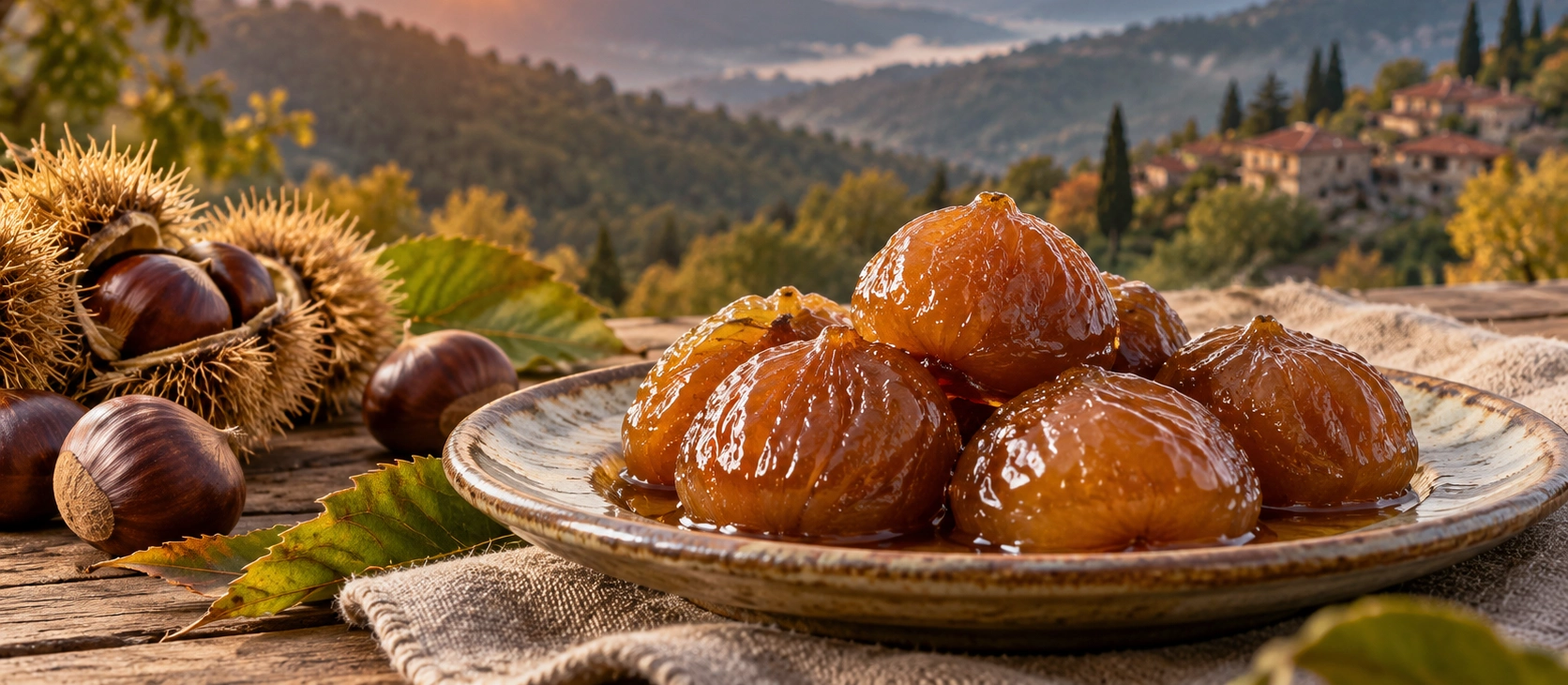
The confection is distinguished by generously sized chestnuts that remain visually substantial after preparation.
- Form: Whole fruit
- Appearance: Large
- Structure: Intact






Travel east from İzmir into the fertile Küçük Menderes Basin, then climb toward the forested heights of the Bozdağ Mountains, and the landscape changes dramatically.
Chestnut trees thrive in these cooler mountain environments, where villages around Ödemiş have long been associated with locally grown chestnuts.
From this mountain harvest comes one of İzmir Province's most distinctive sweets: Bozdağ Kestane Şekeri.
Whole peeled chestnuts are carefully cooked, sweetened in syrup and handled gently so that the fruit retains its shape rather than collapsing during preparation.
The result is a confection known for large glossy chestnuts, intact structure and a pleasant sweet flavour.
Its regional identity was formally recognised when Bozdağ Kestane Şekeri received geographical-indication registration as a Mahreç İşareti.
Bozdağ Kestane Şekeri is an officially registered geographical indication.
The confection is closely associated with chestnuts grown in the highlands of Ödemiş.
Careful preparation helps the chestnuts remain large, glossy and intact.
The sweet connects mountain agriculture with the food culture of eastern İzmir Province.
Essential information about one of Ödemiş's protected regional specialities.
The product is associated with Ödemiş district in İzmir Province and the chestnut-growing villages of the Bozdağ region.
Whole chestnuts traditionally associated with Akkoza, Tekkoza and Karaaşı varieties.
A sweet confection made by preparing peeled chestnuts and gradually cooking them with sugar syrup.
Registered in Türkiye as a Mahreç İşareti geographical indication under registration number 28.
A confection shaped by the forests, villages and agricultural traditions of Ödemiş.
The landscape surrounding Bozdağ is very different from the coastal scenery usually associated with İzmir.
Here, mountain slopes, forested valleys and highland settlements create cooler environments where chestnut trees have long formed part of the local agricultural landscape.
Chestnuts from villages in the Ödemiş region became especially valued for confectionery because suitable fruits could be peeled and cooked while maintaining their structure.
This characteristic is crucial for chestnut candy. A good whole chestnut must survive several stages of boiling, peeling, resting and syrup cooking without breaking apart.
Over time the resulting confection became strongly connected with the name Bozdağ Kestane Şekeri.
The product's reputation and relationship with Ödemiş eventually led to geographical-indication protection.
Today Bozdağ chestnut candy represents more than dessert. It connects the mountain environment, regional chestnut cultivation, local confectionery knowledge and the culinary identity of Ödemiş.
The defining character of Bozdağ Kestane Şekeri comes from both the chestnuts used and the careful preparation required to transform a fragile fruit into an intact confection.
The confection is distinguished by generously sized chestnuts that remain visually substantial after preparation.
Syrup cooking gives the finished chestnuts their characteristic attractive sheen.
Although sweetened, the confection should still retain the recognisable flavour and character of chestnut.
Successful preparation produces tender chestnuts without reducing them to a broken paste.
The protected product is historically connected with chestnuts from the mountain environment around Ödemiş.
The Bozdağ Kestane Şekeri name is protected through Türkiye's geographical-indication system.
The geographical-indication specification connects Bozdağ chestnut candy with chestnuts traditionally grown in several villages of Ödemiş's mountain country.
These chestnuts are particularly useful for confectionery because suitable fruits can tolerate preparation without easily falling apart.
Chestnut trees grow naturally and agriculturally across suitable slopes and valleys of the Bozdağ region.
Suitable regional varieties are valued for an inner skin that can be separated relatively easily.
Their ability to remain intact during cooking makes them especially suitable for chestnut confectionery.
The chestnuts maintain an attractive appearance through the different stages of preparation.
Fresh chestnuts belong to the autumn agricultural calendar of the mountain villages.
Chestnuts form part of the broader agricultural and forest economy of the Ödemiş highlands.
The registered specification identifies Akkoza, Tekkoza and Karaaşı among the chestnuts traditionally associated with Bozdağ Kestane Şekeri.
Akkoza chestnuts are described with a rounded-convex form and a relatively light brown outer shell.
Tekkoza is described as a round chestnut with a light brown external shell.
Karaaşı chestnuts are generally larger and are associated with a darker brown shell.
All three are associated with characteristics that make them suitable for sweet preparation.
Their structure helps chestnuts survive the repeated cooking stages required for kestane şekeri.
The varieties help connect the finished confection with the agricultural landscape from which it developed.
The Bozdağ Mountains form one of western Türkiye's most important upland landscapes.
They rise between the Gediz and Küçük Menderes basins, creating forest environments very different from the warmer plains below.
Anatolian chestnut trees form part of the remarkable woodland environment of the Bozdağ range.
Mountain altitude creates cooler conditions than those experienced on the Ödemiş plain.
Small settlements appear among wooded valleys, orchards and agricultural slopes.
The mountains shift dramatically through the seasons, from green summers to autumn harvest colours and winter snow.
Mountain springs and streams have shaped settlement and agricultural life across the highlands.
The chestnut country is a working rural environment, not simply a scenic backdrop.
Producing whole chestnut candy requires patience. The registered method describes a sequence designed to prepare the fruit without destroying its shape.
Chestnuts are thoroughly cleaned to remove soil and other foreign material.
The fruits are sorted according to size before moving into the cooking process.
Chestnuts are heated with their shells until they become suitable for peeling.
Both the hard outer shell and inner skin are carefully removed without damaging the chestnut.
The peeled chestnuts are allowed to rest before the next stage of preparation.
The peeled fruit undergoes another controlled cooking stage while its structure is carefully protected.
The chestnuts are cooked in sweet syrup, gradually absorbing sweetness and developing their glossy finish.
The registered process includes a resting period of approximately 12–18 hours.
Finished chestnuts are checked for appearance, integrity and overall quality.
Pieces are separated into quality categories before packaging.
The confection is packed in suitable containers for storage, transport and sale.
Every stage must balance tenderness and sweetness with the need to keep the chestnut whole.
Chestnuts become increasingly fragile as they are boiled, peeled and saturated with syrup.
The skill of production lies in softening them sufficiently while avoiding the cracks and breakage that would destroy the appearance of a premium whole-fruit confection.
The chestnut must be separated from both layers of skin without cutting deeply into the flesh.
Too little cooking leaves the fruit hard, while excessive cooking can make it collapse.
Gradual contact with syrup allows sweetness to penetrate without unnecessarily damaging the chestnut.
Resting stages are part of the process rather than simply pauses between cooking.
Chestnuts with appropriate size and structure provide the best foundation for whole-fruit confectionery.
Broken and intact pieces can be separated according to the desired finished product.
Bozdağ Kestane Şekeri is officially registered through the Turkish geographical-indication system.
The registered specification describes the chestnut characteristics, geographical relationship, production stages, quality controls and packaging requirements associated with the protected product.
The geographical-indication specification specifically associates Bozdağ chestnuts with mountain areas around several villages of Ödemiş.
One of the settlements named in the protected specification in connection with Bozdağ chestnuts.
Part of the mountain landscape traditionally associated with chestnut cultivation.
Another village specifically connected with the chestnuts described in the registration.
Included among the rural areas forming the agricultural story behind the confection.
One of the Ödemiş villages identified with the regional chestnut-growing environment.
Together these settlements illustrate how strongly the confection is linked with a wider rural landscape.
Bozdağ Kestane Şekeri combines the mellow, slightly earthy character of chestnut with the concentrated sweetness of confectionery syrup.
Sugar syrup transforms the naturally mild chestnut into an indulgent dessert.
The fruit itself should remain recognisable beneath the sweetness.
Proper cooking creates a soft interior without completely destroying the fruit's structure.
The outside develops an attractive sheen and concentrated sweetness.
Chestnuts naturally have a substantial, almost creamy-starchy character when cooked.
Because the confection is rich, one or two whole chestnuts can be a satisfying serving.
Chestnut candy needs little decoration. Its whole-fruit form and glossy surface already make it an elegant traditional confection.
The bitterness of strong Turkish coffee balances the sweetness of the chestnut beautifully.
Serve a small piece beside Turkish tea for an easy afternoon sweet.
One chestnut can provide a simple finishing sweet after a meal.
Boxed chestnut candy makes a characteristic food souvenir from the Ödemiş region.
Serve whole pieces individually so their glossy form remains visible.
Follow the producer's storage instructions and allow the flavour to remain prominent when serving.
Chestnuts are naturally associated with autumn, when mature fruits fall from their spiny husks and the mountain harvest begins.
Chestnut candy itself can be available beyond harvest season because the fruit is transformed into a packaged confection.
Chestnut candy can be found in the wider Ödemiş region, including shops and speciality-food sellers serving Bozdağ, Ödemiş and nearby visitor destinations.
When protected origin matters, look specifically for the name Bozdağ Kestane Şekeri.
Check the producer, ingredients, production information and storage instructions.
High-quality presentation emphasises large chestnuts whose form remains intact.
Choose containers that are properly sealed and undamaged.
Do not leave packaged confectionery inside a hot vehicle for extended periods.
Chestnut candy is an easy way to bring home a culinary memory of eastern İzmir.
Bozdağ lies north of Ödemiş, high in the mountain range that separates the Küçük Menderes and Gediz landscapes.
The settlement sits at approximately 1,150 metres above sea level, surrounded by mountain scenery and forest.
Bozdağ offers a dramatically different atmosphere from coastal İzmir.
Chestnut, oak and pine environments form part of the wider mountain scenery.
Elevation has traditionally made Bozdağ an attractive highland escape during warm weather.
Snow can transform the upper Bozdağ Mountains during colder periods.
The surrounding region contains established mountain and countryside routes.
Agriculture and mountain products remain part of the visitor experience.
Ödemiş lies in the fertile interior of İzmir Province, surrounded by agricultural plains and mountain ranges.
The district is known for a remarkable variety of produce, regional foods and historic settlements, making chestnut candy part of a much larger culinary landscape.
Rich agricultural land supports a wide range of crops and livestock.
The northern highlands rise dramatically above the cultivated plain.
Ödemiş remains strongly connected with regional farmers, producers and seasonal food.
The district has several distinctive foods in addition to chestnut candy.
One of western Türkiye's most fascinating historic settlements lies only a short journey from Ödemiş.
Highland landscapes add nature, walking and mountain scenery to an Ödemiş itinerary.
Although coastal produce often dominates images of Aegean cuisine, the mountains of inland İzmir contribute an equally important layer.
Chestnuts are closely connected with autumn and the arrival of cooler weather.
The sweet reveals the productive landscapes hidden above İzmir's plains and coastal districts.
Turning fresh chestnuts into confectionery extends their culinary life beyond harvest.
Successful kestane şekeri depends on patient preparation rather than speed.
A simple ingredient can become a powerful symbol of a particular landscape.
Packaged sweets play an important role in Turkish traditions of visiting and hospitality.
Bozdağ Kestane Şekeri fits naturally into a journey combining the cultural heritage of Birgi with the mountain landscapes north of Ödemiş.
Bozdağ chestnut candy becomes even more meaningful when explored alongside the protected agricultural products and regional foods found throughout İzmir Province.
Begin with glossy whole chestnuts from the mountain food culture of Ödemiş.
Travel toward Nif Mountain to discover another protected İzmir fruit.
Explore the purple-black table grapes of İzmir's mountain vineyards.
Discover another forest product shaped by a distinctive upland landscape.
Continue toward the coast for one of the İzmir Peninsula's celebrated spring vegetables.
Add a savoury regional speciality to your journey through İzmir's protected foods.
The significance of Bozdağ Kestane Şekeri extends beyond its sweetness. It connects forest agriculture, regional craftsmanship and the identity of Ödemiş.
The confection creates demand for chestnuts connected with the Bozdağ mountain landscape.
Production preserves specialised knowledge about handling a delicate whole fruit.
Chestnut growing and confectionery contribute to the wider rural economy.
The product gives Ödemiş another distinctive place on İzmir's culinary map.
Registration formally recognises the product's reputation and regional relationship.
Bozdağ Kestane Şekeri remains a food that visitors can taste, buy and share today.
Continue your journey through one of Türkiye's richest regional food cultures.
Discover the protected cherries cultivated between Nif and Spil mountains.
Explore protected dark grapes from İzmir's elevated vineyard country.
Discover one of the İzmir Peninsula's most famous seasonal vegetables.
Explore the stone-pine forests of the Kozak Plateau.
Taste one of western Türkiye's best-known matured cheeses.
Explore the wild and cultivated greens at the heart of İzmir's seasonal cuisine.
Discover İzmir's famous fried-dough tradition and its strong social meaning.
Explore traditional drinks made from fruit, herbs, flowers and spices.
The Ödemiş region offers an unusually rich combination of historic architecture, mountain scenery, rural landscapes and regional food.
Experience the highland settlement that gives the famous chestnut confection its name.
Discover mountain woodland where mature Anatolian chestnut trees form part of the ecosystem.
Visit the mountain lake and highland scenery above the Ödemiş plain.
Explore historic mansions, mosques and streets reflecting centuries of western Anatolian history.
Discover the district centre, its market traditions and regional cuisine.
Enjoy changing scenery as agricultural plains rise toward wooded highlands.
Ask specifically for Bozdağ Kestane Şekeri when geographical identity matters to you.
Recipes and commercial presentations can vary, so check the producer's label.
The intact chestnut is one of the most characteristic visual features of the confection.
Unsweetened Turkish coffee provides an excellent contrast to the syrupy chestnut.
Understanding Bozdağ's landscape adds context to the sweet's regional identity.
A visit to historic Birgi works naturally with an Ödemiş and Bozdağ food journey.
Chestnut groves and agricultural land may be privately owned and actively worked.
Bozdağ's elevation means weather can differ considerably from the İzmir coast.
Bozdağ Kestane Şekeri is a protected chestnut confection associated with Ödemiş district in İzmir Province.
Kestane şekeri literally means chestnut candy and generally refers to peeled chestnuts sweetened through syrup cooking.
Its geographical-indication registration is associated with Ödemiş district and its villages in İzmir Province.
Bozdağ is a mountain settlement north of Ödemiş in İzmir Province, high in the Bozdağ mountain range.
Yes. Bozdağ Kestane Şekeri is registered in Türkiye as a geographical indication.
It is registered as a Mahreç İşareti.
Bozdağ Kestane Şekeri is registered under geographical-indication number 28.
The registration date is 22 November 2000.
The registrant is Ödemiş Ticaret Odası, the Ödemiş Chamber of Commerce.
The registered specification identifies Akkoza, Tekkoza and Karaaşı among the chestnuts associated with the product.
The geographical-indication specification names Hacı Hasan, Kemer, Yılanlı, Elma Bağı and Ovacık in connection with the regional chestnuts.
Their characteristics make suitable fruits easier to peel and help them retain their structure during confectionery production.
The registered method includes washing, grading, boiling, peeling, resting, further cooking, syrup cooking, quality control, classification and packaging.
Maintaining the integrity of the chestnut is one of the characteristic goals of the preparation process.
It combines concentrated sweetness with the mellow, nutty and slightly earthy flavour of chestnut.
A well-prepared piece is tender inside while remaining sufficiently intact to preserve the shape of the chestnut.
They belong to the same broad family of candied chestnut preparations, but recipes, production methods and regional traditions can differ.
Chestnuts are primarily associated with the autumn harvest season.
Yes. Because it is a processed confection, packaged chestnut candy may be available throughout the year.
Turkish coffee and tea both work well, with unsweetened coffee providing an especially strong contrast to the confection's sweetness.
Bozdağ offers mountain scenery, forests, highland atmosphere and access to a very different side of İzmir Province.
Yes. Birgi, Ödemiş, Gölcük and Bozdağ can be combined into a rewarding cultural, nature and food itinerary.
Yes. The Bozdağ mountain environment includes significant Anatolian chestnut woodland.
The wider district is associated with regional products including Ödemiş Köftesi, Ödemiş potatoes, local olive oil and other agricultural specialities.
Explore Kemalpaşa cherries, Kavacık grapes, Urla artichokes, Kozak pine nuts, İzmir tulum cheese, Aegean herbs, lokma and regional sherbets.
Bozdağ Kestane Şekeri offers rich visual possibilities, from close-up food photography to the forested landscapes behind the product.
Close-up images reveal the sheen, texture and individual shape of each piece.
A traditional coffee setting creates an instantly recognisable Turkish food story.
Fresh chestnuts and opened spiny husks connect the confection with its raw ingredient.
Wide images of mountain woodland provide geographical context for the product.
Mountain roads and forested slopes show a side of İzmir many visitors never expect.
Simple plates, Turkish coffee cups and natural textures allow the confection to remain the visual focus.
When photographing production areas, shops or individual producers, always ask permission before taking close photographs.
Explore eastern İzmir through historic villages, mountain scenery, local food and the agricultural traditions of the Küçük Menderes region.
Custom-designed private touring with professional guiding, comfortable transportation and flexible timing for travellers interested in regional cuisine, mountain landscapes, traditional settlements and local food culture.
Discover Bozdağ Kestane Şekeri, regional foods, mountain agriculture and the culinary identity of Ödemiş.
Request This Experience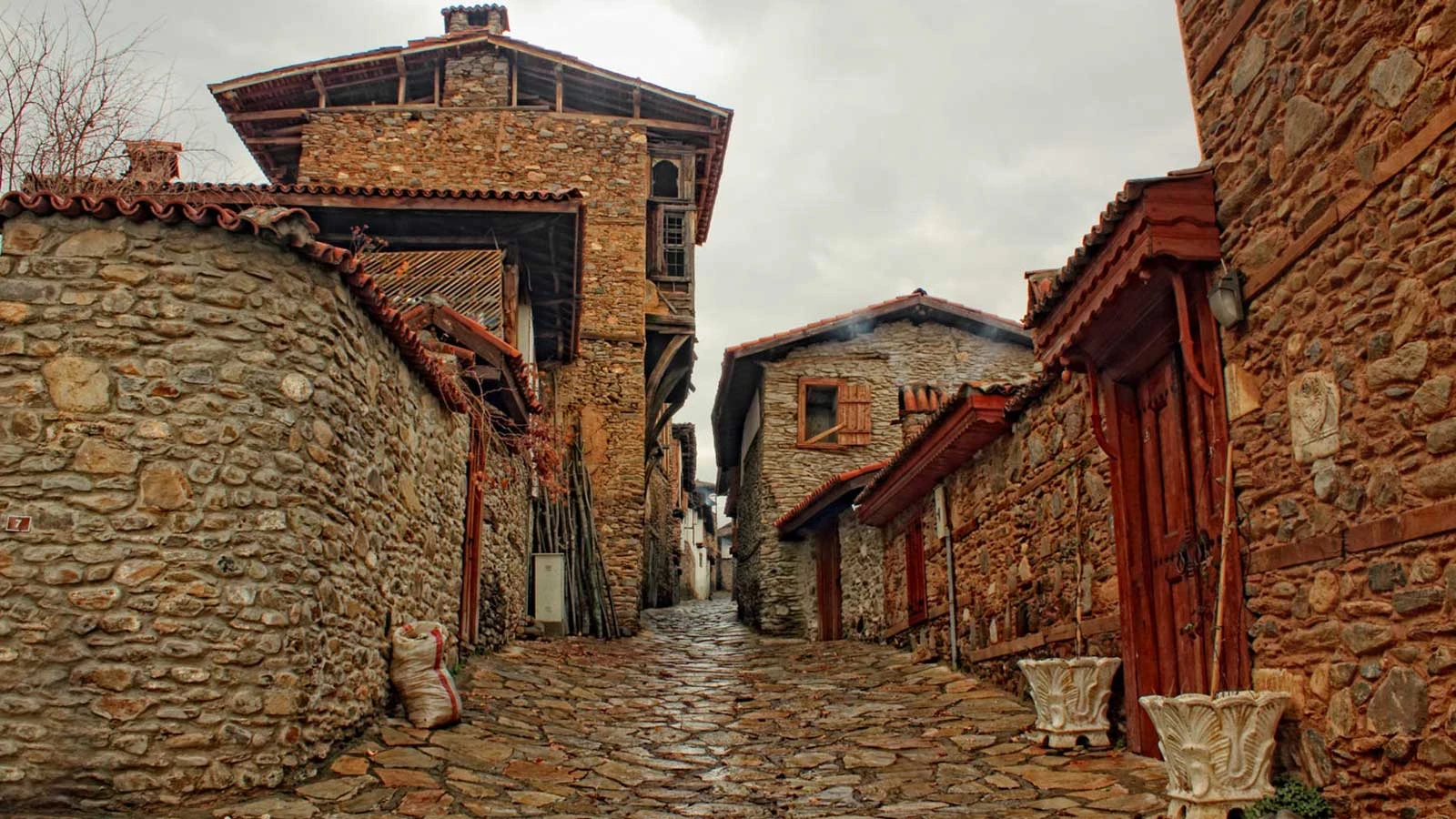
Combine historic Birgi with Gölcük, Bozdağ, mountain scenery and distinctive regional flavours.
Design Your ExperienceContinue your journey through Türkiye's Aegean region with private cultural, archaeological and culinary experiences designed around your interests.