Purple-Black Colour
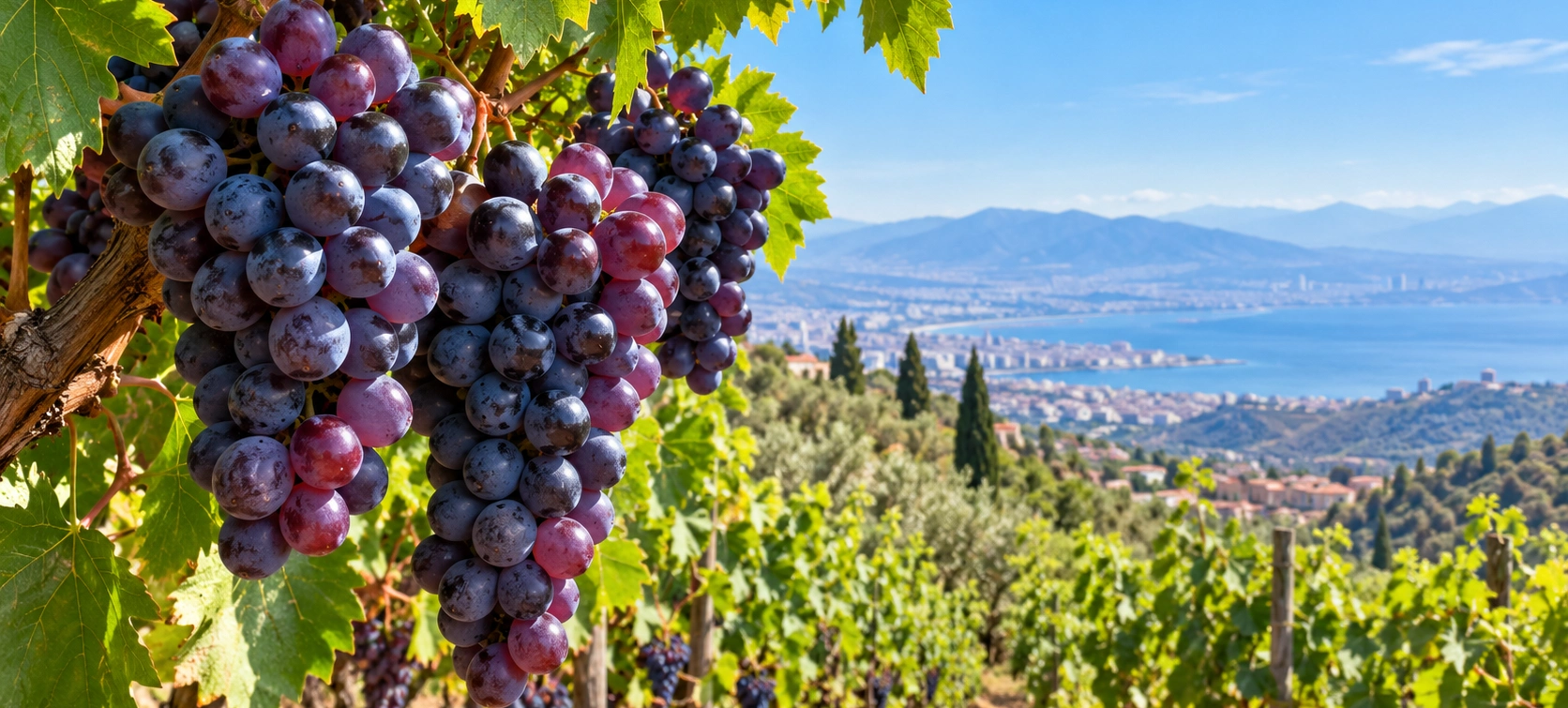
Mature Kavacık grapes develop the rich dark colouring that makes their bunches immediately recognisable.
- Colour: Purple-black
- Appearance: Glossy
- Type: Table grape






Leave the dense streets of İzmir behind and climb into the wooded mountains southwest of the city, and the landscape changes remarkably quickly.
Among pine-covered slopes lies Kavacık, a rural settlement belonging to Karabağlar and one of the most distinctive vineyard landscapes close to metropolitan İzmir.
The village is especially famous for Kavacık Üzümü, a large, dark-purple table grape produced from the Alphonse Lavallée cultivar.
Although the cultivar itself originated outside Türkiye, generations of cultivation in Kavacık have created a grape closely associated with the village's altitude, Mediterranean climate, dry vineyards and traditional growing methods.
The grapes develop large bunches, dark purple-black berries, a glossy appearance and a flavour appreciated primarily as fresh table fruit.
Their connection with Kavacık was formally recognised in 2019, when Kavacık Üzümü received Menşe Adı geographical-indication protection in Türkiye.
Kavacık Üzümü is officially registered as a Menşe Adı geographical indication.
The grape is grown in the elevated landscape of Kavacık village in Karabağlar.
The protected grape is produced from the dark-skinned Alphonse Lavallée cultivar.
Grape growing remains an important part of Kavacık's agricultural and cultural identity.
Essential information about one of İzmir Province's protected vineyard products.
Kavacık village in Karabağlar district, in the elevated landscape southwest of central İzmir.
Kavacık Üzümü is produced from Vitis vinifera L. Alphonse Lavallée.
Mountain elevation, proximity to the Aegean coast and traditional dry vineyard cultivation shape the grape's character.
Registered in Türkiye as a Menşe Adı geographical indication under registration number 475.
A local grape tradition shaped by mountain geography, village life and generations of growers.
Kavacık sits in the rugged uplands of the Kızıldağlar, remarkably close to İzmir yet very different from the densely urbanised coastal city below.
The surrounding mountain landscape has supported rural settlement, forest life and agriculture for generations.
Viticulture eventually became one of the defining activities of the village, with grape growing developing into an important source of livelihood for local families.
The variety that became especially associated with Kavacık is Alphonse Lavallée, a large dark table grape.
Local environmental conditions proved particularly well suited to it. The combination of elevation, climatic conditions and traditional vineyard techniques produced grapes whose appearance and flavour became strongly identified with Kavacık.
The fruit became so closely associated with the village that it came to be widely known as Kavacık Üzümü and, locally, also as Enfes Üzümü.
In recognition of this relationship between fruit and place, Kavacık Üzümü was registered as a Menşe Adı geographical indication on 20 December 2019.
Today the vineyards are more than agricultural land. They form part of Kavacık's landscape, seasonal rhythm, local economy and cultural identity.
The protected grape combines the characteristics of Alphonse Lavallée with the particular vineyard environment and traditional cultivation practices of Kavacık.
Mature Kavacık grapes develop the rich dark colouring that makes their bunches immediately recognisable.
One of the grape's most striking characteristics is the generous size of its bunches.
The berries are broad, visually impressive and comparatively substantial for a table grape.
Kavacık grapes have relatively thick skins, a characteristic associated with their good keeping quality.
The registered production method describes vines grown in the traditional low goblet-training system.
The Kavacık Üzümü name is connected specifically with grapes produced inside the registered geographical boundary.
Kavacık's grape identity begins with geography. The village lies high in the Kızıldağlar, within reach of the Aegean coast but far above the urban plain.
The official geographical-indication specification connects the grape's character with the area's elevation, Mediterranean climatic influence and relative proximity to the sea.
Vineyards rise through a landscape considerably higher than central İzmir.
Despite its upland setting, Kavacık remains relatively close to İzmir's coastal environment.
Traditional vineyard cultivation takes advantage of the village's dry agricultural landscape.
Elevation delays ripening in higher vineyards and extends the local harvest season.
Open vineyard sites receive the sunlight required for ripening dark table grapes.
Vineyards appear among the wooded hills and rural scenery surrounding Kavacık.
The geographical indication defines Kavacık Üzümü as fruit produced from Vitis vinifera L. Alphonse Lavallée.
Alphonse Lavallée is an internationally known dark table-grape cultivar, but its cultivation in Kavacık has produced a distinctive local expression closely associated with the village.
The registered product is officially classified as a fresh table grape.
The berries develop a characteristic glossy purple-black exterior at maturity.
Large winged-conical bunches give Kavacık grapes an impressive market appearance.
The berries generally contain two to three seeds rather than being seedless.
The vine is described as relatively early ripening, although altitude produces important differences in harvest timing.
The grape can remain in good condition for a relatively long period when handled appropriately.
The geographical-indication specification defines measurable characteristics that help distinguish authentic Kavacık Üzümü.
Kavacık's vineyard culture is based on techniques adapted to the village's dry, elevated landscape.
New vines are traditionally established during the winter and early-spring period.
Young rootstocks are allowed time to develop before the desired grape cultivar is grafted.
The protected Kavacık grape variety is established through grafting onto suitable rootstock.
Traditional vines are trained close to the ground using the classic goblet system.
Regular short pruning controls growth and supports the traditional form of the vineyard.
The soil is worked periodically to aerate the vineyard and support vine development.
The registered production description emphasises cultivation without irrigation on dry vineyard land.
The grapes begin colouring and ripening during the warmest part of the vineyard year.
Mature bunches are cut carefully and unsuitable berries are removed before packing.
Grape growing is not simply a harvest-season activity. Work in the vineyards continues through much of the year.
One of the most interesting characteristics of the Kavacık harvest is the difference in ripening time between vineyards at different elevations.
Warmer vineyards at lower levels mature first, while vineyards approaching the highest parts of the production area ripen later.
Actual timing naturally changes according to elevation, weather and the development of the grapes in a particular year.
Harvest transforms Kavacık from a quiet mountain village into a landscape of intense agricultural activity.
Families move between vineyards, village houses and packing areas as ripe bunches are prepared for sale.
Harvesting traditionally begins early, before the strongest daytime heat develops.
Ripe bunches are cut individually rather than mechanically harvested.
Small, dry or damaged berries are removed from the bunch with scissors.
Selected bunches are arranged in suitable fruit crates for transport.
The registered method describes fruit being sent toward the market without long-term storage.
Picking shifts toward cooler, higher vineyards as the season progresses.
Kavacık Üzümü is officially registered by the Turkish Patent and Trademark Office.
The Menşe Adı status is especially important because production is directly connected with a defined geographical area.
The registration also specifies the cultivar, physical characteristics, cultivation techniques, harvest practices and methods used to verify authentic Kavacık Üzümü.
Kavacık belongs administratively to Karabağlar district, yet its appearance feels far removed from central İzmir.
The village sits among the wooded heights of the Kızıldağlar, surrounded by vineyards, mountain slopes and rural scenery.
Kavacık occupies an elevated position within the Kızıldağlar landscape.
The settlement preserves a rural identity shaped by agriculture and long-established village life.
Grape vines are among the most characteristic agricultural features surrounding the village.
The road and surrounding hills pass through extensive wooded scenery unusual so close to central İzmir.
High points in the surrounding landscape offer dramatic perspectives toward İzmir and the Gulf region.
Kavacık remains a living agricultural community rather than a purpose-built tourist attraction.
The importance of grapes to Kavacık is most visible during the Kavacık Üzüm Festivali.
The festival brings together vineyard growers, local residents and visitors while promoting the village's protected grape.
The festival is closely associated with Kavacık's grape-harvest season.
Growers are central to the event and present the agricultural identity of the village.
A grape competition encourages producers and showcases the quality of the harvest.
Visitors can encounter grapes and other foods produced by local households and growers.
Concerts, performances and activities broaden the festival beyond agriculture alone.
Festival dates and programmes vary from year to year and should be confirmed before travelling.
Kavacık Üzümü is valued as a fresh table grape, combining generous fruit size with sweetness, balanced acidity and a distinctive dark-skinned character.
The registered specification records soluble solids of approximately 18–24% Brix.
Natural acidity prevents the grape from tasting simply sweet and gives the fruit freshness.
The official description emphasises a pleasant flavour without an undesirable puckering sensation.
A relatively thick skin contributes both texture and durability.
The grape is particularly enjoyable when eaten fresh during the harvest season.
Its local identity is closely associated with Kavacık's elevation and dry vineyard environment.
When Kavacık grapes appear in İzmir markets, a few visual details help identify attractive fresh bunches.
Mature Kavacık berries should display their characteristic purple-black appearance.
A natural pale bloom on grape skins can be a normal feature of freshly handled fruit.
The variety is known for large, substantial bunches with generously sized berries.
Look for intact berries rather than heavily crushed, leaking or split fruit.
The protected Kavacık Üzümü name applies specifically to grapes from the registered Kavacık area.
Late summer and autumn provide the strongest connection with Kavacık's actual vineyard harvest.
Kavacık Üzümü is first and foremost a table grape, and the simplest way to experience it is often the best.
Wash the bunch shortly before serving and enjoy the grapes naturally at room temperature or lightly chilled.
Dark grapes pair naturally with regional cheeses, bread, walnuts and other breakfast foods.
Their sweetness provides contrast beside salty or matured cheeses.
Large purple-black bunches create a striking centrepiece on an autumn fruit table.
Part of the grape harvest can also be transformed into traditional products rather than eaten fresh.
Eating Kavacık grapes during vineyard season provides the strongest sense of their connection with place.
Fresh bunches dominate the harvest, but local grape culture reaches well beyond fruit eaten directly from the vine.
The principal use remains fresh table consumption.
Grapes can be concentrated into traditional grape molasses known as pekmez.
Fresh grape juice and traditional şıra preserve another expression of the harvest.
Part of the crop can be fermented into grape vinegar for household culinary use.
Some fruit can be dried, extending the usefulness of the harvest beyond the fresh season.
Local households also transform grapes into other traditional foods and seasonal products.
Kavacık Üzümü is a powerful example of how deeply Aegean food culture is connected with geography, season and small-scale agriculture.
The appearance of dark grape bunches marks the arrival of late summer and autumn.
Elevation, climate and vineyard practice combine to give the fruit its recognised local identity.
Vineyard work traditionally involves several members of the same household.
The grape harvest has long provided an important source of agricultural income.
Fresh grapes can be transformed into pekmez, vinegar and other products for later use.
Geographical registration formally connects the fruit with Kavacık's agricultural environment.
During harvest season, Kavacık grapes can appear in local markets, greengrocers and food events around İzmir.
Ask specifically for Kavacık Üzümü when geographical origin matters to you.
Availability is strongest from late summer through the autumn harvest.
Look for the distinctive dark purple-black appearance of mature Alphonse Lavallée berries.
Although the grape keeps comparatively well, heavy pressure can still damage ripe bunches.
Avoid leaving fresh grapes for extended periods inside a hot vehicle.
Rinse grapes appropriately before serving or eating them.
Kavacık offers a striking change of atmosphere from central İzmir and can form part of a relaxed countryside exploration.
Kavacık grapes become even more meaningful when explored alongside the remarkable protected products and regional foods found throughout İzmir Province.
Begin with purple-black table grapes from the mountain vineyards above İzmir.
Travel east of İzmir to discover another protected fruit shaped by mountain geography.
Explore the protected spring artichoke grown on the İzmir Peninsula.
Discover a celebrated agricultural product from the forested Kozak Plateau.
Taste a tart traditional drink made from unripe grapes along İzmir's northern Aegean coast.
Pair the region's grapes with one of western Türkiye's best-known matured cheeses.
The significance of Kavacık Üzümü reaches far beyond flavour. The grape connects agriculture, landscape, local economy and village identity.
Grape growing preserves agricultural knowledge developed through generations of local cultivation.
The harvest continues to provide income to growers and agricultural households.
Vineyards contribute directly to the appearance and seasonal rhythm of Kavacık's countryside.
Agriculture helps preserve an active village economy remarkably close to metropolitan İzmir.
Registration protects the formal relationship between the product and Kavacık village.
The grapes continue to be cultivated, harvested, sold and celebrated rather than existing only as heritage.
Continue your journey through one of Türkiye's richest regional food cultures.
Discover the protected cherries cultivated between Nif and Spil mountains.
Explore one of the İzmir Peninsula's most famous spring vegetables.
Discover the pine nuts gathered from the stone-pine forests of the Kozak Plateau.
Taste one of the characteristic matured cheeses of the Aegean region.
Explore the wild and cultivated greens at the heart of İzmir's seasonal cuisine.
Discover one of western Anatolia's most delicate seasonal dishes.
Explore İzmir's famous fried-dough tradition and its strong social meaning.
Discover traditional fruit, herb, flower and spice-based drinks from the Aegean.
The Kavacık countryside reveals a surprisingly wild side of İzmir only a relatively short journey from the metropolitan centre.
Explore the rural settlement at the centre of the protected grape-growing area.
Experience the mountainous landscape that forms the geographical setting of Kavacık.
See one of the distinctive mountain formations associated with the uplands southwest of İzmir.
Follow public rural roads through grape-growing landscapes during the appropriate season.
Enjoy wooded scenery along the approach to Kavacık and through the surrounding mountains.
Higher areas provide broad perspectives over parts of the İzmir landscape and surrounding region.
Late summer and early autumn offer the strongest opportunity to experience Kavacık's grape culture.
Harvest timing varies significantly between lower and higher vineyards.
The protected name refers specifically to grapes produced within the registered Kavacık geographical area.
Vineyards are working private agricultural properties unless the grower explicitly permits access.
Never remove fruit from vines without the vineyard owner's permission.
Give farmers and agricultural vehicles space during the busiest weeks of the season.
The Kavacık Grape Festival programme and dates can change from year to year.
Kavacık is best appreciated as a living village and agricultural landscape rather than a checklist attraction.
Kavacık Üzümü is the protected name for Alphonse Lavallée table grapes produced within Kavacık village in Karabağlar district, İzmir.
Kavacık is a rural mountain settlement in Karabağlar district, southwest of central İzmir in western Türkiye.
The registered geographical-indication specification identifies the grape as Vitis vinifera L. Alphonse Lavallée.
Yes. It is officially registered as a fresh table grape.
Mature Kavacık grapes have a distinctive glossy purple-black appearance.
No. The registered specification describes berries containing approximately two to three seeds.
The protected specification gives an average bunch-weight range of approximately 800–1000 grams.
The registered specification gives berry weights of approximately 4.85–6.14 grams.
Yes. Kavacık Üzümü is registered in Türkiye as a Menşe Adı geographical indication.
The registration date is 20 December 2019.
Kavacık Üzümü is registered under geographical-indication number 475.
The geographical indication is registered by Karabağlar Belediyesi.
The registered geographical boundary is Kavacık village in Karabağlar district, İzmir Province.
The registered production method describes traditional low vineyards using the goblet or goble training system and short pruning.
The registered traditional production method describes dry farming without irrigation in the area's dry vineyard soils.
In lower vineyards, harvest can begin around 10–12 August, depending on conditions.
In the highest vineyards the harvest may continue until approximately the first week of November.
Differences in vineyard elevation mean grapes do not ripen everywhere in Kavacık at the same time.
They are sweet, fresh table grapes with balanced acidity, while the official description particularly notes their pleasant flavour without undesirable astringency.
The Alphonse Lavallée grape cultivated in the village is also commonly referred to locally as Enfes Üzümü.
Yes. Kavacık hosts a traditional grape festival celebrating local producers, village culture and the protected grape.
The event is associated with the grape-harvest season, but exact dates should be checked for the year of travel.
Not automatically. Vineyards are privately worked agricultural land, so visitors should enter only with permission from the owner or grower.
Local grape culture includes fresh grapes as well as products such as pekmez, grape juice, vinegar and dried grapes.
Explore İzmir's cherries, artichokes, pine nuts, regional cheeses, wild herbs, köfte, sherbets, olive-oil dishes and other geographically protected products.
Kavacık offers a completely different visual world from coastal İzmir, especially during the weeks when dark grape bunches fill the vineyards.
Close views of ripe Alphonse Lavallée bunches reveal the colour and scale of the fruit.
Low goblet-trained vines illustrate the traditional vineyard structure described in the protected specification.
Carefully arranged grape crates provide a strong visual expression of harvest season.
Wide compositions can connect vineyards with Kavacık's forested slopes and elevated setting.
The rural settlement itself provides context for understanding the community behind the grape.
With permission, portraits of vineyard families can tell the human story behind Kavacık Üzümü.
Always ask permission before entering a vineyard, photographing workers closely or handling grapes and vines.
Explore a lesser-known side of İzmir through mountain landscapes, village culture, vineyards and the seasonal flavours of the Aegean.
Custom-designed private touring with professional guiding, comfortable transportation and flexible timing for travellers interested in regional food, agriculture, village culture and İzmir's rural landscapes.
Discover Kavacık's mountain vineyards, protected grapes, village landscapes and seasonal agricultural traditions.
Request This Experience
Combine vineyard country with forest scenery, mountain roads, village traditions and the quieter rural side of İzmir.
Design Your ExperienceContinue your journey through Türkiye's Aegean region with private cultural, archaeological and culinary experiences designed around your interests.