Turquoise Bays, Forested Mountains, Wildlife & the Büyük Menderes Delta

Dilek Peninsula National Park – Beaches, Nature & Visitor Guide

Discover one of the Aegean coast's richest protected landscapes,
where forested mountains descend toward pristine bays and the wetlands of the Büyük Menderes Delta.

Explore Dilek Peninsula

Dilek Peninsula – Where Mountains, Forest and the Aegean Sea Meet

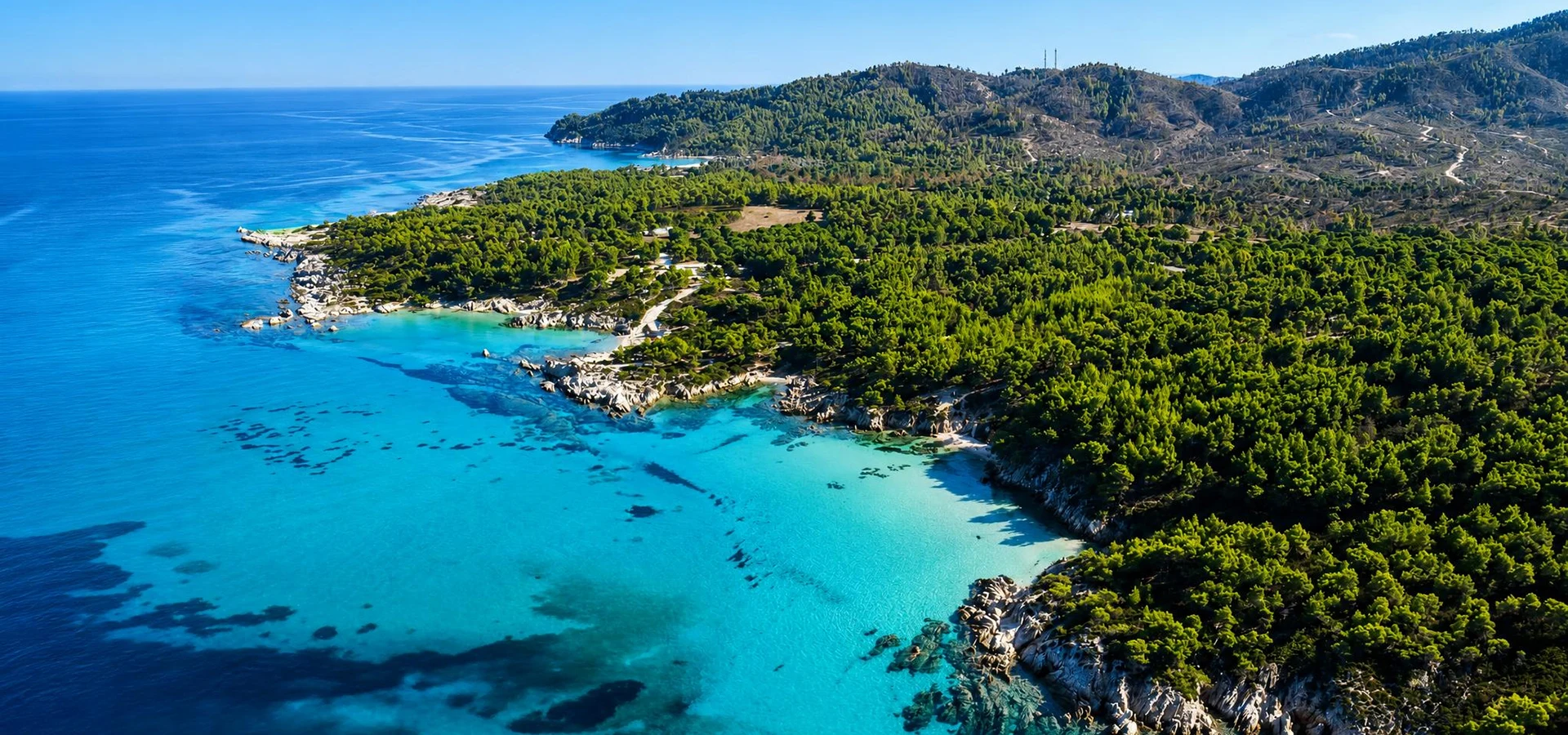
Dilek Peninsula–Büyük Menderes Delta National Park is one of the most extraordinary protected landscapes on Türkiye's Aegean coast. Stretching across the southern Kuşadası region and the great wetland system around the mouth of the Büyük Menderes River, the park combines mountains, forests, beaches, marine habitats, lagoons and bird-rich wetlands within a single conservation area.

The northern side of the peninsula is the part most commonly visited from Kuşadası and Güzelçamlı. A scenic road enters the national park and follows the coast past four principal visitor bays: İçmeler, Aydınlık, Kavaklıburun and Karasu.

Behind the beaches rises a remarkably wild mountain landscape. The peninsula forms the western end of the ancient Mycale mountain range, known today as the Samsun Mountains, culminating at Dilek Tepe at approximately 1,237 metres.

Yet the national park is much more than a collection of beautiful beaches. Its forests contain hundreds of plant species, its mountains support diverse wildlife, and the neighbouring Büyük Menderes Delta provides feeding, resting and breeding habitat for an exceptional variety of birds.

Four Famous Bays

Swim at İçmeler, Aydınlık, Kavaklıburun and Karasu, where forested slopes descend directly toward clear Aegean water.

27,598 Hectares

The combined peninsula and delta form one of the largest and most ecologically diverse protected landscapes in western Türkiye.

Exceptional Biodiversity

Discover a botanical landscape containing hundreds of plant species together with mammals, reptiles, birds and marine life.

Sea, Forest & Wetlands

Experience beaches, mountain valleys, Mediterranean woodland and the bird-rich ecosystems of the Büyük Menderes Delta.

Know Before You Go

Dilek Peninsula National Park – Quick Facts

An introduction to one of Aydın Province's most important natural and ecological destinations.

Location

South of Kuşadası around Güzelçamlı, extending through the Dilek Peninsula and Büyük Menderes Delta in Aydın Province.

Open on Google Maps

Protected Area

Approximately 27,598 hectares combining the mountainous Dilek Peninsula and the wetlands of the Büyük Menderes Delta.

National Park

The Dilek Peninsula was protected as a national park in 1966, while the Büyük Menderes Delta was incorporated in 1994.

Highest Point

Dilek Tepe rises to approximately 1,237 metres above the Aegean coast.

Main Bays

İçmeler, Aydınlık, Kavaklıburun and Karasu are the four principal coastal recreation areas reached from the park road.

Famous For

Wild beaches, botanical diversity, mountain scenery, birdlife, hiking, wildlife and remarkably clear Aegean water.

One of the Aegean Region's Great Protected Landscapes

Why Is Dilek Peninsula National Park Special?

Few places in western Türkiye contain such a dramatic concentration of mountains, forests, beaches, wetlands and wildlife.

The exceptional character of Dilek Peninsula–Büyük Menderes Delta National Park comes from the meeting of several completely different ecosystems within a relatively compact area.

On the peninsula, steep mountains rise directly behind the sea. Forests descend toward small coves and beaches, while valleys and ravines create cooler, sheltered environments where plant communities differ considerably from those exposed to the dry Mediterranean coast.

Immediately to the south and east, the landscape changes again. The Büyük Menderes River reaches the Aegean through a vast delta of wetlands, lagoons, salt marshes, shallow coastal waters and mudflats.

Together these environments support an unusually rich mixture of plant, animal and bird species. The park therefore protects not simply a beautiful coastline but an interconnected system of terrestrial, freshwater, wetland and marine habitats.

For travellers, the result is equally remarkable. Within the same protected landscape it is possible to swim beneath forested mountains, walk through Mediterranean vegetation, photograph wild coastline and later observe birds across one of western Anatolia's major river deltas.

The national park represents the natural counterpart to the archaeological heritage introduced throughout our Aydın travel guide.

The Landscape of Dilek Peninsula

The physical geography of the peninsula is responsible for much of its dramatic character.

Dilek Peninsula forms the western extension of the Samsun Mountains, historically associated with ancient Mount Mycale. Rather than gradually descending toward the sea, the mountain landscape frequently approaches the coastline through steep slopes, rocky headlands and deeply cut valleys.

The highest summit is Dilek Tepe, rising approximately 1,237 metres above sea level. This substantial change in elevation over a relatively short distance helps create numerous microclimates.

The geological landscape includes ancient metamorphic rocks, limestone, marble and younger sedimentary formations. Over time, erosion created valleys, ravines, cliffs and the irregular coastline visible today.

From many points along the northern shore, the Greek island of Samos can be seen across the narrow waters separating the peninsula from the opposite side of the Aegean.

Dilek Tepe

The highest point of the peninsula rises approximately 1,237 metres above sea level.

Ancient Mycale

The peninsula forms the western end of the mountain landscape known in antiquity as Mount Mycale.

Mountain Valleys

Deep valleys and ravines create sheltered environments very different from the exposed coastline.

Aegean Coast

Rocky headlands alternate with bays and beaches along the peninsula's dramatically indented shoreline.

Look beyond the beaches: Dilek Peninsula is especially impressive because of the rapid transition from sea level to mountainous terrain. The surrounding peaks and forests are as important to the landscape as the famous bays themselves.

History of Dilek Peninsula National Park

The conservation history of the area developed in two important stages.

The Dilek Peninsula was declared a national park in 1966, recognising the remarkable value of its mountains, forests, coastline, wildlife and botanical diversity.

Almost three decades later, protection was substantially expanded when the Büyük Menderes Delta was incorporated into the national park in 1994.

The combined national park consequently protects approximately 27,598 hectares: around 10,985 hectares on the peninsula and approximately 16,613 hectares within the delta.

This enlargement was environmentally important because the peninsula and delta are complementary ecosystems. Mountain forests, rocky coastline, marine habitats, river environments and wetlands are interconnected rather than isolated natural areas.

The park also contains or overlaps several additional conservation designations connected with natural, archaeological and cultural heritage.

1966

The Dilek Peninsula received national park protection.

1994

The Büyük Menderes Delta was incorporated into the protected national park landscape.

10,985 Hectares

Approximate protected area represented by the mountainous peninsula.

16,613 Hectares

Approximate protected area represented by the Büyük Menderes Delta.

Plants and Forests of Dilek Peninsula

Dilek Peninsula is frequently described as a natural botanical garden because an extraordinary variety of plants grows within a relatively small geographical area.

Official conservation studies have identified approximately 804 plant species inside the national park, including locally restricted plants and species endemic to Türkiye.

The diversity is partly explained by the peninsula's dramatic range of altitude, slope orientation, geology, exposure and moisture.

Mediterranean maquis vegetation dominates many lower slopes, while pine forests, oak communities and other woodland habitats appear as elevation and local environmental conditions change.

Species associated with cooler or more northerly parts of Anatolia can also occur within protected valleys and mountain environments, creating unusual combinations of vegetation for such a southerly Aegean location.

Maquis

Dense evergreen Mediterranean shrubs form one of the characteristic vegetation communities of the peninsula.

Pine Forest

Pine woodland provides shade around several visitor areas and descends close to sections of the coastline.

Plane Trees

Cooler valleys and watercourses support vegetation that contrasts strongly with the drier coastal slopes.

Wild Olive & Carob

Classic Mediterranean trees and shrubs appear throughout the warmer, rocky landscape.

Bay Laurel

Laurel contributes to the rich evergreen vegetation found in sheltered environments.

Rare Plant Communities

The park protects several unusual botanical communities whose distribution in Türkiye is limited.

Botanical importance: The value of Dilek Peninsula is not simply the number of plant species. Different vegetation communities occur over very short distances because altitude, moisture, slope and exposure change rapidly across the peninsula.

Wildlife of Dilek Peninsula National Park

Large parts of the peninsula remain mountainous, forested and relatively undeveloped, creating important habitat for wildlife.

Official studies record dozens of mammal and reptile species within the wider national park landscape.

Among the animals associated with the peninsula are wild boar, foxes, jackals, wildcats, badgers, martens, porcupines, hares and otters.

Visitors occasionally encounter wild boar close to picnic areas and roads. Although these encounters can appear harmless, wild animals should never be approached, surrounded or fed.

The coastal and marine environment is equally important. The waters around the peninsula form habitat used by marine mammals, fish and other Mediterranean species, while protected rocky shorelines provide relatively undisturbed areas compared with heavily developed sections of the Aegean coast.

Wild Boar

One of the animals most frequently associated with visitor encounters inside the peninsula.

Wildcat

Forested and rocky habitats support secretive mammals rarely seen by casual visitors.

Otter

Aquatic environments within the wider protected landscape provide habitat for this elusive mammal.

Porcupine

The park's diverse terrestrial habitats support a surprisingly broad variety of mammals.

Marine Life

Rocky coast, reefs, shallow water and seagrass habitats contribute to the park's underwater biodiversity.

Reptiles

Warm rocky habitats and Mediterranean vegetation support numerous reptile species.

Wildlife rule: Never feed wild boar or other animals. Feeding encourages wildlife to approach people, alters natural behaviour and can create dangerous situations for both animals and visitors.

The Büyük Menderes Delta and Birdlife

The second great ecological landscape within the national park lies south of the mountainous peninsula.

Here the Büyük Menderes River, one of western Anatolia's major river systems, approaches the Aegean and creates an extensive delta of lagoons, shallow water, marshes, mudflats, salt meadows and coastal habitats.

These wetlands provide critically important feeding, resting and breeding areas for birds moving between Europe, Asia and Africa.

Hundreds of bird species have been recorded within the national park and surrounding delta landscape. Depending on season and water conditions, visitors may encounter flamingos, pelicans, herons, egrets, cormorants, ducks, waders and birds of prey.

The experience here is completely different from the beach-oriented northern peninsula. Instead of swimming bays and forested coves, the delta is defined by huge skies, distant mountains, shallow wetlands and constantly moving birdlife.

Wetlands

Lagoons, marshes, shallow waters and mudflats create numerous feeding environments for birds.

Migratory Birds

The delta occupies an important position along major migration routes through the eastern Mediterranean.

Waterbirds

Herons, egrets, ducks, cormorants and numerous waders use the wetland environment.

Flamingos

These unmistakable birds may be observed in suitable parts of the wider delta according to season and conditions.

Birds of Prey

The surrounding mountains, wetlands and open landscapes also support raptors.

Photography

Long lenses are particularly useful for photographing birds without disturbing feeding or resting wildlife.

Different experience: The Büyük Menderes Delta should not be treated simply as an extension of the beach road. It is a sensitive wetland ecosystem where wildlife observation and quiet landscape exploration are the principal attractions.

The Bays of Dilek Peninsula National Park

For most first-time visitors, the best-known experience inside Dilek Peninsula is the coastal road leading west from the entrance near Güzelçamlı.

Four principal daily-use areas are located along this northern shoreline: İçmeler, Aydınlık, Kavaklıburun and Karasu.

Although they belong to the same coast, each feels slightly different because the surrounding vegetation, beach material, depth of water and mountain backdrop change along the route.

The national park road itself is part of the experience. Forest frequently approaches the shoreline, while gaps between the trees reveal views across the Aegean toward Samos.

First Bay İçmeler
Second Bay Aydınlık
Third Bay Kavaklıburun
Fourth Bay Karasu
Main Activities Swimming, picnicking, coastal photography, nature observation and relaxed day trips
Summer planning: The most accessible bays can become busy during summer weekends and public holidays. Arriving earlier in the day generally provides a calmer experience and more flexibility.

İçmeler Bay

İçmeler Bay is the first principal recreation area encountered after entering Dilek Peninsula National Park from Güzelçamlı.

A wooded valley opens toward the sea here, creating one of the most accessible combinations of forest and beach within the park.

Its location close to the entrance makes İçmeler especially popular with visitors who want to spend most of the day swimming rather than continue farther into the peninsula.

The surrounding trees provide an attractive green frame around the beach and contribute to the characteristic Dilek Peninsula experience of swimming almost immediately below forested mountain slopes.

Closest Main Bay

İçmeler is the first of the four principal visitor bays reached from the national park entrance.

Forest & Beach

Trees descend close to the coastline, creating shade and a strong sense of being inside the national landscape.

Popular Stop

Its accessibility means the bay can attract substantial visitor numbers during the main summer season.

Good Starting Point

First-time visitors can stop briefly here before continuing west to compare the other bays.

Aydınlık Bay

Continuing west from İçmeler brings visitors to Aydınlık Bay, another substantial coastal recreation area surrounded by dense vegetation.

The beach is backed by pine and Mediterranean vegetation, creating a particularly attractive contrast between deep green forest and the changing blue tones of the Aegean.

Aydınlık offers more of the characteristic mountain-coast atmosphere that becomes increasingly noticeable as visitors travel deeper into the peninsula.

Clear conditions can provide excellent opportunities for swimming, shoreline photography and observing the rocky underwater landscape close to shore.

Second Main Bay

Aydınlık lies farther inside the park beyond İçmeler.

Long Shoreline

The bay provides a substantial natural beach framed by forested terrain.

Clear Aegean Water

Calm weather can produce striking visibility and beautiful blue-green colours.

Mountain Backdrop

The landscape becomes increasingly dramatic as the park road continues west.

Kavaklıburun Bay

Kavaklıburun, also encountered in local references under the name Kalamaki, is one of the largest visitor areas along the northern coast.

The bay is surrounded by a mixture of pine woodland, Mediterranean shrubs and other vegetation that reaches close to the shoreline.

Its long beach and spacious natural setting make Kavaklıburun one of the most recognisable swimming areas inside the park.

Looking away from the beach toward the mountains reveals why Dilek Peninsula feels so different from a conventional coastal resort: there is remarkably little separation between recreational shoreline and wild mountain terrain.

Long Beach

Kavaklıburun contains one of the longest principal visitor beaches inside the national park.

Kalamaki

The name Kalamaki is also traditionally used in connection with this part of the peninsula.

Wooded Setting

Forest and dense Mediterranean vegetation surround the recreation area.

Photography

The combination of beach, trees and steep mountains creates excellent wide landscape compositions.

Karasu Bay

Karasu Bay lies farther west along the visitor road and is the last of the four principal daily-use bays normally reached by road.

By this stage of the journey, the feeling of being deep inside the peninsula is particularly strong. Forested slopes rise immediately behind the coast while the open Aegean stretches toward Samos.

The shoreline is framed by dense Mediterranean vegetation and mature trees, creating a particularly attractive setting for swimming and landscape photography.

Visitors should remember that access beyond designated recreational areas is controlled in order to protect sensitive parts of the national park.

Fourth Main Bay

Karasu is the farthest of the four principal coastal recreation areas along the visitor road.

Wild Setting

The surrounding mountains and dense vegetation give the bay a particularly remote atmosphere.

Aegean Views

Clear conditions can provide beautiful perspectives across the water toward Samos.

Protected Landscape

The road system is intentionally limited because large areas of the peninsula are managed primarily for conservation.

Zeus Cave near Dilek Peninsula

One of the most popular stops associated with a visit to Dilek Peninsula is Zeus Cave, located close to the national park entrance near Güzelçamlı.

The cave contains a striking blue-green pool fed by water emerging through the surrounding rock. Its cool, shadowed interior forms a dramatic contrast with the bright and often hot Aegean landscape outside.

Local mythology connects the cave with Zeus and Poseidon. According to popular tradition, Zeus took refuge here while escaping the anger of his brother Poseidon and refreshed himself in the cave's waters.

Other stories have accumulated around the cave over time, linking its water with mythological and religious figures. These traditions form part of the cultural storytelling surrounding the site rather than archaeological evidence for historical events.

Because Zeus Cave lies very close to the entrance, it can easily be visited before entering or after leaving the national park.

Near the Entrance

The cave is only a short distance from the Güzelçamlı entrance to the peninsula.

Natural Pool

Water collecting inside the cave creates its distinctive blue-green appearance.

Zeus Legend

Local mythology says Zeus sheltered here while escaping the anger of Poseidon.

Separate Stop

Treat Zeus Cave as a nearby attraction rather than assuming it forms part of every visit inside the national park.

Mythology and history: Stories about Zeus, Poseidon and other figures are part of local tradition. They should be enjoyed as mythology rather than interpreted as evidence that historical events occurred inside the cave.

Panionion and Ancient Mycale

The Dilek Peninsula was important long before the creation of the modern national park.

In antiquity, the mountain was known as Mycale, while the area around present-day Güzelçamlı is traditionally associated with the Panionion.

The Panionion was connected with the Ionian League, the federation of Ionian cities whose communities shared cultural and religious traditions across the central Aegean coast.

Ancient literary sources describe a common sanctuary associated with Poseidon Helikonios and gatherings of the Ionian communities.

Archaeological remains in the wider Güzelçamlı landscape therefore add an important historical dimension to a destination now primarily famous for nature and beaches.

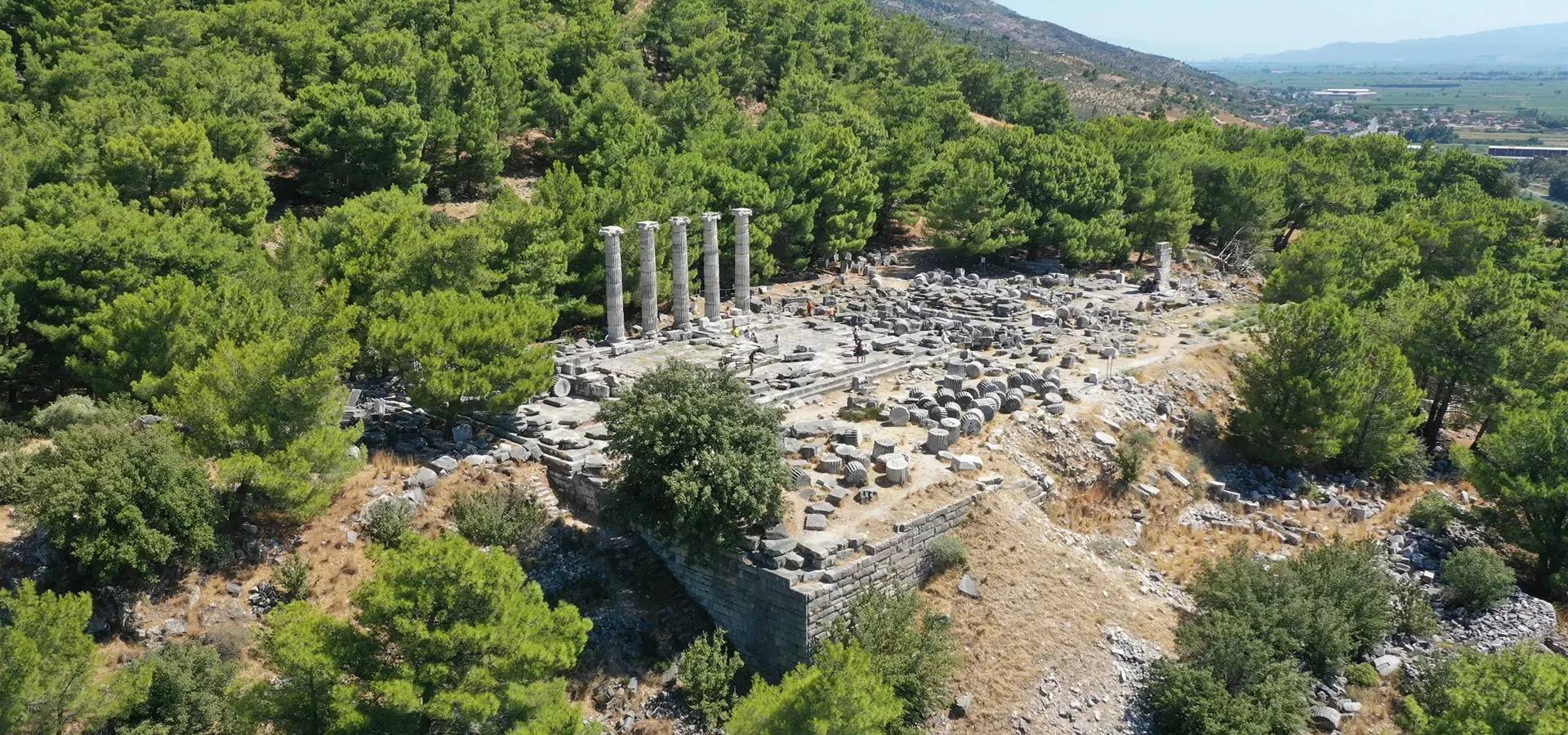
The combination of ancient Mycale, nearby Priene and the Ionian landscape of the Büyük Menderes region helps connect Dilek Peninsula with some of the most important archaeological destinations of western Anatolia.

Mount Mycale

The mountain landscape of Dilek Peninsula was known as Mycale in antiquity.

Ionian League

The wider Güzelçamlı area is associated with the common meeting and religious traditions of the Ionian cities.

Poseidon

Ancient tradition connected the Panionion with a sanctuary dedicated to Poseidon Helikonios.

Priene Connection

The surrounding landscape formed part of the same historical world as nearby Priene and the lower Maeander Valley.

Hiking and Nature Walks at Dilek Peninsula

Although swimming attracts the largest number of visitors, Dilek Peninsula is also an outstanding landscape for walking and nature observation.

Trails and designated routes reveal a very different side of the park from the coastal recreation areas.

Walkers encounter Mediterranean shrubs, pine forest, plane trees, rocky valleys and changing views across the Aegean.

The mountainous terrain means that some routes can involve considerable gradients, uneven surfaces and summer heat. Visitors should therefore distinguish between short recreational walks and longer mountain routes.

Access to particular trails can also change according to conservation requirements, weather conditions, fire risk and park management decisions.

Botanical Walks

Short trails provide opportunities to observe how vegetation changes between coastline, forest and sheltered valleys.

Mountain Routes

More demanding routes reveal the steep terrain that dominates the interior of the peninsula.

Coastal Views

Elevated sections can provide spectacular perspectives over the Aegean and neighbouring Samos.

Wildlife Watching

Quieter walking routes offer better opportunities for observing birds and signs of wildlife.

Summer Conditions

Heat can become severe away from the shaded coastline, particularly during the middle of the day.

Check Access

Confirm current trail conditions and restrictions before attempting a longer route.

Hiking preparation: Carry sufficient water, wear suitable footwear and do not assume that mobile reception, shade or services will be available throughout mountain routes.

Best Things to See at Dilek Peninsula National Park

İçmeler Bay

Begin with the first major beach where forest meets the clear Aegean Sea.

Aydınlık Bay

Continue deeper into the park for beautiful coastal scenery framed by pine-covered slopes.

Kavaklıburun Bay

Experience one of the peninsula's longest and most impressive visitor beaches.

Karasu Bay

Travel toward the farthest principal coastal recreation area and enjoy the increasingly wild surroundings.

Zeus Cave

Visit the atmospheric cave and natural pool close to the national park entrance.

Dilek Tepe

Look toward the 1,237-metre mountain that gives the peninsula its dramatic vertical character.

Forest Landscapes

Observe the remarkable transitions between Mediterranean maquis, woodland and sheltered valleys.

Aegean Views

Look across the narrow strait toward Samos from suitable sections of the peninsula.

Büyük Menderes Delta

Discover a completely different landscape of wetlands, lagoons, birds and expansive horizons.

Birdlife

Watch for waterbirds, raptors and migratory species throughout the wider protected landscape.

Panionion Landscape

Connect the natural environment with the ancient Ionian history surrounding Güzelçamlı and Mount Mycale.

Old Doğanbey

Combine the delta landscape with the historic stone village overlooking the southern side of the national park.

Dilek Peninsula National Park Visitor Information

Dilek Peninsula is large enough to deserve considerably more time than a quick beach stop.

Travellers interested mainly in swimming can comfortably spend a full day visiting one or two bays. Visitors who also want to explore trails, Zeus Cave, Güzelçamlı or the Büyük Menderes Delta should allow additional time.

Official Name Dilek Peninsula–Büyük Menderes Delta National Park
Location Güzelçamlı / Kuşadası and the Büyük Menderes Delta, Aydın Province
Total Protected Area Approximately 27,598 hectares
Highest Point Dilek Tepe – approximately 1,237 metres
Main Visitor Bays İçmeler, Aydınlık, Kavaklıburun and Karasu
Recommended Time At least half a day; a full day is better for swimming and nature exploration
Best For Nature, swimming, hiking, wildlife, birdwatching, photography and relaxed coastal exploration
Before travelling: Entrance fees, opening hours, vehicle access, beach services, trail availability and seasonal restrictions can change. Check current official national park information shortly before your visit.

Suggested Dilek Peninsula National Park Itinerary

Begin in Güzelçamlı and visit Zeus Cave before entering the national park, particularly if you arrive early before the beaches become busy.

Continue through the national park entrance and briefly stop at İçmeler Bay. This gives you an immediate introduction to the characteristic combination of forest and Aegean coastline.

Rather than remaining at the first beach all day, continue along the coastal road toward Aydınlık and Kavaklıburun.

Choose one of these bays for a longer swimming or picnic stop before travelling farther west toward Karasu.

Throughout the journey, allow time simply to observe the landscape. The changing mountain backdrop, vegetation and views toward Samos are essential parts of the experience.

Travellers with a complete day can later explore the Güzelçamlı surroundings or dedicate a separate excursion to Old Doğanbey and the Büyük Menderes Delta.

Stop 1

Zeus Cave near the national park entrance.

Stop 2

İçmeler Bay for your first view of forest meeting the Aegean.

Stop 3

Aydınlık Bay and the increasingly dramatic coastal scenery.

Stop 4

Kavaklıburun for swimming, relaxation and a longer beach stop.

Stop 5

Karasu Bay at the deeper end of the regular visitor road.

Stop 6

Return toward Güzelçamlı, stopping for photographs when conditions and designated parking areas permit.

Dilek Peninsula and the Aydın Region

Dilek Peninsula occupies one of the most fascinating travel regions in western Türkiye.

Within a relatively short geographical distance, travellers can move between wild coastline, ancient Ionian cities, wetlands, Ottoman villages and modern Aegean resorts.

Dilek Peninsula

The natural landscape — famous for forests, mountain scenery, wildlife and pristine bays.

Kuşadası

The major coastal resort and cruise destination immediately north of the national park.

Priene

A beautifully planned ancient Greek city occupying the foothills of the Mycale mountain landscape.

Miletus

One of the great intellectual and maritime cities of the ancient Greek world.

Didyma

Home to the monumental Temple of Apollo and one of antiquity's most important oracular sanctuaries.

Büyük Menderes Delta

The wetland landscape created where the ancient Maeander River reaches the Aegean Sea.

Continue exploring with our Aydın travel guide, Kuşadası travel guide, Priene Ancient City guide, Miletus Ancient City guide and Didyma & Didymaion guide.

Best Time to Visit Dilek Peninsula National Park

The best season depends on whether your priority is swimming, hiking, photography or wildlife.

Spring

One of the finest periods for vegetation, wildflowers, walking and comfortable exploration before intense summer heat.

Early Summer

A particularly attractive balance of warm swimming conditions, long daylight and greener landscapes.

July & August

Excellent for swimming but generally the busiest and hottest period, especially on weekends and holidays.

September

Sea temperatures often remain pleasant while visitor pressure can gradually decrease after the peak holiday season.

Autumn

Comfortable weather can make nature walks, archaeological combinations and delta exploration especially rewarding.

Winter

The coastline becomes quiet and atmospheric, while the wetlands can be particularly interesting for bird observation.

Photography at Dilek Peninsula National Park

Dilek Peninsula offers some of the most varied landscape photography opportunities on the Aegean coast.

At the beaches, the strongest compositions often combine clear water with dark green forest and steep mountain slopes.

Along the coastal road, views toward Samos can create layered images using foreground vegetation, the Aegean Sea and distant island mountains.

Inside the forest, concentrate on smaller details: tree trunks, wildflowers, leaves, stream beds and patterns created by sunlight passing through vegetation.

The Büyük Menderes Delta requires a different approach. Wide lenses work well for expansive wetland landscapes, while longer focal lengths are essential for responsible bird photography.

Turquoise Bays

Elevated viewpoints and shoreline angles reveal the contrast between clear water and dense vegetation.

Mountain Scale

Include people, boats or trees within compositions to communicate the scale of the surrounding mountains.

Samos Views

Clear weather can create striking layered images across the Aegean toward the neighbouring Greek island.

Forest Details

Use shaded areas to photograph botanical textures and the remarkable diversity of vegetation.

Bird Photography

Use distance and longer lenses rather than approaching resting or feeding birds.

Golden Light

Early and later daylight can add greater depth and texture to mountains, coastline and vegetation.

Photography tip: Do not concentrate only on the beaches. Some of the most distinctive images come from combining mountains, forest, distant Samos, wildlife and the changing textures of the coastline.

Accessibility and Safety at Dilek Peninsula

The principal bays are reached by road, making the northern visitor section relatively accessible, but Dilek Peninsula remains a mountainous natural environment.

Summer Heat

Carry drinking water and use sun protection, especially when walking away from shaded beach areas.

Rocky Shores

Some coastal sections may contain stones, slippery surfaces or uneven entries into the sea.

Wild Boar

Keep your distance from wildlife and never attempt to feed or touch wild animals.

Forest Fire Risk

Follow all current rules concerning fire, smoking, picnic equipment and restricted areas.

Mountain Trails

Longer routes require proper footwear, water, realistic timing and awareness of current trail conditions.

Limited Mobility

Accessibility differs between beaches, parking areas, paths and facilities, so confirm current conditions in advance.

Important: Park restrictions can change according to wildfire danger, conservation requirements and seasonal conditions. Barriers, closed roads and restricted areas should always be respected.

How to Get to Dilek Peninsula National Park

The principal visitor entrance to the Dilek Peninsula section of the national park lies immediately beyond Güzelçamlı, south of Kuşadası.

The most flexible way to explore the four bays and surrounding attractions is by private vehicle, particularly if you want to stop at several locations during the same day.

From Kuşadası

Travel south through the Davutlar and Güzelçamlı area toward the main entrance to Dilek Peninsula National Park.

From Güzelçamlı

The national park entrance lies immediately beyond the town, making Güzelçamlı the closest practical base.

From Söke

Approach the peninsula through the road network connecting Söke with Güzelçamlı and the southern Kuşadası region.

From Priene

The archaeological landscape around Priene can be combined with Dilek Peninsula as part of a carefully planned private day.

Public Transport

Local services may connect Kuşadası with Güzelçamlı, but onward access and seasonal arrangements should be checked locally.

Private Vehicle

Private transportation provides the greatest flexibility for moving between the national park's principal bays.

Summer planning: During peak periods, visitor and vehicle capacity can become an important consideration. Arriving early is generally preferable when planning a beach-focused visit.

Places to Visit near Dilek Peninsula National Park

Güzelçamlı

The coastal town immediately beside the national park is the main gateway to the Dilek Peninsula.

Zeus Cave

Visit the natural cave and blue-green pool located close to the national park entrance.

Old Doğanbey

Explore a beautifully situated historic stone village overlooking the Büyük Menderes Delta.

Büyük Menderes Delta

Discover wetlands, birdlife and wide open landscapes on the southern side of the peninsula.

Priene

Explore the extraordinary ancient city overlooking the Maeander landscape with our Priene Ancient City guide.

Miletus

Continue into the ancient Maeander region with our Miletus Ancient City guide.

Didyma

Discover the Temple of Apollo with our Didyma & Didymaion guide.

Kuşadası

Explore the major Aegean resort north of the peninsula with our Kuşadası travel guide.

Aydın

Plan a wider journey through the province with our Aydın travel guide.

Frequently Asked Questions About Dilek Peninsula National Park

Where is Dilek Peninsula National Park?

Dilek Peninsula–Büyük Menderes Delta National Park is located in Aydın Province on Türkiye's Aegean coast. The principal peninsula entrance is beside Güzelçamlı, south of Kuşadası.

What is the full name of Dilek Peninsula National Park?

Its official name is Dilek Peninsula–Büyük Menderes Delta National Park, reflecting the protection of both the mountainous peninsula and the neighbouring river delta.

How large is Dilek Peninsula National Park?

The combined protected area covers approximately 27,598 hectares.

When was Dilek Peninsula declared a national park?

The Dilek Peninsula received national park protection in 1966.

When was the Büyük Menderes Delta added?

The Büyük Menderes Delta was incorporated into the national park in 1994.

What are the main beaches at Dilek Peninsula?

The four principal visitor bays are İçmeler, Aydınlık, Kavaklıburun and Karasu.

Can you swim at Dilek Peninsula National Park?

Yes. Swimming is one of the park's most popular activities, particularly at the designated coastal recreation areas of İçmeler, Aydınlık, Kavaklıburun and Karasu.

Which is the first beach inside Dilek Peninsula?

İçmeler is the first principal visitor bay reached after entering the national park from Güzelçamlı.

Which is the last main bay on the visitor road?

Karasu is the farthest of the four principal coastal recreation areas normally reached along the main visitor road.

What is the highest mountain on Dilek Peninsula?

Dilek Tepe is the highest point of the peninsula at approximately 1,237 metres above sea level.

What was Dilek Peninsula called in antiquity?

The mountain landscape was associated with ancient Mount Mycale, an important geographical feature of the Ionian coast.

What is Panionion?

Panionion is associated with the common sanctuary and meeting traditions of the ancient Ionian League in the wider Güzelçamlı and Mycale landscape.

Is Zeus Cave inside Dilek Peninsula National Park?

Zeus Cave is located very close to the national park entrance near Güzelçamlı and is normally visited as a separate nearby stop.

Why is Zeus Cave famous?

The cave contains a distinctive natural pool and is connected with local mythology in which Zeus supposedly sheltered there from the anger of Poseidon.

Are there wild boars in Dilek Peninsula?

Yes. Wild boar live within the peninsula and are occasionally seen near roads and visitor areas. They should never be approached or fed.

Is Dilek Peninsula good for birdwatching?

Yes. The combined national park is exceptionally important for birds, particularly around the Büyük Menderes Delta and its wetlands.

Can you see flamingos at the Büyük Menderes Delta?

Flamingos can occur within the wider wetland landscape according to season, water conditions and bird movements, although wildlife sightings can never be guaranteed.

Can you hike at Dilek Peninsula?

Yes. Nature walks and hiking are possible on designated routes, although current access conditions and seasonal restrictions should always be checked before attempting longer trails.

Can you cycle inside Dilek Peninsula National Park?

Cycling is associated with the park's recreational activities, but visitors should follow current access rules and any restrictions applying to particular roads or routes.

Can you camp inside Dilek Peninsula National Park?

Overnight access and camping are subject to national park regulations and should never be assumed to be permitted. Check current official rules before planning any overnight activity.

When is the best time to visit Dilek Peninsula?

Spring and autumn are excellent for nature and walking, while late spring through early autumn is most suitable for swimming. July and August are generally the busiest and hottest months.

How much time should I allow for Dilek Peninsula?

Allow at least half a day. A full day is preferable if you want to visit several bays, swim and explore the landscape without rushing.

Is Dilek Peninsula suitable for children?

The designated beach areas can be suitable for families, but children should always be supervised around the sea, wildlife, roads and natural terrain.

Is Dilek Peninsula suitable for travellers with limited mobility?

Accessibility varies between parking areas, beaches, paths and facilities. Travellers with specific mobility requirements should confirm current conditions before visiting.

How far is Dilek Peninsula from Kuşadası?

The principal entrance near Güzelçamlı lies roughly 30 kilometres south of central Kuşadası, depending on your exact starting point and route.

Can Dilek Peninsula be combined with Priene?

Yes. Dilek Peninsula and Priene can form an excellent nature-and-history combination, particularly for travellers using private transportation.

Can I visit the Büyük Menderes Delta on the same day?

It is possible with careful planning, but the delta is geographically and experientially different from the northern beach road. A separate excursion provides more time for birdwatching and Old Doğanbey.

Do I need a private vehicle?

A private vehicle is the most convenient option for exploring several bays and combining the park with surrounding attractions, although local transport may reach Güzelçamlı.

Does Dilek Peninsula have fixed opening hours?

The national park operates controlled visitor access, but opening hours can change according to season and official management decisions. Check current information shortly before travelling.

Is there an entrance fee?

Entrance fees and vehicle charges may apply and can change. Confirm the current official tariff rather than relying on older travel reports.

Is Dilek Peninsula worth visiting from Kuşadası?

Yes. For travellers interested in nature, beaches, wildlife or photography, Dilek Peninsula provides one of the strongest contrasts to the busy resort and cruise atmosphere of central Kuşadası.


Responsible Visiting at Dilek Peninsula National Park

Never Feed Wildlife

Wild boar and other animals should remain wild. Feeding changes their behaviour and can create dangerous interactions.

Protect the Forest

Follow all fire regulations and never create flames or use equipment prohibited by current park rules.

Leave Plants Alone

Do not collect flowers, branches, seeds or other natural material from protected habitats.

Protect Marine Life

Avoid disturbing underwater habitats and never leave plastic, fishing line or other waste along the coast.

Respect Wetlands

Observe birds from a distance and avoid entering sensitive breeding, feeding or resting areas.

Leave No Trace

Take all rubbish with you and help preserve the unusually clean natural environment that makes the park special.

Private Tours to Dilek Peninsula National Park

Discover the peninsula with comfortable private transportation and a flexible itinerary combining turquoise bays, mountain scenery, nature, photography and the archaeological heritage of southern Aydın, without compulsory shopping stops.

Your Private Nature & History Journey through Southern Aydın

Combine Dilek Peninsula with Kuşadası, Priene, Old Doğanbey, the Büyük Menderes Delta or other selected destinations according to your available time and interests.