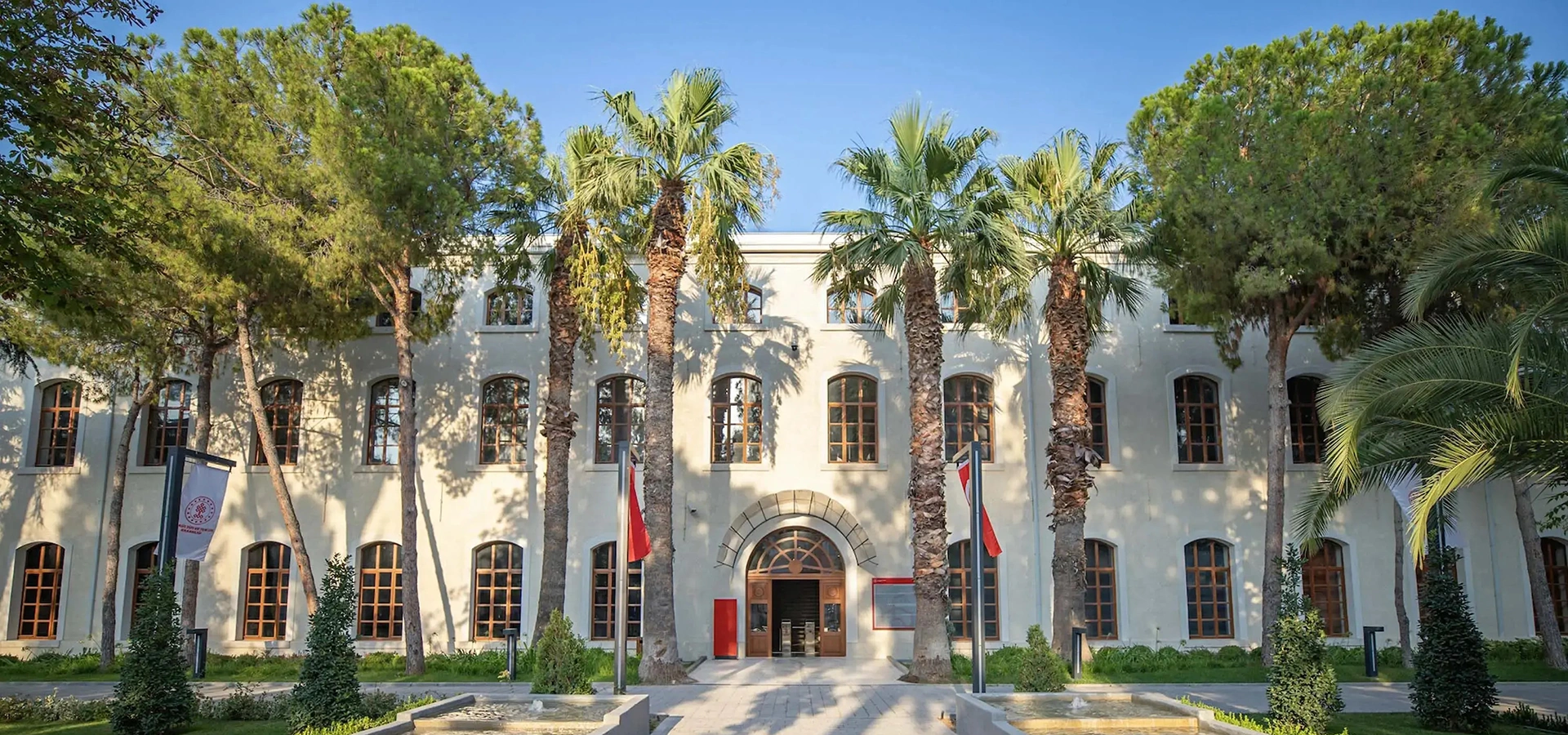
İzmir Kültür Sanat Fabrikası
Explore another remarkable industrial complex transformed into museums, libraries, galleries and contemporary cultural spaces.
Explore the Culture Factory





Standing close to Alsancak Port and Alsancak Railway Station, İzmir's Historical Gas Factory — Tarihi Havagazı Fabrikası is one of the city's most important surviving examples of 19th-century industrial architecture.
Construction of the gasworks began in 1862, during a period when İzmir was expanding rapidly as an international port and commercial centre of the Ottoman Empire.
The factory produced manufactured gas that helped illuminate İzmir's streets before electricity became widespread.
As the city modernised, gas lighting gradually gave way to electricity, while manufactured gas continued to be used for other purposes, particularly cooking.
After more than a century of changing industrial use, the complex eventually lost its original function.
Rather than disappearing completely, however, the surviving historic buildings were restored by İzmir Metropolitan Municipality and reopened in December 2008 as a cultural and social venue.
Today its restored stone workshops, monumental brick chimney, landscaped courtyards and traces of former industrial machinery create one of İzmir's most atmospheric examples of adaptive reuse.
The result is a place where industrial archaeology, architecture, urban history, concerts, festivals and contemporary city life come together.
Explore one of the major industrial complexes created during İzmir's 19th-century commercial expansion.
See the towering brick chimney that has become the unmistakable visual symbol of the complex.
Discover restored workshops, machine buildings and traces of the former gas-production landscape.
Experience concerts, festivals, exhibitions and events within one of İzmir's finest restored industrial sites.
Essential information about one of İzmir's most important surviving industrial heritage complexes.
İzmir Tarihi Havagazı Fabrikası — İzmir Historical Gas Factory.
Alsancak–Umurbey area of Konak, near İzmir Port and Alsancak Railway Station.
1862.
Production of manufactured gas for street lighting and later domestic use.
The gas company passed to İzmir Municipality in 1935.
Approximately 23,250 square metres.
Eight surviving historic structures within the former industrial complex are officially registered.
Approximately 46.3 metres high.
A cultural, arts, concert and event venue operated within the restored industrial complex.
The restored complex returned to city life at the end of 2008.
Alsancak Railway Station is within easy walking distance.
Allow approximately 30–60 minutes for the architecture, longer when attending an event.
The Historical Gas Factory offers something very different from İzmir's archaeological sites, museums and waterfront monuments.
It tells the story of the moment when the city was becoming an industrial, technologically connected and internationally important Mediterranean port.
During the 19th century, İzmir was changing rapidly.
Railways connected the harbour with the agricultural interior of western Anatolia, factories appeared near transport corridors, steamships filled the port and modern infrastructure began altering everyday urban life.
The gasworks belonged directly to this transformation.
Its furnaces, machinery, gas-storage structures and distribution network helped create a new kind of city — one in which streets could remain illuminated after sunset.
Much of the original machinery has disappeared, but the surviving stone buildings and immense chimney preserve the scale and atmosphere of the former industrial landscape.
The modern restoration adds another layer to the story.
Instead of treating the factory merely as an abandoned industrial monument, İzmir transformed it into a living cultural complex used for concerts, festivals, exhibitions, gatherings and special events.
The Historical Gas Factory therefore allows visitors to understand not only how İzmir industrialised, but also how historic architecture can be given an entirely new role within a modern city.
The origins of İzmir's gasworks belong to a wider transformation taking place across European and Mediterranean cities during the 19th century.
Before electric streetlights became practical, many modernising cities adopted manufactured gas — often known as town gas or coal gas — for urban lighting.
İzmir was no exception.
In 1857, entrepreneur André Morchais applied on behalf of a Paris gas company for permission to establish a gasworks in İzmir.
That first initiative did not proceed after Morchais died.
A second proposal followed in 1859, when A. Edwards applied to the Ottoman authorities for the right to establish and operate a gasworks in the city.
The concession was approved, providing the legal foundation for the project.
Construction eventually began in 1862.
Equipment and technical expertise were brought from Europe, while a distribution network was gradually developed beneath İzmir's streets.
By the middle of the decade, gas lighting was beginning to transform the city's nighttime environment.
The factory was fully established as part of İzmir's rapidly developing industrial infrastructure and remained associated with urban gas production for generations.
The gasworks did not appear in isolation.
During the second half of the 19th century, İzmir experienced one of the most important periods of economic growth in its history.
Agricultural products from western Anatolia were exported through İzmir's harbour, foreign commercial communities expanded and new transport infrastructure connected the port with inland production centres.
The opening of railway lines was particularly important.
Industrial facilities increasingly concentrated close to Alsancak, the harbour and the railway infrastructure, where raw materials could arrive and manufactured products could be distributed efficiently.
Factories for textiles, food processing, utilities and other industries became part of this developing industrial zone.
The gasworks therefore represents an important surviving fragment of a much larger landscape that once defined the northern side of central İzmir.
Although apartment blocks, roads and contemporary commercial buildings have transformed the surrounding district, the factory's chimney still reveals where this historic industrial corridor once stood.
The location of the factory was closely connected with the practical requirements of 19th-century industry.
Producing gas required large quantities of coal and industrial equipment.
A site close to the port and railway therefore offered major logistical advantages.
Coal and machinery could be brought to the area relatively easily, while the factory could remain outside the most densely built sections of the historic city.
Historical accounts also associate the site with the old Darağacı district and describe the area as relatively exposed to wind.
That was useful in an industrial environment where coal dust, smoke and other by-products needed to be managed.
The location therefore reveals how transport, geography, public health concerns and industrial technology influenced the physical growth of İzmir.
The term “gas factory” can be misleading to modern visitors because the site did not extract natural gas from underground.
Instead, it manufactured gas from coal.
Coal was heated in enclosed furnaces with limited oxygen.
This process released a combustible mixture commonly known as coal gas or town gas.
Before the gas could be distributed through the city, it needed to be cooled, cleaned and stored.
Large circular structures known as gasometers or gas holders stored the processed gas and helped regulate pressure within the distribution network.
Pipes then carried the gas from the factory toward street lamps and, later, domestic and commercial consumers.
The importance of the gasworks becomes easier to understand when imagining İzmir before modern street lighting.
After sunset, movement through the city depended heavily on limited lamps, private lighting and moonlight.
Gas lighting allowed streets, commercial districts and public areas to remain illuminated more consistently.
Early planning for the İzmir system anticipated hundreds of lamps.
As the city expanded, the number eventually increased dramatically.
The distribution network first served important commercial and residential districts and gradually expanded toward other neighbourhoods.
Gaslight therefore became both a technological innovation and a visible symbol of urban modernisation.
Restaurants, businesses and households could also use manufactured gas, giving the factory a role that extended beyond public streetlights.
The Historical Gas Factory was not a single building.
It was an extensive industrial complex containing numerous structures required for gas production, storage, maintenance and administration.
Before restoration, the industrial landscape included buildings and installations associated with furnaces, machinery, workshops, storage, technical services and employee facilities.
A substantial stone industrial building later adapted for a new social and cultural function.
Originally associated with the machinery required to operate the industrial gas-production system.
Provided offices and administrative facilities for the historic gas company.
Essential spaces for repairing, maintaining and supporting complex industrial machinery.
Storage buildings held supplies and equipment required for everyday industrial operation.
Water tanks and treatment systems formed another essential part of the industrial process.
Large gas-storage structures once dominated important parts of the industrial landscape but no longer survive intact.
The surviving brick chimney remains the site's most visible industrial landmark.
One reason the complex remains so visually powerful is the contrast between its practical industrial origins and the craftsmanship of its surviving architecture.
The principal buildings use robust stone masonry combined with brick detailing, arched openings and high interior spaces designed around industrial functions.
Large windows helped bring daylight into workshops and machine rooms.
High roofs created the volume needed for equipment while also improving ventilation.
Externally, red-tiled roofs soften the industrial appearance of the stone buildings.
The immense cylindrical chimney provides the vertical counterpoint to the otherwise low complex.
Unlike a palace, mosque or mansion, nearly every architectural feature was originally shaped by function.
That makes the site particularly valuable for visitors interested in industrial archaeology and engineering history.
The most immediately recognisable feature of the Historical Gas Factory is its monumental chimney.
Rising approximately 46.3 metres, the brick structure once served a practical purpose within the gas-production complex.
Today it functions almost like an industrial-era monument.
The chimney can be seen from surrounding roads and transport corridors, announcing the historic complex long before visitors enter the grounds.
During the restoration programme, the structure was strengthened so that this essential element of the factory skyline could survive.
After dark, architectural lighting often makes the chimney even more visually dramatic.
The enormous gas-storage structures that once formed an essential part of the factory no longer survive intact.
Historical documentation records two major gas holders with capacities of approximately 15,000 cubic metres and 4,000 cubic metres.
These structures stored manufactured gas before it entered the distribution system.
Gasometers were among the most characteristic structures of historic gasworks throughout Europe.
Their size and moving storage mechanisms also made them highly visible parts of industrial skylines.
Although İzmir's original gas holders were demolished, the restoration project deliberately attempted to preserve their memory.
The footprint of one former gasometer was indicated within the redesigned landscape using different paving materials.
A symbolic steel construction was also introduced near the exhibition and workshop buildings to evoke the lost industrial structures.
These details are easy to overlook, but they are among the most interesting examples of how the restoration attempts to explain vanished parts of the original factory.
The technology that had made the gasworks modern in the 19th century eventually faced competition from an even newer technology.
Electric lighting began spreading through İzmir at the beginning of the 20th century.
From around 1904, electricity increasingly replaced manufactured gas as the preferred source for street illumination.
That did not immediately make the gasworks obsolete.
Manufactured gas remained valuable for cooking and other domestic uses, allowing the company to continue operating even after its original lighting function declined.
The transition illustrates a recurring pattern in industrial history.
Infrastructure that once represented the latest technology could become outdated within only a few decades.
By preserving the gasworks, İzmir has retained physical evidence of that technological transition rather than allowing it to disappear entirely.
The factory began as a privately operated concession during the Ottoman period.
That arrangement changed during the early Turkish Republic.
On 15 September 1935, İzmir Municipality acquired the gas company.
The facility was repaired and continued operating under municipal control.
During the following decades, manufactured gas became part of the wider network of municipal utility services.
By this period, however, electricity and other forms of energy were steadily reducing the importance of the old gas-production system.
The industrial complex passed through changing functions before eventually reaching the end of its economic life.
The final municipal closure came in 1994.
After production ended, sections of the site were used for municipal vehicle and maintenance purposes while the future of the historic buildings remained uncertain.
By the late 20th century, the old gasworks no longer had an industrial future.
Many original installations had disappeared and some structures were in poor condition.
The challenge was therefore not simply to repair individual buildings, but to decide what role the entire historic complex should play within modern İzmir.
İzmir Metropolitan Municipality chose adaptive reuse.
The surviving registered industrial structures were restored while later and less significant structures were removed.
The monumental chimney was strengthened.
Historic stonework was preserved and original stone paving recovered during infrastructure work was reused around parts of the complex.
Former industrial buildings received new functions suitable for cultural, educational and social activities.
Landscaping, plazas, green spaces and ornamental pools helped transform the former working factory into a public cultural environment.
The restored Historical Gas Factory entered service at the end of December 2008.
Its transformation is now one of İzmir's clearest examples of how an obsolete industrial complex can be returned to urban life without erasing its architectural identity.
Rather than attempting to reconstruct the gasworks as a fully operating industrial museum, the restoration gave the surviving buildings new uses.
The historic foundry building was adapted for hospitality and social use.
The former machine building was restored with a reading and cultural function.
The original administration structure continues to support the operation of the complex.
Historic workshop spaces were converted for cultural activities, exhibitions and events.
Restored industrial rooms provide atmospheric spaces for temporary cultural programmes.
The large former industrial grounds now provide space for concerts, festivals and open-air gatherings.
The transformation of the Historical Gas Factory involved much more than restoring walls and roofs.
The surrounding industrial yard was redesigned as a landscaped cultural environment.
Historic stone paving recovered during infrastructure works was reused around parts of the complex to preserve a sense of the original texture.
Mature olive trees and new planting introduced greenery into what had previously been a hard-working industrial site.
An approximately 1,800-square-metre open lawn area was created for outdoor use.
Plazas and ornamental pools add contemporary public spaces between the historic buildings.
The landscape design deliberately avoids hiding the site's industrial character.
The chimney, stone buildings and traces of former gas infrastructure remain the visual focus.
Today the complex functions primarily as a cultural and event venue rather than a conventional museum.
Its atmosphere changes considerably depending on the programme.
On one evening the former factory grounds may host a major outdoor concert.
At another time there may be a festival, exhibition, corporate gathering, cultural event or private celebration.
The large open spaces are particularly suitable for events requiring both historic architecture and substantial outdoor capacity.
The venue continues to use the industrial character of the complex as part of its identity.
Instead of hiding the old chimney and stone workshops behind modern additions, events unfold around them.
This makes the factory especially atmospheric after sunset, when architectural lighting emphasises the stone walls and towering chimney.
Not in the conventional sense.
Visitors should not expect a traditional industrial museum with permanent galleries explaining every stage of gas production.
The primary attraction is the historic complex itself.
Its architecture, chimney, industrial layout and surviving features tell the story physically.
Some traces of former industrial structures have been deliberately preserved or symbolically reconstructed within the landscape.
However, the complex's present-day function centres on culture, events and social activities.
This distinction is important when planning a visit.
If you are interested purely in architecture and industrial history, allow time to study the buildings and landscape.
If you want to experience the complex at its liveliest, check the current event calendar and visit when a concert, festival or public programme is scheduled.
The 46.3-metre chimney is the dominant architectural feature and the best-known symbol of the factory.
Notice the thick masonry walls that gave the workshops both durability and a distinctive character.
Large repeated openings create some of the strongest architectural rhythms on the restored façades.
The spacious interiors reflect the practical requirements of machinery, ventilation and industrial work.
Look for landscape details marking the former presence of major gas-storage structures.
Original materials recovered during restoration were incorporated into parts of the renewed site.
Modern lighting and event infrastructure demonstrate how the factory has been adapted without completely losing its industrial identity.
These spaces help reveal the former industrial scale of the complex and now provide gathering areas for events.
The stone buildings and chimney become particularly dramatic when illuminated after sunset.
Look beyond the restored complex to understand its relationship with the port, railway and wider industrial landscape of Alsancak.
Visitors often associate İzmir primarily with ancient Smyrna, Ottoman Kemeraltı or the city's early Republican architecture.
Its industrial history receives less attention.
Yet factories, railways, warehouses, docks and utility infrastructure played an enormous role in shaping modern İzmir.
The Historical Gas Factory is important because it preserves a surviving physical link with that transformation.
Its location illustrates how industry clustered around the port and railway.
Its gas-production technology reflects the introduction of modern urban utilities.
Its later decline demonstrates the impact of technological change.
And its restoration shows how cities can reinterpret former industrial districts rather than erasing them.
For travellers interested in urban history, the gasworks therefore deserves to be understood as much more than an attractive concert venue.
Use the tall brick structure as the dominant vertical element in wide compositions of the complex.
The rough historic masonry creates particularly strong texture in side lighting.
Windows and doorways provide repeating architectural details ideal for closer photographs.
The period shortly after sunset can create a dramatic balance between architectural illumination and the remaining blue sky.
Evening lighting can transform the chimney and factory walls into some of the most striking industrial architecture in central İzmir.
Include the surrounding open space to communicate the scale of the former industrial complex.
Search for surviving metalwork, paving, structural elements and other traces of the factory's former function.
Professional photography during concerts and organised events may be subject to event-specific restrictions.
Enough for a quick exterior look at the historic buildings and chimney if you are passing through Alsancak.
A reasonable amount of time for visitors primarily interested in architecture and industrial heritage.
Allows a slower exploration of the complex when normal visitor access is available.
Allow additional time depending on the programme and areas accessible during your visit.
Your visit will naturally follow the duration and admission arrangements of the event.
Combine the gasworks with Alsancak, Kültürpark, İzmir Kültür Sanat Fabrikası and Kordon.
The Historical Gas Factory operates differently from a conventional museum with fixed sightseeing hours.
It is an active cultural and event complex, meaning access can depend on the current programme, private bookings and scheduled public events.
Concerts, festivals and special events may have their own opening times, entrance rules and ticket prices.
Visitors planning a journey specifically to enter the complex should therefore check the current programme before travelling.
The factory occupies a convenient position on the northern side of central Alsancak, close to the port and railway infrastructure that originally influenced its location.
This makes public transport particularly practical.
Alsancak Railway Station is one of the most convenient arrival points and lies within easy walking distance of the complex.
The factory can be reached on foot from central Alsancak by continuing north toward the port and railway district.
The Konak Tram serves the wider Alsancak corridor and can be combined with a short walk depending on your starting point.
Numerous ESHOT services operate through the Alsancak, Liman and railway-station area.
Ask for “Tarihi Havagazı Fabrikası” or “Alsancak Tarihi Havagazı Fabrikası.”
Road access is straightforward, although traffic around Alsancak can become heavy during peak periods and major events.
Public transport is often more convenient when large concerts or festivals bring substantial crowds to the venue.
Walk north through Alsancak and combine the factory with the historic railway and port district.
Pleasant temperatures make it comfortable to combine the factory with a longer walking itinerary through Alsancak.
Open-air concerts and cultural events can make summer particularly lively, although daytime temperatures may be high.
Comfortable weather and an active cultural calendar make autumn another excellent period.
Best for studying stonework, architectural details and the relationship between the buildings.
Lower sunlight gives the rough stone façades more depth and texture.
One of the most photogenic periods when architectural lighting begins to appear against the evening sky.
Best for experiencing the complex as a living cultural venue rather than simply a historic monument.
Check the current calendar because access and atmosphere vary considerably according to scheduled events.
See another surviving piece of the transport infrastructure that helped shape İzmir's historic industrial district.
Explore another major example of industrial heritage transformed into a contemporary cultural complex.
Continue into İzmir's great 20th-century urban park with historic fair architecture, gardens and cultural institutions.
Walk through one of İzmir's liveliest districts before continuing toward the waterfront promenade.
Visit the historic residence on First Kordon associated with Mustafa Kemal Atatürk's stays in İzmir.
The neighbouring harbour helps explain why the gasworks and other industrial facilities developed in this part of the city.
Explore the wider former industrial district whose identity has increasingly become connected with contemporary arts and urban culture.
Continue south toward one of Kordon's major public spaces and the open landscape of the Gulf of İzmir.
An excellent combination for understanding how İzmir has preserved and reused major industrial buildings.
Explore two surviving landmarks associated with the transport and industrial development of 19th-century İzmir.
Move from 19th-century industrial modernisation into the public architecture and urban planning of 20th-century İzmir.
Combine industrial heritage with İzmir's best-known waterfront promenade.
Follow İzmir's transition from late Ottoman commercial city to early Republican metropolis.
Explore Alsancak during the day and return to the complex when its industrial architecture is illuminated for an event.
The factory is an active event venue, so access and atmosphere can change significantly from one day to another.
The principal historical experience comes from the preserved architecture and industrial landscape itself.
The monumental brick chimney is easy to appreciate from a distance but even more impressive when viewed from inside the complex.
Paving and landscape details preserve traces of structures that no longer survive, including the former gasometer.
Late afternoon and blue hour are particularly good for appreciating the stone façades and architectural lighting.
Alsancak's rail, tram and bus connections can be more convenient than driving, particularly during large events.
Major concerts and festivals can significantly increase traffic and pedestrian numbers around the site.
The Culture Factory, Alsancak Station and Kültürpark make this one of İzmir's strongest areas for exploring modern urban history.
The chimney, stone walls and open courtyards provide some of the city's most distinctive industrial architectural compositions.
Professional cameras, tripods and other equipment may be restricted during ticketed performances or private events.
Remember that the open plazas were once filled with industrial processes, equipment, workers and gas-storage structures.
The factory works especially well at the beginning or end of a longer Alsancak walking itinerary.
It is a restored 19th-century gasworks complex in Alsancak that once produced manufactured gas for İzmir and now functions as a cultural and event venue.
It is called Tarihi Havagazı Fabrikası or İzmir Tarihi Havagazı Fabrikası.
It is located in the Alsancak–Umurbey area of Konak, close to İzmir Port and Alsancak Railway Station.
Construction began in 1862 during the late Ottoman period.
The gas network developed during the 1860s, with detailed local histories placing the fully established factory operation by 1867.
It was established primarily to produce manufactured gas for İzmir's developing street-lighting network.
No. The factory produced manufactured town gas from coal rather than extracting natural gas.
Coal was heated in enclosed furnaces, producing combustible gas that was then cooled, purified, stored and distributed through pipes.
Its earliest major purpose was street lighting. Later, manufactured gas continued to be used particularly for cooking and domestic purposes.
The location provided convenient access to the port and railway infrastructure required for transporting coal, machinery and other industrial materials.
Electricity began increasingly replacing gas for urban illumination from the beginning of the 20th century, particularly from around 1904.
No. Manufactured gas continued to have domestic and other uses, allowing the gasworks to survive long after electric lighting became common.
İzmir Municipality acquired the gas company on 15 September 1935.
The historic industrial operation reached the end of its life in 1994, after many decades of technological and administrative change.
İzmir Metropolitan Municipality completed the major restoration and the renewed complex entered service at the end of 2008.
The historic site occupies approximately 23,250 square metres.
Eight historic structures within the former industrial complex are officially registered.
The historic brick chimney rises approximately 46.3 metres.
The original gas-storage structures were demolished, but traces and symbolic references to them were incorporated into the restored landscape.
No. It is primarily a restored industrial heritage complex and cultural venue rather than a conventional museum with permanent galleries.
The venue hosts concerts, festivals, exhibitions, cultural programmes, corporate gatherings and private events.
Yes. Open-air concerts are among the best-known contemporary uses of the complex.
There is no single museum-style admission system. Ticketing depends on the particular concert, festival or event taking place.
The venue does not function like a conventional attraction with one permanent sightseeing timetable. Check current access and the event calendar before visiting.
Access can vary according to venue operations and private bookings, so visitors making a special journey should confirm current arrangements in advance.
Approximately 30–60 minutes is normally sufficient for visitors mainly interested in architecture and industrial history. Events naturally require longer.
Late afternoon and blue hour are particularly attractive because the historic masonry gains texture and the architectural lighting begins to illuminate the chimney and buildings.
Yes. Alsancak Railway Station is one of the most convenient public transport points for reaching the complex.
Yes. İzmir's Konak Tram serves the wider Alsancak area and can be combined with walking to the factory.
Yes. It lies north of the central Alsancak waterfront and can be incorporated into a longer walking route through Kordon and Alsancak.
Alsancak Railway Station, İzmir Kültür Sanat Fabrikası, Kültürpark, İzmir Atatürk Museum, Kordon and the historic Alsancak neighbourhood are all useful additions.
It preserves evidence of İzmir's 19th-century industrialisation, the development of modern urban utilities and the transformation of the city into a major Mediterranean commercial centre.
The project preserved surviving industrial architecture while giving the complex a new cultural purpose instead of allowing an obsolete factory to disappear from the city.
Yes, particularly for travellers interested in architecture, industrial archaeology, İzmir's urban development and adaptive reuse, although current access should be checked first.
Use the Historical Gas Factory as a starting point for discovering İzmir's industrial heritage, cultural institutions, historic neighbourhoods and waterfront.
Continue from the restored gasworks into another industrial heritage complex, İzmir's great historic park, the streets of Alsancak and the city's famous waterfront.
Explore another remarkable industrial complex transformed into museums, libraries, galleries and contemporary cultural spaces.
Explore the Culture Factory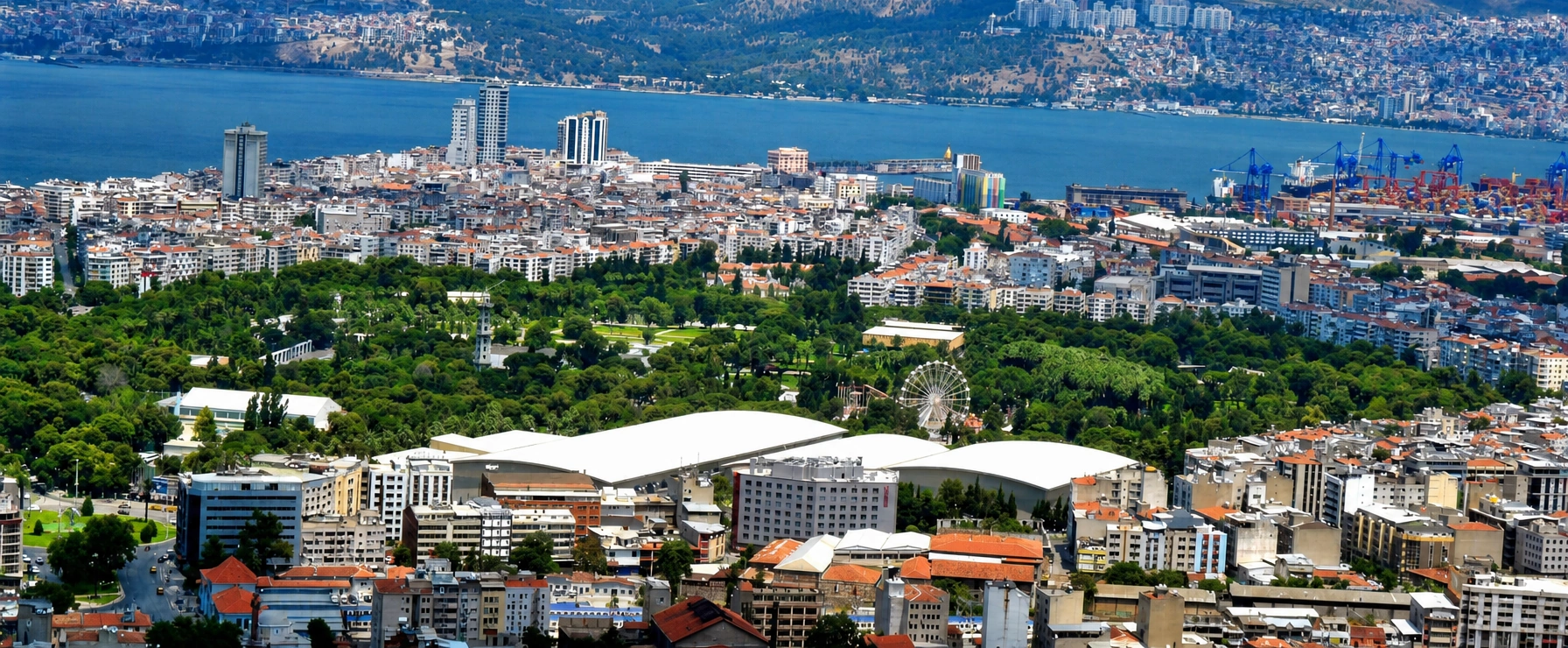
Discover İzmir's great historic city park, home of the İzmir International Fair, mature gardens, cultural venues and the famous Parachute Tower.
Explore Kültürpark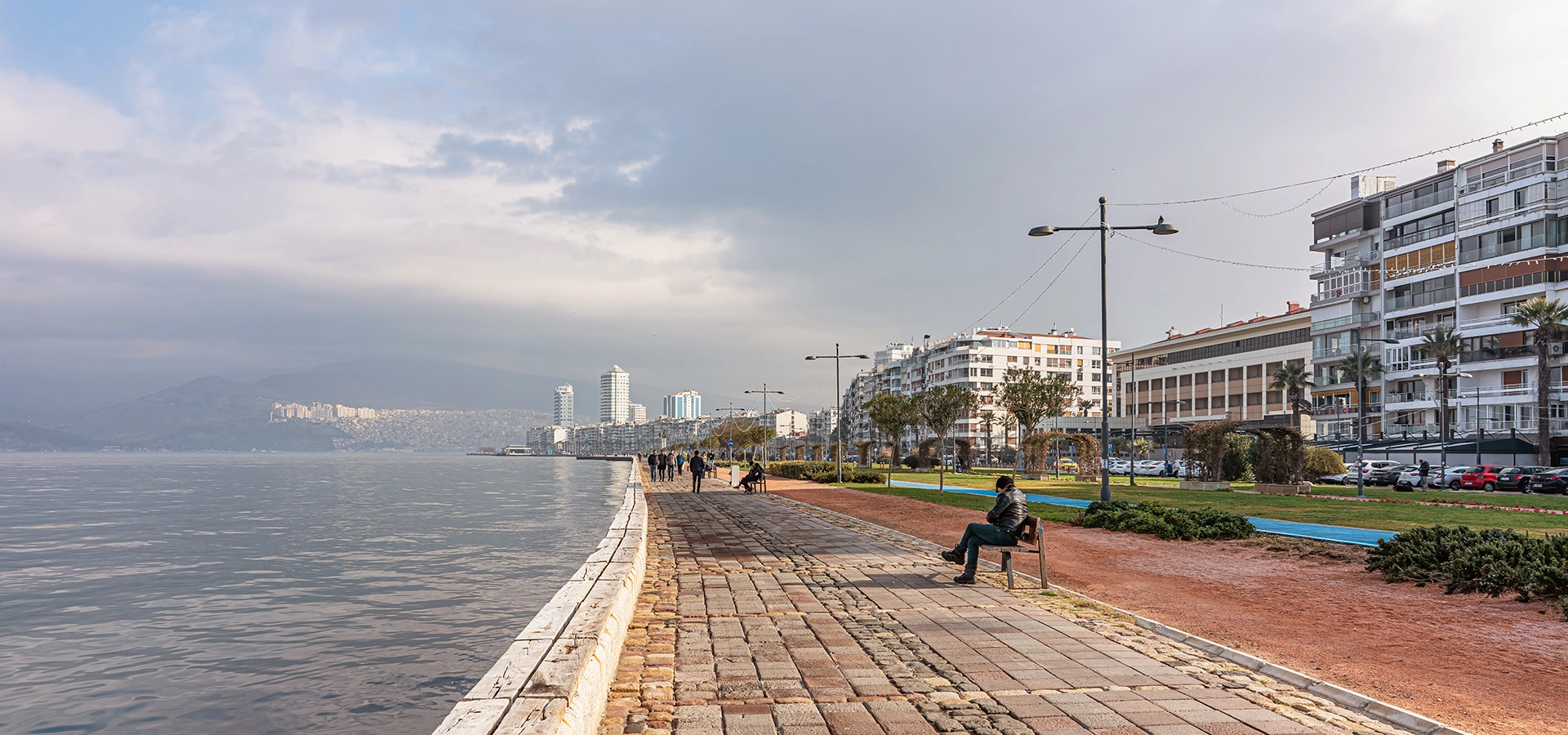
Continue toward İzmir's iconic waterfront for historic streets, cafés, restaurants, palm-lined promenades and sunsets over the Gulf.
Explore Kordon & Alsancak
Continue with our complete İzmir guide covering ancient Smyrna, museums, churches, synagogues, historic districts, coastal towns, cuisine and day trips.
View İzmir Guide