From Bakery Bread to İzmir Icon
The History of İzmir Kumrusu
Discover how a sesame-covered bread developed into one of İzmir’s most recognisable foods.
The history of İzmir Kumrusu stretches back approximately 150 years. At its heart is the distinctive kumru bread traditionally produced by İzmir’s bakeries, particularly bakeries associated with gevrek and other local baked goods.
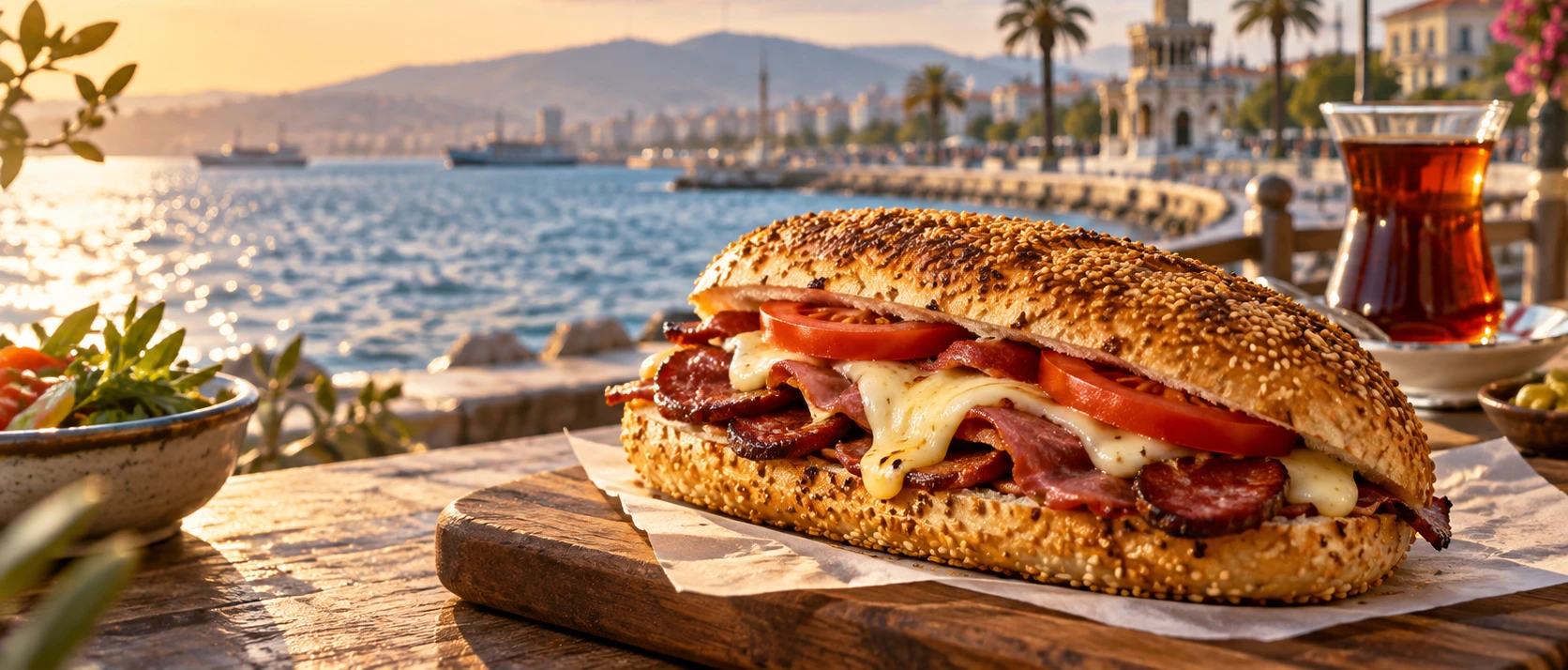
The bread is characterised by a sesame-covered exterior and a shape with a wider centre that narrows toward both ends. Local tradition associates this outline with the body of a kumru bird, giving the bread — and eventually the sandwich — its familiar name.
The older form of the sandwich was simple and refreshing. The sesame bread was opened and filled with İzmir Tulum cheese, tomato and green pepper. It was normally served cold and became an easy breakfast, snack or light meal.
During the twentieth century, another style developed and became increasingly popular: the hot kumru. Grilled sucuk and salami were placed inside toasted kumru bread with melting kaşar cheese and tomato.
This grilled interpretation became particularly associated with İzmir’s coastal food culture and later with destinations such as Çeşme. Today many visitors first encounter kumru in its hot form.
Rather than replacing the older tradition, the hot sandwich created a second identity. Modern İzmir therefore recognises both the simple cold kumru and the richer grilled version as part of the city’s culinary story.
In 2017, the connection between the sandwich and the city received formal recognition when İzmir Kumrusu was registered as a geographical indication.