Private Karacasu Cultural Tour
Ask us about a personalized route featuring Karacasu's ethnographic heritage, traditional pottery, local culture and the surrounding countryside.
Request a Custom Tour





The Karacasu Ethnography Museum, known in Turkish as Karacasu Etnografya Müzesi, is a cultural museum in the historic town of Karacasu in Aydın Province, Türkiye. Dedicated to traditional crafts, regional clothing, household objects and local social history, it offers visitors an intimate introduction to the everyday lives of communities in southwestern Anatolia.
Opened in 2007 under the administration of the Aphrodisias Museum Directorate, the museum preserves ethnographic material associated with Karacasu and its surrounding villages. Its collections illuminate the traditional occupations that helped shape the district, including pottery, weaving, leatherworking and blacksmithing.
Located in the lower level of the Karacasu Municipality building on Tavas Caddesi, the museum occupies an exhibition area arranged around historical objects, craft demonstrations and reconstructed scenes of traditional working life.
While the nearby ancient city of Aphrodisias reveals the extraordinary artistic achievements of Greek and Roman antiquity, the Karacasu Ethnography Museum tells a different but equally human story: how more recent generations dressed, worked, cultivated the land, practiced their beliefs and preserved local customs.
For travelers exploring the cultural landscape of Karacasu, the museum provides an excellent introduction to the district's living heritage and its longstanding relationship with traditional craftsmanship.
Explore pottery, weaving, blacksmithing and leatherworking traditions.
Discover traditional garments, carpets, woven fabrics and household textiles.
See domestic objects, agricultural equipment and reconstructed workshops.
Understand Karacasu's social history and early Republican heritage.
Essential information for discovering one of Aydın's regional cultural museums.
Yaylalı Mahallesi, Tavas Caddesi, Karacasu town center, Aydın.
Open on Google MapsOpened to visitors in 2007 under the Aphrodisias Museum Directorate.
Traditional textiles, pottery, leatherwork, metalwork and household artifacts.
622 registered objects in the published official museum inventory.
Free admission according to official museum listings; verify current access.
Allow approximately 30–60 minutes, or longer if studying the collections.
A museum dedicated to the people, skills and traditions behind Karacasu's cultural identity.
Karacasu occupies a distinctive place in the cultural geography of southwestern Anatolia. Its history is closely connected with the ancient region of Caria, but its heritage extends far beyond archaeological monuments.
For generations, the inhabitants of Karacasu and its surrounding villages developed specialized skills in agriculture, pottery, textile production, leather processing and metalworking. These activities were not merely occupations. They shaped family economies, social relationships, commercial networks and local identity.
The Karacasu Ethnography Museum preserves the material evidence of this world. Tools, clothing, household goods and ceremonial objects document aspects of regional life that might otherwise disappear as lifestyles and production methods change.
Unlike an archaeological museum concentrating mainly on excavated ancient objects, an ethnographic museum interprets the lives and traditions of people through the objects they made and used.
A weaving loom, for example, tells a story about labor, skill, family production and clothing. An agricultural implement reveals the relationship between rural communities and the land. A handmade copper vessel reflects both practical needs and the artistic abilities of local craftsmen.
The museum also helps visitors understand why Karacasu remains associated with traditional craftsmanship today. Several of the occupations represented in its collections continue to survive in modified forms, connecting historical exhibits with the working life of the modern district.
The Karacasu Ethnography Museum was established to preserve and present the more recent cultural history of Karacasu and neighboring communities.
The museum opened in 2007 in a property belonging to Karacasu Municipality and allocated for use by the Turkish Ministry of Culture and Tourism. Its approximately 500-square-meter indoor premises were adapted for ethnographic exhibitions.
The collection was assembled from several sources. Some objects were donated or purchased from Karacasu and nearby villages, while other ethnographic artifacts came from collections associated with the Aydın and Tire museums.
The institution operates within the administrative structure of the Aphrodisias Museum Directorate, connecting the preservation of the district's recent cultural heritage with the broader museum administration responsible for its internationally important archaeological landscape.
Official descriptions identify a large L-shaped exhibition hall, a small storage area and an administrative office. The main display includes traditional crafts, textile and carpet exhibits, household objects and historical material associated with the district's changing social life.
The museum's establishment reflected an important conservation principle: cultural heritage includes not only ancient temples, sculptures and inscriptions, but also the tools, clothing, beliefs and skills of more recent generations.
Ethnographic objects were gathered from Karacasu, nearby villages and other museum collections.
The museum officially opened to visitors in central Karacasu.
Exhibitions occupy a ground-level section of the municipality building on Tavas Caddesi.
The institution operates under the Aphrodisias Museum Directorate.
The collections document crafts, domestic life, community traditions and social change.
Everyday objects are preserved as evidence of the district's historical identity.
The museum contains a varied ethnographic collection representing local craftsmanship, clothing, agriculture, domestic life, religious practices and regional history.
According to the published official museum description, the collection comprises 622 registered objects, of which 327 were displayed and 295 were preserved in storage at the time of that inventory. Approximately 32% of the collection consists of shuttle-woven textiles.
Rather than arranging the material only by date, the exhibitions use objects and reconstructed scenes to explain how traditional activities were performed.
Woven fabrics, garments, towels, sashes, covers and other examples of regional textile production.
Handwoven floor coverings demonstrate textile techniques and regional decorative traditions.
Objects and displays associated with Karacasu's distinctive red-clay pottery tradition.
Traditional tools and materials associated with tanning and leather production.
Craft equipment and metal objects reflecting the importance of local ironworking.
Traditional plows, implements and tools associated with rural production.
Copper vessels, food-preparation equipment, hand mills and domestic accessories.
Ornaments and objects made from copper, brass and other traditional materials.
Devotional items, historic manuscripts and objects associated with religious life.
Examples of weapons preserved within the museum's broader ethnographic collection.
Historic gravestones that preserve evidence of local commemorative and artistic traditions.
Documents and monuments associated with the early decades of the Turkish Republic.
Weaving occupies a particularly important place in the museum's collection. For generations, woven fabrics were essential to domestic life, clothing and the household economy in Karacasu and its villages.
Textile production required a combination of technical knowledge and patient manual labor. Spinning, preparing threads, operating a loom and finishing a piece of cloth all depended on skills acquired through practice and often passed between generations.
Karacasu weaving experienced a particularly productive period during the middle decades of the twentieth century, when domestic looms remained an important part of local life.
The museum preserves traditional weaving equipment and a substantial group of woven objects, helping visitors understand both how fabrics were produced and how they were used.
Traditional wooden equipment illustrates the production of woven fabrics.
Woven waistbands or drawstrings traditionally used with garments.
Traditional shirts or undergarments associated with regional dress.
Decorative or practical woven towels used in domestic settings.
A traditional three-panel garment associated with Anatolian women's clothing.
Loose traditional trousers worn in different forms across Anatolia.
For visitors interested in social history, textiles reveal much more than decorative preferences. They reflect changing fashions, household economies, local customs and the practical requirements of agricultural and domestic work.
Karacasu has long been associated with several specialized occupations. The district's cultural identity is often expressed through its traditions of working with clay, iron, leather and other materials.
These crafts developed in response to local resources, agricultural requirements and regional trade. The museum places them within their historical context through surviving products, equipment and reconstructed workspaces.
Karacasu pottery, known locally as Karacasu çömleği, is among the district's most recognizable traditions. Local earthenware is particularly associated with naturally reddish clay, including material obtained from the area around Yazır.
Traditional potters prepare and shape the clay using established techniques before drying and firing their products. Cooking vessels, pitchers, bowls and other domestic items connect the craft with everyday Anatolian life.
Visitors may encounter examples of the craft within the museum and can explore the living pottery tradition in Karacasu itself, where workshops continue to produce handmade earthenware.
Traditional blacksmithing was closely connected with agriculture, construction and domestic needs. Blacksmiths produced and repaired implements such as knives, axes, agricultural tools and other metal objects.
The work required control of heat, knowledge of metal behavior and skill in hammering and shaping iron. The museum preserves evidence of this occupational heritage.
Leather processing is another significant chapter in Karacasu's economic history. The availability of tanning materials and the demand for processed hides supported a local leatherworking tradition.
The museum's exhibits help explain the relationship between leather production, skilled manual labor and the regional economy. This industry also connects Karacasu with broader commercial networks in western Türkiye.
Traditional weaving provided clothing and household textiles. The equipment and products preserved in the museum demonstrate the important role of domestic production before factory-made textiles became widespread.
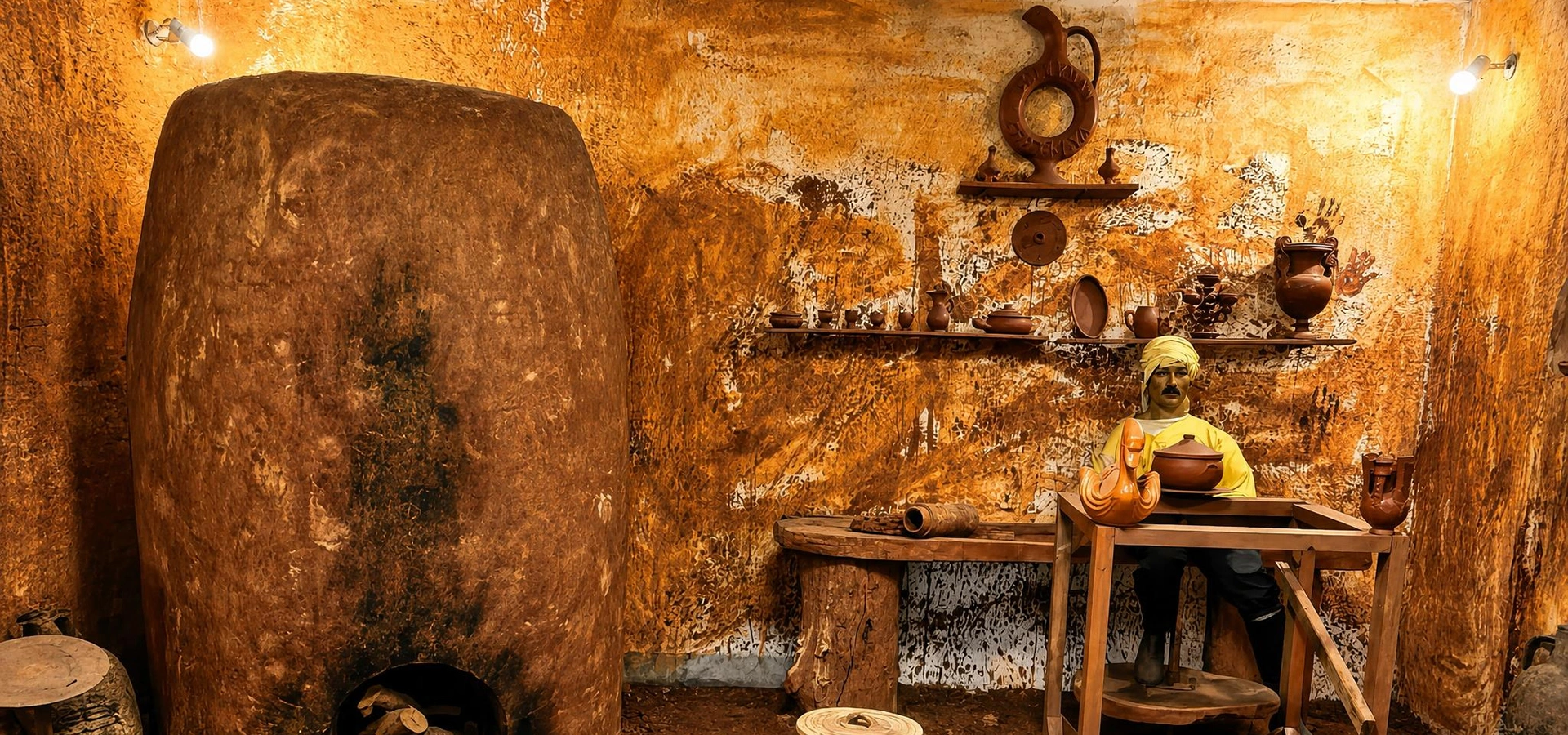
One of the most engaging features of Karacasu Ethnography Museum is the use of reconstructed working environments and human figures to explain traditional occupations.
Instead of presenting every object in isolation, selected displays recreate aspects of historical craft production. These scenes help visitors recognize how tools were used and understand the relationship between different stages of work.
Official descriptions identify three reconstructed rooms associated with traditional crafts and occupations, alongside exhibition cases displaying textiles, household metals, devotional materials and other artifacts.
Displays introduce the tools and techniques associated with shaping and producing traditional ceramics.
Equipment and reconstructed scenes illustrate aspects of traditional ironworking.
Objects related to leather production explain one of Karacasu's longstanding occupations.
Traditional looms and associated artifacts help visitors visualize textile production.
Historic household objects provide insight into cooking, storage and family routines.
Regional woven objects demonstrate the practical and artistic dimensions of textile making.
These displays are particularly useful for visitors unfamiliar with traditional Anatolian crafts. Seeing the relationship between a tool, a material and a finished object makes the history of production easier to understand.
Beyond the displays of traditional crafts, the museum contains a diverse range of objects reflecting social, economic and religious life in Karacasu and the surrounding region.
An approximately 300-year-old handwritten Quran is listed among the museum's important religious artifacts.
Stone monuments preserve historical inscriptions and decorative traditions associated with burial customs.
Precision weighing equipment illustrates the practical requirements of traditional commerce.
Historical administrative objects recall systems of official communication and documentation.
Handcrafted devotional objects reflect religious and spiritual practices.
Traditional metal vessels reveal elements of regional cooking, dining and hospitality.
Historic household furnishings illustrate changing approaches to domestic life and craftsmanship.
Animal-drawn agricultural equipment reflects the importance of farming in the regional economy.
Metal accessories provide evidence of personal decoration and traditional dress.
Selected firearms and edged weapons form part of the museum's ethnographic displays.
Food-processing equipment demonstrates everyday technologies used before widespread mechanization.
Lighting equipment illustrates the domestic and ceremonial use of worked metal.
The importance of these objects lies in their ability to document ordinary lives. Collectively, they preserve evidence of occupations, family traditions, craftsmanship and cultural practices across generations.
Although much of the museum focuses on traditional life and craftsmanship, its collection also includes material associated with the formative decades of the Republic of Türkiye.
One notable object described in the official collection is a 1926 Independence Medal certificate bearing the signature of Mustafa Kemal Atatürk. This document connects the local historical collection with the wider national memory of Türkiye's struggle for independence.
Another important exhibit is associated with celebrations marking the tenth anniversary of the Republic in 1933.
The museum preserves a small pedestal block belonging to the Tenth Anniversary Monument erected in Karacasu during these commemorations. This object provides a tangible connection with the ceremonies and public expressions of national identity that accompanied the early Republican period.
These exhibits broaden the museum's historical scope. They demonstrate how local history intersects with political and social developments taking place across the country.
A document associated with an Independence Medal and bearing Atatürk's signature.
A surviving element of Karacasu's Tenth Anniversary Monument.
Objects connecting community history with important national events.
Karacasu Ethnography Museum is a relatively compact cultural institution rather than a large archaeological complex.
The museum occupies part of the municipal building, and its principal exhibition area is arranged in an L-shaped hall. The displays bring together reconstructed craft scenes, textile collections and cases containing other ethnographic objects.
Visitors can explore the exhibitions at a comfortable pace while moving between different themes of traditional regional life.
Observe displays illustrating traditional occupations and working methods.
Examine woven fabrics, clothing and household textiles.
Explore domestic items, religious artifacts, weapons and administrative memorabilia.
Compare examples of traditional carpet and kilim production.
Discover objects associated with twentieth-century local history.
The manageable size makes it suitable for travelers with limited time in Karacasu.
Travelers sometimes confuse the Karacasu Ethnography Museum with the better-known Aphrodisias Museum. Both are located within Karacasu district, but their collections explore different historical periods and aspects of cultural heritage.
Located in Karacasu town center, this museum focuses on traditional occupations, textile production, household life, regional clothing and historical memorabilia.
Located at the ancient city near Geyre, the archaeological museum displays sculpture, reliefs and other discoveries associated with Aphrodisias and its ancient artistic tradition.
Visiting both offers a broader understanding of the district. At Aphrodisias, travelers encounter the extraordinary achievements of ancient marble sculptors. At Karacasu Ethnography Museum, they discover the more recent craft traditions and everyday culture of people who lived in the surrounding landscape.
For archaeological collections, explore our Aphrodisias Museum visitor guide. For the ancient monuments themselves, see our complete guide to Aphrodisias Ancient City.
The museum can easily form part of a wider cultural visit to Karacasu. A little preparation will make your experience more rewarding.
Confirm that the museum is operating before traveling, particularly on holidays or during maintenance.
Approximately 30–60 minutes is suitable for a general visit, with longer for detailed study.
Pay attention to traditional garments, weaving equipment and distinctive handmade fabrics.
Understanding how tools were used helps explain Karacasu's traditional economy.
Combine the museum with pottery workshops when access and demonstrations are available.
The museum fits naturally into an itinerary featuring the ancient city and archaeological museum.
Do not handle historical textiles, tools or display objects unless staff specifically permit it.
Confirm current museum photography rules before taking pictures inside.
The museum is located beneath the Karacasu Municipality building on Tavas Caddesi in the town center.
Official Turkish Museums information lists visiting hours as 09:00–17:30, Tuesday through Sunday, with Monday as the regular closing day. Admission is listed as free for visitors.
However, another official museum portal has displayed a closed status despite publishing the normal opening schedule. Visitors should therefore confirm the museum's current operational status directly before making a special journey.
As an indoor attraction, the museum can be enjoyed throughout the year whenever it is open. Seasonal conditions become more relevant when combining the visit with walking around Karacasu or exploring nearby Aphrodisias.
Comfortable weather for combining museum visits with the surrounding countryside and archaeological sites.
Visit the museum during the hotter part of the day while reserving cooler hours for outdoor sightseeing.
Pleasant conditions for cultural itineraries, town exploration and traditional workshop visits.
An indoor heritage stop that can complement visits to local villages and historic buildings.
A useful option before visiting local businesses, restaurants or nearby archaeological attractions.
A convenient short stop after an earlier visit to Aphrodisias, subject to museum opening hours.
A brief visit covering the main displays and examples of traditional craftsmanship.
Recommended for exploring the major collections at an unhurried pace.
Suitable for visitors with particular interests in textiles, social history and traditional occupations.
Combine the museum with a town walk, local food and traditional craft workshops.
Visit Aphrodisias Ancient City, Aphrodisias Museum and Karacasu's ethnographic attractions.
Focus on the workshop reconstructions, everyday tools and easily recognizable household objects.
The museum's textiles, working tools and reconstructed displays offer opportunities to document traditional craft culture, provided photography is permitted by museum staff.
Photograph traditional looms and the relationship between equipment and finished textiles.
Capture decorative motifs and details that reveal different weaving techniques.
Use wider compositions to show the arrangement of workshops and their tools.
Focus on the materials, surfaces and workmanship of traditional objects.
Document details of copper vessels, ornaments and domestic equipment.
Avoid flash or close photography of delicate materials where prohibited.
Official museum listings identify the attraction as suitable for families and include accessibility and parking facilities among its visitor amenities.
Nevertheless, travelers who require step-free access or specific mobility arrangements should contact the museum directly to confirm the current entrance, internal circulation and available facilities.
The main collection is housed within a municipal building rather than spread across an outdoor archaeological site.
Confirm current entrance arrangements, thresholds and accessible visitor facilities before arrival.
The museum's compact layout and craft displays make it a manageable cultural stop.
Parking is identified as an available facility, although spaces and access conditions may vary.
Ask staff about seating arrangements if a visitor cannot stand for extended periods.
Contact museum administration in advance for specific accessibility needs.
The museum is situated in central Karacasu, within Aydın Province in southwestern Türkiye. Its position inside the municipality building makes it a convenient destination for travelers already exploring the town.
Karacasu can be reached by road from other towns in the Aydın and Denizli regions. A private vehicle is particularly convenient for travelers planning to combine the museum with Aphrodisias and surrounding villages.
Head toward the municipality building on Tavas Caddesi. The museum is located on its lower level.
Drive from the archaeological site near Geyre toward Karacasu town center.
Follow the regional road network toward Karacasu, then continue to the municipality building.
Travel toward Nazilli and Karacasu using regional highways and local connections.
Reach Karacasu by road through the surrounding district network, checking your preferred route before departure.
A private vehicle allows travelers to combine Karacasu with Aphrodisias and other regional heritage sites.
Karacasu is an excellent destination for travelers interested in both ancient history and traditional Anatolian culture. Its surrounding landscape contains archaeological sites, villages, working craft traditions and rural scenery.
Discover the town's historic character, craft traditions, local cuisine and regional identity.
Explore one of Türkiye's most important archaeological sites, famous for its ancient sculpture and monumental architecture.
Admire ancient marble statues, reliefs and other discoveries from the renowned archaeological site.
Discover the production of Karacasu's distinctive reddish earthenware in local workshops.
Explore rural communities connected with agriculture, traditional crafts and regional customs.
Experience the rural landscape that has shaped settlement, agriculture and craftsmanship in the district.
Continue exploring the archaeological heritage, local traditions and natural landscapes of the wider province.
Discover important archaeological collections from ancient cities and settlements across the region.
A rewarding way to experience Karacasu is to combine its ethnographic heritage with the ancient monuments of Aphrodisias.
Begin at Aphrodisias Ancient City, where monumental architecture, the famous stadium, the Tetrapylon and the remains of the ancient sanctuary reveal the prosperity of this important Carian settlement.
Continue to the Aphrodisias Museum to study the sculptures and reliefs created by the city's celebrated marble-working tradition.
After lunch, travel into Karacasu town and visit the Karacasu Ethnography Museum, subject to confirmed opening arrangements. Here, the focus changes from ancient marble sculpture to the everyday history of local communities.
If arrangements permit, finish the day with a visit to a traditional pottery workshop, where contemporary craftsmen continue aspects of Karacasu's earthenware tradition.
The museum is located in the lower level of the Karacasu Municipality building on Tavas Caddesi in Yaylalı Mahallesi, Karacasu, Aydın Province, Türkiye.
It is a regional cultural museum presenting traditional crafts, textiles, household objects and historical artifacts associated with Karacasu and surrounding communities.
The museum opened to the public in 2007.
The museum operates under the Aphrodisias Museum Directorate within the Turkish Ministry of Culture and Tourism's museum administration.
Visitors can explore traditional weaving equipment, textiles, carpets, pottery-related displays, leatherworking and blacksmithing artifacts, household objects, historic religious items and Republican-era memorabilia.
The published official museum inventory describes 622 objects, including 327 exhibited items and 295 objects in storage. These figures may change as collections and displays develop.
Pottery, weaving, leatherworking and blacksmithing are among the principal traditional occupations featured in the museum's exhibitions.
Karacasu is associated with handmade earthenware produced using local reddish clay and longstanding pottery techniques. Cooking pots, pitchers and other household ceramics are important products of this tradition.
Yes. Its textile collection includes regional garments and woven accessories, including traditional shirts, sashes and garments such as üç etek and şalvar.
Yes. The museum includes displays of traditional woven carpets and kilims, along with other textile products and weaving equipment.
Yes. The collection includes Ottoman-period gravestones and other historical objects associated with regional social and religious traditions.
Official collection descriptions include an approximately 300-year-old handwritten Quran among the museum's notable religious artifacts.
Yes. The published museum inventory identifies a 1926 Independence Medal certificate bearing Mustafa Kemal Atatürk's signature and material associated with the Republic's tenth-anniversary celebrations in 1933.
The museum preserves a small pedestal block associated with the monument erected in Karacasu during the tenth-anniversary celebrations of the Turkish Republic in 1933.
No. Karacasu Ethnography Museum focuses on traditional crafts and more recent regional history, while Aphrodisias Museum displays archaeological finds and sculptures from the ancient city.
Official Turkish museum listings identify the museum as free to visit. Check current arrangements before traveling.
The published visiting schedule is 09:00–17:30, Tuesday through Sunday, with Monday closed. Because official listings contain conflicting operational-status information, confirm that the museum is open before visiting.
Monday is listed as the museum's regular closing day.
Allow approximately 30–60 minutes for a general visit. Visitors with a particular interest in crafts, textiles or ethnography may wish to spend longer.
Yes. Traditional tools, garments and reconstructed craft scenes can help children learn about everyday life and historic occupations. Adult supervision remains important around delicate exhibits.
Official listings include accessibility among the museum's facilities, but visitors should contact the administration to confirm current step-free access and other individual requirements.
Photography rules may vary. Ask museum staff about current restrictions, including flash photography, before taking pictures.
Yes. The museum is a practical addition to an Aphrodisias cultural itinerary when both attractions are open and travel is planned efficiently.
Karacasu maintains an active pottery tradition. Workshop visits or demonstrations may be possible with suitable advance arrangements.
Yes, especially for travelers interested in Anatolian social history, traditional craftsmanship, regional textiles and the cultural heritage of the communities surrounding Aphrodisias.
Ethnographic collections often contain delicate textiles, wooden objects, manuscripts and handcrafted materials. Respectful visiting helps preserve these objects for future generations.
Historic fabrics, tools and household objects may be fragile even when they appear durable.
Respect restrictions intended to protect sensitive objects and other visitors.
Approach historic manuscripts and devotional objects with appropriate consideration.
Consider purchasing authentic handmade products directly from local artisans.
Follow directions about access, displays and visitor conduct.
Avoid bringing food or drinks into exhibition areas unless specifically permitted.
Combine the traditional heritage of Karacasu with the extraordinary archaeological monuments of Aphrodisias through a thoughtfully planned private experience, with flexible pacing and no compulsory shopping stops.
Explore local crafts, the ethnography museum and nearby archaeological heritage through a customized itinerary.
Ask us about a personalized route featuring Karacasu's ethnographic heritage, traditional pottery, local culture and the surrounding countryside.
Request a Custom Tour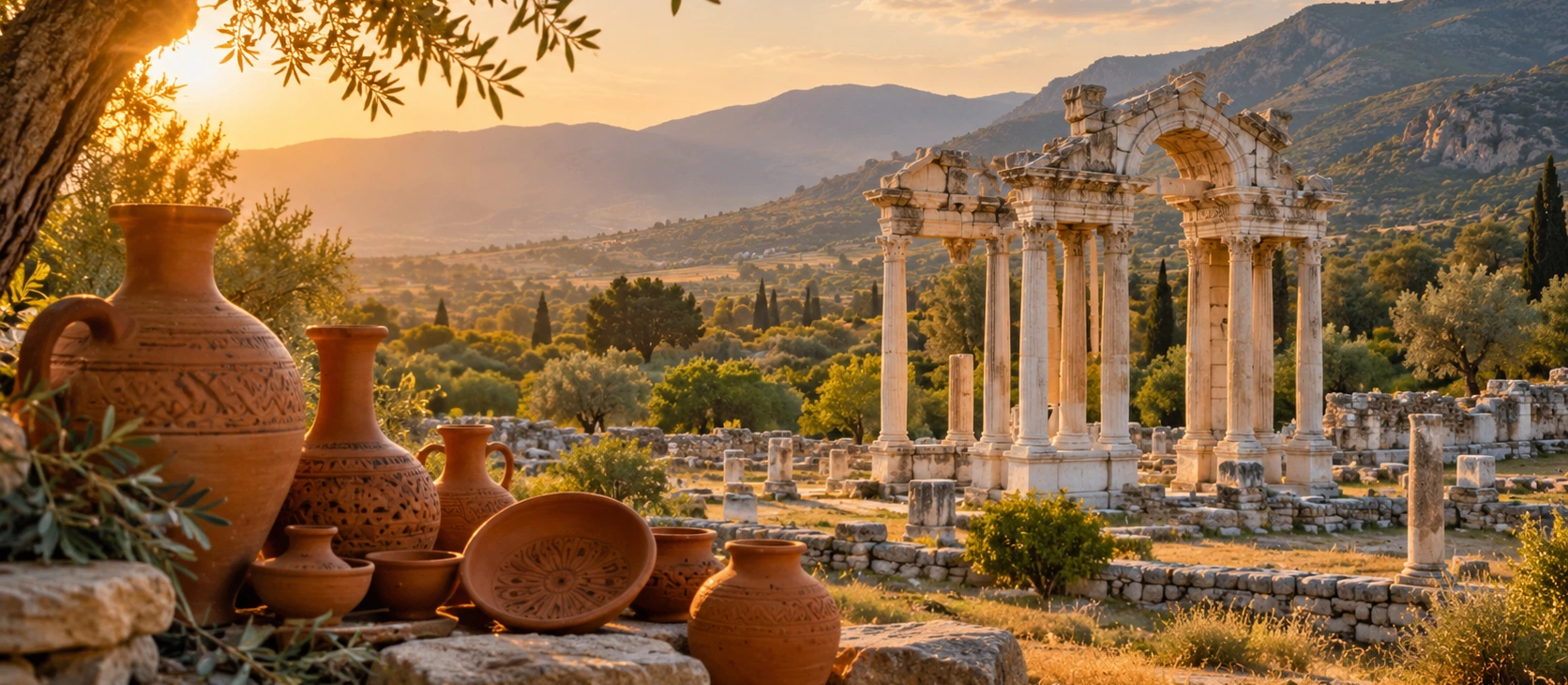
Explore the town's craft traditions, historic setting, local food, rural culture and nearby archaeological treasures.
Explore KaracasuDiscover the celebrated monuments and cultural landscapes of southwestern Anatolia.
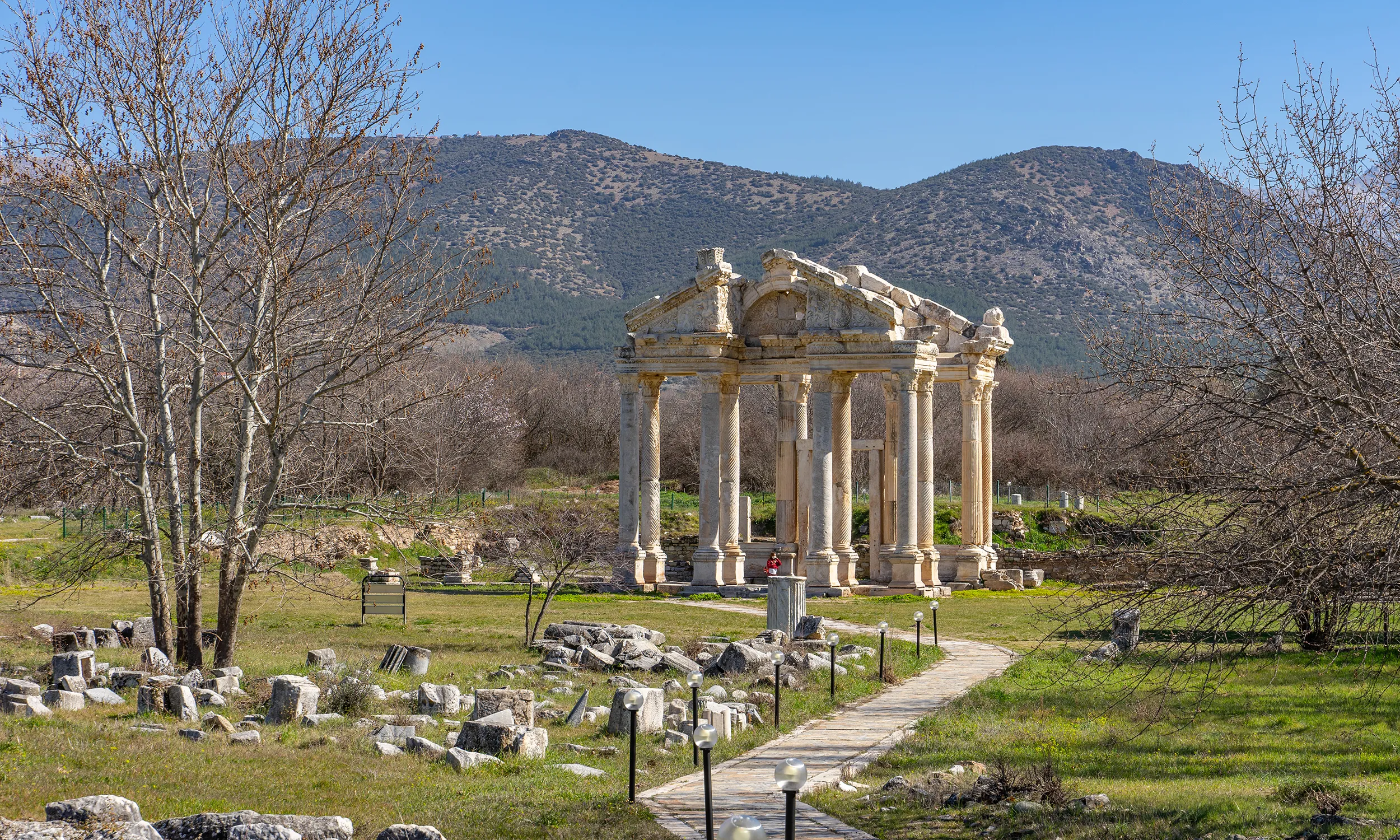
Discover magnificent Roman monuments, a celebrated sanctuary and one of the ancient world's finest preserved stadiums.
Explore Aphrodisias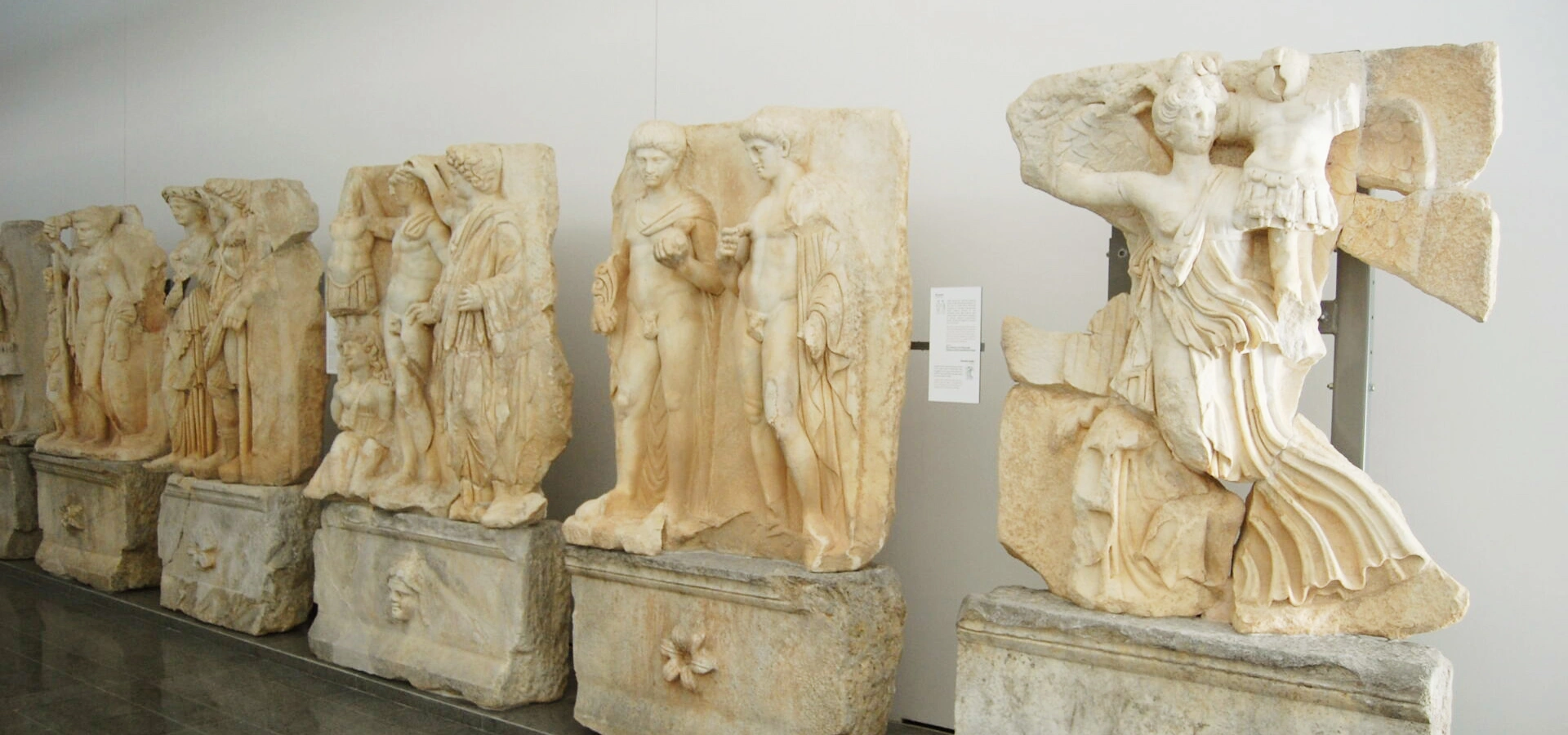
Explore outstanding examples of classical sculpture, imperial reliefs and archaeological discoveries from ancient Caria.
Explore the Museum
Continue through ancient cities, traditional towns, historic monuments, cultural museums and remarkable Aegean landscapes.
View Aydın Guide