Prehistoric Anatolia, Rock Paintings & Sacred Landscapes

Latmos Rock Art – Complete Aydın Visitor Guide

Discover prehistoric paintings hidden among the extraordinary rocks of the Beşparmak Mountains,
where ancient communities recorded human relationships, family life and sacred traditions.

Explore the Ancient Paintings

Latmos Rock Art – The Prehistoric Painted World of Western Anatolia

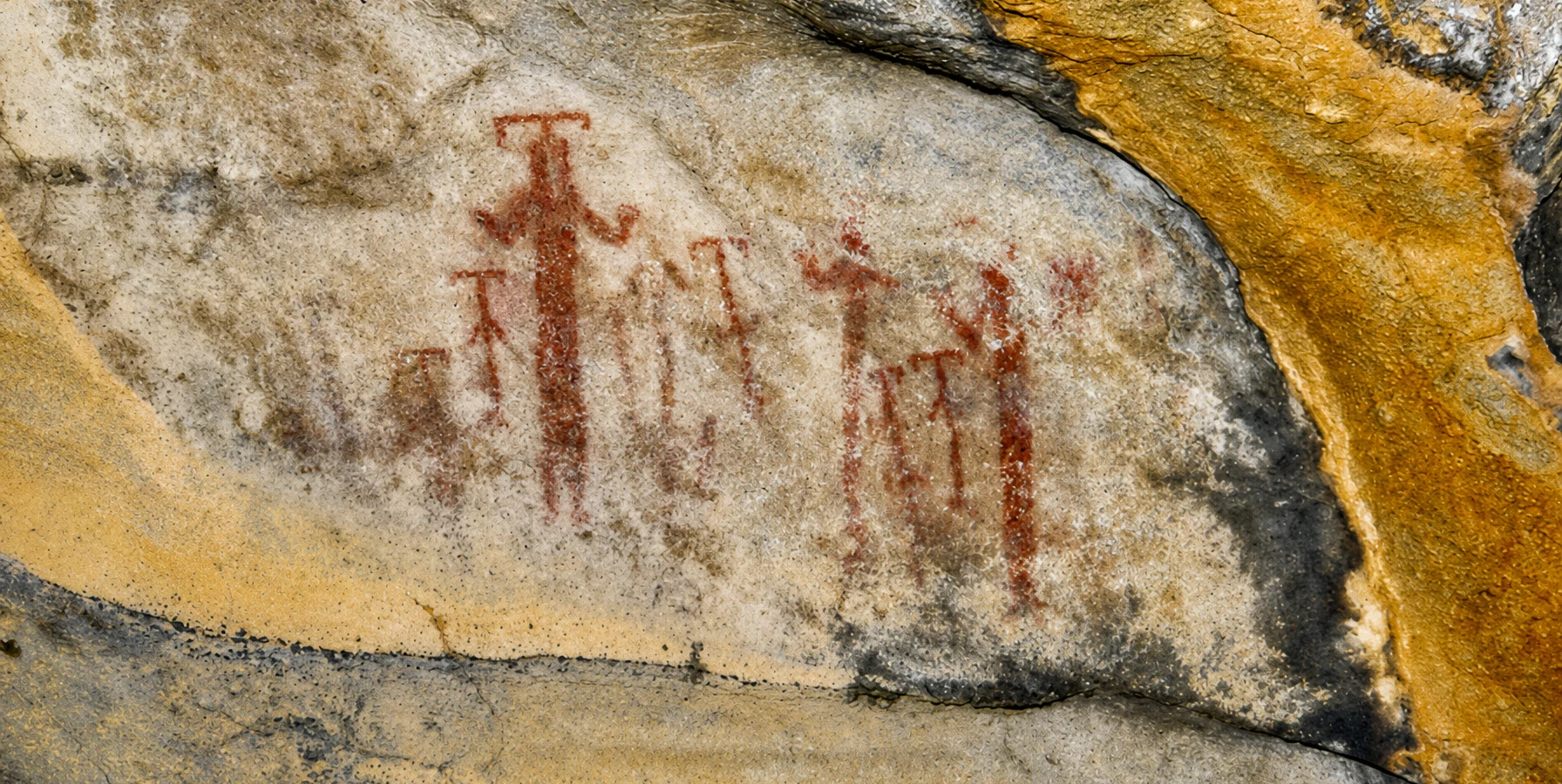
Hidden among the remarkable granite and gneiss formations of the Beşparmak Mountains, historically known as Mount Latmos, lies one of the most distinctive prehistoric artistic traditions in Türkiye. Thousands of years before the great cities of ancient Caria and Ionia emerged, communities living in this mountainous landscape painted human figures, groups and symbolic compositions onto sheltered rock surfaces.

The Latmos rock paintings, commonly dated to the 6th and 5th millennia BC, are often described as approximately 8,000 years old. Unlike many prehistoric artistic traditions that emphasize wild animals and hunting, the paintings of Latmos are especially notable for their concentration on human relationships, women, couples, children, gatherings and possible ritual activities.

Systematic archaeological investigations began revealing the extraordinary importance of this artistic landscape in 1994, through research led by German archaeologist Dr. Anneliese Peschlow-Bindokat. More than 170 locations containing prehistoric paintings have been documented across the wider mountains, establishing Latmos as an important center for the study of early human imagery in Anatolia.

Today, the paintings survive on natural rock shelters, boulder surfaces, shallow caves and overhangs scattered through the mountains around Lake Bafa and the wider Latmos region. Visiting them is not like entering a conventional archaeological museum. The experience combines prehistoric archaeology, mountain walking, extraordinary geology, village life and the exploration of a landscape that remained culturally significant for millennia.

8,000-Year Heritage

Encounter paintings traditionally dated to the Neolithic and Chalcolithic transition.

Human Stories

Discover figures interpreted as families, couples, children and community gatherings.

170+ Sites

Explore the history of a remarkable network of documented painted locations.

Sacred Landscape

Experience a mountain where prehistoric traditions and Byzantine spirituality intersect.

Know Before You Go

Latmos Rock Art – Quick Facts

Essential information about the prehistoric paintings of the Beşparmak Mountains in western Türkiye.

📍

Location

Beşparmak (Latmos) Mountains, extending across Aydın and Muğla provinces near Lake Bafa.

Explore the Area on Maps
🏺

Historical Period

Generally dated to the 6th and 5th millennia BC, approximately 8,000–7,000 years ago.

🎨

Artistic Tradition

Small prehistoric paintings featuring human figures, social groupings and symbolic motifs.

🔎

Research

Systematically documented from 1994 through work led by Anneliese Peschlow-Bindokat.

🥾

Visiting Style

Outdoor archaeological exploration along mountain paths; a knowledgeable local guide is strongly recommended.

⏱️

Suggested Visit

Allow approximately 3–5 hours for a selected guided route, or longer for a combination with nearby monuments.


An Extraordinary Window into Prehistoric Life

Why Is Latmos Rock Art Important?

The prehistoric paintings of Latmos preserve an unusually human-centered artistic tradition from early western Anatolia.

Prehistoric rock art is often associated with wild animals, hunting scenes and dramatic encounters between humans and nature. The paintings of Latmos offer a strikingly different perspective. Their most prominent subject is the human figure, frequently appearing alongside other people in compositions interpreted as expressions of social relationships.

Some figures appear in pairs. Others form groups or stand beside smaller individuals. Researchers have suggested that several compositions may represent couples, mothers with children, communal dances, ceremonies and ideas related to fertility. These interpretations remain archaeological hypotheses rather than literal captions left by the ancient artists.

The predominance of female figures is particularly noteworthy. Women are often represented with distinctive body shapes, sometimes accompanied by decorative elements that may indicate clothing, adornment or symbolic conventions.

The paintings are also closely connected with the physical environment. Their placement beneath monumental boulders, within natural shelters and near distinctive geological formations suggests that the mountain landscape itself contributed to their significance.

Latmos therefore provides valuable evidence for studying how early communities in western Anatolia represented themselves, organized social identities and expressed beliefs through images.

History of the Latmos Rock Paintings

The mountains surrounding Lake Bafa preserve traces of occupation and cultural activity reaching far beyond the Classical period. Although Latmos later became associated with Carian settlements, Greek mythology, Byzantine monasteries and Ottoman-era communities, its prehistoric paintings belong to a much earlier chapter of human history.

The principal painted tradition is generally assigned to the 6th and 5th millennia BC, during the broad period when farming and settled community life were transforming societies across western Anatolia. Archaeologists have identified similarities between the painted figures and certain aspects of contemporary prehistoric visual culture, although the precise chronology of individual panels is not always established.

Long before the foundation of Herakleia at Latmos, communities were using natural shelters and rock surfaces to produce images that appear closely connected with human interaction and ceremonial life.

Over subsequent millennia, the mountain retained religious and cultural significance. Later traditions associated its extraordinary summit with divine powers, while the Greek myth of Selene and Endymion gave the landscape an enduring place in Classical storytelling.

During the Byzantine period, Latmos—then also known as Latros—developed into an important monastic landscape. Hermits and monks occupied caves, built monasteries and decorated natural rock surfaces with Christian frescoes. These later paintings are historically separate from the prehistoric art, although both traditions reveal the long-standing spiritual importance of the mountains.

6th–5th Millennia BC

The principal prehistoric painting tradition is generally placed within this broad period.

Ancient Caria

Latmos becomes associated with settlements, regional cults and the development of the Carian landscape.

Classical Antiquity

The mountain becomes closely connected with the mythological relationship between Selene and Endymion.

Byzantine Period

Monastic settlements and painted Christian sanctuaries develop across the mountains.

1994

Systematic documentation of the prehistoric paintings begins through archaeological research.

Modern Conservation

Archaeological documentation, protective designations and conservation advocacy continue as new locations are identified.

Discovery and Archaeological Research at Latmos

The modern recognition of Latmos as a major prehistoric rock-art landscape is closely associated with Dr. Anneliese Peschlow-Bindokat, whose archaeological investigations revealed the exceptional nature and distribution of the paintings.

Beginning in 1994, research conducted in connection with the German Archaeological Institute documented painted shelters, recorded individual figures and examined relationships between the images and their geological settings.

More than 170 painted locations became known through archaeological fieldwork. Individual shelters may contain several figures or complicated compositions, meaning the number of painted figures is substantially greater than the number of sites.

Scholars have studied the subjects, artistic techniques, positioning and possible ritual significance of the paintings. The results contributed to exhibitions and publications that brought international attention to a previously little-known dimension of Anatolian prehistory.

Among these efforts was the exhibition Prehistoric Human Paintings, presented at Istanbul's Sadberk Hanım Museum in 2006. It introduced visitors to the remarkable imagery of Latmos through archaeological documentation and photographs.

Field Surveys

Researchers documented paintings on boulders, natural cavities, shallow caves and rock overhangs.

Archaeological Drawings

Detailed tracings help researchers identify figures that can be difficult to distinguish on weathered stone.

Photographic Records

Images provide essential documentation of fragile paintings and their preservation condition.

Comparative Research

The compositions are studied alongside archaeological evidence for prehistoric western Anatolian societies.

Landscape Interpretation

The position of each painting is considered alongside boulders, water sources, valleys and mountain landmarks.

Continuing Discoveries

Additional rock paintings continue to be identified beyond the areas investigated during the original surveys.

An important distinction: The often-cited figure of more than 170 refers to documented painted locations in the broader Latmos landscape, not to 170 individual human figures or 170 publicly accessible visitor attractions.

What Do the Latmos Rock Paintings Depict?

The most remarkable quality of the Latmos rock-art tradition is its strong emphasis on human representation. Although each composition must be studied individually, several recurring subjects and artistic conventions have been identified.

Female Figures

Many figures interpreted as women feature strongly emphasized hips and distinctive body outlines, sometimes with patterned details.

Male Figures

Figures interpreted as men are frequently shown frontally, with simplified bodies, prominent limbs and raised or extended arms.

Couples

Paired human figures appear repeatedly and have been interpreted as representations of relationships between women and men.

Mothers and Children

Some compositions show large and small figures together, suggesting possible relationships between adults and children.

Communal Gatherings

Groups of figures have been interpreted as gatherings, dances or ceremonies connected with community life.

Possible Weddings

Several paired and grouped compositions have been interpreted as marriage or fertility-related imagery.

Decorative Motifs

Geometric patterns and decorated bodies may communicate clothing, social identity or symbolic meaning.

Rare Animal Images

Animals occur within the painted tradition but are much less prominent than the human subjects.

These artistic themes are valuable because they suggest an interest in social continuity and the relationships connecting members of early communities. However, prehistoric images cannot be translated with the certainty of a written historical document.

How should the paintings be interpreted? Descriptions such as wedding, family ceremony, mother and child or fertility ritual represent scholarly interpretations. They help explain the imagery, but the precise intentions and identities of the prehistoric artists remain unknown.

The Importance of Female Figures in Latmos Rock Art

One of the most frequently discussed features of the paintings is the prominence of female figures. Archaeological documentation has identified hundreds of human representations, with figures interpreted as women forming a substantial proportion of the surviving imagery.

Female bodies are often shown in profile, with elongated upper bodies, prominent hips and distinctive outlines. Some figures appear to wear decorated garments, skirts or aprons, although the identification of particular details remains interpretive.

The recurring presentation of women has encouraged researchers to examine possible connections with fertility, reproduction, family relationships and the social importance of women.

Nevertheless, the paintings should not be treated as straightforward proof of a particular political or social system, such as a matriarchal society. Their importance lies in the visible role assigned to female imagery within a complex prehistoric artistic tradition.

Distinctive Silhouettes

Strongly stylized body shapes allow many female figures to be recognized within the painted repertoire.

Possible Clothing

Decorative patterns may indicate garments, ornamentation or symbolic body designs.

Paired Representations

Women often appear alongside other figures in compositions involving close human interaction.

Social Symbolism

The prominence of female imagery may relate to ideas of community continuity and reproduction.

How Were the Latmos Rock Paintings Created?

The prehistoric artists of Latmos generally used red mineral pigments to create their images. Iron-rich materials, including forms of iron oxide such as hematite, are associated with this characteristic red coloring.

The pigment was applied in relatively small figures, probably using fingers or simple tools capable of producing narrow lines and filled shapes. The artists worked directly on natural rock surfaces, taking advantage of protected hollows, sheltered ceilings and the unusual contours of the stone.

The paintings are not monumental murals covering entire cave systems. Many consist of compact, carefully arranged figures that require close observation to appreciate.

At certain locations, color differences and overlapping figures provide possible evidence of more than one episode of artistic activity. Although red predominates, the well-known Balıktaş paintings also preserve the unusual use of yellow pigment.

Red Ochre

Iron-rich red pigments produced the characteristic reddish-brown appearance of most paintings.

Fine Application

Figures were painted with fingers or simple narrow tools rather than cut deeply into the stone.

Natural Shelters

Overhanging rock surfaces offered some protection from direct rainfall and sunlight.

Stylized Forms

Simple outlines, exaggerated body features and repeated conventions created recognizable imagery.

Overlapping Figures

Some compositions include superimposed images that may indicate separate painting phases.

Rare Yellow Pigment

Balıktaş provides a particularly important example of yellow coloring alongside red figures.

Paintings, not carvings: The principal prehistoric images of Latmos are painted pictographs. They should not be confused with rock engravings or with the Byzantine Christian frescoes created thousands of years later.

Famous Latmos Rock Painting Sites

The prehistoric paintings are distributed across a broad mountain landscape rather than concentrated in one publicly managed cave. Archaeological publications identify numerous painted shelters by names associated with nearby valleys, natural formations and local places.

Balıktaş

Among the best-known painting locations, with human compositions and distinctive use of yellow alongside red pigment.

İkizada

A notable painted location associated with grouped human figures and compositions interpreted as expressions of relationships.

Karadere

A particularly significant natural rock shelter where a large figure has been interpreted as a possible weather deity.

Kerdemlik

A prehistoric painted location known from walking routes connecting the mountain villages with the Yediler Monastery area.

Göktepe

One of the documented localities contributing to the wide geographical distribution of prehistoric painting.

Kavalan

A documented rock-art location known for human compositions and unusual painted details.

Damlıyurt

A locality represented within the archaeological records of the wider Latmos painting tradition.

Söğütdere

Part of the extensive network of painted sites documented during archaeological surveys.

Other recorded localities include Ballıkaya, Çayırlık, Çobanlar, Kayabaşı, Karadere and several additional shelters. Many locations are difficult to identify without detailed archaeological documentation or local expertise.

Access is not guaranteed: The names above identify documented archaeological locations, not a list of open or officially marked tourist attractions. Some may be difficult to reach, environmentally sensitive or subject to access restrictions. Arrange visits through responsible local guidance and respect any protected areas.

Latmos as a Prehistoric Sacred Mountain

The extraordinary appearance of the Beşparmak Mountains has encouraged researchers to consider whether the natural landscape played a central role in prehistoric spiritual traditions.

Large, weathered boulders form sheltered spaces, narrow passages, natural chambers and striking shapes that can resemble animals or human faces. Many painted surfaces are directly associated with these remarkable geological formations.

Archaeological interpretations suggest that parts of the mountain may have served as places of ritual activity linked with weather, water and fertility. Rainfall would have been particularly important to communities dependent on farming and the seasonal productivity of the surrounding landscape.

The Karadere rock shelter provides one of the most interesting examples. Its prominent male figure, shown with raised arms and a distinctive head form, has been interpreted as a possible personification of a weather deity. The surrounding natural setting has also been examined as a potential ritual space.

These suggestions connect the paintings with a broader history of sacred mountains in Anatolia. However, the identities of prehistoric deities and the precise functions of individual painted shelters cannot be established with certainty.

Sacred Summit

The dramatic highest sections of Latmos became associated with divine powers in later regional traditions.

Rain and Agriculture

Water and seasonal rainfall may have influenced prehistoric ritual beliefs and artistic themes.

Natural Chambers

Enclosed spaces formed by fallen boulders could provide meaningful settings for painting and gatherings.

Enduring Sacred Identity

Later Classical and Byzantine religious traditions developed within the same mountain landscape.

The Extraordinary Landscape of the Latmos Mountains

The Beşparmak Mountains form part of the geological landscape of western Anatolia's Menderes Massif. Their distinctive appearance owes much to ancient metamorphic rocks and prolonged weathering.

Large masses of gneiss and other metamorphic rocks have developed rounded shapes, deep hollows, balancing forms and dramatic surfaces. Some appear almost sculptural, resembling animals, human heads or imaginary creatures.

These natural forms are not simply a background to the prehistoric paintings. In several cases, the artwork was placed in direct relationship with the shape of a rock surface, suggesting that ancient artists may have understood the existing landscape as a meaningful part of their compositions.

The mountains also preserve olive groves, Mediterranean vegetation, seasonal streams, rocky slopes and traditional rural settlements. Together, these features create a complex cultural landscape where prehistoric archaeology and the natural environment are closely connected.

Ancient Metamorphic Rocks

The landscape is dominated by geological formations shaped over immense periods of time.

Natural Rock Shelters

Hollows and overhangs created sheltered surfaces suitable for prehistoric painting.

Unusual Boulder Forms

Rounded and weathered rocks create the mountain's distinctive sculptural character.

Lake Bafa Views

Higher viewpoints reveal the relationship between the mountains and the ancient coastal landscape.

Olive Landscapes

Traditional olive groves and rural paths remain important features of the region.

Mountain Ecology

Rock habitats, vegetation and wildlife make conservation of the wider landscape essential.

Prehistoric Rock Art and Byzantine Frescoes at Latmos

One of the most fascinating aspects of Latmos is the presence of paintings created thousands of years apart within the same mountain system.

The prehistoric rock paintings belong primarily to the 6th and 5th millennia BC. Their imagery is characterized by small red figures, stylized human bodies, group compositions and possible ritual symbolism.

The Byzantine frescoes belong to the Christian monastic history of the mountain, principally many centuries after the arrival of Christianity. These later paintings depict recognizable religious subjects, including figures of Christ, saints and biblical scenes.

The celebrated Yediler Monastery area preserves an especially interesting connection between Byzantine architecture and painted rock surfaces. Nearby Christian paintings help demonstrate how naturally sheltered spaces continued to serve artistic and spiritual purposes during the medieval period.

Prehistoric Period 6th–5th millennia BC
Prehistoric Subjects People, couples, children, groups and possible ritual imagery
Prehistoric Technique Predominantly red mineral pigment on natural rock surfaces
Byzantine Period Medieval Christian monastic occupation
Byzantine Subjects Christ, saints, biblical narratives and Christian iconography
Shared Landscape Natural shelters, caves and monumental rock formations
Remember: A painted image showing Christ or a saint is not prehistoric Latmos rock art. These medieval Christian paintings are historically distinct, even when they occupy similar kinds of rock shelters.

Conservation and Threats to Latmos Rock Art

The prehistoric paintings have survived for thousands of years, but their continued preservation is not guaranteed. Their exposed mountain setting makes them vulnerable to both natural processes and human activity.

Conservation researchers and environmental organizations have repeatedly highlighted the effects of quarrying, mining-related landscape disturbance, vandalism and uncontrolled human access in parts of the wider Latmos region.

Modern markings, the touching of painted surfaces and inappropriate attempts to improve visibility can permanently damage ancient pigment. The wider environment is also important because the archaeological value of Latmos depends on the relationship between the paintings and the natural formations surrounding them.

In 2025, following discoveries reported by the environmental organization EKODOSD, an area containing prehistoric paintings and other archaeological remains within Aydın's Koçarlı district was registered as a first-degree archaeological protected area. This represents protection for that identified area, rather than evidence that the entire mountain range has a single uniform conservation designation.

Reports in 2026 also drew attention to vandalism and continued conservation concerns. These developments underline the importance of responsible visitation, scientific documentation and comprehensive protection of the archaeological landscape.

Mining and Quarrying

Industrial disturbance can affect the geological setting, natural habitats and archaeological landscape.

Vandalism

Modern paint, graffiti and deliberate marking can permanently damage prehistoric imagery.

Natural Weathering

Moisture, temperature changes, erosion and biological activity gradually affect exposed rock surfaces.

Visitor Contact

Touching and rubbing fragile surfaces can contribute to pigment deterioration.

Scientific Documentation

Photographs, drawings and archaeological records help preserve information about threatened paintings.

Responsible Tourism

Small guided visits and respect for restrictions can help reduce the impact of tourism.

A heritage landscape worth protecting: Latmos should be experienced as a fragile archaeological environment rather than an unrestricted outdoor adventure park. Never touch, trace, clean, wet or mark the painted surfaces.

What to See When Visiting Latmos Rock Art

A carefully planned walk through the Latmos Mountains offers far more than individual rock paintings. The experience combines ancient images with mountain scenery, prehistoric environments and later historical remains.

Prehistoric Human Figures

Look for compact red compositions depicting highly stylized human bodies and groups.

Painted Rock Shelters

Observe how artists selected protected rock surfaces and natural cavities for their images.

Unusual Rock Formations

Discover monumental weathered boulders, overhangs and naturally sculpted stone formations.

Yediler Monastery

Explore the remains of a Byzantine monastic complex on suitable guided hiking routes.

Byzantine Christian Paintings

Compare the prehistoric images with medieval frescoes created within the same mountain environment.

Traditional Mountain Paths

Walk routes associated with local villages, olive groves and historic movement through the hills.

Lake Bafa Panorama

Enjoy views toward the lake and its dramatic mountain setting from selected elevated trails.

Rural Heritage

Experience the continuing human relationship with the landscape through nearby villages and olive-growing traditions.

Suggested Latmos Rock Art Hiking Route

For a first visit, the most rewarding approach is to arrange a guided walk beginning in the villages surrounding the southeastern and eastern Lake Bafa landscape.

The official Aydın cultural tourism information identifies Gölyaka as a traditional access point for mountain routes. Other organized archaeological walks use the Karahayıt area to reach selected prehistoric paintings and the nearby Byzantine monastic landscape.

A suitable route may begin with a short orientation at the village, followed by a walk through olive groves and weathered rock formations to an accessible prehistoric painting shelter. A guide can explain how to recognize the human figures without touching or approaching the painted surface too closely.

Depending on the chosen route, conditions and access permissions, the experience may continue toward Kerdemlik and the Yediler Monastery area, where later Byzantine remains provide a striking historical contrast.

Finish with time to appreciate the mountain landscape before returning to the village or continuing toward Lake Bafa and Kapıkırı.

Starting Area Gölyaka or Karahayıt, depending on the agreed route
First Experience Traditional paths, olive groves and geological formations
Main Highlight An accessible prehistoric rock-painting location
Optional Extension Kerdemlik and the Yediler Monastery landscape
Suggested Duration Approximately 3–5 hours, depending on the trail and stops
Recommended Format Guided small-group or private archaeological walk
Route planning matters: Not every named prehistoric site can be combined into one convenient walk. Trail conditions, distance, conservation rules and current access must be checked locally. A knowledgeable guide should select the specific route rather than relying on an unverified online map.

Latmos Rock Art Visitor Information

The Latmos rock paintings are distributed across open mountain terrain and do not operate as one centralized archaeological museum. Consequently, there is no single visitor entrance, ticket counter or general opening-hours schedule covering every painted location.

Some rock shelters can be approached by established rural walking routes, while others may be remote, difficult to identify, privately bordered or protected. A route's physical accessibility does not necessarily mean that entry to every painted location is permitted.

Visitors should arrange guidance in advance, confirm which painted location will be included and ask about walking distances, terrain conditions and any current restrictions.

Region Beşparmak (Latmos) Mountains, Aydın and Muğla
Main Access Areas Gölyaka, Karahayıt and the Lake Bafa surroundings
Opening Hours No unified schedule for the distributed rock-art sites
Admission No general combined ticket; guiding and any restricted access must be checked separately
Walking Conditions Rocky, uneven natural mountain trails with varying difficulty
Suggested Time 3–5 hours for a selected guided experience
Best For Prehistory, archaeology, culture, geology, hiking and photography
Guide Strongly recommended for navigation and heritage protection
Official information: Consult the Türkiye Culture Portal's Latmos page for an official introduction to the area. For a particular painting shelter, confirm current access with local authorities or an experienced guide.

Best Time to Visit Latmos Rock Art

Because visiting the paintings usually involves outdoor walking, the time of year can have a significant impact on comfort and safety. Moderate temperatures and stable weather generally make the archaeological landscape easier to explore.

Spring

One of the most pleasant seasons for walking, with milder temperatures and greener vegetation.

Autumn

Comfortable hiking conditions and softer light make this another excellent period for exploration.

Summer

Begin very early if walking, as exposed rock surfaces and steep paths can become extremely hot.

Winter

Cooler weather can be suitable, but rainfall and slippery rock surfaces may limit access.

Morning

An early start provides additional time for walking and helps avoid the strongest midday heat.

Dry Weather

Dry trail conditions are generally preferable for negotiating steep and uneven natural surfaces.

Practical Tips for Visiting Latmos Rock Art

Latmos is a landscape where archaeological interest must be balanced with realistic hiking preparation. Even relatively short walks can involve uneven stone, steep slopes and limited services.

Arrange a Guide

A knowledgeable local guide can identify appropriate routes and explain the archaeological background.

Wear Hiking Shoes

Choose shoes with reliable grip for rocky paths, loose stones and irregular surfaces.

Carry Drinking Water

Take sufficient water for the entire walk, especially in warm weather.

Protect Yourself from Sun

Use a hat, sunscreen and appropriate clothing for exposed mountain terrain.

Stay on Established Paths

Avoid shortcuts across archaeological areas, unstable boulders or sensitive vegetation.

Keep Your Distance

Observe the paintings without touching, leaning against or brushing the painted rock.

Do Not Wet the Paintings

Never apply water, chalk or another substance to make faint prehistoric images more visible.

Allow Extra Time

Build flexibility into your visit for photography, interpretation, weather and slow walking.

Safety and conservation: Do not squeeze into unstable rock cavities, climb above painted shelters or enter restricted areas. Never remove stones, pigments or archaeological material.

How Much Time Do You Need at Latmos?

1–2 Hours

Suitable for a brief village visit, landscape viewpoints and an introduction without a substantial archaeological hike.

3 Hours

May be sufficient for a carefully selected shorter guided walking route to an accessible painted shelter.

4–5 Hours

A useful allowance for a more substantial archaeological walk with interpretation and rest stops.

Full Day

Combine selected rock paintings with Byzantine remains, traditional mountain paths and Lake Bafa.

Two Days

Explore the prehistoric landscape more deeply and devote separate time to Herakleia, Kapıkırı and the lake.

With Children

Choose a short guided route appropriate to the children's ages, mobility and walking experience.

These are planning estimates, not fixed walking times. The actual duration depends on the selected site, starting village, trail condition, route restrictions and fitness of the participants.

Photography at the Latmos Rock Painting Sites

Latmos offers fascinating opportunities for archaeological and landscape photography, from tiny red figures on sheltered rock to dramatic views across the Beşparmak Mountains.

However, capturing an image must never take priority over preservation. Ancient pigments are fragile, and archaeological surfaces should not be touched, cleaned, rearranged or artificially enhanced.

Natural Light

Use available daylight where possible and avoid altering the surface to improve contrast.

Painting Details

Photograph the surviving figures from an appropriate distance without touching the rock.

Landscape Context

Include surrounding boulders and shelters to show how the art belongs to the mountain environment.

Geological Formations

Look for striking natural shapes, weathered surfaces and monumental balancing rocks.

Lake Bafa Views

Capture the relationship between the mountainous landscape and the lake below.

Respectful Sharing

Consider avoiding precise location tags for particularly vulnerable or unmonitored painted shelters.

Photography responsibility: Never use water, chalk, powder, paint or physical tracing to reveal ancient figures. Follow any photography restrictions imposed at protected archaeological locations.

Accessibility at Latmos Rock Art Sites

Accessibility is limited at many prehistoric painting locations because they are situated among natural mountain formations rather than within modern visitor facilities.

Reaching a painted shelter may involve stone paths, irregular steps, inclined ground, loose surfaces or narrow sections between boulders. Some shelters require bending or moving through confined natural spaces.

Natural Terrain

Expect uneven paths, slopes and rocky surfaces without continuous paved access.

Limited Facilities

Restrooms, seating and refreshments may not be available once the walk begins.

Wheelchair Access

Most mountain painting routes are not reliably wheelchair accessible; confirm any suitable alternatives locally.

Mobility Considerations

Visitors with limited mobility should discuss walking distance and terrain with the guide beforehand.

Young Children

Steep rocks and exposed paths require close supervision and careful route selection.

Alternative Experiences

Mountain viewpoints, village stops and nearby archaeological sites may offer less demanding ways to explore Latmos.

How to Get to Latmos Rock Art in Aydın

The Latmos Mountains extend across parts of Aydın and Muğla, with several possible approaches depending on the paintings and historical monuments included in your itinerary.

For many visitors, the most convenient orientation point is the Lake Bafa area, reached from the Söke–Milas road. From here, local roads lead toward villages such as Gölyaka and Kapıkırı, while some organized hikes begin closer to Karahayıt.

From Söke

Travel toward Lake Bafa on the main road, then continue to the agreed village meeting point.

From Milas

Approach the Lake Bafa area from the southeast and continue by suitable local roads.

From Didim

A day trip is possible by private vehicle, allowing time for a planned walk and nearby attractions.

From Kuşadası

Travel via Söke and allow a substantial part of the day for the journey and archaeological experience.

Gölyaka

A traditional starting area for walks toward prehistoric sites and Byzantine mountain monuments.

Karahayıt

A starting point used on selected archaeological hiking routes in the Latmos landscape.

Navigation advice: Do not navigate directly to an archaeological shelter using approximate map pins. Confirm the meeting village and walking route with your guide, since vehicle access and trail conditions vary substantially.

Places to Visit Near Latmos Rock Art

The surrounding region combines prehistoric archaeology, ancient cities, Byzantine religious heritage and natural landscapes. Several destinations can be included in a wider cultural itinerary, depending on the chosen route and available time.

Lake Bafa

Discover a dramatic lake landscape surrounded by mountains, archaeological remains and traditional villages.

Herakleia at Latmos

Explore the remains of an ancient city where Hellenistic walls and other structures survive among remarkable granite formations.

Kapıkırı Village

Experience a traditional lakeside settlement built within and around the ruins of ancient Herakleia.

Yediler Monastery

Visit an important Byzantine monastic landscape with ruins and nearby Christian rock paintings.

Beşparmak Mountain Trails

Walk among spectacular geological formations, olive groves and historic mountain paths.

Carian Trail

Discover sections of the long-distance hiking network passing through the cultural landscapes of southwestern Türkiye.

Myus Ancient City

Explore the remains of an ancient Ionian city shaped by changes in the Büyük Menderes landscape.

Panionion

Discover the important religious and political sanctuary associated with the ancient Ionian communities.

Didim

Continue toward one of the Aegean region's most significant ancient religious landscapes.

Koçarlı

Explore another part of Aydın's countryside, where additional prehistoric discoveries have expanded knowledge of the wider Latmos region.

Frequently Asked Questions About Latmos Rock Art

Where are the Latmos rock paintings located?

The paintings are distributed across the Beşparmak Mountains, historically known as Latmos, in the wider Aydın and Muğla region of southwestern Türkiye. Many well-known locations are in the mountain landscape near Lake Bafa.

How old are the Latmos rock paintings?

The principal painting tradition is generally dated to the 6th and 5th millennia BC. The images are therefore commonly described as approximately 8,000 years old, although exact dates for individual compositions are not always known.

Who created the prehistoric paintings?

The paintings were created by prehistoric communities living in western Anatolia. The identities, languages and precise social organization of the artists remain unknown.

When were the Latmos rock paintings discovered?

Modern systematic archaeological documentation began in 1994 through research associated with Dr. Anneliese Peschlow-Bindokat and the German Archaeological Institute.

How many Latmos rock painting sites are known?

Archaeological research has documented more than 170 painted locations in the broader Latmos region. Additional discoveries have continued to expand knowledge of their distribution.

What do the paintings represent?

Human figures dominate the imagery. Some compositions have been interpreted as couples, families, mothers with children, group gatherings, ceremonies or possible fertility-related scenes.

Why are women important in the Latmos paintings?

Female figures occur prominently in the surviving imagery. Their appearance has encouraged interpretations involving human relationships, reproduction, community continuity and symbolic roles, although their precise meanings are uncertain.

Are there hunting scenes in the Latmos rock art?

Unlike many famous prehistoric artistic traditions, Latmos is particularly notable for its human-centered scenes. Animal representations are comparatively uncommon, and hunting is not a dominant theme.

What colors were used in the paintings?

Most surviving paintings were made with red mineral pigments. Some locations, particularly Balıktaş, also preserve unusual examples of yellow coloring.

Are the paintings carved into the rocks?

The best-known prehistoric images are paintings applied to natural rock surfaces, rather than deep engravings carved into the stone.

Why was Mount Latmos considered sacred?

Archaeological interpretations and later historical traditions connect the mountain with religious activities involving weather, rain, fertility and divine powers. The precise beliefs of the prehistoric artists cannot be reconstructed with certainty.

Is Latmos the same as the Beşparmak Mountains?

Yes. Latmos is the ancient name associated with the mountain range known today as the Beşparmak Mountains, extending through parts of Aydın and Muğla.

Are the Latmos paintings related to the Byzantine frescoes?

They belong to very different periods. The prehistoric paintings date to the 6th and 5th millennia BC, while the Christian frescoes were created during the much later Byzantine monastic occupation of the mountains.

Can visitors see the paintings without a guide?

Some locations lie near traditional hiking routes, but finding them responsibly can be difficult. A knowledgeable guide is strongly recommended for navigation, archaeological interpretation and preservation.

Is there an entrance fee for Latmos rock art?

There is no single centralized ticketing system for the distributed rock-art landscape. Guiding services and any site-specific access arrangements should be confirmed before visiting.

What are the opening hours?

The mountain painting sites do not have one unified opening schedule. Access to individual locations may be affected by protection rules, local conditions and permitted visiting arrangements. Daylight visits are recommended.

How difficult is the hiking?

Difficulty varies by route. Many paths include rocky surfaces, slopes and uneven ground. Visitors should select an itinerary suitable for their fitness and mobility.

Can Latmos rock art be visited from Didim or Kuşadası?

Yes. A planned day excursion can be arranged from either destination, with transport to a suitable village starting point and sufficient time for the chosen archaeological walk.

Are the Latmos rock paintings a UNESCO World Heritage Site?

The paintings are internationally significant archaeological heritage, but the broader Latmos rock-art landscape should not be described as an inscribed UNESCO World Heritage Site. Archaeological significance and formal UNESCO designation are different matters.

Are the paintings threatened?

Yes. Conservation concerns include industrial landscape disturbance, vandalism, natural weathering and inappropriate visitor activity. Some individual areas have received archaeological protection, but safeguarding the wider landscape remains important.

Can visitors touch the prehistoric paintings?

No. The painted surfaces are fragile. Touching, tracing, wetting, cleaning or marking them can cause permanent damage and should always be avoided.

Is Latmos Rock Art worth visiting?

For travelers interested in prehistory, archaeology, sacred landscapes and unusual natural environments, Latmos offers a highly distinctive experience. Its greatest appeal lies in discovering ancient human imagery within the dramatic landscape where it was created.

Responsible Visiting at Latmos Rock Art

Every visitor has a responsibility to help preserve the extraordinary paintings of Latmos. Their survival depends on protecting both the pigment and the natural environment in which the paintings were created.

Never Touch Paintings

Keep hands, clothing and equipment away from prehistoric painted surfaces.

Leave the Rocks Unchanged

Do not add inscriptions, move stones, trace figures or attempt to clean rock surfaces.

Respect Protected Areas

Follow archaeological restrictions, barriers and directions provided by authorized guides.

Stay on Established Routes

Avoid damaging vegetation, archaeological deposits and fragile natural formations.

Leave No Waste

Carry away all food packaging, bottles and other rubbish from the mountains.

Support Local Communities

Use responsible local guiding services and respect the daily lives of mountain residents.

Protect Sensitive Locations

Avoid publishing precise directions to particularly vulnerable and unmanaged painting shelters.

Support Conservation

Respect scientific research, heritage authorities and responsible initiatives protecting the mountain landscape.

Preserve the original: The goal of a responsible Latmos visit is to understand and appreciate the paintings without leaving any physical trace of your presence.

Private Latmos Rock Art & Aydın Experiences

Explore the extraordinary world of prehistoric Anatolia through a carefully planned cultural experience combining archaeology, mountain landscapes, local heritage and the remarkable history of Lake Bafa.

Custom Latmos Archaeological Experience

Ask us about a private itinerary adapted to your historical interests, walking preferences and available time, with no compulsory shopping stops.

Continue Exploring the Archaeology of Aydın

Discover more ancient settlements, landscapes and cultural traditions of western Anatolia.

Myus Ancient City

Discover a historic Ionian settlement and the environmental changes that transformed the ancient Büyük Menderes region.

Explore Myus

Explore Didim

Continue your journey through the ancient sacred landscapes and remarkable historical heritage of the Aegean coast.

View Didim Guide