Private Panionion & Ionian Heritage Tour
Ask us about a tailor-made experience exploring the sanctuary of Poseidon Helikonios, the history of the Ionian League and the landscapes surrounding Mount Mycale.
Request a Custom Tour





Hidden among the pine-covered hills near Güzelçamlı in Aydın Province, Panionion, also written Panionium, was one of the most significant religious and political gathering places of ancient Ionia. Situated on the northern slopes of Mount Mycale, known today as Samsun Dağı or Dilek Dağı, the sanctuary was dedicated to Poseidon Helikonios, a deity worshipped collectively by the Ionian Greeks.
Unlike the monumental cities of Ephesus, Miletus and Priene, Panionion was not primarily an independent urban settlement. It was a shared sacred sanctuary and meeting place associated with the Ionian League, a confederation traditionally composed of twelve Greek city-states along the western Anatolian coast and nearby Aegean islands.
Representatives of these communities gathered at Panionion for religious ceremonies, communal festivals and, at important moments, political consultation. Their principal celebration, known as the Panionia, expressed a collective Ionian identity even though the individual cities retained their own governments, interests and rivalries.
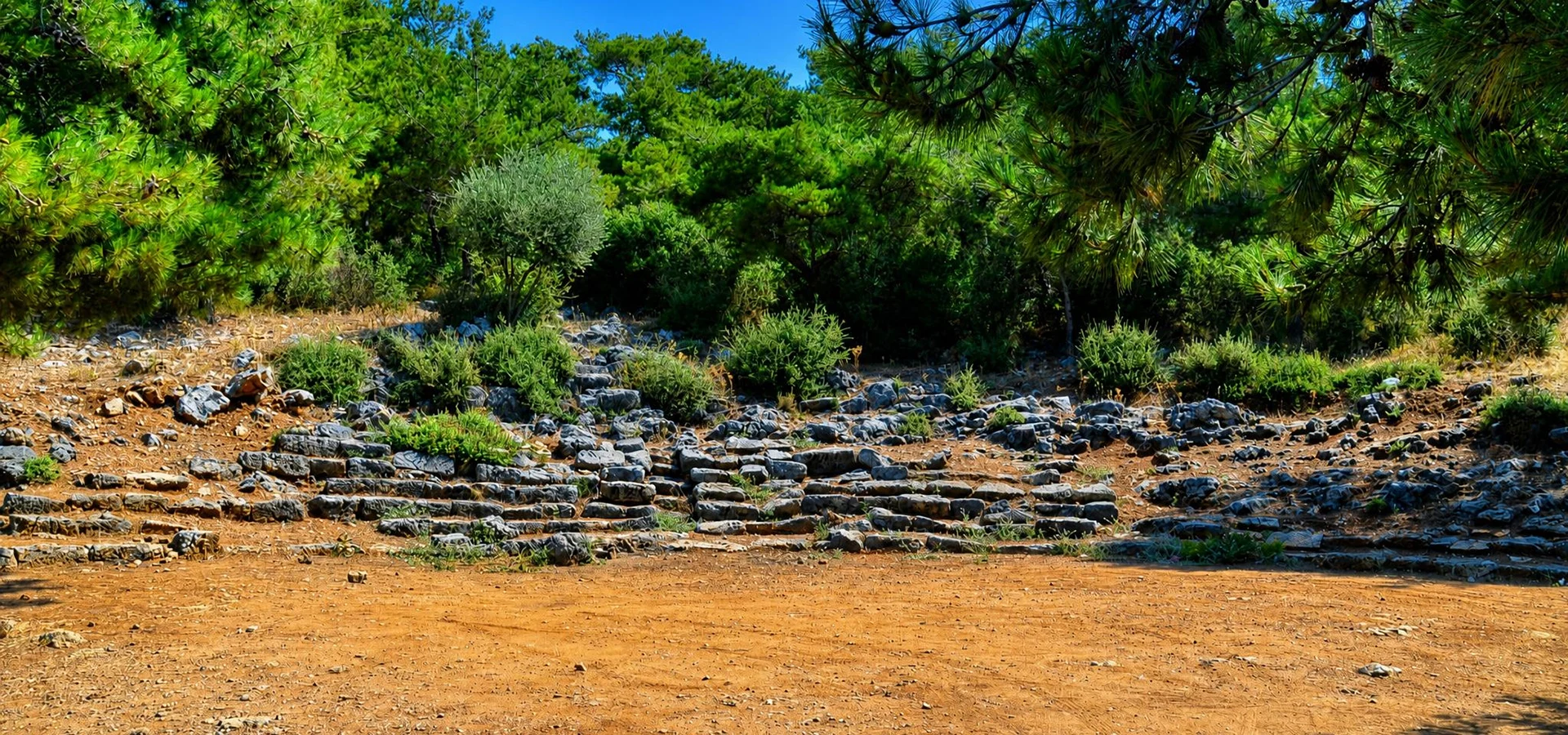
Today, the traditionally identified site near Güzelçamlı preserves modest archaeological remains, including a semicircular assembly structure, stone foundations and traces associated with an ancient sacred precinct. Further archaeological discoveries higher on Mount Mycale have generated debate about the location of the sanctuary's earliest phases.
For travelers interested in Greek history, ancient religion, archaeology and the origins of regional political cooperation, Panionion offers a fascinating connection between the civilizations of the Aegean and the remarkable landscape of western Türkiye.
Discover the shared sanctuary of twelve ancient Ionian city-states.
Explore a sacred landscape dedicated to Poseidon Helikonios.
See the remains associated with communal meetings and ceremonies.
Experience the wooded slopes overlooking the Aegean and Samos.
Essential information about one of ancient Ionia's most important shared sanctuaries.
Near Güzelçamlı, in the Kuşadası district of Aydın Province, Türkiye.
Open on Google MapsReligious sanctuary and communal meeting place of the Ionian League.
Archaic Greek period onward, with important Classical and later phases.
Poseidon Helikonios, worshipped as the common protector of the Ionian communities.
The twelve-city Ionian League, traditionally known as the Ionian Dodecapolis.
Allow approximately 30–60 minutes at the accessible ruins, plus walking and travel time.
Panionion represents an extraordinary meeting point between ancient religion, collective identity and political cooperation.
Ancient Ionia was renowned for its maritime trade, artistic achievement, philosophical inquiry and influential cities. Yet the Ionian communities were not governed by a single permanent state. Their political independence made a shared sanctuary especially meaningful.
Panionion provided a sacred focus for the identity of the Ionian Greeks. Here, communities separated by distance, geography and competing interests could recognize their common religious traditions and cultural connections.
The importance of Panionion is preserved in ancient literary sources, particularly the writings of Herodotus. In his Histories, the historian describes the sanctuary on Mount Mycale and explains its connection with the communal festival of the Ionians.
The sanctuary also illustrates how religious gatherings could support communication between independent cities. Such cooperation was significant during a period when western Anatolia experienced the expansion of Lydia, Persian imperial rule, Greek political conflicts and changing alliances.
Although Panionion has sometimes been compared with modern political unions, the ancient league should be understood within its own historical setting. Its members were independent city-states, and the religious federation did not operate like a modern national government.
For visitors exploring the ancient cities of Aydın, Panionion creates an important historical connection between Priene, Miletus and Myus, three neighboring members of the Ionian League.
The name Panionion refers to a sanctuary belonging collectively to the Ionians. Its name reflects this shared Ionian identity, while its religious character was expressed through worship of Poseidon Helikonios.
Unlike a traditional Greek city, Panionion did not need an extensive residential quarter, defensive walls, marketplace or monumental street network. Its principal function was to provide a common sacred place where people from different Ionian communities could gather.
The sanctuary was associated with religious celebrations and communal deliberations. In the ancient Greek world, these activities were often closely related: sacrifices and festivals could reinforce political alliances, establish social relationships and express a sense of belonging.
The site was regarded as sacred to the Ionian communities collectively rather than belonging exclusively to one city.
Its principal cult honored Poseidon Helikonios through communal ceremonies and festival traditions.
Representatives of Ionian cities could gather to discuss matters affecting their communities.
The sanctuary expressed common cultural connections among politically distinct cities.
The origins of the Ionian League belong to the formative centuries of Greek settlement and cultural development along the western Anatolian coast. Its precise foundation date remains uncertain, but the league's communal traditions were established by the Archaic period.
During the 7th and 6th centuries BC, the Ionian cities developed increasingly important commercial, religious and political connections. Panionion became associated with their shared worship of Poseidon Helikonios and the celebration of the Panionia festival.
The Greek historian Herodotus, writing in the 5th century BC, provides the most influential ancient description of the sanctuary. His account places it on the north-facing side of Mount Mycale, opposite the island of Samos.
As the Ionian cities came under the influence of Lydia and subsequently the Persian Empire, collective political consultation gained additional importance. Herodotus records meetings of Ionian representatives during the political crises following the Persian conquest of Lydia.
The Ionian Revolt of 499–494 BC and the wider Greco-Persian conflicts transformed the political circumstances of the region. The nearby Battle of Mycale in 479 BC became another decisive event in the relationship between the Greek world and the Persian Empire.
In the 4th century BC, the Ionian League experienced renewed activity. Ancient testimony and the architectural remains near Güzelçamlı have been connected with phases of renewed collective worship and assembly, although the chronology and identification of particular structures remain subjects of archaeological discussion.
The sanctuary's prominence gradually diminished as political systems and regional power structures changed during the Hellenistic and Roman periods. Its physical remains were later obscured by vegetation, landscape change and the passage of time.
Modern archaeological investigations, particularly those undertaken during the 20th and early 21st centuries, brought Panionion back into historical discussion and introduced new questions about the location of its earliest sanctuary.
The shared religious identity of the Ionian cities develops, with Panionion emerging as a communal sanctuary.
Ionian cities experience Lydian expansion and Persian conquest, increasing the importance of regional political decisions.
The Ionian Revolt challenges Persian authority and reshapes the political landscape of western Anatolia.
The Battle of Mycale takes place in the wider mountain and coastal region associated with the sanctuary.
Renewed Ionian communal activity is associated with later phases of the federal sanctuary.
Excavations near Güzelçamlı investigate the altar area and semicircular assembly structure.
Further archaeological discoveries on Mount Mycale reopen questions about the original sanctuary's location.
The Ionian League was traditionally composed of twelve city-states, sometimes described collectively as the Ionian Dodecapolis. These communities occupied parts of western Anatolia and two important Aegean islands.
Herodotus identifies the twelve cities in his account of Ionia. Although their inhabitants shared important traditions, he also emphasizes differences among their dialects and historical backgrounds.
A major maritime and intellectual center famous for trade, colonial connections and early Greek philosophy.
A smaller Ionian city near the ancient Latmian Gulf, later affected by the silting of the Maeander landscape.
An important Ionian community associated with the administration of the Panionion sanctuary.
One of the most influential cities of Ionia, internationally renowned for the sanctuary of Artemis.
An ancient Ionian city associated with literary traditions, religious institutions and regional trade.
A coastal Ionian city whose history reflects the changing political fortunes of the Aegean communities.
An important Ionian port associated with maritime exchange and the worship of Dionysus.
An Ionian community near modern Urla, known for trade, olive-oil production and cultural activity.
A maritime city celebrated for its seafaring traditions and extensive Mediterranean connections.
An Ionian city on the Çeşme Peninsula, with significant religious and commercial connections.
A powerful island city opposite Mount Mycale, famous for its maritime strength and sanctuary of Hera.
An Aegean island community known for maritime commerce, agriculture and cultural traditions.
These cities did not form a unified territorial state. Their political relationships changed over time, and they frequently pursued independent policies. Nevertheless, their shared cult at Panionion gave visible expression to a broader Ionian identity.
Some other Greek communities, including Smyrna, had historical connections with Ionia, but the traditional twelve-city list preserved by Herodotus should not be confused with every city later considered culturally Ionian.
The principal deity worshipped at Panionion was Poseidon Helikonios, an important regional form of the Greek god Poseidon.
Poseidon is widely known as the god of the sea, but his ancient religious associations also included earthquakes, horses and powerful forces of nature. His prominence among maritime communities such as the Ionians made him especially meaningful in the Aegean world.
The title Helikonios is traditionally associated with the cult of Poseidon at ancient Helike in Achaea, on the Greek mainland. Ancient traditions connected Ionian religious identity with this earlier cult, although the historical development of the worship remains a subject of scholarly interpretation.
At Panionion, worship of Poseidon provided a shared religious framework for communities living across western Anatolia and the nearby islands.
The sanctuary belonged to the collective religious traditions of the Ionian cities.
Ancient Greek sanctuary ceremonies commonly included offerings and animal sacrifices to the deity.
A designated sacred area separated the cult space from its surrounding landscape.
Religious gatherings strengthened relationships between communities with a common cultural heritage.
Worship of Poseidon Helikonios expressed a distinctive shared Ionian tradition.
The sanctuary's setting joined the sacred mountain landscape with the maritime world of the Aegean.
The Panionia was the communal religious festival associated with the Ionian League and the sanctuary of Poseidon Helikonios.
Its importance extended beyond individual acts of worship. Festivals brought communities together, created opportunities for communication and reinforced the idea that people from different cities could belong to a shared cultural world.
Herodotus describes the Ionians assembling from their cities at Mount Mycale for the Panionia. This testimony makes the festival central to our understanding of Panionion.
Although many ancient Greek festivals included processions, sacrifices, banquets and competitions, the detailed program of the Panionia is not fully preserved. Visitors should therefore distinguish the festival's documented existence from modern reconstructions of precisely how its ceremonies were conducted.
Communal worship of Poseidon Helikonios formed the festival's central sacred purpose.
Representatives from Ionian communities could meet within a common religious setting.
The festival emphasized traditions shared among communities across the eastern Aegean.
Participation reinforced stories, identities and relationships connecting the Ionian cities.
Panionion is especially interesting because it reveals how religious ceremonies could help maintain regional connections without erasing local independence.
The traditionally identified sanctuary near Güzelçamlı is modest in appearance. Its surviving stone features lie within a wooded landscape rather than an extensive excavated urban complex.
Archaeologists investigating the site have identified remains interpreted as parts of a sacred enclosure, an altar area and a small semicircular structure. The latter has often been described as an odeon, theater-like assembly space or bouleuterion.
These structures provide important clues about how communal worship and gatherings may have been organized, although their precise construction dates and functions continue to be discussed.
Curving stone seating carved into the hillside is among the most recognizable remains of the traditional Panionion site.
The theater-like structure has been interpreted as a place for meetings or gatherings connected with the Ionian communities.
Rectangular stone remains have been associated with an altar dedicated to Poseidon Helikonios.
Low foundations have been interpreted as boundaries defining the sanctuary's sacred precinct.
The builders used the hillside and exposed bedrock as integral parts of the archaeological setting.
Pine trees and Mediterranean vegetation now surround many of the ancient remains.
The search for the ancient sanctuary of Panionion attracted archaeologists because classical authors described its location on Mount Mycale, but the original sacred complex had not survived as an easily recognizable monument.
Archaeological investigations around Güzelçamlı during the late 19th and 20th centuries established the importance of the area. German archaeological research, including excavations undertaken in 1957–1958 under Gerhard Kleiner and his colleagues, investigated the sanctuary remains on or near Otomatik Tepe.
The investigations documented a theater-like assembly structure with approximately eleven rows of seating, together with stone features interpreted as an altar and sacred enclosure.
These discoveries supported the traditional identification of the Güzelçamlı archaeological site with Panionion. The remains are still commonly presented under this name in local visitor information.
However, later archaeological research introduced an important alternative interpretation.
During surveys led by archaeologist Hans Lohmann in the early 21st century, researchers identified an Archaic-period temple complex higher on Mount Mycale, near Çatallar Tepe.
Further excavations revealed a substantial ancient temple and associated archaeological remains. Lohmann proposed that this higher location might represent the original Archaic Panionion, while the lower site near Güzelçamlı could belong to a later phase of the sanctuary's history.
Other researchers, including Alexander Herda, have challenged aspects of this identification and defended the significance of the traditional Otomatik Tepe location.
The resulting debate concerns archaeological chronology, ancient topography, inscriptions and the interpretation of the literary sources. It has not been resolved by a universally accepted identification of one site as the original sanctuary.
The archaeological remains near Otomatik Tepe in Güzelçamlı have long been associated with Panionion.
Research documented the small semicircular structure and remains interpreted as a sacred precinct.
A substantial Archaic temple higher in the mountains prompted a reassessment of the sanctuary's location.
Different archaeological interpretations remain important for understanding the history of Panionion.
Our understanding of Panionion relies heavily on the ancient Greek historian Herodotus, who wrote during the 5th century BC.
In Book I, section 148 of his Histories, Herodotus describes Panionion as a sacred area on the north-facing side of Mount Mycale, established collectively by the Ionians and dedicated to Poseidon Helikonios.
He also records that the Ionians came together there from their different cities to celebrate the festival called the Panionia.
This passage is significant because it identifies three defining characteristics of the sanctuary: its geographical relationship to Mount Mycale, its dedication to Poseidon and its importance to the collective religious life of the Ionian communities.
Elsewhere, Herodotus describes political assemblies involving the Ionian cities during the crisis created by the expansion of Persian power. These accounts help establish the importance of Panionion beyond purely ceremonial activity.
The historian's broader description of Ionia also celebrates the favorable natural setting of the Ionian cities, whose maritime and agricultural environments contributed to their prosperity.
Mount Mycale is famous not only for its association with the Ionian sanctuary but also for the Battle of Mycale in 479 BC, an important engagement during the Greco-Persian Wars.
After the Persian invasion of mainland Greece and the Greek naval victory at Salamis in 480 BC, the conflict continued across the Aegean. A coalition of Greek forces eventually confronted Persian forces on the Anatolian coast near Mount Mycale.
The battle ended in a Greek victory and the destruction of Persian ships that had been brought ashore. The outcome helped transform the political situation of the Aegean and encouraged renewed resistance to Persian authority among the Ionian Greeks.
The association of Panionion with this mountain gives the sanctuary a wider historical setting. The same region that supported religious gatherings also witnessed major conflicts over political independence and imperial power.
Nevertheless, the sanctuary ruins near Güzelçamlı should not be confused with the precise battlefield. The Battle of Mycale involved a wider coastal and mountain landscape, and its exact ancient topography must be reconstructed from historical and archaeological evidence.
The Battle of Mycale takes place during the final phase of Xerxes' invasion of Greece.
Greek allied forces attack Persian positions on the Anatolian coast.
The destruction of Persian forces and ships has major consequences for control of the Aegean.
The battle contributes to renewed Ionian resistance and changing regional alliances.
Panionion offers a quieter and more understated archaeological experience than the major ancient cities of the Aegean coast. The visible remains invite visitors to imagine the religious and political gatherings once associated with this landscape.
Look for the curved tiers of surviving stone seating, traditionally associated with communal meetings.
Observe low stone foundations that have been interpreted as part of the sanctuary's ancient boundaries.
Identify the archaeological area associated with the worship of Poseidon Helikonios.
See how the natural rocky hillside was incorporated into the surviving structures.
Appreciate the Mediterranean forest setting surrounding the archaeological remains.
Understand the relationship between the sanctuary, the surrounding mountain and the nearby Aegean coast.
Because Panionion is a relatively small and natural archaeological site, preparation is useful. Visitors should approach it as a heritage stop in a hillside setting rather than a fully developed archaeological park.
Search specifically for Panionion near Güzelçamlı and confirm the approach before setting out.
Expect uneven soil, loose stones, natural paths and rocky archaeological ground.
Do not depend on finding refreshments immediately beside the remains.
Daylight makes the subtle archaeological features easier to recognize and the pathways safer.
Finding and understanding the remains may take longer than their small size suggests.
Do not move stones, disturb the soil or climb fragile ancient features.
Summer conditions in Aydın can be very hot, particularly on exposed paths.
A knowledgeable guide helps explain remains whose original functions are not immediately obvious.
Panionion works particularly well as part of a historical journey along the Aydın coastline. Its relatively modest ruins gain greater meaning when connected with the nearby Ionian cities and landscapes.
Begin in Güzelçamlı and visit the accessible Panionion remains. Allow time to study the semicircular seating area and the sacred precinct, while considering the role of Mount Mycale in ancient Ionian identity.
Continue toward the Dilek Peninsula National Park, where the dramatic mountains, forests and coastline provide a vivid impression of the geography surrounding the ancient sanctuary.
For a deeper archaeological itinerary, travel onward to Priene, one of the twelve Ionian cities and a community closely connected with the history of Panionion.
Visitors with additional time may also explore Miletus, Myus and Didyma, expanding the experience into a full-day or multi-day study of ancient Ionia.
Panionion is located near Güzelçamlı, in the Kuşadası district of Aydın Province. The commonly recognized archaeological site lies near Otomatik Tepe on the northern side of Mount Mycale.
The ruins are considerably less developed for tourism than major archaeological destinations such as Ephesus and Miletus. Visitors should not expect a large museum complex, extensive visitor facilities or a regularly staffed ticket office.
Reliable, comprehensive public information confirming a fixed daily opening schedule or a permanent admission tariff is not readily available. Access conditions may depend on local maintenance, archaeological work and site management.
Before making a special journey, visitors are advised to confirm current access and directions locally, particularly if arriving independently.
Panionion lies in a Mediterranean environment where seasonal temperatures and sunlight affect the experience. Mild weather is particularly valuable when walking on natural archaeological ground.
Comfortable temperatures, green vegetation and pleasant conditions make spring an excellent time to explore.
Milder weather and softer sunlight are well suited to archaeological walking and photography.
Visit early in the day to avoid the strongest heat, especially when combining the ruins with other outdoor attractions.
Quiet conditions can be appealing, although rain may make natural paths muddy or slippery.
Dry conditions help visitors distinguish stonework and walk more comfortably among the remains.
Plan your visit while natural light is strong enough to navigate the hillside and examine the archaeological features.
A brief stop to see the principal accessible archaeological remains, assuming the approach is straightforward.
A more comfortable visit allowing time for the assembly structure, stone foundations and historical interpretation.
Allow additional time for local walking, orientation and photography around the accessible site.
Combine Panionion with Güzelçamlı, the nearby coastline or part of the Dilek Peninsula.
Add Priene or other nearby Ionian archaeological sites to create a broader historical excursion.
Spend more time exploring the Ionian League, the sanctuary's history and the archaeological debate.
Photography at Panionion is less about grand monuments and more about the atmosphere of an archaeological landscape. Ancient stone remains, curving seating and pine-covered slopes create understated compositions that communicate the site's history.
Capture the curved ancient stone tiers to illustrate the site's traditional association with communal assemblies.
Use close compositions to reveal the texture of surviving archaeological masonry.
Include the surrounding vegetation to convey the sanctuary's secluded hillside character.
Morning and late-afternoon light can highlight the contours of the stonework.
Where safe viewpoints allow, photograph the mountain environment associated with ancient Mycale.
Avoid climbing, moving stones or entering restricted areas for a photograph.
Panionion is a small archaeological site in a natural hillside environment. Visitors should anticipate uneven terrain and limited developed visitor infrastructure.
Loose stones, exposed bedrock and natural soil may make walking difficult in places.
The ancient seating and other archaeological features should not be treated as modern accessible stairways.
A reliably step-free route has not been confirmed. Contact local authorities before planning an accessible visit.
Natural paths may be unsuitable for ordinary strollers, particularly after rain.
Plan restrooms, refreshments and other practical needs in Güzelçamlı before reaching the archaeological area.
A private vehicle or locally arranged taxi can help with reaching the general site area, subject to road access.
Panionion lies near Güzelçamlı, a coastal community southwest of Kuşadası and close to the entrance area of the Dilek Peninsula National Park.
The main regional approach is through Kuşadası and the Davutlar–Güzelçamlı area. The final approach to the archaeological remains should be checked against current local directions because it is not a major, continuously staffed tourism complex.
Drive southwest toward Güzelçamlı, then follow verified local directions to the Panionion archaeological area.
The site lies in the nearby hillside landscape. Confirm the recognized access path before walking.
Travel toward the Güzelçamlı area using regional roads, allowing extra time for the final local approach.
Combine a visit to the ancient city with a separate drive toward Güzelçamlı and the traditional sanctuary.
Local transport serves Güzelçamlı, but onward access to the archaeological remains may require walking or a taxi.
Convenient for combining Panionion with other ancient sites, subject to local road and parking conditions.
Panionion lies within one of western Türkiye's most rewarding regions for ancient history and natural scenery. The surrounding area connects the Ionian cities, Mount Mycale, the Büyük Menderes landscape and the Aegean coastline.
Explore the forests, mountains, beaches and coastal landscapes surrounding ancient Mount Mycale.
Discover a remarkable natural cave and freshwater pool near the entrance to the Dilek Peninsula.
Visit an important Ionian city famous for its planned streets, theater and Temple of Athena.
Discover another member of the Ionian League within the changing landscape of the ancient Maeander valley.
Explore one of Ionia's greatest centers of maritime commerce, philosophy and urban history.
See the monumental remains of one of the ancient Greek world's most important oracular sanctuaries.
Walk through a beautifully preserved historic village between the mountains and the Büyük Menderes Delta.
Enjoy the lively Aegean coastal town, its historic harbor, local culture and seaside scenery.
Panionion was an ancient sanctuary dedicated to Poseidon Helikonios and associated with the religious gatherings and political consultations of the Ionian League.
The traditionally identified archaeological site lies near Güzelçamlı in the Kuşadası district of Aydın Province, on the northern slopes of Mount Mycale.
Not in the conventional sense. Panionion was principally a shared religious sanctuary and gathering place, rather than an independent city with an extensive urban settlement.
It provided a common sacred center for twelve Ionian city-states and helped reinforce their religious and cultural identity.
The Ionian League was a confederation traditionally composed of twelve ancient Ionian cities in western Anatolia and the nearby Aegean islands.
The traditional twelve were Miletus, Myus, Priene, Ephesus, Colophon, Lebedus, Teos, Clazomenae, Phocaea, Erythrae, Samos and Chios.
The sanctuary was dedicated to Poseidon Helikonios, a regional form of Poseidon associated with the collective religious traditions of the Ionians.
The Panionia was a communal religious festival celebrated by the Ionian cities at the sanctuary of Poseidon Helikonios on Mount Mycale.
Its origins belong to the Archaic Greek period, although the precise date of the sanctuary's establishment and the chronology of individual archaeological remains remain debated.
Herodotus described it as a sacred place on the north-facing side of Mount Mycale, dedicated collectively by the Ionians to Poseidon Helikonios and used for the Panionia festival.
The traditionally identified site includes a small semicircular stone seating structure and foundations associated with an ancient sacred precinct.
Yes. Ancient accounts associate Panionion with gatherings of Ionian representatives, although its principal religious significance should not be overlooked.
The semicircular stone structure is commonly interpreted as an assembly area, odeon or bouleuterion associated with communal meetings. Its precise function and chronology remain open to interpretation.
Important investigations near Güzelçamlı were conducted by Gerhard Kleiner and colleagues in the 1950s. Later research on Mount Mycale introduced new interpretations of the sanctuary's location.
The traditional Güzelçamlı site is well known, but archaeologists disagree about whether the earliest sanctuary was located there or at another site higher on Mount Mycale.
Çatallar Tepe is an area on Mount Mycale where archaeologists discovered Archaic temple remains. One interpretation associates these remains with the original Panionion sanctuary, but the identification is disputed.
Priene was one of the twelve Ionian cities and was historically associated with responsibility for the shared sanctuary.
No precise identification of the sanctuary ruins as the battlefield is justified. The Battle of Mycale took place in the wider mountain and coastal region in 479 BC.
A current, reliably verified admission tariff is not available. Visitors should confirm local access arrangements before their journey.
A dependable fixed opening schedule has not been confirmed. Plan for daylight and check current access conditions locally.
Allow approximately 30–60 minutes for the accessible archaeological remains, with additional time for reaching the site and walking.
Spring and autumn generally offer comfortable temperatures for archaeological walking. Summer visits are best planned for cooler morning hours.
Families interested in history may enjoy a short visit, but children require supervision around uneven stones, rocky ground and archaeological features.
A confirmed step-free visitor route is not available. Visitors with mobility requirements should inquire about current conditions before arriving.
Yes. Panionion, Priene and Miletus make an excellent thematic itinerary exploring the shared history of the Ionian cities, provided sufficient driving and visiting time is allowed.
Yes, particularly for travelers interested in ancient Greek religion, the Ionian League, archaeology and the historical landscape of Aydın. Its importance is greater than the modest scale of its surviving ruins might suggest.
Panionion is a fragile archaeological landscape. Responsible visiting helps protect the remains and the natural environment surrounding them.
Even small fragments may contain important archaeological information and must remain undisturbed.
Avoid crossing restricted areas, unstable ground or sections closed for conservation.
Historic masonry and carved stone features can be damaged by inappropriate use.
Protect the surrounding pine trees, natural vegetation and sensitive hillside environment.
Leave the archaeological area clean and avoid creating litter in the surrounding landscape.
Follow official instructions and never disturb excavation equipment, protective coverings or research areas.
Discover the shared religious heritage of the Ionian cities, explore the archaeological landscapes of Mount Mycale and combine Panionion with the remarkable ancient sites of western Türkiye through a private itinerary tailored to your interests.
Experience Panionion within the wider historical setting of the Aegean coast and ancient Ionia.
Ask us about a tailor-made experience exploring the sanctuary of Poseidon Helikonios, the history of the Ionian League and the landscapes surrounding Mount Mycale.
Request a Custom Tour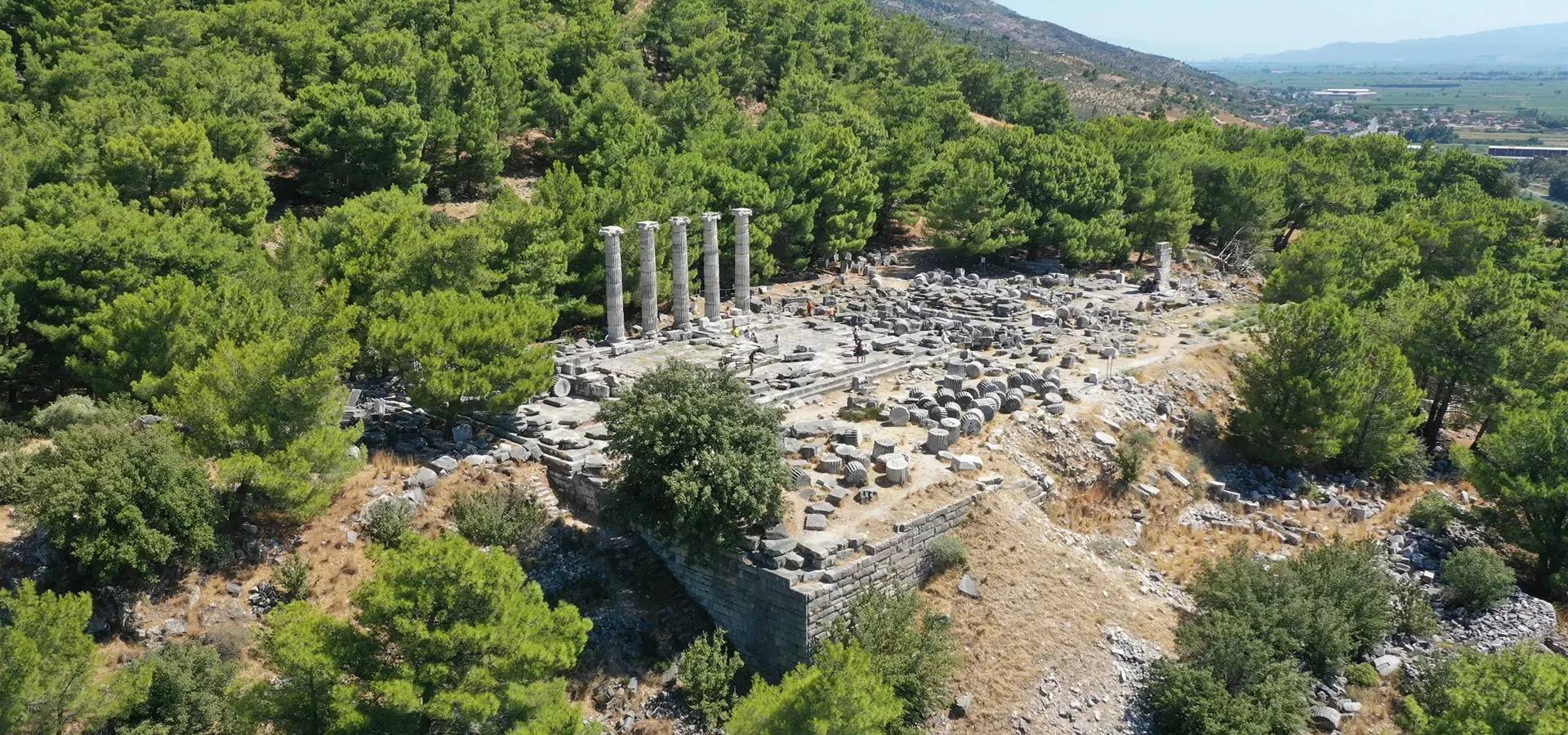
Discover the ancient city closely associated with Panionion, including its extraordinary planned streets, theater and Temple of Athena.
Explore PrieneConnect the history of Panionion with the great cities, temples and natural landscapes of western Anatolia.
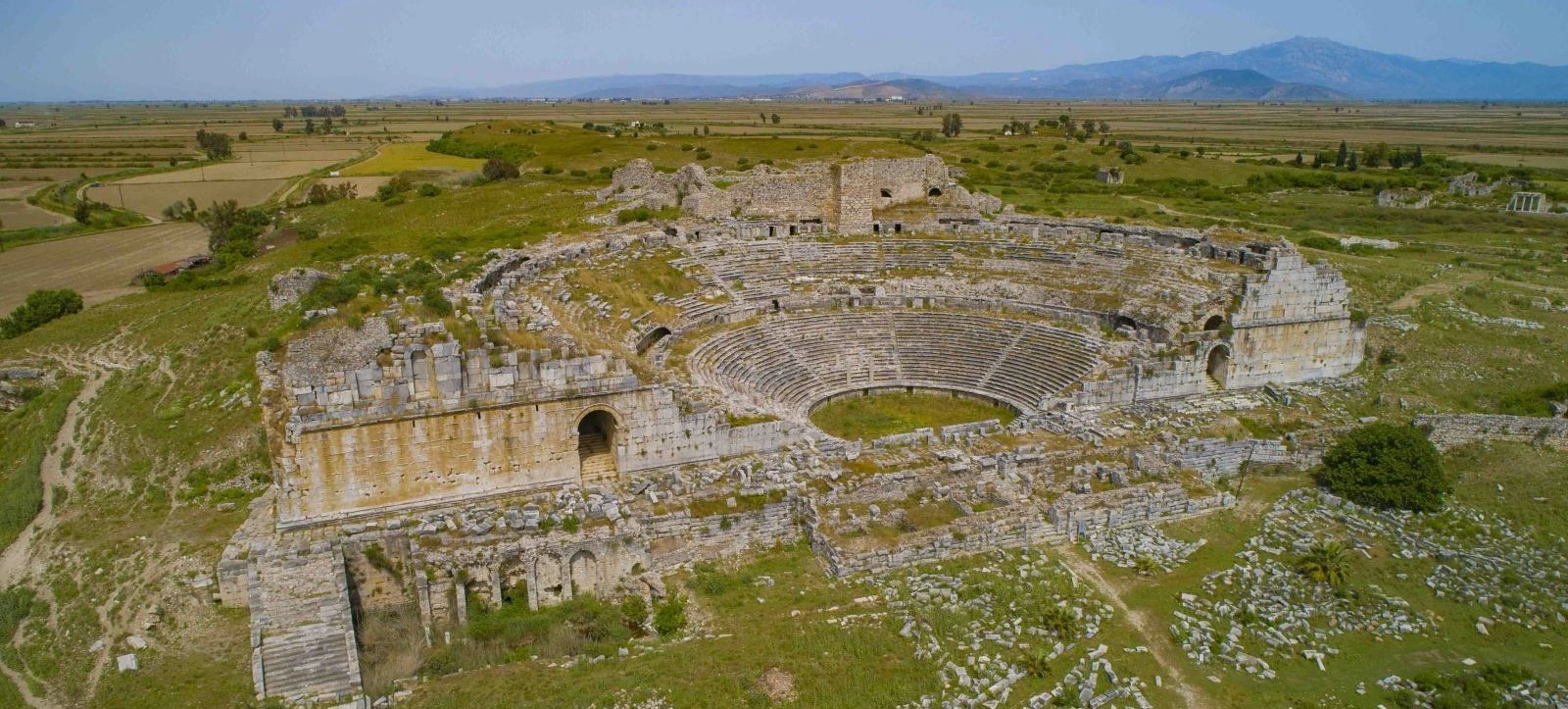
Explore one of the most influential cities of Ionia, celebrated for its maritime trade, intellectual achievements and impressive ancient theater.
Discover Miletus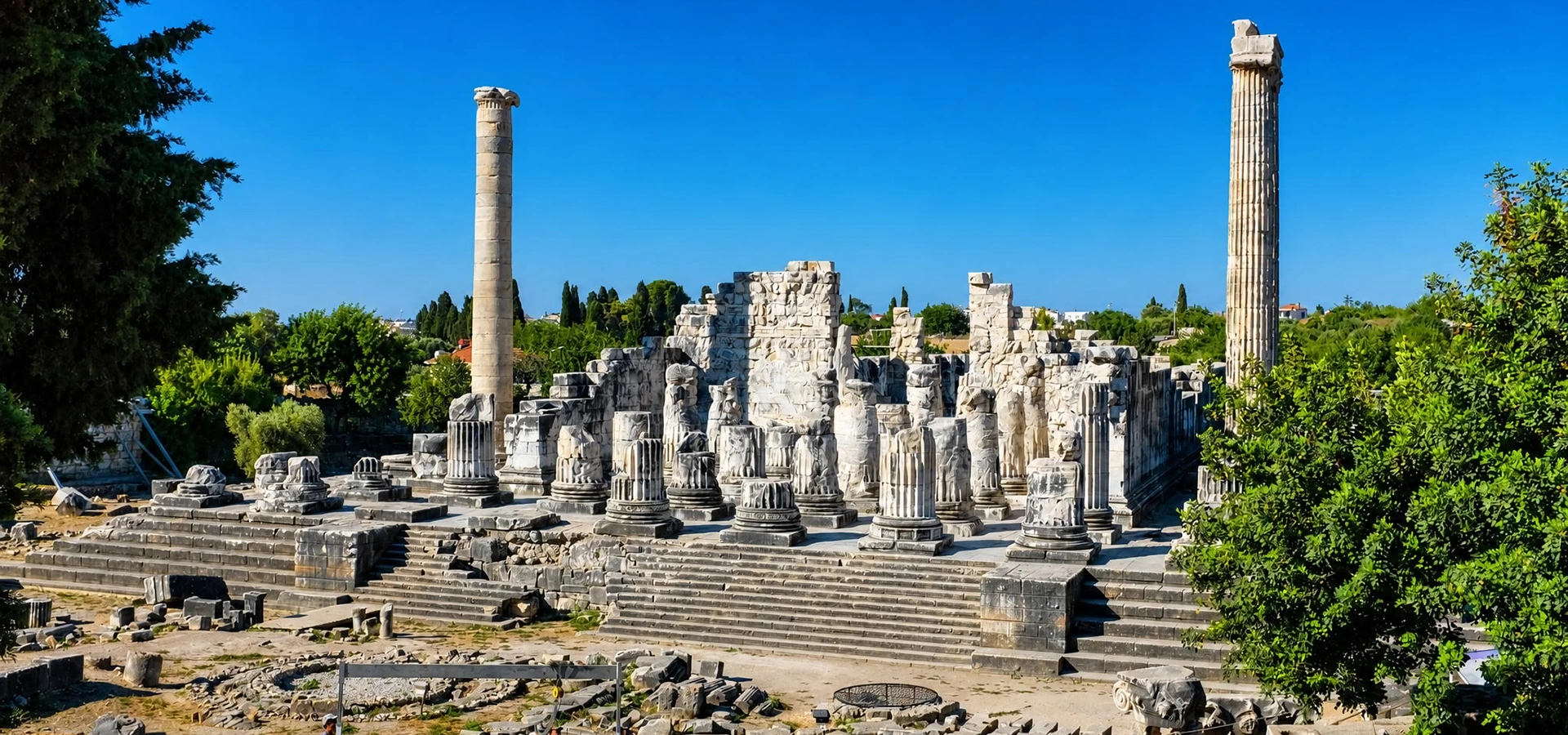
Discover one of the ancient world's great oracular sanctuaries, where monumental architecture and sacred tradition meet.
Explore Didyma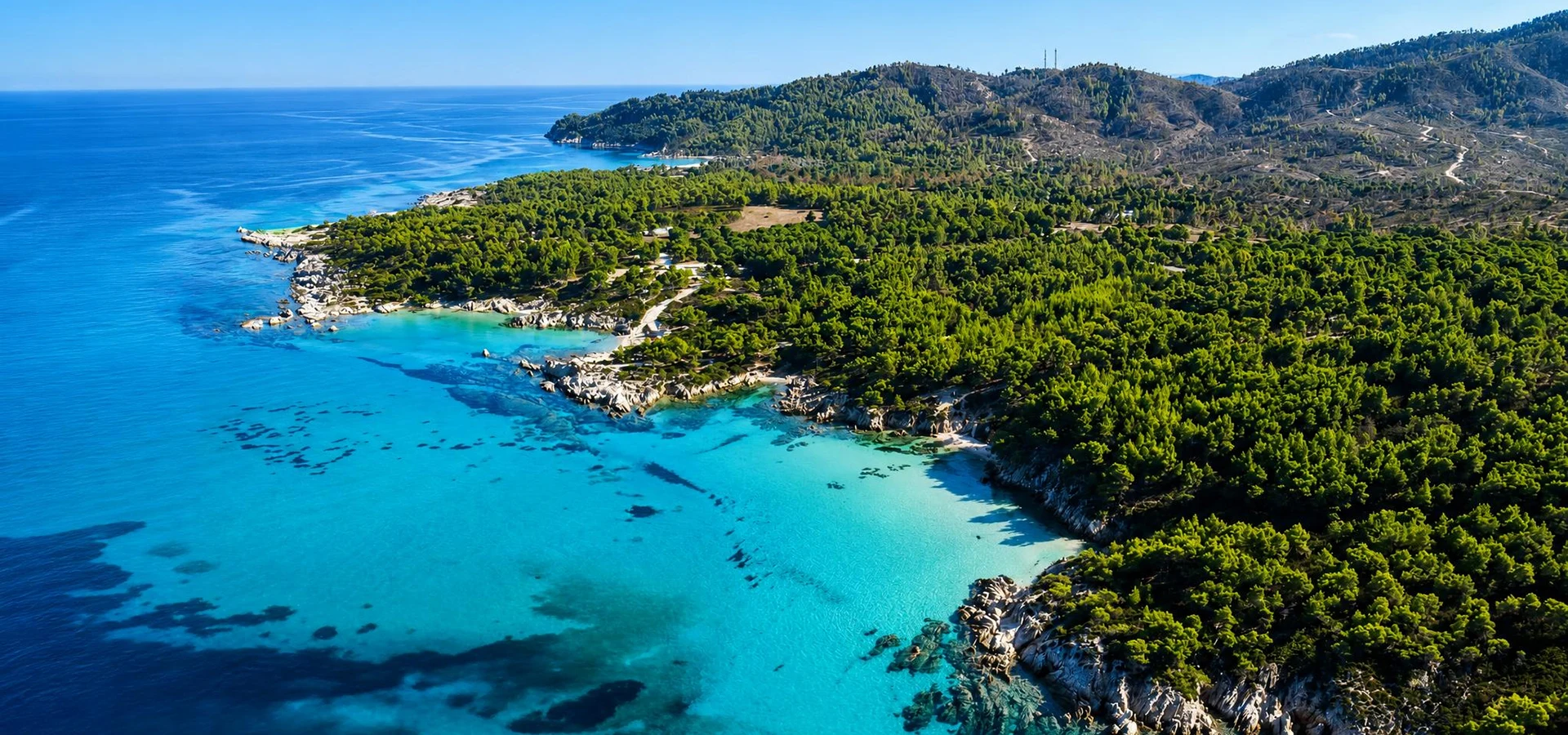
Explore the beautiful mountain and coastal environment that surrounds ancient Mycale, with its forests, beaches and extraordinary biodiversity.
Discover Dilek Peninsula