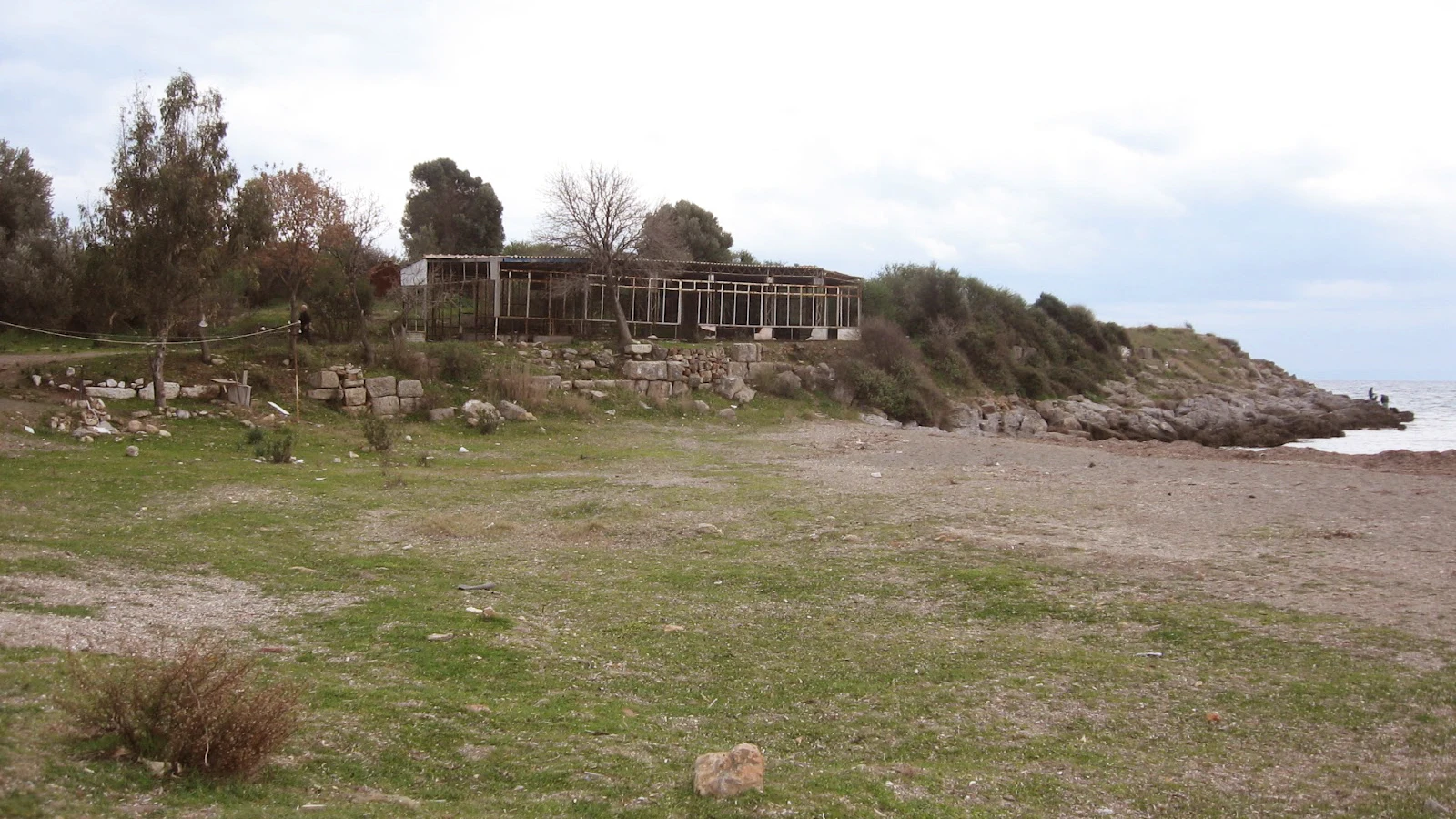
Private Lebedos & Ancient Ionia Tour
Explore Lebedos together with selected archaeological sites of southern İzmir on a private journey focused on Ionian history, ancient landscapes and the Aegean coast.
Request a Custom Tour





The Ancient City of Lebedos, also known in classical sources as Lebedus, was one of the historic cities of Ionia on the western coast of Anatolia. Its archaeological remains occupy the coastal landscape around the Kısık Peninsula, between modern Gümüldür and Ürkmez in İzmir Province.
Lebedos never achieved the political or economic power associated with famous Ionian cities such as Ephesus, Miletus or Smyrna. Yet its history reflects many of the forces that shaped western Anatolia: Ionian migration traditions, regional rivalries, Hellenistic kings, population transfers, maritime connections and the cultural world of the professional Artists of Dionysus.
Ancient writers remembered Lebedos as a relatively small and quiet city. Its modest reputation, however, makes the archaeological landscape especially fascinating today. Instead of monumental restored streets, visitors encounter fragments of defensive walls, building foundations, terraces and ancient remains scattered beside one of the most beautiful stretches of the Aegean coast.
Lebedos also belongs to a remarkable chain of archaeological sites extending across southern İzmir. Together with Kolophon, Klaros and Notion, it reveals the extraordinary concentration of ancient Ionian history within the modern Menderes region.
Discover one of the historic communities traditionally belonging to the twelve cities of Ionia.
Explore ancient remains positioned directly beside the beautiful coastline of southern İzmir.
Experience a quiet archaeological landscape far removed from Türkiye's heavily visited ancient cities.
Learn about the professional performers whose association became connected with Lebedos during the Hellenistic period.
Essential information for exploring one of the least-known ancient cities of Ionia on the coast of southern İzmir.
Kısık Peninsula between Gümüldür and Ürkmez, İzmir Province, western Türkiye.
Open on Google MapsIonia, one of the most influential cultural regions of the ancient Aegean world.
A coastal archaeological landscape overlooking the Aegean Sea.
Associated during the Hellenistic period with the professional Artists of Dionysus.
Fortification walls, building traces, terraces and fragments of the ancient settlement.
Allow approximately 45–90 minutes depending on access conditions and your interest in archaeology.
Lebedos shows that the story of ancient Ionia was shaped not only by powerful cities, but also by smaller communities affected by regional politics, migration and cultural change.
Lebedos was traditionally counted among the twelve Ionian cities. Although it never became one of the region's dominant political centers, participation in the Ionian world connected the settlement with a wider network of cities sharing religious institutions, cultural traditions and maritime connections.
Its coastal location provided direct access to the Aegean. The surrounding landscape also placed Lebedos between several important ancient centers, including Kolophon, Klaros, Notion and Teos.
The city's history became particularly turbulent during the early Hellenistic period. Rulers attempted to reorganize the populations and political structures of western Anatolia, and Lebedos became involved in plans for forced urban mergers and population movements.
Lebedos later gained a distinctive cultural role through its association with the Artists of Dionysus, professional actors, musicians, poets and performers who played an important role in the festival culture of the Hellenistic Mediterranean.
For modern visitors, Lebedos is equally valuable because it remains largely outside the major tourism routes. The site provides an opportunity to encounter ancient Ionia in a quiet coastal setting where archaeology and natural landscape remain closely intertwined.
The early history of Lebedos is known through a combination of ancient literary traditions, archaeological remains and later historical references. Ancient Greek traditions connected the Ionian settlement of the city with migrations to western Anatolia traditionally associated with descendants of the legendary Athenian king Codrus.
The surrounding region had cultural connections with western Anatolia long before the historical period usually associated with the Ionian cities. By the first millennium BC, Lebedos had developed as part of the wider Ionian world along the Aegean coast.
Lebedos became one of the communities traditionally associated with the Ionian League. Compared with neighboring cities such as Ephesus, Kolophon and Teos, however, it remained relatively small.
During the centuries following the Persian conquest of western Anatolia, the political landscape of Ionia repeatedly changed. Lebedos passed through the same wider struggles involving Persian imperial rule, Greek cities and later the Macedonian kingdoms that followed Alexander the Great.
The early Hellenistic period brought particularly dramatic changes. Antigonus Monophthalmus considered merging Lebedos with Teos as part of a wider reorganization of the region. Surviving royal correspondence provides valuable evidence for the proposed transfer of people and property.
Ancient tradition later recorded that Lysimachus transferred inhabitants of Lebedos to the reorganized city of Ephesus. Despite these attempts to weaken or restructure the old community, Lebedos did not completely disappear.
During part of the Hellenistic period the city came under Ptolemaic influence and was associated with the name Ptolemais. Lebedos subsequently continued to appear in the political and cultural history of western Asia Minor.
One of the most interesting chapters in its later history concerns the Artists of Dionysus, whose professional association became established at Lebedos after periods of movement and conflict elsewhere in Ionia.
Ancient tradition connects the city with the wider Ionian migration narratives of western Anatolia.
Lebedos belonged to the historic network of communities traditionally identified as the twelve cities of Ionia.
The relatively small city lived in the shadow of more powerful neighboring Ionian centers.
Antigonus planned a political and demographic union between Lebedos and Teos.
Ancient sources associate his regional reorganization with the transfer of inhabitants toward Ephesus.
Lebedos survived political disruption and later became connected with the Artists of Dionysus.
Ancient Ionia occupied the central Aegean coast of western Anatolia. Its cities became famous for maritime trade, philosophy, literature, architecture, religious sanctuaries and political experimentation.
Lebedos shared this cultural landscape with famous communities including Ephesus, Teos, Kolophon, Klazomenai, Erythrai, Phokaia and Miletus.
Unlike some Ionian cities that controlled extensive territories or major natural harbors, Lebedos remained relatively modest. Its importance therefore lies less in imperial scale than in what the site reveals about the diversity of ancient Ionian communities.
Its coastal position nevertheless placed the inhabitants within the maritime world of the Aegean. Boats, traders, pilgrims, performers and political envoys could travel between the closely spaced cities lining the western Anatolian coast.
Lebedos belonged to the cultural and political landscape of the ancient Ionian cities.
The settlement occupied a strategic location beside the Aegean Sea.
Another historic Ionian city developed inland around modern Değirmendere.
The powerful coastal city of Teos played an important role in Lebedos' Hellenistic history.
Klaros connected this part of Ionia with one of the ancient world's celebrated oracular sanctuaries.
Sea routes connected relatively small communities such as Lebedos with a much wider Mediterranean world.
The centuries following Alexander the Great transformed the cities of western Anatolia. His successors competed for territory and frequently reorganized cities in an attempt to create stronger political and economic centers.
Lebedos became directly affected by these policies. Around the beginning of the 3rd century BC, Antigonus Monophthalmus planned to combine Lebedos with neighboring Teos.
The surviving royal correspondence concerning this proposed union is exceptionally interesting because it discusses practical questions involving houses, property, citizenship and the movement of populations.
The plan was apparently never fully realized. Soon afterward, another Hellenistic ruler, Lysimachus, reorganized the region around Ephesus. Ancient sources state that inhabitants of both Lebedos and Kolophon were transferred to the enlarged city.
Yet Lebedos survived. Later evidence shows that the community continued to exist and participated in the changing political landscape of Hellenistic western Anatolia.
During the complex struggles between Hellenistic kingdoms, parts of western Anatolia periodically came under the influence of the Ptolemaic dynasty of Egypt. Lebedos participated in this shifting political world.
Regional historical sources record that the city was known for a period as Ptolemais, reflecting its connection with Ptolemaic rule.
The episode demonstrates how even relatively small Ionian cities could become involved in the rivalry between the great successor kingdoms that emerged after Alexander.
Political control in western Anatolia was rarely permanent. Cities might pass between different rulers while maintaining elements of their local institutions, traditions and civic identity.
One of the most fascinating elements of Lebedos' history is its connection with the Artists of Dionysus.
These were not simply local entertainers. They belonged to professional associations of actors, musicians, poets and other specialists who performed at religious festivals throughout the Greek-speaking Mediterranean.
Dionysus was closely associated with theatre and performance, and organizations of Dionysian artists became influential institutions during the Hellenistic period. Their members traveled widely between festivals and often enjoyed special privileges.
The Ionian association experienced periods of conflict and relocation. After movements between other coastal communities, a group of Dionysian artists eventually became established at Lebedos.
Their presence gave the relatively small city an unusual cultural importance and linked Lebedos with the international festival networks of the Hellenistic world.
Professional dramatic performers participated in festivals throughout the Greek world.
Instrumentalists and singers were essential to theatrical and religious celebrations.
Literary and musical composition formed part of the competitive festival tradition.
The god of theatre, performance and festival culture gave the professional association its identity.
Members moved between cities and festivals across the Hellenistic Mediterranean.
The city eventually became an important base for part of the Ionian association.
The archaeological remains of Lebedos are considerably less monumental than those at better-known ancient cities in western Türkiye. This does not mean the site lacks historical importance.
The ancient settlement occupied the coastal peninsula and adjacent slopes. Defensive walls protected the urban area, while buildings extended through the surrounding terrain.
Surviving archaeological traces reported around the site include portions of Hellenistic fortification walls, areas associated with a gymnasium, a temple terrace and remains of ancient houses.
Additional pottery and wall traces across the nearby mainland demonstrate that ancient activity extended beyond the most obvious remains on the peninsula itself.
Lebedos has never developed into the kind of extensively excavated and reconstructed archaeological attraction represented by Ephesus. Understanding the site therefore depends heavily upon reading the natural topography and recognizing relatively subtle architectural traces.
Sections of ancient defensive masonry preserve the outline of the fortified settlement.
Wall remains provide some of the clearest surviving evidence for the city's ancient defenses.
Archaeological traces have traditionally been associated with a gymnasium complex.
Elevated architectural remains indicate an important sacred or monumental area of the settlement.
Foundations and wall traces reveal habitation across the slopes behind the principal structures.
Pottery fragments across the surrounding landscape indicate a broader ancient occupation zone.
Visitors should approach Lebedos differently from major archaeological parks. There are no grand reconstructed avenues or long rows of standing columns. The attraction lies in the relationship between surviving archaeology, the peninsula and the surrounding Aegean landscape.
Follow surviving sections of masonry that once protected the coastal settlement.
Observe how the narrow coastal landform created a naturally defensible location beside the Aegean.
Changes in elevation preserve traces of the settlement's organized urban landscape.
Low walls and stone foundations provide evidence for ancient domestic and public architecture.
Look for the elevated terrace traditionally associated with one of the city's religious structures.
The surrounding coastline helps explain why maritime connections were fundamental to ancient Lebedos.
The location of Lebedos is one of its greatest attractions. The settlement developed directly beside the Aegean Sea, where a small peninsula provided both access to maritime routes and a naturally defensible urban position.
Standing among the surviving walls today, it is possible to understand how closely the lives of ancient Ionian communities were tied to the sea.
The Aegean was not a barrier. It functioned as a highway connecting western Anatolia with nearby islands, mainland Greece and the wider Mediterranean.
Lebedos therefore belonged to a maritime cultural landscape in which traders, fishermen, soldiers, pilgrims, diplomats and performers could move between coastal cities.
Lebedos and Kolophon demonstrate two contrasting ways in which Ionian cities could occupy the landscape.
Kolophon developed inland around the fertile territory near modern Değirmendere, maintaining its connection with maritime trade through coastal Notion. Lebedos, by contrast, stood immediately beside the Aegean.
Both communities were affected by the political restructuring of western Anatolia during the Hellenistic period, particularly the policies associated with Lysimachus and the expansion of Ephesus.
Visiting the two sites together creates an unusual opportunity to compare an inland Ionian polis with a much smaller coastal Ionian settlement.
Southern İzmir contains an exceptional concentration of ancient sites that can be explored as part of the same regional journey.
Begin with inland Kolophon, one of the historic cities of Ionia.
Continue toward Klaros, where the celebrated oracle of Apollo Klarios attracted visitors from across the ancient Mediterranean.
Nearby Notion provides the dramatic coastal counterpart to Kolophon, with Hellenistic fortifications and extensive views across the Aegean.
Finally, Lebedos reveals another side of ancient Ionia: a much smaller coastal city whose political history became entangled with the ambitions of Hellenistic kings.
Lebedos is not a conventional archaeological park with extensive visitor infrastructure. Conditions can vary according to vegetation, weather, conservation work and local access.
Natural terrain and low archaeological remains are much easier to identify in good daylight.
Choose footwear suitable for stones, rough ground and uneven coastal terrain.
Do not depend on finding visitor facilities immediately beside the archaeological remains.
A hat, sunscreen and suitable clothing are important during warmer months.
Save your geographic reference before arriving because archaeological entrances can be unclear.
Never enter fenced, restricted, agricultural or private areas without permission.
Leave pottery fragments and every piece of archaeological material exactly where you find it.
Early morning and late afternoon are generally more comfortable during summer.
Begin at Lebedos Ancient City while temperatures are comfortable. Explore the surviving walls and archaeological landscape while paying particular attention to the relationship between the settlement and the Aegean coastline.
Continue toward Gümüldür for the modern coastal landscape surrounding the ancient city.
Travel east through the Menderes countryside toward Kolophon. The contrast between coastal Lebedos and inland Kolophon provides an excellent introduction to the different geographical environments occupied by Ionian communities.
From Kolophon continue toward Klaros and finish at Notion above the Aegean.
Lebedos should be approached as an undeveloped archaeological landscape rather than a major ticketed archaeological museum.
Facilities, clearly defined walking routes, staffed entrances and other services should not be assumed. Conditions around archaeological remains can also change because of vegetation, conservation measures and local land use.
For this reason, travelers should confirm current local access before making a special journey and avoid relying entirely on old third-party visitor information.
Lebedos is an exposed outdoor archaeological site, so weather and seasonal temperatures can significantly affect the experience.
Green landscapes, wildflowers and mild temperatures create excellent conditions for archaeological exploration.
Comfortable temperatures and softer light make autumn ideal for walking and photography.
Arrive early before the strongest heat reaches the exposed archaeological landscape.
Lower sunlight can emphasize ancient wall lines and create beautiful views across the Aegean.
The coast can be atmospheric and quiet, although rain and wind may make exploration less comfortable.
Use additional caution because stones and natural ground can become slippery.
A quick look at the coastal setting and principal surviving archaeological traces.
A better visit for exploring the landscape, walls and visible ancient remains.
Suitable for history enthusiasts who want to examine archaeological details and photograph the site.
Combine Lebedos with Gümüldür and the surrounding Aegean coastline.
Combine Lebedos with Kolophon, Klaros and Notion for an extensive Ionian archaeology route.
Allow extra time because interpretation greatly improves understanding of relatively subtle archaeological remains.
Lebedos is particularly attractive for photographers interested in the relationship between archaeological remains and natural landscape.
The strongest compositions often include both ancient masonry and the surrounding sea, rather than attempting to isolate individual ruins.
Lower sunlight can help reveal shallow archaeological foundations and textures in ancient stone.
Use wider compositions that place the archaeological remains within their coastal setting.
Fortification masonry provides strong foreground detail for landscape photographs.
Seasonal greenery creates beautiful contrasts with stone walls and the blue Aegean.
Softer light can create more depth across low walls, terraces and natural terrain.
Never climb walls, move stones or enter restricted areas simply to obtain a photograph.
Lebedos should not be considered a fully landscaped archaeological attraction. Natural ground, stones, vegetation and changes in elevation can present significant challenges for visitors with limited mobility.
Expect stones, soil and irregular surfaces around the archaeological landscape.
Clearly paved pedestrian routes should not be expected throughout the site.
Continuous step-free access should not be assumed around the ancient remains.
Standard strollers can be difficult to use across rough archaeological terrain.
High temperatures and limited shade may substantially increase the physical difficulty of a visit.
Visitors with mobility concerns should assess current access conditions before traveling specifically to the site.
Lebedos lies on the coast of southern İzmir around the Gümüldür–Ürkmez area. A private vehicle is generally the most flexible option for exploring both the archaeological site and nearby ancient destinations.
Travel south toward Menderes and continue toward the Gümüldür and Ürkmez coastline.
Lebedos lies close to the coastal route east of the main Gümüldür area.
The archaeological landscape is located near the coastal zone immediately around Ürkmez.
Travel toward the Aegean coast through the southern Menderes countryside.
The easiest choice when combining several widely scattered archaeological sites in the same day.
Historical interpretation is especially valuable at Lebedos because many archaeological remains are subtle.
Lebedos lies within an exceptionally rich combination of Ionian archaeology, coastal landscapes and traditional Aegean destinations.
Discover beaches, citrus-growing landscapes and the relaxed atmosphere of the southern İzmir coast.
Explore the inland Ionian city famous for its cavalry traditions, intellectual history and connection with Klaros.
Visit the monumental sanctuary of Apollo Klarios and one of antiquity's remarkable centers of prophecy.
Walk through Hellenistic fortifications overlooking the Aegean above the Klaros sanctuary.
Explore the wider district containing archaeological sites, villages, agricultural landscapes and Aegean beaches.
Continue west toward historic settlements, coastal scenery and the wider Ionian landscape around Teos.
Relax beside the Aegean after a day exploring the archaeological landscapes of southern İzmir.
Discover another major Ionian city with strong historical connections to Dionysus and the ancient performing arts.
Lebedos is located on the Aegean coast of İzmir around the Kısık Peninsula between Gümüldür and Ürkmez in western Türkiye.
Yes. Lebedos is commonly used in modern archaeological writing, while Lebedus is another Latinized form encountered in English translations of ancient sources.
Yes. Lebedos was traditionally counted among the historic cities of ancient Ionia.
Yes. Ancient geographical and historical traditions include Lebedos among the communities associated with the Ionian League.
Lebedos was generally smaller and less influential than major Ionian centers such as Ephesus, Miletus and Teos.
Ancient tradition connected the Ionian settlement of Lebedos with the descendants of Codrus. As with many early Greek foundation stories, these accounts combine historical memory with later tradition.
Ancient sources state that Lysimachus transferred inhabitants of Lebedos to his reorganized city of Ephesus during the early Hellenistic period.
No. Although the city was severely affected by Hellenistic population movements, later historical evidence demonstrates that the community continued to exist.
Regional historical sources record a period of Ptolemaic control during which the city was associated with the name Ptolemais.
They were professional associations of actors, musicians, poets and other performers who participated in religious festivals throughout the ancient Greek and Hellenistic world.
During the Hellenistic period, part of the Ionian association of professional Dionysian performers became established in Lebedos following earlier relocations.
Visitors can encounter surviving fortification walls, building foundations, terraces and other traces of the ancient settlement within the coastal landscape.
No major reconstructed monument dominates the site today. Lebedos is better understood as a fragmented archaeological landscape than as a monumental ruin complex.
No. Ephesus is an extensively excavated archaeological park containing monumental architecture. Lebedos is far smaller and retains the character of an undeveloped archaeological landscape.
Approximately 45–90 minutes is reasonable for most visitors, although archaeology enthusiasts and photographers may wish to remain longer.
Spring and autumn generally provide the most comfortable conditions. During summer, visit early in the morning or later in the afternoon.
Families can visit the area, but children require close supervision because of uneven terrain, ancient masonry and the lack of a conventional visitor route.
Continuous wheelchair access should not be expected because the archaeological landscape includes natural ground, stones and uneven terrain.
Yes. Kolophon, Klaros and Notion are particularly interesting additions for travelers wanting to understand the wider archaeological landscape of southern İzmir.
Lebedos is especially rewarding for travelers interested in Ionian history, lesser-known archaeological sites and quiet Aegean landscapes. It is even more meaningful when combined with nearby ancient sites.
Never collect pottery, stones or archaeological fragments, regardless of how insignificant they appear.
Avoid standing or climbing on ancient walls and unstable masonry.
Do not enter fenced land, gardens or private areas without permission.
Use established tracks where possible rather than creating new paths through archaeological areas.
Take bottles, food packaging and every other item you bring into the archaeological landscape away with you.
Treat the surrounding natural landscape with the same care as the ancient remains.
Discover the lesser-known archaeological landscapes of southern İzmir with a private route designed around Ionian history, ancient religion, coastal scenery and meaningful exploration without compulsory shopping stops.
Follow ancient routes between forgotten coastal cities, sacred sanctuaries and the landscapes that connected Ionia with the Aegean Sea.
Explore Lebedos together with selected archaeological sites of southern İzmir on a private journey focused on Ionian history, ancient landscapes and the Aegean coast.
Request a Custom Tour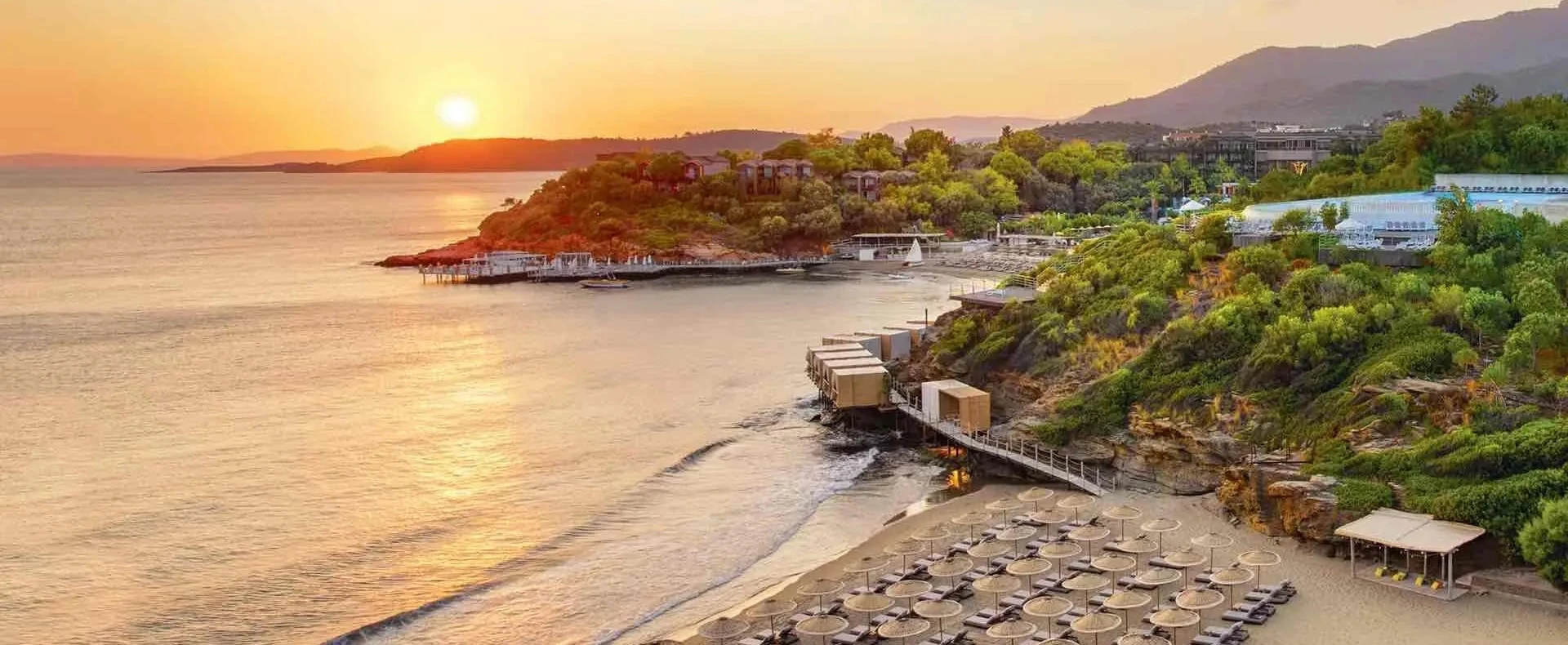
Discover ancient cities, Apollo's oracle, coastal settlements, traditional villages, Aegean beaches and the historic landscapes south of İzmir.
View Menderes GuideConnect coastal Lebedos with the cities and sanctuaries that shaped the ancient landscape of southern İzmir.
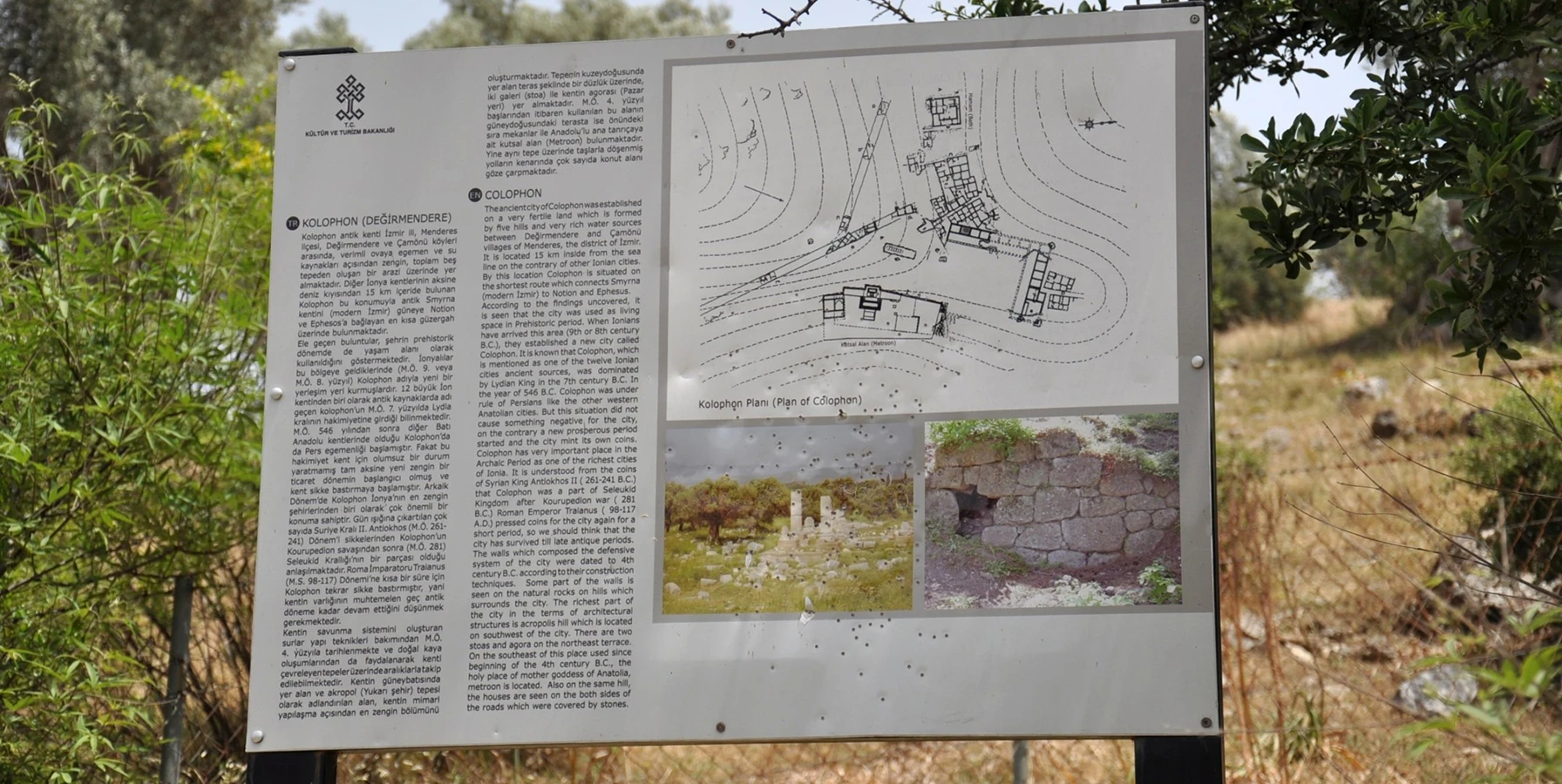
Explore the inland Ionian city remembered for its cavalry, intellectual traditions and relationship with the sanctuary of Klaros.
Explore Kolophon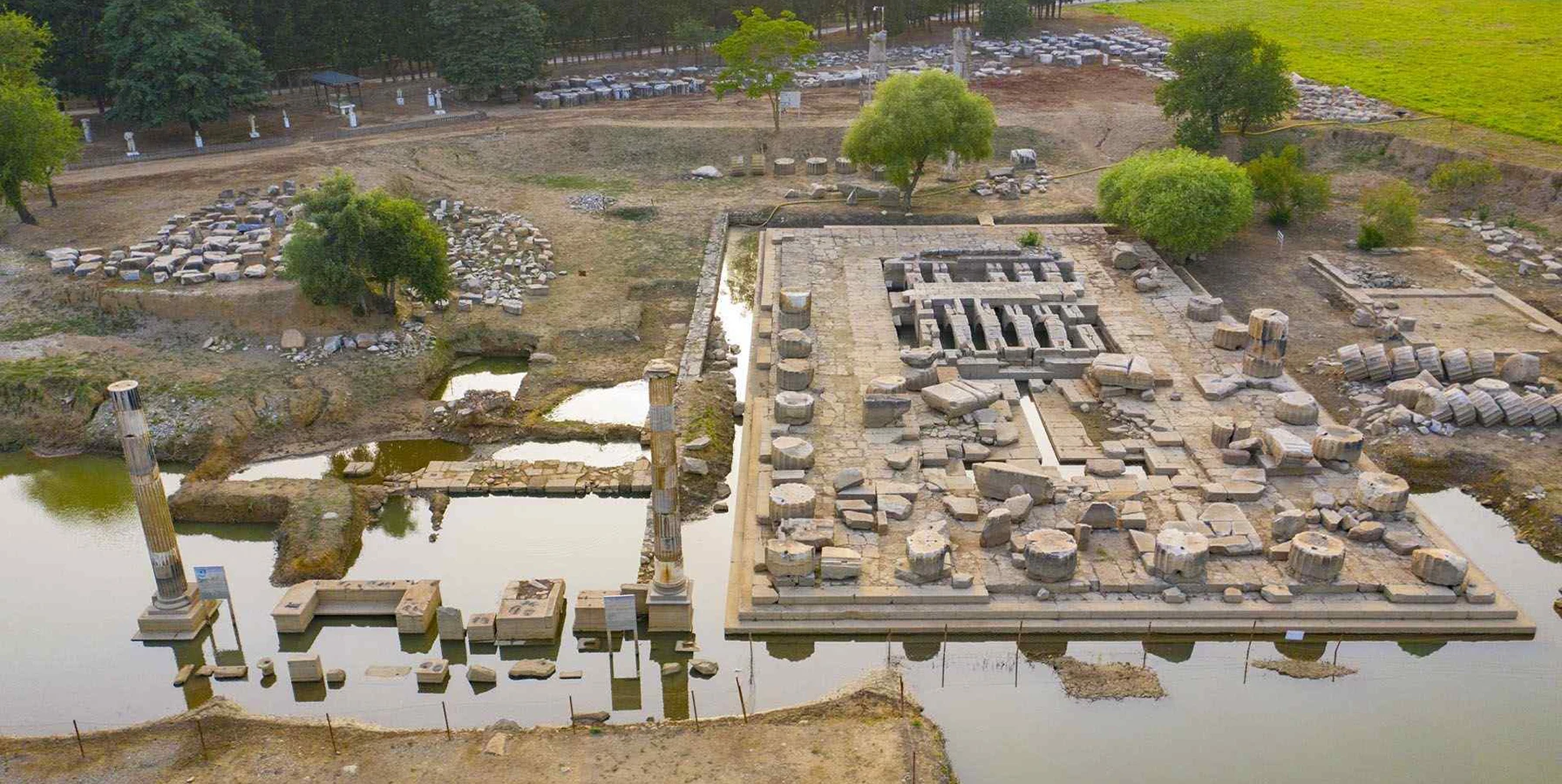
Enter the sacred world of Apollo Klarios and discover one of the ancient Mediterranean's remarkable centers of prophecy.
Explore Klaros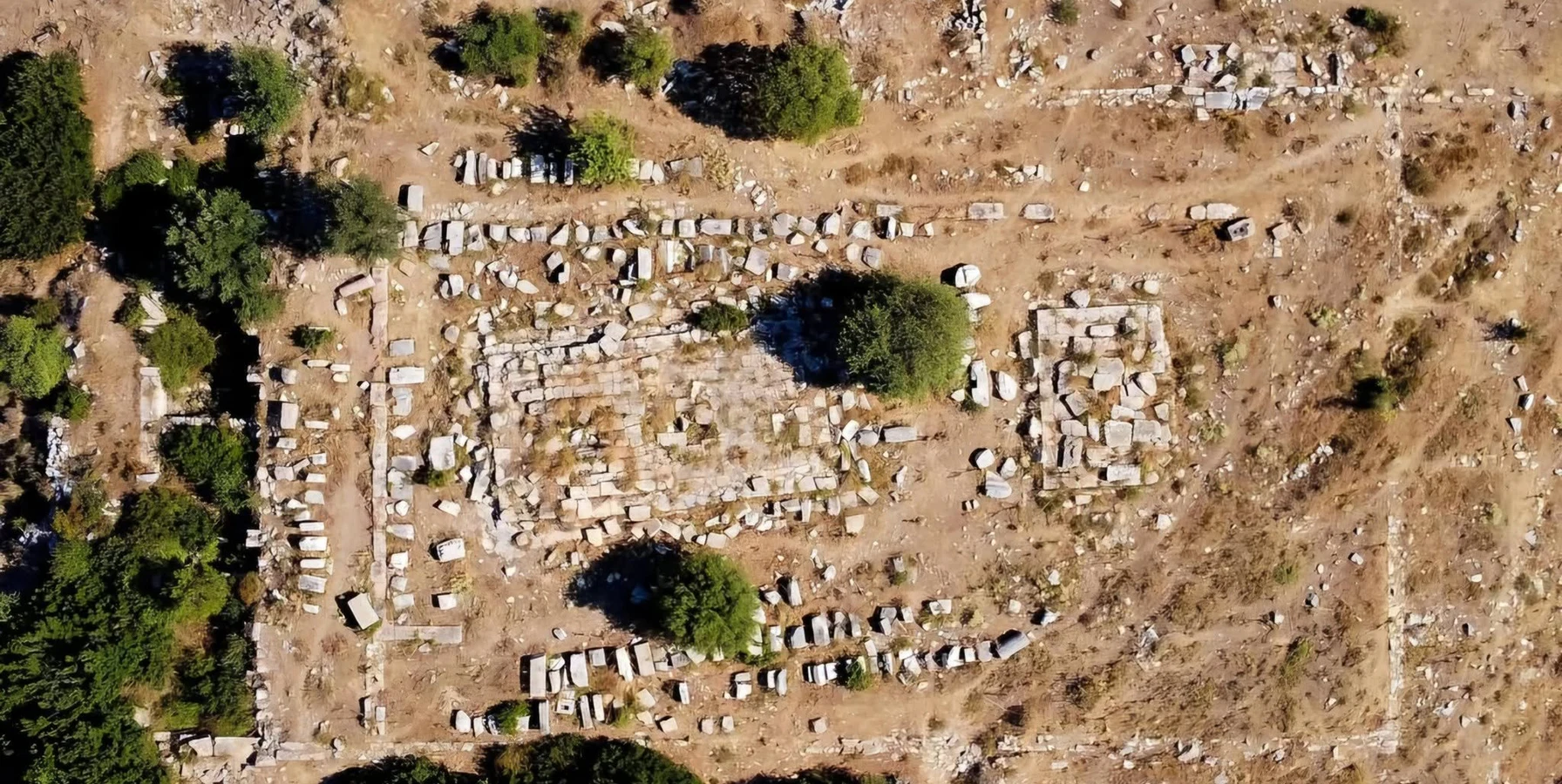
Explore the fortified coastal settlement historically connected with Kolophon and enjoy extraordinary views across the Aegean.
Explore NotionCombine ancient history with the relaxed coastal landscapes surrounding Lebedos.
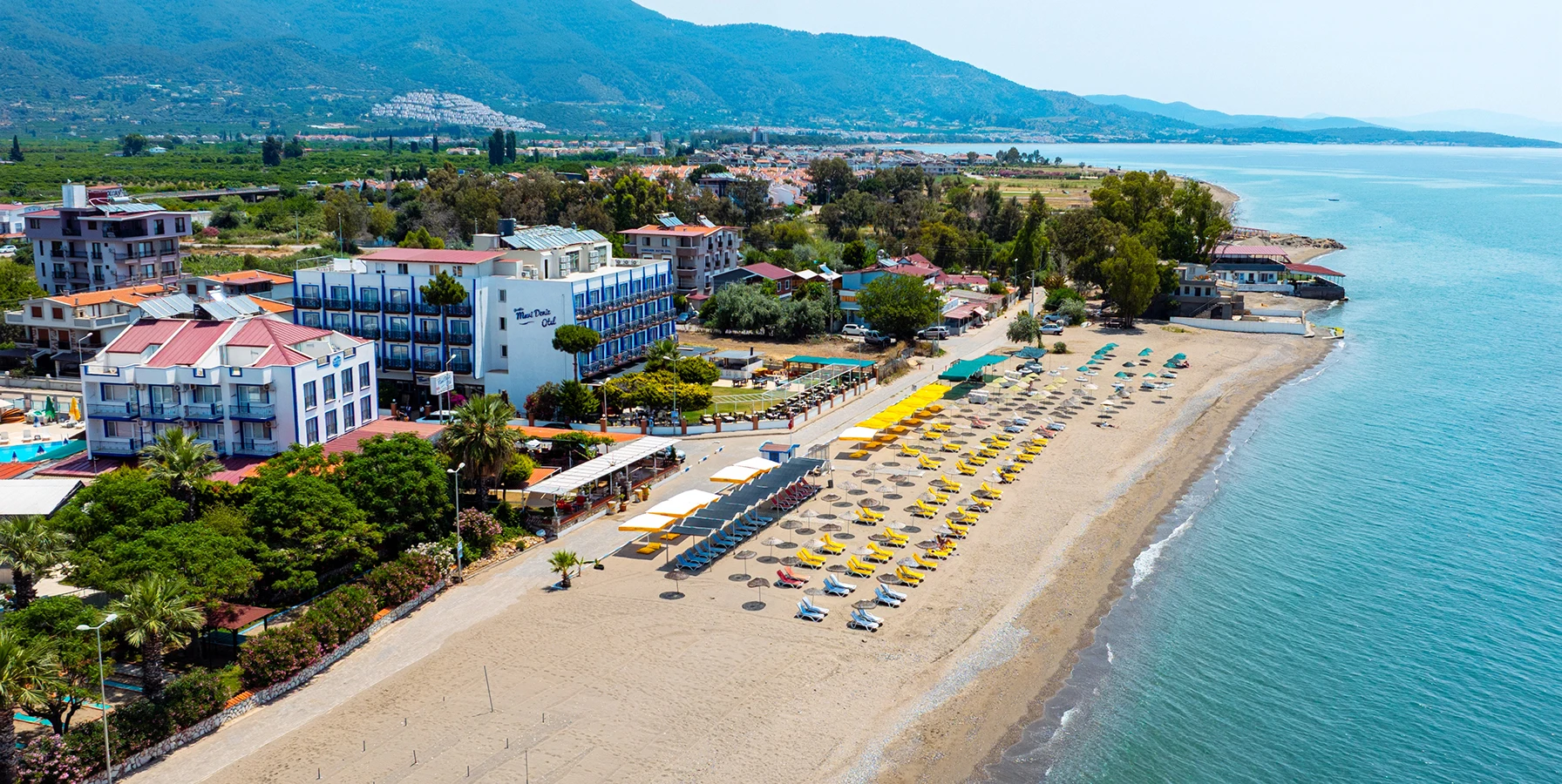
Continue along the Aegean coast through beaches, citrus-growing landscapes and the relaxed atmosphere surrounding ancient Lebedos.
Explore Gümüldür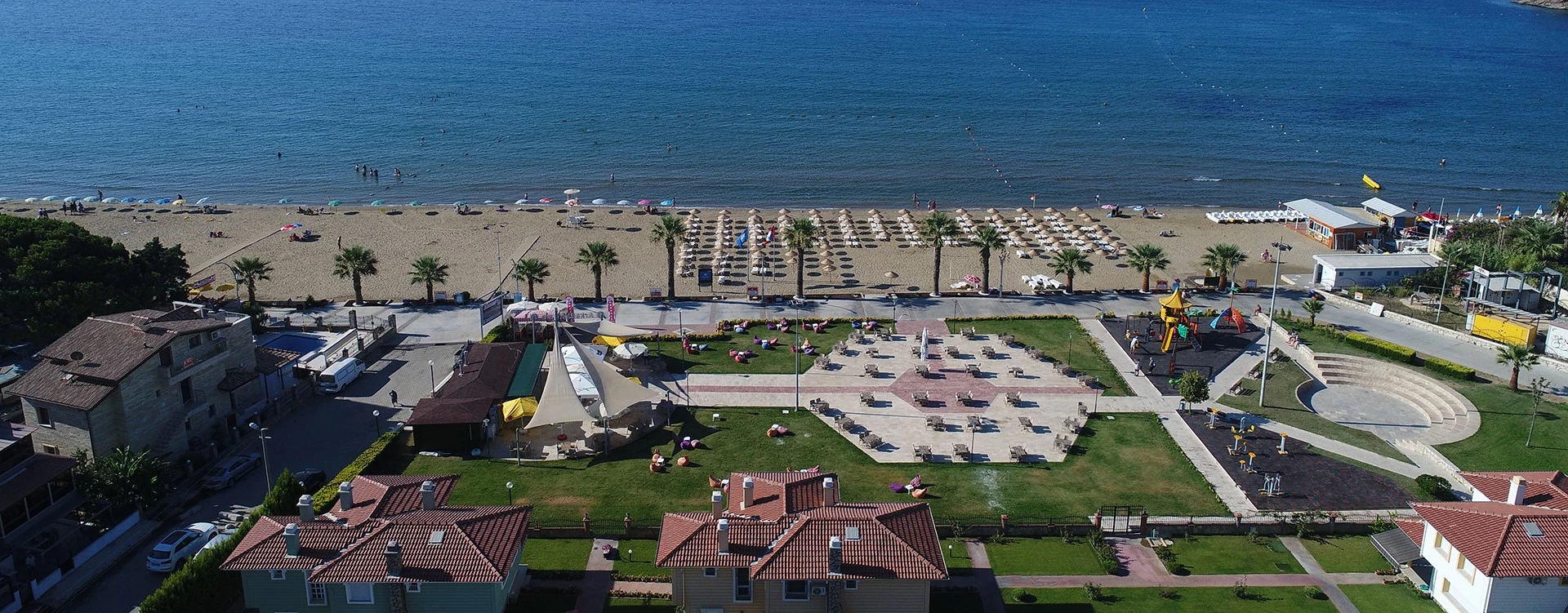
Finish your archaeological journey beside the Aegean with beaches, coastal landscapes and a relaxed seaside atmosphere.
Explore Özdere