Magnesia ad Maeandrum – The City of the White-Browed Artemis
Magnesia ad Maeandrum, usually known in English as
Magnesia on the Maeander, is one of the most important yet surprisingly under-visited ancient cities of western Türkiye.
Its ruins lie near Tekin village in Germencik, beside the historic route between Aydın, Ortaklar and Söke and within the wider cultural landscape of
Aydın Province.
Magnesia occupied an exceptionally strategic position between Ephesus, Priene and Tralleis, close to roads connecting the Aegean coast with the Büyük Menderes Valley and inland Anatolia.
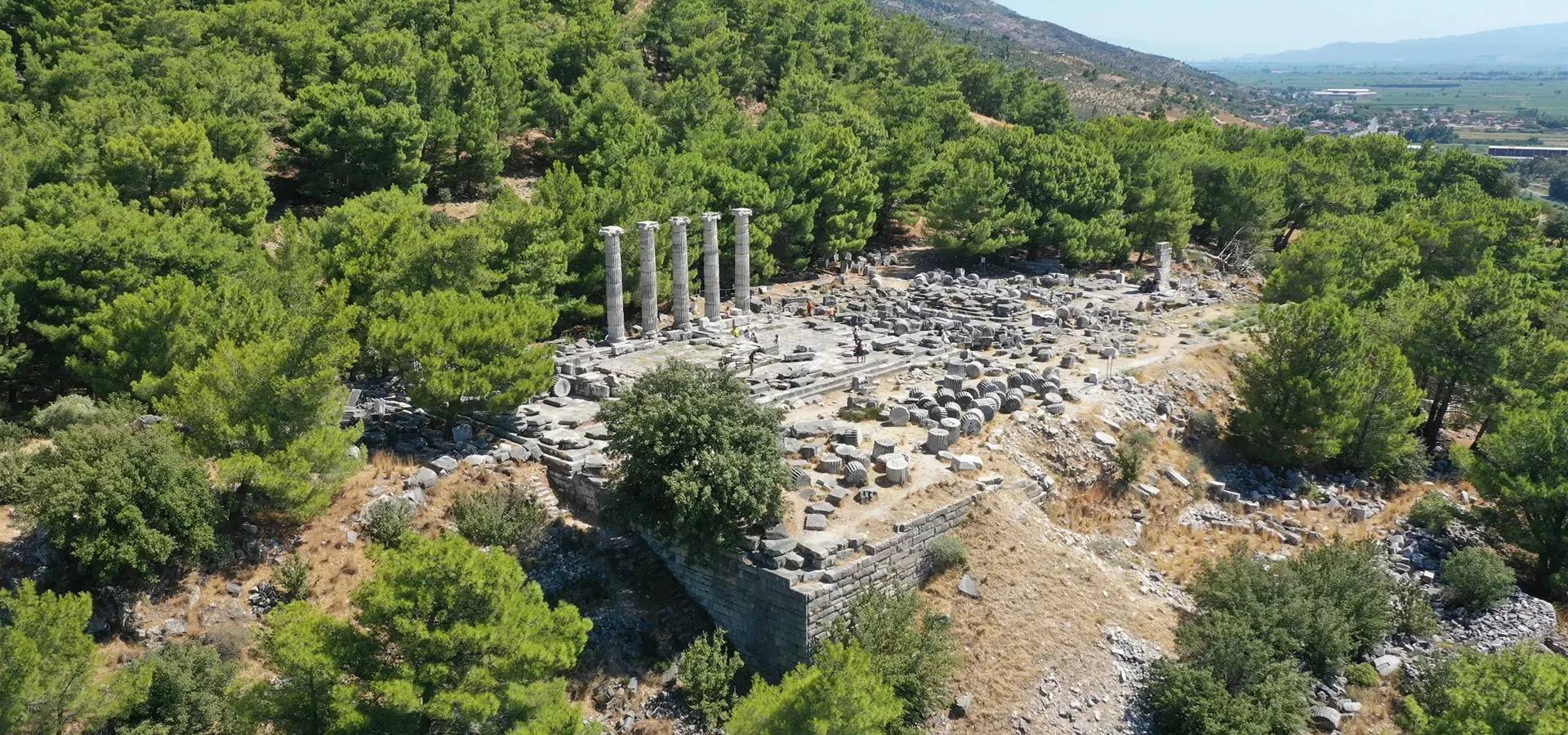
The city's greatest architectural masterpiece was the monumental
Temple of Artemis Leukophryene,
designed by the celebrated Hellenistic architect Hermogenes.
Ancient architectural tradition regarded the sanctuary as one of the finest demonstrations of proportion and harmony in Asia Minor.
Yet Magnesia was much more than a temple city.
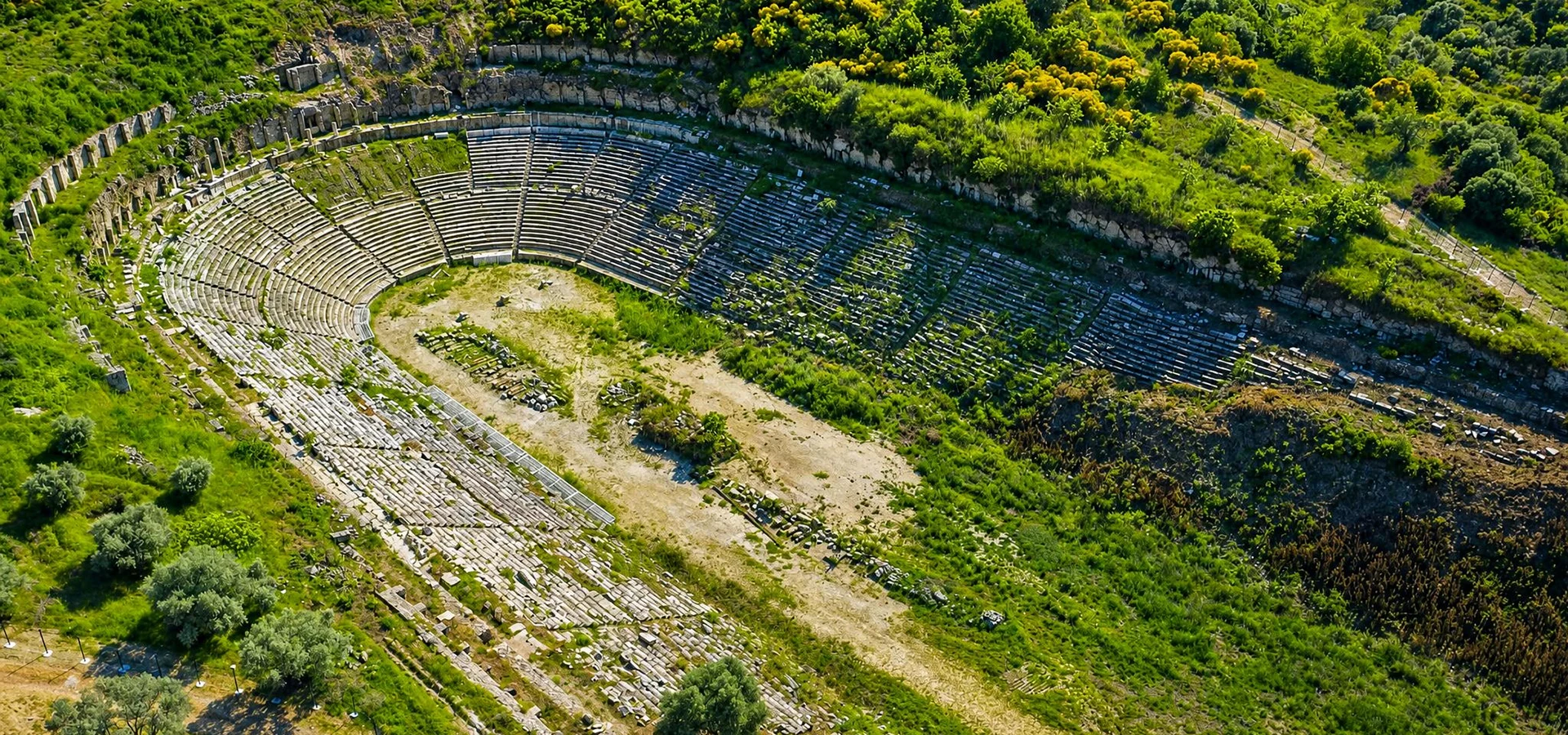
Its archaeological landscape contains an enormous stadium, monumental agora, ceremonial propylon, Roman basilica, gymnasium, baths, theatre, unfinished theatron, latrina, defensive walls and traces of the Byzantine city.
The result is an archaeological site where architecture, religion, sport, commerce and ancient urban planning can all be explored within one remarkably rich landscape.
Artemis Leukophryene
Discover the sanctuary of Magnesia's principal goddess and one of the most influential Hellenistic temples of Anatolia.
Hermogenes
Explore the work of one of antiquity's most influential architects and the development of the pseudodipteral temple plan.
Monumental Stadium
Walk through one of the most spectacular surviving stadium landscapes in western Türkiye.
Ancient Urbanism
See how sacred architecture, markets, ceremonial spaces, sports facilities and roads were organised within a planned ancient city.