Birthplace Connection
Namık Kemal was born in Tekirdağ in 1840, giving the city an enduring place in the history of nineteenth-century Turkish literature.
- Born: 21 December 1840
- Birthplace: Tekirdağ
- Period: Tanzimat era




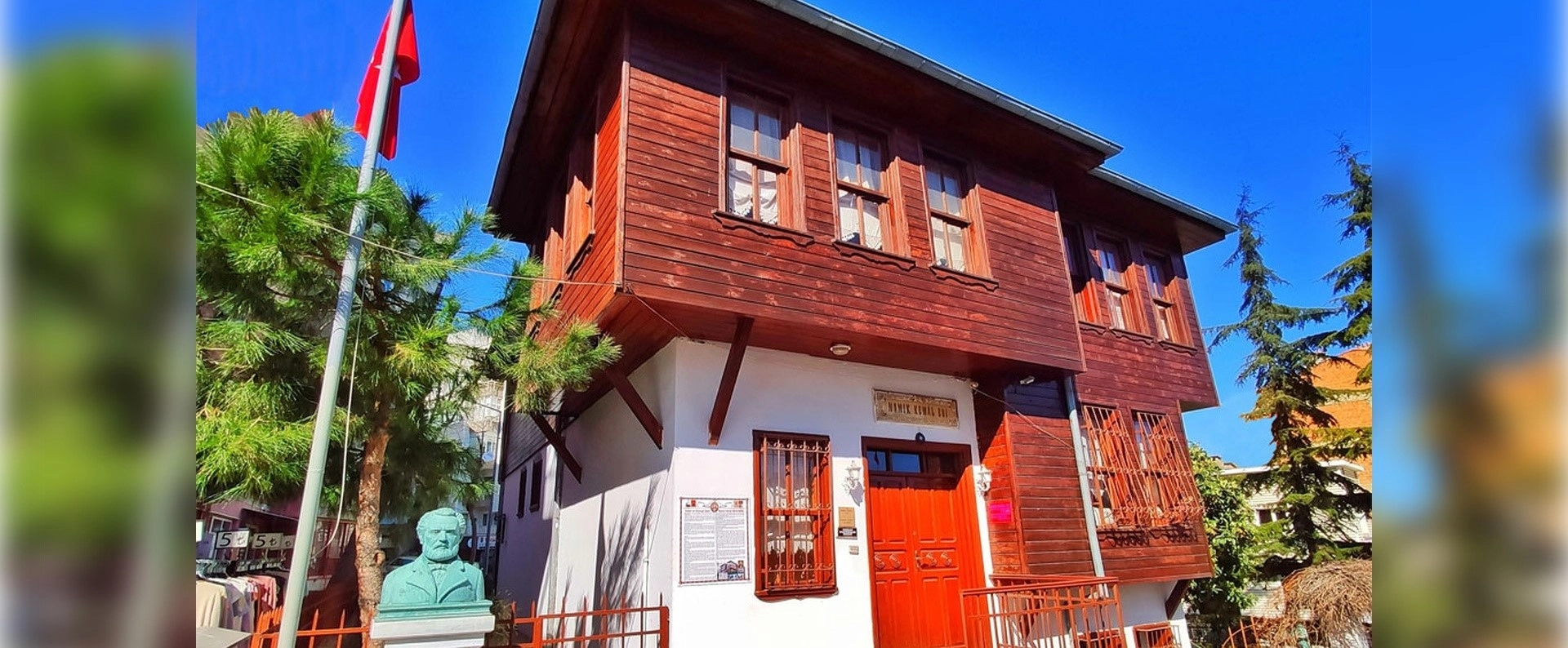
In the historic centre of Tekirdağ, a traditional-style Ottoman house preserves the memory of one of the most important writers and intellectuals of the nineteenth century: Namık Kemal.
Born in Tekirdağ on 21 December 1840, Namık Kemal became a poet, novelist, playwright, journalist and political thinker whose writings helped popularize powerful ideas about homeland, liberty, constitutional government and civic responsibility.
The present Namık Kemal House is a commemorative museum rather than the surviving original house in which he was born. It was constructed in 1993 close to his birthplace, taking inspiration from traditional historic houses of Tekirdağ.
Inside, visitors encounter books, documents, photographs and materials relating to Namık Kemal together with ethnographic displays recreating elements of domestic life in old Tekirdağ.
Discover the extraordinary life of the celebrated poet of homeland and liberty.
Explore the world behind works including Vatan Yahut Silistre, İntibah and Cezmi.
See a museum building inspired by nineteenth-century domestic architecture in Tekirdağ.
Understand the strong connection between Namık Kemal and the city where he was born.
Essential information about one of Tekirdağ's most important literary and cultural museums.
Orta Cami neighbourhood in central Tekirdağ, within easy reach of the city's historic attractions.
Open Namık Kemal House on Google MapsConstructed in 1993 in memory of Namık Kemal using historic Tekirdağ houses as architectural references.
Namık Kemal, the influential Ottoman poet, writer, journalist and political intellectual born in Tekirdağ in 1840.
Books, literary material, photographs, commemorative objects and traditional Tekirdağ ethnographic displays.
The museum connects modern Tekirdağ with one of the defining personalities of nineteenth-century Ottoman intellectual life.
Mehmed Namık Kemal was born in Tekirdağ on 21 December 1840. Although his life would later take him throughout the Ottoman Empire and beyond, Tekirdağ remained forever associated with the beginning of his story.
The historic house in which he was born did not survive as an intact museum building. To preserve his connection with Tekirdağ, a commemorative house was eventually created near the area of his birthplace.
The present Namık Kemal House was constructed in 1993 with the involvement of the Tekirdağ Namık Kemal Association and local institutions. Rather than attempting to present a surviving original residence, the project took inspiration from examples of traditional Tekirdağ domestic architecture.
The interior was arranged not only to commemorate the writer but also to evoke the domestic culture of historic Tekirdağ. Traditional rooms and ethnographic objects therefore appear beside books, photographs and material relating directly to Namık Kemal.
This combination makes the museum particularly interesting. It tells two interconnected stories: the story of a writer whose ideas helped transform Ottoman intellectual culture and the story of the provincial city in which he was born.
The museum is small, but its subject reaches far beyond Tekirdağ into the history of modern Turkish literature, journalism and political thought.
Namık Kemal was born in Tekirdağ in 1840, giving the city an enduring place in the history of nineteenth-century Turkish literature.
Books, documents, photographs and commemorative material introduce visitors to Namık Kemal's literary career and historical importance.
The interior incorporates ethnographic displays representing traditional domestic spaces such as the kitchen, principal room and bedroom.
Namık Kemal's celebrated drama became inseparably associated with the ideas of patriotism and sacrifice that defined his public reputation.
Namık Kemal became one of the most recognizable literary voices associated with concepts of liberty, homeland and constitutional government.
His influence extended beyond poetry and fiction through newspaper writing, political commentary and participation in Ottoman intellectual debates.
One of Namık Kemal's best-known prose works, İntibah occupies an important place in the development of the Ottoman-Turkish novel.
Namık Kemal also turned to historical fiction, producing Cezmi, one of the important early historical novels of Turkish literature.
Namık Kemal was one of the most influential intellectual figures of the Tanzimat period, an era in which the Ottoman Empire was experiencing far-reaching political, administrative and cultural change.
He worked across an unusually broad range of literary forms. He wrote poetry, drama, novels, essays, historical works, criticism and journalism, while simultaneously participating in the major political debates of his generation.
His writing repeatedly returned to concepts such as vatan — homeland — together with liberty, justice, citizenship, public responsibility and constitutional government.
These ideas gave his work an influence extending far beyond literature. For generations of readers, Namık Kemal became closely associated with the emotional language of patriotism and freedom.
One of the most important things to understand before visiting is that the present museum should not be confused with a perfectly preserved nineteenth-century birthplace.
The house standing today was constructed in 1993 near the area where Namık Kemal was born. Historic houses of Tekirdağ were studied and used as references for its traditional architectural character.
The purpose was therefore commemorative as much as architectural: to create a place in Namık Kemal's native city where visitors could encounter his memory, works and cultural environment.
The museum's architecture was designed to reflect the character of traditional houses that once formed an important part of Tekirdağ's urban landscape.
This makes the building itself part of the visitor experience. The structure provides a domestic setting rather than a conventional gallery environment, allowing literary displays and ethnographic material to be presented within rooms inspired by historic local homes.
The museum draws architectural inspiration from surviving examples and records of old Tekirdağ houses.
Rooms are arranged to create the atmosphere of a historic residence rather than a large institutional museum.
Furniture and household objects help visitors imagine the domestic culture of historic Tekirdağ.
The traditional setting provides a fitting background for displays relating to Namık Kemal's life and writings.
The collection combines material associated with Namık Kemal with ethnographic objects representing traditional life in Tekirdağ.
Official cultural information specifically identifies displays representing the traditional Tekirdağ kitchen, principal reception room and bedroom, together with works written by Namık Kemal and publications about him.
Explore editions of works by Namık Kemal together with publications examining his life and legacy.
Visual and documentary material helps place the writer within the political and cultural world of the nineteenth century.
Ethnographic objects evoke the household environment and everyday culture of historic Tekirdağ.
The traditional principal room introduces visitors to the social and domestic organization of an old Tekirdağ home.
Period-style furnishings help complete the museum's interpretation of traditional domestic life.
Portraits and commemorative objects reflect the lasting place of Namık Kemal in Turkish cultural memory.
Among all Namık Kemal's works, few are as closely associated with his public reputation as Vatan Yahut Silistre.
Written in 1872, the play dramatizes themes of homeland, courage, love and sacrifice against the background of military conflict.
Its importance lies not simply in its plot but in the emotional power with which the concept of vatan — homeland was presented to a public audience.
The reactions surrounding performances of the play became part of Namık Kemal's political story and contributed to the increasingly difficult relationship between the writer and the Ottoman authorities.
Namık Kemal's literary output was remarkably diverse. Visitors encountering his story for the first time may recognize him primarily as a poet, but his influence extended into drama, fiction, criticism, journalism and historical writing.
A celebrated drama that helped make ideas of homeland, sacrifice and patriotism central to Namık Kemal's public image.
An important work in the early development of the Ottoman-Turkish novel.
A historical novel demonstrating Namık Kemal's deep interest in history, political ideals and heroic narrative.
A dramatic work exploring authority, oppression, resistance and moral responsibility.
A play focusing on family, marriage, social pressures and personal tragedy.
An ambitious historical drama that reflects Namık Kemal's fascination with leadership, struggle and history.
Another of his dramatic works, combining personal tragedy with themes of loyalty and duty.
Namık Kemal devoted significant energy to historical subjects and attempted an extensive history of the Ottoman state.
For Namık Kemal, literature was never entirely separated from public life. Journalism became one of the most important ways in which he communicated ideas about government, society, liberty and responsibility.
His career developed during a period in which newspapers were becoming increasingly important arenas for political and cultural debate within the Ottoman Empire.
Through journalism and political writing, Namık Kemal helped introduce a new vocabulary of public debate to a broader reading audience.
His connection with thinkers including Şinasi and his involvement with reform-minded Ottoman intellectual circles placed him at the centre of many of the ideological debates of the Tanzimat period.
Namık Kemal's importance cannot be explained by any single poem, play or political position. His influence came from the way literature and political thought were brought together.
Concepts such as vatan and hürriyet — homeland and liberty — acquired unusual emotional force in his poetry and prose.
He argued passionately about the responsibilities of government and society while helping a new generation of readers think about the relationship between the individual, the public and the state.
Later generations interpreted his writings through their own political and historical circumstances, allowing Namık Kemal's reputation to continue long after his death in 1888.
He helped transform vatan into one of the most emotionally powerful concepts in late Ottoman literary culture.
Freedom became one of the defining ideas associated with both his literary identity and political reputation.
His political writings participated in nineteenth-century Ottoman debates concerning representation, law and government.
He treated literature as something capable of influencing society rather than simply providing artistic entertainment.
Namık Kemal's outspoken political and literary activities repeatedly brought him into conflict with Ottoman authorities.
Periods of exile and administrative service became major chapters of his life. Places including Magosa, Midilli, Rodos and Sakız became associated with different stages of his writing and public career.
Rather than ending his literary activity, these periods often became intensely productive. He continued writing plays, novels, criticism and historical works while away from Istanbul.
Namık Kemal died on 2 December 1888 while serving on Sakız. His remains were subsequently transferred to Bolayır on the Gallipoli Peninsula, where he was buried near the tomb of Süleyman Pasha.
Although Namık Kemal spent much of his life elsewhere, Tekirdağ maintains a particularly powerful symbolic connection with him because it was here that his life began.
His name appears throughout the modern city in streets, institutions and monuments, while the museum gives this connection a physical centre that travelers can actually visit.
Exploring Namık Kemal House together with other cultural sites in central Tekirdağ also reveals something larger about the city's history. Ottoman architecture, Hungarian exile history, archaeology, literature and modern Turkish cultural memory exist within a remarkably compact urban area.
Comfortable temperatures make spring excellent for combining the museum with a walking tour of central Tekirdağ.
Visit the museum during the day before continuing toward Tekirdağ's waterfront, restaurants and Marmara coast.
Pleasant temperatures and softer light make autumn particularly enjoyable for exploring the historic city centre on foot.
The museum provides a useful indoor cultural stop while exploring Tekirdağ during quieter winter months.
The museum's traditional architecture makes it an attractive subject for travelers documenting Tekirdağ's cultural heritage.
Photograph the traditional form of the building and its relationship with the surrounding historic neighbourhood.
Look for windows, timber details and other features inspired by older Tekirdağ houses.
Where photography is permitted, the recreated domestic spaces provide interesting cultural details.
Portraits, books and commemorative objects can provide meaningful visual context to Namık Kemal's story.
Namık Kemal House is located in the Orta Cami neighbourhood of central Tekirdağ, making it easy to combine with several of the city's other historic attractions.
Travelers already exploring central Tekirdağ can normally incorporate the museum into a walking route connecting the historic centre with Rüstem Pasha Mosque, Rakoczi Museum and the waterfront.
Visitors arriving from Istanbul or elsewhere in Thrace can reach Tekirdağ by road and then explore the central attractions on foot or by short local transfers.
This compact route brings together literature, Ottoman architecture, archaeology, international history and local cuisine, making it an excellent introduction to Tekirdağ for first-time visitors.
The present building was constructed in 1993 and should not be mistaken for the completely surviving original 1840 birthplace.
Knowing a little about Vatan Yahut Silistre and his ideas about homeland and liberty makes the museum considerably more meaningful.
The museum has historically operated limited daytime hours and may close at weekends, so verify the current schedule before visiting.
Namık Kemal House, Rakoczi Museum and the Archaeology & Ethnography Museum reveal very different chapters of Tekirdağ's history.
The museum is relatively compact, and most visitors can explore it comfortably without setting aside an entire morning.
The ethnographic rooms are also useful for understanding traditional domestic culture in Tekirdağ.
Its central location makes the museum an excellent stop within a wider walking route around historic Tekirdağ.
After exploring the museums and historic centre, finish your visit beside the Sea of Marmara.
The museum lies within one of the best areas for exploring Tekirdağ's history on foot, with Ottoman monuments, museums and the Marmara waterfront nearby.
Visit Tekirdağ's important sixteenth-century Ottoman mosque associated with the great architect Mimar Sinan.
Discover the extraordinary story of Hungarian prince Francis II Rákóczi and the exile community that lived in Ottoman Tekirdağ.
Explore archaeological discoveries and cultural objects tracing thousands of years of history across Thrace.
Look for additional memorials dedicated to the writer while exploring central Tekirdağ.
Continue toward the Marmara shore for sea views, local restaurants and a relaxed walk after visiting the historic centre.
Discover more museums, Ottoman monuments, coastal attractions, local foods and day-trip possibilities throughout Tekirdağ.
Namık Kemal House is close enough to central Tekirdağ's restaurants and waterfront to combine a cultural visit with some of the province's best-known foods.
Try the city's signature grilled meatballs, one of the culinary specialties most strongly associated with Tekirdağ.
Finish your meal with the province's distinctive sweet traditionally prepared using fresh unsalted cheese.
The city's position on the Sea of Marmara makes fish and seafood natural choices for a meal near the waterfront.
Explore local olive oil, grape products and other foods produced throughout Tekirdağ Province.
Namık Kemal House is located in the Orta Cami neighbourhood of central Tekirdağ, on Namık Kemal Caddesi.
Namık Kemal was a nineteenth-century Ottoman poet, novelist, playwright, journalist, political thinker and administrator whose writings had a major influence on Turkish literature and intellectual life.
Yes. Namık Kemal was born in Tekirdağ on 21 December 1840.
No. The present museum was constructed in 1993 close to the area of his birthplace and was designed with inspiration from traditional historic houses of Tekirdağ.
The present commemorative museum building was constructed in 1993.
It was created to preserve Namık Kemal's memory in the city of his birth and to provide a place for displaying material relating to his life, writings and cultural environment.
Visitors can see publications and displays relating to Namık Kemal together with ethnographic objects representing traditional Tekirdağ domestic life.
The museum contains material relating to Namık Kemal, but visitors should understand it primarily as a commemorative literary museum rather than an untouched historic residence preserved with all of his original possessions.
He is particularly famous for his poetry, journalism and political writing emphasizing ideas such as homeland and liberty, as well as literary works including Vatan Yahut Silistre, İntibah and Cezmi.
Vatan means homeland or fatherland. The concept became especially closely associated with Namık Kemal's literary and political reputation.
Vatan Yahut Silistre is Namık Kemal's celebrated nineteenth-century drama exploring themes of patriotism, courage, duty and sacrifice.
Yes. His novels include İntibah and Cezmi, both important works in the development of nineteenth-century Ottoman-Turkish fiction.
Yes. Journalism was a major part of his career and provided an important platform for his literary, social and political ideas.
Yes. He participated actively in the major intellectual and political debates of his period and became particularly associated with ideas of liberty, constitutional government and public responsibility.
Yes. Political conflicts resulted in periods away from Istanbul, and Magosa became particularly famous as one of the places associated with his exile.
Namık Kemal died on 2 December 1888 on the island of Sakız.
His remains were transferred to Bolayır on the Gallipoli Peninsula, where his tomb stands near that of Süleyman Pasha.
Approximately 30 to 60 minutes is normally sufficient for the museum, although visitors particularly interested in literature may prefer to spend longer examining the displays.
Yes, particularly for travelers interested in Turkish literature, Ottoman intellectual history, traditional architecture and the cultural heritage of Tekirdağ.
Yes. The combination of a traditional house setting, historical objects and the story of a famous writer can make it a useful cultural stop for families and school-age visitors.
Photography rules can change. Follow the instructions displayed at the museum or ask staff before photographing interior collections.
Rüstem Pasha Mosque, Rakoczi Museum House, Tekirdağ Archaeology & Ethnography Museum and the Marmara waterfront can all be combined with Namık Kemal House.
Yes. The museum can be included in a Tekirdağ day trip from Istanbul, particularly when combined with the historic centre, local cuisine and the Marmara waterfront.
Yes. Travelers with a full day or overnight stay can continue west toward Şarköy, Mürefte, Hoşköy, the Hora Lighthouse and the vineyard landscapes beneath the Ganos Mountains.
Namık Kemal House can be included in a private cultural journey through Tekirdağ combining literature, Ottoman heritage, museums, local cuisine and the Marmara coast.
Explore Namık Kemal House together with Tekirdağ's principal museums, Ottoman monuments, historic neighbourhoods and local culinary traditions.
Ask us about a tailor-made journey combining Namık Kemal House, Rüstem Pasha Mosque, Rakoczi Museum, archaeology, local food and Tekirdağ's Marmara waterfront.
Request a Custom Tour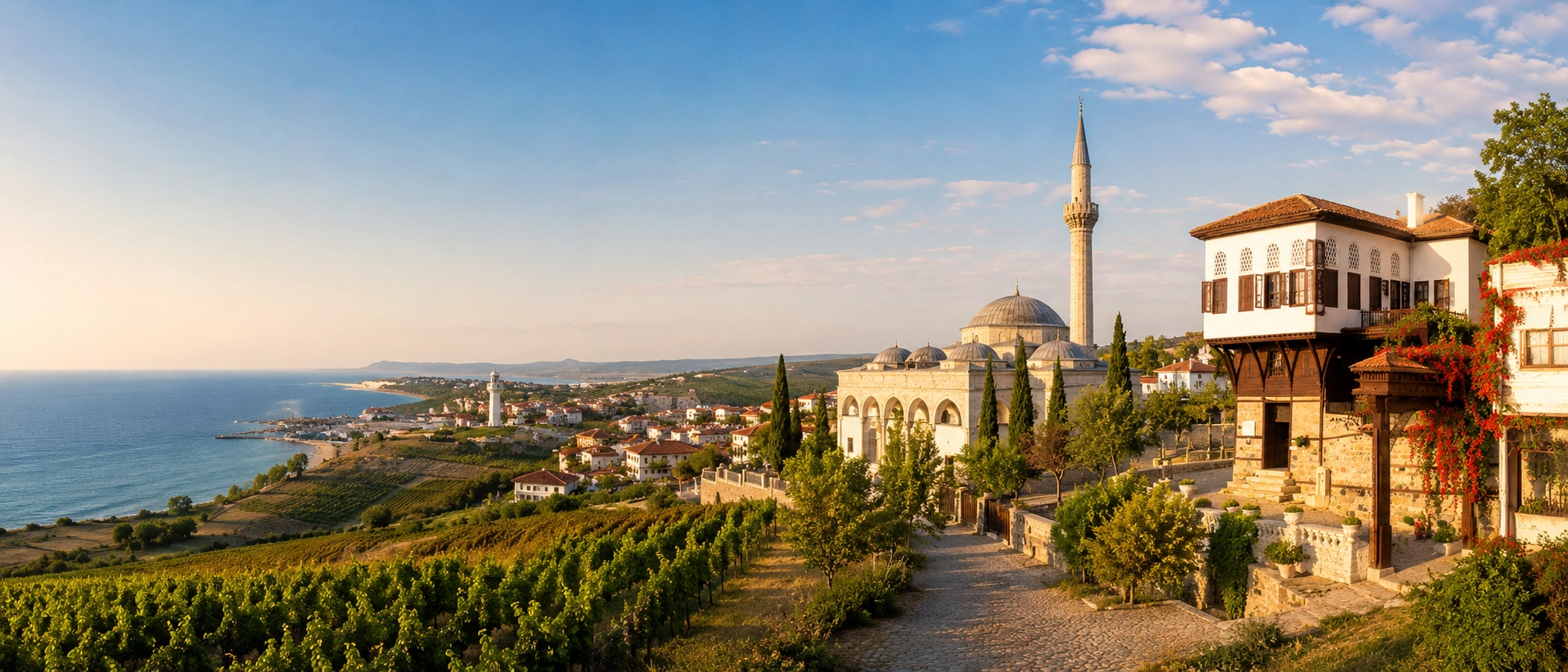
Continue planning your journey with our complete Tekirdağ guide covering historic attractions, museums, Ottoman monuments, local food and the Marmara coast.
View Tekirdağ GuideTekirdağ can become the first stop on a longer private journey through Şarköy, the Ganos Mountains, Gallipoli, Troy and the northern Aegean.
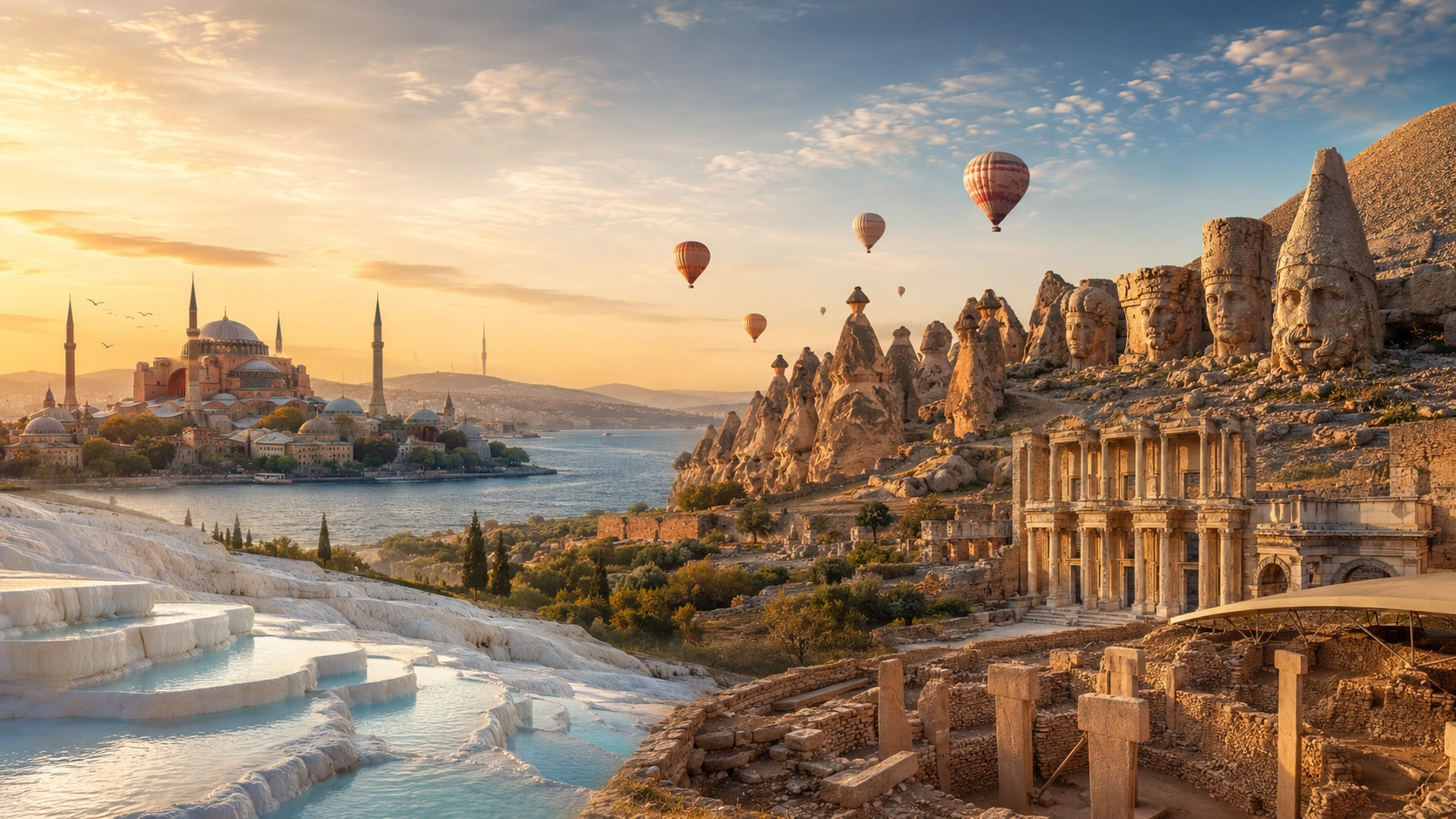
Explore Türkiye's extraordinary historic landscapes through a longer cultural journey linking archaeological sites, Ottoman cities and remarkable heritage destinations.
View Tour
Create a private route linking Istanbul with Tekirdağ before continuing toward Şarköy, Hoşköy, the Ganos Mountains, Gallipoli, Troy or the northern Aegean.
Plan Your Route