Private Orthosia Ancient City Experience
Ask us about a tailored exploration of ancient Orthosia, Donduran, Carian history and the surrounding Meander Valley landscape.
Request a Custom Tour





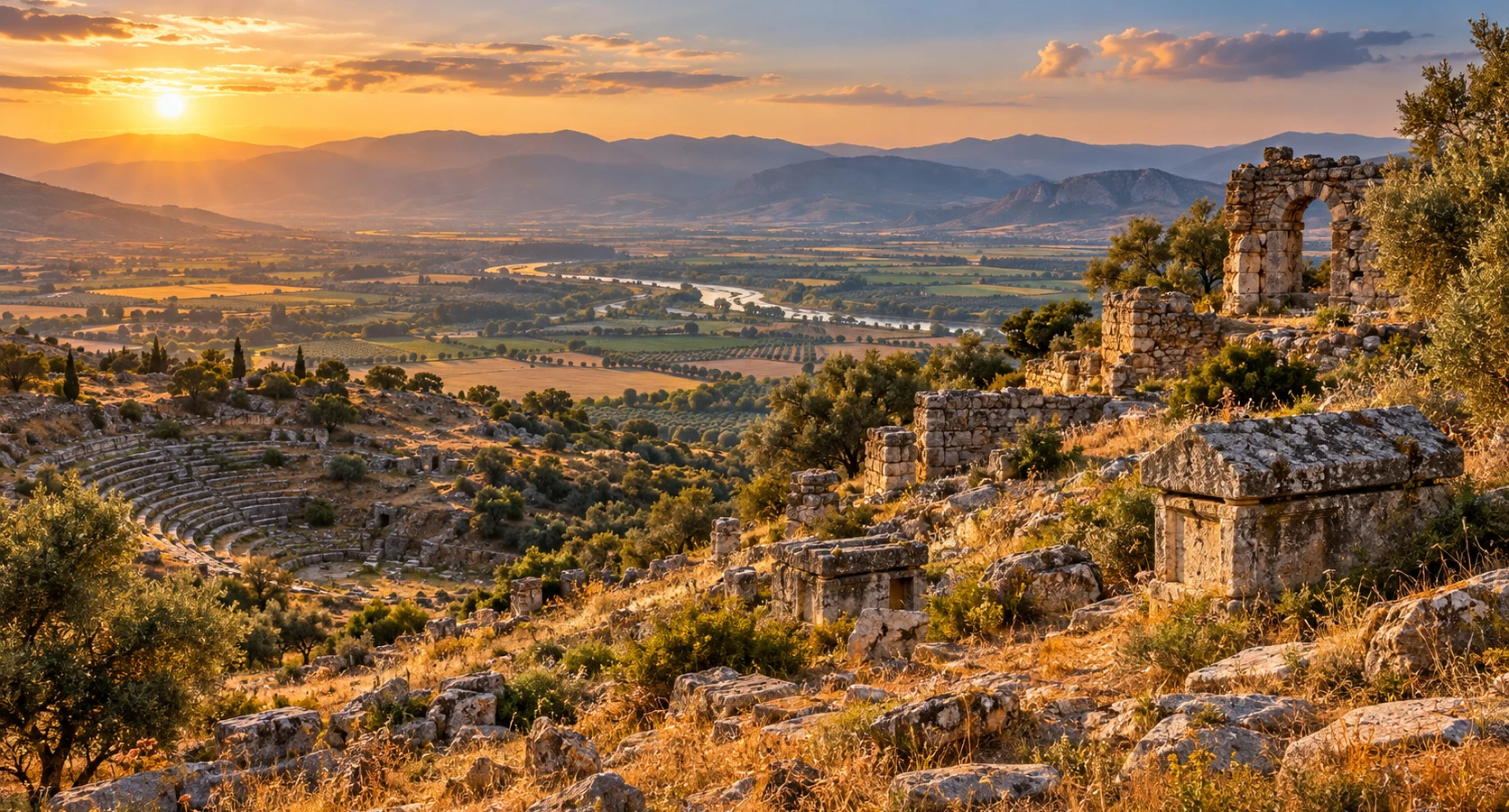
Orthosia Ancient City, also written Orthasia, is one of the lesser-known archaeological settlements of western Türkiye. Located near Donduran village in the Yenipazar district of Aydın, the ancient city occupies elevated ground overlooking the fertile Büyük Menderes Valley.
Unlike the extensively excavated cities of Ephesus, Aphrodisias and Priene, Orthosia remains a comparatively quiet archaeological landscape. Much of its ancient settlement is still concealed beneath the soil, while surviving structures include traces of a theatre, impressive funerary monuments, architectural remains and buildings associated with the Byzantine period.
Orthosia was part of ancient Caria, a region shaped by indigenous Anatolian traditions and successive Greek, Lydian, Persian, Hellenistic, Roman and Byzantine influences. The geographer Strabo identified Orthosia as a Carian settlement, confirming its place within the historical geography of southwestern Anatolia.
One of the city's most extraordinary discoveries is a richly decorated Roman floor mosaic, recovered from the area of Donduran. Its remarkable scenes include mythology, animals and gladiatorial imagery. Important sections are preserved and displayed at the Aydın Archaeological Museum, providing an exceptional opportunity to appreciate the artistic culture of ancient Orthosia.
Today, Orthosia appeals especially to travelers interested in archaeology, Carian history, Roman provincial life and places beyond the established tourist routes. Its combination of ancient remains, olive-covered slopes and expansive valley scenery makes it a rewarding destination for thoughtful exploration.
Discover a settlement recorded by Strabo in the historic Carian landscape.
Explore the story of exceptional mosaics preserved at Aydın Archaeological Museum.
Learn about carved tombs, sarcophagi and the funerary traditions of Orthosia.
Experience a largely unexcavated ancient landscape overlooking the Meander Valley.
Essential information for discovering one of Aydın's lesser-known ancient Carian settlements.
Donduran village, Yenipazar district, Aydın Province, Türkiye.
Open on Google MapsCaria, near the southern edge of the Büyük Menderes Valley.
Archaic, Hellenistic, Roman and Byzantine periods.
Theatre traces, funerary monuments, architectural ruins and Byzantine structures.
Roman floor mosaics displayed at Aydın Archaeological Museum.
Allow approximately 1–2 hours for a carefully planned exploration.
Orthosia reveals the historical connections between Caria, the Meander Valley and the civilizations that shaped western Anatolia.
The importance of Orthosia begins with its location. The city occupied elevated terrain close to the fertile plains of the Maiandros River, known today as the Büyük Menderes. This river valley was an important corridor connecting the interior of southwestern Anatolia with the Aegean world.
Ancient communities established settlements along this corridor because it offered agricultural land, access to water, movement between regions and defensible positions above the valley floor. Orthosia belonged to this wider landscape of interconnected Carian and Ionian communities.
The city's historical significance is also documented by ancient literary references. Strabo described Orthosia as a Carian settlement, while other classical authors preserve evidence of its existence in the political geography of Asia Minor.
Archaeologically, Orthosia is particularly important for its funerary architecture and Roman mosaics. Its necropolis provides information about local burial customs, while the elaborate mosaic discovered at Donduran offers rare insight into the decorative preferences and cultural interests of its inhabitants.
The survival of Byzantine structures demonstrates that Orthosia's story extended beyond classical antiquity. The city remained connected with the changing religious and administrative world of late antique and medieval Anatolia.
Because Orthosia has not been excavated on the scale of better-known archaeological cities, many questions remain unanswered. Its significance lies not only in the monuments already identified but also in the historical information that future research may reveal.
The exact foundation date of Orthosia has not been securely established. Its historical background is connected with the development of Carian settlements in the middle Büyük Menderes region, where communities participated in extensive networks of trade, agriculture and regional politics.
According to traditional historical summaries, Orthosia experienced the upheavals caused by Cimmerian incursions during the 7th century BC. The subsequent expansion of Lydian power under King Alyattes changed the political situation of western Anatolia.
During the 6th century BC, the region became increasingly integrated into the political world of Lydia and later the Persian Empire. Turkish Ministry of Culture and Tourism descriptions also associate Orthosia with the Ionian political sphere during this period.
Following the campaigns of Alexander the Great, western Anatolia entered a complex Hellenistic era marked by competing dynasties and changing alliances. Ancient references connect Orthosia with regional conflicts involving Rhodes and Carian communities during the 2nd century BC.
Under Roman rule, Orthosia belonged to the wider urban and economic system of the province of Asia. The discovery of a richly decorated domestic mosaic demonstrates that the settlement participated in the artistic culture of the Roman eastern provinces. Local elites could commission elaborate decorative programs combining Greek mythology, entertainment and geometric ornament.
Christianity and Byzantine administration later transformed the region. Orthosia appears in historical discussions of the ecclesiastical geography of Caria, and architectural remains indicate activity during the Byzantine period. The precise circumstances of the ancient city's gradual decline or transformation are not fully understood.
The community developed within the indigenous cultural landscape of Caria.
Cimmerian incursions, Lydian expansion and Persian control reshaped western Anatolia.
Orthosia participated in a region influenced by changing kingdoms and alliances.
Monumental architecture and elaborate mosaics reveal the city's participation in Roman culture.
Religious and architectural remains reflect the later history of this Carian settlement.
Archaeological investigations and discoveries have gradually revealed the city's importance.
Orthosia stands within a distinctive geographical transition between the wide agricultural plain of the Büyük Menderes and the rising terrain associated with the Madran Mountains.
The position provided access to fertile agricultural land while taking advantage of higher ground. From elevated areas, the surrounding valley, cultivated fields and nearby settlements form a landscape that helps visitors understand why ancient communities chose this region.
The Büyük Menderes River was one of the defining geographical features of ancient western Anatolia. Known to Greek and Roman writers as the Maiandros, its winding course gave rise to the English word "meander." The river basin supported agriculture, settlements and communication routes throughout antiquity.
The ancient settlement occupies sloping ground above the valley.
The surrounding agricultural basin supported communities for millennia.
The Meander corridor linked inland Anatolia with western coastal regions.
Olive groves, hills and cultivated fields surround the ancient remains.
Orthosia is not a fully excavated archaeological park. Its visible architecture represents only a portion of a settlement that once included public buildings, residential districts, defensive features and burial grounds.
Researchers and historical descriptions identify several important categories of remains, including a theatre, masonry structures, funerary monuments and Byzantine buildings.
The ancient settlement's sloping location influenced how structures were positioned. As at many Carian cities, natural elevations offered opportunities for construction, defense and views across the surrounding plain.
Surviving traces reveal the presence of a public performance building.
Scattered architectural remains indicate the extent of the ancient settlement.
Tombs and sarcophagi preserve evidence of ancient burial traditions.
Decorative mosaic discoveries provide evidence of sophisticated domestic interiors.
Later structural remains demonstrate continued occupation and adaptation.
Much of the ancient urban plan still awaits detailed investigation.
Among the most frequently mentioned monuments of Orthosia is its ancient theatre. The existence of this building demonstrates that the settlement possessed a public architectural space associated with the civic and cultural traditions of antiquity.
Ancient theatres served more than one purpose. In Greek and Roman cities, they hosted dramatic performances, musical events and public gatherings, bringing together inhabitants for shared cultural experiences.
At Orthosia, the theatre survives in a much less complete condition than the celebrated examples at Ephesus, Aphrodisias or Nysa. Published descriptions refer to partially visible seating and architectural traces. Its full design, capacity and construction chronology should not be assumed from the limited remains.
The theatre is nevertheless a significant indication of urban life at Orthosia. When viewed together with the city's mosaics and funerary monuments, it contributes to a broader picture of a settlement influenced by the civic traditions of the Greco-Roman world.
The necropolis of Orthosia is one of the archaeological features that distinguishes the settlement. Official historical descriptions mention well-preserved tombs, sarcophagi and chamber graves displaying accomplished stone workmanship.
Necropoleis were burial areas normally situated beyond the main inhabited parts of ancient cities. They preserve valuable evidence of social hierarchy, religious beliefs, family identity and attitudes toward death.
Sarcophagi were stone burial containers, sometimes ornamented with reliefs, inscriptions or architectural decoration. Chamber tombs could accommodate individual or multiple burials, depending on their design and the customs of the community.
At Orthosia, these monuments contribute to our understanding of local funerary architecture in Caria. Their craftsmanship also reflects the importance of skilled stoneworkers in the ancient region.
Burial monuments made from carefully worked stone blocks.
Funerary spaces constructed or carved to contain burials.
Surviving masonry reveals the skills of ancient builders.
The tombs offer evidence of traditions and social identities.
Perhaps the most remarkable artistic discovery associated with Orthosia is an extensive Roman floor mosaic uncovered in the Donduran area.
The mosaic belonged to a richly decorated building, generally interpreted as a Roman villa or substantial residence. Its composition includes multiple figurative panels separated and framed by decorative elements.
Official Aydın Archaeological Museum descriptions identify four principal mosaic panels, connecting sections and ornamental borders. The museum dates the floor decoration to the Roman Imperial period, specifically the 2nd century AD in its published visitor material.
Archaeological discussions of the mosaic describe scenes drawing from Greek mythology, the natural world and Roman entertainment. Such subjects reveal the cultural interests of those who commissioned and experienced the decorated interior.
Fighting figures connect the decoration with popular Roman spectacles.
A mythological subject associated with Zeus taking the form of a swan.
Imagery associated with the legendary labors of the Greek hero.
Figures connected with nature, pastoral mythology and divine beings.
Classical sea-related figures appear among the documented subjects.
Repeating ornaments, animal imagery and geometric patterns organize the floor.
The varied imagery demonstrates the influence of classical artistic traditions on a provincial community in Roman Anatolia. It also suggests that at least some inhabitants of Orthosia had the resources and cultural connections necessary to commission sophisticated mosaic decoration.
The discovery is especially valuable because many of the city's other buildings remain incompletely investigated. The mosaics provide an unusually vivid glimpse into everyday environments and elite domestic culture.
Orthosia has attracted archaeological attention, including surveys and investigations during the 1990s. Research has helped identify ancient structures, funerary remains and decorative materials from the Roman period.
The mosaic discovery is particularly important because it provides substantial evidence of the quality of domestic decoration. Museum conservation and exhibition have made this material available to a much wider public.
Archaeological work at sites such as Orthosia requires careful investigation of building phases, pottery, inscriptions, masonry and the changing relationship between settlements and their environment.
Large parts of Orthosia remain unexcavated. Consequently, the exact location and function of many ancient public buildings, the city's complete street network and significant elements of its chronology have not yet been securely established.
Classical authors help place Orthosia within the historical geography of Caria.
Surface investigations identify structures and the distribution of archaeological remains.
Preserved decorative panels offer insights into ancient artistic techniques.
Further research may clarify the city's organization, chronology and social history.
Orthosia's historical development did not end with the Roman Empire's transformation during late antiquity. The settlement continued to belong to the wider cultural and religious landscape of Byzantine Caria.
Official descriptions identify Byzantine architectural remains among the monuments visible at the site. The city is also mentioned in historical studies of the region's Christian ecclesiastical organization.
Across western Anatolia, many Roman cities experienced changes in their public spaces, settlement patterns and religious institutions. Christianity increasingly shaped urban identity, while older buildings were repaired, reused or transformed.
At Orthosia, the surviving evidence suggests a similarly layered history, although detailed interpretation depends on further archaeological study. It would be misleading to attribute every later ruin to a church or monastery without specific archaeological identification.
These remains nevertheless remind visitors that ancient Anatolian cities were not abandoned simultaneously at the end of classical antiquity. Many remained inhabited and culturally active through changing historical periods.
Exploring Orthosia is more like visiting an archaeological landscape than walking through a fully restored ancient city. The principal attraction is the opportunity to understand surviving monuments within their original geographical setting.
Look for surviving traces of the ancient performance building, where access permits.
Discover the historical importance of the settlement's funerary landscape.
Examine the craftsmanship associated with ancient burial monuments.
Learn how the settlement continued into later historical periods.
Observe the scattered masonry and building materials of the ancient city.
Appreciate the relationship between Orthosia and the fertile Meander Valley.
Experience the countryside surrounding the ancient settlement.
Complete the story at Aydın Archaeological Museum, where the famous mosaics are preserved.
A visit to Orthosia requires more preparation than a visit to a major archaeological park. The site lies in a rural landscape and should not be expected to offer the same visitor facilities, signage or maintained pathways as larger excavated cities.
Choose sturdy walking shoes suitable for soil, stones and uneven terrain.
Bring sufficient water, especially during the warmer months.
Plan your exploration during clear daylight hours rather than after sunset.
Save the Donduran and Orthosia locations before leaving Yenipazar.
Do not rely on finding a ticket office, restrooms or refreshments beside the ruins.
Avoid entering cultivated fields or privately controlled land without permission.
Archaeological masonry can be unstable and easily damaged.
Knowledgeable interpretation can help explain remains that are difficult to identify.
Begin in Yenipazar, where the landscape and local history provide an introduction to the settlement. Continue toward Donduran, the village associated with ancient Orthosia.
From an appropriate public access point, explore the safely reachable archaeological landscape. Concentrate on identifying the settlement's position, visible masonry and publicly accessible remains rather than attempting to reach every reported structure.
Where local access conditions permit, include viewpoints associated with the theatre area and the funerary landscape. Take time to observe the relationship between the ancient settlement, nearby hills and the agricultural valley.
A particularly rewarding extension is to visit Aydın Archaeological Museum, where the Orthosia mosaics are displayed. The museum visit requires separate travel to Aydın city and should be planned as an additional stop rather than part of a short walk around the ruins.
Orthosia is located in the Donduran area of Yenipazar, Aydın Province, approximately five kilometers east of Yenipazar according to official regional tourism descriptions.
Unlike major state-operated archaeological parks, Orthosia does not have a clearly verified, publicly listed ticketing and visitor timetable in the official tourism information consulted for this guide.
Some local visitor guides describe the ruins as freely accessible in daylight. However, individual monuments, privately owned land and archaeological protection zones may have different restrictions. These descriptions should not be interpreted as permission to enter every part of the site.
Visitors should confirm local access arrangements with the relevant authorities before making a special journey, particularly if they hope to visit specific tombs, architectural remains or archaeological research areas.
Orthosia lies in the warm inland Aegean region, where seasonal temperatures can strongly affect outdoor exploration. Comfortable conditions are especially important because shaded visitor facilities may be limited.
Green hillsides, mild weather and pleasant daylight make this an excellent season.
Cooler temperatures and softer sunlight are ideal for archaeology and photography.
Explore early before the strong inland Aegean afternoon heat.
Quiet landscapes can be appealing, but rain may create muddy and slippery conditions.
Gentle light helps reveal stone textures and details in the archaeological landscape.
Warm light can enhance the landscape, provided you leave before darkness.
Suitable for a short landscape viewpoint and an introduction to the ancient settlement.
Enough for a focused look at conveniently accessible archaeological remains.
Recommended for visitors interested in the history, landscape and surviving ruins.
Combine Orthosia with Donduran and time in Yenipazar.
Add another regional ancient city or Aydın Archaeological Museum, allowing for driving time.
Allow extra time for careful observation, notes and photography.
Orthosia offers photographic opportunities different from those of heavily restored archaeological parks. The attraction lies in the relationship between weathered ruins, rural scenery, olive trees and the surrounding valley.
Use wider compositions to show the ancient settlement within its geographical setting.
Photograph weathered blocks, masonry joints and architectural fragments.
Document safely accessible tomb details without touching or entering them.
Include the surrounding agricultural landscape for historical context.
Low-angle sunlight can emphasize relief and surface irregularities.
Avoid unstable structures, protected excavation areas and intrusive images of residents.
Orthosia is an archaeological landscape rather than a fully developed visitor complex. Sloping ground, loose stones, vegetation and uneven paths can present difficulties for people with limited mobility.
Expect changes in ground level, stones and irregular surfaces.
A continuous accessible route through the ruins should not be assumed.
Rough ground may make conventional stroller use impractical.
Plan rest stops in nearby settlements rather than relying on site facilities.
Road conditions and the nearest permitted drop-off point should be checked locally.
Aydın Archaeological Museum provides a managed indoor setting for viewing Orthosia's mosaics.
Orthosia is situated near Donduran village, east of Yenipazar in Aydın Province. The most practical approach for many independent visitors is by private car or arranged vehicle.
Yenipazar lies within the middle Büyük Menderes basin, along the wider road network connecting Aydın, Nazilli and Denizli. From Yenipazar, visitors continue toward Donduran and the archaeological locality.
Follow local directions toward Donduran, approximately 5 km east of the town.
Travel toward Yenipazar through the Büyük Menderes valley road network.
Continue toward Yenipazar, then follow the local route toward Donduran.
Travel west toward the Aydın region and connect with the Yenipazar route.
Regional services may reach Yenipazar; verify any onward village transport in advance.
A private vehicle offers flexibility for combining Orthosia with nearby sites.
Orthosia can be combined with other historic destinations across the Büyük Menderes Valley and the wider Aydın region. Some require a short local journey, while others are best included in a longer driving itinerary.
Explore the rural setting surrounding Orthosia and its relationship with the local landscape.
Discover a small Aegean town recognized for its Cittaslow identity and local heritage.
See the preserved Orthosia mosaics alongside discoveries from other ancient cities of Aydın.
Discover a major ancient Carian city known for its theatre, public architecture and Roman urban landscape.
Explore the fascinating ancient sanctuary associated with Pluto, Kore and sacred rituals near Nysa.
Continue into the Nazilli region to explore another lesser-known ancient settlement.
Extend your journey into the mountainous interior of ancient Caria.
Discover another important Carian settlement with a rich Hellenistic and Roman history.
Orthosia is located near Donduran village in the Yenipazar district of Aydın Province, southwestern Türkiye, overlooking the Büyük Menderes Valley.
Orthosia is an ancient Carian settlement whose surviving remains include traces of a theatre, funerary monuments, architectural structures and Byzantine-period buildings.
Yes. Orthosia and Orthasia are alternative spellings used in references to the ancient settlement near Yenipazar.
Orthosia has ancient Carian origins, but its exact foundation date is not securely established. Its history extends through several pre-Roman periods into Roman and Byzantine times.
Orthosia belonged to the Carian cultural region and later participated in the wider Hellenistic, Roman and Byzantine worlds.
The Greek geographer Strabo described Orthosia as a Carian settlement. Other ancient authors also preserve references to the city.
Orthosia is especially notable for its Roman mosaics, ancient theatre, funerary architecture and comparatively unexplored archaeological landscape.
Yes. Archaeological descriptions identify theatre remains at the site, although the structure is not preserved as a fully restored monument.
Historical and archaeological descriptions mention sarcophagi and chamber tombs noted for their stone craftsmanship.
The documented mosaics include mythological figures, gladiatorial scenes, animals and ornamental geometric patterns.
Important sections are preserved and displayed at Aydın Archaeological Museum in Aydın city.
The mosaics belong to the Roman Imperial period. Official Aydın museum material dates the displayed floor mosaic to the 2nd century AD.
Yes. Byzantine architectural remains and historical references indicate that the settlement continued into later antiquity.
No. Much of the ancient settlement remains unexcavated, and important details of its urban layout and development are still uncertain.
A current official ticketing arrangement could not be verified from the published tourism information consulted for this guide. Confirm access conditions locally before visiting.
No reliable uniform visitor timetable has been established for the ancient settlement. Arrange a daylight visit and confirm any access restrictions with local authorities.
Approximately 1–2 hours is a reasonable planning allowance for a focused exploration, depending on accessible areas.
Independent exploration may be possible where public access is permitted, but a knowledgeable guide can help explain remains that are difficult to interpret without detailed signage.
Children interested in history may enjoy the landscape, but supervision is essential because of uneven ground and potentially unstable ruins.
A complete step-free visitor route should not be assumed. Visitors with mobility requirements should confirm local ground conditions and available access in advance.
Spring and autumn generally offer the most comfortable conditions. Early morning is preferable during hot summer weather.
Yes. The two sites belong to the broader Büyük Menderes archaeological landscape and can be considered for a regional heritage itinerary.
Yes, particularly for travelers who appreciate lesser-known archaeological sites, Carian history, rural scenery and ancient monuments outside the major tourist circuits.
Partially excavated ancient settlements are especially vulnerable to erosion, unauthorized digging, accidental damage and the removal of archaeological material. Responsible visiting helps protect Orthosia for future research and future generations.
Leave pottery, stones, mosaic pieces and all archaeological material exactly where found.
Never climb on sarcophagi, enter unsafe chambers or disturb burial structures.
Follow fences, signs, archaeological restrictions and instructions from officials.
Avoid entering private fields, gardens or buildings without permission.
Carry away all packaging, bottles and waste after your visit.
Observe monuments without touching fragile surfaces or altering the site.
Explore Orthosia and the remarkable ancient cities of the Büyük Menderes region through a personalized cultural itinerary focused on archaeology, history and local heritage, without compulsory shopping stops.
Discover the lesser-known archaeological landscapes of Aydın with a route adapted to your interests and current site accessibility.
Ask us about a tailored exploration of ancient Orthosia, Donduran, Carian history and the surrounding Meander Valley landscape.
Request a Custom Tour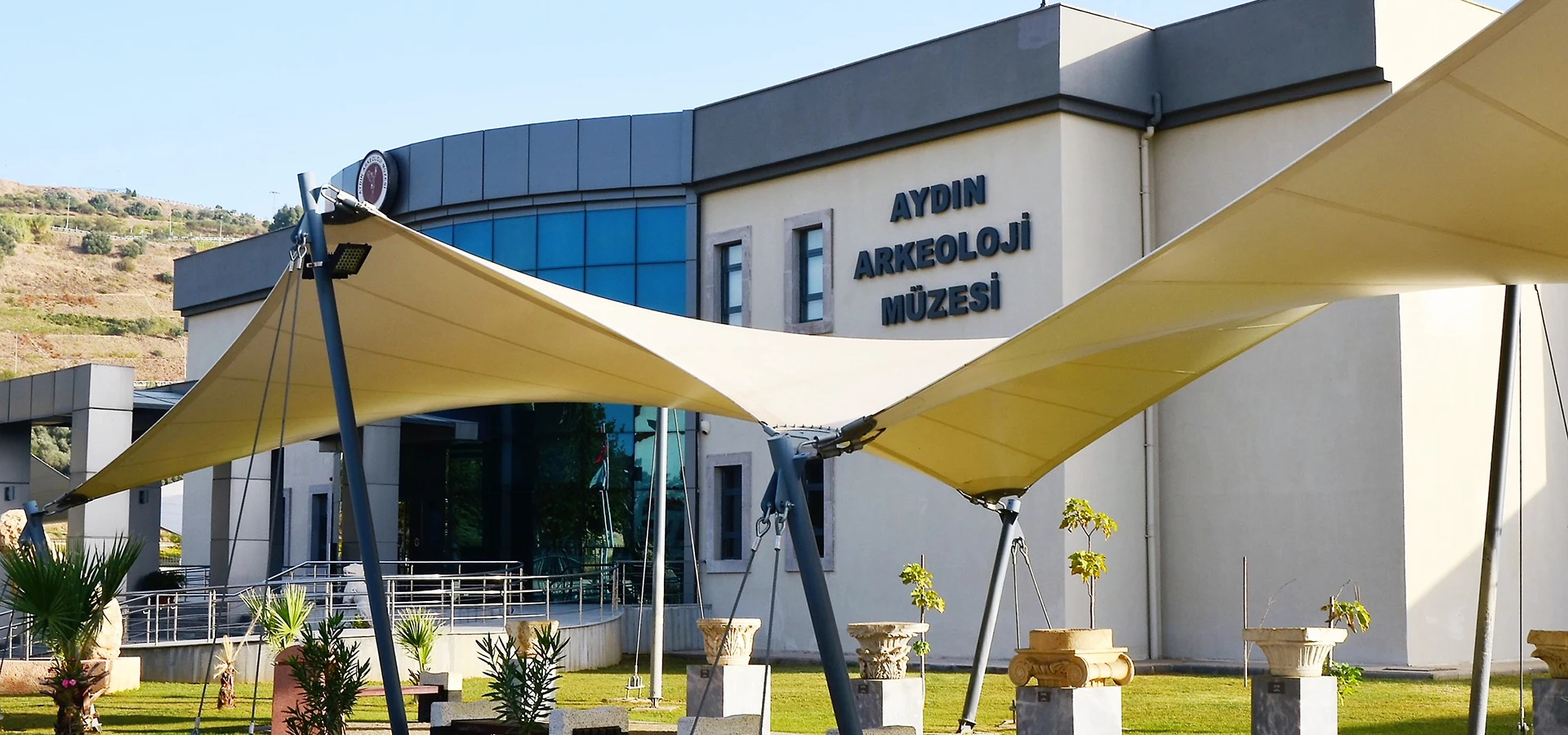
Discover the extraordinary mosaics from Orthosia and artifacts representing the ancient civilizations of the Aydın region.
Explore the MuseumDiscover more remarkable Carian and Roman sites across western Anatolia.
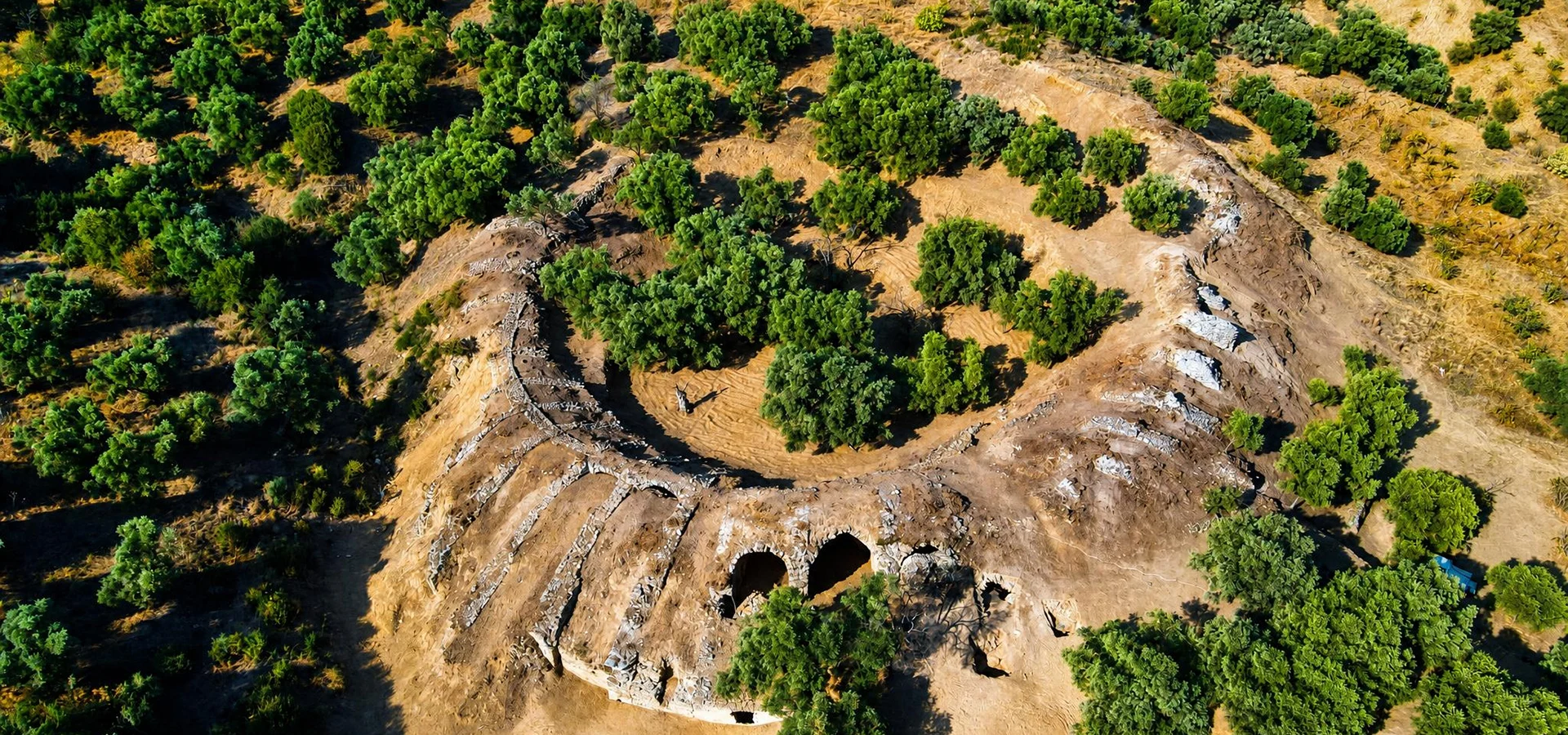
Explore another intriguing ancient settlement in the Nazilli region.
Discover Mastaura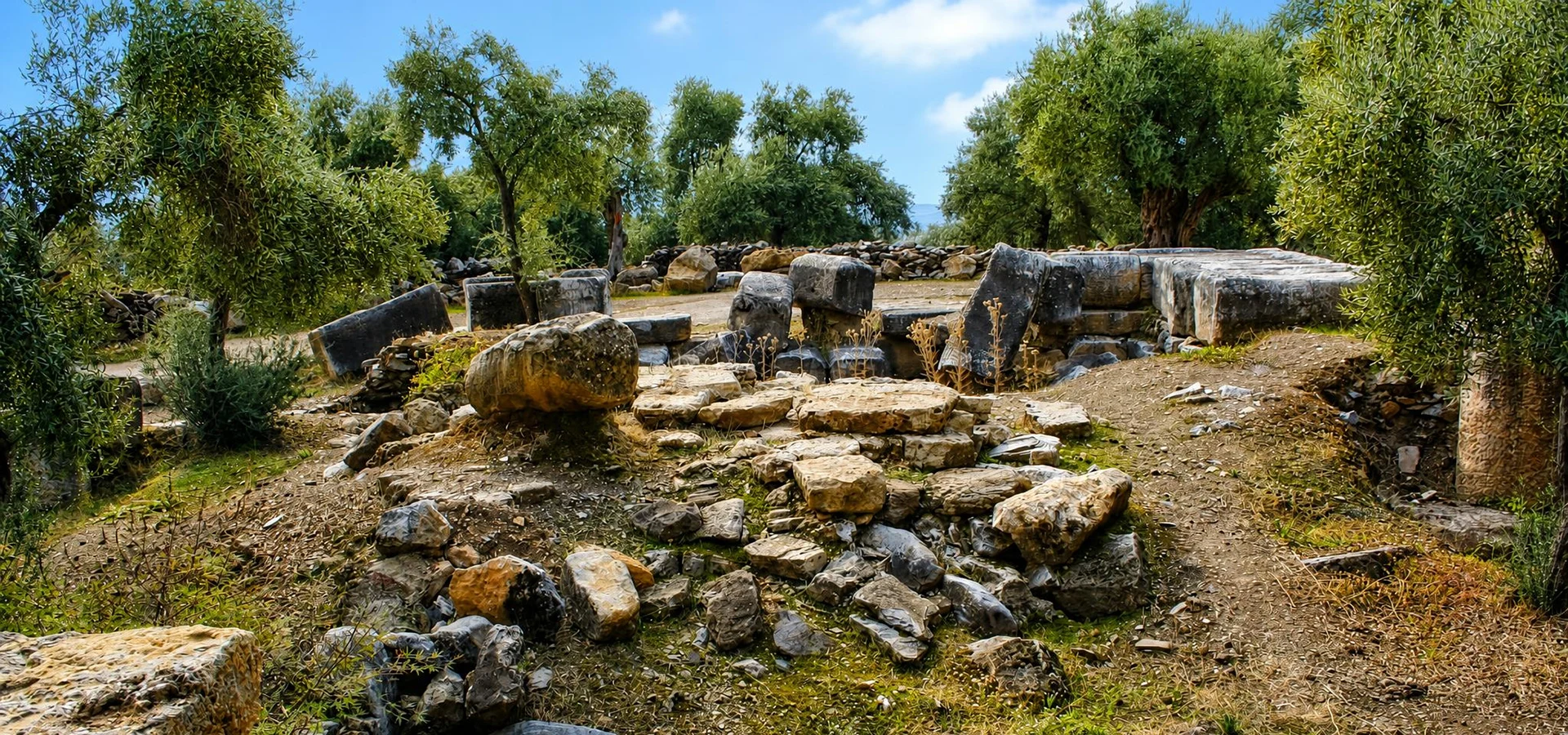
Discover ancient religious traditions and the remarkable sanctuary associated with Nysa.
Explore Akharaka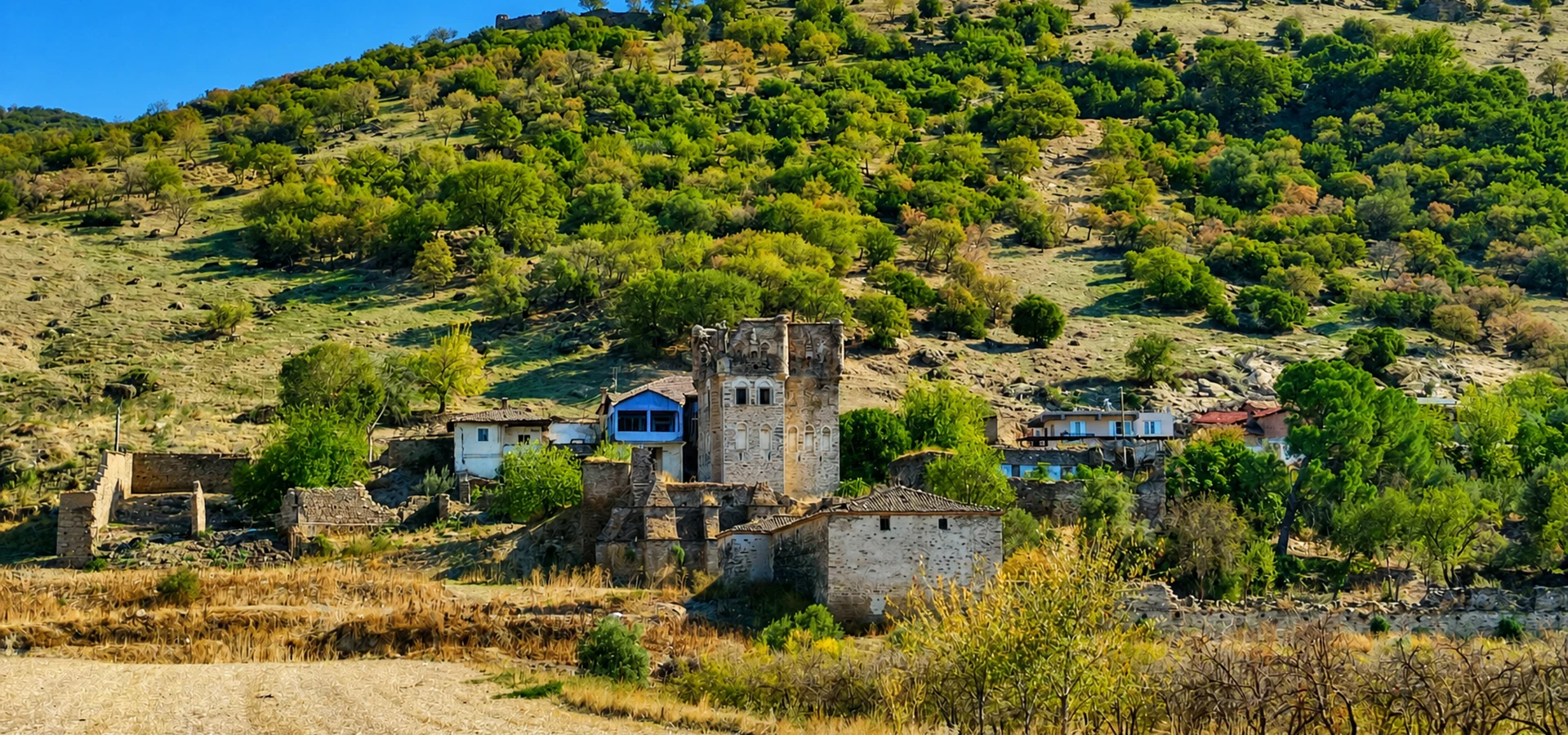
Journey into the rugged landscapes of ancient Caria and discover another hidden historical settlement.
Discover Harpasa