Akharaka – The Ancient Sanctuary of Pluto, Kore and Sacred Healing
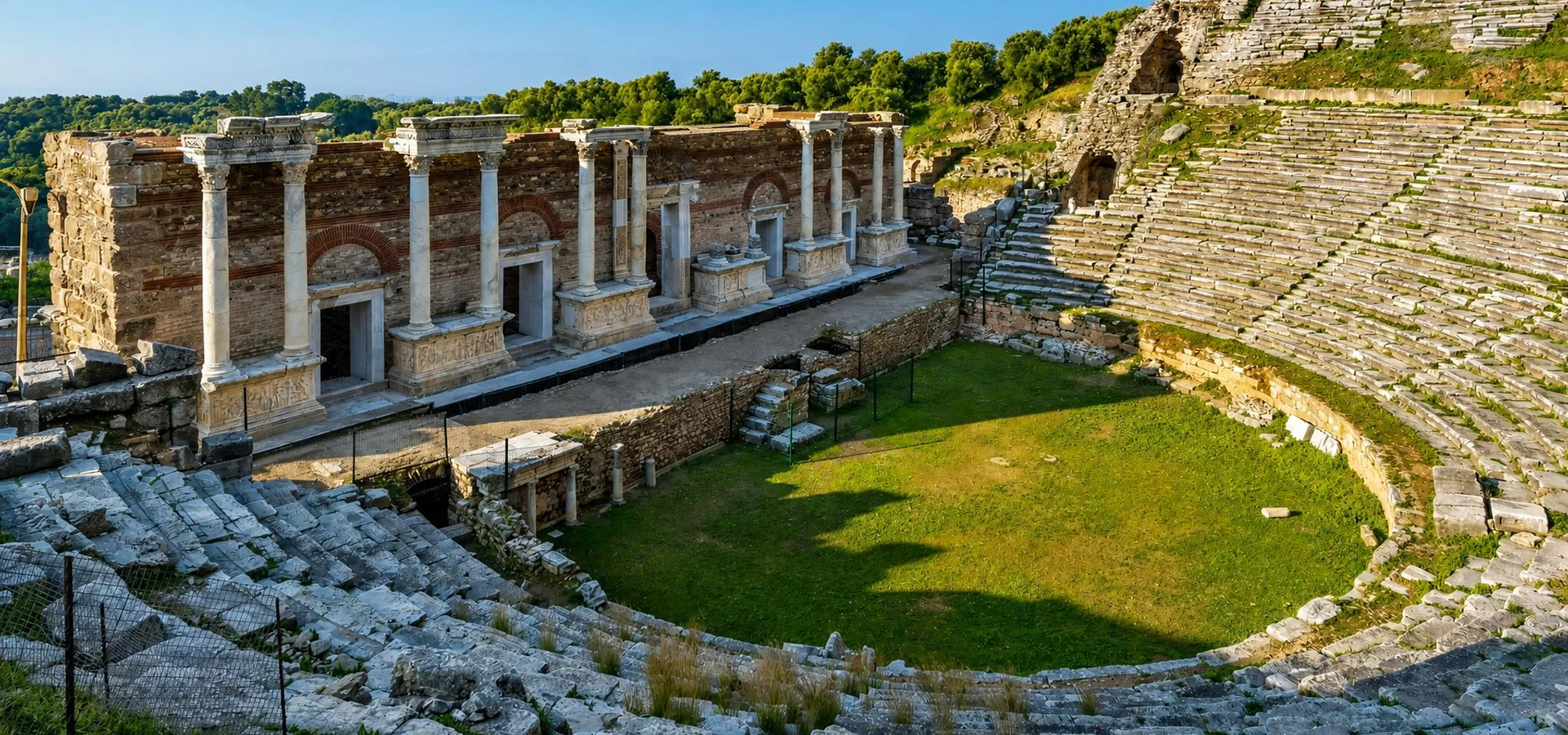
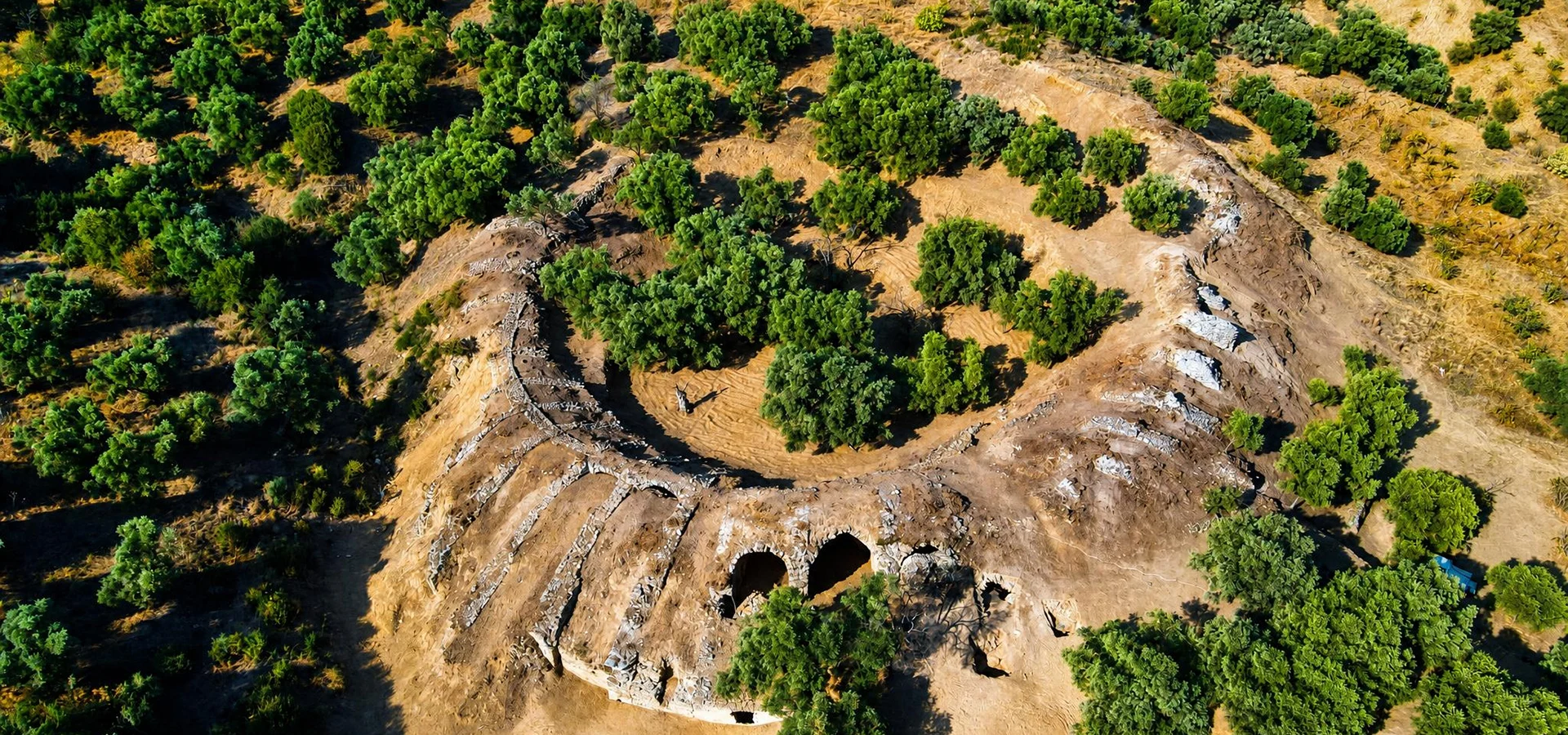
Hidden among the foothills of the Aydın Mountains near Salavatlı and Sultanhisar, Akharaka Ancient Sanctuary, also written Acharaca, preserves the remains of one of western Anatolia's most unusual religious and healing centers. Closely associated with the ancient city of Nysa on the Maeander, this sacred settlement was renowned for its temple of Pluto and Kore, its mineral-rich waters and a mysterious cave known as the Charonion.
In Greek and Roman religious tradition, Pluto, or Hades, ruled the underworld, while Kore, also known as Persephone, embodied the mysterious relationship between death, fertility and the renewal of life. At Akharaka, these deities were believed to possess healing powers. Visitors suffering from illness sought divine assistance through priestly rituals, sacred dreams and practices associated with the sanctuary's extraordinary natural environment.
The ancient geographer Strabo, who knew the region around Nysa, described Akharaka as a remarkable religious destination where priests interpreted dreams, patients underwent unusual treatments and an annual festival attracted participants from the surrounding communities. His account makes the sanctuary especially valuable for understanding ancient beliefs about illness, the supernatural and the world beneath the earth.
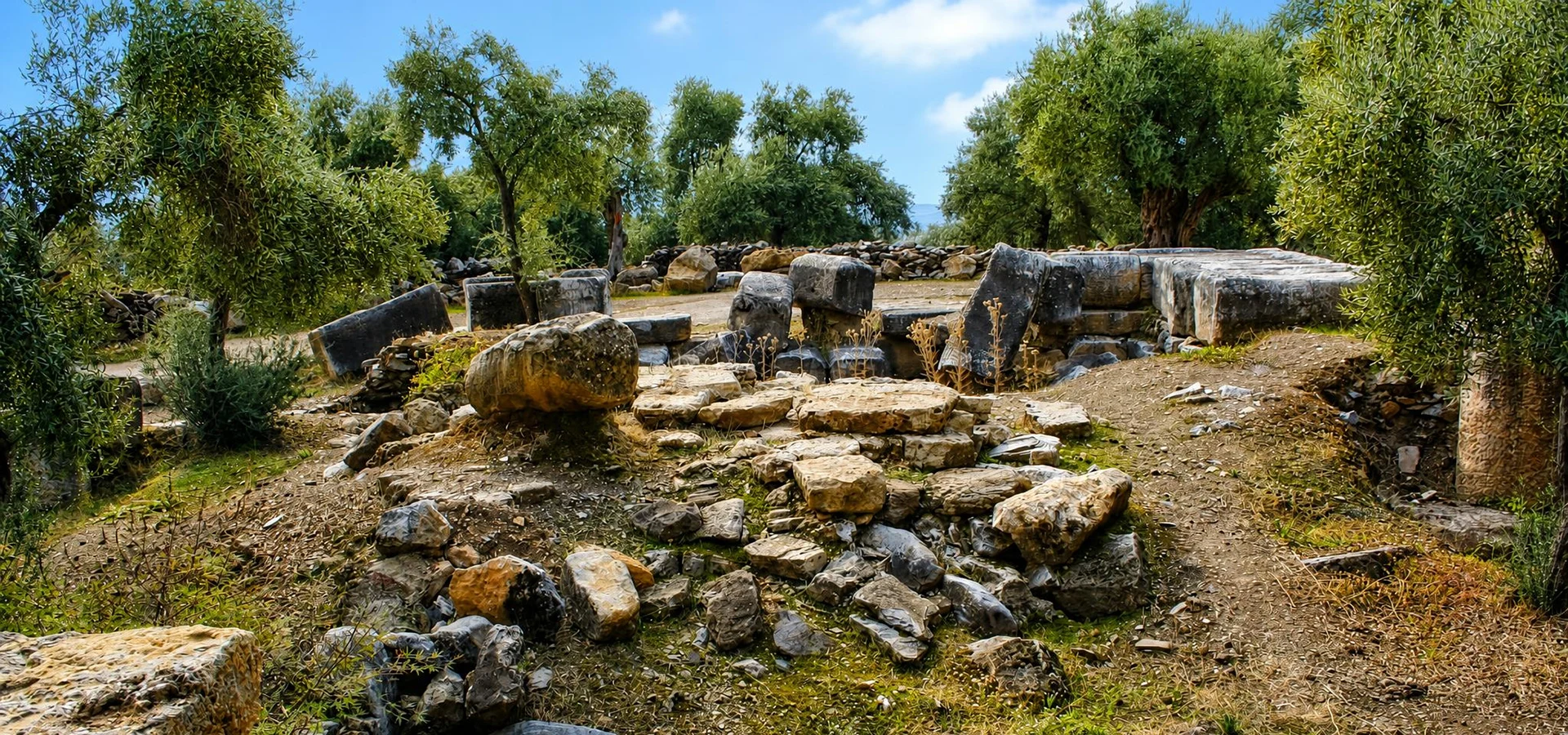
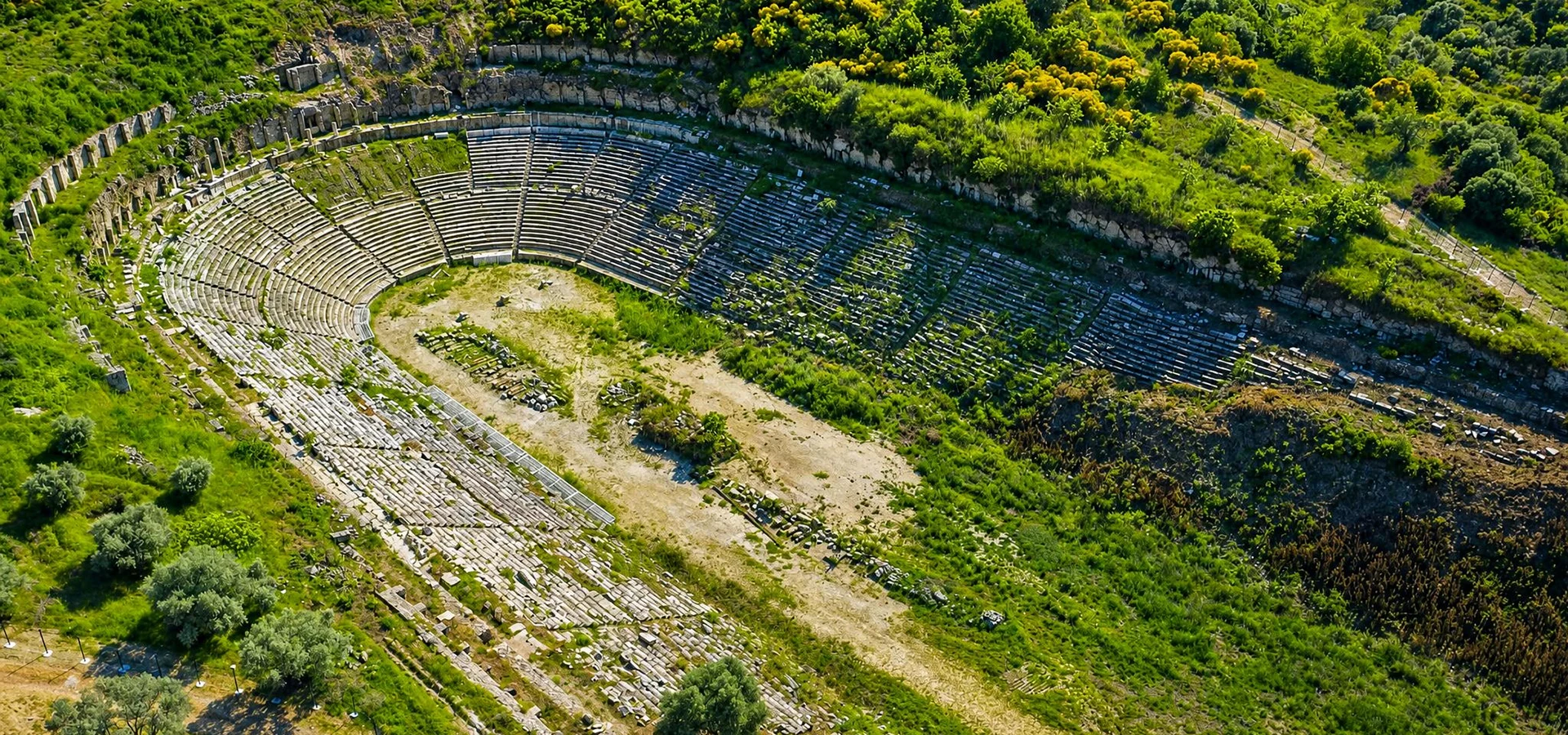
Today, Akharaka is a quiet archaeological landscape rather than a monumental reconstructed complex. Scattered architectural blocks, foundations, traces of ancient structures and the surrounding olive-covered terrain invite visitors to imagine a sacred place where religion, medicine and geology once came together.
Underworld Sanctuary
Explore the sacred landscape dedicated to Pluto and Kore.
Ancient Healing
Discover dream interpretation, priestly rituals and mineral springs.
Strabo's Account
Follow one of antiquity's most fascinating descriptions of sacred medicine.
Hidden Archaeology
Experience a peaceful historic landscape near ancient Nysa.