Private Seven Sleepers & Christian Ephesus Tour
Ask us about a private historical route combining the Seven Sleepers, Ephesus, St. John's Basilica and other monuments connected with the Christian history of the region.
Request a Custom Tour





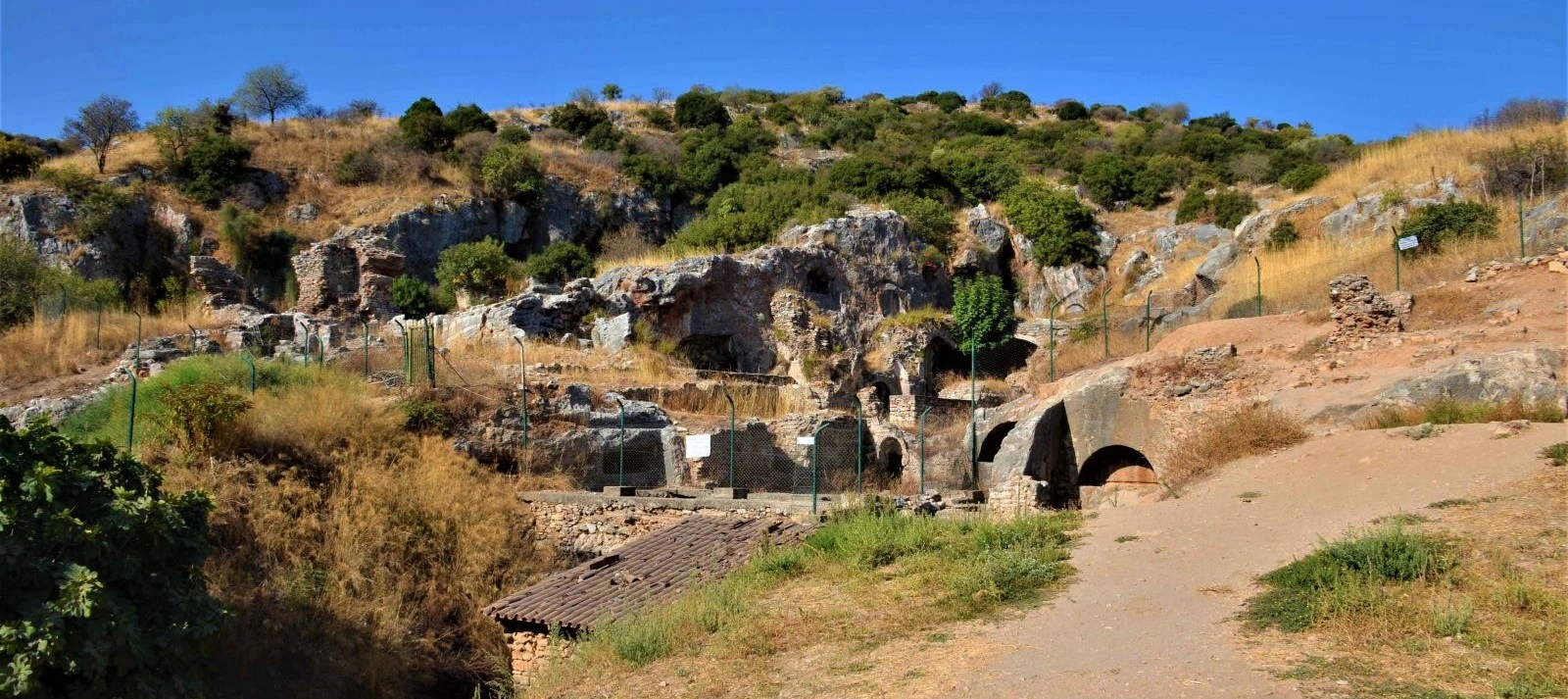
Hidden on the slopes of Panayırdağ, close to the ancient city of Ephesus, lies one of the region's most fascinating early Christian archaeological sites: the Seven Sleepers Cemetery, also known as the Grotto or Cave of the Seven Sleepers.
For centuries, this place has been associated with the famous story of young believers who fled religious persecution, took refuge in a cave and awoke after an extraordinary period of sleep to discover that the religious world around them had completely changed. Versions of the story became widely known across the Christian world and later found a powerful parallel in the Islamic tradition of the Companions of the Cave – Ashab al-Kahf.
Yet the Ephesus site is much more than a legendary cave. Archaeological investigation revealed a substantial Late Antique cemetery and Christian pilgrimage complex containing rock-cut burial chambers, built tombs, church structures and inscriptions. The area became closely associated with devotion to the Seven Sleepers during the Christian history of Ephesus.
The archaeological evidence does not prove that the miraculous events of the legend literally occurred here. Instead, it demonstrates something historically important in its own right: people in Late Antiquity strongly associated this place with the Seven Sleepers, buried their dead near the sacred complex and transformed the site into an important destination for Christian pilgrims.
Explore one of the places most strongly associated with the famous Seven Sleepers legend.
See the remains of an extensive Late Antique cemetery containing numerous ancient graves.
Understand the connections and important differences between Christian tradition and the Qur'anic People of the Cave.
Discover a quieter archaeological site beyond the monumental streets normally associated with Ephesus.
Essential information about one of the most intriguing religious and archaeological sites around ancient Ephesus.
On the slopes of Panayırdağ near ancient Ephesus, Selçuk, İzmir Province.
Open on Google MapsLate Antique Christian cemetery, cave complex, church remains and pilgrimage site.
Associated with the Seven Sleepers legend known throughout the medieval Christian world.
The Qur'an recounts the People of the Cave in Surah al-Kahf, although it does not identify their cave as Ephesus.
Excavations revealed numerous burials together with substantial Christian religious structures.
Allow approximately 30–45 minutes, especially if reading the site information carefully.
The site reveals another side of Ephesus: not the marble Roman metropolis, but the Christian pilgrimage city that developed during Late Antiquity.
Most visitors encounter Ephesus through monuments such as the Library of Celsus, Great Theatre, Curetes Street and Terrace Houses. Yet the history of the city continued long after the height of Roman imperial urban life. Christianity transformed the religious landscape of Ephesus, and new churches, cemeteries and pilgrimage destinations developed around the ancient city.
The Cemetery of the Seven Sleepers became one of those sacred places. The association between the cemetery and the legendary sleepers encouraged Christians to bury their dead close to a location they considered holy. For believers, proximity to saints and martyrs could carry profound spiritual meaning.
The result was an extensive funerary and religious complex rather than simply a single cave. Its archaeological remains help historians understand burial practices, pilgrimage, religious memory and the growth of Christian Ephesus.
The Seven Sleepers also became culturally important far beyond Ephesus. Their story crossed languages, regions and religious traditions, eventually becoming one of the remarkable narratives shared, though interpreted differently, within both Christian and Islamic cultural history.
The traditional Christian story is generally set during the reign of Roman Emperor Decius in the middle of the 3rd century AD, a period remembered for imperial measures requiring public participation in traditional Roman religious rites.
According to the legend, a group of young Christian men refused to abandon their faith. To escape persecution, they withdrew from Ephesus and hid inside a cave outside the city.
The entrance was eventually sealed, and the young men fell into a miraculous sleep. When they awoke, what appeared to them to have been only a short period had actually lasted for generations.
One of the sleepers reportedly returned to Ephesus to buy food using an old coin. His currency immediately attracted attention because it belonged to another age. The sleepers then learned that the Roman world had changed dramatically and that Christianity was no longer the persecuted religion they had known.
Different versions vary considerably in names, chronology and individual details. The central message, however, remained remarkably stable: the sleepers became a symbol of faith, divine protection and resurrection.
The legend places the beginning of the story during the reign of Decius (AD 249–251). His reign coincided with one of the most significant empire-wide attempts to require Roman inhabitants to perform sacrifices demonstrating loyalty to the traditional gods and the imperial order.
Christians who refused such rituals could face serious consequences, and memories of these persecutions became deeply embedded within Christian literature and tradition.
The world of the later Roman Empire changed dramatically during the following centuries. Christian communities expanded, imperial support for Christianity developed during the 4th century, and Ephesus emerged as an increasingly important Christian center.
The city eventually contained important churches, bishops, pilgrimage destinations and burial places associated with saints. Against this historical background, the Seven Sleepers story carried an especially powerful message: the religious world supposedly encountered by the awakened youths was entirely different from the one in which they had gone into hiding.
The traditional Seven Sleepers location at Ephesus is not merely an empty natural cave. Archaeological investigation revealed a complex burial landscape developed over several phases.
The site incorporates natural and rock-cut spaces together with burial chambers, tombs, religious buildings and architectural additions. It became one of the important Christian funerary areas surrounding Late Antique Ephesus.
The archaeological evidence shows that Christians deliberately buried people here and monumentalized the location. Inscriptions and other finds demonstrate that devotion connected with the Seven Sleepers had become associated with the cemetery.
The exact chronology of individual architectural phases has been refined and debated through archaeological study. For visitors, the most important point is that the surviving complex developed over time rather than being created as a single monument.
Natural and carved spaces formed part of the cemetery and sacred complex.
The area developed into a substantial Christian burial ground rather than a single isolated tomb.
Religious buildings were constructed around and above parts of the burial complex.
Built and vaulted areas expanded the available space for Christian burials.
Epigraphic evidence helped connect the archaeological site with devotion to the Seven Sleepers.
The site eventually became more than a cemetery and attracted visitors seeking a sacred connection with the legend.
Modern archaeological exploration of Ephesus began revealing the extraordinary scale of the ancient city during the late 19th and early 20th centuries. After excavation resumed following the First World War, Christian monuments became an important area of investigation.
The Austrian archaeological mission investigated the Cemetery of the Seven Sleepers during the 1920s. The research exposed the extensive funerary and religious structures that survive on the slopes of Panayırdağ.
Archaeologists discovered that the area contained far more than the legendary grotto. The complex included numerous graves, burial chambers, church architecture and evidence of long-term religious activity.
These excavations were particularly significant because they provided physical evidence that the traditional Seven Sleepers location had genuinely functioned as an important Christian sacred site during Late Antiquity.
Systematic archaeological work brought the forgotten cemetery complex back into scholarly attention.
The Seven Sleepers formed part of a wider research focus that included Ephesus's churches and Christian heritage.
Excavation demonstrated that the location accommodated numerous burials over multiple phases.
Inscriptions and architectural remains supported the site's ancient association with Christian devotion.
The Seven Sleepers became widely known in the Christian world during Late Antiquity and the Middle Ages. The story circulated in several languages, and different Christian communities preserved their own versions of the names and details of the youths.
The central theological meaning of the story was closely connected with resurrection. The extraordinary awakening of the sleepers after generations had passed could be interpreted as a visible sign that bodily resurrection was possible.
This symbolism helped explain why the traditional cave became a pilgrimage destination. Christians wanted to pray near places associated with holy figures, and burial near a sacred location could be considered spiritually desirable.
Ephesus already possessed exceptional importance within early Christianity. The city appears prominently in the New Testament, was associated with St. Paul and St. John, and developed major Christian monuments including the Church of Mary and the Basilica of St. John. The Seven Sleepers therefore became part of a much broader sacred landscape.
A closely related story occupies an important place in Islam through Surah al-Kahf – “The Cave” – Chapter 18 of the Qur'an. The Qur'anic narrative describes a group of believing youths who seek refuge in a cave, where God causes them to remain for an extraordinary period of time before awakening them.
They are commonly known in Islamic culture as Ashab al-Kahf, meaning the Companions or People of the Cave.
The Qur'an presents differing claims about how many companions there were, including the statement that they were seven and their dog the eighth, before emphasizing that God knows their number best. For this reason, it is important not to present later popular traditions about names and numbers as though every detail were explicitly stated in the Qur'an.
The Qur'an also refers to the extraordinarily long period spent in the cave, describing it as three hundred years, adding nine. The narrative emphasizes faith, divine protection and the limits of human knowledge.
The Qur'an itself does not name Ephesus as the location. Over the centuries, different communities have associated the Companions of the Cave with several places in Türkiye and elsewhere, including Ephesus, Tarsus and Afşin, as well as locations outside Türkiye.
The site is less monumental than the main streets of Ephesus, and many structures survive only as archaeological remains. Knowing what to look for makes the visit considerably more rewarding.
Observe the rock-cut and natural spaces around which the sacred tradition developed.
Look for graves cut directly into the hillside and natural bedrock.
Several chambers illustrate the extensive funerary use of the complex.
Architectural traces reveal the transformation of the cemetery into an organized Christian religious center.
Built burial areas demonstrate that the complex expanded considerably beyond its original natural spaces.
Walls, foundations and modified rock surfaces reveal multiple stages of construction and reuse.
Remember that the surrounding landscape was part of the broader burial areas outside ancient Ephesus.
The hillside setting helps explain the relationship between the cemetery and the ancient city below.
One of the most important things to understand about this site is that it developed into a major Christian cemetery.
The ancient world frequently placed burial grounds outside city walls, and the slopes around Ephesus contained extensive necropolis areas. As Christian religious traditions developed, certain burial places gained special spiritual significance.
The location associated with the Seven Sleepers attracted numerous burials. Families apparently wished to place their dead close to a sacred place connected with figures believed to symbolize resurrection and eternal life.
As additional burials accumulated, the site expanded architecturally. Rock-cut tombs existed alongside constructed burial chambers, vaulted spaces and religious buildings.
This transformation is what makes the Seven Sleepers particularly valuable archaeologically. The site shows how a religious tradition could reshape an existing funerary landscape and turn it into a major destination of memory and pilgrimage.
Late Antique Ephesus was not only an administrative and commercial center. It was increasingly a Christian pilgrimage destination.
Pilgrims could connect the city with major figures and traditions of Christianity. The landscape included the Church of Mary, traditions surrounding St. Paul, the monumental Basilica of St. John on Ayasuluk Hill and the Cemetery of the Seven Sleepers.
The Seven Sleepers added another dimension to this sacred geography. Their story offered an especially powerful image of resurrection and God's protection of believers.
Pilgrims traveled to the cemetery, and the continued religious importance of the complex demonstrates how strongly the story had become connected with Ephesus.
A sacred cemetery connected with resurrection and miraculous awakening.
One of Ephesus's most important early Christian monuments and associated with the Council of Ephesus of AD 431.
Ayasuluk Hill became a major pilgrimage destination through the monumental Basilica of St. John.
Together these monuments transformed Ephesus into one of the important Christian centers of Byzantine Asia Minor.
The Seven Sleepers site is particularly valuable because it reveals a period of Ephesus that visitors can easily overlook.
The famous marble monuments of the archaeological city largely represent the wealth and urban sophistication of Hellenistic and Roman Ephesus. But the city continued to change during Late Antiquity.
Christianity altered its sacred geography. Older buildings were reused, new churches appeared, cemeteries developed and pilgrimage increasingly influenced the way people experienced the city.
Visiting the Seven Sleepers after the main archaeological site therefore creates a much broader historical picture. The Roman city did not simply disappear. It gradually evolved into a different kind of urban and religious landscape.
Ephesus was inscribed on the UNESCO World Heritage List in 2015, recognizing an extraordinary cultural landscape whose history extends across thousands of years.
The heritage significance of Ephesus reaches far beyond the Library of Celsus and the monumental Roman streets. UNESCO nomination documentation discusses the Cemetery of the Seven Sleepers as an important element in understanding Christian Ephesus and the development of pilgrimage in Late Antiquity.
The Seven Sleepers site illustrates the transformation of Ephesus from a major Greco-Roman city into an important Christian religious center. Together with monuments such as the Church of Mary and the Basilica of St. John, it provides crucial evidence for the city's later history.
Sites connected with ancient religious traditions are most rewarding when visitors distinguish between archaeological evidence and traditional belief.
A substantial ancient and Late Antique cemetery existed at this location near Ephesus.
Christian religious buildings and numerous burials developed around the site.
The complex became associated in antiquity with devotion to the Seven Sleepers.
Seven persecuted Christian youths hid here and awoke generations later.
Archaeology cannot demonstrate that the miraculous sleep described by the legend occurred.
Several places across Türkiye and the wider region preserve traditions identifying their own cave with the story.
The Seven Sleepers is quite different from the monumental central section of Ephesus. It is a quieter archaeological location with exposed ruins, uneven surfaces and relatively little visitor infrastructure.
Expect rough ground, stones and irregular archaeological surfaces.
The ruins become much more meaningful when you understand the Seven Sleepers tradition before arriving.
The Ephesus area can become extremely hot during the summer months.
A hat and sunscreen are useful from late spring through early autumn.
This is primarily an archaeological cemetery complex, not a developed underground cave attraction.
Some archaeological spaces may be closed to direct entry for conservation and safety reasons.
The site works especially well as a short addition before or after visiting the main archaeological city.
The site is often calmer than central Ephesus and rewards visitors interested in religious history.
The Seven Sleepers archaeological area lies near the main Ephesus site on the slopes of Panayırdağ, within the Selçuk district of İzmir Province.
Unlike the main Ephesus archaeological city, the Seven Sleepers should not be assumed to follow the same ticketing or access arrangements. Current public cultural sources identify the location as a visitor site, but a reliable standalone official admission fee and fixed daily schedule could not be confirmed when this guide was updated in September 2026.
Access arrangements can also change because of archaeological conservation, maintenance or local site management. Visitors should therefore verify conditions shortly before making a special journey.
The Seven Sleepers is predominantly an outdoor archaeological site, so temperature and sunlight can significantly affect the experience.
Mild weather and green surroundings make March through May particularly pleasant.
September through November usually provides comfortable walking temperatures and softer light.
Visit early before temperatures rise around the exposed slopes of Ephesus.
Heat can become intense and shade around archaeological remains is limited.
A quieter season, although rain can make archaeological ground slippery.
The site generally feels more contemplative when visited away from peak Ephesus excursion times.
Enough for a quick visual overview if you are passing the site during a larger Ephesus itinerary.
Recommended for most visitors who want to understand the ruins and read about the tradition.
Suitable for visitors especially interested in early Christianity, archaeology or religious history.
Combine the Seven Sleepers with the main Ephesus archaeological city.
Add the Ephesus Museum and Temple of Artemis in Selçuk.
Explore Ephesus, Seven Sleepers, Ayasuluk Hill, St. John's Basilica and central Selçuk.
The visual appeal of the Seven Sleepers differs considerably from monumental Ephesus. Rather than grand marble façades, the strongest subjects are archaeological textures, rock-cut spaces, burial architecture and the surrounding hillside.
Use angled light to reveal the texture and depth of ancient burial chambers.
Close details can highlight masonry, arches and the relationship between built structures and natural rock.
Wider compositions help explain that the site is an extensive cemetery rather than a single cave.
Softer light generally produces more detail in weathered stone surfaces.
Simple compositions often work better than attempting to make the archaeological remains appear more monumental than they are.
Include Panayırdağ and the surrounding terrain to connect the cemetery with the wider geography of Ephesus.
The Seven Sleepers is an archaeological landscape rather than a modern, fully accessible visitor attraction. Historic terrain can create difficulties for visitors with limited mobility.
Expect rough archaeological surfaces, stones and natural changes in level.
The site developed around a natural hillside rather than a level modern visitor route.
Heat may make movement more difficult during summer.
Not all archaeological sections should be expected to be comfortably wheelchair accessible.
Visitors with balance or mobility concerns should approach uneven areas cautiously.
Temporary barriers or conservation work can alter the accessible route.
The Seven Sleepers archaeological area is situated close to Ephesus, outside modern Selçuk. It can easily be incorporated into a day exploring the wider Ephesus region.
The Seven Sleepers lies close to the archaeological city and can be reached by a short road transfer.
Travel toward the Ephesus area and follow local directions for Yedi Uyuyanlar / Seven Sleepers.
Reach Selçuk first by regional transport or private vehicle, then continue toward Ephesus.
The site can be included easily in a private excursion to Ephesus and Selçuk.
A local taxi from Selçuk is convenient, particularly when combining several nearby archaeological sites.
A private vehicle makes it especially easy to include the Seven Sleepers without sacrificing time at the main Ephesus monuments.
The Seven Sleepers stands within one of Türkiye's richest archaeological landscapes. Several major monuments can easily be combined during the same day.
Explore the Library of Celsus, Great Theatre, Curetes Street, temples, baths and public buildings of ancient Ephesus.
Visit the surviving remains of one of the Seven Wonders of the Ancient World.
See sculptures, cult objects and archaeological discoveries excavated from Ephesus.
Climb above Selçuk to explore the fortified medieval settlement that succeeded ancient Ephesus.
Discover one of western Anatolia's finest surviving monuments of 14th-century Aydınoğlu architecture.
Explore Justinian's monumental pilgrimage church built over the traditional burial place of St. John the Apostle.
Begin with the main archaeological city of Ephesus, where you can explore the monumental Roman streets, Library of Celsus, Great Theatre, Temple of Hadrian and other major structures.
After leaving the ancient city, continue to the Seven Sleepers. The transition is historically fascinating: within minutes, you move from the monumental architecture of Roman civic life to a quieter Late Antique landscape shaped by Christianity, burial and pilgrimage.
Continue into Selçuk and visit the Ephesus Museum to see original sculptures and finds excavated throughout the region.
Then explore the Temple of Artemis before continuing toward the Basilica of St. John, İsa Bey Mosque and Ayasuluk Castle.
Use established paths and respect archaeological boundaries.
Restricted chambers may be unstable or protected for conservation.
Ancient masonry is fragile and can be damaged by repeated climbing.
Even apparently loose fragments belong to the archaeological context.
The site remains meaningful to visitors interested in both Christian and Islamic traditions.
Carry bottles, packaging and other rubbish away from the archaeological area.
The traditional Ephesus site lies on the slopes of Panayırdağ near the ancient city of Ephesus in Selçuk, İzmir Province, Türkiye.
It is an archaeological cemetery and religious complex associated for centuries with the Christian legend of seven young believers who escaped persecution and miraculously slept for generations.
The site incorporates natural and rock-cut spaces, but visitors should not imagine a single large tourist cave. It is better understood as an extensive cemetery, grotto and Christian pilgrimage complex.
According to Christian tradition, they were young Christians who refused to abandon their faith during the reign of Emperor Decius and sought refuge in a cave near Ephesus.
The miraculous story belongs to religious tradition. Archaeology confirms that an important ancient cemetery and Christian pilgrimage site associated with the Seven Sleepers existed near Ephesus, but it cannot prove the miraculous events described by the legend.
The Christian legend traditionally begins during the reign of Roman Emperor Decius in the middle of the 3rd century AD.
Different traditions give different chronologies. Christian versions often describe roughly two centuries, while the Qur'anic account of the People of the Cave states three hundred years with nine added.
The Seven Sleepers story is not a biblical narrative. It developed within later Christian tradition.
The Qur'an recounts the story of the People or Companions of the Cave in Surah al-Kahf. The narrative has long been associated with the Seven Sleepers tradition, although the Qur'an does not identify their cave as Ephesus.
Surah al-Kahf mentions different claims about their number, including seven with their dog as the eighth, and emphasizes that God knows their number best.
A dog appears prominently in the Qur'anic account of the Companions of the Cave and became a familiar element of later Islamic tradition.
No location can be presented as historically proven. Ephesus has one of the most important ancient archaeological sites associated with the Seven Sleepers tradition, but other locations in Türkiye and elsewhere also preserve claims connected with the story.
Excavations revealed an extensive funerary complex containing rock-cut and built graves, burial chambers, Christian religious structures and evidence connecting the location with devotion to the Seven Sleepers.
The Austrian archaeological mission investigated the cemetery extensively during the 1920s as part of renewed research into Ephesus and its Christian monuments.
The site became a sacred Christian burial place. People apparently wished to be buried close to a location associated with holy figures and the promise of resurrection.
Yes. The cemetery is one of the important monuments for understanding the Christian transformation of Ephesus during Late Antiquity.
The Seven Sleepers Cemetery forms part of the wider archaeological and historical landscape considered in the documentation of Ephesus, which was inscribed on the UNESCO World Heritage List in 2015.
Access to individual archaeological chambers can be restricted. Visitors should respect barriers and should not assume that every part of the cemetery or grotto will be open for entry.
Around 30–45 minutes is sufficient for most visitors. Those particularly interested in early Christianity, archaeology or religious history may wish to spend longer.
A dependable standalone official admission price could not be confirmed when this guide was updated in September 2026. Access arrangements can change, so check current local information before visiting.
A reliable standalone official daily schedule could not be confirmed when this guide was updated in September 2026. Check current access before making a special journey to the site.
Yes. The Seven Sleepers is close to the main Ephesus archaeological site and is best visited as part of the same Ephesus and Selçuk itinerary.
Nearby highlights include Ephesus Ancient City, the Ephesus Museum, Temple of Artemis, Basilica of St. John, İsa Bey Mosque and Ayasuluk Castle.
For visitors interested in early Christianity, religious history, archaeology and the lesser-known story of Ephesus, the site provides an important contrast to the monumental Roman city.
Yes, particularly when children know the story beforehand. However, parents should supervise them carefully around uneven archaeological ground and restricted ruins.
Comfortable walking shoes are recommended. During warm months, bring water, sun protection and a hat because the archaeological landscape can be hot and exposed.
Discover the Seven Sleepers together with ancient Ephesus, St. John's Basilica, the Temple of Artemis and the archaeological treasures of Selçuk through a private itinerary built around your interests and without compulsory shopping stops.
Follow the transformation of Ephesus from one of the greatest cities of the Roman world into an important center of early Christianity and Byzantine pilgrimage.
Ask us about a private historical route combining the Seven Sleepers, Ephesus, St. John's Basilica and other monuments connected with the Christian history of the region.
Request a Custom Tour
Explore Ephesus privately with a licensed guide and connect its famous Roman monuments with the city's Christian, Byzantine and medieval history.
Plan Your Private Ephesus TourFollow the extraordinary history surrounding Ephesus from the ancient sanctuary of Artemis to Christian pilgrimage and medieval Ayasuluk.
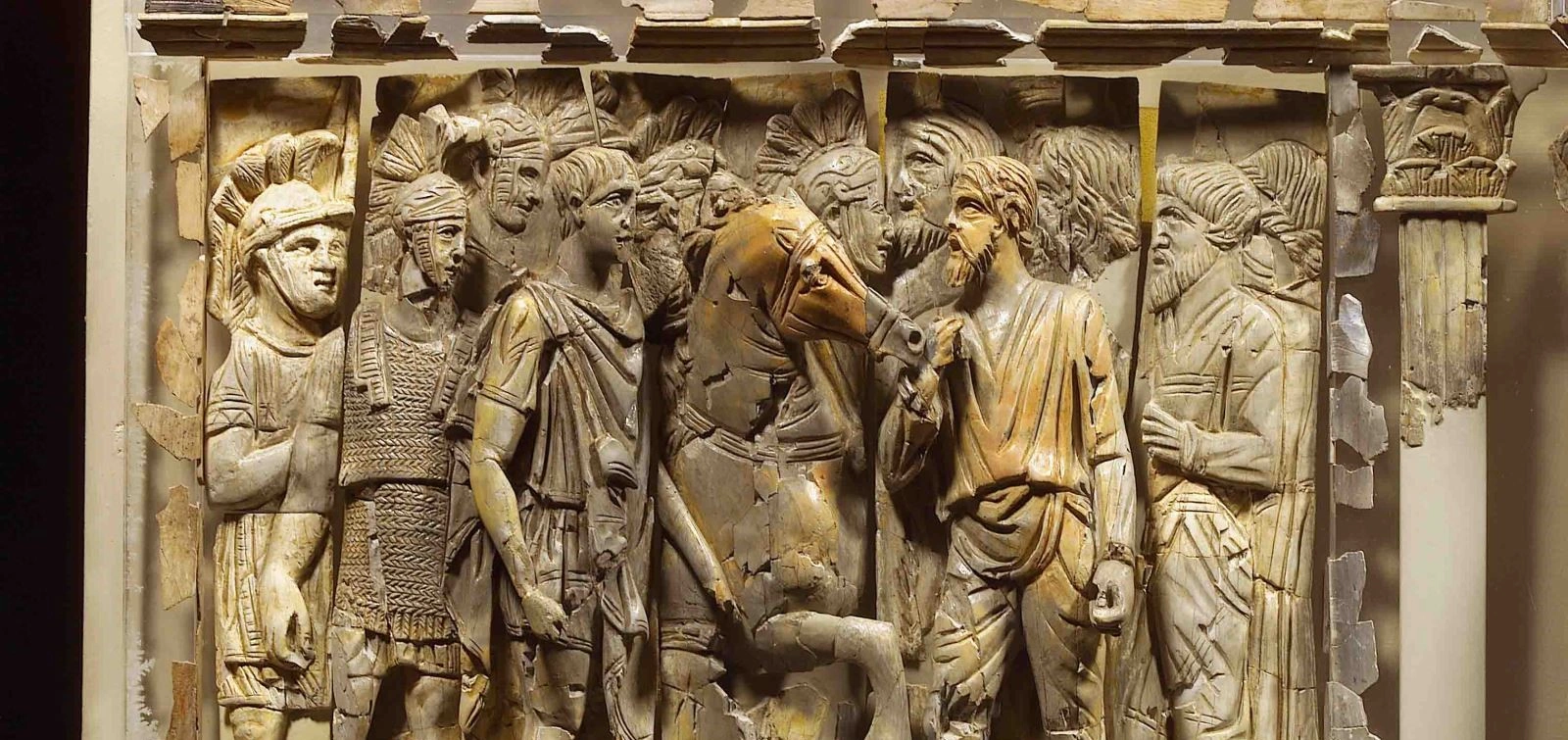
See sculptures, cult objects and discoveries that bring the religious and everyday life of ancient Ephesus into focus.
Explore Ephesus Museum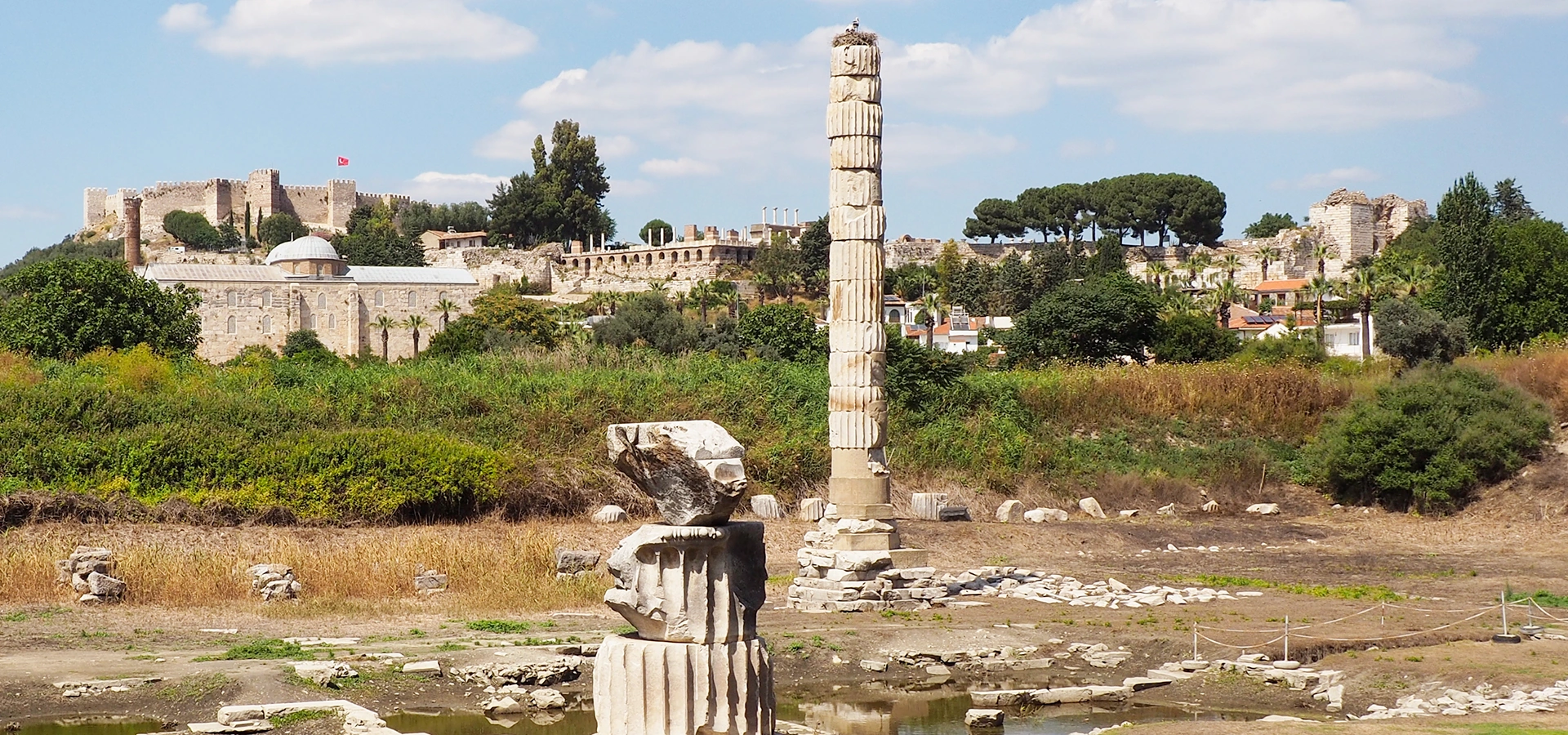
Visit the remains of one of the Seven Wonders and explore the ancient religious landscape that preceded Christian Ephesus.
Explore the Temple of Artemis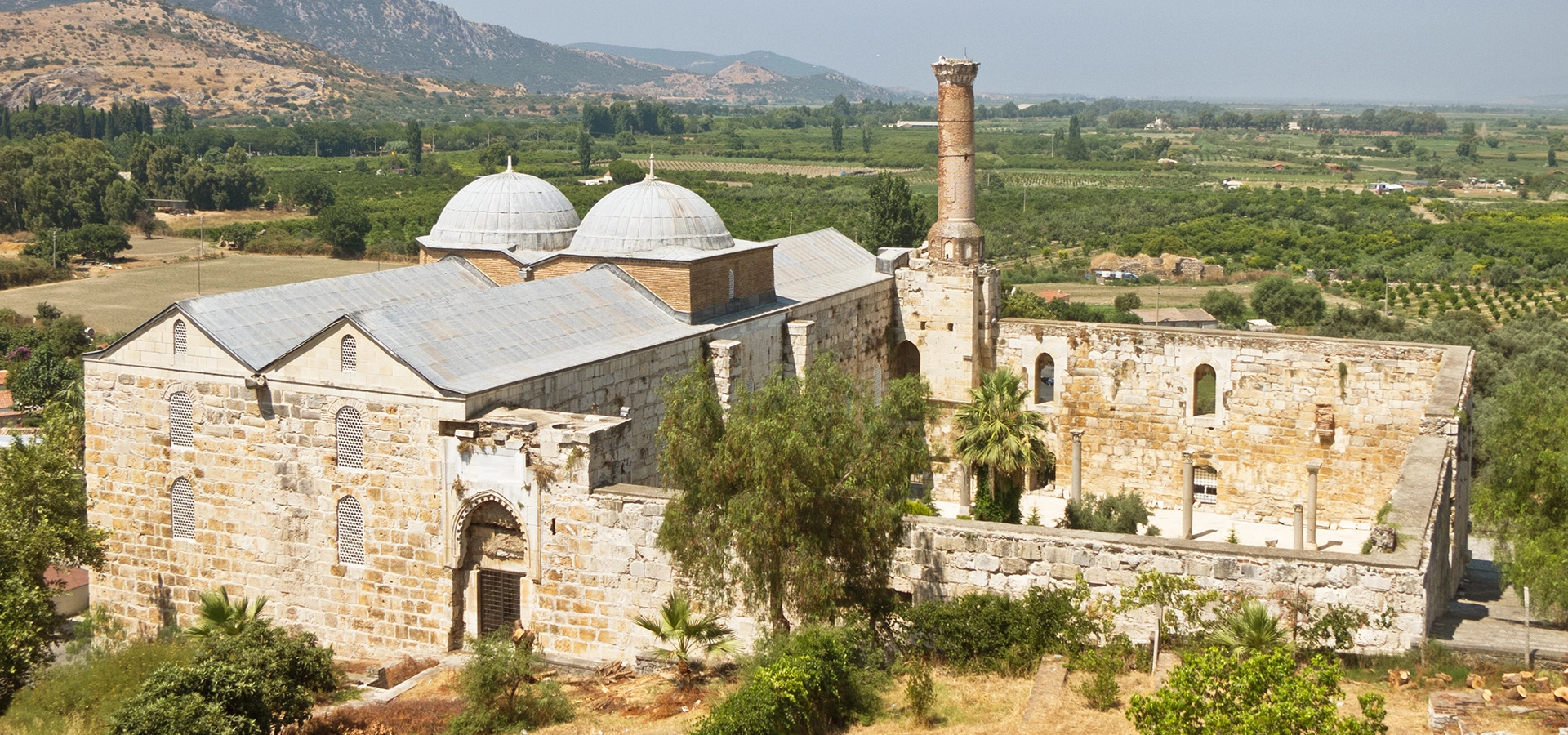
Continue the historical journey into medieval Ayasuluk at one of western Anatolia's finest 14th-century mosques.
Explore İsa Bey Mosque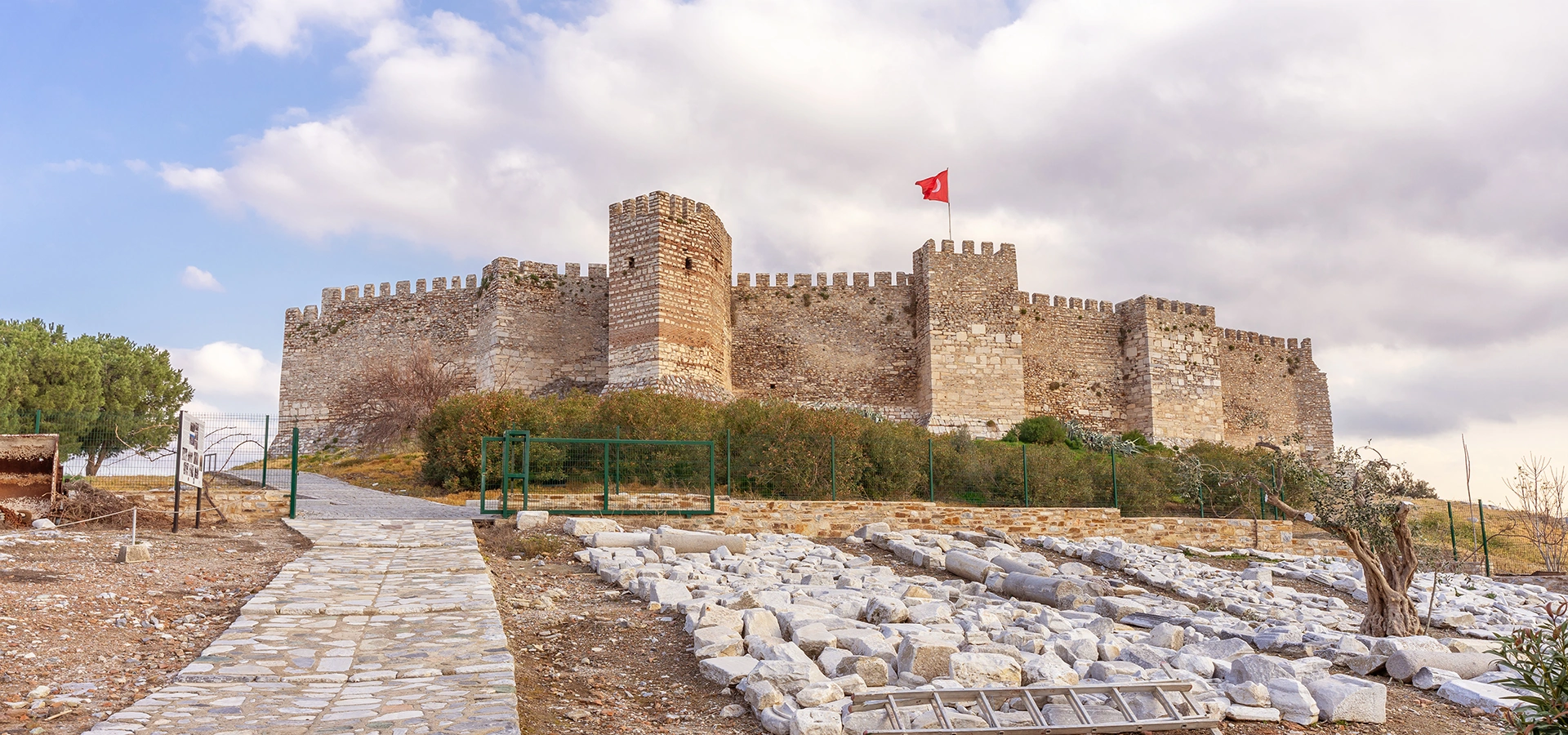
Climb above Selçuk to discover the Byzantine, Aydınoğlu and Ottoman settlement that succeeded ancient Ephesus.
Explore Ayasuluk Castle