Private Karacasu Heritage Experience
Ask us about a customized day exploring Karacasu's culture, traditional crafts, scenic countryside and nearby archaeological monuments. Underground cave entry is not included or guaranteed.
Request a Custom Tour





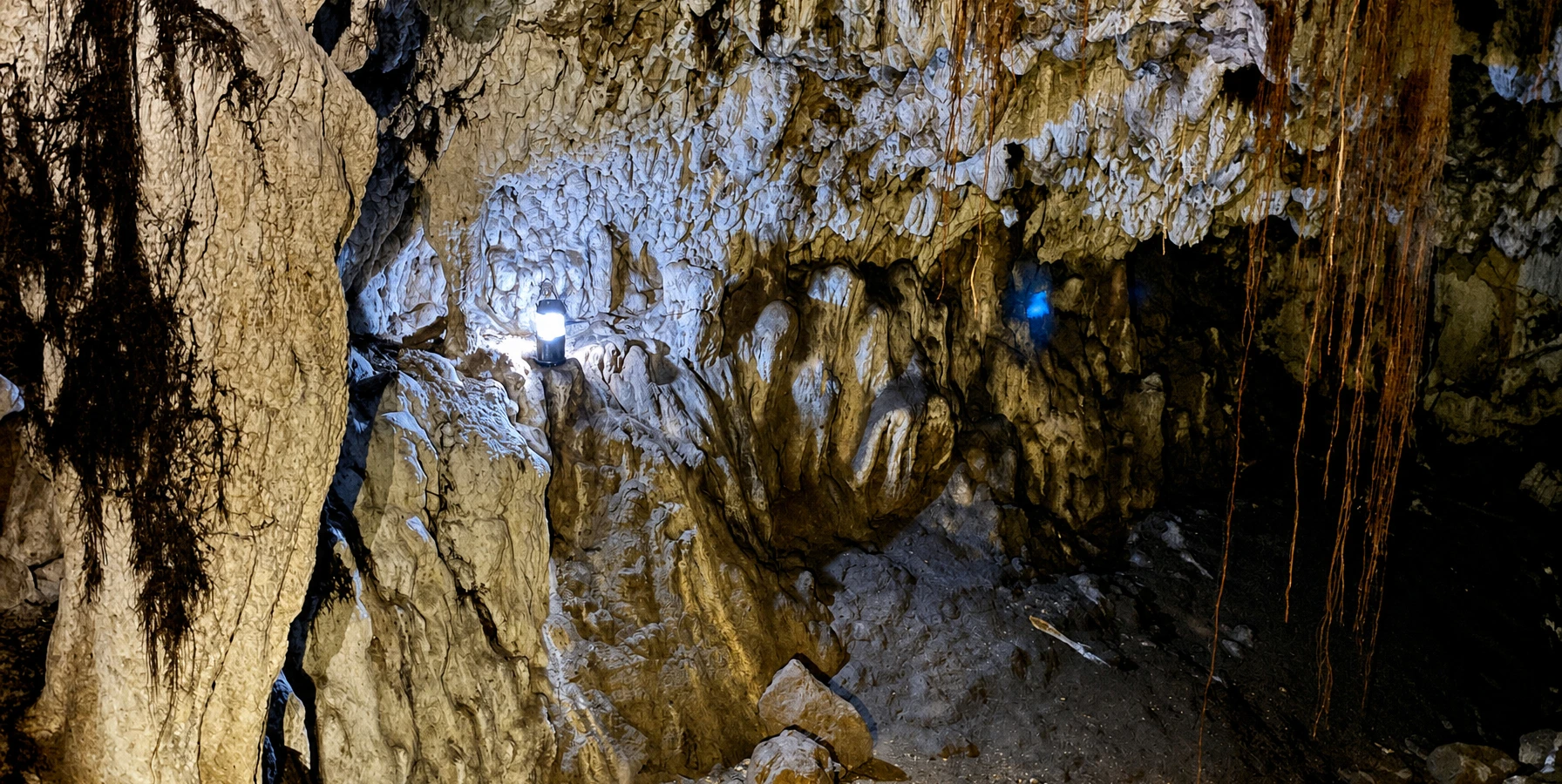
Sırtlanini Cave, known in Turkish as Sırtlanini Mağarası or Sırtlan İni Mağarası, is a remarkable natural cave in the Karacasu district of Aydın Province, Türkiye. Hidden within the mountainous countryside near the ancient city of Aphrodisias, it is distinguished by an exceptionally narrow entrance, spacious underground galleries, spectacular limestone formations and important evidence of natural and human history.
Situated in the Çamarası area, between the traditional settlements of Yukarı Çamarası and Narlıgedik, the cave forms part of the region's protected natural landscape. Although the surrounding countryside appears peaceful and rural, beneath the surface lies an extraordinary network of chambers shaped by geological processes over immense periods of time.
The cave's entrance is particularly unusual. A passage approximately four meters long, narrow enough to require crawling, leads into a much larger underground chamber. Beyond this confined opening, impressive stalactites, stalagmites, mineral columns and flowstone formations create an intricate subterranean landscape.
Published descriptions from Aydın's cultural authorities record a cave approximately 348 meters long and 32 meters deep. Other official conservation records and scientific publications report an explored length of approximately 450 meters and a maximum depth of 40 meters. These differences reflect distinct published surveys and documentation and should not be treated as interchangeable measurements.
Sırtlanini is more than a geological curiosity. Ceramic fragments recorded near its entrance indicate possible ancient human activity, while bat colonies and other cave-adapted organisms make it an important habitat. Scientific studies of its stalagmites have also helped researchers investigate environmental and climatic changes in western Anatolia.
For travelers discovering the cultural landscape of Karacasu, Sırtlanini Cave introduces another fascinating dimension of the region: the hidden natural world beneath the mountains surrounding Aphrodisias.
Discover remarkable stalactites, stalagmites, limestone columns and mineral deposits.
Learn about the spacious chambers concealed beyond the cave's narrow entrance.
Explore the significance of ceramic fragments recorded near the main gallery.
Understand how cave formations preserve clues about past environmental changes.
Essential geographical, geological and visitor information about one of Aydın's most remarkable natural caves.
Çamarası area, Karacasu district, Aydın Province, Türkiye.
Find on Google MapsPredominantly horizontal, dry natural cave developed within marble formations.
348 m in traditional tourism descriptions; approximately 450 m in other official surveys.
32 m or approximately 40 m below the entrance level, depending on the published survey.
Approximately 17°C and 85% relative humidity in published reference measurements.
Known bat habitat with ecological importance and other cave-associated organisms.
Approximately 9.5 km from Aphrodisias according to published cultural records.
Regular public opening, admission arrangements and permitted entry conditions require confirmation.
A hidden natural heritage site connecting geology, archaeology, biodiversity and the environmental history of Anatolia.
Sırtlanini Cave occupies a distinctive position among the natural landmarks of Aydın Province. Its geological formations, unusual entrance and extensive internal chambers make it one of the noteworthy caves of the Karacasu region.
Much of Aydın's international reputation comes from its ancient cities, archaeological museums and Aegean landscapes. Yet the province also contains significant underground environments that reveal geological processes and ecological relationships not immediately visible at the surface.
Sırtlanini provides an especially interesting example because it combines several forms of heritage within a single natural setting.
The cave's extensive mineral deposits illustrate how water, dissolved calcium carbonate and geological time can produce extraordinary underground structures. Its enclosed chambers provide specialized habitats for animals, including bats. Archaeological material near the entrance suggests that people may also have interacted with the cave in antiquity.
More recently, scientific examination of stalagmites from Sırtlanini has demonstrated the potential of its mineral formations to preserve information about past climate conditions. Researchers have investigated isotopic and mineralogical evidence to reconstruct environmental variations across different historical periods.
The cave therefore has value far beyond its visual appearance. It is simultaneously a natural monument, a biological habitat, a place of archaeological interest and an archive of environmental change.
Its location near Aphrodisias Ancient City also connects the underground landscape with one of southwestern Türkiye's most important archaeological regions.
Sırtlanini Cave is located in southwestern Türkiye, within the boundaries of Karacasu district in Aydın Province. Its commonly cited location is the Sırtlan Deliği area of Çamarası, in the mountainous countryside south of the ancient city of Aphrodisias.
Official tourism descriptions place the cave between Yukarı Çamarası and Narlıgedik, two local settlements historically associated with access to the area.
The landscape surrounding the cave is characterized by hills, rural pathways, agricultural areas and natural vegetation. Its setting differs considerably from the more developed archaeological attractions of the region.
Aydın, in the western part of Türkiye.
Karacasu, an inland district associated with Aphrodisias and traditional Anatolian craftsmanship.
Çamarası, historically identified in records as Yukarı Çamarası and related village territory.
Routes have been described from both Yukarı Çamarası and Narlıgedik.
Approximately 9.5 km from the ancient site in official heritage descriptions.
Protected mountainous countryside containing important limestone and marble formations.
The cultural significance of the surrounding landscape is particularly interesting. Visitors to Aphrodisias encounter monumental structures carved from marble, while the nearby cave reveals how natural processes have transformed geological formations beneath the same wider region.
Sırtlanini is a substantial underground system, although its narrow entrance gives little indication of the spaces hidden beyond it.
Published measurements vary according to the source. The Aydın Provincial Directorate of Culture and Tourism and Türkiye's Culture Portal describe the cave as 348 meters long, with its deepest point approximately 32 meters below the entrance.
Other official environmental protection documentation, the Karacasu District Governor's Office and scientific research publications describe an underground system measuring approximately 450 meters in length and 40 meters in depth.
The figures should be understood as measurements published in different records rather than evidence of two separate caves.
The length given in traditional tourism information published by Aydın's cultural authorities.
The length reported by other official conservation documents and scientific research.
A published depth measurement in established Ministry tourism descriptions.
A measurement appearing in additional official records and geological studies.
Older cave descriptions identify a principal gallery approximately 147 meters long.
Approximately four meters of exceptionally restricted access before the larger cave interior.
Sırtlanini Cave is part of the geological landscape of the Menderes Massif, one of the major geological structures of western Anatolia.
Scientific investigations describe the cave as having developed within Mesozoic marble formations. Marble consists predominantly of recrystallized carbonate minerals and can be gradually modified by the chemical action of naturally occurring groundwater.
Over geological time, water moving through fractures and weaknesses in carbonate rock can dissolve minerals, enlarge openings and contribute to the development of interconnected underground spaces.
This process, broadly associated with karst development, helps explain the formation of cavities in limestone and marble landscapes.
Once underground spaces exist, mineral-bearing water entering the cave can gradually deposit calcium carbonate. These deposits produce the formations that make Sırtlanini visually remarkable.
The formation of an underground chamber is generally a long-term process involving rock structure, groundwater movement and chemical weathering. Water follows natural fractures and may enlarge pathways through the carbonate rock.
Changes in regional geological conditions and drainage can alter the movement of underground water, leaving behind passages that are no longer occupied by a permanent stream.
Sırtlanini is traditionally described as a dry cave, meaning that it does not contain a continuously flowing underground river throughout its described passages. Nevertheless, water remains essential to the formation and development of its mineral deposits.
When mineral-rich water reaches an underground air-filled cavity, carbon dioxide may escape from the water, allowing dissolved calcium carbonate to precipitate.
Repeated precipitation slowly builds mineral structures on ceilings, walls and floors.
The spectacular formations visible in Sırtlanini are products of this natural interaction between water, rock chemistry and time.
The major geological region containing the marble formations in which the cave developed.
Marble provides a geological environment in which groundwater can enlarge natural openings.
Water moving through rock fractures contributes to cave formation and mineral deposition.
Calcium carbonate precipitation produces many of the cave's distinctive decorative formations.
The cave is classified as predominantly dry despite its humid atmosphere and history of water activity.
The cave's structures reflect natural processes operating over long periods, at different rates.
One of Sırtlanini Cave's most distinctive characteristics is the contrast between its entrance and the large chambers that follow.
Official descriptions explain that the cave begins with a very narrow passage, approximately four to five meters long, before opening into a much larger underground gallery.
Some accounts specifically describe the entrance as a passage that must be crossed by crawling.
This physical restriction is important when evaluating the cave's suitability for exploration. It is not comparable to entering a developed cave through a spacious doorway, constructed stairway or illuminated visitor tunnel.
Passing through a confined natural entrance may involve uneven rock surfaces, limited movement, difficulties with equipment and the need for specialist experience.
The size and condition of the passage should never be underestimated simply because the broader cave system contains large chambers.
Access begins through a restricted natural opening rather than a conventional visitor pathway.
The most confined initial section is described as approximately four meters long.
Published descriptions indicate that the narrow entrance may require crawling.
The restricted entrance leads into a considerably more spacious underground chamber.
Confined spaces, irregular terrain and darkness make the site inappropriate for casual exploration.
Any authorized entry should depend on appropriate permissions and a qualified cave specialist's assessment.
Beyond the entrance, Sırtlanini opens into a remarkable underground gallery where natural mineral formations dominate the landscape.
According to official tourism descriptions, the principal hall is divided into approximately five or six sections by groups of columns standing close together.
In some places, neighboring columns have developed into formations resembling walls, giving the impression of separate underground rooms.
Additional chambers extend from the main hall, creating an intricate arrangement of natural spaces rather than a single uninterrupted cavity.
The ceilings, floors and walls contain varied mineral formations, including stalactites, stalagmites, columns and flowstone surfaces.
One of the most striking aspects of the interior is the relationship between the formations and the spaces around them. Hanging deposits may appear like mineral curtains, while upright formations and interconnected columns divide the chambers into visually distinctive areas.
These natural structures are exceptionally vulnerable to damage. Many grow extremely slowly, and touching or breaking them can permanently alter features that have developed over long periods.
A large chamber situated beyond the narrow entrance passage.
Official descriptions identify multiple spaces divided by natural columns.
Closely spaced mineral columns create wall-like divisions within the galleries.
Smaller connected rooms contain further examples of mineral formations.
Numerous stalactites and related formations descend from the roof of the cave.
Stalagmites and other deposits occupy parts of the underground floor.
The extraordinary mineral formations are among the principal features that distinguish Sırtlanini Cave.
These formations are collectively known as speleothems, a term used for secondary mineral deposits produced within caves.
They form under suitable environmental conditions as dissolved minerals are deposited from water moving through the rock.
Stalactites develop downward from cave ceilings as mineral-bearing droplets repeatedly deposit calcium carbonate.
They can vary considerably in size and shape, ranging from thin elongated forms to thicker and more irregular structures.
At Sırtlanini, stalactites are especially notable in the main gallery and connected chambers.
Stalagmites grow upward where dripping water deposits minerals on the cave floor.
Depending on the water supply, mineral concentration and environmental conditions, they can develop into rounded, pointed or column-like shapes.
Some of Sırtlanini's stalagmites have particular scientific value because their internal layers preserve information about the circumstances in which they formed.
When a descending stalactite and an upward-growing stalagmite eventually connect, they may form a continuous column.
Sırtlanini is especially notable for groups of such columns arranged side by side.
These formations can partially divide the underground space and create the appearance of natural stone walls.
Water moving across cave walls or floors can leave layered coatings of calcium carbonate, commonly described as flowstone.
Some official descriptions of Sırtlanini refer to the mineral-covered walls as travertine formations.
These deposits produce rippled, folded or sheet-like surfaces that add further texture to the cave interior.
Mineral formations growing downward from cave ceilings.
Mineral structures accumulating upward from cave floors.
Continuous mineral formations connecting the ceiling and floor.
Layered mineral deposits created by water moving across rock surfaces.
A common calcium carbonate mineral forming many underground deposits.
Natural formations may take very long periods to develop and can be permanently damaged.
Another interesting characteristic of Sırtlanini is its underground microclimate.
Official cave descriptions provide a reference measurement in which the outdoor temperature was 28°C with 44% relative humidity, while conditions inside the cave were approximately 17°C with 85% relative humidity.
This comparison illustrates the contrast that can exist between the warm, relatively dry exterior landscape and a cooler, considerably more humid underground environment.
Cave temperatures often experience less short-term variation than outdoor air, particularly in areas sufficiently removed from entrance influences.
Nevertheless, the published values represent documented conditions rather than a guarantee that the cave always maintains exactly the same temperature and humidity.
Approximately 17°C in official reference measurements.
Approximately 85% relative humidity in the same comparison.
28°C during the conditions described in the published comparison.
44% relative humidity during the same reference conditions.
Moisture and mineral-bearing water play important roles in the cave's internal environment.
Changes in airflow, visitors and external conditions can influence delicate underground environments.
For geological and ecological research, the cave's microclimate is particularly significant because temperature and moisture influence the survival of underground organisms and the conditions under which mineral deposits develop.
Sırtlanini is not merely an empty geological formation. It is also an underground ecological environment associated with bat colonies and cave-dwelling organisms.
Aydın's official tourism descriptions specifically mention the presence of large bat colonies inside the cave.
Bats are important components of many cave ecosystems. Depending on their species and seasonal behavior, caves may provide suitable conditions for resting, shelter and reproduction.
Underground habitats can be particularly sensitive to human disturbance because their resident animals may depend on stable darkness, humidity and relatively undisturbed conditions.
Bright lights, loud noises, repeated disturbance and unauthorized exploration can negatively affect animals using these spaces.
Many bat species perform valuable ecological functions, including the consumption of insects and participation in broader natural food webs.
For cave-dwelling species, underground chambers provide sheltered environments that may be important during particular periods of the year.
Because the exact species composition and current seasonal occupation of Sırtlanini require specialist confirmation, the cave should be treated as a sensitive wildlife habitat at all times.
Local official descriptions also refer to insect diversity inside Sırtlanini. Like many natural caves, its dark and humid conditions may support specialized communities of small invertebrates.
These organisms contribute to the biological importance of subterranean environments even when they are not easily visible.
Official descriptions identify the cave as a habitat used by substantial numbers of bats.
Insect diversity and other small cave-associated organisms contribute to its ecological value.
The absence of natural light creates environmental conditions different from the surface.
Moist underground conditions support specialized ecological relationships.
Breeding, hibernation or other biological activities may require particularly undisturbed conditions.
Conservation depends on minimizing disturbance and following any restrictions on access.
In addition to its geological and ecological significance, Sırtlanini has attracted attention because of archaeological material reported inside the cave.
Official cultural heritage descriptions mention ceramic fragments near the entrance to the main gallery.
The presence of pottery is important because ceramic materials can provide evidence of human activity, depending on their archaeological context, dating and relationship with surrounding deposits.
Some published descriptions suggest that these fragments may indicate the cave was associated with an ancient settlement or other form of human occupation.
However, the presence of ceramics alone does not establish when the cave was occupied, how frequently people entered it or precisely what activities took place there.
Possible explanations for archaeological material in caves can include temporary shelter, storage, ceremonial activity or other human uses, but identifying a particular function requires detailed scientific investigation.
A historical conservation inventory also identifies ancient material within the cave and emphasizes its archaeological potential.
Human interaction with natural caves has a long history across Anatolia. Such environments could offer shelter, protection from weather or spaces associated with different social practices.
At Sırtlanini, the recorded ceramic fragments make ancient human use a reasonable subject for archaeological study.
Nevertheless, no specific occupation date or established cultural attribution should be assigned to the cave without appropriately published archaeological evidence.
Sırtlanini lies within the wider historical landscape surrounding Aphrodisias, a major ancient city renowned for its sculpture, monumental architecture and religious history.
The cave's proximity to Aphrodisias is geographically important, but it does not by itself prove that the cave served a particular function for the ancient city.
Its archaeological evidence must be studied independently before establishing any direct historical connection.
Pottery pieces have been reported near the entrance to the principal cave gallery.
The finds suggest that people may have entered or used parts of the cave in antiquity.
A precise date for the reported archaeological material is not established in the general tourism descriptions.
The cave belongs to the wider geographical setting of ancient Caria and Aphrodisias.
Carefully documented archaeological investigations may clarify how the cave was used.
Archaeological objects and their original contexts must remain undisturbed.
One of the most fascinating modern chapters in Sırtlanini Cave's history is its contribution to scientific research on the environmental past of western Anatolia.
Researchers have examined stalagmites from the cave to investigate climatic conditions during the Holocene, the geological epoch that includes the development of many ancient civilizations and the modern world.
Cave mineral formations are especially useful for this type of research because their internal layers can preserve chemical information associated with past rainfall, groundwater conditions and environmental processes.
Sırtlanini formed part of scientific investigations associated with the European Union-supported SPELEOTOLIA project, which studied cave mineral deposits to better understand past climate changes in western and southwestern Anatolia.
Researchers examined mineralogical and geochemical data from a stalagmite identified as SRT-5.
A study presented at the European Geosciences Union General Assembly in 2021 described a stalagmite approximately 423 millimeters long, with mineral growth spanning portions of roughly the last two millennia.
By studying uranium-series dates, stable isotope measurements and mineral structures, the researchers investigated historical environmental variability.
Under suitable conditions, stalagmites record changes in the chemistry of the water from which they grow.
Scientists can examine the relative abundance of certain oxygen and carbon isotopes, the ages of successive mineral layers and additional chemical characteristics.
These measurements may provide evidence relevant to past rainfall patterns, vegetation, groundwater processes and other environmental changes.
However, interpreting a particular mineral signal requires careful scientific analysis, because several environmental factors can influence the chemistry of cave deposits.
Research on Sırtlanini's formations has investigated climatic variations during periods corresponding broadly to Roman, Byzantine and Ottoman history.
This scientific work is significant because climate variability can influence agricultural production, water availability and the environments in which historical communities lived.
Such research does not mean that individual historical events can automatically be explained by climate changes. Instead, it provides additional environmental evidence that historians, archaeologists and scientists can compare with other sources.
A scientific research project investigating Holocene climate history using Anatolian cave deposits.
A studied mineral formation measuring approximately 423 millimeters in length.
A geochronological method used to establish the ages of suitable calcium carbonate deposits.
Oxygen and carbon isotope measurements provide information relevant to past environmental conditions.
The studied formations preserve environmental information from periods within recent geological history.
Geology, climate science and archaeology can contribute to understanding regional environmental history.
Sırtlanini's geological formations, ecological habitats and archaeological potential make conservation especially important.
Turkish cultural and environmental authorities have documented the cave within the country's protected natural heritage system.
Government records identify the surrounding site in the Çamarası area as a protected natural location, and a published conservation inventory records a first-degree natural site designation, with a decision dated 17 January 2001.
Protected-area designations may be subject to later administrative revisions, so the current legal status and rules governing access should always be verified with the responsible authorities.
Protection is important because cave environments can be affected by even relatively small disturbances.
Visitors may unintentionally damage mineral structures, disturb wildlife or displace archaeological material. Physical alterations to the entrance, uncontrolled lighting, excavation and unauthorized collection can have lasting consequences.
Protecting the cave's physical formations and surrounding geological landscape.
Safeguarding bats, invertebrates and specialized underground environmental conditions.
Preserving any surviving historical material in its original context.
Maintaining mineral formations that contain valuable environmental information.
Access must comply with the site's current conservation rules and authorizations.
Responsible management helps protect irreplaceable natural features for future generations.
Sırtlanini Cave is widely described in tourism and cultural heritage materials, but being listed as a place of interest does not necessarily mean it operates as a conventional public tourist attraction.
The available official descriptions provide information about the cave's location, geological features and historical significance. They do not establish a consistently published schedule for public entry, a standard admission ticket or a permanently operated visitor route.
Furthermore, the narrow entrance, sensitive wildlife and protected natural environment require particular caution.
Travelers should therefore distinguish between visiting the surrounding countryside, reaching the cave entrance and being authorized to enter the underground galleries.
The countryside near Çamarası may be approached through the local road and walking network, depending on present conditions and access arrangements.
Even reaching the cave entrance may involve rural paths, uneven terrain and route-finding difficulties. Land access and protected-area restrictions should be checked before setting out.
Entering the cave should only be considered where permission is clearly established and a qualified cave specialist has assessed the conditions, route and appropriate safety precautions.
Official cave descriptions mention traditional approaches from Yukarı Çamarası and Narlıgedik.
The Aydın Provincial Directorate of Culture and Tourism describes a walk of approximately 45 minutes from Yukarı Çamarası.
Other Ministry cave information describes a shorter walk of approximately 20–25 minutes from Narlıgedik.
These durations are historical published estimates, not verified contemporary hiking itineraries. Actual walking conditions may differ because of trail changes, weather, vegetation, land access and the precise point from which a visitor starts.
Approximately 45 minutes on foot in traditional tourism descriptions.
Approximately 20–25 minutes in another published Ministry cave description.
Expect natural countryside and potentially uneven or poorly defined paths.
Use current local guidance rather than relying exclusively on old route descriptions.
Rain or seasonal changes may affect local tracks and the safety of the approach.
Confirm whether access across land or within the protected area is currently permitted.
Sırtlanini differs significantly from developed tourist caves equipped with visitor walkways, interpretive signs, installed lighting and regular staff supervision.
Its remote setting and highly restricted entrance make it primarily a natural and scientific heritage site rather than an easy sightseeing stop.
For travelers interested in the cave, a responsible experience may involve learning about its geology, studying the surrounding landscape and discovering its relationship with Karacasu's wider natural heritage.
Any actual underground visit requires a separate assessment of current permissions, visitor safety and wildlife conservation requirements.
Rural hills and the quieter mountainous landscape around Karacasu.
A small natural opening concealing a much larger underground system.
Mineral formations and cave architecture documented in official descriptions.
Wildlife and environmental conditions requiring protection.
No confirmed standard visitor infrastructure at the cave itself.
Conditions and permitted activities must be checked before travel.
Natural caves can present hazards that are not immediately apparent from the entrance or from photographs of their interior formations.
Sırtlanini's narrow passage and underground chambers make it especially important to approach the site with caution.
Any entry should be limited to situations in which competent authorities permit access and appropriately qualified specialists have established suitable safety arrangements.
The entrance may require crawling and is unsuitable for anyone unable to move safely through restricted spaces.
Natural cave floors can contain loose stones, irregular surfaces and other obstacles.
Do not assume that permanent lighting exists anywhere inside the underground chambers.
Mobile telephone coverage cannot be relied upon in underground environments.
External rainfall and changing conditions should be evaluated before any authorized cave activity.
Appropriate helmets, lighting, clothing and other equipment must be determined by qualified specialists.
Underground exploration requires a clearly established plan for emergencies and safe return.
Bat colonies and sensitive habitats may require restricted entry during important biological periods.
Sırtlanini's natural entrance and underground terrain present significant accessibility challenges.
The requirement to crawl through a confined passage means that the cave cannot be described as wheelchair accessible or suitable for visitors with a broad range of mobility limitations.
Even experienced outdoor travelers should not assume that the interior can be visited safely without specialist knowledge and permission.
The natural cave entrance is not suitable for wheelchair access.
The narrow entrance and uneven underground terrain present major physical barriers.
The confined passage makes underground entry inappropriate for people uncomfortable in tight spaces.
Underground exploration is not recommended as a casual family activity.
Suitability depends on individual mobility, health, official permission and specialist assessment.
Karacasu and Aphrodisias offer other cultural and landscape experiences without entering the cave.
Seasonal conditions mainly affect travel through the countryside surrounding Sırtlanini rather than determining whether underground entry is permitted.
The region experiences hot summers and generally cooler conditions during spring, autumn and winter.
For outdoor landscape exploration, spring and autumn can offer relatively comfortable conditions. However, seasonal wildlife protection and current access restrictions are more important than general weather preferences when considering cave entry.
Often pleasant for exploring Karacasu's countryside, although rainfall and wildlife sensitivity must be considered.
Dry and hot weather may make outdoor walks demanding, especially around midday.
Can provide comfortable weather for rural sightseeing and wider Karacasu itineraries.
Cold, wet or otherwise difficult conditions may affect mountain access and countryside pathways.
Usually preferable for planning rural activities in daylight and avoiding the hottest hours in summer.
Conservation or wildlife requirements may limit access regardless of the weather.
Sırtlanini's mineral formations create visually remarkable subjects for geological and nature photography.
Photographs published by cultural authorities reveal groups of hanging stalactites, densely textured mineral surfaces, large columns and the complex structure of the cave interior.
However, attractive photographic opportunities must never be treated as justification for unauthorized entry or disturbance of wildlife.
Photography inside the cave should only take place where specifically permitted and under conditions established by responsible authorities and qualified specialists.
Document the delicate shapes and mineral textures of hanging formations where photography is permitted.
Wider images can illustrate the structures dividing the cave's principal gallery.
Mineral-covered rock surfaces demonstrate the effects of long-term water deposition.
The narrow opening provides context for the contrast between the exterior and underground galleries.
Avoid flash, close approach and repeated illumination of bats or other sensitive organisms.
Official cultural heritage photographs offer an alternative way to appreciate the cave without entering it.
Sırtlanini Cave is situated in the Çamarası area of Karacasu district, within the mountainous countryside of Aydın Province.
Travelers generally approach Karacasu by road from Nazilli, Aydın or surrounding districts.
From Karacasu, the route continues toward the Çamarası area. Official information describes traditional walking access from nearby rural settlements, but the exact current route should be confirmed locally.
A private vehicle can provide flexibility for reaching the wider Karacasu area and combining it with other regional attractions. However, no assumption should be made that an ordinary road vehicle can drive directly to the cave entrance.
Travel toward Çamarası and confirm the current approach route and permitted access with local authorities.
The cave lies approximately 9.5 km from the ancient site according to official descriptions; this is not necessarily driving distance.
Travel toward Karacasu before continuing into the rural countryside.
Follow the regional road network toward Nazilli and Karacasu.
Reach the Karacasu region by road, checking current route and travel conditions.
A suitable vehicle and local route knowledge are useful for exploring the wider Karacasu countryside.
The area surrounding Sırtlanini is rich in archaeological, cultural and natural heritage. Visitors can combine an interest in the cave's geology with better-established attractions around Karacasu and Aphrodisias.
Discover one of Türkiye's most celebrated archaeological sites, with extraordinary Roman monuments, marble sculptures and a monumental stadium.
Explore the remarkable sculptural heritage and archaeological discoveries of ancient Aphrodisias.
Experience traditional craftsmanship, local architecture, regional cuisine and the cultural heritage of inland Aydın.
Learn about traditional weaving, pottery, blacksmithing, leatherwork and the daily life of local communities, subject to confirmed opening.
Discover Karacasu's longstanding red-clay pottery tradition through workshops where visits can be arranged.
Explore the rural landscape associated with Sırtlanini, respecting protected land and local access conditions.
Discover the natural landscape and agricultural surroundings of the wider Karacasu district.
Continue exploring the ancient cities, mountains, natural landmarks and living traditions of southwestern Türkiye.
A rewarding cultural excursion in this part of Aydın can combine the classical monuments of Aphrodisias with Karacasu's traditional heritage and an introduction to the surrounding natural landscape.
Begin with Aphrodisias Ancient City, exploring its spectacular stadium, Tetrapylon, Temple of Aphrodite remains and other major archaeological monuments.
Continue to the Aphrodisias Museum, where impressive marble sculptures and reliefs reveal the artistic achievements of the ancient city.
Travel onward to Karacasu for lunch and an introduction to its traditional pottery and rural cultural heritage.
For visitors interested in Sırtlanini, information about the cave and the protected landscape can be incorporated into the day. A visit to the surrounding countryside should only be undertaken if local access conditions allow it.
Underground entry is not included in this suggested itinerary. Any specialist cave access would require a separate assessment and authorization.
Sırtlanini Cave is located in the Çamarası area of Karacasu district, Aydın Province, Türkiye, within the mountainous countryside near Aphrodisias.
It is a natural underground cave known for its narrow entrance, spacious chambers, stalactites, stalagmites, mineral columns, bat habitat and archaeological interest.
The cave is known as Sırtlanini Mağarası and is sometimes written as Sırtlan İni Mağarası.
Traditional Ministry tourism descriptions give a length of 348 meters, while other official conservation records and scientific studies report approximately 450 meters.
Published measurements describe the deepest point as either 32 meters or approximately 40 meters below the entrance, depending on the survey.
Different official documents and scientific studies report different surveyed dimensions. Both the 348-meter and 450-meter figures appear in authoritative sources.
Scientific research and local official descriptions place the cave at approximately 1,060 meters above sea level.
Its unusually narrow entrance opens into large galleries containing extensive mineral formations. The cave is also important for its bat habitat, archaeological traces and scientific climate research.
A regular public opening schedule and standardized tourist entry arrangements have not been verified. Visitors should confirm current authorization requirements with the relevant local authorities.
No reliable official public admission tariff has been confirmed. Do not assume that the absence of a ticket price means the cave is freely accessible.
Regular visitor opening hours have not been established in the available official information. Access conditions must be checked before visiting.
Yes. Published descriptions indicate that the cave begins with an approximately four-meter narrow passage requiring crawling before reaching the larger gallery.
Independent exploration is not recommended. The confined entrance, natural underground terrain, protected status and wildlife sensitivity require confirmed authorization and appropriate specialist guidance.
Yes. Sırtlanini is particularly known for its stalactites, stalagmites, limestone columns and mineral-covered walls.
Official descriptions explain that the large main hall is divided into approximately five or six sections by groups of natural columns.
Yes. Official tourism records identify the cave as a habitat for large bat colonies. Their present numbers and seasonal locations require specialist confirmation.
Bats should never be approached, touched or disturbed. Any authorized underground activity should follow specialist wildlife and health precautions.
Official reference measurements report an interior temperature of approximately 17°C. Actual conditions may vary by location and time.
Yes. A published measurement records approximately 85% relative humidity inside the cave, compared with 44% outdoors during the same observation.
The cave is described as a predominantly dry underground system rather than a cave containing a continuous flowing underground river.
Official cultural descriptions report ceramic fragments near the entrance to the main gallery, indicating possible ancient human activity.
The reported archaeological material suggests potential human use, but general tourism descriptions do not establish a definite prehistoric occupation period or settlement history.
The cave lies within the wider landscape near Aphrodisias, but its geographical proximity does not establish a particular ancient historical or religious connection.
Published cultural heritage descriptions place it approximately 9.5 kilometers from Aphrodisias. This should not be interpreted as a verified road or hiking distance.
Official sources differ, with some citing approximately 13.5 kilometers and the district governor's office describing a distance of approximately 20 kilometers. Different access references and routes may contribute to the discrepancy.
Traditional approaches are described from Yukarı Çamarası and Narlıgedik. Current trail conditions, land access and permission requirements must be checked locally.
Historical Ministry descriptions give approximately 45 minutes from Yukarı Çamarası or 20–25 minutes from Narlıgedik. These are not guaranteed present-day route times.
No. Its narrow natural entrance and underground terrain are incompatible with wheelchair access.
It is not recommended as a casual family cave excursion because of its confined entrance and natural underground hazards.
Yes. Government conservation records document protected natural status for the cave area. Current legal classifications and access restrictions should be verified with the responsible authorities.
Researchers have analyzed stalagmite mineral layers and isotope records to investigate environmental variations during the Holocene in western Anatolia.
SPELEOTOLIA was a European Union-supported scientific research project studying cave deposits to reconstruct past climatic conditions in Anatolia.
Photography requires confirmation of legal access and any applicable restrictions. Wildlife must not be disturbed, and mineral formations should never be touched or moved.
Spring and autumn can provide comfortable conditions for exploring the surrounding countryside, subject to current weather, land access and conservation restrictions.
Their geographical proximity makes a regional itinerary possible, but any cave-related activity depends on verified access. A visit to Aphrodisias does not guarantee that the cave can be entered.
Absolutely. It is a valuable example of the geological, ecological, archaeological and scientific heritage hidden beneath the mountains of southwestern Anatolia.
Natural caves are exceptionally sensitive environments. Responsible behavior is essential to protect their mineral formations, underground wildlife and any surviving archaeological evidence.
Never enter the cave without confirmed authorization and an appropriately qualified specialist.
Do not touch, break, collect or modify mineral formations.
Avoid loud noises, bright lights and any activities that could disrupt wildlife.
Never move, remove or collect ceramic fragments or other potential historical objects.
Carry all rubbish away from the protected landscape.
Respect local landowners, protected boundaries and any designated access arrangements.
Never dig, disturb cave sediment or alter natural structures.
Choose responsible educational experiences that prioritize the protection of natural heritage.
The information in this guide draws on Turkish government cultural and conservation records, together with published scientific research. Because dimensions and visitor arrangements differ across sources, the relevant distinctions have been retained.
Official descriptions of the cave's chambers, formations, dimensions, walking approach, humidity and wildlife.
Information about location, archaeological fragments and the natural characteristics of Sırtlanini.
Local administrative description including alternative cave measurements and geographical information.
Research investigating stalagmite mineralogy and Holocene environmental changes at Sırtlanini Cave.
Discover the ancient monuments, traditional culture and natural landscapes of southwestern Türkiye through thoughtfully planned private experiences. Visits to protected or undeveloped caves are subject to separate permissions and safety requirements.
Combine classical archaeology, local traditions and the remarkable natural heritage of the Karacasu region.
Ask us about a customized day exploring Karacasu's culture, traditional crafts, scenic countryside and nearby archaeological monuments. Underground cave entry is not included or guaranteed.
Request a Custom Tour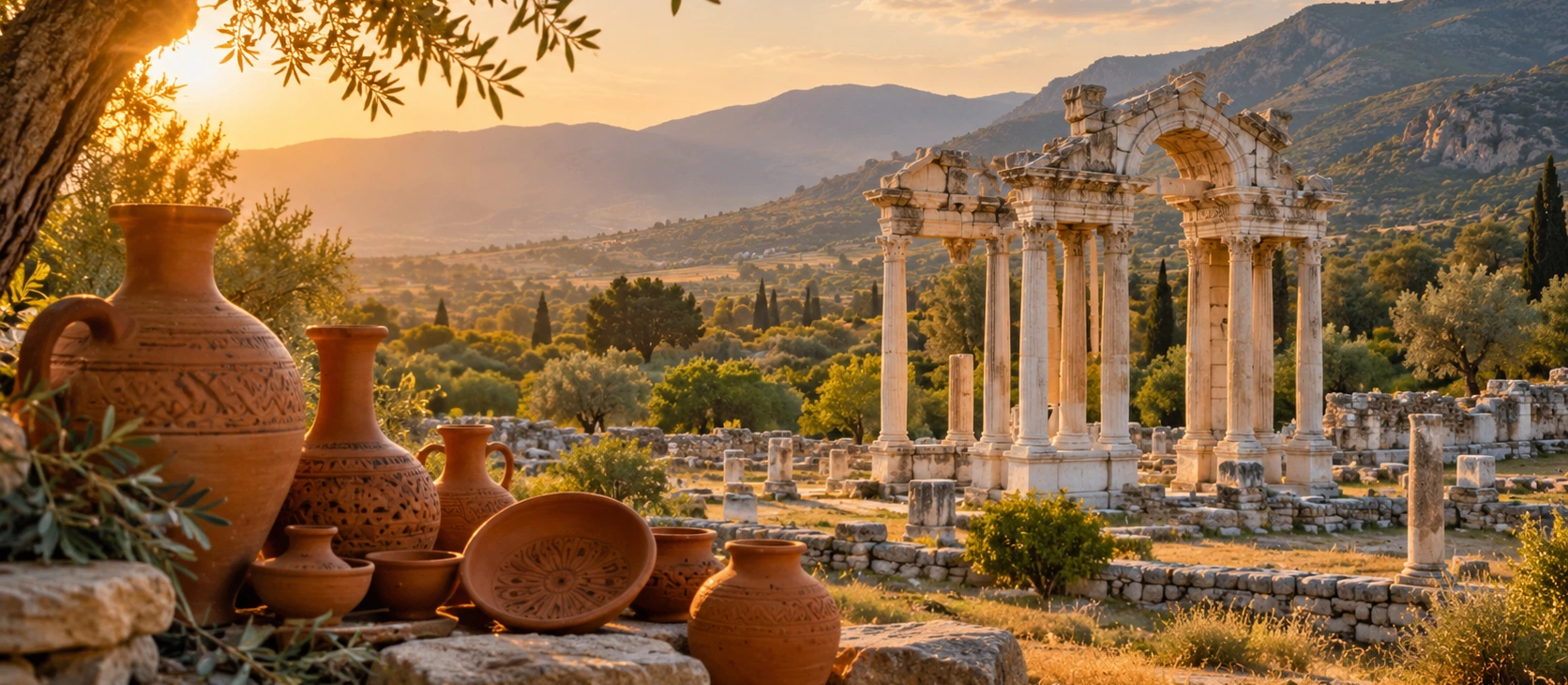
Explore historic streets, local crafts, traditional pottery and the cultural landscape surrounding one of Aydın's most fascinating ancient regions.
Explore KaracasuTravel through the ancient landscapes, archaeological sites and cultural landmarks of the Aegean region.
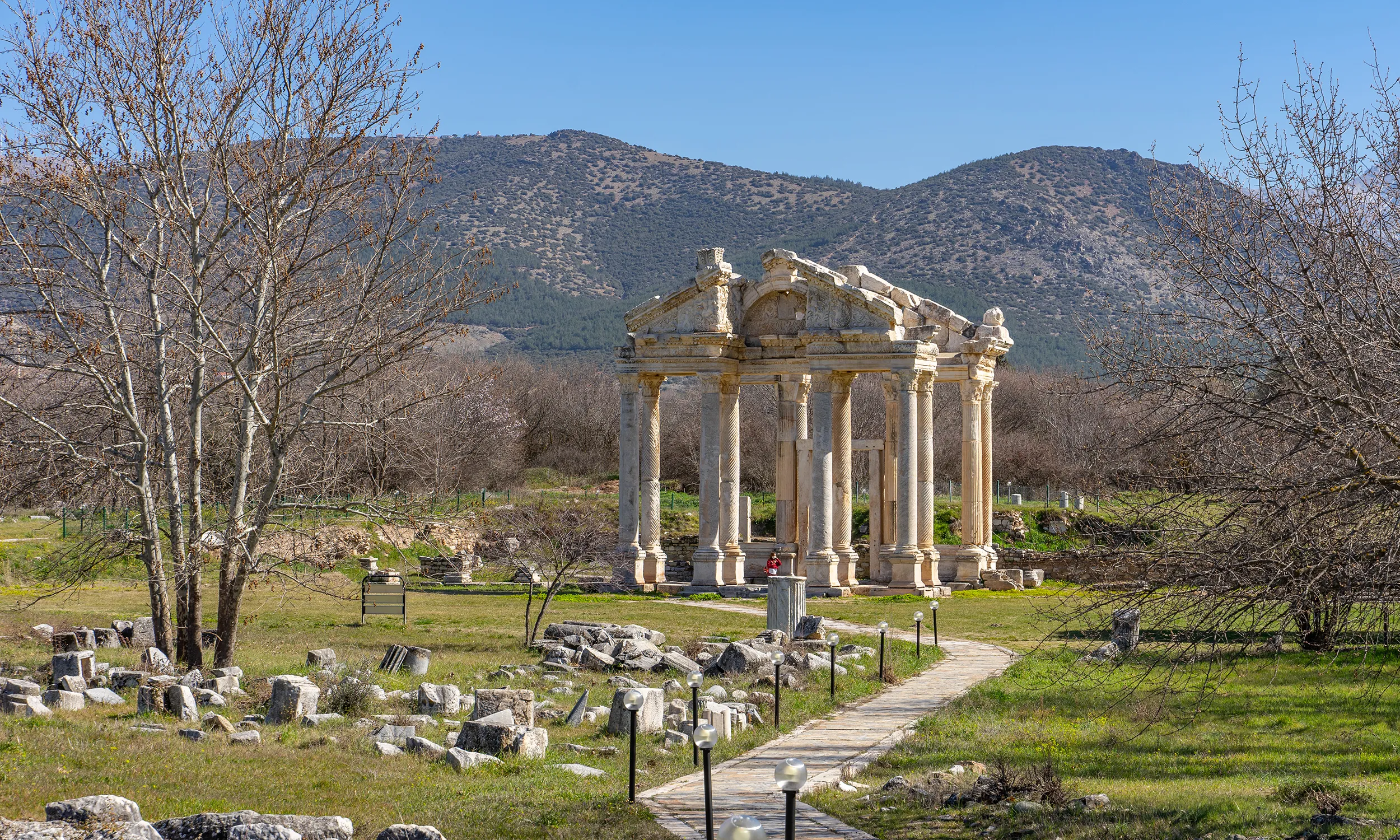
Discover the Temple of Aphrodite, monumental Roman architecture, extraordinary sculpture and one of the ancient world's finest preserved stadiums.
Explore Aphrodisias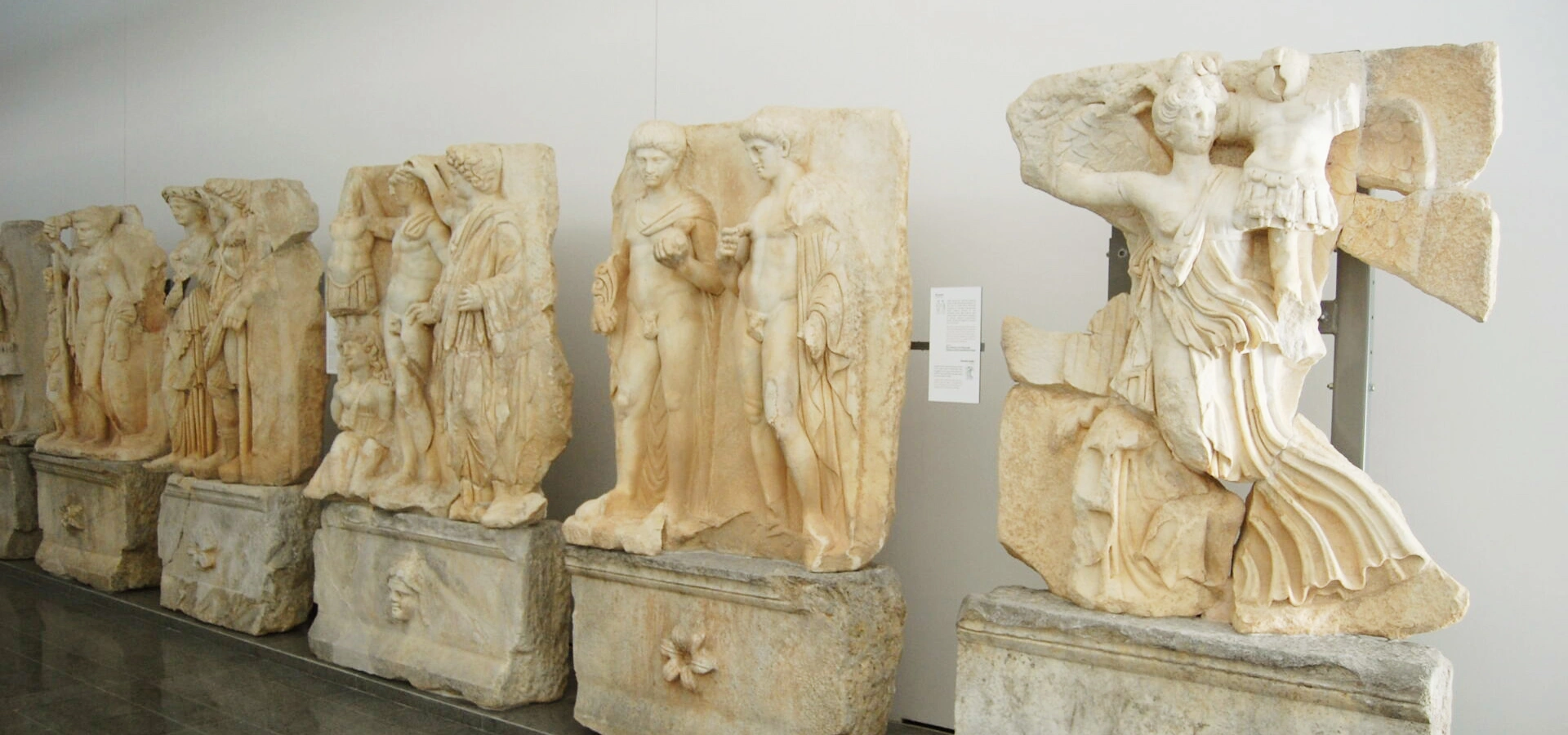
Admire magnificent ancient sculptures and historical discoveries documenting the extraordinary artistic traditions of Aphrodisias.
Explore the Museum
Continue your journey through fascinating archaeological sites, natural landscapes, traditional villages and the rich cultural history of the Aegean region.
View Aydın Guide