Private Çeşme Heritage Experience
Explore Çeşme Castle, the archaeological collections, historic streets, Ottoman monuments and waterfront with an itinerary designed around your interests.
Request a Custom Experience





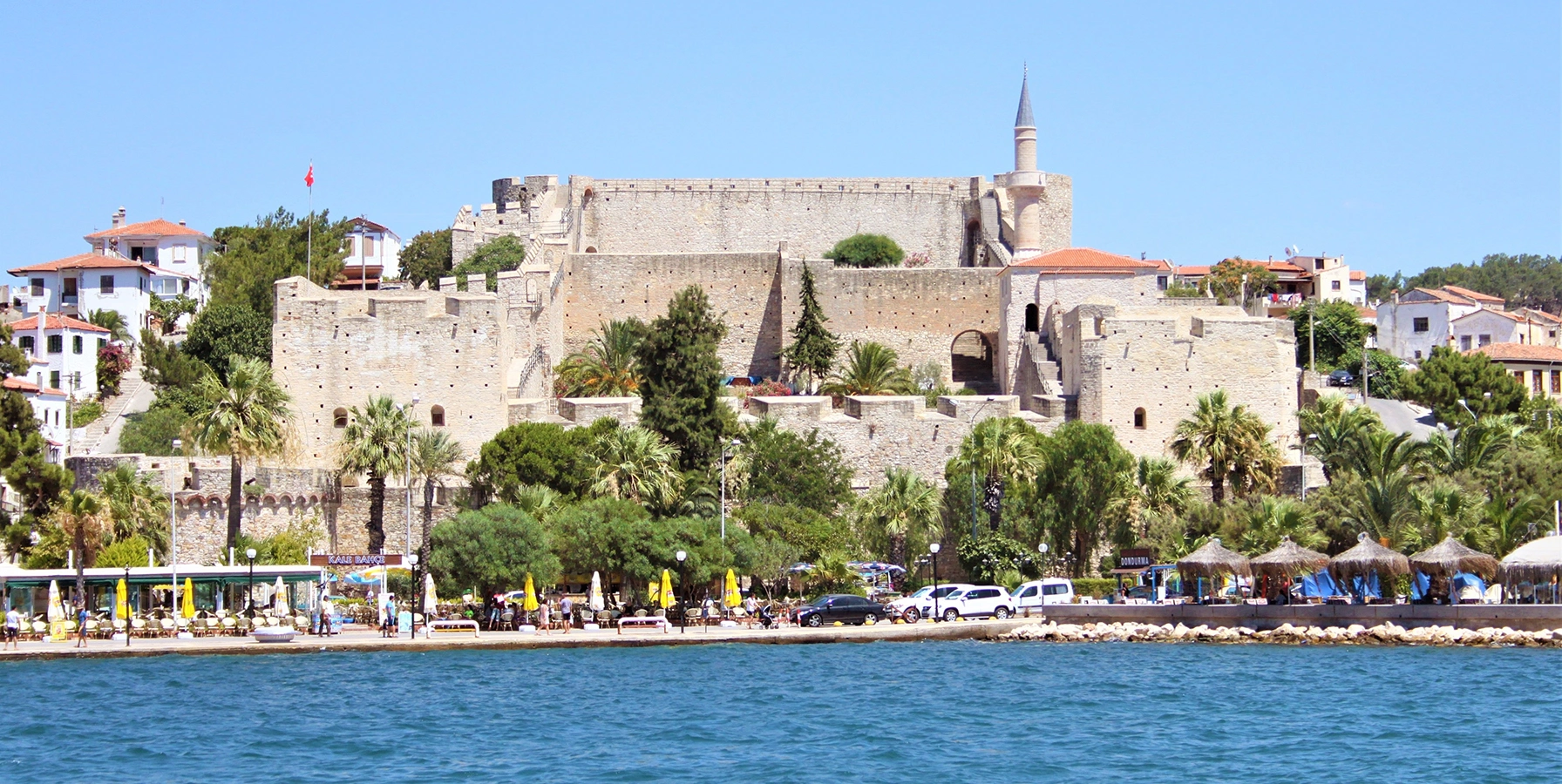
Standing above the historic centre of Çeşme, Çeşme Castle is the town's most important monumental landmark and one of the most impressive surviving fortifications on Türkiye's western Aegean coast.
Its massive walls and towers dominate the old harbour landscape, immediately revealing why Çeşme once held such strategic importance. From this point, ships moving between the Anatolian mainland and the island of Chios could be observed, while the harbour below formed part of a much wider network of Aegean trade and naval activity.
The castle carries evidence of more than one historical layer. Official museum interpretation notes traces associated with a fifteenth-century Genoese fortification, while major additions and repairs during the reign of Sultan Bayezid II in 1508–1509 transformed it into the powerful Ottoman fortress visible today.
The monument is also much more than a castle. Its historic rooms now contain the Çeşme Archaeological Museum, where visitors can see material from ancient Erythrai, the Bronze Age settlement of Bağlararası, maritime archaeology and the famous Ottoman-Russian naval conflict of 1770.
Add panoramic views across the marina, old town and Aegean Sea, and Çeşme Castle becomes essential for anyone interested in the history of the İzmir region.
Explore towers, defensive walls, courtyards and military architecture strengthened under Sultan Bayezid II.
Discover finds from Erythrai, Bağlararası and the maritime archaeology of the Çeşme Peninsula.
Learn about one of the most dramatic Ottoman-Russian naval confrontations of the eighteenth century.
Look across Çeşme Marina, the historic harbour, old town and the sea toward Chios.
Essential information for visiting the historic fortress and archaeological museum in central Çeşme.
Çeşme Castle stands in the historic centre of Çeşme, İzmir Province, immediately beside the old harbour and marina.
A fortified coastal castle containing architectural elements associated with both Genoese and Ottoman periods.
The castle was substantially enlarged and repaired during the reign of Sultan Bayezid II in 1508–1509.
The fortress protected an important Aegean harbour and maritime route facing the island of Chios.
Çeşme Archaeological Museum operates inside the castle and displays archaeology from across the peninsula.
Highlights include material from Erythrai, Bağlararası, ancient maritime trade and regional archaeology.
A dedicated exhibition interprets the Ottoman-Russian naval conflict fought around Çeşme in 1770.
The fortress forms part of Türkiye's Tentative List heritage network connected with Genoese maritime trading posts and fortifications.
Elevated areas provide excellent panoramas across Çeşme, the marina, harbour and Aegean coast.
Allow approximately 1–2 hours for the castle, museum collections and viewpoints.
Expect historic stone surfaces, stairways and changes in level throughout parts of the fortress.
Morning and late afternoon provide attractive light across the towers, marina and historic centre.
Çeşme Castle brings several different chapters of Aegean history together within a single monument.
The first reason to visit is the fortress itself. Thick stone walls, powerful towers, defensive courtyards and elevated positions reveal the military importance of protecting Çeşme's harbour.
The second is the archaeological museum. Instead of visiting an empty castle, travellers encounter objects that tell the much longer story of human settlement on the Çeşme Peninsula.
The third is maritime history. From Genoese commercial connections to Ottoman naval strategy and the dramatic battle of 1770, Çeşme's history has always been shaped by the sea.
Finally, the castle offers some of the best views in central Çeşme. Looking down over the marina and historic streets makes the relationship between fortress, harbour and town immediately understandable.
Çeşme Castle stands in the centre of Çeşme on the western side of the Çeşme Peninsula in İzmir Province.
The fortress rises immediately behind the historic harbour and only a short walk from Çeşme Marina, the traditional commercial streets and the town's waterfront.
Its location was strategic. Çeşme faces the Greek island of Chios across a relatively narrow stretch of the Aegean Sea, placing the harbour on important maritime routes connecting western Anatolia with the islands and wider Mediterranean world.
Today the same central location makes the castle extremely easy to combine with the rest of historic Çeşme.
The history of Çeşme Castle cannot be separated from the harbour below it.
Çeşme occupied a valuable position on the western coast of Anatolia directly facing Chios, an island deeply connected with medieval and early modern maritime trade.
Official museum interpretation records architectural evidence suggesting that a fortification connected with Genoese activity existed here during the fifteenth century.
After Çeşme became securely integrated into the Ottoman world, the strategic importance of the harbour continued. During the reign of Sultan Bayezid II, extensive additions and repairs were undertaken in 1508–1509.
These works created the major Ottoman form of the castle and strengthened its ability to control access to the harbour.
The fortress remained in use for centuries and continued to witness the changing military importance of the Aegean well into the Ottoman period.
By the nineteenth century, changes in warfare, harbour functions and regional politics reduced its military role, and the castle was eventually abandoned as an active defensive installation.
One of the most interesting aspects of Çeşme Castle is that it should not be understood as the product of a single moment.
The Aegean coastline experienced intense interaction between Byzantine, Genoese, Venetian, Turkish and other maritime powers during the medieval and early Ottoman periods.
At Çeşme, official interpretation identifies traces consistent with an earlier Genoese phase connected with the defence of maritime commerce between the peninsula and Chios.
The Ottoman authorities later enlarged and strengthened the site rather than simply ignoring its earlier strategic value.
The result is a monument in which different construction traditions became part of the same defensive landscape.
For visitors, this makes Çeşme Castle particularly useful for understanding how coastal fortifications evolved as control of western Anatolia and the Aegean changed hands.
Çeşme Castle has a broadly rectangular fortified plan adapted to the rocky slope above the historic harbour.
Its defensive design originally took full advantage of the surrounding geography. The western side faced the sea, while defensive ditches strengthened protection around the landward approaches.
The principal entrance lies on the southern side of the fortress.
Inside, visitors move through courtyards, enclosed exhibition rooms, stone passageways and staircases linking different defensive levels.
The towers are among the castle's most visually impressive elements. Their height and mass communicate the fortress's military character even before entering the museum galleries.
Heavy masonry surrounds the fortress and demonstrates the defensive scale required for protecting the harbour.
Large towers strengthen the perimeter and provide elevated positions above the surrounding town.
The historic main entrance is located on the southern side of the castle.
Interior open spaces connect defensive architecture with the museum rooms now occupying the fortress.
The structure was integrated into a naturally defensible coastal slope above the harbour.
Upper areas provide both an understanding of the castle's defensive logic and panoramic views of modern Çeşme.
Today the castle appears slightly separated from the sea, but historically the relationship between fortress and harbour was much more immediate.
Changes to the waterfront, harbour engineering and later land reclamation transformed the coastline around the monument.
Originally, ships approaching Çeşme would have encountered the fortress as a powerful defensive presence rising almost directly above the water.
This geography explains why the castle was so important. Whoever controlled the fortress could protect the port, monitor maritime movement and defend a valuable crossing point opposite Chios.
Standing on the upper levels today and looking toward the marina remains the best way to visualize this historic relationship.
One of the greatest advantages of visiting Çeşme Castle is that the monument also houses the Çeşme Archaeological Museum.
The castle first opened to visitors as a museum in 1965, when historical weapons transferred from Topkapı Palace Museum were displayed inside the fortress.
The institution was reorganized in 1984 as an archaeological museum, allowing discoveries from the Çeşme Peninsula to become the centre of the exhibition.
The resulting experience is particularly effective because visitors move between different periods without leaving the same monument.
Bronze Age settlement, ancient Ionian archaeology, maritime commerce, Ottoman fortification and eighteenth-century naval warfare are all presented within the walls of the castle.
Objects from Bağlararası reveal everyday life in Çeşme thousands of years before the modern town developed.
Sculptural material from Erythrai illustrates the artistic traditions of the ancient Ionian city.
Small archaeological objects provide insights into religious practice, domestic life and ancient craftsmanship.
Coin collections help explain trade, political authority and economic life in the ancient Aegean.
Transport vessels recovered from maritime contexts reveal the importance of wine, olive oil and other traded products.
Architectural and inscribed material adds another dimension to the archaeological collections.
The castle's earlier museum tradition is connected with the military history of the fortress and wider Ottoman period.
A dedicated presentation explores the major Ottoman-Russian naval confrontation associated with Çeşme.
Among the museum's most important collections are discoveries from the Bağlararası Bronze Age settlement in central Çeşme.
Archaeological work revealed that people were living here thousands of years before the medieval and Ottoman harbour town appeared.
The settlement included buildings arranged along streets and provides evidence for organised community life, production and connections with the wider Aegean.
Bağlararası is particularly important for evidence connected with early wine production.
Excavations have also revealed the destructive effects of a major earthquake approximately 3,700 years ago, providing rare archaeological evidence of a prehistoric natural disaster affecting the settlement.
Seeing these finds inside Çeşme Castle creates a remarkable chronological contrast: Bronze Age objects are displayed within a fortress built thousands of years later to defend the same coastline.
Another major part of the collection comes from Erythrai, the ancient settlement at modern Ildırı approximately twenty-two kilometres from Çeşme.
Erythrai occupied an important position within the ancient Ionian world and maintained strong maritime connections across the Aegean.
Excavations have uncovered important remains including the sanctuary of Athena, theatre, fortifications, residential buildings and other structures from different periods of the city's history.
Objects displayed in Çeşme Museum include sculptures, figurines, coins and other material discovered in and around the ancient settlement.
Travellers interested in archaeology should ideally visit both locations: begin with the museum collections inside the castle and later explore Erythrai itself above the village of Ildırı.
The archaeological collections also help explain a subject fundamental to Çeşme's identity: maritime trade.
Ancient amphorae displayed inside the museum were the shipping containers of their age.
Similar vessels carried products such as wine, olive oil and grain between ports throughout the Aegean and Mediterranean.
Their presence in a museum overlooking Çeşme harbour is especially appropriate, because commercial movement across the sea shaped the peninsula long before the Ottoman fortress existed.
For visitors, these objects connect ancient archaeology with the geographical reason the castle was eventually built in this exact location.
Çeşme Castle is also one of the best places to learn about the major naval confrontation associated with the town in 1770.
The fighting took place during the Russo-Ottoman War of 1768–1774 and involved Ottoman and Russian fleets operating around Chios and the Çeşme coast.
After initial fighting in the surrounding Aegean, Ottoman ships entered Çeşme Bay.
The confrontation culminated in a devastating night attack that destroyed much of the Ottoman fleet and became one of the most consequential naval episodes of the war.
A dedicated exhibition inside Çeşme Museum interprets the event within its local geographical setting.
This makes the castle particularly valuable: visitors can learn about the battle while standing above the same harbour landscape that played such an important role in the conflict.
The area surrounding the castle also preserves the memory of Cezayirli Gazi Hasan Pasha, one of the best-known Ottoman naval commanders associated with the period.
A monument near the castle depicts Hasan Pasha with the lion traditionally connected with stories about his life.
Together with the naval exhibition inside the museum, the monument makes the castle district an important place for understanding the Ottoman maritime identity of Çeşme.
Even visitors who arrive primarily for the architecture should take time to notice these historical references around the fortress before continuing into the old town.
Çeşme Fortress is associated with Türkiye's UNESCO Tentative List serial property representing the Genoese Maritime Network of trading posts and fortifications extending from the Mediterranean toward the Black Sea.
The concept is important because Genoese influence was not limited to a single castle or city.
Merchants established networks of fortified ports and commercial centres throughout strategically important coastal regions.
Çeşme's inclusion reflects its place within this wider maritime landscape, together with other fortifications in Türkiye including Foça, Çandarlı, Amasra and Yoros.
Visitors should remember that Tentative List status is not the same as inscription on the UNESCO World Heritage List. It identifies the property as one considered by Türkiye for potential future nomination.
The elevated sections of Çeşme Castle provide some of the finest views in the town centre.
Below the walls lies Çeşme Marina, filled today with yachts and modern waterfront development.
Beyond it are the historic streets of Çeşme and the open Aegean Sea.
On clear days, the broader maritime geography toward Chios becomes easier to appreciate.
These viewpoints are more than simply photogenic. They explain why generations of sailors, merchants and military authorities considered this location important.
Begin by examining the defensive approach and heavy masonry of the southern entrance.
Look closely at the monumental towers that give the fortress its unmistakable silhouette.
Interior courtyards reveal how different parts of the military complex were connected.
Explore archaeological collections covering thousands of years of settlement around the peninsula.
Discover Bronze Age pottery, production evidence and objects from ancient Çeşme.
See sculpture, figurines, coins and other discoveries from the ancient Ionian city.
Understand how products were transported through ancient Aegean trade networks.
Learn about the major Ottoman-Russian naval battle associated with Çeşme Bay.
Climb to elevated sections for views and a clearer understanding of the fortress's defensive design.
Look across the marina and imagine the coastline before modern land reclamation changed its appearance.
A rushed walk through Çeşme Castle misses much of what makes the monument interesting.
Allow approximately one to two hours for a comfortable visit.
Travellers mainly interested in architecture and panoramic views may need less time, while archaeology enthusiasts can easily spend longer studying the museum collections.
During summer, visiting earlier in the day can make exposed stone stairways and upper levels considerably more comfortable.
After leaving the fortress, continue on foot through the historic streets toward the marina for a complete introduction to central Çeşme.
Because Çeşme Castle operates as a museum, access follows the visiting arrangements of the Çeşme Museum.
The current official museum listing shows opening from 08:30 to 21:00, with the ticket office closing at 20:30, and indicates that the museum is open daily.
Opening hours can change because of season, public holidays, restoration work or administrative decisions, so travellers should verify the official museum information shortly before visiting.
Admission arrangements for Çeşme Castle are managed as part of the Çeşme Museum.
The official museum listing confirms that MüzeKart is valid for eligible Turkish citizens.
Entrance prices and pass conditions may change, so it is better to check the current official museum information rather than relying on an older published ticket price.
Travellers planning several archaeological sites around İzmir should also compare current museum-pass options before beginning their journey.
Visitors should remember that Çeşme Castle was constructed as a military fortress rather than as a modern museum building.
Stone paving, staircases, narrow passages and significant changes in level appear throughout sections of the monument.
Some museum areas may be easier to access than the upper defensive levels and panoramic viewpoints.
Visitors with limited mobility should confirm current accessibility arrangements directly with the museum before travelling.
Comfortable, stable footwear is useful for almost everyone, particularly when exploring upper stone surfaces.
Cooler conditions and fewer visitors make spring excellent for historical exploration and photography.
One of the most comfortable months, with warm weather before peak summer crowds arrive.
Excellent weather combines easily with beach time elsewhere on the Çeşme Peninsula.
Hot and busy. Visit earlier in the morning to avoid the strongest midday sun.
Peak holiday season brings substantial visitor numbers and very warm exposed stone surfaces.
Excellent for combining castle sightseeing with warm sea temperatures and a more relaxed atmosphere.
Comfortable for walking, history and photography, with fewer summer crowds.
A quiet time for history-focused travel, although windy or wet weather can affect outdoor areas.
For a balance of comfortable sightseeing and a wider coastal holiday, May, June and September are particularly attractive.
Morning is usually the most comfortable time during July and August.
The stone fortress contains exposed sections where midday summer heat can become tiring.
Morning light also works well for photographing architectural details without the stronger contrast created by the afternoon sun.
Late afternoon offers a different advantage. Softer light begins to fall across the fortress, marina and surrounding town.
Visitors interested in photography can finish the castle before continuing toward Çeşme Marina and the waterfront for sunset.
A very quick visit covering the principal architecture and a few panoramic viewpoints.
Enough for the major museum rooms, courtyards and castle views at a steady pace.
The best choice for most visitors wanting both archaeology and architectural exploration.
Suitable for travellers with a strong interest in Bronze Age archaeology, ancient Erythrai or Ottoman naval history.
Use the castle's massive towers to emphasize the scale of the defensive architecture.
Stone textures and deep shadows create strong architectural compositions around the southern entrance.
Look for masonry, historic objects, arches and changing layers of construction inside the fortress.
Photograph the contrast between historic fortifications and modern sailing boats.
Elevated views place the historic centre within the wider coastal landscape.
Clear weather creates expansive compositions across the sea toward the western horizon.
Softer light brings warmth to the stone and reduces harsh summer contrast.
The illuminated castle and nearby marina can become especially atmospheric after sunset.
Çeşme Castle can be an enjoyable historical stop for families because its original purpose is immediately understandable.
Walls, towers, defensive positions and maritime views help children imagine how a fortified harbour functioned.
The museum collections can also introduce different historical periods without requiring a long archaeological excursion.
Families should take particular care around stone steps, elevated sections and uneven historic surfaces.
Combining the castle with lunch, the marina or nearby beach time can create a balanced day for younger travellers.
Museum opening times can change seasonally or because of special circumstances.
Morning temperatures are considerably more comfortable for exposed castle areas.
Stone surfaces and stairs make stable, comfortable footwear preferable to beach sandals.
Summer heat and exposed viewpoints can make even a relatively short visit tiring.
Do not treat the castle only as a viewpoint; the archaeological collections are an important part of the visit.
The old town and marina are close enough to explore immediately after leaving the fortress.
A hat and sunscreen are particularly useful when exploring the upper castle in summer.
The museum gives valuable context for Bağlararası, Erythrai and the 1770 naval battle.
Restricted areas protect both visitors and vulnerable historic masonry.
Historic fortifications can be fragile even when the stone appears extremely strong.
Follow gallery rules and avoid touching archaeological material unless specifically permitted.
Elevated sections, stairs and stone surfaces require particular attention.
Keep courtyards and surrounding historic streets free of litter.
The neighbourhood surrounding the castle remains part of a living coastal community.
Walk through historic streets, traditional buildings, shops and old fountains surrounding the fortress.
See the sixteenth-century Ottoman caravanserai commissioned under Sultan Süleyman the Magnificent.
Continue toward the waterfront for restaurants, cafés, sailing boats and excellent castle views.
Look for surviving fountains connected with the very name of Çeşme.
Combine sightseeing with a nearby coastal stop and clear Aegean water.
Travel a short distance east for one of Çeşme's most famous beaches and natural thermal waters.
Continue to historic stone streets, restaurants and the famous windsurfing coast.
Visit the archaeological site whose discoveries form an important part of the castle museum collections.
The easiest historical combination and ideal for travellers with only a few hours in Çeşme.
Move directly from historic maritime defence to Çeşme's modern sailing waterfront.
Combine morning history with an afternoon beside the beach and thermal-water coastline.
Explore Ottoman Çeşme before spending the late afternoon and evening among Alaçatı's stone streets.
Connect museum objects directly with the ancient archaeological landscape where many were discovered.
Include Çeşme in a wider journey through the historical and archaeological sites of İzmir Province.
Çeşme Castle is in the historic centre of Çeşme, İzmir, immediately beside the old harbour and modern marina.
The fortress contains evidence associated with a fifteenth-century Genoese phase and was substantially enlarged and repaired under Sultan Bayezid II in 1508–1509.
Official museum interpretation identifies traces of an earlier Genoese fortification, while the major surviving Ottoman castle developed through extensive work carried out during the reign of Sultan Bayezid II.
Its principal purpose was to protect Çeşme's strategically important harbour and maritime routes across the Aegean.
The monument seen today is principally associated with its Ottoman development, although earlier Genoese architectural connections are also identified.
The castle contains evidence interpreted as belonging to an earlier Genoese phase, but it was substantially expanded and transformed into an Ottoman fortress in the early sixteenth century.
Yes. The fortress houses the Çeşme Archaeological Museum.
The castle opened as a museum in 1965 and was reorganized as an archaeological museum in 1984.
Collections include Bronze Age pottery, sculpture, figurines, coins, amphorae, stone objects and finds from Erythrai and Bağlararası.
Bağlararası is an important Bronze Age settlement in central Çeşme whose finds reveal settlement, production and early wine-making activity thousands of years ago.
Erythrai was an ancient Ionian city located at modern Ildırı on the northern side of the Çeşme Peninsula.
Yes. Archaeological objects from excavations at Erythrai form an important part of the museum collections.
Amphorae were important containers used for maritime transport of products such as wine and olive oil and help explain ancient Aegean trade.
A major Ottoman-Russian naval confrontation culminated around Çeşme Bay during the Russo-Ottoman War of 1768–1774.
Yes. The museum contains a dedicated exhibition interpreting the 1770 Ottoman-Russian naval conflict.
He was an important Ottoman naval commander associated with the period of the 1770 conflict and is commemorated by a monument near Çeşme Castle.
No. Çeşme Fortress is associated with a serial Genoese maritime property on Türkiye's UNESCO World Heritage Tentative List, which is different from full World Heritage inscription.
The castle overlooks the Aegean toward the maritime corridor separating the Çeşme Peninsula from Chios, although visibility depends on weather conditions.
Most visitors should allow approximately 1–2 hours for the museum, architecture and viewpoints.
The current official museum listing shows 08:30–21:00, with the ticket office closing at 20:30. Always verify current hours before travelling.
The current official museum listing states that the museum is open daily, but schedules can change.
The official museum listing states that MüzeKart is valid for eligible Turkish citizens.
The castle combines historic architecture, archaeological collections, Ottoman naval history and excellent views across the harbour in one central location.
Spring and autumn offer comfortable temperatures, while summer visitors should consider arriving earlier in the morning.
Parts contain stone paving, steps and significant changes in level, particularly around the upper fortress.
Yes, although children should be carefully supervised around stairs, walls and elevated sections.
Yes. A morning castle visit followed by Ilıca and an afternoon or evening in Alaçatı works particularly well.
Yes. Çeşme is connected with İzmir by motorway and the castle can easily form the historical centrepiece of a full-day peninsula trip.
Explore the old town, Kanuni Caravanserai, Çeşme Marina, historic fountains and the surrounding waterfront.
Yes. The combination is especially rewarding because archaeological finds from Erythrai are displayed inside the castle museum.
A tailor-made journey can combine the history of Çeşme Castle with archaeological sites, Ottoman heritage, coastal towns, local food and the landscapes of the western Aegean.
Tell us whether your priority is Ottoman history, archaeology, maritime heritage, photography, Alaçatı, Erythrai or a complete İzmir Peninsula journey, and we can shape the day around your interests.
Explore Çeşme Castle, the archaeological collections, historic streets, Ottoman monuments and waterfront with an itinerary designed around your interests.
Request a Custom Experience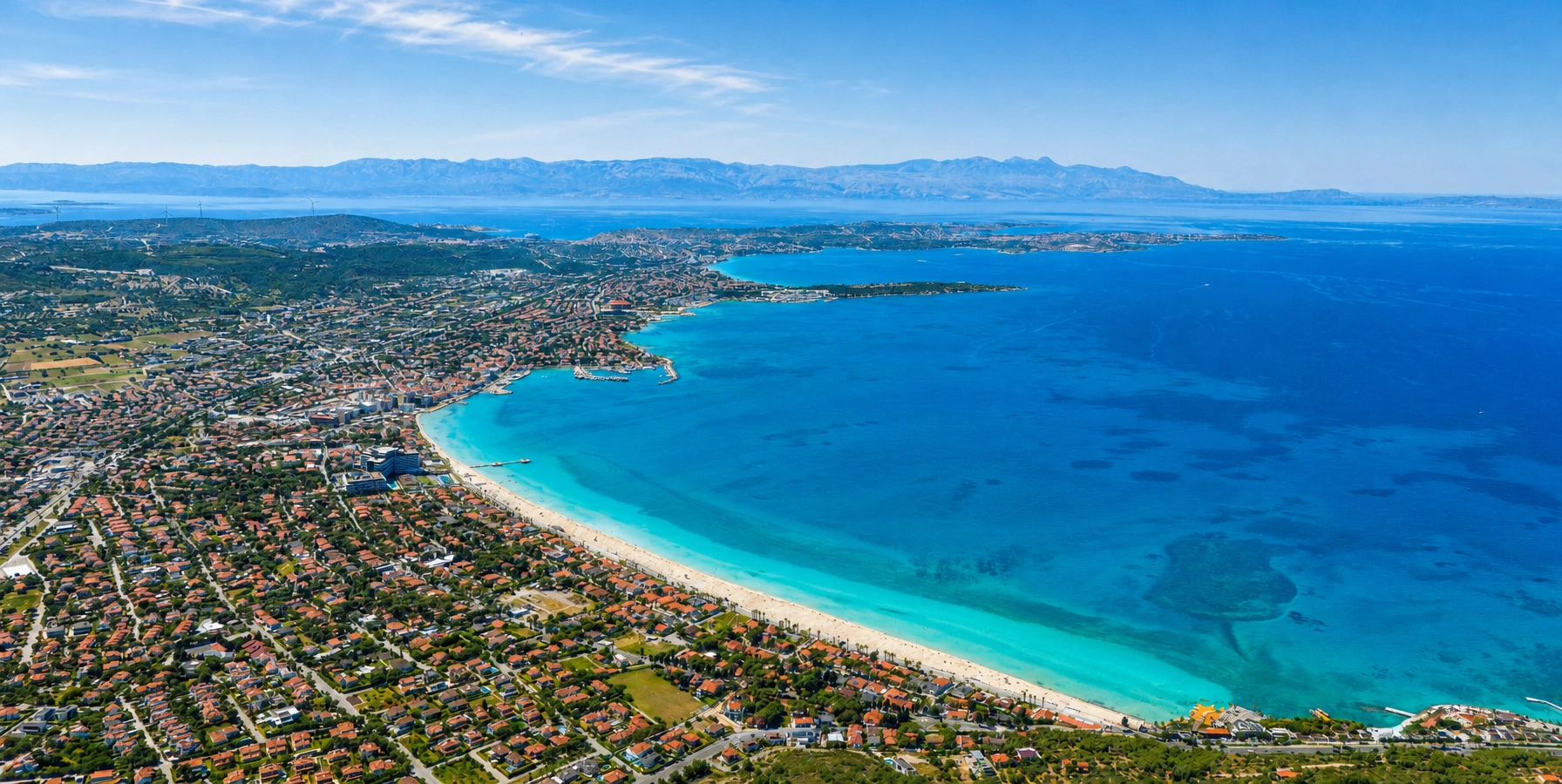
Continue with our complete Çeşme guide covering beaches, thermal springs, Alaçatı, archaeology, food and the wider peninsula.
View Çeşme Guide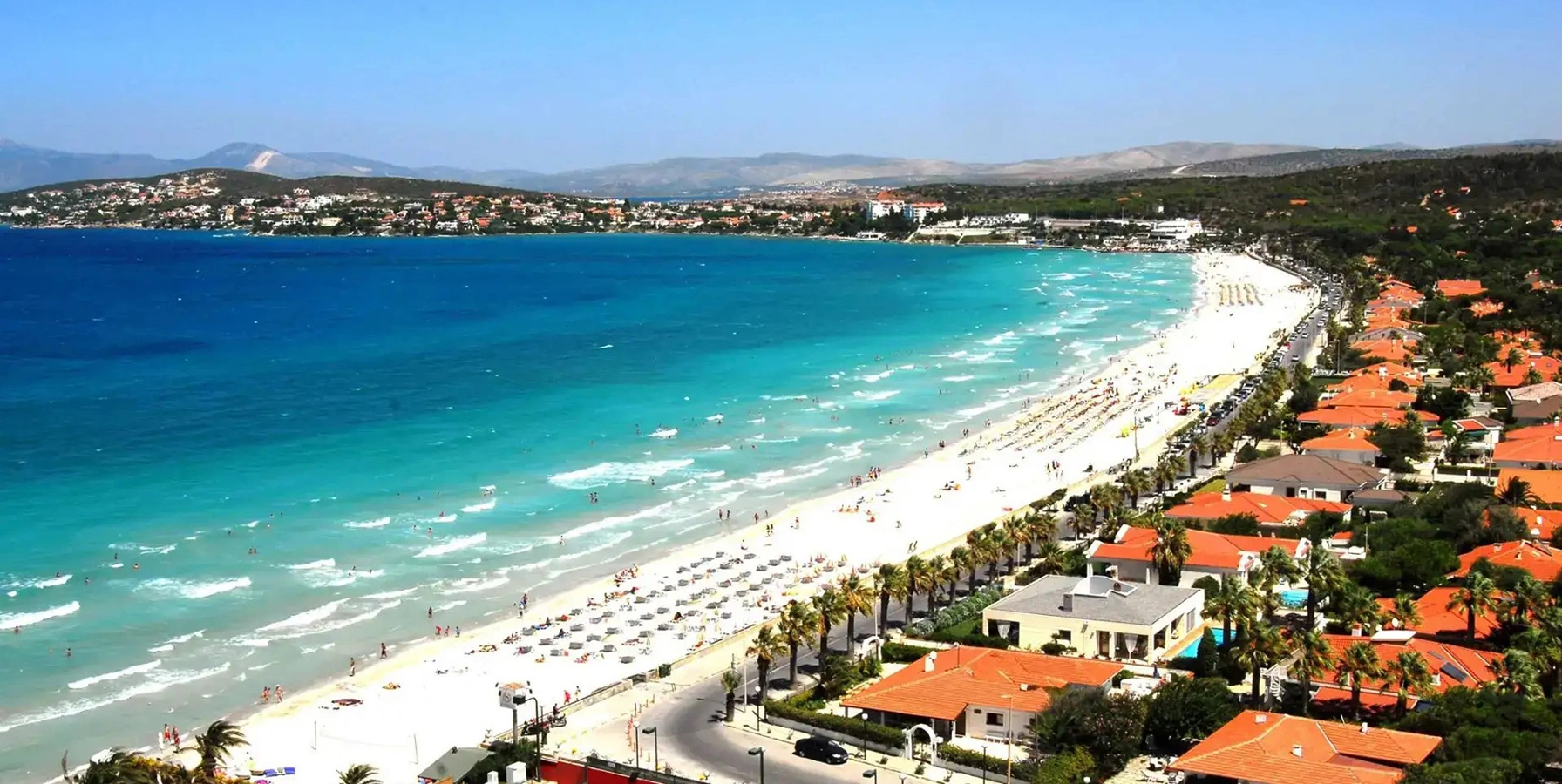
Combine the history of Çeşme Castle with stone streets, traditional architecture, gastronomy and the famous windsurfing coast.
View Alaçatı Guide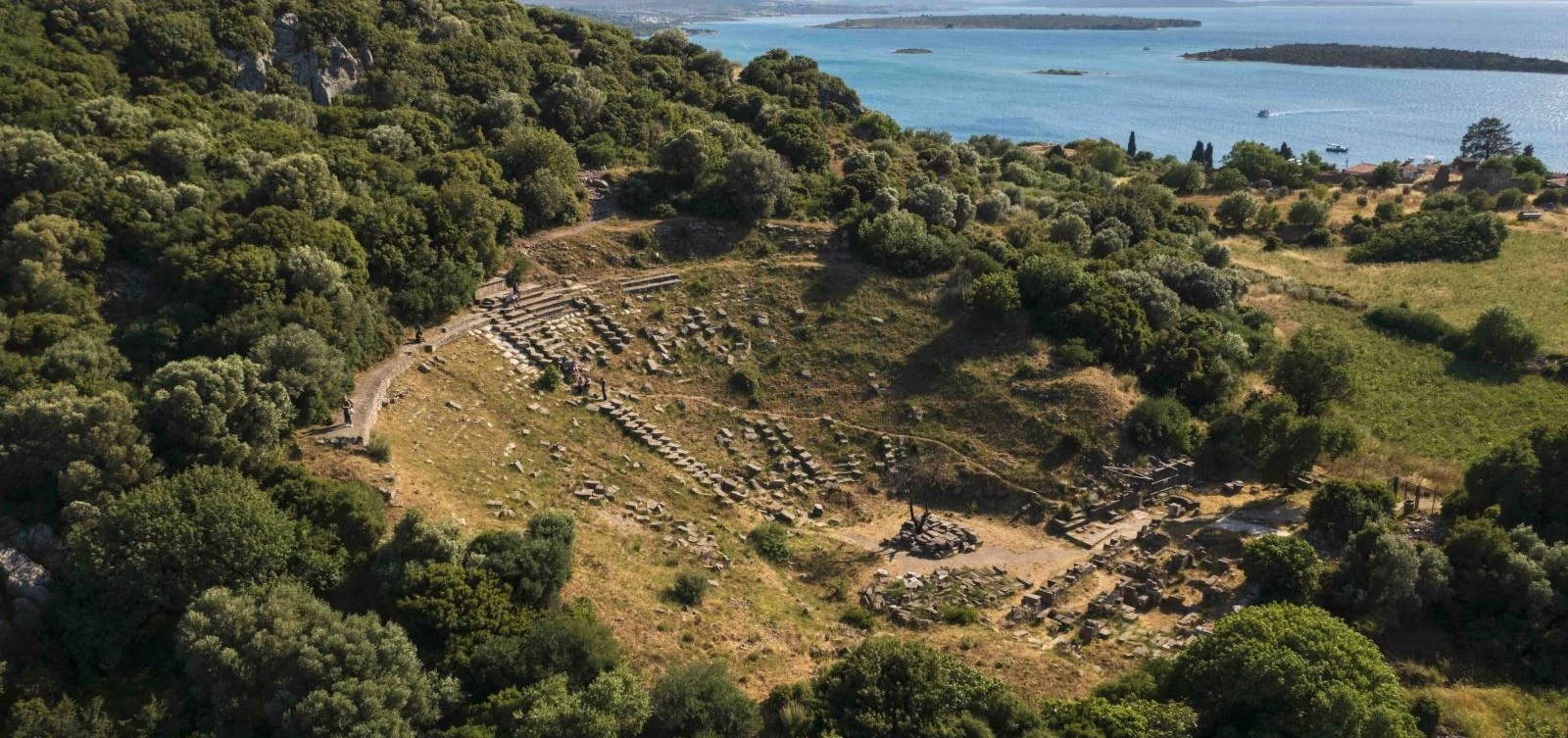
See the archaeological landscape that produced many of the ancient objects now preserved inside Çeşme Museum.
View Erythrai Guide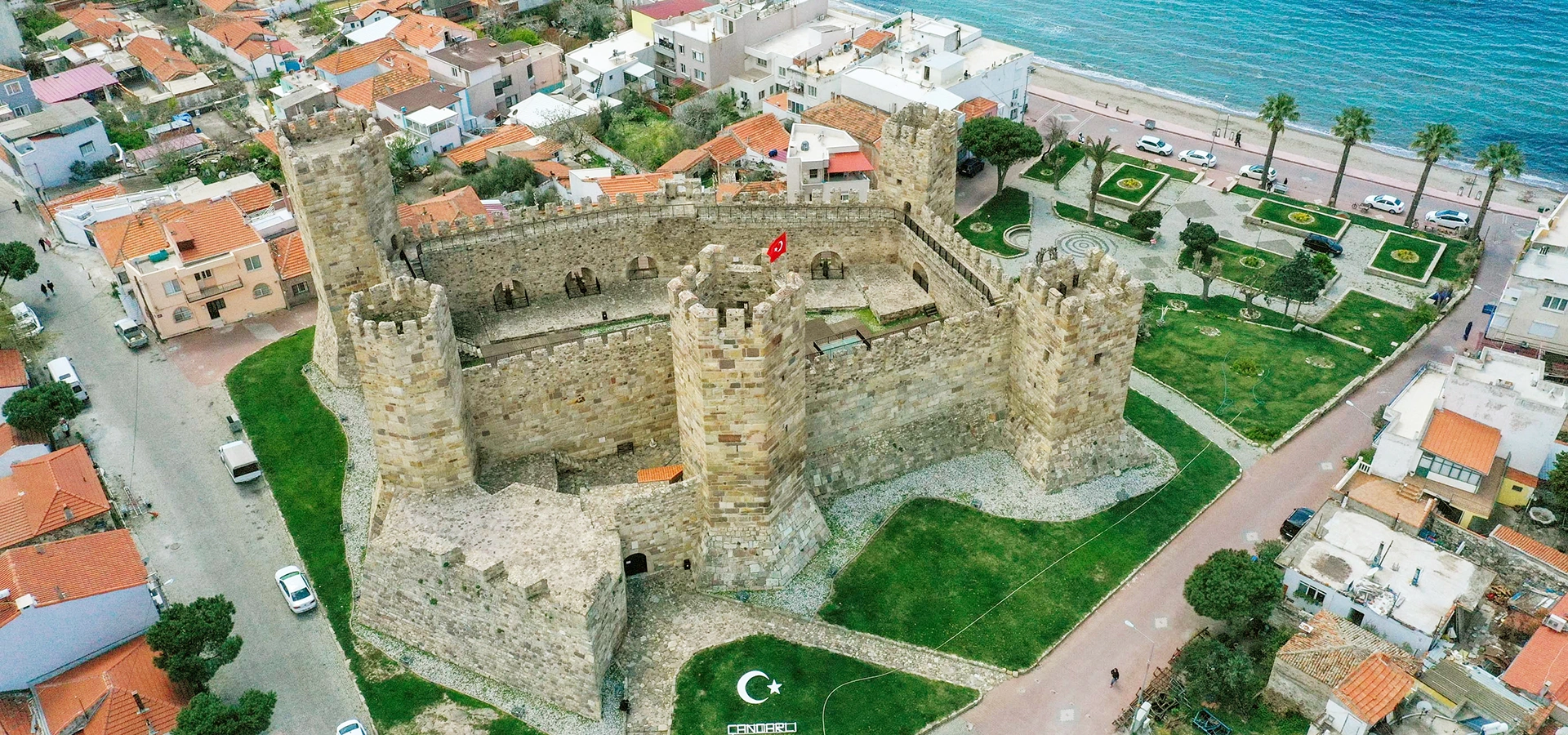
Compare Çeşme with another major western Anatolian coastal fortress connected with Genoese and Ottoman maritime history.
View Çandarlı Castle Guide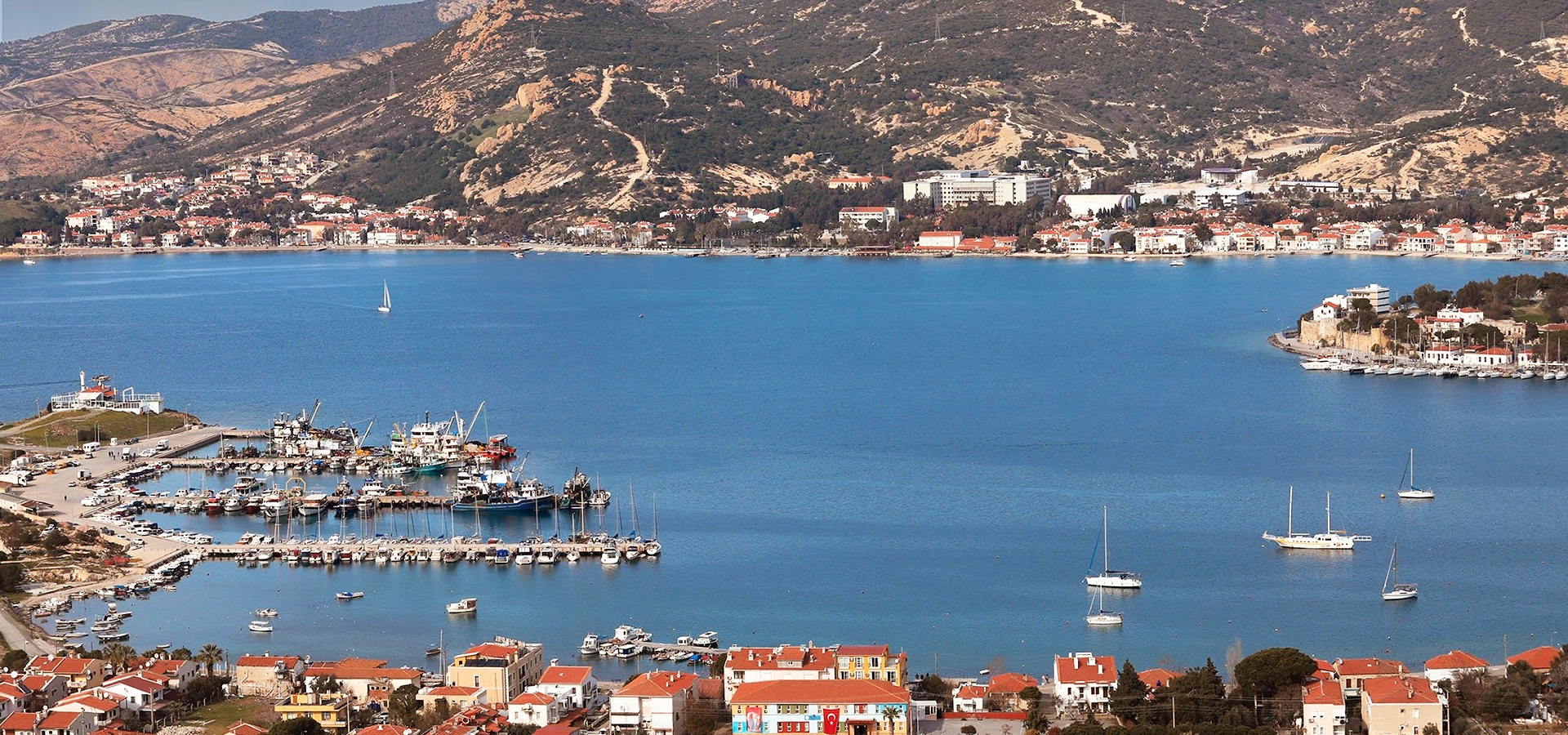
Continue the story of Aegean maritime trade through ancient Phokaia, Genoese fortifications and one of İzmir's historic coastal towns.
View Foça Guide