Private Ildırı & Erythrai Experience
Ask us about a tailor-made visit combining ancient Erythrai, Ildırı's waterfront, local food, panoramic viewpoints and other highlights of the northern Çeşme Peninsula.
Request a Custom Tour





On the northern coast of the Çeşme Peninsula, far from the busiest streets of Alaçatı and the summer crowds of central Çeşme, lies one of the region's most atmospheric villages: Ildırı.
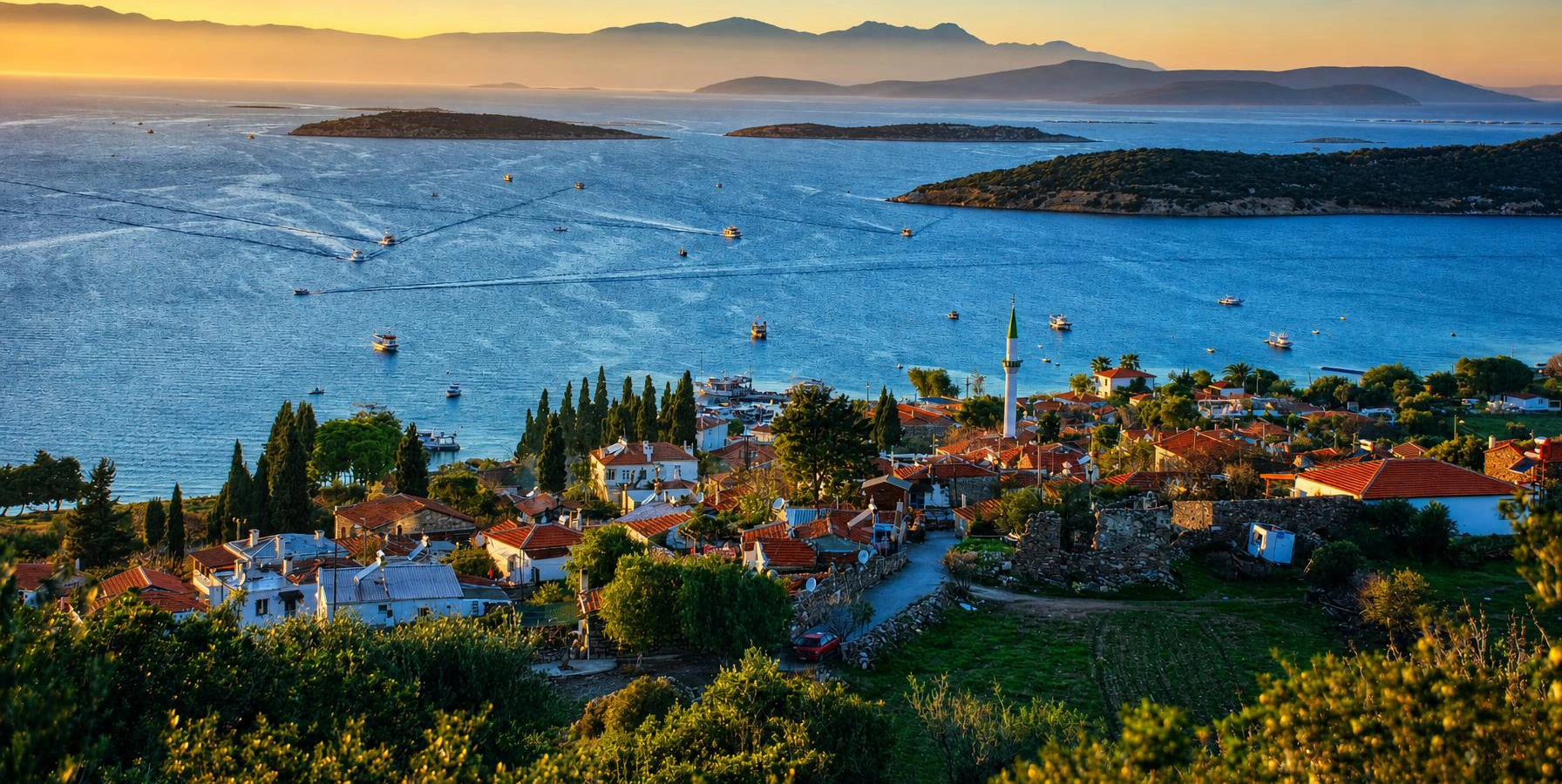
At first glance, Ildırı appears to be a quiet Aegean settlement of fishing boats, olive trees, small waterfront restaurants and blue coastal views.
But immediately above the modern village rise the remains of ancient Erythrai, one of the historic cities of Ionia.
For thousands of years, people have lived on this naturally protected stretch of coast, looking across the same islands, bays and channels that visitors see today.
Ancient walls, a hillside theatre, the remains of an Athena sanctuary and archaeological terraces still occupy the slopes above the village.
Below them, modern Ildırı continues at a completely different rhythm: fishing boats move through the bay, tables fill with seafood and Aegean dishes, and the sun sets behind the islands offshore.
The result is one of Çeşme's most rewarding combinations of archaeology, village life and coastal scenery.
Explore the remains of one of the historic Ionian cities of western Anatolia.
Experience a quieter side of Çeşme shaped by fishing, olive trees and traditional coastal life.
Climb above the village for sweeping views across the bay, islands and northern Çeşme Peninsula.
Stay into the evening for one of the most atmospheric sunset settings around Çeşme.
Essential information for visiting Ildırı, exploring ancient Erythrai and experiencing one of the quieter coastal landscapes of the Çeşme Peninsula.
Northern Çeşme Peninsula, İzmir Province, Türkiye.
Open Ildırı on Google MapsErythrai, an important settlement of ancient Ionia.
Ancient ruins, Ionian history, a hillside theatre, Athena sanctuary, fishing village atmosphere and Aegean views.
A peaceful bay surrounded by hills, olive trees and small islands.
Combine the archaeological site, village waterfront, seafood and sunset in one relaxed visit.
Allow approximately 2–4 hours, or stay longer for lunch or sunset.
Few places around Çeşme combine archaeology, village life and coastal scenery as naturally as Ildırı.
Most visitors associate the Çeşme Peninsula with beaches, beach clubs, Alaçatı and summer holidays.
Ildırı reveals a completely different side of the region.
Here, the landscape is dominated not by large resorts but by an ancient settlement, a working coastal village, olive-covered hills and the Aegean Sea.
The archaeological remains of Erythrai rise directly behind the modern settlement, making it possible to walk from village streets into a landscape inhabited for thousands of years.
From the upper slopes, the reason for the ancient city's location becomes immediately clear.
The settlement overlooks natural bays, offshore islands and maritime routes connecting the Çeşme Peninsula with the wider Aegean world.
After exploring the ruins, visitors can return to the waterfront, sit beside the sea, enjoy local food and watch fishing boats move through the bay.
This transition from archaeology to ordinary village life is exactly what makes Ildırı special.
For a broader introduction to the peninsula, continue to our complete Çeşme travel guide .
The ancient city occupying the hills above Ildırı was known as Erythrai.
Its location on the northern side of the Çeşme Peninsula placed the settlement directly within the maritime world of the Aegean.
Archaeological evidence indicates that the area was inhabited from the Early Bronze Age, although the city is particularly important for its later Ionian, Classical, Hellenistic and Roman history.
Erythrai eventually became part of the Ionian cultural and political world and participated in the Panionion, the religious and political association of Ionian communities in western Anatolia.
Over the centuries, the city passed through periods of Lydian, Persian, Macedonian, Pergamene and Roman influence.
In the Roman period, Erythrai enjoyed the status of a free city and retained a reputation for agriculture, wine, goats, millstone production and its famous prophetic tradition.
Today, much of the ancient city remains archaeological landscape rather than reconstructed monumental architecture.
This makes Erythrai a place to explore slowly, where fragments of walls, terraces, the theatre and sanctuary remains must be understood together with the geography around them.
Erythrai belonged to the network of important Ionian communities of western Anatolia.
Archaeological finds indicate settlement in the area from the Early Bronze Age.
The city overlooked natural bays and sea routes connecting the Çeşme Peninsula with the wider Aegean.
Erythrai experienced Lydian, Persian, Macedonian, Pergamene and Roman periods before declining in later antiquity.
The ruins extend across slopes and terraces above modern Ildırı rather than forming one compact reconstructed monument.
Modern Ildırı occupies part of the wider landscape once connected with the ancient city.
The name Erythrai is traditionally connected with the Greek word erythros, meaning red.
One common explanation links the name to the reddish color of the soil around the settlement, giving the city the interpretation "Red City."
Ancient traditions also preserved another explanation, connecting the name with Erythros, a legendary founder associated with Rhadamanthes of Crete.
As with many ancient place names, the exact origin cannot be reduced to a single completely certain explanation.
What is clear is that forms of the ancient name continued to influence the identity of the settlement for centuries.
After the region came under Turkish rule, variations of the name were used, and from the Ottoman period onward forms such as İlderen and eventually Ildırı became established.
Among the most recognizable archaeological remains at Erythrai is the ancient theatre on the northern slope of the acropolis.
The theatre was built into the natural hillside, using the topography to create the rising seating area typical of ancient Greek theatrical architecture.
Archaeological investigations brought substantial sections of the structure back to light during modern excavations.
The surviving remains do not create the monumental impression of highly restored theatres at sites such as Ephesus or Aspendos.
Instead, Erythrai's theatre remains closely connected with the hillside, vegetation and archaeological landscape.
Its greatest impact comes from understanding where the theatre stood within the ancient city and from imagining gatherings taking place here with the Aegean environment surrounding the settlement.
The theatre occupies the northern slope of the ancient acropolis.
Like other Greek theatres, the building provided a space for public performance and communal gathering.
The theatre was among the first major monuments revealed during archaeological work at Erythrai.
The seating followed the slope of the hill, integrating architecture directly into the landscape.
Visitors should expect archaeological ruins rather than a completely reconstructed theatre.
The theatre and surrounding slopes provide beautiful compositions with vegetation and the Aegean landscape.
Above the theatre, on the highest part of the ancient acropolis, archaeological investigations identified remains associated with a sanctuary of Athena.
The elevated position would have made the sanctuary one of the most prominent sacred locations within ancient Erythrai.
Finds from the acropolis have helped archaeologists understand the religious life of the city during the Archaic period.
Ancient literary tradition also connects Athena with Erythrai, reinforcing the significance of the sanctuary.
Very little of the monument survives in the form that casual visitors might expect from a classical temple.
Instead, the importance of the site comes from its archaeology, its elevated position and the extraordinary relationship between sacred space and surrounding landscape.
From the upper archaeological area, views extend toward the village, coast and islands beyond.
Erythrai became famous in the ancient world for its association with a Sibyl, a woman believed to possess prophetic abilities.
Ancient traditions referred to the Erythraean Sibyl and associated the city with the prophetess Herophile.
Sibyls occupied a distinctive place within Greco-Roman religious culture.
Unlike the permanent priesthood of a single sanctuary, their reputation came from inspired prophecy and traditions concerning predictions of future events.
Over centuries, stories surrounding different Sibyls became intertwined, making it difficult to separate historical individuals, local traditions and later legend.
Nevertheless, the association was important enough for Erythrai to become known far beyond the Çeşme Peninsula.
Ancient tradition connected Erythrai with one of the celebrated prophetic women of the classical world.
The name Herophile became particularly associated with prophetic traditions connected with Erythrai.
The Sibyl helped give Erythrai a religious reputation extending beyond its immediate region.
Stories about ancient Sibyls combine religious tradition, literature and mythology and should not be read as straightforward biography.
Archaeological research indicates that Erythrai was surrounded by an extensive fortification system.
The circuit extended for approximately five kilometers, protecting the urban area and strategically important approaches to the settlement.
The earliest phases of the surviving fortifications reach back to the Late Classical period, while substantial construction took place during the Hellenistic era.
Sections beside the modern Ildırı–Barbaros road remain particularly impressive, with portions of masonry surviving to considerable height.
These fortifications reveal the scale of ancient Erythrai more clearly than isolated ruins alone.
The city was not simply a small sanctuary or fishing settlement. It occupied a large, defended landscape with strategic, commercial and political importance.
Erythrai's position beside the Aegean made maritime trade a fundamental part of its economy.
Ancient and archaeological sources associate the city with several products, including wine, livestock and millstones.
The production and export of grinding stones became particularly associated with the city's commercial reputation.
Agriculture was equally important.
The surrounding landscape, with its Mediterranean climate, supported crops, vineyards and animal husbandry while the sea connected the settlement with markets elsewhere in the Aegean.
Modern Ildırı still makes the ancient relationship between land and sea easy to understand.
Olive trees cover the surrounding slopes, small boats fill the waterfront, and the bay remains visually connected with the islands and sea routes beyond.
Ancient Erythrai developed a reputation for producing and exporting grinding stones.
Viticulture and wine formed part of the agricultural reputation of the ancient city.
Ancient descriptions also associate Erythrai with goats and the surrounding agricultural landscape.
Its coastal position linked the city naturally with neighboring communities across the Aegean.
The geography provided useful coastal access while hills offered natural defensive advantages.
Olive groves, fishing and village agriculture still help visitors understand the relationship between settlement and environment.
Modern archaeological investigation has played a major role in revealing the scale and importance of ancient Erythrai.
Systematic excavations began during the 1960s, bringing monuments such as the ancient theatre and the acropolis sanctuary into clearer view.
Research also identified the extensive city walls and produced archaeological material from different periods of occupation.
A renewed phase of excavation began in 2007, continuing scholarly research into the city's settlement history, architecture, religion and relationship with the sea.
Some objects recovered from Erythrai have also been displayed in Çeşme's archaeological collections.
Visitors should remember that Erythrai remains an active archaeological landscape.
Our understanding of individual buildings, chronology and the wider city continues to develop as research progresses.
The modern village of Ildırı sits directly beside the archaeological landscape and retains a much quieter atmosphere than the peninsula's major resort centers.
Small houses, olive trees, local gardens, fishing boats and waterfront businesses shape the village character.
The village is particularly appealing for travelers who want to experience a slower, more local side of the Çeşme Peninsula.
Rather than rushing immediately away after visiting Erythrai, allow time to walk through the settlement and reach the waterfront.
Depending on the season, you may see fishermen returning, local produce being sold, families sitting beside the water or boats anchored quietly in the bay.
Ildırı has also appeared as a filming location in Turkish television and cinema, although its greatest attraction remains the natural combination of history, village atmosphere and the Aegean coast.
Small boats and local seafood traditions remain an important part of Ildırı's coastal identity.
Olive trees and Mediterranean vegetation cover much of the surrounding countryside.
The village generally feels far calmer than central Çeşme and Alaçatı during the busy summer season.
Seafood, Aegean mezes and seasonal local dishes are natural choices during a relaxed visit.
The bay looks toward small islands and an intricate northern Aegean coastline.
Ildırı is best experienced without rushing from one monument to the next.
Sunset is one of the reasons to stay in Ildırı after exploring ancient Erythrai.
The village looks across a broad Aegean seascape broken by small islands, peninsulas and fishing boats.
As the sun drops, the archaeological hillside, village and water gradually change color.
The experience is very different from the busy sunset atmosphere of Çeşme's larger resorts.
Ildırı is often quieter, making it possible simply to sit beside the coast, have dinner or walk along the waterfront as daylight fades.
Ildırı is not primarily known as a large organized beach destination.
Instead, the coast consists of small bays, rocky sections, village waterfront and quieter swimming areas.
This makes the experience very different from major sandy beaches such as Ilıca Beach or Altınkum Beach .
Visitors who prefer a natural, less developed coastal atmosphere may find Ildırı particularly appealing.
Swimming conditions depend on the exact part of the coast, weather and wind, so choose established local access points rather than assuming every section of shoreline is suitable for entering the sea.
Ildırı's fishing-village character makes seafood a natural part of the local experience.
Depending on season and availability, waterfront restaurants may serve fresh fish, calamari, octopus, shrimp and other Aegean seafood.
Traditional meze made with olive oil, wild herbs, vegetables and yogurt are equally characteristic of the region.
The wider Çeşme Peninsula also has distinctive local specialties, including Çeşme kumru and dishes based on seasonal Aegean herbs.
Ildırı is especially enjoyable when lunch or dinner is treated as part of the visit rather than simply a quick stop between attractions.
Ask what is locally available rather than choosing only by menu photographs.
Look for olive-oil dishes, seasonal vegetables, herbs and seafood-based starters.
This fried dough dessert is also traditionally associated with village visits and local events.
Olive cultivation is part of the surrounding Aegean landscape and naturally influences regional cooking.
An early evening meal beside the bay is one of the easiest ways to extend an Ildırı visit.
Local seafood and produce vary throughout the year, so availability can change from day to day.
Green landscapes and mild temperatures make spring excellent for archaeological walking.
Longer days and warm weather create an excellent balance of history, village life and coastal time.
Expect strong sun and summer heat; explore the ruins earlier or later in the day.
One of the most enjoyable periods for combining archaeology, warm sea temperatures and quieter evenings.
Pleasant conditions can continue well into autumn, particularly for sightseeing and village meals.
The village becomes much quieter and some seasonal businesses may reduce operating days or hours.
Wear shoes with reliable grip for uneven paths, stone surfaces and archaeological terrain.
Carry sufficient water, particularly when exploring the ruins during warm weather.
A hat, sunglasses and sunscreen are important because large sections of the site are exposed.
The combination of archaeology, village life, islands and sunset provides excellent photography opportunities.
A coastal breeze can develop toward evening, especially outside midsummer.
Bring swimwear if you plan to combine the archaeological visit with swimming around the peninsula.
Enough for a brief look at the village or a limited archaeological visit, but the experience will feel rushed.
Allows time for the principal archaeological area and a short stop by the waterfront.
Ideal for exploring Erythrai, walking through the village and enjoying a relaxed drink or meal.
Combine archaeology, lunch, village exploration and time beside the coast.
Excellent if you want to combine Erythrai with sunset and dinner.
Combine Ildırı with Ilıca, Alaçatı, Şifne or central Çeşme using private transport or a rental car.
Begin the morning around Ilıca , where the peninsula's famous sandy coast and geothermal landscape provide a very different introduction to Çeşme.
Continue north toward Ildırı and allow at least two hours for ancient Erythrai.
Explore the theatre, archaeological slopes and acropolis area before descending into the modern village.
Stop for a relaxed seafood or Aegean lunch beside the bay.
During the afternoon, you can continue toward Alaçatı for historic stone streets, cafés and the Alaçatı Windmills .
Alternatively, stay in Ildırı until sunset before returning to central Çeşme .
Erythrai should be approached as an open archaeological landscape rather than a heavily reconstructed tourist attraction.
Paths can be uneven, rocky and exposed to direct sunlight.
Archaeological work may also affect which sections can be approached at any particular time.
Access arrangements, managed areas and visitor services can change, so travelers making a special journey should confirm current conditions before arrival.
The modern village itself can be visited independently, with restaurants, small businesses and waterfront areas operating separately from the archaeological site.
The modern village and the archaeological site offer very different accessibility conditions.
Some parts of Ildırı's village center and waterfront can be approached relatively easily by vehicle.
Ancient Erythrai, however, occupies uneven hillside terrain.
Stone surfaces, natural paths, slopes and archaeological remains can present difficulties for visitors with limited mobility.
Vehicle access can reduce walking, although individual streets and waterfront areas may still be uneven.
Expect rough terrain, natural slopes and irregular stone surfaces.
Higher archaeological areas require more walking and are not suitable for every visitor.
A walking pole can be useful for travelers who are comfortable on uneven archaeological terrain but want additional stability.
Useful for creating a shorter route and minimizing unnecessary walking between village and surrounding attractions.
Visitors unable to explore the slopes can still enjoy Ildırı's waterfront, village atmosphere and views.
Ildırı lies on the northern side of the Çeşme Peninsula, away from the main Çeşme–Alaçatı resort corridor.
The village is reached by road through the northern peninsula, with the final approach providing increasingly rural and coastal scenery.
A rental car, taxi or private transfer provides the greatest flexibility, particularly if you plan to combine Ildırı with several other places around Çeşme.
Drive northeast across the peninsula toward Ildırı and the northern coastline.
Travel north through the peninsula before continuing toward Ildırı.
Ilıca and Ildırı can be combined easily when exploring the northern side of Çeşme by car.
Travel toward the Çeşme Peninsula before continuing toward the northern Ildırı road network.
Provides excellent flexibility for combining Ildırı with beaches, thermal areas and villages.
A private vehicle allows the archaeological visit to be combined with other Çeşme highlights without relying on fixed transport schedules.
Ildırı's northern location makes it easy to combine ancient Erythrai with several different sides of the Çeşme Peninsula.
Discover the peninsula's geothermal landscape around Ilıca and Şifne.
Visit Çeşme's famous shallow sandy beach where geothermal water meets the Aegean coast.
Explore historic stone houses, cobbled streets, restaurants, cafés and one of Türkiye's best-known Aegean towns.
Visit the restored stone windmills overlooking the historic town and surrounding peninsula.
Discover the peninsula's historic center, marina, waterfront, beaches and wider coastal landscape.
Explore the fortress overlooking Çeşme's harbor and discover the region's maritime history.
Continue along the northern peninsula to experience another quieter coastal area associated with Çeşme's thermal heritage.
Continue east and north for increasingly wild Aegean scenery, coastal villages and quieter landscapes.
Ildırı is one of the most photogenic places on the northern Çeşme Peninsula because several completely different landscapes come together within a small area.
Ancient masonry, olive trees, village houses, fishing boats, blue water and offshore islands can all appear within the same visit.
Use the surviving seating, hillside and vegetation to communicate the archaeological setting rather than isolating individual stones.
Higher ground provides broad perspectives across Ildırı Bay and the surrounding islands.
Fishing boats and small waterfront scenes work particularly well during early morning and late afternoon.
The ancient ruins framed by Mediterranean vegetation create a strong sense of place.
Late-afternoon light softens the archaeological landscape and gives the village warmer tones.
Use the offshore islands, boats and horizon as silhouettes as the sun falls across the Aegean.
Ancient walls and architectural blocks are archaeological remains, not seating or climbing structures.
Never move, collect or rearrange pottery fragments, stones or other archaeological material.
Stay outside closed archaeological areas and obey all barriers and excavation signage.
Take rubbish away and avoid damaging vegetation around archaeological and coastal areas.
Ildırı is a living community, so avoid entering private properties or photographing residents intrusively.
A meal, drink or local purchase helps keep tourism connected with the village economy.
Ildırı is located on the northern side of the Çeşme Peninsula in İzmir Province, Türkiye.
The ancient settlement was known as Erythrai, an important city of ancient Ionia.
Modern Ildırı occupies the same wider landscape as ancient Erythrai. The archaeological remains extend across the hills immediately beside and above the village.
The name is commonly connected with the Greek word erythros, meaning red, and is traditionally interpreted as the “Red City.”
Its strategic Aegean location, membership in the Ionian world, maritime connections, agricultural production, millstone trade and religious traditions made Erythrai an important regional city.
Archaeological evidence indicates that people were living in the area from the Early Bronze Age, although the city developed through many later historical periods.
Important remains include the ancient theatre, acropolis area, Athena sanctuary, sections of ancient fortifications and archaeological structures spread across the surrounding slopes.
Yes. The ancient theatre of Erythrai occupies the northern slope of the acropolis and is one of the site's best-known surviving monuments.
Yes. Archaeological remains associated with an important sanctuary of Athena have been identified on the highest area of the ancient acropolis.
Ancient tradition associated Erythrai with a celebrated prophetic woman or Sibyl, often linked with the name Herophile. Over time, history, religious tradition and legend became closely intertwined.
Yes. Erythrai belonged to the Ionian cultural world of western Anatolia and participated in the Panionion association of Ionian communities.
Historical traditions associate the city with wine, goats, millstone production, maritime trade and the prophetic reputation of the Erythraean Sibyl.
Archaeological investigations indicate that the ancient settlement was surrounded by a fortification circuit of approximately five kilometers.
Major systematic archaeological work began during the 1960s, and a renewed phase of research started in 2007.
Allow roughly 1.5–2 hours for a comfortable archaeological visit, and longer if you enjoy history, photography or slow exploration.
Around 3–4 hours allows time for Erythrai, the village, waterfront and a relaxed meal. Staying until sunset creates an even better experience.
Ildırı offers an unusual combination of a major ancient Ionian settlement, a peaceful fishing village and beautiful northern Aegean scenery. It is especially rewarding for travelers interested in history, photography and quieter destinations.
There are coastal areas around Ildırı where swimming is possible, although the village is not primarily a large organized sandy-beach destination.
Yes. The open views toward the Aegean, small islands and fishing boats make sunset one of Ildırı's most memorable experiences.
Yes. The village has places where visitors can enjoy seafood, Aegean mezes and other local dishes, although availability varies by season.
Spring, early summer and September–October are particularly comfortable for archaeological walking. Summer is also beautiful, but midday heat can be intense.
Early morning or late afternoon provides more comfortable conditions for Erythrai. Late afternoon is especially attractive because you can continue into sunset.
Shade is limited across many exposed parts of the archaeological landscape, so sun protection and drinking water are particularly important in summer.
Some parts can be difficult because the archaeological landscape contains uneven ground, stones and hillside paths. The village waterfront is generally easier to experience.
Yes. Ildırı and Ilıca work well together when exploring the northern side of the Çeşme Peninsula.
Yes. A day combining ancient Erythrai with Alaçatı creates an excellent contrast between ancient history and historic Aegean town life.
Yes. Ildırı in the morning or afternoon can easily be combined with Çeşme Castle and the central Çeşme waterfront.
Yes. Ildırı can be reached by road from İzmir as part of a day trip to the Çeşme Peninsula. A private vehicle or rental car provides the most flexible itinerary.
The two places offer very different experiences. Ildırı is stronger for archaeology, village atmosphere, coastal scenery and quiet exploration, while Alaçatı is known for historic stone architecture, restaurants, shops and a much livelier atmosphere.
Yes, but the ancient city is fundamental to understanding what makes Ildırı unique. Even a relatively short archaeological visit adds considerable meaning to the village experience.
If your schedule allows it, yes. Exploring Erythrai in the late afternoon and finishing with sunset and dinner is one of the most enjoyable ways to experience the village.
Avoid creating new routes across archaeological deposits or fragile vegetation.
Pottery fragments and stones belong to the archaeological site even when they appear insignificant.
Closed areas protect both archaeological work and visitor safety.
Carry bottles, food packaging and other rubbish away from archaeological and coastal areas.
Remember that Ildırı is a real village rather than an open-air tourist attraction.
Supporting restaurants and small local businesses helps tourism remain connected with the community.
Combine ancient Erythrai with Ildırı village, Ilıca, Alaçatı, Çeşme Castle, thermal springs and the beautiful northern Aegean coastline through a private itinerary designed around your interests and without compulsory shopping stops.
Discover one of the quieter sides of Çeşme through ancient history, village life, Aegean landscapes and a relaxed private pace.
Ask us about a tailor-made visit combining ancient Erythrai, Ildırı's waterfront, local food, panoramic viewpoints and other highlights of the northern Çeşme Peninsula.
Request a Custom Tour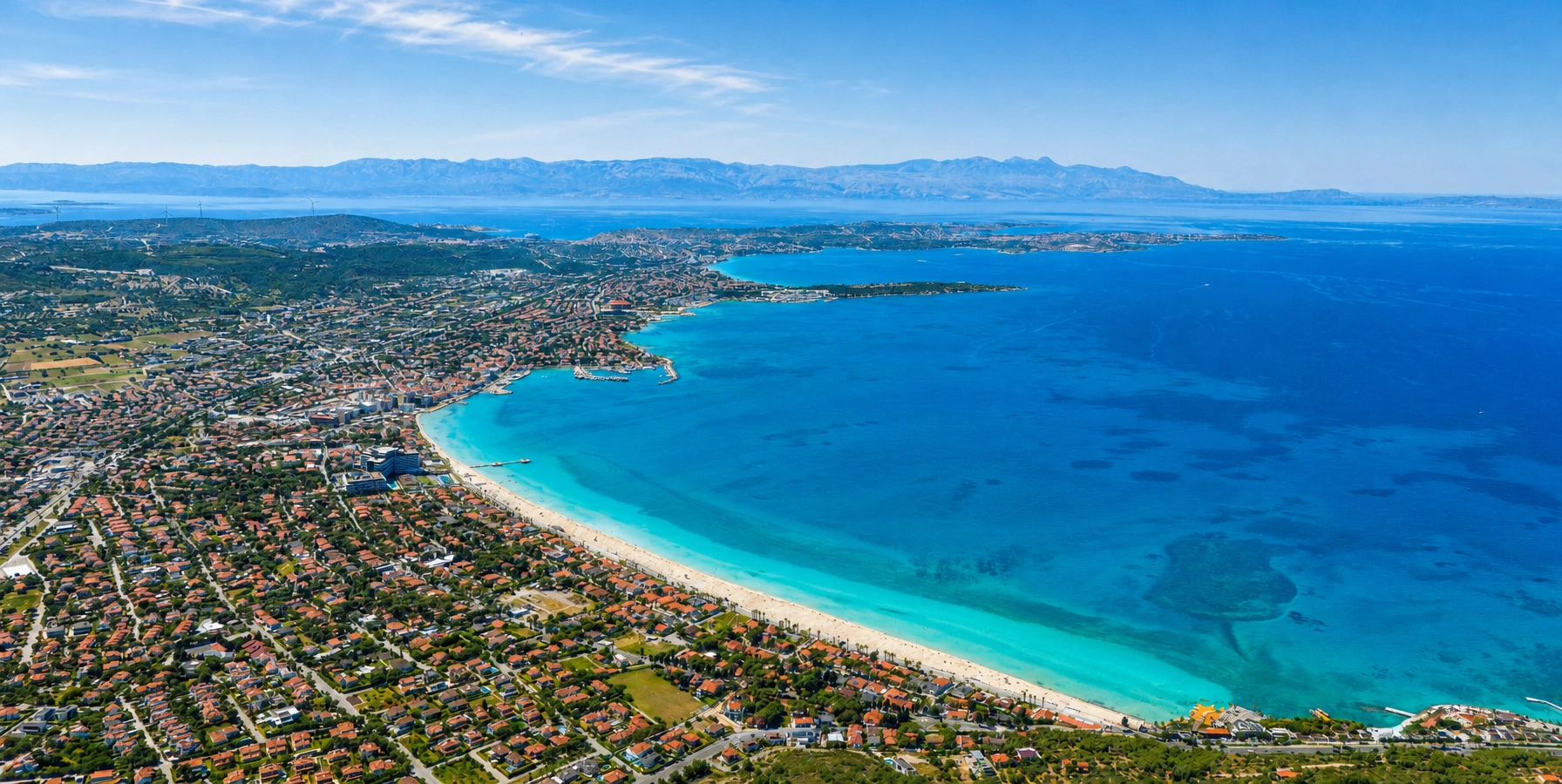
Continue beyond Ildırı to discover Çeşme's castle, marina, historic center, beaches, thermal springs, villages and extraordinary Aegean coastline.
View Çeşme GuideCombine Ildırı and Erythrai with the historic, cultural and coastal highlights of western İzmir.
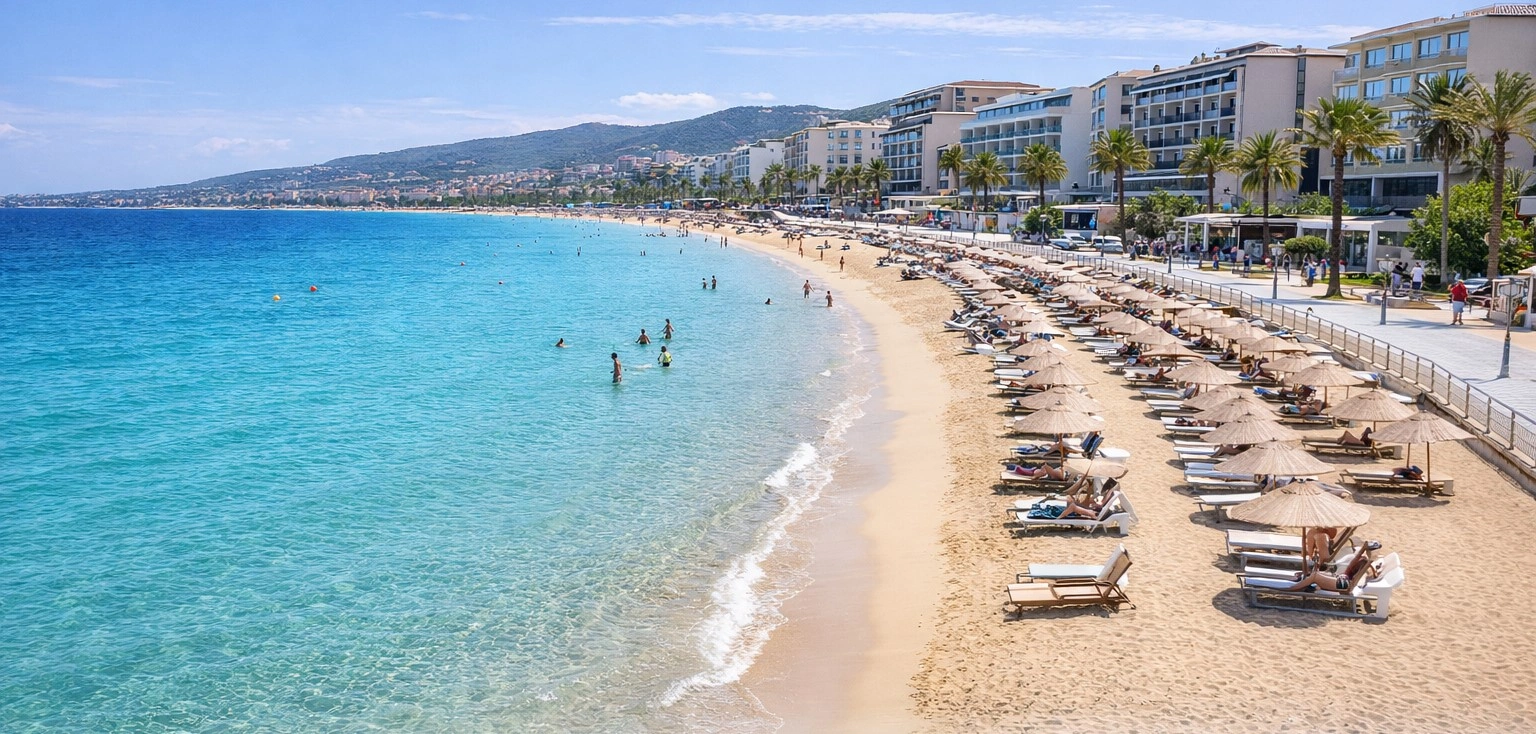
Explore Çeşme's famous shallow sandy beach, where thermal springs and the Aegean coastline create one of the peninsula's most distinctive natural settings.
Explore Ilıca Beach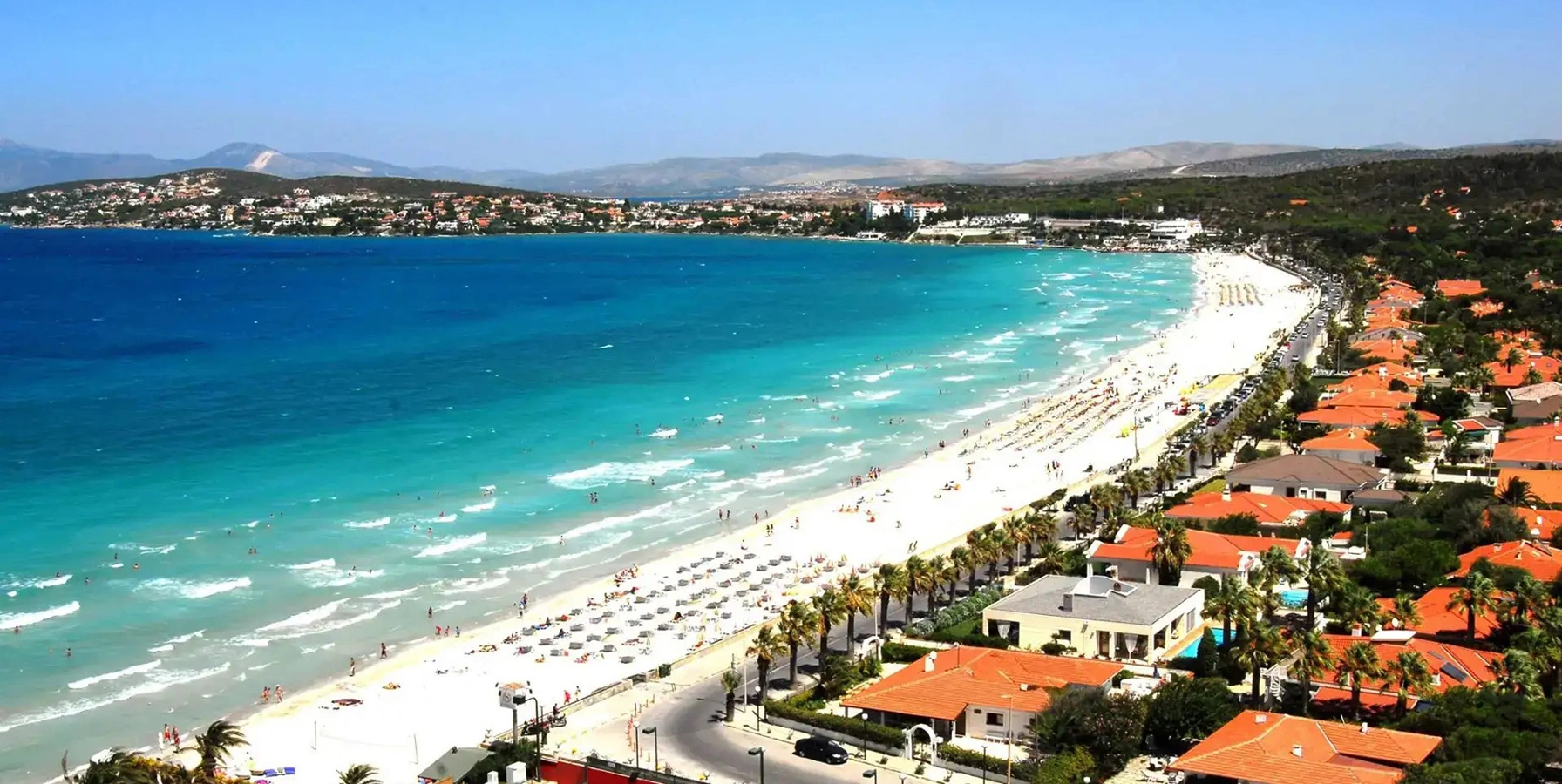
Continue to Alaçatı for historic stone architecture, cobbled streets, restaurants, cafés and one of the Aegean coast's most distinctive towns.
Explore Alaçatı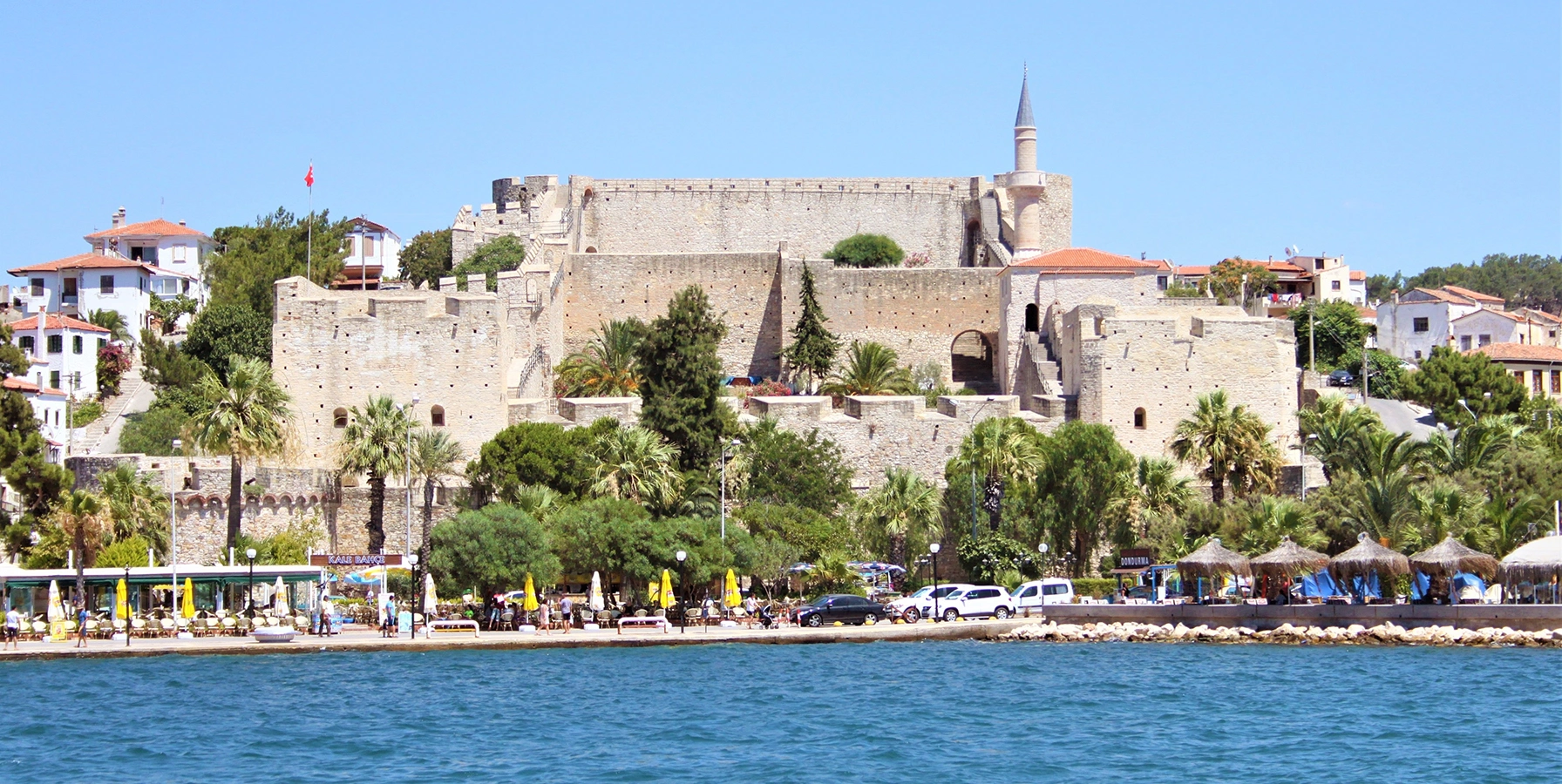
Explore the imposing fortress overlooking Çeşme's harbor and discover the peninsula's maritime history after visiting ancient Erythrai.
Explore Çeşme Castle