Fresh Zucchini Blossoms
The flower itself is the defining ingredient, providing a delicate wrapper around the rice filling.
- Texture: Extremely delicate
- Colour: Yellow to golden orange
- Season: Warm growing months






Among the colourful dishes of Türkiye's Aegean coast, few are as beautiful or as closely connected with the rhythm of the growing season as kabak çiçeği dolması — zucchini blossoms carefully filled with seasoned rice and gently cooked with olive oil.
The flowers are naturally fragile. They appear on zucchini plants during the warmer growing season and must be handled with considerable care from the moment they are collected until they reach the plate.
Inside each blossom is a fragrant filling commonly built around rice, onion, fresh herbs, olive oil and seasoning. Recipes change from household to household, allowing mint, dill, parsley, tomato or different spices to give each version its own character.
For travellers exploring İzmir's cuisine, stuffed zucchini flowers offer something particularly special: a dish that expresses seasonality, agricultural knowledge, patience and the vegetable-focused philosophy of the Aegean kitchen.
Fresh zucchini blossoms are available for only part of the growing season.
Each delicate flower must be opened and filled individually without tearing its petals.
Olive oil gives the rice filling richness while preserving the delicate character of the flower.
Kabak çiçeği dolması has become one of the most recognisable vegetable dishes of the Aegean table.
Essential information about İzmir's delicate stuffed zucchini flowers.
İzmir and the wider Aegean coast of western Türkiye.
Open İzmir on Google MapsFresh and carefully handled zucchini blossoms.
Rice combined with onion, herbs, seasoning and olive oil.
Primarily associated with the warmer zucchini-growing season.
A seasonal dish shaped by vegetable gardens, olive oil and generations of careful home cooking.
The cuisine of İzmir developed within one of western Türkiye's most productive agricultural landscapes. Vegetables, herbs, olives and fruit have long shaped the everyday cooking of towns and villages across the region.
Zucchini plants provide not only the familiar vegetable but also their beautiful yellow-orange blossoms. Traditional cooks learned to make use of these flowers while they were fresh and tender, transforming an extremely fragile ingredient into an elegant stuffed dish.
The flowers are filled individually, most commonly with a mixture of rice, onion, olive oil and aromatic herbs. They are then placed carefully together and cooked gently so the petals remain intact.
Versions of stuffed zucchini flowers appear throughout the Aegean and Mediterranean culinary world. In western Türkiye, the dish fits naturally into the broader tradition of zeytinyağlı cooking and the vegetable-rich shared table.
İzmir's historic connections with Cretan and wider Aegean food cultures have also contributed to the region's extraordinary repertoire of herbs, vegetables, olive-oil dishes and stuffed foods.
Today kabak çiçeği dolması remains a seasonal favourite in homes, traditional restaurants, village kitchens, coastal meze restaurants and contemporary restaurants celebrating local Aegean produce.
Every part of the dish reflects the light, seasonal and ingredient-focused character of Aegean cooking.
The flower itself is the defining ingredient, providing a delicate wrapper around the rice filling.
Rice provides the foundation of the traditional filling while absorbing olive oil, herbs and seasoning.
Olive oil connects the dish directly with İzmir's wider zeytinyağlı culinary tradition.
Mint, dill, parsley and other herbs may appear according to the cook and family recipe.
Finely prepared onion provides sweetness and depth within the rice mixture.
The blossoms require careful cooking so that the rice becomes tender without destroying the fragile flowers.
Kabak çiçeği means zucchini or squash flower in Turkish, while dolma describes foods prepared by filling vegetables, leaves or other ingredients.
Kabak çiçeği dolması therefore literally refers to stuffed zucchini blossoms. Each flower becomes a delicate natural wrapper around a small portion of seasoned rice.
Fresh zucchini blossoms form the edible outer layer of the dish.
Rice provides structure while absorbing herbs, olive oil and seasoning.
Olive oil provides richness while keeping the dish firmly connected with Aegean cuisine.
Fresh herbs introduce fragrance and freshness into the filling.
Every individual flower must be prepared and filled carefully by hand.
The availability of fresh blossoms naturally limits when the traditional dish can be prepared.
The extraordinary character of the dish begins with the flowers themselves. Unlike vegetables that can be transported and stored relatively easily, zucchini blossoms are extremely fragile.
Fresh blossoms are soft, thin and easily damaged, making careful harvesting, transportation and preparation essential.
Traditional preparation often begins early in the day. Fresh zucchini blossoms are easiest to work with when they remain open, fresh and resilient enough to accept the filling.
As the day becomes warmer, the flowers can begin closing or losing some of their freshness, which makes careful stuffing more difficult.
Recently collected flowers are easier to open gently for filling.
Morning conditions help preserve the naturally delicate structure of the petals.
Healthy, intact blossoms are selected before cooking begins.
Freshness becomes especially important because the ingredient is so fragile.
Knowing exactly when to collect the flowers is part of traditional agricultural experience.
The short journey from plant to cooking pot is one of the charms of the dish.
There is no single filling used by every cook. The exact balance changes between households, villages and restaurants, but a classic meat-free version is centred around rice, onion, herbs and olive oil.
Preparing stuffed zucchini flowers is less about complicated techniques than precision and patience. The greatest challenge is working with a flower whose petals can tear easily.
The blossom itself explains why this dish is so closely associated with careful home cooking. A zucchini flower is far more fragile than a pepper, aubergine or vine leaf.
The blossom can tear if opened too forcefully.
The filling must be introduced carefully rather than packed tightly inside.
Space must remain for the rice to cook and expand.
The petals are closed carefully to keep the filling inside.
The flowers are often positioned closely so they remain stable during cooking.
Excessively aggressive cooking would damage both the appearance and texture.
The blossom itself has a subtle character, meaning the dish is defined by balance rather than powerful individual flavours.
The rice provides substance, herbs bring fragrance, onion adds sweetness and olive oil binds everything together with a gentle richness.
The flower provides a subtle vegetable character rather than an aggressive flavour.
Fresh mint, dill or parsley can make the filling particularly aromatic.
Good olive oil gives the dish a smooth and recognisably Aegean character.
The cooked flower becomes tender around the rice filling.
Lemon or gentle acidity can brighten the finished dish.
No single ingredient should overwhelm the fragile zucchini blossom.
Unlike foods prepared from ingredients available throughout the year, traditional stuffed zucchini flowers depend on the natural flowering cycle of zucchini plants.
For this reason, the dish is particularly associated with the warmer growing season and is at its most meaningful when genuinely fresh flowers are reaching local kitchens and markets.
Kabak çiçeği dolması reflects several defining characteristics of Aegean cuisine at the same time: vegetables, herbs, olive oil, seasonality and careful preparation.
The dish begins with an ingredient whose quality depends directly on freshness.
The region's defining cooking ingredient provides richness without overwhelming the flower.
Herbs connect the filling with the wider green and aromatic character of İzmir cuisine.
The dish naturally appears when the agricultural landscape provides the required flowers.
A simple plant ingredient is treated as worthy of considerable time and attention.
Stuffed flowers fit naturally among several small dishes on an Aegean meze table.
İzmir's culinary identity extends far beyond its famous street foods. The surrounding province contains vegetable farms, olive groves, vineyards, village markets and an extraordinary tradition of cooking with herbs and seasonal produce.
Stuffed zucchini flowers therefore feel completely at home here. They may appear in traditional home-style restaurants, meze selections and produce-driven restaurants throughout the city and surrounding coastal districts.
Traditional restaurants and meze counters provide opportunities to discover seasonal vegetable dishes.
Agriculture, olive oil and contemporary gastronomy make Urla particularly rewarding for food-focused travellers.
Coastal restaurants combine Aegean vegetables and olive-oil mezes naturally with seafood.
Seasonal herbs and vegetables play an important part in the peninsula's culinary identity.
Local producer culture creates a strong connection between farms, markets and traditional food.
Some of the most memorable examples remain closely connected with traditional home cooking.
The food traditions of western Türkiye developed through centuries of movement and exchange across the Aegean. İzmir in particular became home to communities carrying culinary traditions from islands, coastal towns and different parts of the former Ottoman world.
Stuffed zucchini flowers are strongly associated with the wider Aegean and are frequently connected with Cretan culinary traditions. Their emphasis on vegetables, herbs and olive oil fits naturally within the food culture that developed around İzmir.
Fresh garden produce forms the foundation of many shared Aegean dishes.
Knowledge of edible greens plays an important role on both sides of the Aegean.
Olive cultivation connects the agricultural landscapes and cuisines of the region.
Leaves, vegetables and blossoms provide natural wrappers for seasoned fillings.
Traditional recipes respond closely to what gardens and fields provide.
These culinary connections remain visible in contemporary İzmir restaurants and homes.
Olive oil is fundamental to the character of traditional kabak çiçeği dolması. It flavours the rice, contributes richness during cooking and connects the finished dish with the broader family of Aegean olive-oil foods.
Good olive oil contributes its own aroma rather than disappearing into the background.
The grains absorb oil and seasoning while cooking.
Olive oil helps create a moist and tender filling.
The oil provides richness while fresh herbs keep the dish bright.
Olive cultivation is inseparable from the food landscapes surrounding İzmir.
Stuffed blossoms belong naturally beside other olive-oil vegetables and stuffed dishes.
Kabak çiçeği dolması can be enjoyed as part of a larger meal rather than necessarily functioning as a stand-alone main course.
Its delicate nature makes it especially suitable beside other vegetable dishes, herbs and mezes.
Many traditional olive-oil versions of stuffed zucchini flowers are based entirely around blossoms, rice, onion, herbs and olive oil, making them naturally suitable for many plant-focused diets.
Recipes can vary, however, and restaurants may use different ingredients. Travellers with strict dietary requirements should always confirm the individual preparation.
The classic filling provides a completely plant-based foundation.
Zucchini flowers and onion supply the principal fresh ingredients.
Herbs provide aroma without requiring heavy sauces.
Olive oil supplies richness traditionally provided without dairy.
Individual kitchens may prepare different versions of the dish.
Confirm ingredients directly when strict vegetarian, vegan or allergy requirements matter.
One of the best ways to experience kabak çiçeği dolması is not in isolation but as one element of a colourful Aegean meal.
Olive-oil artichokes add another delicate seasonal vegetable to the table.
Smooth broad-bean purée provides a creamy contrast to the rice-filled flowers.
Borlotti beans add colour, richness and greater substance.
Boiled or sautéed greens dressed with olive oil and lemon provide freshness.
Stuffed vine leaves create an interesting comparison between two traditional rice-filled foods.
Along the coast, vegetable mezes often precede simply prepared fish.
Weekly markets provide the clearest connection between stuffed zucchini flowers and the agricultural landscape behind them.
During the growing season, travellers may encounter zucchini blossoms alongside herbs, vegetables, olives and other ingredients used throughout the Aegean kitchen.
Explore a peninsula celebrated for agriculture, olive oil and produce-driven gastronomy.
Its traditional market provides one of the great agricultural food experiences of İzmir Province.
Village producers and local agriculture are central to the district's food culture.
The Çeşme Peninsula is particularly celebrated for seasonal herbs and vegetables.
The fertile Küçük Menderes basin supports a rich farming and market tradition.
Neighbourhood markets reveal the extraordinary seasonal diversity behind the city's cuisine.
Because stuffed zucchini flowers are seasonal, they may not appear on every menu throughout the year. Asking what has been freshly prepared is often more successful than searching only for a permanent menu listing.
The best place to search for kabak çiçeği dolması is often a restaurant whose menu changes according to the season rather than one attempting to offer every regional speciality throughout the year.
Traditional restaurants around İzmir's historic bazaar serve a broad range of home-style dishes.
Meze restaurants provide opportunities to explore several Aegean vegetable dishes together.
One of Türkiye's leading destinations for restaurants built around seasonal local produce.
The historic town is strongly associated with herbs, vegetables and seasonal Aegean cuisine.
Cold vegetable dishes naturally accompany the district's coastal seafood culture.
Local producer culture creates excellent conditions for traditional vegetable-focused food.
The apparent simplicity of stuffed zucchini flowers leaves little room to hide poor ingredients or careless preparation.
The blossoms should remain tender and recognisable rather than disintegrating during cooking.
The rice should complement the flower rather than overwhelm it.
The rice should be cooked through without becoming excessively soft.
Aromatic herbs should provide freshness without dominating every bite.
The oil should contribute a pleasant flavour rather than simply greasiness.
The finished blossoms should still reveal the craftsmanship involved in filling them.
The best version is usually the one prepared while fresh blossoms are naturally available.
Seasonal restaurants may prepare only limited quantities each day.
Order stuffed flowers alongside other Aegean vegetable dishes rather than eating only one speciality.
Different kitchens create noticeably different aromas through their choice of fresh herbs.
Good olive oil should remain a recognisable part of the finished flavour.
Seeing fresh zucchini blossoms helps explain why the dish requires so much care.
Urla, Çeşme, Alaçatı and Seferihisar provide particularly rewarding culinary experiences.
This is a dish best appreciated as part of a relaxed meal built around several seasonal plates.
Kabak çiçeği dolması demonstrates how Aegean cooks can transform a fleeting agricultural ingredient into something memorable without hiding its natural character.
A fragile flower receives the same culinary attention that another cuisine might reserve for a more expensive ingredient.
Traditional cooking responds to nature rather than demanding every ingredient throughout the year.
Individual flowers require careful preparation by hand.
Rice, herbs and olive oil create complexity without requiring a long list of ingredients.
The finished dish maintains a visible connection with the zucchini plant that produced it.
Small stuffed blossoms naturally become part of a larger communal table.
A food-focused day in İzmir can connect the finished dish with the markets, neighbourhoods and coastal landscapes behind the region's cuisine.
Travellers particularly interested in seasonal Aegean cuisine can turn stuffed zucchini flowers into one stop on a much wider journey through İzmir Province.
Begin with Kemeraltı, neighbourhood restaurants, meze counters and the historic waterfront.
Explore olive groves, vineyards, vegetable gardens and contemporary Aegean gastronomy.
Discover one of the peninsula's great centres of herb and seasonal vegetable culture.
Combine stuffed vegetables and cold mezes with fresh Aegean seafood.
Experience producer markets, village cooking and agricultural landscapes.
Travel inland for one of the province's most impressive traditional weekly markets.
The importance of stuffed zucchini flowers lies not only in their flavour. The dish preserves knowledge about seasons, agriculture, olive oil, delicate ingredients and the patient preparation associated with traditional kitchens.
The dish directly connects the dining table with vegetable gardens and farms.
Cooks understand when blossoms appear and when they are best collected.
The dish preserves culinary skills that cannot simply be replaced by speed.
Olive oil links the blossoms with the wider agricultural identity of western Anatolia.
Kabak çiçeği dolması has become strongly associated with the vegetable-rich Aegean table.
The dish continues to appear in homes, markets and contemporary restaurant kitchens.
Stuffed zucchini flowers reveal the delicate vegetable side of İzmir cuisine. Continue exploring the city's remarkable food culture with its breads, herbs, olive-oil dishes, street foods and desserts.
Discover artichokes, beans, stuffed vegetables, fava and the wider zeytinyağlı tradition of the Aegean.
Explore radika, cibez, arapsaçı, şevketi bostan and the remarkable green side of İzmir cuisine.
The city's famous layered pastry and one of the defining flavours of an İzmir breakfast.
A crisp sesame-covered bread ring deeply connected with İzmir's street-food tradition.
Distinctive sesame bread transformed into one of the city's best-known sandwiches.
İzmir's characteristic finely chopped interpretation of Türkiye's famous grilled speciality.
Seasoned meatballs cooked with potatoes, peppers and rich tomato sauce.
A beloved fried syrup dessert deeply connected with neighbourhood traditions.
A modern İzmir favourite with a thin pastry shell surrounding a rich chocolate centre.
Discovering kabak çiçeği dolması can easily become part of a wider journey through İzmir's historic districts, archaeological sites, coastal towns and agricultural landscapes.
Explore İzmir's historic commercial heart together with traditional restaurants, cafés and food shops.
Discover the archaeological remains of ancient Smyrna in the modern city centre.
Combine olive groves, vineyards, markets and contemporary gastronomy.
Explore stone streets, seasonal herbs and the food culture of the Çeşme Peninsula.
Enjoy the natural relationship between seafood and vegetable-rich Aegean mezes.
Experience an agricultural town famous for its enormous traditional weekly market.
Kabak çiçeği dolması is a traditional dish made by filling fresh zucchini blossoms with a seasoned mixture commonly based on rice, onion, herbs and olive oil.
“Kabak çiçeği” means zucchini or squash flower, while “dolması” refers to its being stuffed or filled.
Yes. Stuffed zucchini flowers are strongly associated with the vegetable-rich culinary traditions of İzmir and the wider Aegean region.
Traditional meat-free fillings commonly include rice, onion, olive oil, fresh herbs and seasoning. Exact recipes vary considerably between cooks.
The flower itself has a mild and delicate vegetable character. Much of the finished flavour comes from olive oil, herbs, onion and the seasoned rice filling.
It is particularly associated with the warmer growing season when fresh zucchini blossoms are naturally available.
Fresh blossoms are traditionally valued while they remain open, tender and easier to prepare. Heat and time can make the extremely delicate flowers more difficult to handle.
Many traditional olive-oil versions are vegetarian and contain rice rather than meat. Individual recipes should nevertheless be checked when dietary requirements matter.
Many versions made from blossoms, rice, herbs, vegetables and olive oil can be entirely plant based. Ask the restaurant to confirm the exact recipe.
Serving style varies. Olive-oil versions may be enjoyed cool or at room temperature, while some preparations are served gently warm.
Zucchini flowers have extremely fragile petals, so opening, filling, folding and cooking them requires considerable care.
It can form part of a larger meze selection and works particularly well alongside other Aegean vegetable and olive-oil dishes.
Recipes vary, but mint, dill and parsley are among the fresh herbs that may appear in the rice filling.
The classic olive-oil version commonly uses seasoned rice without meat, although different regional or household variations may exist.
Look for traditional home-style restaurants, Aegean meze restaurants and seasonal kitchens in central İzmir, Urla, Alaçatı, Çeşme and other parts of the province.
Not necessarily. Fresh zucchini flowers are seasonal, and restaurants focusing on genuinely seasonal ingredients may offer the dish only when suitable blossoms are available.
They pair beautifully with artichokes, fava, barbunya pilaki, stuffed vine leaves, seasonal Aegean herbs and other cold vegetable mezes.
Kabak dolması normally refers to stuffed zucchini itself, while kabak çiçeği dolması uses the zucchini plant's edible flower as the wrapper for the filling.
Olive oil provides flavour and richness to the rice while connecting the dish with the wider zeytinyağlı tradition of the Aegean coast.
Try boyoz, gevrek, kumru, İzmir köfte, kokoreç, lokma, İzmir Bombası, Aegean herbs and the enormous variety of traditional olive-oil dishes.
Kabak çiçeği dolması is one of İzmir's most photogenic traditional foods. Its golden petals, green herbs, glossy olive oil and handmade appearance immediately communicate the delicacy of the dish.
Photograph intact zucchini blossoms before filling to show the extraordinary ingredient behind the dish.
Hands carefully filling individual blossoms communicate the craftsmanship particularly well.
A close view reveals the folded petals and elegant natural shape of each flower.
Place the stuffed flowers beside herbs, fava and colourful vegetable dishes to provide culinary context.
Fresh flowers displayed at a market beautifully communicate the dish's seasonal nature.
A subtle shine of olive oil across the blossoms highlights the dish's connection with Aegean cuisine.
When photographing farmers, market vendors, cooks or restaurant staff, always ask permission before taking close portraits. The people growing and preparing these fragile blossoms are an important part of the culinary story.
Discover İzmir through its seasonal vegetables, traditional markets, olive oil, local dishes, historic neighbourhoods and extraordinary Aegean landscapes.
Custom-designed private touring with professional guiding, comfortable transportation and flexible timing for travellers who want to understand the connection between İzmir's food, agriculture, history and culture.
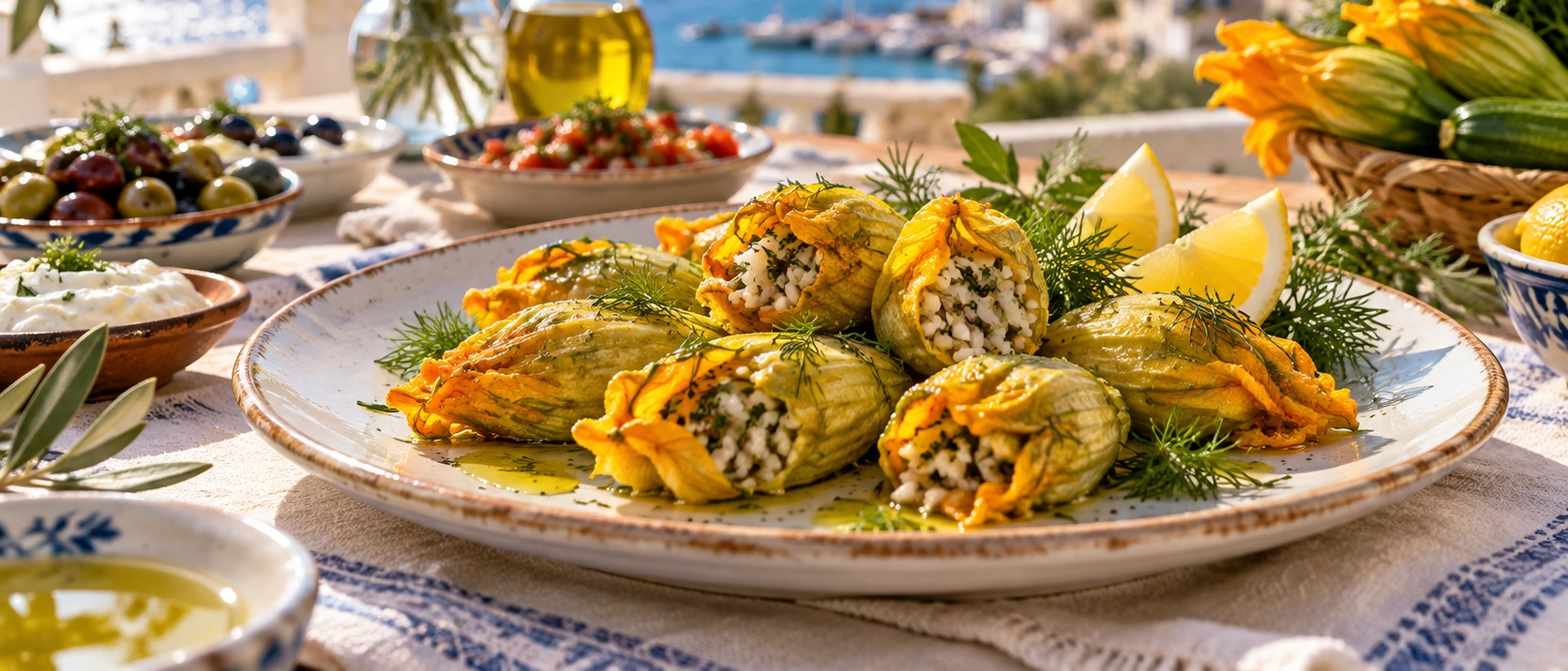
Explore markets, seasonal produce and traditional Aegean dishes while discovering the zucchini flowers, herbs, olive oil and agricultural traditions behind İzmir's cuisine.
Request This Tour
Combine Konak, Kemeraltı, ancient Smyrna and İzmir's waterfront with seasonal foods, traditional markets and the vegetable-rich cuisine of the Aegean.
Design Your ExperienceExtend your culinary journey through İzmir Province with village markets, olive-growing landscapes, coastal towns, archaeological sites and regional food traditions.

Combine one of Türkiye's greatest archaeological sites with İzmir's markets, coastal landscapes and distinctive Aegean culinary traditions.
Request This Tour
Create a personalised route through İzmir Province combining local markets, olive groves, herbs, seasonal vegetables, traditional dishes and the beautiful landscapes of the Aegean.
Design Your Journey