Zeytinyağlı Enginar
Tender artichoke hearts prepared with olive oil and commonly combined with vegetables, herbs and fresh lemon.
- Main ingredient: Artichoke
- Character: Fresh and delicate
- Best season: Spring






To understand the cuisine of İzmir, begin with a bottle of good olive oil. Across the city and the surrounding Aegean coast, vegetables, herbs, legumes and stuffed dishes are transformed into an extraordinary collection of foods known in Turkish as zeytinyağlılar.
These dishes are not simply vegetables cooked using olive oil as a frying medium. Olive oil is one of their principal flavours. Artichokes, green beans, broad beans, aubergines, leeks, celery root, stuffed vine leaves, zucchini flowers and seasonal greens are prepared gently so their own character remains unmistakable.
Many zeytinyağlı dishes are served cool or at room temperature, frequently forming part of a larger meze table. Fresh lemon, herbs, onion, tomato and occasionally rice create additional layers of flavour while the natural sweetness and freshness of the vegetables remain central.
For travellers, this style of cooking reveals one of the most distinctive sides of western Türkiye: a culinary culture shaped by olive groves, vegetable gardens, local markets, the Mediterranean climate and generations of seasonal home cooking.
Olive oil is not merely a cooking fat but one of the defining flavours of the finished dish.
The best dishes often change according to the vegetables and herbs available from local markets.
Many zeytinyağlı dishes naturally appear among the colourful small plates of an Aegean meze table.
Few styles of cooking express the agricultural landscapes around İzmir as clearly.
Essential information about the zeytinyağlı tradition of İzmir and Türkiye's Aegean coast.
İzmir and the central Aegean coast of western Türkiye.
Open İzmir on Google MapsHigh-quality olive oil forms the flavour foundation of zeytinyağlı cuisine.
Seasonal vegetables, herbs, legumes, onions, rice, lemon and fresh greens.
Many dishes are enjoyed cool or at room temperature as meze, starters or vegetable courses.
A culinary tradition shaped by Mediterranean agriculture, coastal life and generations of home cooking.
Olive trees have shaped the landscapes of western Anatolia for thousands of years. Around İzmir, groves spread through coastal districts, fertile valleys and inland hills, making olives and olive oil inseparable from the region's agricultural identity.
It was therefore natural for olive oil to become one of the foundations of local cooking. Vegetables could be gently prepared with oil, onion, herbs and modest seasoning rather than relying on rich sauces or large quantities of meat.
Over generations, an enormous repertoire developed: artichokes with olive oil, green beans, stuffed vine leaves, aubergines, celery root, leeks, broad beans, zucchini flowers, black-eyed peas and countless seasonal greens.
İzmir's history as a cosmopolitan Aegean port also enriched its food culture. Turkish, Greek, Cretan, Balkan, Sephardic Jewish, Levantine and wider Anatolian culinary traditions interacted within the city and surrounding towns.
The result is not one rigid collection of recipes but a shared culinary philosophy built around excellent produce, seasonality, olive oil, restraint and respect for natural flavour.
Today zeytinyağlı dishes remain visible everywhere from home kitchens and neighbourhood restaurants to seafood restaurants, meze counters and the modern gastronomic tables of Urla and the Çeşme Peninsula.
The exact selection changes with season and restaurant, but these dishes provide an excellent introduction to İzmir's vegetable-focused cuisine.
Tender artichoke hearts prepared with olive oil and commonly combined with vegetables, herbs and fresh lemon.
Borlotti beans slowly cooked with olive oil, onion, carrot and tomato to create one of Türkiye's classic cold vegetable dishes.
Vine leaves wrapped around a fragrant rice filling and gently cooked with olive oil.
Fresh green beans slowly cooked with tomatoes, onion and olive oil until wonderfully tender.
Delicate zucchini blossoms carefully filled with seasoned rice and gently cooked with olive oil.
Aubergine filled with a deeply savoury mixture commonly based on onion, tomato, garlic and olive oil.
A smooth broad-bean purée traditionally finished with olive oil and frequently served with fresh dill and onion.
Leeks slowly cooked with olive oil and commonly accompanied by carrot, rice and a gentle acidic note.
Celery root prepared in olive oil, often with carrot, potato or citrus flavours that complement its distinctive aroma.
Fresh broad beans gently cooked with olive oil and often paired with dill for a particularly spring-like flavour.
Black-eyed peas or fresh cowpeas prepared with olive oil in a number of regional Aegean styles.
Okra gently cooked with tomato, olive oil and acidity that helps create the dish's characteristic balance.
The Turkish word zeytinyağlı literally refers to something prepared with olive oil. In culinary use, however, it represents an entire family of dishes in which vegetables, legumes or stuffed ingredients are cooked so that olive oil remains an important part of the final flavour.
Unlike foods in which oil disappears into the background, good zeytinyağlı cooking allows the aroma and texture of olive oil to remain noticeable.
Fresh vegetables are usually the stars rather than secondary accompaniments.
Olive oil contributes flavour, aroma, texture and richness to the finished dish.
Slow or careful cooking helps vegetables soften while retaining their distinctive character.
Many traditional examples are enjoyed cool or at room temperature.
The best selections naturally change according to what local farms and markets provide.
Several different olive-oil dishes may appear together on one Aegean table.
Olive trees are an essential element of the landscape around İzmir. From the Urla Peninsula and Çeşme to villages and agricultural districts farther inland, olives have long been part of everyday food production.
For this reason, olive oil in Aegean cooking is much more than a practical cooking medium. Its aroma, fruitiness and texture can influence the character of an entire dish.
Olive groves form an important part of the agricultural landscape of western Türkiye.
Good olive oil contributes its own aroma rather than simply carrying other ingredients.
Olive oil allows vegetables to develop richness without requiring heavy sauces.
A generous finishing drizzle can bring together herbs, vegetables and legumes.
Fresh produce and olive oil provide the foundation for dishes that change throughout the year.
The flavour of olive oil is inseparable from the culinary character of İzmir.
One of the characteristics that can surprise first-time visitors is that many zeytinyağlı dishes are intentionally served cool or at room temperature.
Allowing a cooked vegetable dish to rest can help its flavours combine while keeping olive oil central to the eating experience.
Traditional Aegean vegetable cooking makes the most sense when experienced seasonally. Different ingredients reach their best quality at different points of the year, so a genuinely local zeytinyağlı selection should not remain exactly the same in every season.
Few vegetables communicate the arrival of spring in the Aegean quite like the artichoke. Around İzmir, fresh artichokes become a major seasonal ingredient and appear in both traditional and contemporary dishes.
A classic zeytinyağlı preparation allows the tender artichoke heart to remain the centre of attention while olive oil, fresh vegetables, herbs and lemon provide balance.
Artichokes are particularly associated with the spring vegetable season.
Carefully prepared artichoke bottoms create the foundation of the dish.
The oil contributes richness without overwhelming the delicate vegetable.
Acidity provides a refreshing contrast and helps define the flavour profile.
Carrot, peas, potato or other vegetables may appear depending on the recipe.
Dill is a particularly familiar partner in many artichoke preparations.
Stuffed zucchini flowers are among the most visually distinctive foods of the Aegean summer. The flowers are fragile and highly seasonal, meaning preparation requires both fresh produce and careful handling.
The blossoms are filled with a seasoned rice mixture and cooked gently so the delicate flower remains intact.
Colourful barbunya pilaki is one of the easiest dishes to recognise on a traditional meze counter. Borlotti beans are gently cooked with vegetables and olive oil until creamy and deeply flavoured.
The dish is typically allowed to cool and is often finished with parsley, lemon or an additional drizzle of olive oil.
The beans provide a creamy texture and satisfying substance.
Generous olive oil defines the smooth and rich character of the dish.
Slow-cooked onion provides sweetness and depth.
Carrot commonly adds colour and gentle sweetness.
Tomato may provide acidity, colour and savoury richness.
Barbunya pilaki is particularly well suited to a shared Aegean table.
Stuffed vine leaves are found across a wide geographical area, but they feel completely at home on the Aegean table. Each leaf encloses a carefully seasoned rice filling before being arranged closely and gently cooked.
Recipes vary between households, restaurants and regions, which means the balance of herbs, acidity, sweetness and spice can differ considerably.
Fava transforms dried broad beans into a smooth, comforting purée whose simplicity makes the quality of its olive oil particularly noticeable.
It is commonly served as a cold meze, sometimes shaped or cut into portions and finished with fresh dill, onion and another generous drizzle of olive oil.
Dried broad beans create the smooth foundation of the dish.
Its flavour becomes particularly noticeable in such a simple preparation.
Fresh dill provides a classic aromatic contrast.
Onion may appear during cooking or as part of the finishing garnish.
Properly prepared fava should be smooth, creamy and satisfying.
It pairs naturally with vegetable dishes, seafood and fresh bread.
Aubergine occupies an extraordinary place in Turkish cooking, and olive-oil preparations reveal its ability to absorb surrounding flavours while developing a beautifully soft texture.
Aubergine filled with onion, tomato and garlic is one of the great vegetable classics.
Smoky roasted flesh can become the base for numerous cold meze dishes.
Fresh tomato provides acidity and sweetness to many summer preparations.
Garlic naturally complements the richness of aubergine and olive oil.
Aubergines belong naturally to the colourful vegetable tables of the warmer months.
Many aubergine dishes become especially enjoyable after their flavours have rested.
The best way to understand the diversity of zeytinyağlı cuisine may be to avoid choosing only one dish. At an Aegean meze table, several small portions can be ordered together and shared.
A delicate seasonal vegetable dish with a strong connection to spring.
Creamy beans and vegetables bring richness and colour to the table.
Smooth broad-bean purée provides a comforting contrast to fresh greens.
Stuffed vine leaves offer herbs, rice, acidity and olive oil in a compact bite.
Seasonal boiled or sautéed greens add bitterness, aroma and freshness.
Along the coast, olive-oil vegetable mezes naturally precede grilled or simply prepared fish.
İzmir's famous edible herbs and its olive-oil dishes are closely connected. Wild and cultivated greens are frequently boiled, sautéed or gently cooked before being finished with olive oil and lemon.
Travellers particularly interested in this tradition can continue with our dedicated guide to İzmir's Aegean herbs.
Pleasantly bitter greens traditionally served with olive oil and lemon.
Tender young greens particularly suited to simple preparation.
Mustard greens provide a sharper and slightly peppery flavour.
Salty coastal greens make a distinctive cold salad or meze.
Aromatic fennel-like greens add a powerful fragrance to cooked dishes.
One of the most recognisable plants associated with the wider culinary culture of the Aegean.
The extraordinary variety of vegetable, herb and legume dishes makes İzmir particularly rewarding for travellers interested in plant-focused food.
Many traditional zeytinyağlı dishes can be entirely plant based. Individual recipes nevertheless vary, so travellers following a strict vegetarian or vegan diet should confirm ingredients directly.
Zeytinyağlı taze fasulye is commonly based entirely around vegetables and olive oil.
Olive-oil artichokes provide an excellent seasonal plant-based choice.
Bean dishes offer a more substantial addition to a vegetable-focused meal.
Olive-oil vine leaves commonly contain rice rather than meat.
Many boiled Aegean greens are naturally plant based.
Ask about stock, dairy, egg or other additions if your diet requires strict avoidance.
The most meaningful way to understand İzmir's vegetable cuisine is to see its ingredients before they reach the kitchen. Weekly markets display the extraordinary seasonal variety that supports traditional Aegean cooking.
Explore an area strongly associated with olive oil, agriculture, herbs and contemporary Aegean gastronomy.
The enormous traditional market provides one of İzmir Province's most memorable food experiences.
Producer and village culture makes the district particularly rewarding for seasonal food exploration.
The Çeşme Peninsula is celebrated for herbs, vegetables and a strongly seasonal culinary identity.
The fertile Küçük Menderes basin supports a rich agricultural and market tradition.
Markets and food shops around the city provide easy access to vegetables, olives, oils and traditional ingredients.
West of central İzmir, the Urla Peninsula provides one of the most rewarding destinations for travellers interested in the relationship between agriculture and modern Aegean gastronomy.
Olive groves, vineyards, vegetable gardens, village markets and ambitious contemporary restaurants all contribute to a food culture deeply connected with local ingredients.
The surrounding landscape makes the connection between olives and regional cooking immediately visible.
Small-scale agricultural production remains an important part of the peninsula's identity.
Restaurants frequently build dishes around ingredients available at a particular moment.
Local markets reveal vegetables, herbs, cheeses, olives and other regional products.
Wine production adds another dimension to the peninsula's growing gastronomic reputation.
Urla works particularly well for travellers who want to experience food within its landscape.
Many restaurants display their cold mezes and vegetable dishes where guests can see them. Rather than ordering only from a printed menu, ask what was freshly prepared that day.
Zeytinyağlı dishes appear throughout İzmir, from neighbourhood home-style restaurants to seafood restaurants, meze specialists and ambitious contemporary Aegean kitchens.
The historic bazaar area contains traditional restaurants serving regional home-style foods.
Explore meze restaurants and contemporary interpretations of Aegean cuisine in the city centre.
One of Türkiye's most exciting destinations for produce-driven contemporary Aegean cooking.
Seasonal vegetable dishes feature strongly across the historic town's restaurant scene.
Pair cold olive-oil dishes with seafood beside the Aegean coast.
Discover local produce and vegetable-based cooking connected with the district's strong producer culture.
A restaurant shows you the finished dish. A market reveals the agriculture, seasonality and human knowledge that make the dish possible.
Market displays reveal which vegetables genuinely belong to that moment of the year.
Dill, parsley and regional wild greens show the aromatic side of Aegean cooking.
Different varieties and preparations reveal that olives are far more diverse than one breakfast ingredient.
Local oils connect the market directly with the surrounding agricultural landscape.
Weekly markets can bring visitors into direct contact with farmers and small producers.
Learning Turkish ingredient names makes restaurant and market exploration much more rewarding.
The freshest vegetable on the market may provide the best dish of the day.
Sharing multiple zeytinyağlı dishes is one of the easiest ways to appreciate their variety.
Many traditional olive-oil dishes are intentionally served cool or at room temperature.
Pay attention to the flavour and aroma of the olive oil rather than treating it as invisible.
Do not focus only on kebabs and meat dishes when exploring Turkish cuisine.
Seeing the ingredients first makes the finished dishes much easier to understand.
Urla, Alaçatı, Çeşme, Seferihisar and Tire reveal very different sides of İzmir's food culture.
Artichokes in spring and aubergines or green beans in summer can be more rewarding than searching for one dish year-round.
Olive-oil cooking illustrates an important characteristic of İzmir's culinary identity: vegetables do not have to be treated merely as side dishes.
At an Aegean table, a perfectly cooked artichoke, plate of beans or bowl of seasonal greens can receive as much attention as fish or meat.
A central ingredient whose own flavour deserves attention.
Produce occupies a starring role rather than merely supporting other dishes.
Traditional menus naturally respond to the agricultural calendar.
Simple preparation allows the individual ingredient to remain recognisable.
Meze culture encourages diners to experience numerous flavours within one meal.
Olive groves, vegetable fields and the Aegean coast are reflected directly on the table.
A culinary day in central İzmir can combine zeytinyağlı dishes with the city's historic markets, archaeological heritage and waterfront.
Travellers with a strong interest in gastronomy can explore the olive-oil tradition as part of a wider journey through İzmir Province.
Begin with Kemeraltı, traditional restaurants, meze counters and the historic waterfront.
Explore olive groves, vineyards, markets and one of Türkiye's most dynamic culinary destinations.
Discover seasonal herbs, vegetables and Aegean dishes within the historic stone-built town.
Pair local olive-oil mezes with fish and seafood beside the Aegean Sea.
Experience local producers, village culture and the agricultural landscapes south of İzmir.
Travel inland to experience one of the province's great traditional markets and a different side of Aegean agriculture.
Zeytinyağlı cuisine preserves much more than individual recipes. It reflects an entire relationship between people, agriculture, seasonality, local markets and the olive-growing landscapes of the Aegean.
Vegetable dishes preserve the connection between regional cooking and local farms.
Olive oil connects the kitchen with one of western Anatolia's most important agricultural traditions.
Traditional cooks understand which vegetables are at their best during each period of the year.
Olive-oil cooking immediately communicates the Mediterranean character of İzmir.
These dishes remain part of contemporary restaurants, markets and everyday home cooking.
Zeytinyağlı dishes encourage relaxed meals built around numerous plates rather than a single dominant course.
Olive-oil dishes represent the vegetable-rich Aegean side of İzmir cuisine. Continue exploring the city's food identity with its famous breads, street foods, desserts and seasonal greens.
Discover radika, cibez, arapsaçı, şevketi bostan and the extraordinary green side of the Aegean kitchen.
The city's celebrated layered pastry and one of the defining flavours of an İzmir breakfast.
A crisp sesame-coated bread ring deeply connected with İzmir's morning street-food culture.
Distinctive sesame-covered bread transformed into one of İzmir's best-known sandwiches.
İzmir's finely chopped interpretation of Türkiye's famous charcoal-grilled offal speciality.
A distinctive cold preparation of cooked lamb-head meats with vegetables and seasoning.
Seasoned meatballs cooked with potatoes, peppers and rich tomato sauce.
A beloved fried syrup dessert with an important place in İzmir's neighbourhood traditions.
A modern İzmir classic with an extremely thin shell surrounding a rich chocolate centre.
İzmir's olive-oil cuisine can easily become part of a wider journey combining archaeological sites, historic markets, coastal towns and agricultural landscapes.
Explore İzmir's historic commercial heart and its traditional restaurants, food shops and cafés.
Discover the archaeological remains of ancient Smyrna within the modern city centre.
Combine olive groves, gastronomy, vineyards, coastal scenery and village culture.
Walk through stone streets while exploring seasonal herbs and contemporary Aegean food culture.
Enjoy the natural partnership between seafood, vegetables and olive-oil mezes.
Experience an inland agricultural town famous for its enormous traditional weekly market.
Zeytinyağlı dishes are vegetables, legumes, stuffed foods and other preparations in which olive oil plays a central role in both cooking and flavour.
The word literally means “with olive oil” or “made with olive oil.” In Turkish cuisine it also describes a broad and recognisable category of dishes.
İzmir lies within one of Türkiye's great olive-growing regions, and olive cultivation has profoundly shaped the agriculture and food traditions of the Aegean coast.
Excellent introductions include zeytinyağlı enginar, barbunya pilaki, yaprak sarma, green beans, fava, stuffed zucchini flowers and seasonal Aegean herbs.
It is an olive-oil artichoke preparation particularly associated with the spring season and commonly combined with vegetables, herbs and lemon.
Barbunya pilaki is a dish of borlotti beans slowly cooked with olive oil and vegetables before usually being served cool or at room temperature.
Fava is a smooth broad-bean purée commonly served as a cold meze with olive oil and frequently garnished with dill or onion.
Kabak çiçeği dolması consists of delicate zucchini flowers filled with a seasoned rice mixture and carefully cooked.
Many are traditionally enjoyed cool or at room temperature, although serving styles vary according to the individual dish.
Many are vegetarian and numerous versions are vegan, but recipes vary. Travellers following strict diets should confirm ingredients individually.
There is no single season. Spring is particularly exciting for artichokes and broad beans, while summer brings aubergines, tomatoes, green beans, peppers and zucchini flowers.
Look for artichokes, broad beans, fresh greens and other young seasonal vegetables that appear in İzmir's markets during spring.
Summer is excellent for green beans, aubergines, tomatoes, peppers, okra, zucchini and stuffed zucchini flowers.
Traditional restaurants, meze restaurants and seafood restaurants throughout İzmir often serve them. Kemeraltı, Alsancak, Urla, Alaçatı, Çeşme and Seferihisar are particularly interesting areas to explore.
Yes. Ordering several small plates to share is one of the best ways to understand the variety of Aegean vegetable cuisine.
Traditional dishes specifically described as zeytinyağlı are generally associated with olive-oil vegetable cooking rather than meat, but individual recipes and restaurant preparations should always be checked when dietary restrictions matter.
They pair naturally with Aegean herbs, fresh bread, other mezes, legumes and the fish and seafood traditions of İzmir's coast.
Our İzmir Aegean Herbs Guide explores the wild and cultivated greens commonly served with olive oil and lemon.
Urla, Alaçatı, Çeşme, Seferihisar, Tire and Ödemiş provide very different perspectives on the agricultural and culinary heritage of İzmir Province.
Try boyoz, gevrek, kumru, İzmir köfte, kokoreç, kelle söğüş, lokma, İzmir Bombası and the city's remarkable collection of seasonal Aegean herbs.
Zeytinyağlı cuisine is exceptionally photogenic because its story includes colourful vegetables, glossy olive oil, market displays and tables filled with numerous small dishes.
Photograph several vegetable dishes together to show the diversity of the Aegean table.
The sculptural shape and spring colours of artichoke dishes work beautifully in close-up photographs.
Stuffed blossoms provide one of the most delicate and seasonal food images in the region.
Capture fresh olive oil being poured across vegetables, herbs or fava.
Photograph seasonal vegetables before they become finished dishes.
Landscape photographs connect the dishes directly with the agricultural environment behind them.
When photographing market vendors, farmers or restaurant staff, ask permission before taking close portraits. The people growing, preparing and preserving these foods are an essential part of the culinary story.
Discover İzmir through its olive-oil cuisine, traditional markets, seasonal produce, historic neighbourhoods and the remarkable landscapes of Türkiye's Aegean coast.
Custom-designed private touring with professional guiding, comfortable transportation and flexible timing for travellers who want to understand İzmir through its history, markets and culinary traditions.
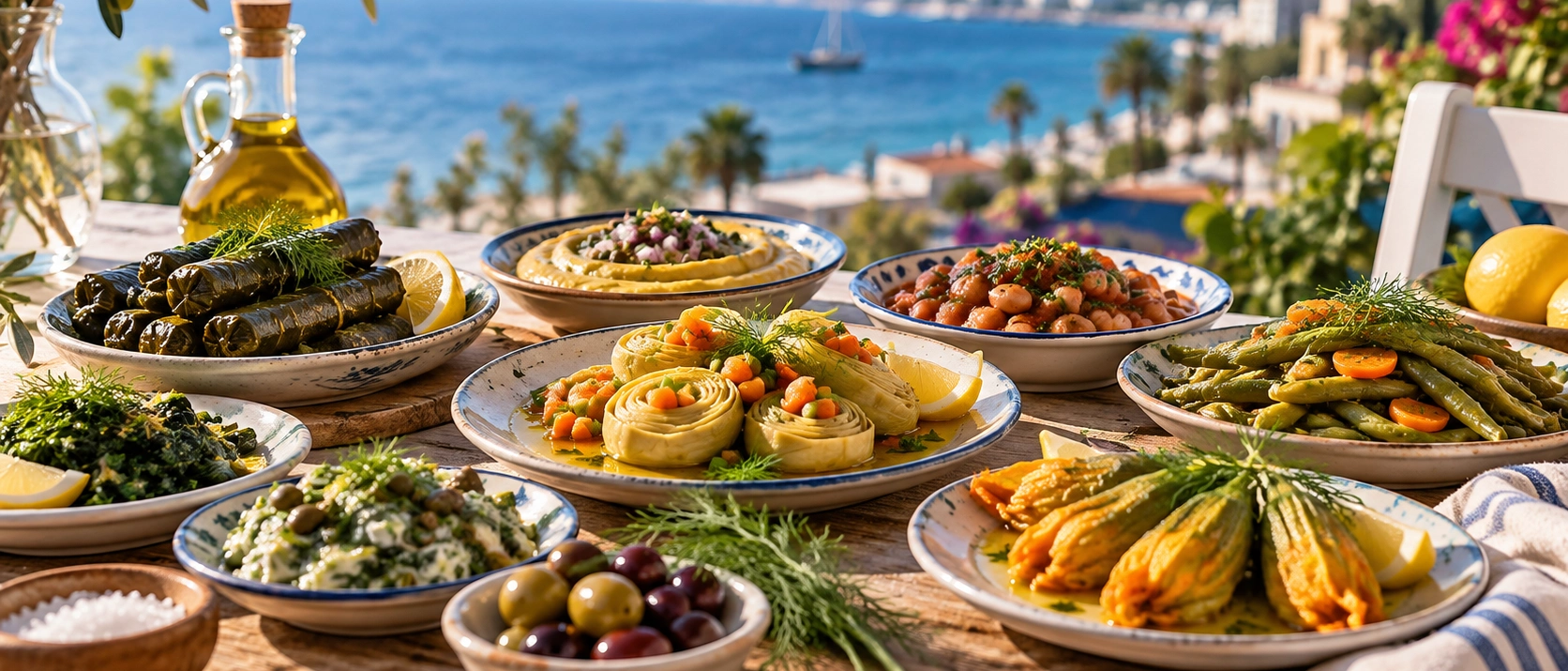
Explore traditional markets and discover the artichokes, vegetables, herbs, olive oil and colourful zeytinyağlı dishes that define the Aegean table.
Request This Tour
Combine Konak, Kemeraltı, ancient Smyrna and İzmir's waterfront with a relaxed exploration of seasonal vegetables, traditional foods and Aegean mezes.
Design Your ExperienceExtend your culinary journey through İzmir Province with markets, olive-growing landscapes, coastal towns, archaeological sites and regional food traditions.

Combine one of Türkiye's greatest archaeological sites with İzmir's urban history, markets and distinctive Aegean culinary traditions.
Request This Tour
Create a personalised route through İzmir Province combining olive groves, local markets, seasonal vegetables, herbs, seafood, historic towns and Aegean landscapes.
Design Your Journey