Custom Aydın Gastronomy Experience
Discover authentic regional flavors, traditional restaurants and cultural attractions through a personalized journey across the Turkish Aegean.
Request a Custom Experience





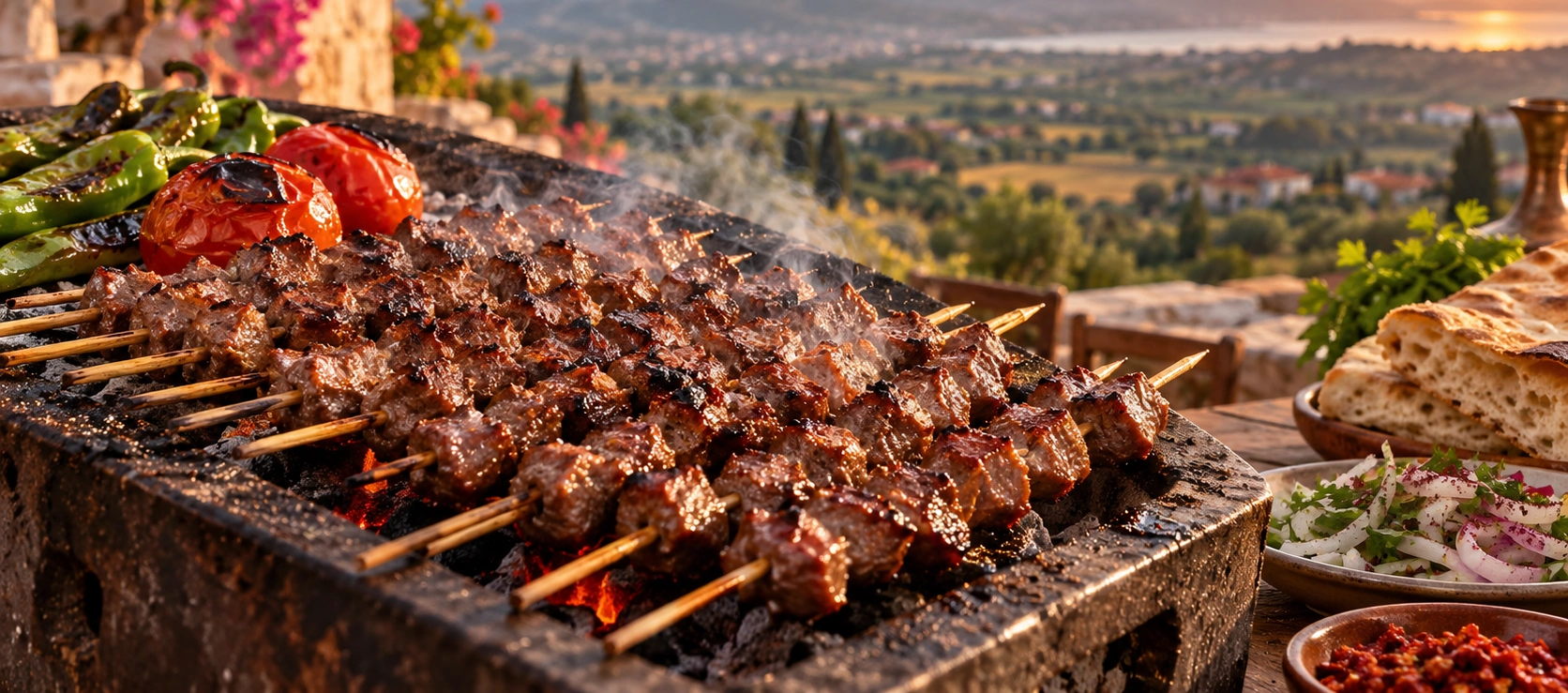
Ortaklar Çöp Şiş is one of the most recognizable traditional meat dishes of Aydın Province in western Türkiye. Originating from Ortaklar, a neighborhood of Germencik district, this distinctive kebab consists of small pieces of beef threaded onto slender reed skewers and quickly grilled over glowing charcoal.
Despite its simple appearance, Ortaklar Çöp Şiş represents a remarkable combination of traditional craftsmanship, regional food culture and culinary knowledge passed between generations of local cooks.
Its character comes from carefully prepared beef, exceptionally small portions, natural reed skewers and a distinctive finishing piece of sheep tail fat.
Unlike many familiar Turkish kebabs, which may be served on long metal skewers with vegetables or marinades, the traditional Ortaklar version follows a particularly precise preparation method.
Each skewer is approximately 15 centimeters long and made from a thin piece of dried reed, locally known as kargı. Small pieces of beef are arranged closely together, with sheep tail fat added to the tip.
The skewers are cooked rapidly over hot charcoal, developing an appetizing grilled exterior while preserving the distinctive flavor of the meat.
Traditionally associated with travelers using the İzmir–Aydın railway, Ortaklar Çöp Şiş developed from a convenient food sold by local vendors into an established regional specialty.
Over time, small roadside stands and mobile sellers gave way to restaurants specializing in the famous skewers, making Ortaklar an important culinary stop for travelers exploring the Aegean Region.
Its cultural and gastronomic importance received official recognition when Ortaklar Çöp Şiş was registered as a Turkish geographical indication on November 23, 2020, under registration number 608.
Today, this famous kebab continues to attract visitors who appreciate authentic Turkish cuisine, traditional cooking methods and the pleasure of discovering regional specialties in the places where they originated.
Small pieces of carefully prepared beef are threaded onto slender reed skewers.
High-temperature charcoal grilling gives the meat its distinctive flavor and texture.
The dish became famous through its association with travelers passing through Ortaklar.
Officially registered as a Turkish geographical indication in November 2020.
Essential information about one of Aydın's most distinctive traditional kebabs.
Ortaklar, Germencik district, Aydın Province, Türkiye.
Explore Ortaklar on Google MapsSmall pieces of lean beef, traditionally taken from the hindquarter.
Thin dried reeds, approximately 15 cm long and 0.5 cm wide.
Rapid grilling over high-temperature charcoal.
Registration No. 608, dated November 23, 2020.
Grilled vegetables, bread, regional seasonings and ayran.
A traditional charcoal-grilled beef dish distinguished by its miniature portions, reed skewers and regional cooking technique.
Ortaklar Çöp Şiş is a traditional Turkish kebab associated with Ortaklar in the Germencik district of Aydın.
It is prepared using small pieces of lean beef threaded closely onto slender, sharpened reeds and grilled over charcoal.
The official geographical indication specification identifies beef from the hindquarter as the principal ingredient, together with a piece of sheep tail fat placed toward the tip of each skewer.
These tiny portions of meat are essential to the dish's character. Their size allows them to cook rapidly over high heat.
The result is a flavorful kebab served in numerous small skewers rather than the larger portions associated with many other Turkish grilled meat dishes.
Ortaklar Çöp Şiş is especially appreciated for its straightforward preparation, distinctive charcoal aroma and strong connection to the local culinary culture.
The traditional name Ortaklar Çöp Şiş combines the name of its geographical origin with a description of its characteristic miniature skewers.
The name of the settlement in Germencik district where the kebab developed its regional reputation.
In this culinary context, the word refers to the small sticks or slender skewers used to hold the meat.
The Turkish word for a skewer, commonly associated with grilled meat dishes.
A Turkish culinary term describing small pieces of meat cooked on miniature skewers.
For English-speaking visitors, Ortaklar Mini Beef Skewers or Ortaklar Çöp Şiş Kebab are useful descriptive translations.
However, retaining the traditional Turkish name is preferable because it preserves the dish's cultural identity and its officially registered geographical indication.
Ortaklar Çöp Şiş originates from Ortaklar, a settlement within the Germencik district of Aydın Province in Türkiye's Aegean Region.
Ortaklar lies along important transportation connections linking İzmir, Aydın, Söke and the surrounding Aegean destinations.
Its historical railway station played a significant role in the settlement's development and helped establish the local food tradition for which it became famous.
The close relationship between the town's transportation history and its traditional kebab is one of the most fascinating elements of Ortaklar's culinary identity.
The settlement most closely associated with the development and reputation of this traditional kebab.
The officially defined geographical area associated with the registered specialty.
A major agricultural and cultural region of western Türkiye with a rich culinary heritage.
The İzmir–Aydın railway helped connect Ortaklar with travelers and regional commerce.
The official geographical indication specifies Germencik district as the geographical boundary for production, rather than the entirety of Aydın Province.
This distinction is important when identifying products prepared according to the registered Ortaklar Çöp Şiş specification.
The history of Ortaklar Çöp Şiş is closely connected with the development of transportation and commercial life in western Anatolia.
During the nineteenth century, the construction of the İzmir–Aydın railway transformed settlements along its route by bringing new commercial opportunities and connecting previously distant communities.
Ortaklar became an important stopping point for travelers passing through the region.
Local vendors began offering convenient foods to passengers, including small grilled meat skewers that could be prepared and served quickly.
The small size of the beef pieces made the dish especially suitable for rapid charcoal cooking, allowing vendors to serve travelers during relatively short stops.
As the dish became increasingly popular, the tradition expanded beyond mobile railway vendors.
Roadside stands and specialized kebab restaurants gradually became part of the culinary landscape of Ortaklar and its surroundings.
During the twentieth century, particularly as road transportation became increasingly important, Ortaklar Çöp Şiş gained recognition among motorists, bus passengers and other travelers.
Today, the dish continues to represent the close relationship between local entrepreneurship, travel and traditional Turkish food culture.
The historical İzmir–Aydın railway helped establish Ortaklar as a transportation and commercial center.
Small meat skewers became associated with vendors serving railway passengers.
The tradition developed into a recognizable local restaurant specialty.
Preparation methods and practical skills have been preserved by local kebab makers.
The dish established a reputation beyond the immediate Ortaklar area.
Geographical indication registration in 2020 formally recognized its regional identity.
Ortaklar Çöp Şiş is distinguished by the combination of carefully selected beef, tiny portions, slender natural skewers and rapid charcoal cooking.
Rather than relying on complicated sauces or elaborate seasoning mixtures, the registered preparation emphasizes the character of the meat and the traditional grilling method.
Lean beef from the hindquarter forms the foundation of the traditional registered recipe.
Each piece is prepared in a very small size, allowing efficient cooking over intense heat.
Thin, sharpened reeds are a distinctive element of the preparation.
A small piece of sheep tail fat is placed at the tip of the skewer according to the traditional specification.
High-temperature charcoal cooking is central to the kebab's traditional flavor.
The dish is closely associated with the history, restaurant culture and reputation of Ortaklar.
The traditional registered preparation of Ortaklar Çöp Şiş uses a notably simple combination of ingredients.
The focus is on the quality and preparation of the beef, complemented by sheep tail fat and the flavor developed during charcoal grilling.
Small pieces of boneless beef from the hindquarter, prepared after removal of unsuitable connective tissue.
A small piece is traditionally added to the tip of each skewer.
Thin pieces of dried kargı reed, sharpened at one end and prepared for grilling.
The traditional fuel used to produce the intense grilling heat characteristic of the dish.
The geographical indication specifies that no vegetables or other ingredients are threaded onto the skewers alongside the beef and sheep tail fat.
Vegetables, bread and seasonings may nevertheless be offered separately as accompaniments when the cooked skewers are served.
This distinction separates the composition of the registered kebab from the wider restaurant meal in which it may be enjoyed.
One of the most recognizable features of Ortaklar Çöp Şiş is the use of small skewers made from natural reeds.
These reeds, locally called kargı, are prepared by cutting them into short lengths and sharpening their tips.
The official registered specification describes skewers approximately 15 centimeters long and 0.5 centimeters wide.
Pieces of beef are threaded closely together along the reed, leaving the characteristic piece of sheep tail fat at the tip.
The resulting skewer is considerably smaller than those commonly associated with many other Turkish kebabs.
Traditional skewers are produced from prepared pieces of reed.
The relatively short skewers accommodate small portions of beef.
Cutting and sharpening the reeds requires practical knowledge of the material.
Numerous miniature skewers create the characteristic appearance of a serving of Ortaklar Çöp Şiş.
The use of these traditional reeds is an important part of the dish's recognized production method and cultural identity.
Although the finished dish appears straightforward, preparing Ortaklar Çöp Şiş requires precision in meat selection, cutting, skewering and grilling.
The following overview reflects the essential stages described in the Turkish geographical indication specification.
Lean beef from the hindquarter is selected for the traditional preparation.
Excess fat and connective tissue are removed to obtain suitable lean portions.
The registered method describes slicing and resting the beef for several days before final preparation.
The beef is cut into exceptionally small pieces, traditionally described as suitable for a sparrow to swallow.
Dry reeds approximately 15 cm long are prepared with sharpened tips.
The small pieces of meat are arranged closely together along the reeds without gaps.
A piece of sheep tail fat is placed toward the tip of each skewer.
The grill is heated using charcoal to produce the intense heat required for cooking.
The miniature skewers are cooked quickly over high heat.
The finished skewers are traditionally enjoyed hot, often with bread, vegetables and seasonings.
Charcoal grilling is one of the defining stages in preparing Ortaklar Çöp Şiş.
The small portions of beef are placed over a charcoal fire producing intense heat, allowing the meat to cook rapidly.
Because the pieces are comparatively small, careful attention is required to prevent unnecessary drying or burning.
The meat develops its characteristic grilled flavor while the sheep tail fat contributes richness.
Traditional kebab makers rely on practical experience to control the heat, position the skewers and judge when the meat is ready.
The preparation calls for rapid cooking over a hot charcoal fire.
Miniature pieces allow the meat to cook quickly and efficiently.
Traditional charcoal cooking contributes to the dish's recognizable grilled character.
Experienced grill masters manage the heat to prepare the delicate skewers without overcooking them.
The distinctive cooking technique helps explain why Ortaklar Çöp Şiş became particularly suitable for the railway and roadside food service traditions of the area.
Ortaklar Çöp Şiş offers a rich, savory beef flavor enhanced by traditional charcoal grilling.
Its character is shaped by the relatively small meat portions, the careful grilling technique and the addition of sheep tail fat.
The finished kebab combines the appealing exterior of grilled beef with the tenderness expected from properly prepared meat.
The traditional method emphasizes the character of the meat rather than elaborate sauces.
Charcoal grilling adds a recognizable roasted aroma.
The small portion of sheep tail fat contributes additional depth to the overall flavor.
Small pieces create a different eating experience from large grilled kebabs.
The exact texture and flavor may vary according to the quality of the meat and the experience of the establishment preparing it.
Ortaklar Çöp Şiş is generally enjoyed freshly grilled and hot, accompanied by familiar elements of Turkish kebab dining.
Although the registered skewers contain only beef and sheep tail fat, restaurants may serve them with grilled vegetables, bread, regional spices and beverages.
Numerous miniature beef skewers form the centerpiece of the meal.
Tomatoes may be served alongside the meat as a traditional grilled accompaniment.
Grilled peppers offer a complementary vegetable flavor.
Onions are among the accompaniments associated with regional kebab service.
Fresh or toasted bread is commonly served with the skewers, depending on the establishment.
The traditional Turkish yogurt-based drink is a popular accompaniment to grilled meat dishes.
Seasonings such as cumin, thyme, black pepper and red pepper flakes may be provided separately, allowing diners to adjust the flavor according to their preferences.
Individual restaurants may offer additional dishes or different presentation styles.
Türkiye has a remarkably diverse kebab culture, with each region developing distinctive ingredients, preparation methods and serving traditions.
Ortaklar Çöp Şiş stands apart from many other kebabs because of its very small meat portions, short natural reed skewers and rapid charcoal-grilling method.
Miniature beef pieces threaded onto reed skewers with sheep tail fat and quickly grilled over charcoal.
Usually features larger pieces of meat threaded onto longer skewers, with regional differences in preparation.
Traditionally prepared from seasoned minced meat shaped around broad skewers and grilled.
A distinctive minced-meat kebab generally associated with a milder seasoning profile than Adana kebab.
These different traditions illustrate the extraordinary variety of Turkish grilled meat dishes.
The defining identity of Ortaklar Çöp Şiş lies in its specific combination of ingredients, miniature reeds and geographical association with Germencik.
Ortaklar Çöp Şiş is more than a popular meal. It represents a distinctive element of the cultural identity of Ortaklar and the wider Germencik district.
The traditional dish illustrates how local ingredients, practical skills and commercial activity can develop into an enduring regional food tradition.
Its association with railway passengers and roadside restaurants makes it particularly important to the area's historical relationship with travel.
Preparing the kebab also involves specialized knowledge, from cutting small portions of beef to preparing reed skewers and managing charcoal heat.
The kebab contributes to Ortaklar's reputation as a destination for traditional regional cuisine.
Its development reflects the relationship between railway travel, roadside commerce and local food service.
Preparing the miniature skewers requires skills associated with local kebab craftsmanship.
Ortaklar Çöp Şiş provides an appealing reason for visitors to explore the culinary heritage of Aydın.
Ortaklar Çöp Şiş is officially recognized as a geographically indicated food product in Türkiye.
Its registration acknowledges the distinctive preparation, geographical reputation and established relationship between the traditional kebab and Germencik district.
The Turkish Patent and Trademark Office registered the product on November 23, 2020, under registration number 608.
Ortaklar Çöp Şiş.
608.
C2020/043.
February 5, 2020.
November 23, 2020.
Mahreç İşareti, a Turkish geographical indication category.
Germencik Municipality (Germencik Belediyesi).
Germencik district, Aydın Province, Türkiye.
The registration defines the traditional ingredients, reed dimensions, preparation method, geographical boundary and other characteristics associated with the protected name.
According to the official specification, all production stages of Ortaklar Çöp Şiş must take place within the defined geographical area of Germencik district.
When exploring the traditional restaurants of Ortaklar, visitors may notice certain characteristics associated with the registered preparation.
The traditional presentation features numerous small pieces of beef on slender natural reeds.
The registered composition uses beef and sheep tail fat without vegetables threaded onto the skewers.
The traditional method relies on rapid grilling over a hot charcoal fire.
The registered product is associated with production within Germencik district.
These characteristics help explain what makes the dish distinctive, although appearance alone does not establish formal compliance with the geographical indication.
Visitors interested in the protected product can ask restaurants about their ingredients, preparation methods and geographical indication status.
The most meaningful place to experience this regional specialty is Ortaklar itself, in Germencik district of Aydın Province.
The settlement is associated with restaurants specializing in çöp şiş, continuing a culinary tradition that developed around local transportation routes.
For visitors exploring the Aegean Region, a stop in Ortaklar offers the opportunity to combine a traditional meal with an introduction to local food culture.
The historic center of the kebab's regional reputation and an appropriate place to experience the dish.
Local establishments may offer freshly prepared skewers with familiar regional accompaniments.
The wider geographical area officially associated with the registered product.
Ortaklar can be considered as a culinary stop while exploring western Türkiye by road.
Restaurant menus, opening hours and preparation methods may vary. Visitors seeking a particular establishment should check its current details before traveling.
Ortaklar's location in western Aydın makes it an interesting addition to a journey through the historical landscapes and culinary traditions of the Aegean Region.
Visitors can consider combining a traditional kebab stop with nearby archaeological sites, countryside experiences and regional attractions.
Discover the archaeological remains of an important ancient city near Ortaklar, known for its significant classical heritage.
Explore the geothermal landscape and thermal traditions associated with Germencik district.
Discover another geographically indicated regional dish associated with the distinctive food culture of Germencik.
Explore one of the Turkish Aegean's best-known coastal destinations, offering seaside scenery and access to major historical attractions.
A personalized itinerary can combine historic sites with regional cuisine, allowing visitors to experience both the cultural and gastronomic traditions of western Anatolia.
If you are planning to discover this traditional dish while traveling through Aydın, a few practical considerations can help you make the most of the experience.
Look for establishments that specialize in çöp şiş and follow traditional preparation methods.
Ortaklar Çöp Şiş is best appreciated when served directly after cooking.
Grilled vegetables, bread and ayran complement the savory character of the skewers.
Restaurants may be able to explain how their meat, skewers and charcoal-grilling methods are prepared.
A visit to Ortaklar can fit naturally into a wider cultural journey through Aydın and the Aegean Region.
The traditional recipe contains beef and sheep fat. Ask the restaurant directly about ingredients and any dietary restrictions.
Helpful answers about the history, ingredients, preparation and geographical identity of this famous Aegean kebab.
Ortaklar Çöp Şiş is a traditional Turkish kebab made from small pieces of beef threaded onto short reed skewers with sheep tail fat and rapidly grilled over charcoal.
The dish originates from Ortaklar in the Germencik district of Aydın Province, western Türkiye.
Çöp Şiş is a Turkish culinary expression referring to small meat skewers. It should not be translated literally as "garbage shish."
The geographical indication specifies lean beef from the hindquarter, prepared in very small pieces, together with sheep tail fat.
No. The registered preparation specifies beef and sheep tail fat on the reeds. Vegetables may be served separately as accompaniments.
The miniature portions allow rapid cooking over high heat and are part of the traditional character of the dish.
The miniature skewers are traditionally grilled quickly over hot charcoal.
They are made from dried reeds, locally known as kargı, cut and sharpened into short skewers approximately 15 centimeters long.
Yes. It received Turkish geographical indication registration No. 608 on November 23, 2020.
Germencik Municipality registered the product through the Turkish Patent and Trademark Office.
The registered geographical boundary is Germencik district in Aydın Province, and the official specification requires all production stages to take place there.
The dish developed a reputation through vendors serving passengers traveling along the İzmir–Aydın railway. Its small pieces allowed quick preparation and convenient service.
Common accompaniments include grilled tomatoes, peppers, onions, bread, seasonings and ayran. The selection depends on the restaurant.
The registered preparation focuses on beef and tail fat rather than hot spices. Diners may add seasonings served separately according to their preferences.
Yes. Ortaklar can be included as a culinary stop during a customized journey through Aydın and the surrounding Aegean region, subject to route and restaurant arrangements.
The information presented in this guide is based on the official Turkish geographical indication record and published resources concerning the culinary heritage of Ortaklar.
Official geographical indication database entry for Ortaklar Çöp Şiş, registration No. 608.
Primary registration document describing the ingredients, production method, geographical boundary and traditional characteristics.
Academic research examining production standards and geographical indication compliance for Ortaklar Çöp Şiş Kebab.
Regional tourism information about Ortaklar Çöp Şiş and its place in Aydın's gastronomy.
Combine traditional Aegean cuisine, fascinating archaeological sites and authentic regional experiences through a personalized private journey.
Our team can help design a private itinerary combining historical sightseeing with opportunities to discover the traditional food culture of Aydın. Specific restaurant stops and tastings are subject to availability and advance arrangements.
Discover authentic regional flavors, traditional restaurants and cultural attractions through a personalized journey across the Turkish Aegean.
Request a Custom Experience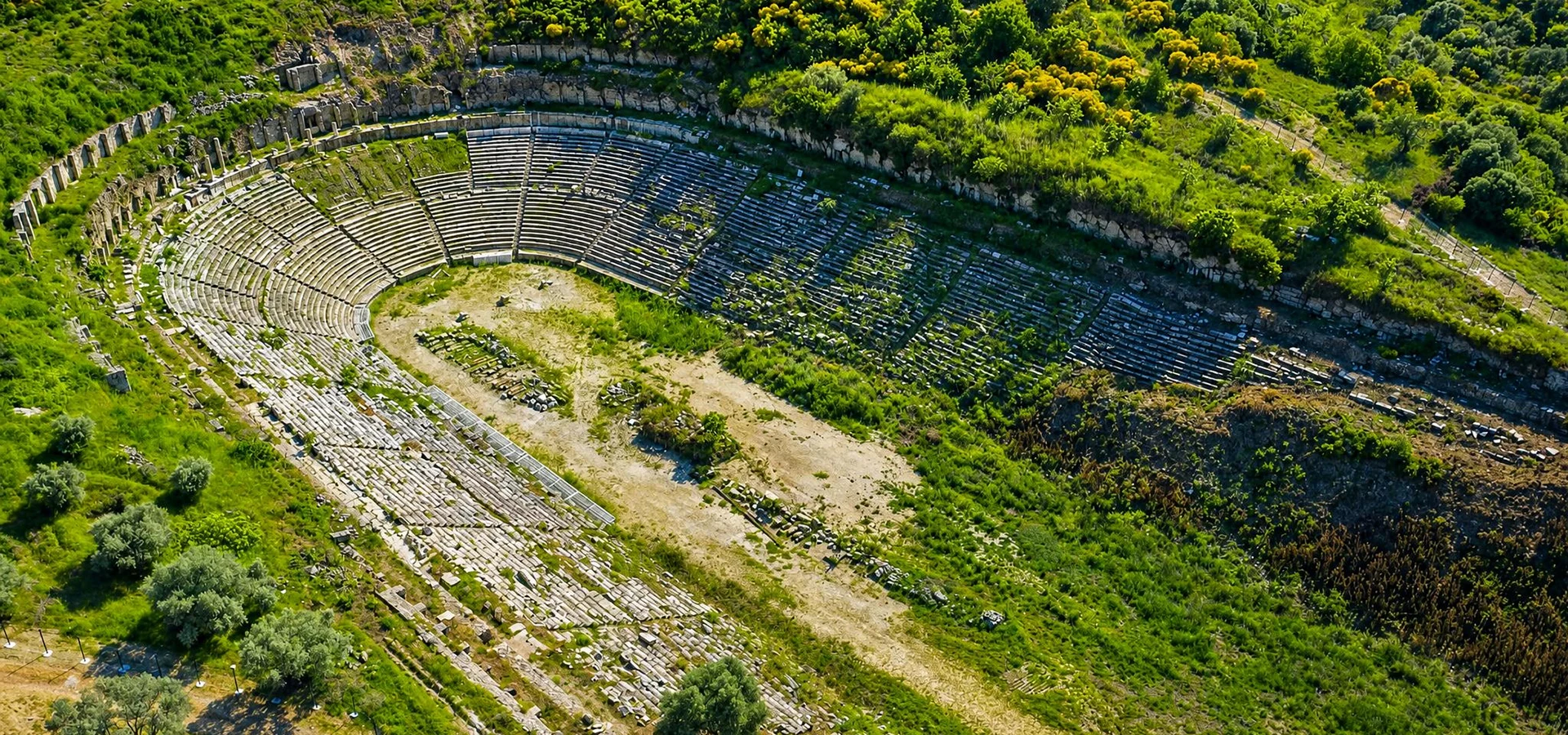
Visit an important ancient city near Ortaklar and discover the classical history of the Aegean landscape.
Discover MagnesiaExplore more regional dishes and distinctive agricultural products that contribute to the rich gastronomic identity of Aydın Province.
Discover another traditional regional dish associated with Germencik and its protected culinary heritage.
Explore Germencik Sour ChickenLearn about a traditional specialty reflecting the cooking techniques and regional flavors of Aydın.
Discover Aydın YuvarlamasıExplore a ceremonial dish associated with Karacasu and the traditional food culture of western Anatolia.
Explore Dedebağ KeşkeğiDiscover the renowned Memecik olive variety and the olive oil traditions of the Aegean Region.
Discover Memecik Olive OilExplore the famous figs of Aydın and their important place in the region's agricultural identity.
Discover Aydın FigDiscover a traditional Aegean dessert prepared with exceptionally thin pumpkin slices, tahini and walnuts.
Explore Aydın Pumpkin Dessert