Early Neolithic Communities
The monumental enclosures of Göbekli Tepe and the long-lived settlement of Çatalhöyük help explain major developments in ritual, community life and early agriculture. Interpretations continue to evolve with excavation.






Türkiye (Turkey) occupies one of the world's most fascinating geographical and historical positions. The greater part of the country lies on the Anatolian peninsula of western Asia, while Eastern Thrace extends into southeastern Europe. Between them, the Bosphorus, Sea of Marmara and Dardanelles form a maritime passage that has shaped trade, migration and political power for millennia.
Few countries bring together such different worlds in a single journey. Explore the imperial monuments of Istanbul, the extraordinary rock-cut settlements of Cappadocia, the marble streets of Ephesus and western Anatolia, the white terraces of Pamukkale, the ancient cities of the Mediterranean and the monumental prehistoric sites around Şanlıurfa.
Yet Türkiye is much more than its most famous landmarks. Across 81 provinces, traditional towns, remote valleys, mountain communities, historic markets, sacred buildings, archaeological sites and remarkably distinct regional cuisines preserve local identities that cannot be captured by a single itinerary.
At Wow Cappadocia, our goal is to introduce both the celebrated sights and the often-overlooked places that make Türkiye so rewarding to explore. This page explains the country itself; for detailed destination-by-destination advice, see our Turkey Travel Guide.
Prehistoric communities, Hittite kingdoms, Greek and Roman cities, Byzantine monuments, Seljuk architecture, Ottoman heritage and the modern republic.
Fairy chimneys, turquoise coastlines, Black Sea forests, volcanic mountains, broad steppes, river valleys and highland lakes.
Local markets, hospitality, music, crafts, ceremonies and an extraordinary food culture shaped by regional history.
Travel through the country with private and small-group options suited to archaeology, culture, nature, food or family travel.
A helpful introduction to the country, its administrative geography and the practical details that visitors often ask about.
Ankara has been the national capital since 1923.
Istanbul, the historic metropolis on the Bosphorus.
Turkish; other languages are spoken by different communities.
Turkish lira (TRY). Currency exchange rates can change.
Most territory is in Asia; Eastern Thrace is in Europe.
Seven geographical regions and 81 administrative provinces.
Türkiye Time (UTC+3), used year-round.
230 V / 50 Hz; commonly Type C and F plugs.
Dial 112 for emergency assistance.
22 UNESCO World Heritage properties, according to UNESCO's current country listing.
Varies considerably between the coasts, central plateau and high eastern mountains.
Ideal for urban culture, archaeology, hiking, coastal holidays and tailored routes.
Anatolia has never been the territory of only one civilization. Its archaeological record reveals changing networks of settlement, religion, political power, trade and cultural exchange.
The earliest known monumental architecture at Göbekli Tepe, near Şanlıurfa, dates to the Pre-Pottery Neolithic. Later settlements such as Çatalhöyük offer evidence for early farming communities, domestic architecture and social life. Bronze Age polities, classical cities, medieval courts and modern cities continued the story on an extraordinary scale.
The monumental enclosures of Göbekli Tepe and the long-lived settlement of Çatalhöyük help explain major developments in ritual, community life and early agriculture. Interpretations continue to evolve with excavation.
The Hittite kingdom developed an imperial state centred on Hattusha in north-central Anatolia, leaving royal archives, fortifications and monumental sanctuaries such as Yazılıkaya.
Urartian, Phrygian and Lydian states flourished; Greek-speaking coastal communities created important cities; and the Achaemenid Persian Empire ruled much of Anatolia.
Following Alexander's campaigns, successor kingdoms and regional powers reshaped urban life. The monumental landscapes of Pergamon, Ephesus and other cities reflect these transformations.
Roman cities and roads linked Anatolia to the Mediterranean. Constantinople became an imperial centre in 330 CE; Byzantine Christian culture left churches, mosaics and monasteries across the region.
After the Battle of Manzikert in 1071, Turkish principalities and the Anatolian Seljuk Sultanate gradually changed the political landscape, building caravanserais, mosques, madrasas and new towns.
Beginning as an Anatolian principality, the Ottoman polity expanded into a major empire. Istanbul, Bursa, Edirne and many other cities preserve Ottoman architecture and urban traditions.
Proclaimed on 29 October 1923 with Ankara as its capital, the modern republic developed new institutions while inheriting a vast and diverse cultural landscape.
History in Türkiye is also the history of numerous peoples and communities, including Armenians, Greeks, Kurds, Syriac Christians, Jews, Arabs and many others. Their contributions can be studied through surviving buildings, manuscripts, languages, local customs and archaeological research. Individual regions have distinct, sometimes contested histories; no short timeline can tell every story.
The traditional seven-region system groups the country by landscape and climatic characteristics. It is different from the administrative division into 81 provinces, and each region contains many cultures and travel experiences.
The Bosphorus, inland seas, Ottoman capitals, Byzantine heritage and routes between Europe and Anatolia.
Ancient city-states, classical archaeology, vineyards, olive-growing landscapes, bays and traditional market towns.
High plateaus, Cappadocia's volcanic landscapes, Seljuk centres, Hittite monuments and the modern capital.
Discover Cappadocia, Ankara and Konya.
Turquoise shores, the Taurus Mountains, ancient theatres, Lycian heritage, citrus-growing plains and sheltered coves.
Forested mountains, tea landscapes, wooden houses, coastal towns, monasteries and lush highland pastures.
High volcanic mountains, Lake Van, medieval Armenian monuments, Urartian heritage and dramatic continental scenery.
The Upper Mesopotamian frontier, prehistoric settlements, stone cities, diverse faith traditions and celebrated regional kitchens.
Türkiye is home to 22 UNESCO World Heritage properties as listed on UNESCO's country page in November 2026 — 20 cultural properties and two mixed cultural-and-natural properties. The separate Tentative List currently contains 80 sites. These figures may change as nominations proceed; the official UNESCO country record is the authoritative reference.
The sites range from the Neolithic remains of Göbekli Tepe and Çatalhöyük to the classical cities of Ephesus and Aphrodisias, the Hittite capital Hattusha, the monumental setting of Nemrut Dağ, Istanbul's historic quarters and the rock-hewn churches and valleys of Cappadocia. UNESCO's 2025 inscription of Sardis and the Lydian Tumuli of Bin Tepe adds another important layer to Türkiye's ancient heritage.
 Cappadocia is one of Türkiye's two mixed UNESCO World Heritage properties, recognised for its cultural and natural value.
Some places are best understood not as isolated monuments but as entire cultural landscapes. Cappadocia combines rock formations, churches, cave dwellings and underground settlements; Hierapolis–Pamukkale unites a thermal landscape with a major Greco-Roman city.
Elsewhere, the impressive urban archaeology of Ephesus, the sanctuary of Göbekli Tepe, the royal statues of Mount Nemrut and the rich historic quarters of Istanbul explain very different chapters of human experience.
Ancient Anatolia was linked by roads, ports, river valleys and caravan routes. Along the Aegean coast, sites such as Aphrodisias, Priene, Miletus, Assos, Didyma and Pergamon reveal Greek, Roman and later histories. Inland, caravanserais, temples, necropolises and old villages broaden that picture. Preservation and excavation conditions vary; visitors should respect protected areas and follow on-site guidance.
The country's living heritage is just as compelling as its archaeology. Art, music, cuisine, architecture and local customs reflect centuries of encounters between communities.
Türkiye's historic landscape contains mosques, churches, synagogues, monasteries, shrines and places of older worship. The early Christian communities of Anatolia, the Byzantine traditions of Istanbul and Cappadocia, the Armenian and Syriac Christian heritage of eastern and southeastern Türkiye, the Jewish history of major cities, and the spiritual traditions associated with Seljuk and Ottoman societies all form part of the country's story.
For travellers interested in religious history, Istanbul, Cappadocia, Konya, Mardin, Van and the wider Aegean coast offer particularly meaningful routes. At active places of worship, visitors should check visiting hours and follow dress and photography rules.
Food changes noticeably from one province to another. The Aegean is celebrated for olive oil, herbs, vegetables and seafood; Central Anatolia for grains, oven dishes and wheat-based traditions; the Black Sea for corn, fish and tea; and southeastern cities for complex kebab traditions, spices, pastries and rich desserts. Shared meals, local markets and regional bakeries often reveal as much about a place as its monuments.
Offering tea is a familiar gesture of hospitality in homes, workshops and businesses. A simple conversation in a local café can be an essential part of a journey.
Carpets, kilims, ceramics, copperwork, stone carving, woodwork and textiles preserve distinctive regional techniques and design traditions.
From Konya's oven dishes to Gaziantep's culinary traditions, the best dishes often have a local history worth discovering.
Folk music, local dances, religious ceremonies and family celebrations reflect the country's diverse cultural geographies and communities.
These destinations provide a memorable introduction to the country. Follow the guides for more detailed historical articles, nearby places and possible travel routes.
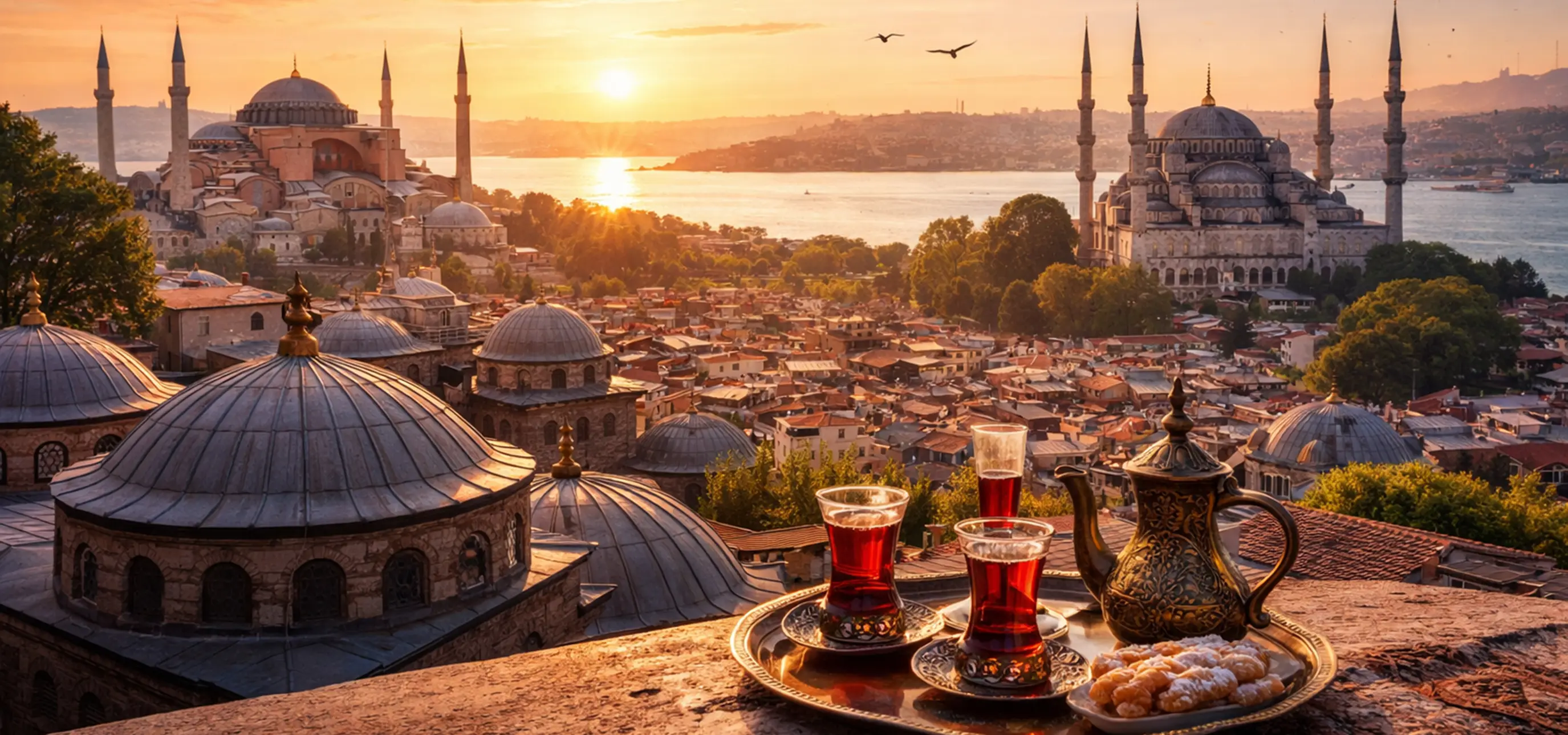
Three imperial worlds, extraordinary monuments, the Bosphorus, historic neighbourhoods and a food culture shaped by centuries of exchange.
Explore Istanbul →Volcanic landscapes, rock-cut churches, underground settlements, village traditions and some of Anatolia's most memorable scenery.
Explore Cappadocia →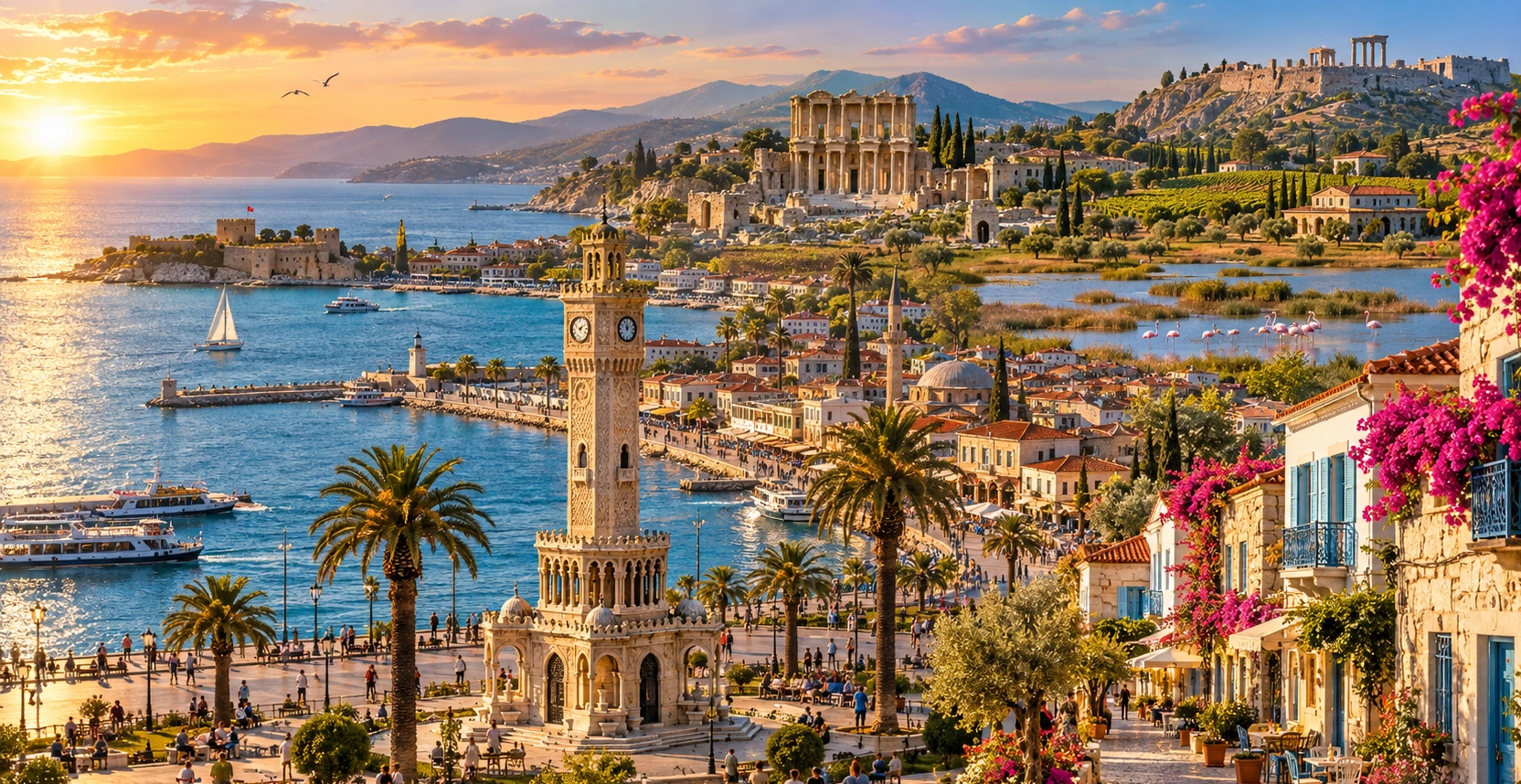
Classical urban heritage, ancient sanctuaries, coastal settlements, markets and archaeological treasures of the western Aegean.
Explore İzmir →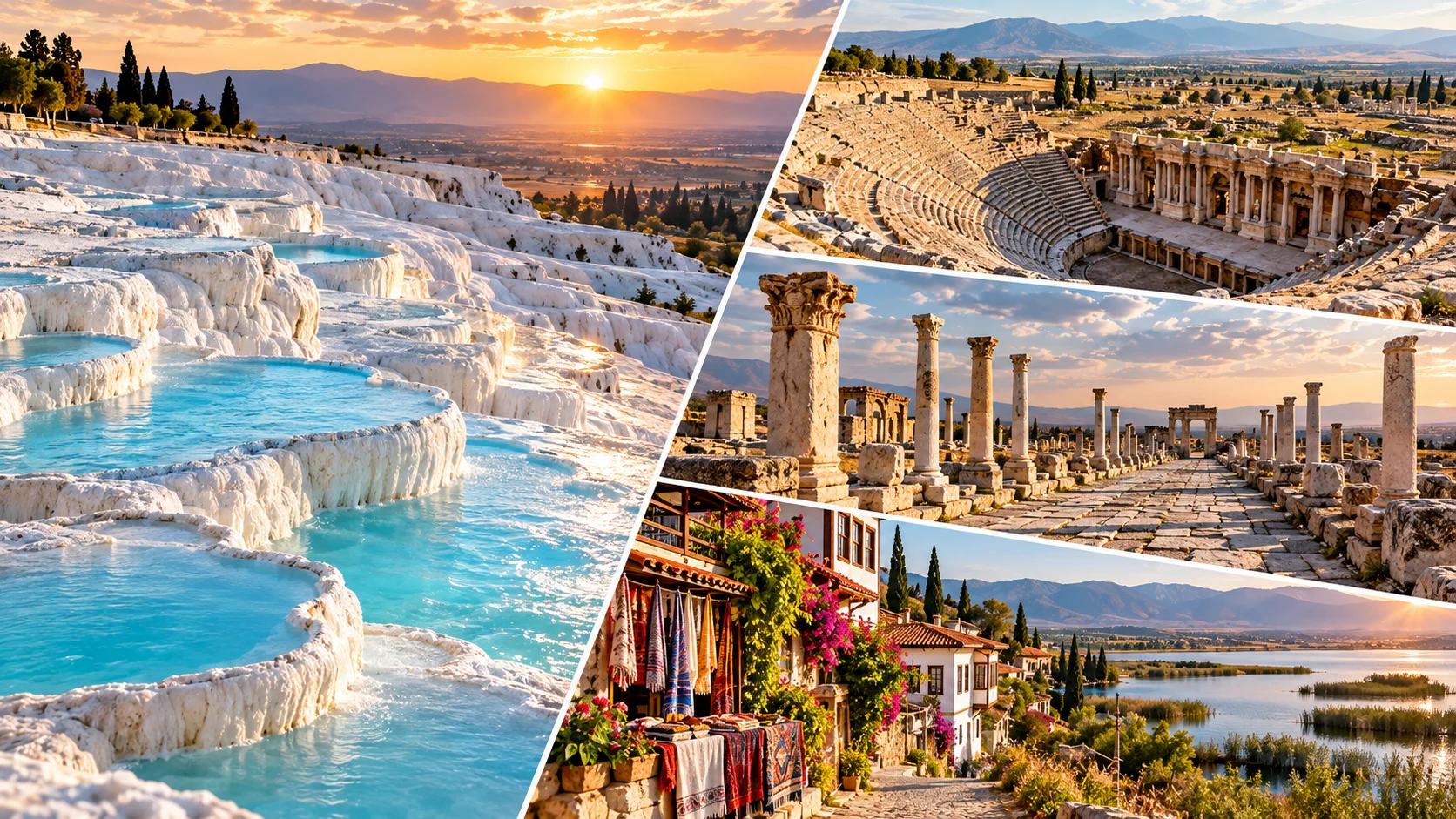
White travertine terraces, Roman Hierapolis, Biblical archaeology, ancient towns and the landscapes of inland western Anatolia.
Explore Denizli →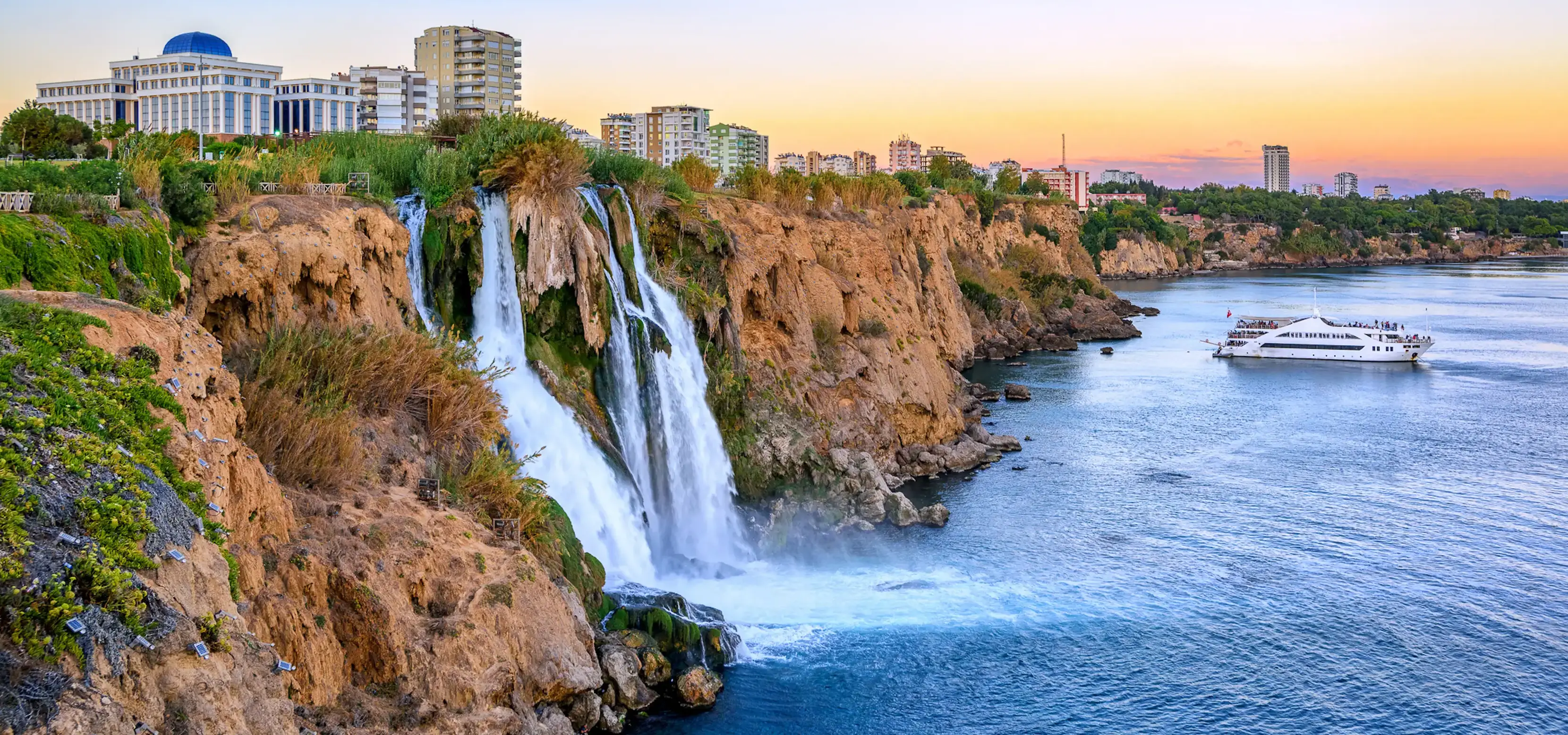
Ancient Mediterranean cities, mountain scenery, harbours, beaches, picturesque old towns and exceptionally rich archaeological routes.
Explore Antalya →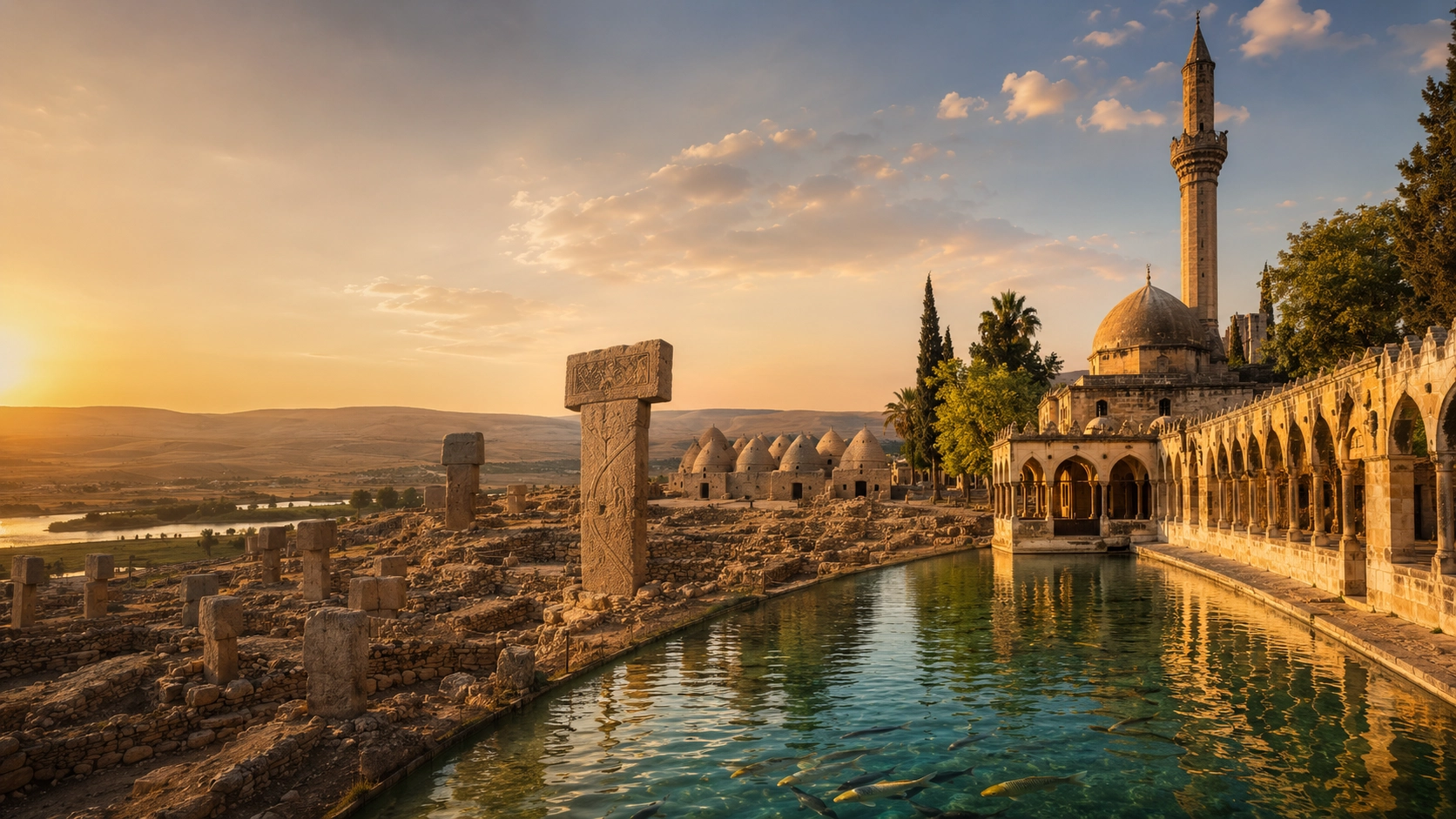
Göbekli Tepe, Harran, sacred traditions, archaeological discoveries and distinctive landscapes near the upper Mesopotamian plain.
Explore Şanlıurfa →A little preparation makes a multi-region trip more enjoyable. Conditions, entry requirements and transport options depend on your route and travel dates.
Visa and document requirements depend on your nationality and circumstances. Confirm the latest information through the official e-Visa portal or a Turkish diplomatic mission before travelling.
Spring and autumn are often ideal for archaeology and multi-city journeys. Summer suits many coastal routes; inland plateaus and eastern highlands may have cold winters and large day–night temperature changes.
Domestic flights connect major regions. Intercity buses, trains on selected corridors, and private road transfers serve different routes. Travel times can be long across mountainous regions, so avoid overloading your itinerary.
The Turkish lira is the local currency. Cards work in many towns and tourism areas, but smaller cash payments remain useful. Check roaming or local SIM/eSIM options with your provider.
Everyday dress varies by setting. Religious buildings may ask visitors to cover shoulders or knees, remove shoes in prayer areas or observe visiting restrictions during worship.
Archaeological sites, protected landscapes and historic houses are fragile. Stay on marked paths, follow conservation instructions, avoid removing objects and ask permission before photographing people.
Suggested first journey: For a broad introduction, many visitors combine Istanbul, Cappadocia, Ephesus and Pamukkale over about 8–12 days, adding Antalya or another region if time allows. The ideal route depends on the season, pace, interests and arrival/departure airports. We recommend making room for at least one lesser-known destination rather than moving every day.
Useful answers about the country's name, capital, geography, heritage, language and practical travel planning.
Yes. Türkiye is the country’s official name in Turkish and is also used internationally. Turkey remains familiar in English-language travel searches and conversation.
Ankara is the capital of the Republic of Türkiye. Istanbul is its largest city and a major cultural, historical and commercial centre.
Türkiye spans two continents. Most of its territory is in Anatolia in Asia, while Eastern Thrace lies in southeastern Europe. The Bosphorus and Dardanelles connect the Black Sea and Mediterranean waterways.
Türkiye has seven geographical regions and 81 administrative provinces. The regions describe geography and climate; provinces are administrative divisions.
As listed by UNESCO in November 2026, Türkiye has 22 inscribed World Heritage properties: 20 cultural and two mixed cultural-and-natural sites. The UNESCO Tentative List is separate and changes as nominations are updated.
Turkish is the official language. Other languages are spoken in different communities, and English is commonly used in many tourism businesses, especially in major visitor destinations.
The Turkish lira (TRY) is the national currency. Cards are accepted widely in cities and established tourism areas, but having some lira is useful for smaller shops, rural areas and local markets.
April to June and September to October often offer comfortable conditions for multi-region cultural trips. The Mediterranean coast is popular in summer, and mountain regions have their own seasonal conditions.
Entry rules depend on nationality, travel documents and the purpose and length of the stay. Check the official Republic of Türkiye e-Visa and consular information before making travel arrangements.
Absolutely. The country’s 81 provinces include major archaeological regions, highlands, Black Sea landscapes, Mediterranean coasts, villages, sacred places and distinctive food traditions. Our city-by-city travel guide is a useful starting point.
Tell us when you are travelling, what interests you most and the pace you prefer. Our team can help shape a journey that balances the country's great landmarks with its lesser-known stories.
Whether you prefer a fully private itinerary, a small group programme, a shorter multi-day route or a Mediterranean cruise, we can help you find the right starting point.
Flexible, fully private itineraries built around your travel dates, preferred pace and favourite destinations.
View Private PackagesDiscover celebrated highlights with a planned route and the convenience of a group programme.
Explore Group ToursPair two or three destinations in a compact itinerary without losing the character of each stop.
Browse Short PackagesHeritage figures on this page have been checked against the UNESCO World Heritage Centre's Türkiye listing (accessed 11 November 2026), which records 22 inscribed properties (20 cultural and two mixed) and 80 Tentative List sites. For the latest official entry requirements, consult the Republic of Türkiye e-Visa service and relevant consular notices. Historical periods and archaeological interpretations are introductory summaries rather than substitutes for specialist publications; excavation findings and visitor arrangements may change.
Need help choosing where to go next? Continue to our Turkey Travel Guide, UNESCO Sites in Turkey and city-specific destination pages.